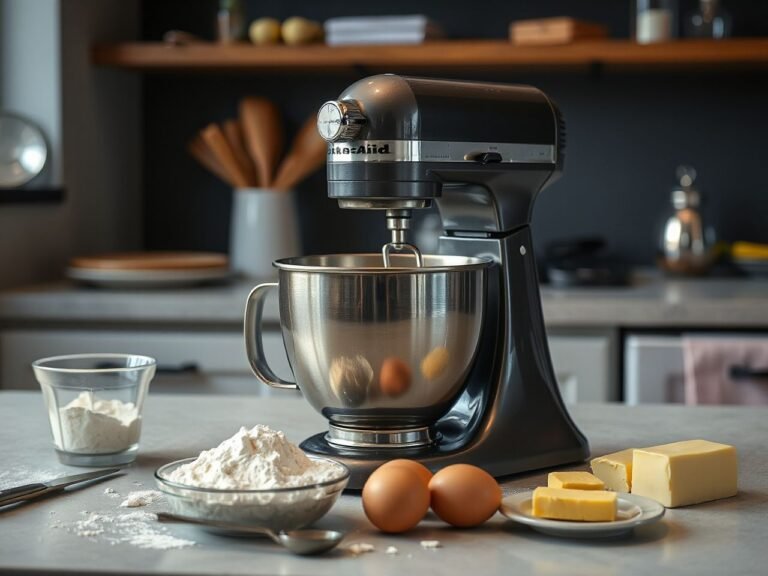
Recent stand-mixer advice has moved away from wattage and bowl size alone, because those figures say little about how a machine behaves under strain. A useful stand mixer buying guide separates advertised bowl capacity and motor power from the mixer’s workable performance under load: stiff dough can demand far more from the transmission than a light batter. It also treats the mixer as a system of bowl geometry, attachment clearance, drive mechanism, controls, cleanability, and repairability rather than judging the motor in isolation.
Key Takeaways
- Judge workable batch size and dough behaviour separately from the bowl’s stated capacity.
- Compare bowl access, attachment clearance, noise, controls, cleaning, and replacement-part support.
- Switch off and disconnect the mixer before reaching into the bowl, changing attachments, or cleaning near moving parts.
Beginner: Start With the Work You Actually Do
Step 1: Separate light mixing from heavy mixing
A stand mixer consists of an electric motor integrated into a fixed base that holds a bowl. That basic arrangement suits jobs where both hands are occupied, but the useful choice depends on the work placed through the motor transmission.
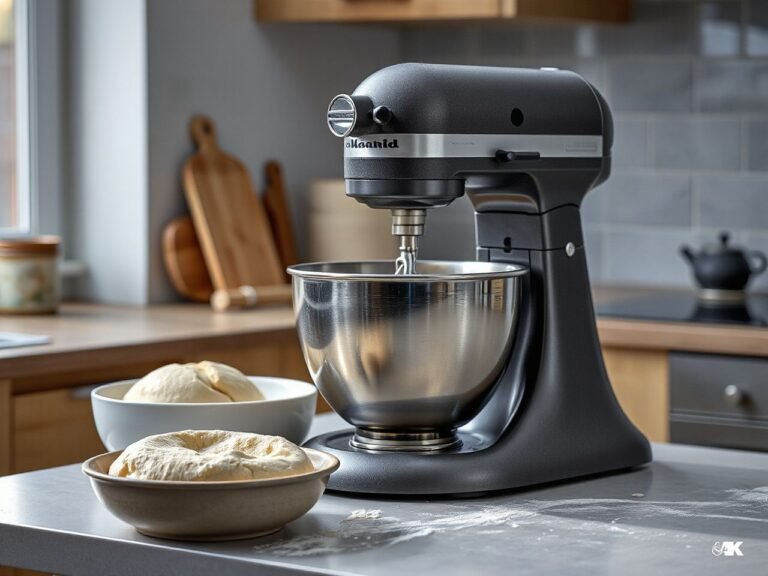
Light batter usually asks the machine to move ingredients that flow readily around the bowl. Stiff bread dough behaves differently. Dough can gather around the hook, resist movement, and transfer changing loads through the attachment and drive system. A motor label does not show how the transmission, gearing, cooling, and overload protection respond to that resistance.
Stiff dough places greater strain on a stand mixer’s drive system than light batter. That sentence should guide the comparison more strongly than a large capacity claim.
- Mostly cakes, sauces, and whipped mixtures: Give attention to whisk clearance, low-speed control, bowl access, and how easily the machine can be cleaned.
- Regular bread dough: Study the dough hook, the machine’s stability, the bowl’s working room, and the instructions for maximum dough quantity.
- Large or repeated batches: Look for clear manufacturer guidance rather than assuming that a larger bowl can safely carry every mixture.
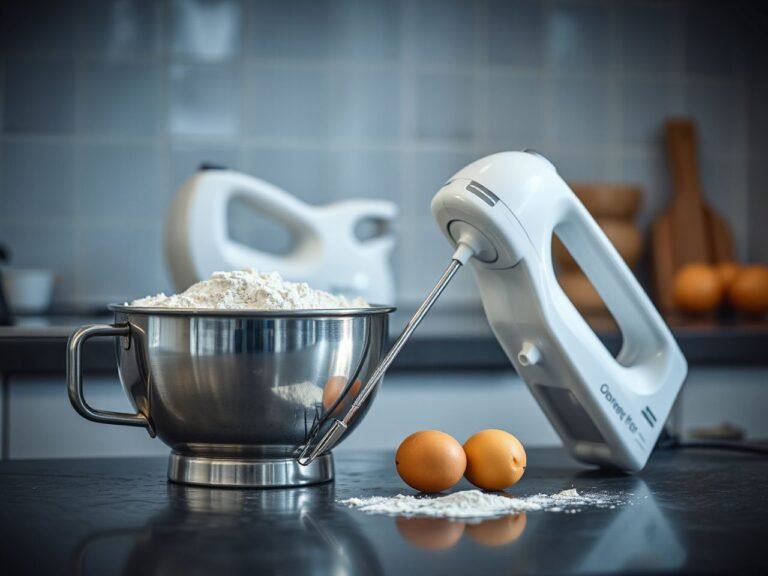
Do not treat a stand mixer as an automatic replacement for a bread machine, food processor, or hand mixer. A hand mixer may be easier to store for occasional light work, while a stand mixer earns its counter space when the bowl can remain in place and the machine can work without being held.
If limited counter and storage space is the main concern, the compact stand mixer buying guide provides a useful companion discussion. A smaller footprint can be practical, but footprint alone does not establish dough capacity.
Step 2: Treat capacity as a ceiling, not a recipe promise
The capacity printed for a bowl describes its physical volume. It does not automatically describe the amount of dough or batter that can move freely, stay inside the bowl, or place an acceptable load on the drive system.
A stiff dough may occupy less visible space than a loose batter while placing more demand on the mixer. Flour can remain at the bottom, dough can climb the hook, and the attachment can lose efficient contact with the mixture. The workable batch is therefore the amount the manual permits for that specific mixture and attachment, not simply the volume of an empty stainless steel mixing bowl.
A bowl’s advertised capacity is not the same as its workable mixing capacity. Readers should check the manual’s guidance for dough, whipped mixtures, and minimum quantities before treating a large bowl as a large-batch guarantee.
Look for signs that the bowl and attachment are well matched:
- The attachment reaches enough of the mixture to combine it without leaving a persistent layer underneath.
- Ingredients do not repeatedly climb above the working area or escape over the rim.
- The mixer remains stable while the mixture changes from loose to dense.
- The manual gives usable instructions for the recipes you make, rather than only listing bowl volume.
Beginner: Understand the Bowl and Head Design
Step 3: Compare tilt-head and bowl-lift mechanisms
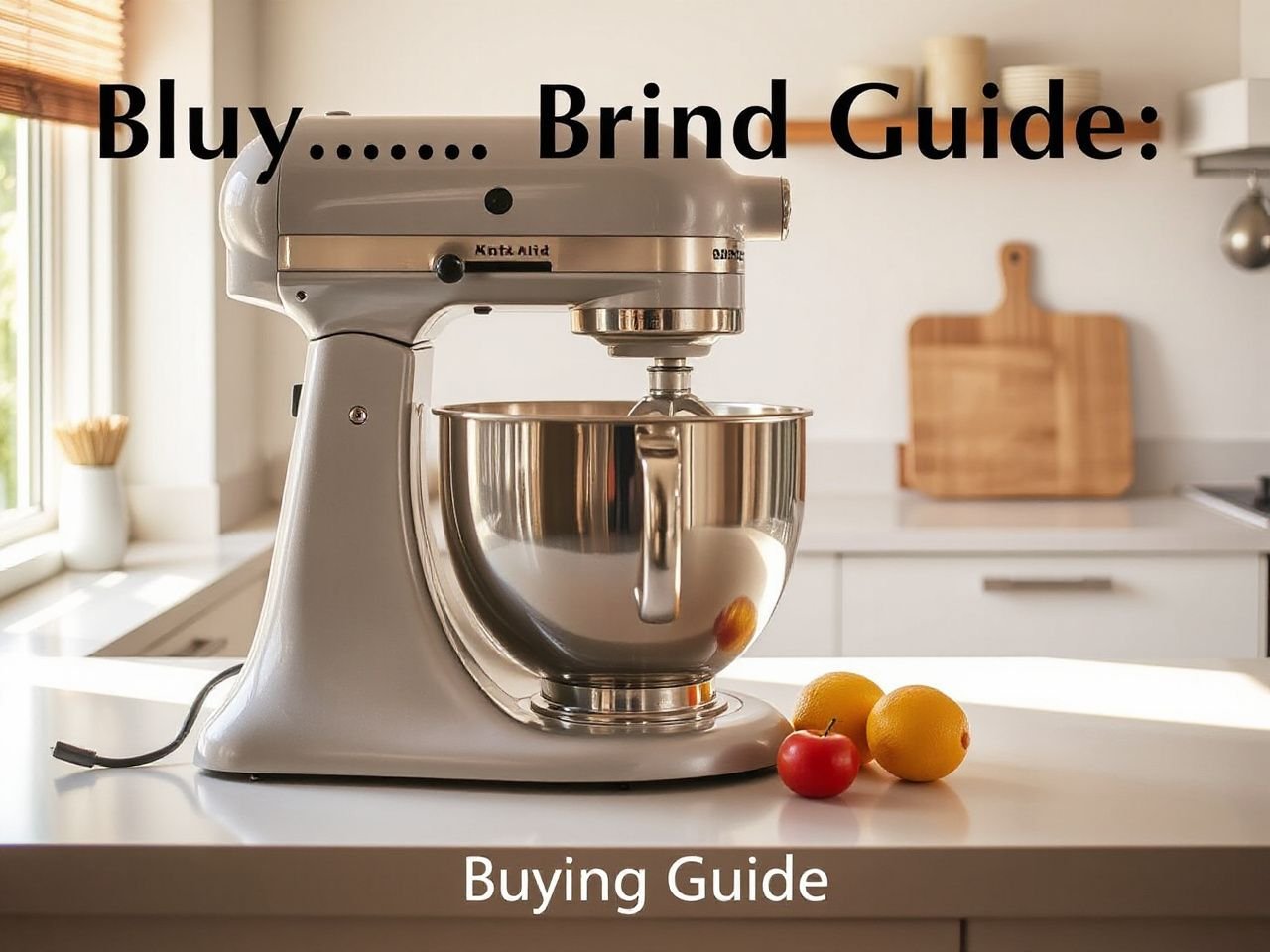
In a tilt-head stand mixer, the head pivots rearward so the user can remove the paddle or add ingredients. This gives direct access to the bowl, which can make scraping, fitting an attachment, and checking mixture texture straightforward.
In a bowl-lift stand mixer, the bowl is raised or lowered while positioned beneath the mixing attachment. The head stays in place, so bowl movement rather than head movement provides access. That arrangement changes how much room is needed above and around the machine.
A tilt-head mechanism changes head position, while a bowl-lift mechanism changes bowl position. The distinction affects everyday access, attachment clearance, stability, and safe operation space.
What to inspect before choosing a design
- Overhead clearance: Check whether the head can pivot or the bowl can move without striking a shelf, cabinet, or stored object.
- Bowl access: Confirm that you can add ingredients, scrape the sides, and remove the bowl without placing fingers near a moving attachment.
- Attachment clearance: Look at the gap between the attachment and bowl. A poor match can leave ingredients untouched or encourage unsafe scraping while the machine runs.
- Stability: Consider how the fixed base sits on the counter during dense mixing. A machine that shifts is difficult to supervise.
- Storage: Account for the space needed to open the head, lift the bowl, and remove attachments.
Bowl geometry matters as much as bowl material. A tall, narrow bowl and a broad, open bowl may hold the same advertised volume while presenting different working areas to the whisk, paddle, or hook. The attachment must reach the mixture without striking the bowl, and the user must be able to see whether ingredients have been incorporated.
Step 4: Learn what planetary mixing action does
Planetary mixing action means the attachment rotates on its own axis while also travelling around the bowl. That movement brings the attachment through different parts of the mixture instead of leaving it fixed in one central track.
Planetary mixing action moves the attachment around the bowl so ingredients are contacted across a wider path. The action still depends on bowl shape, attachment clearance, ingredient quantity, and mixture texture.
A planetary path does not remove the need to stop the mixer and scrape the bowl when the recipe calls for it. Nor does it make a dough hook, flat beater, and wire whisk interchangeable. Each attachment applies force in a different way.
Intermediate: Match Attachments to the Mechanical Job
Step 5: Use the dough hook for resistant mixtures
The dough hook is shaped to gather and stretch dough rather than whip air into a loose mixture. Bread dough can still strain the drive system because the mixture resists movement, especially as the dough becomes cohesive and pulls against the bowl.
Read the manual before selecting a speed or batch size. If the mixer slows sharply, makes a harsh change in sound, rocks on the counter, or stops, pause the machine and follow the instructions for overload protection. Do not respond by forcing a higher setting or holding the head down.
The dough mixer buying guide offers further context for readers deciding how much of their work involves bread dough rather than general baking.
Step 6: Use the flat beater for mixtures that need working
The flat beater is suited to mixtures that need combining and working without the aeration pattern produced by a wire whisk. It can distribute ingredients through a batter or similar mixture, but the appropriate speed and batch limit remain specific to the manual.
A flat beater should not be used as a substitute for a dough hook simply because both attachments turn. The shape determines how the mixture is gathered and pushed through the bowl, while the resistance determines how much load reaches the transmission.
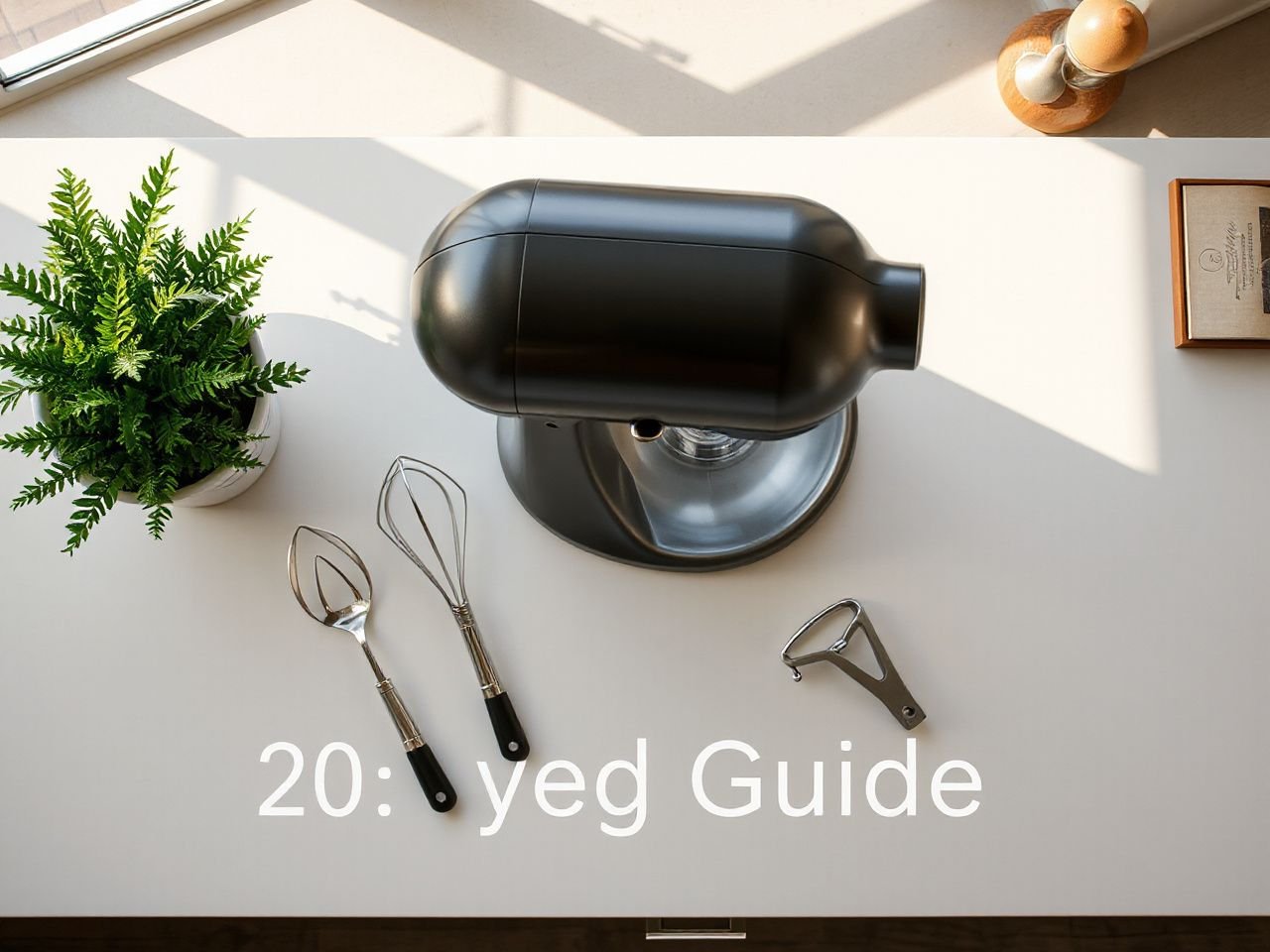
Step 7: Reserve the wire whisk for aeration
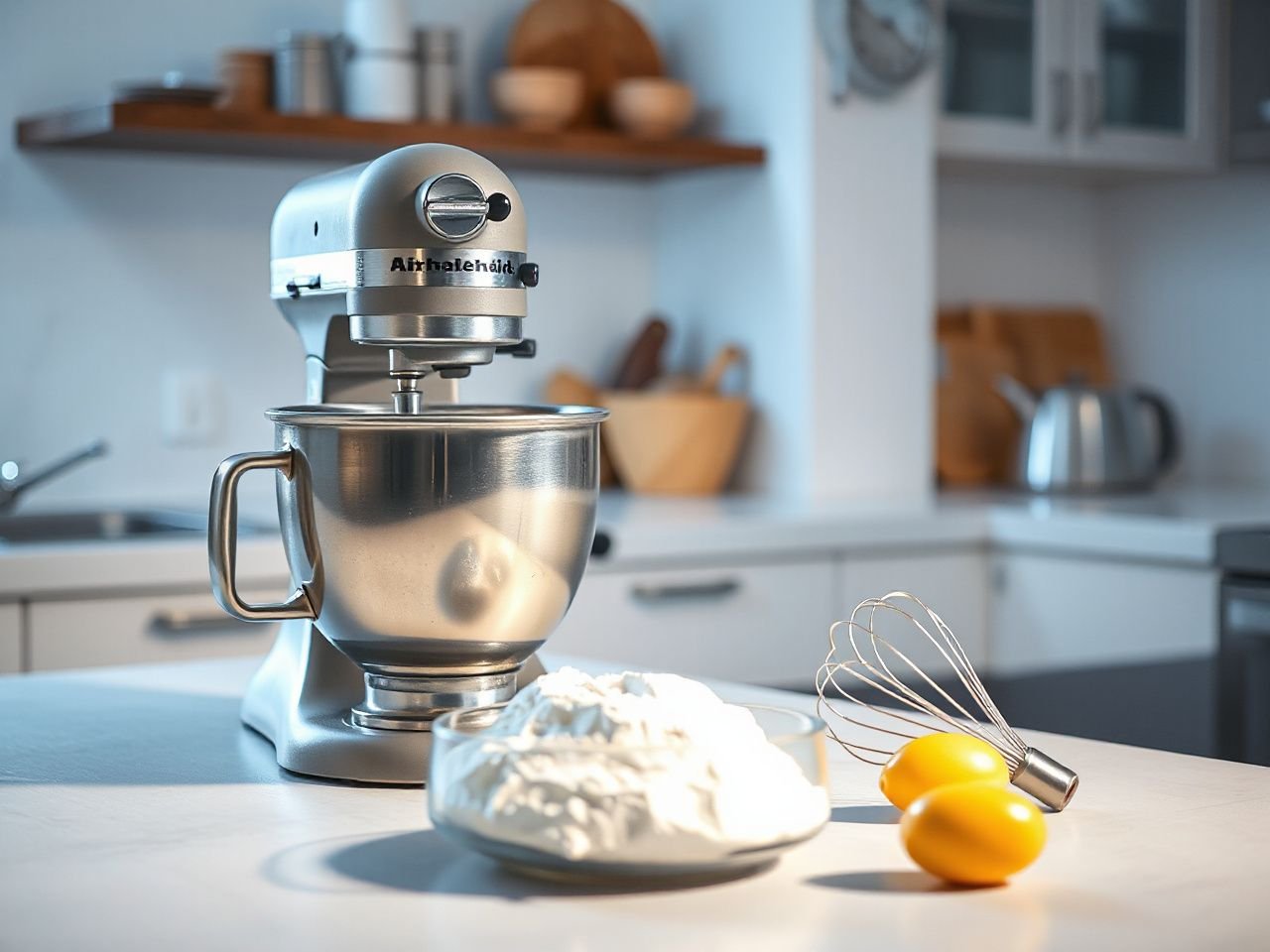
The wire whisk is designed to move through a lighter mixture and incorporate air. Its open structure is not a reason to use it for stiff dough. Dense mixtures can resist the wires and place a load on an attachment that was not designed for that job.
Dough hooks, flat beaters, and wire whisks perform different mechanical jobs. Choosing the attachment by mixture texture protects the machine and gives the recipe a better chance of reaching the intended texture.
How motor noise should influence your comparison
I am sceptical of quietness claims that do not explain the operating condition. A mixer may sound different during whisking than during kneading, and a light mixture gives the motor a different task from stiff dough. A machine that sounds quiet while empty tells you very little about its behaviour under load.
Look for controls that let you begin gently and increase speed in a controlled way. Sudden starts can scatter flour and make it harder to judge how the load is changing. The important observation is not a particular sound level; it is whether the machine remains controlled as the mixture becomes denser.
Motor noise that changes sharply under load deserves attention before a batch continues. Stop, disconnect, and investigate according to the manual rather than treating the sound as normal for every mixer.
Intermediate: Check Attachments, Controls, and Ownership
Step 8: Confirm the attachment connection system
Stand mixer attachments use specific connection systems. A whisk, beater, or hook that fits one design should not be assumed to fit another, even if the attachments look similar.
Check the connection point, locking method, clearance, and instructions for the exact mixer. This applies to the supplied attachments as well as optional stand mixer attachments. A replacement part must match the machine’s design, not merely the broad category of attachment.
Attachment compatibility must be checked against the exact mixer design. Treating similar-looking connection systems as interchangeable can lead to poor fit, contact with the bowl, or an attachment that cannot lock securely.
Step 9: Read the control layout as a safety feature
Controls should be easy to reach without placing a hand near the attachment. A clear off position matters because the mixer must be stopped before the user changes tools, scrapes the bowl, or removes a stuck mixture.
The U.S. Consumer Product Safety Commission provides consumer safety information, and its guidance is a sensible reference alongside the appliance manual for safe operation around moving equipment.
Switch the mixer off and disconnect it before:
- Removing or installing a dough hook, flat beater, or wire whisk.
- Reaching into the bowl or touching dough wrapped around an attachment.
- Cleaning the bowl area near moving parts.
- Checking a jam, unusual sound, or unexpected stop.
- Moving the machine or working around its power connection.
Step 10: Account for cleaning and replacement parts
Clean the bowl and the attachment used after each preparation. Wipe the areas that collect flour, batter, or dough, and follow the manual for the motor housing and controls. Water and electrical components should be treated according to the maker’s cleaning instructions, not guessed from the appearance of the casing.
Dishwasher guidance differs by model and part. The verified information for the Beautiful by Drew Barrymore 19113 states that its splash guard, bowl, and attachments are dishwasher-safe, but that claim should not be transferred to another mixer. Read the exact manual before placing any component in a dishwasher.
A dishwasher-safe claim applies to the named parts and model, not to every stand mixer attachment. Replacement parts deserve the same care: confirm the connection, material guidance, and cleaning instructions before ordering.
Ongoing ownership can include optional attachments, replacement beaters or hooks, electricity, and maintenance. No single purchase price captures those costs. A machine that uses a connection system with readily identified replacement parts may be easier to keep in service, but readers should verify availability for the exact model rather than assume long-term support.
Advanced: Diagnose Load, Heat, and Stoppage Without Guesswork
Why a stand mixer can struggle or stop
A mixer may struggle because the mixture is too stiff for the selected attachment, the batch is too large for the manual’s guidance, or the dough has gathered in a way that increases resistance. The motor transmission must transfer force through the attachment, so a change in dough texture can change the demand on the machine even when the visible amount seems modest.
Overload protection may stop the mixer to limit stress on the drive system. A stop does not prove that the machine is defective, and it does not prove that the batch was acceptable. Disconnect the machine, inspect the instructions, and identify whether the mixture, quantity, attachment, or operating setting caused the condition.
Overload protection is a response to excessive demand, not permission to keep increasing the load. Continuing without finding the cause can place repeated strain on the transmission.
Use observable signs rather than marketing claims
A reader can assess a mixer without laboratory equipment by paying attention to clear changes during ordinary operation:
- The attachment repeatedly misses a dry layer at the bottom of the bowl.
- The dough climbs the hook and turns without being worked through the bowl.
- The head or base shifts as the mixture becomes dense.
- The sound becomes harsh, uneven, or sharply different from the start of the batch.
- The control does not provide a clear way to stop before the user needs to intervene.
- The attachment rubs the bowl or leaves an unusually narrow clearance.
These signs do not identify a hidden internal fault. They do tell you to stop and consult the manual instead of making an unsupported assumption about motor power.
Safety and independent information
Safety instructions belong to the appliance manual first. The National Sanitation Foundation also publishes information about food equipment and sanitation, which can help readers understand why cleanable food-contact parts and clear cleaning instructions matter.
Never reach into a moving bowl, even if the attachment appears slow. Disconnecting the plug removes the immediate drive connection, while switching off alone may leave the user relying on the control state during cleaning or attachment changes.
Advanced: Decide Whether a Stand Mixer Fits Your Kitchen
Counter space and workflow
A stand mixer is practical when the fixed base can remain stable and accessible. Measure the space needed to open a tilt-head mechanism or raise and lower a bowl-lift mechanism, then consider where the bowl and attachments will be stored when not in use.
Countertop space is part of the ownership cost. A machine that must be moved for every batch may be less convenient than a hand mixer for occasional work, even if the stand mixer has greater mechanical ability. A hand mixer also avoids the bowl and base footprint, while a stand mixer lets the user attend to other recipe steps without holding the tool.
Choose by recipe pattern, not by attachment collection
Optional attachments can expand a machine’s role, but every attachment adds a compatibility question, a storage requirement, and a possible replacement cost. Start with the recipes that occupy most of your baking time. If cakes and whipped mixtures dominate, the supplied flat beater and wire whisk may matter more than optional tools. If bread dough dominates, the dough hook, workable batch guidance, and load behaviour deserve priority.
A stand mixer is more practical than a hand mixer when its fixed bowl, stable base, and attachment system match the user’s regular work. The larger machine is not automatically the more useful machine.
A final comparison sequence
- Write down the mixtures: Separate light batters from stiff doughs and note how often each appears.
- Check the manual: Find attachment-specific guidance, batch limits, cleaning rules, and overload instructions.
- Inspect the mechanism: Compare tilt-head and bowl-lift access, overhead clearance, and the space required to work safely.
- Study the bowl: Look beyond volume and consider attachment reach, mixture visibility, and practical working capacity.
- Assess sound and movement: Plan how you will recognise a changing load rather than trusting a motor figure alone.
- Verify parts: Confirm that supplied and replacement attachments use the correct connection system.
- Count ownership demands: Include storage, cleaning, optional attachments, replacement parts, electricity, and maintenance.
This sequence keeps the decision grounded in observable design and stated instructions. It also prevents a common error: choosing a machine for an impressive bowl or motor label before checking whether the machine suits the dough, space, and cleaning routine in the kitchen.
Frequently Asked Questions
How should I compare stand mixers without focusing on brands?
Compare the system rather than the name on the housing. Start with your mixtures, then inspect workable batch guidance, bowl geometry, attachment clearance, drive behaviour under dense dough, controls, noise changes, cleaning instructions, and replacement-part support. A stated motor power or bowl capacity cannot establish performance by itself, especially when stiff dough places more strain on the transmission.
What is the practical difference between tilt-head and bowl-lift stand mixers?
A tilt-head mixer pivots the head rearward for bowl access and attachment changes. A bowl-lift mixer raises or lowers the bowl beneath a stationary head. The choice affects overhead clearance, attachment access, stability, and how easily you can add ingredients or remove the bowl. Check the available counter space and the manual’s attachment clearance before deciding which arrangement suits your workflow.
How can I tell if a mixer can handle bread dough?
Look for attachment-specific instructions rather than relying on motor power. Check the permitted dough quantity, recommended setting, and overload guidance. During mixing, watch for harsh sound changes, climbing dough, unusual movement, or a sudden stop. Those signs mean the load needs attention. A dough hook is designed for dough, but the hook does not erase the strain caused by a dense or oversized batch.
Which parts should I clean after mixing, and can they go in a dishwasher?
Clean the bowl and used attachment after each batch, then follow the manual for splash guards and other removable parts. Dishwasher guidance is model-specific. The Beautiful by Drew Barrymore 19113 is stated to have a dishwasher-safe splash guard, bowl, and attachments, but that information should not be applied to another mixer. Disconnect the appliance before cleaning near moving parts.
The right stand mixer is defined by the work it can perform safely and repeatedly within its stated instructions, not by a single headline specification. A sceptical look at bowl capacity, transmission load, noise, attachments, and service needs produces a more useful decision than a brand comparison alone.