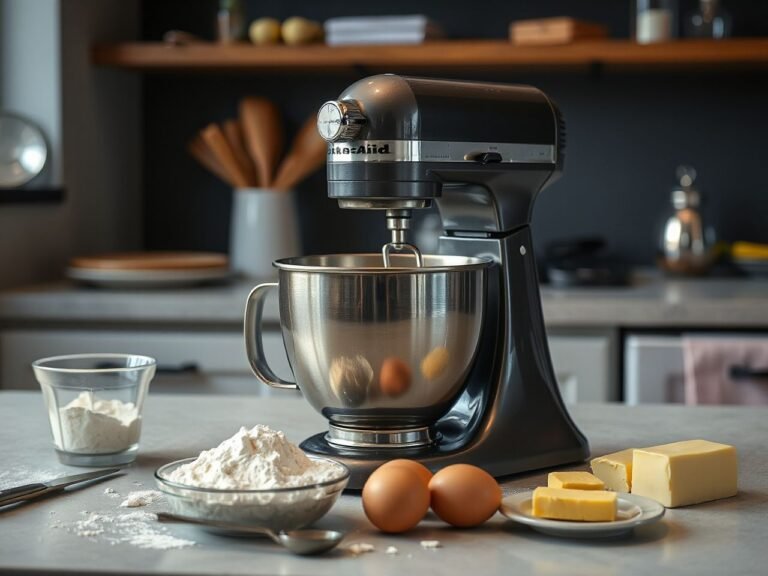
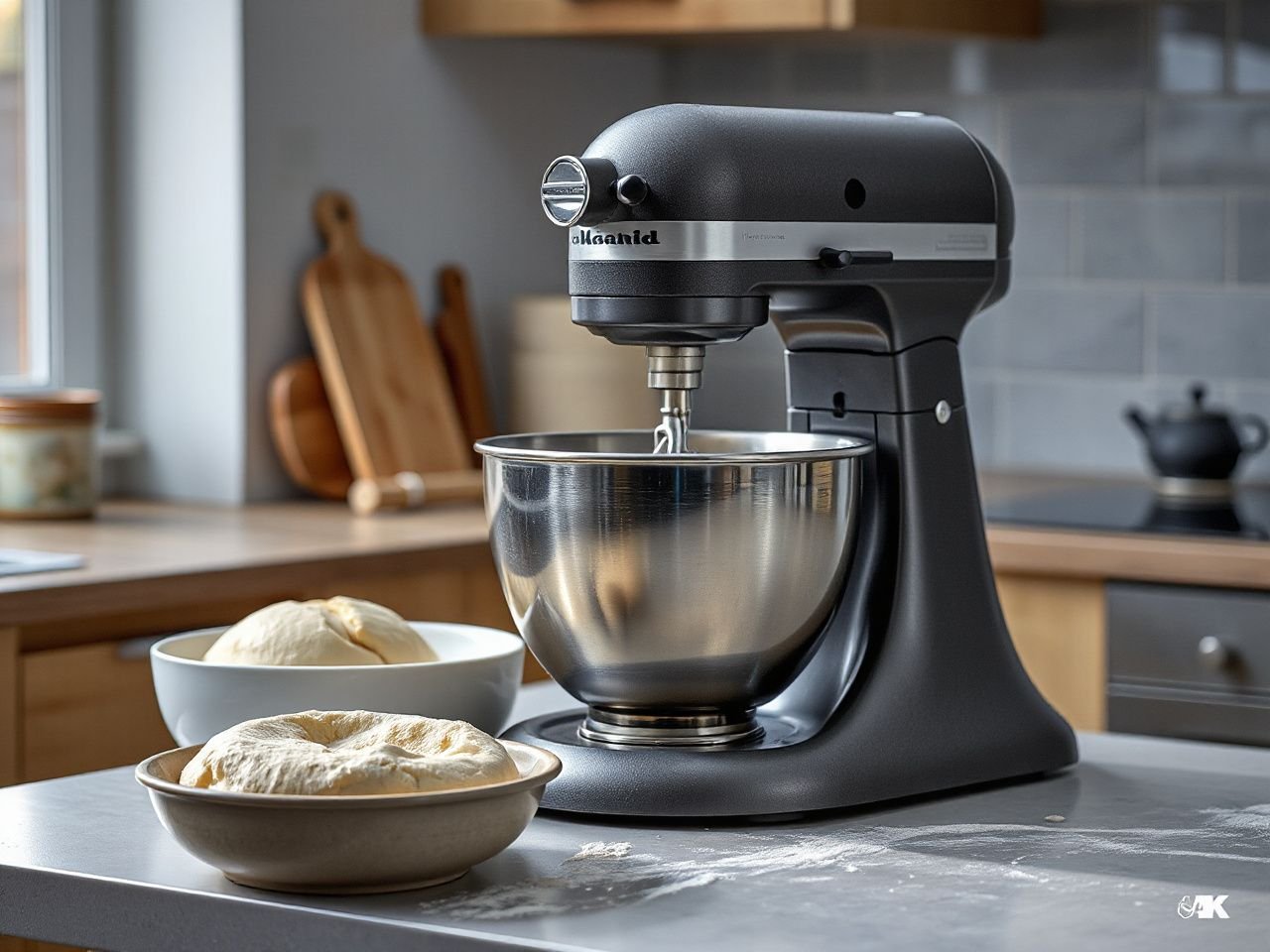
A larger bowl does not automatically make a better dough mixer. Assess a dough mixer by the dough it must process, especially flour load, hydration, batch frequency, and kneading duration, rather than by bowl size or headline wattage. The important distinction is between a mixer that merely has enough room for dough and one whose hook geometry, transmission, speed range, and thermal management can develop dough consistently without excessive strain.
This dough mixer buying guide takes a cleanup-first view. I judge the useful design from the sink outward: what touches the dough, what can be removed, what must stay dry, and what the specification sheet fails to tell you.
Key Takeaways
- Capacity means usable flour and dough load, not bowl volume alone.
- Hydration, hook clearance, transmission design, and thermal protection matter more than advertised wattage.
- A mixer earns its place when it kneads effectively and can be cleaned safely without hidden dough traps.
Beginner: Start with the dough, not the appliance
Step 1: Define your real batch
Manufacturers may state capacity as bowl volume, maximum flour weight, or total dough weight. Those figures are not interchangeable, and hydration changes the load placed on the mixer. A dough made with a high proportion of water behaves very differently from a stiff dough made with the same flour weight.
Use baker’s percentage to describe the formula before comparing machines. Flour is treated as the reference amount, while water and other ingredients are expressed in relation to it. The exact recipe matters because low-hydration dough places substantially more mechanical stress on the drive system than soft dough.
A mixer’s stated bowl volume does not tell you how much stiff dough the transmission can knead. A large bowl can still leave the hook working against a compact, resistant mass, while a smaller bowl may be better suited to the batch size and hook geometry.
Step 2: Separate flour capacity from total dough capacity
Flour capacity describes the flour portion of a formula. Total dough capacity includes water, salt, yeast, fat, seeds, and any other ingredients. A manufacturer that lists only bowl volume has not given you a reliable dough limit.
For a useful calculation, write down the flour weight required by your recipe and then add the other ingredients to estimate total dough weight. Compare both figures with the manufacturer’s published limits. If the listing gives only one of them, treat the missing figure as unknown rather than assuming that a full bowl is a safe working load.
Hydration also changes how the dough gathers. Soft dough may spread across the bowl and contact the hook gradually. Stiff dough can form a dense piece that climbs the hook, presses against the bowl, or loads the drive system before the bowl looks full.
Step 3: Account for batch frequency and kneading duration
One occasional batch places a different demand on a mixer than repeated bread dough production. The listing should ideally explain duty cycle, thermal protection, and any limit on heavy dough. If those details are absent, the safe conclusion is that the manufacturer has not provided enough information for a confident heavy-duty assessment.
Do not treat a stated speed count as a kneading specification. A mixer with six speed settings, such as the Kitchen in the box Stand Mixer listing, still requires separate information about its motor, drive system, operating limits, and protection against heat.
Intermediate: Read the mechanics behind the specifications
Why wattage is a poor comparison
Published wattage usually describes electrical input rather than usable kneading power. It does not show how efficiently the transmission transfers force to the hook, how the speed control behaves under load, or how the housing manages heat.
Transmission design matters because dough resistance reaches the drive system through the attachment. Speed control matters because a machine must maintain a suitable kneading speed without sudden surging. Thermal protection matters because repeated overloads can cause thermal shutdown, gear wear, or premature failure.
Motor wattage measures electrical input, not the force available at the dough hook. I would give more weight to published dough limits, duty-cycle guidance, transmission information, and overload protection than to a large wattage figure standing alone.
Planetary mixing action
Planetary mixing action moves the attachment around the bowl while the attachment rotates on its own axis. This arrangement can combine scraping, folding, and kneading in one bowl, but the result depends heavily on the hook’s shape and its clearance from the bowl.
The hook must contact enough dough to develop it without striking the bowl. Poor geometry can leave flour unmixed at the bottom, encourage dough to climb the hook, or force frequent scraping. A large bowl does not correct a hook that fails to gather the dough.
Spiral mixing action
Spiral mixing action uses a spiral-shaped hook and a bowl that turns or works in a coordinated path, depending on the design. The arrangement is focused on dough development and is commonly associated with dedicated spiral mixers for larger dough batches.
A spiral mixer can be the more suitable tool when bread dough is the main workload and the batch pattern is beyond the comfortable limits of a household stand mixer. The trade-off is less general-purpose flexibility and a cleaning routine that may involve a fixed bowl or less accessible drive area.
Planetary mixers prioritize attachment flexibility, while spiral mixers prioritize dough contact and kneading action. Neither arrangement is automatically correct; the formula, batch size, frequency, and cleaning access decide the fit.
Choosing a dough-hook shape
C-shaped and J-shaped dough hooks can both knead bread dough, but their working behavior depends on bowl diameter, hook reach, clearance, and the consistency of the dough. Low-hydration dough needs a hook that gathers a compact mass without leaving flour pockets or forcing the dough upward.
For stiff dough, I would look for a hook with enough reach to collect material from the base while leaving suitable clearance from the bowl. The manufacturer’s description should identify the hook shape and provide guidance for heavy dough. If the listing shows only a generic dough hook without capacity or clearance information, the design remains difficult to assess from the page alone.
How to tell if kneading is effective
Effective kneading should bring the ingredients together without leaving a persistent ring of dry flour. The dough should be repeatedly folded, stretched, and gathered rather than simply spun around the bowl as one lump.
Pause the machine according to the recipe and inspect the dough. Look for dry material beneath the mass, dough plastered high on the hook, or a hook that rotates without drawing the dough through the bowl. These signs point to a mismatch among hydration, batch size, hook geometry, and speed.
Scraping the bowl may be necessary at the beginning of a recipe, but constant scraping during kneading suggests that the attachment is not contacting the dough effectively. The manufacturer does not list a universal dough consistency, so a mixer must be judged against the specific formula rather than an abstract claim of capacity.
Advanced: Prevent overload, heat, and transmission damage
Why stiff dough is demanding
Low-hydration dough resists deformation more strongly than soft dough. The hook must force the mass to fold and stretch, so the drive system receives greater mechanical stress even when the bowl contains plenty of empty space.
Repeated overloads can cause thermal shutdown, gear wear, or premature failure. A mixer may have enough room for a batch yet still be unsuitable for the formula because the transmission is being asked to turn a dense mass for too long.
Low-hydration dough creates more mechanical stress than soft dough at the same apparent bowl fill. Follow the manufacturer’s instructions for speed and load, and stop when the mixer shows signs of strain rather than treating a shutdown as a normal kneading stage.
What signs deserve attention
- A dough mass climbs the hook and remains there instead of returning to the bowl.
- Dry flour stays beneath the dough after the ingredients should have combined.
- The mixer changes speed, stops, or becomes unusually hot during a dense batch.
- The bowl or attachment shifts because the base does not remain stable.
- The recipe requires a load or duration that the manufacturer does not publish.
These signs do not prove a particular internal failure. They do show that the formula and the appliance may be poorly matched. Reduce the batch only if the manufacturer permits that approach, adjust the recipe only for a known culinary reason, and use hand kneading or stretch-and-fold techniques when the mixer cannot handle the load comfortably.
Tilt-head and bowl-lift considerations
A tilt-head design can make attachment changes and bowl access convenient. The Kitchen in the box Stand Mixer listing identifies a tilt-head mechanism, a 3.2Qt stainless steel bowl, six speed settings, and four anti-slip suckers.
The same listing states that the mixer weighs under 7lbs. A lighter body may be easier to move to the sink, but it also makes the base and anti-slip system more important during dense kneading. Those listed details do not establish the machine’s maximum flour load or transmission strength.
Bowl-lift designs can keep a bowl supported between the frame while the attachment remains aligned, but the listing must still provide usable dough limits. Neither a tilt-head nor a bowl-lift mechanism answers the central question by itself: can the drive system process your formula without excessive strain?
When a stand mixer is the wrong tool
Hand kneading may be the better choice for an occasional small batch, especially when the dough is manageable and the cleanup burden of a mixer exceeds the benefit. Stretch-and-fold work can also suit soft dough that does not need continuous mechanical kneading.
A dedicated spiral mixer becomes more appropriate when bread dough is the main task, batches are large, or repeated stiff mixing is expected. Its purpose-built mixing action may fit that workload more directly than a planetary appliance designed to change between a whisk, flat beater, and dough hook.
Hand kneading is often the simplest option for a small occasional batch, while a dedicated spiral mixer is better suited to repeated large dough loads. The right choice depends on workload rather than on a single headline specification.
Cleaning-first inspection at the sink
Food-contact surfaces
Food-contact surfaces include the bowl, dough hook, flat beater, whisk, splash guard, and any removable shaft or cover that touches ingredients. Stainless steel is useful to identify precisely: the Mini Angel Electric Dough Maker listing specifies 304 stainless steel for its bowl and blade, while the Kitchen in the box listing specifies a stainless steel bowl.
Material names alone do not answer the cleaning question. Check the manufacturer’s instructions for dishwasher use, hand washing, approved detergents, and whether the attachment finish can tolerate soaking. A part that looks removable may contain a joint or coated area that should not be submerged.
What should be cleaned after dough mixing
- Unplug the mixer before removing or changing attachments.
- Remove the hook and inspect the shaft, collar, and attachment hub for dried dough.
- Wash the bowl and approved removable attachments according to the manufacturer’s instructions.
- Wipe the mixer head, housing, controls, and base with a suitable damp cloth rather than immersing the appliance.
- Check beneath the bowl rim and around the splash guard, where flour paste can remain unseen.
- Dry parts fully before storage, especially around attachment joints and threaded areas.
The electrical body should not be submerged unless the manufacturer explicitly states otherwise, and a removable attachment should not be assumed safe for immersion merely because it detaches. Cleaning instructions, food-contact materials, electrical safety, and attachment removal must be checked together.
The Mini Angel listing states that its splash guard opens with a snap-fit safety design. That may make access easier, but the listing does not establish dishwasher suitability, sealing performance, or how dough residue should be removed from the guard’s edges.
Safety and compliance checks
A product page should identify applicable certification or conformity information rather than leaving the buyer to infer safety from appearance.
Commercial kitchens have a different reference point: NSF/ANSI 8 addresses commercial powered food-preparation equipment.
These standards do not tell you the dough capacity, hook geometry, or cleaning effort. They belong in the safety check, not in place of a mechanical assessment.
Costs beyond the purchase price
Operating cost
Electricity use depends on the appliance’s electrical input, the time spent running, and how often dough is mixed. Without the mixer’s wattage, local electricity rate, and actual duty pattern, a precise operating cost cannot be calculated honestly.
Use the information you do have: record the rated input from the specification sheet, estimate operation from your recipe schedule, and multiply by the electricity rate on your bill. A higher-input machine is not automatically more expensive for the same finished dough if it completes the work more efficiently, but efficiency cannot be assumed from wattage alone.
Maintenance cost and effort
Maintenance includes replacement attachments, damaged bowls, worn drive components, cleaning supplies, and the time needed to remove dough from hidden areas. A mixer with many attachments can add more food-contact parts to wash, even if those attachments are useful for other recipes.
Check whether the manufacturer sells replacement hooks, bowls, splash guards, and drive accessories. The listing may omit that information, and the omission matters because a damaged attachment can make the appliance difficult to use even when the motor still operates.
For readers comparing kitchen equipment as a whole, the same specification-first approach appears in our Vitamix blender buying discussion, where the useful questions also concern workload, materials, cleaning, and the gap between advertised power and practical use.
How to compare a mixer without being misled
Use a short evidence checklist
- Write the flour weight and total dough weight for your regular recipe.
- Record the dough hydration and identify whether the formula is soft or stiff.
- Find the manufacturer’s maximum flour or dough limit, not only bowl volume.
- Identify planetary or spiral mixing action and the supplied hook shape.
- Check whether the hook has suitable bowl clearance and whether the listing explains adjustment or limitations.
- Read the instructions for kneading speed, duty cycle, thermal protection, and overload behavior.
- List every removable food-contact part and confirm how each part must be cleaned.
- Check electrical certification information and the instructions for unplugging before attachment changes.
- Consider hand kneading or a dedicated spiral mixer if your workload falls outside the appliance’s stated limits.
A reliable comparison requires flour load, hydration, hook design, transmission information, cleaning instructions, and safety details. Bowl volume and wattage are only two pieces of that record, and neither can stand in for the missing information.
How to treat incomplete listings
Incomplete specifications should narrow your confidence, not encourage guesswork. If a manufacturer does not list a dough capacity, say so. If the listing names a stainless steel bowl but not the attachment material, do not extend the claim to every supplied part.
The Kitchen in the box listing supplies several concrete details: a 3.2Qt stainless steel bowl, a weight under 7lbs, six speed settings, a tilt-head mechanism, a dough hook, a flat beater, a whisk, and four anti-slip suckers. It does not, from the supplied information, establish maximum flour weight, total dough weight, motor wattage, thermal protection, or transmission design.
That distinction protects the buyer from turning a feature list into a performance promise. It also makes comparisons fairer across planetary mixers, spiral mixers, and compact appliances.
Frequently Asked Questions
How do I work out what dough capacity a stand mixer really has?
Start with the recipe’s flour weight and calculate total dough weight by adding water and the other ingredients. Compare both figures with the manufacturer’s published limits. Bowl volume alone is insufficient because hydration changes the dough’s behavior and the force required to knead it. If the listing gives no flour or dough limit, treat the capacity as unknown.
Why is motor wattage a poor way to compare mixers for bread dough?
Published wattage usually describes electrical input rather than usable kneading power. Transmission design, speed control, duty cycle, hook geometry, and thermal protection also determine how a mixer handles dough. A high wattage figure cannot confirm that a machine will maintain speed or survive repeated stiff batches. Give more weight to published dough limits and overload guidance.
What is the difference between planetary and spiral mixing action?
A planetary mixer moves the attachment around the bowl while the attachment rotates, making it suitable for switching among a hook, beater, and whisk. A spiral mixer uses a spiral-focused dough action and is aimed more directly at dough development. A planetary model suits varied kitchen tasks, while a dedicated spiral mixer can fit repeated larger dough workloads more closely.
Which dough-hook shape is better for low-hydration bread dough?
No hook shape wins by name alone. A C-shaped or J-shaped hook must have suitable reach, clearance, and contact with the bowl’s dough zone. Low-hydration dough needs a hook that gathers a compact mass without encouraging climbing or leaving flour underneath. Use the manufacturer’s guidance and inspect the supplied geometry rather than assuming one shape guarantees better kneading.
Can a stand mixer handle stiff dough without overheating or damaging its transmission?
Only if the formula, batch size, kneading duration, and appliance limits match. Stiff dough places substantially more mechanical stress on the drive system than soft dough, and repeated overloads can cause thermal shutdown, gear wear, or premature failure. Follow the stated load and speed guidance. If those details are missing, choose a smaller batch, knead by hand, or consider a dedicated spiral mixer.
Why does dough climb the hook or stick to the sides of the bowl?
Dough can climb when the hook shape, bowl clearance, hydration, or batch size prevents the mass from returning to the working area. Sticky dough may coat the bowl, while stiff dough may wrap around the hook. Pause the mixer according to the recipe, inspect for dry flour, and compare the batch with the manufacturer’s limits. Constant scraping indicates a poor match rather than a simple bowl-size problem.
What should I clean and inspect after mixing dough?
Unplug the mixer before changing attachments. Remove dough from the hook, shaft, collar, bowl rim, splash guard, and attachment hub, then wash approved removable parts according to the instructions. Wipe the electrical body rather than immersing it unless the manufacturer explicitly permits immersion. Inspect joints and edges for dried dough before storing the parts completely dry.
What does a mixer cost to operate and maintain beyond its initial price?
Operating cost depends on rated electrical input, mixing time, usage frequency, and the electricity rate in your area. Maintenance includes cleaning supplies, replacement bowls or attachments, and access to spare parts. A precise total cannot be calculated without those figures. Ask whether the manufacturer lists replacement components and clear cleaning instructions before treating a low purchase price as the complete cost.
When is a stand mixer the wrong tool compared with hand kneading or a dedicated spiral mixer?
Hand kneading is often sensible for a small occasional batch that does not justify setup and cleanup. A dedicated spiral mixer fits repeated dough production and larger loads more directly. A planetary stand mixer is the flexible middle option, but only within its published dough limits. If the appliance repeatedly strains, climbs, overheats, or leaves unmixed flour, the tool and workload do not match.