A poorly chosen digital slow cooker can leave food undercooked after the timer ends, overcook a small batch, or encourage unsafe use of delayed start with perishables. The key distinction is between a programmable interface and predictable cooking: a countdown timer, delayed start, or automatic keep-warm mode does not by itself establish how evenly or safely the cooker heats food. A useful guide therefore evaluates the control logic, temperature behavior, insert and lid constraints, power-loss response, and cleaning or replacement implications separately rather than treating every digital slow cooker as equivalent. That is the standard I use in this programmable slow cooker buying guide.
Key Takeaways
- A programmable cooker controls elapsed time and operating modes; it does not guarantee a particular internal food temperature.
- Delayed start is unsuitable for raw meat, poultry, seafood, dairy, and other perishables that may remain too long in unsafe conditions.
- Check insert and lid instructions, power-loss behavior, control-panel clarity, cleaning requirements, and replacement-part availability before focusing on extra programs.
Beginner: What programmable actually means
Separate the interface from the cooking system
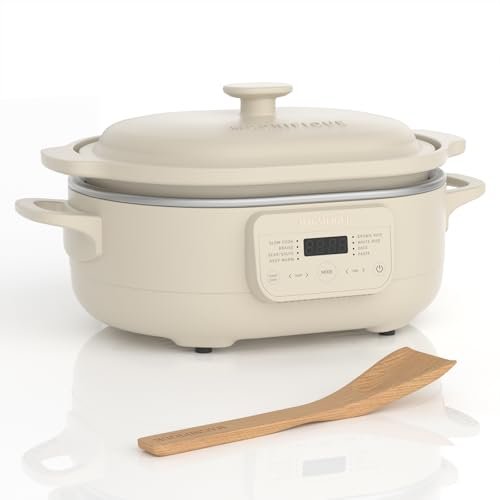
A manual slow cooker normally gives you a mechanical choice such as low or high, with cooking continuing until someone turns the switch off. A programmable slow cooker adds electronic control over elapsed cooking time and may change to automatic keep-warm after that period. Some also include a delayed-start timer, while others offer manual operation through an LCD or LED control panel.
A slow cooker becomes programmable when its control system can set a cooking duration rather than merely selecting a heat level. A digital display alone does not prove that the appliance can delay starting, switch to keep-warm, remember settings after power loss, or offer useful manual control.
Those distinctions matter in ordinary cooking. Timed cooking ends or changes mode after the selected period; a manual setting keeps heating until it is switched off; automatic keep-warm is intended to hold already-cooked food; and delayed start postpones the beginning of the heating cycle. These functions solve different problems and should not be treated as interchangeable.
Read the control panel before counting programs
A good control panel should make the selected heat level, remaining time, and current mode obvious from across the counter. An LCD or LED panel can show more information than a mechanical switch, but extra display elements are useful only if the buttons, labels, and confirmation steps are clear.
- Timer range: Check the shortest and longest selectable cooking periods, not merely the presence of a countdown.
- Heat settings: Confirm whether the cooker offers low and high only, or adds medium, keep-warm, or continuously adjustable power.
- Manual mode: A manual setting can be valuable when a recipe gives a visual or food-based stopping point rather than a fixed duration.
- End-of-cycle behavior: Determine whether the cooker stops, changes to automatic keep-warm, or requires a button press.
- Power-loss response: Look for explicit instructions explaining whether the program resumes, resets, or displays an error after an interruption.
The listing does not always explain these details. If the manufacturer does not state how the timer behaves after power is interrupted, treat that behavior as unknown rather than assuming the last program is restored. A cooker that forgets its setting can produce a very different result from one that resumes automatically.
Timer control does not equal temperature control
A countdown timer measures elapsed time. It does not confirm that the food has reached a particular internal temperature, and it does not account for the starting temperature, quantity, fill level, lid position, or the way a specific insert transfers heat.
The heating element is commonly positioned at the base and sometimes partway up the sides. The contents warm until the liquid near the heated surface gently boils or simmers, depending on the heat setting. A lower setting may simmer below boiling, while a higher setting can drive more active simmering near the heated surface.
A slow cooker uses atmospheric pressure rather than pressure-cooker operation, so the lid is not creating a sealed high-pressure chamber. That makes the appliance fundamentally different from a pressure cooker or multicooker pressure mode, even if the control panel uses similar digital language.
Two slow cookers with identical low and high labels can cook differently because their heating elements, housings, inserts, lids, and control logic may distribute heat differently. The listing rarely supplies enough thermal data to predict that behavior precisely, so recipe timing remains an estimate rather than a guarantee.
Beginner: Choose the physical design before the digital features
Understand the removable stoneware insert
A removable stoneware insert is convenient because the cooking vessel can come out of the heating base for serving and cleaning. Stoneware also retains heat, but that does not make every insert safe for every location. Refrigerator, oven, stovetop, broiler, and dishwasher compatibility must be confirmed in the instructions for the exact appliance.
Stoneware can crack from thermal shock. Moving a cold insert directly into a hot oven, placing a hot insert on a cold or wet surface, or adding cold liquid to a hot vessel can create a rapid temperature change that the material cannot tolerate. The same caution applies to a tempered-glass lid, which can also be damaged by sudden temperature changes.
A removable stoneware insert is not automatically stovetop-safe, oven-safe, broiler-safe, or dishwasher-safe. The product listing needs to state each permitted use separately, and missing information should be treated as a restriction rather than permission.
Some newer cookers use coated aluminum or steel vessels instead of ceramic-style crocks. These materials may allow faster heating and cooling and may permit browning on the stovetop, but the manufacturer must confirm that use. Do not place a cooker insert on a burner merely because it looks metallic.
Assess the lid and fill level
A glass lid commonly fits into a groove around the insert. Condensation collects in that groove and helps limit air exchange, so lifting the lid releases heat and moisture. A programmable setting cannot compensate precisely for repeated lid removal.
Fill level affects how food heats and how much liquid is available around the heated surface. Overfilling can interfere with cooking and may cause liquid to spill, while underfilling can change the relationship between the heating element and the food. The correct level depends on the appliance instructions and recipe.
A tempered-glass lid helps you observe the cooking process without opening the cooker, but it is still a fragile component. Check whether the maker sells replacement lids and whether the lid has a listed part number before assuming a damaged lid can be replaced easily.
Match the shape to the meals you actually prepare
Slow cookers range from compact vessels of 500 mL to models of 7 L, according to the supplied category information. Capacity alone does not tell you the useful cooking area, so an oval vessel may suit long cuts or whole poultry better than a round one of similar stated volume.
The right size is the one that lets your usual recipes sit within the maker’s stated fill range without forcing a small portion into a large vessel or packing a large batch into a small one. A cooker that is consistently underfilled may behave differently from one used near its intended capacity.
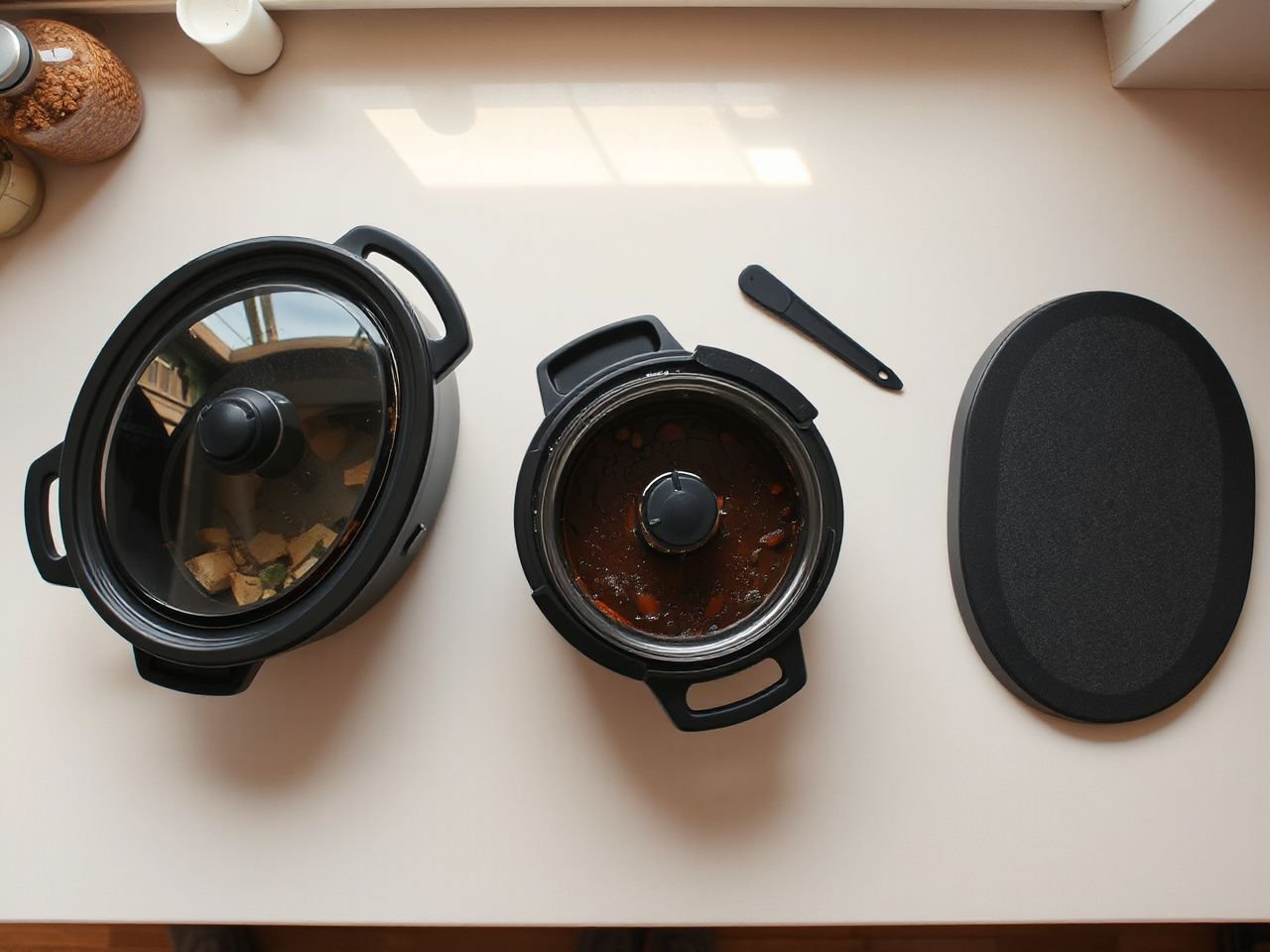
Types of cookware explained in practical terms can help clarify why material, shape, and heat-transfer behavior deserve separate attention from the number of digital programs.
Intermediate: Judge heat behavior and food safety
Know what low, high, and warm actually do
Low and high are operating choices, not precise food temperatures. The heating element supplies energy until the contents reach a simmering condition near the heated surface; the insert, lid, quantity of liquid, and food load then affect how that heat spreads through the meal.
Automatic keep-warm is a holding function for food that has already finished cooking. It should not be used to cook raw ingredients, and it does not make food safe indefinitely. Holding food and cooking food are separate tasks.
The USDA Food Safety and Inspection Service provides food-safety guidance through USDA FSIS; use that guidance for handling, cooking, and holding perishable food rather than relying on a display timer alone. A food thermometer may be needed for safety-sensitive foods because the timer cannot measure the food’s internal condition.
Keep-warm behavior also deserves a close reading. Some products switch automatically, some allow the user to set or cancel the mode, and some listings do not state the duration. If the manufacturer does not explain how long warm operates or how the food behaves during that period, do not interpret the feature as permission to leave food indefinitely.
Use delayed start with great restraint
A delayed-start timer begins cooking later, but it does not refrigerate the ingredients while they wait. Raw meat, poultry, seafood, dairy, and other perishable ingredients may remain too long in the temperature range where bacteria multiply rapidly before heating begins.
For that reason, delayed start is not automatically safe for a meal assembled with perishables. Refrigerate ingredients until preparation and cooking can begin safely, or use a schedule that does not leave the food sitting in the unheated cooker. A timer is a scheduling tool, not a food-preservation system.
Frozen ingredients create a related problem. A slow cooker may not heat frozen food in the same way as refrigerated or already-thawed food, and the product instructions should govern acceptable use. The programmable interface cannot remove the effect of starting temperature.
Account for power interruptions
A brief power interruption can stop the heating cycle, reset the display, or alter the remaining time. The listing may state the response, but many specifications omit it. That omission matters more than a decorative preset because a cooker cannot safely continue a meal if its actual operating state is unknown.
If a power interruption occurs during a perishable meal, record what happened and follow food-safety guidance rather than blindly restarting the same program. The cooker may appear normal after power returns while the food has already spent an unknown period outside active heating.
Adapt recipes with care
Stovetop recipes often reduce liquid through uncovered evaporation, while a slow cooker uses a covered vessel that retains more moisture. Liquid levels therefore may need adjustment during recipe conversion, but adding liquid simply to fill space can dilute flavor and alter cooking behavior.
Layering also matters. Ingredients that need longer exposure to heat should follow the recipe’s intended placement, while delicate ingredients may belong near the end. Do not lift the lid repeatedly to inspect progress; each opening changes the heat and moisture conditions the timer cannot detect.
For guidance on how low and high settings change a recipe’s timing, consult Slow Cooker High vs Low Times: What Changes the Result. The important point is that switching a setting is not always a simple mathematical conversion because the cooker and food load affect the heating path.
Intermediate: Compare control types and long-term ownership
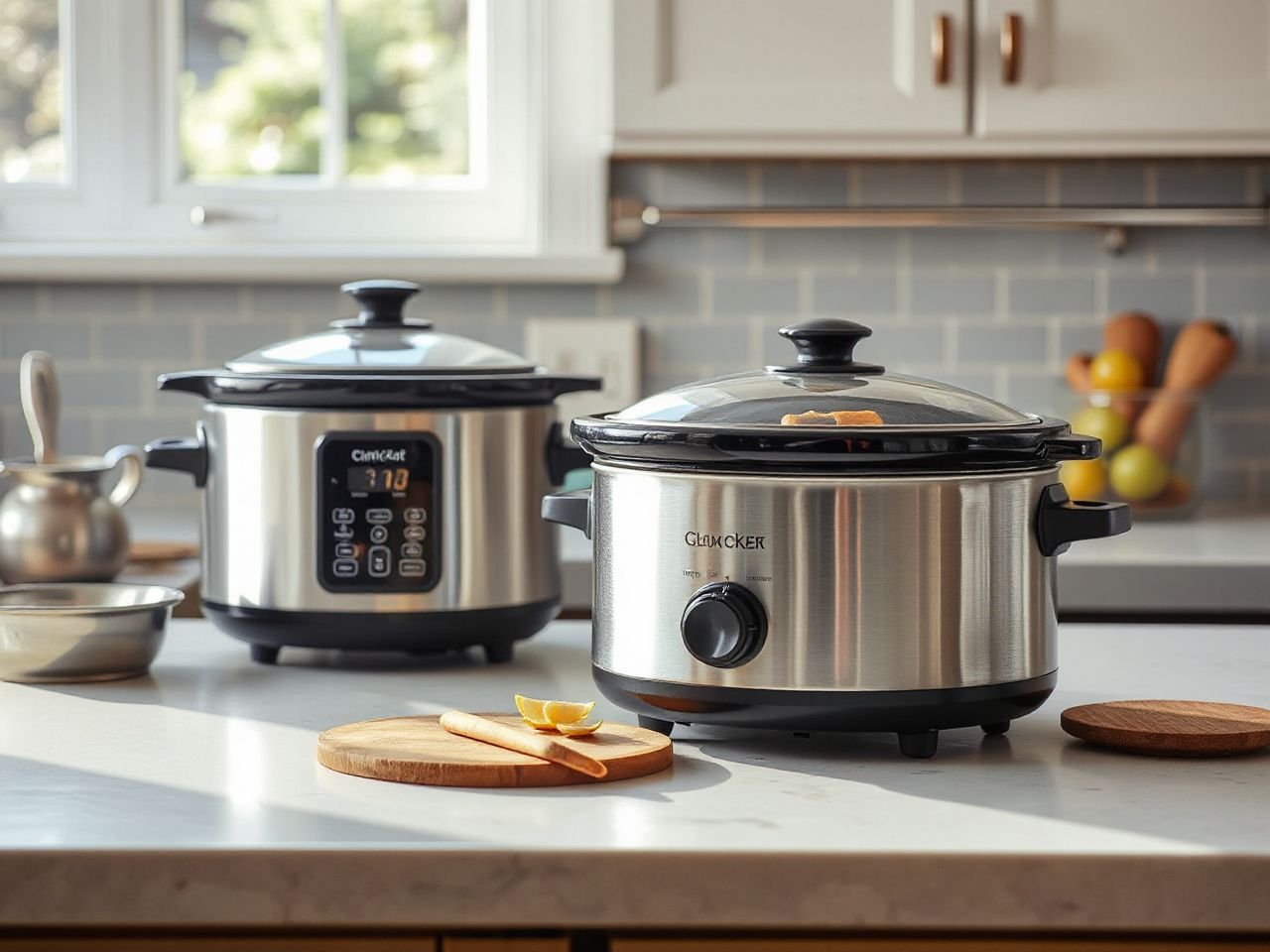
Manual slow cooker versus programmable model
A manual slow cooker has fewer controls and fewer electronic failure points. Its limitation is supervision: someone must turn it off or change the setting. A programmable cooker can end a cooking period or switch to keep-warm, which may suit a fixed routine, but the added convenience depends on clear controls and dependable power-loss behavior.
Choose digital control for a real scheduling need, not simply because the panel looks more advanced. If you normally start dinner when you are present and stop the appliance yourself, a manual design may provide all the control required. If meal timing varies, a programmable model can reduce the need to return to the counter, provided its end-of-cycle behavior is explicit.
Slow cooker versus pressure cooker or multicooker
A slow cooker operates at essentially atmospheric pressure and gently simmers food over time. A pressure cooker uses a different cooking environment, while a multicooker can combine slow-cooking with other modes. Those categories should not be judged by the same expectation for speed, control, or recipe conversion.
Pressure operation also introduces different lid and release instructions. A slow cooker does not require sudden pressure-release handling, but its ordinary lid still needs careful treatment because glass and stoneware can be damaged by thermal shock.
Look beyond the purchase price
Ongoing ownership includes electricity use, replacement stoneware inserts, replacement lids, seals where applicable, and control failures. The listing may not state repairability or part availability, so search the manufacturer’s support information before treating a low initial price as the full cost.
A removable insert that cannot be replaced can shorten the useful life of the entire base after a crack. A lid with no replacement path creates a similar problem. The control panel should also be easy to clean without liquid entering the electronics, because a digital cooker combines a cooking vessel with an electronic interface.
Energy consumption depends on the appliance’s power draw, heat setting, cooking duration, household electricity rate, and how often the cooker remains on keep-warm. Without those figures, a precise operating-cost claim would be invented. Compare the manufacturer’s electrical information and your actual cooking schedule instead.
Advanced: Clean, maintain, and troubleshoot by component
Clean the insert and lid safely
Allow the removable stoneware insert and tempered-glass lid to cool according to the maker’s instructions before washing or exposing them to a different temperature. Thermal shock is the main reason to avoid abrupt movement between hot cooking conditions and cold water or a cold surface.
Confirm dishwasher permission rather than assuming that removable means dishwasher-safe. If the instructions allow dishwasher cleaning, follow the stated placement and detergent guidance. If they do not, hand-wash the insert and lid with suitable utensils and avoid abrasive treatment that could damage a glazed or coated surface.
Protect the heating base and controls
The heating base contains the electrical heating system and should not be immersed. Wipe the base only as the instructions allow, keep liquid away from the LCD or LED control panel, and clean spills before they reach buttons, seams, or the power connection.
Do not put the heating base in an oven, on a stovetop, in a sink, or in a dishwasher unless the manufacturer explicitly permits that use. The removable insert is the cooking vessel; it is not a blanket authorization for every part of the appliance to be exposed to water or heat.
Understand sensor-based regulation
Some digital cookers may use a temperature-sensing component such as an NTC thermistor to inform the control system about temperature changes. The presence of that component, if disclosed by the manufacturer, still does not make the display a direct reading of the food’s internal temperature.
The control system can adjust electrical heating in response to sensed conditions, but the insert and food remain physical barriers between the sensor and the center of the meal. A thick batch, a small batch, a misplaced lid, or a different starting temperature can produce a different result under the same programmed duration.
An NTC thermistor changes its electrical resistance with temperature, allowing an appliance control system to estimate the condition of a monitored area. That estimate is not the same as a food thermometer reading at the center of a dense meal.
Investigate common failures without guessing
- Food overcooks: Check whether the batch was too small, the timer was too long, the lid was removed repeatedly, or keep-warm continued after cooking.
- Food remains undercooked: Check the starting temperature, fill level, frozen ingredients, lid fit, selected setting, and any power interruption.
- Timer behaves unexpectedly: Confirm whether the panel counts down during preheating, pauses after an interruption, or changes to keep-warm when the cycle ends.
- Liquid spills: Review fill level, lid placement, and recipe conversion rather than adding more liquid automatically.
- Insert or lid develops damage: Consider thermal shock and verify whether a replacement part is available before using the appliance again.
Control failures are particularly difficult because the display can look normal while the heating system behaves differently. If the manufacturer does not provide a reset procedure, fault indication, or service path, do not invent a repair sequence or continue using an appliance that no longer follows its stated controls.
Advanced: A practical selection process
Step 1: Define the cooking routine
List the meals, batch sizes, and cooking times you actually use. Decide whether you need a delayed start at all, since delayed scheduling adds food-safety constraints that manual starting avoids. Note whether you serve directly from the insert and whether storage in the refrigerator matters.
Step 2: Audit the specification sheet
Find the stated capacity, insert material, lid material, heat settings, timer range, keep-warm behavior, delayed-start instructions, cleaning rules, and power-loss response. Missing information is part of the buying decision. The absence of a stated oven, stovetop, refrigerator, broiler, or dishwasher limitation should lead you to seek the manual rather than guess.
Step 3: Test the logic on paper
Run through a normal meal from preparation to serving. Ask what happens if the timer ends while you are away, if the power cuts out, if the food begins frozen, if the lid is lifted, and if the meal needs to be stored in the insert. A programmable slow cooker should fit that sequence without relying on assumptions.
Step 4: Compare the maintenance burden
Check whether the insert and lid are removable, whether each part is dishwasher-safe, how the base and control panel are cleaned, and whether replacement parts are listed. A simple cooker with a clear service path can be more practical than a feature-heavy model with vague ownership information.
For readers comparing the broader cookware setup, a frying pan buying guide focused on material and cooking behavior covers a separate heat-transfer decision. A slow cooker cannot replace the browning, reduction, or rapid temperature response of every other pan in a kitchen.
Step 5: Use the appliance within its stated limits
Follow the supplied instructions for fill level, ingredient preparation, insert placement, lid use, cleaning, and permitted surfaces. Do not adapt pressure-cooker instructions to a slow cooker, and do not treat a programmable timer as a substitute for a thermometer or food-safety judgment.
Frequently Asked Questions
What makes a slow cooker programmable rather than merely having low and high settings?
A programmable slow cooker lets the user set an elapsed cooking duration through an electronic control system, often with an LCD or LED panel. It may then stop or change to automatic keep-warm. Low and high settings alone describe heat choices; they do not establish timed operation, delayed start, power-loss behavior, or a particular internal food temperature.
Can I use delayed start with raw meat, poultry, seafood, or dairy?
Do not assume that delayed start is safe for perishables. The ingredients may sit unheated for too long in conditions that support bacterial growth before the cooking cycle begins. Keep perishable ingredients refrigerated until cooking can start safely, follow USDA FSIS guidance, and use the manufacturer’s instructions for any permitted scheduling feature.
Is a removable stoneware insert safe in the oven, refrigerator, stovetop, or dishwasher?
That depends on the specific insert and the manufacturer’s instructions. Removability does not prove compatibility with any particular appliance or temperature change. Stoneware and tempered glass can crack from thermal shock, so verify each use separately and allow components to change temperature gradually rather than moving them directly between cold storage, a hot oven, or a hot base.
Why does the cooker stay on warm after the timer ends?
Automatic keep-warm is designed to hold food after the programmed cooking period, reducing the chance that the appliance simply continues heating at its cooking setting. Keep-warm is not a raw-food cooking mode and does not guarantee indefinite safety. Treat the duration and conditions as limited by the manufacturer’s instructions and applicable food-safety guidance.
Why can two slow cookers with the same settings produce different results?
Low and high labels do not describe every part of the heating system. Element placement, insert material, lid fit, control logic, batch size, liquid level, starting temperature, and power interruptions can all alter the cooking path. A timer measures elapsed time, so a food thermometer may still be needed for safety-sensitive meals.
What should I check if a programmable slow cooker overcooks or fails to finish food?
Review the timer, selected mode, keep-warm transition, fill level, lid position, starting temperature, frozen ingredients, and power history. Small batches in large vessels and repeated lid lifting can change results. If the control behavior conflicts with the manual or the appliance cannot explain its current state after an interruption, stop guessing and contact the manufacturer.