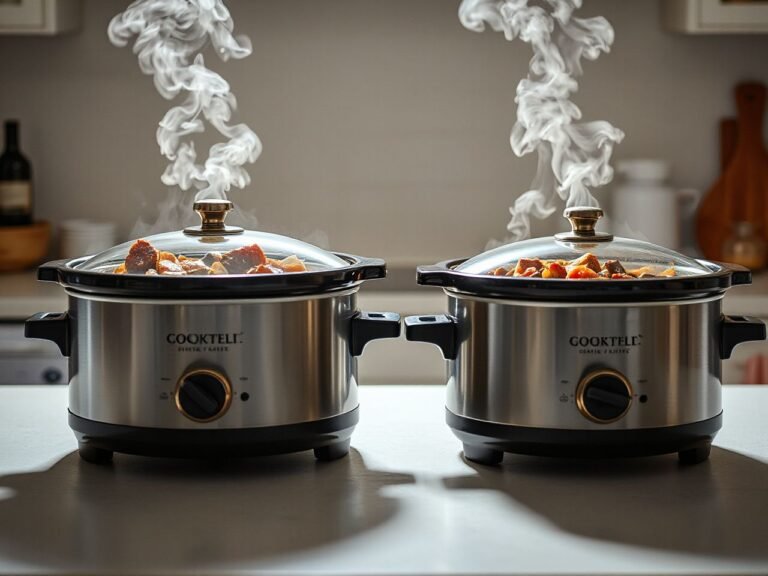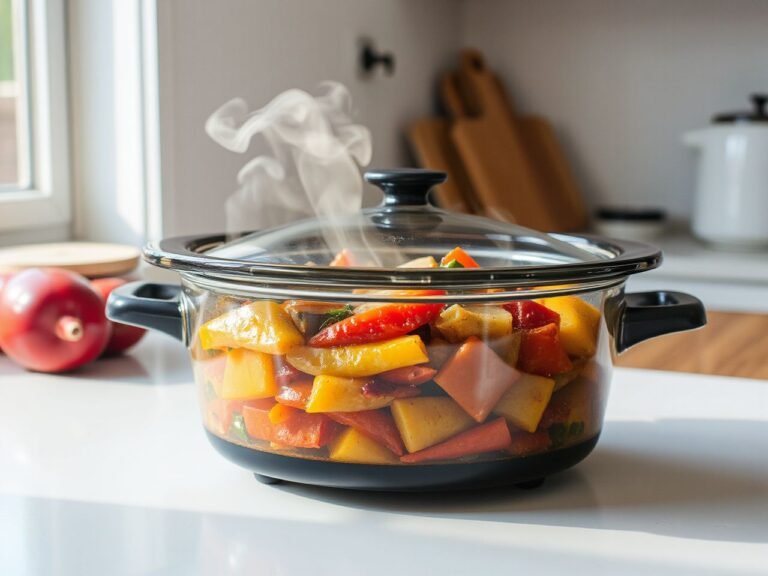
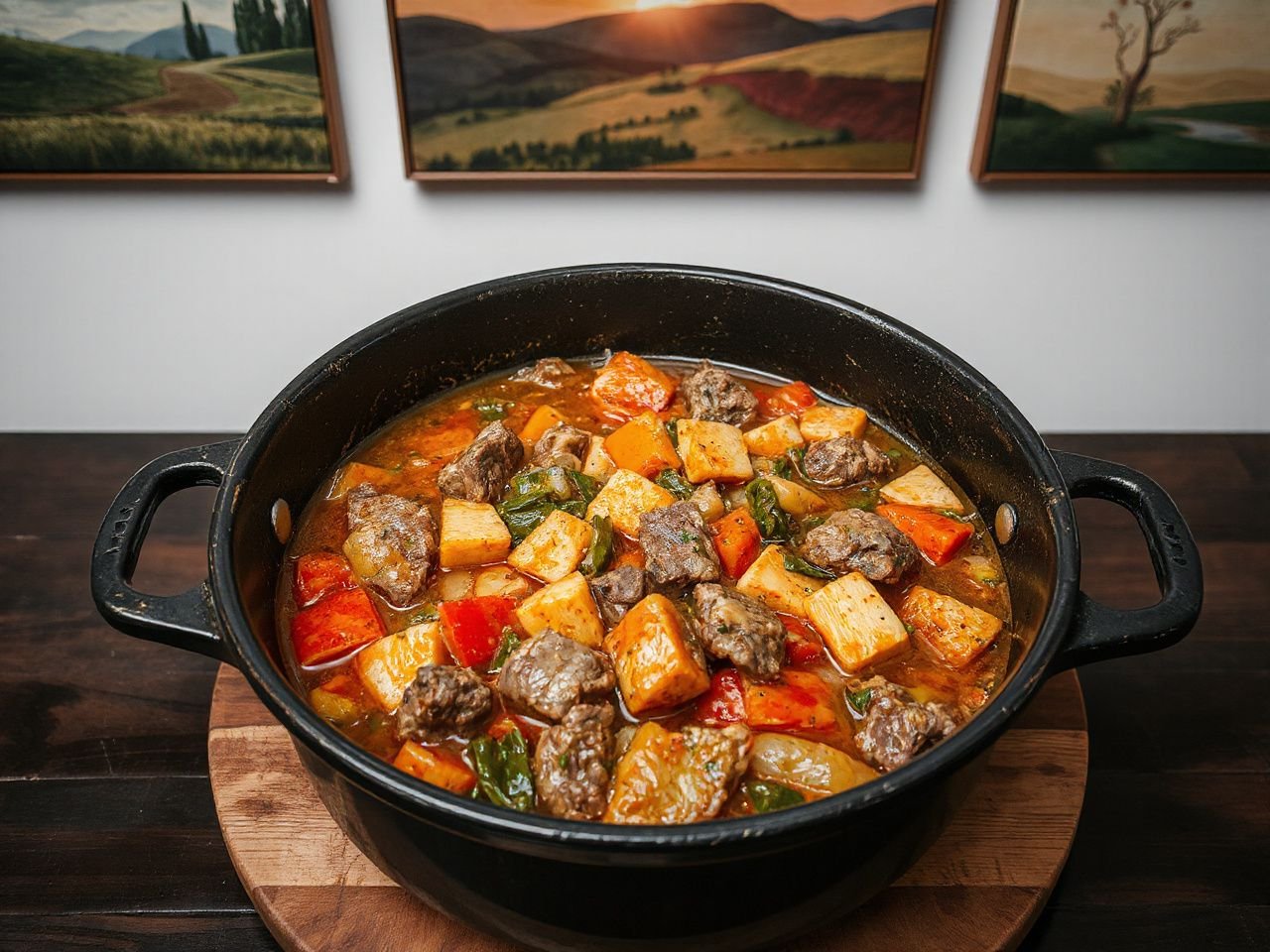
A slow cooker filled to the rim can cause bubbling liquid beneath the lid, while a nearly empty crock exposes food to too much heat near the sides. Measure the opening first. The key difference is between the crock’s physical capacity and the usable cooking range. Food needs room for circulation and bubbling, but too little can lead to uneven cooking against the heated sides. Fill level also interacts with ingredient size, liquid, lid position, and recipe timing. Changing the amount of food isn’t just about making everything proportionally smaller.
So, how full should a slow cooker be? Keep the food within the fill range stated by the manufacturer. Avoid packing ingredients right to the rim. Don’t run the crock with only a thin scattering of food unless the recipe and instructions clearly support it. The right answer isn’t a fixed line but a range, which varies between different crocks.
Key Takeaways
- Use the manufacturer’s stated fill range and leave room for bubbling beneath the slow cooker lid.
- A nearly empty crock can cook unevenly, so reducing a recipe may require a different crock or revised timing rather than simple division.
- Judge thick meat dishes with a food thermometer and clean spills promptly from the crock, lid, heating base, and sink.
How Full Should a Slow Cooker Be for Normal Cooking?
Start with the usable cooking range
The manufacturer’s instructions are the first reference because crock shape, heating element position, lid design, and settings differ. The crock should stay within the recommended fill range for that specific slow cooker. There should be enough food to cover the cooking area sensibly without pushing liquid and ingredients against the lid.
A slow cooker should not be nearly empty or packed to the rim for everyday cooking. This middle range offers ingredients enough space to heat and simmer properly. It also helps prevent bubbling liquid from escaping under the lid.
There isn’t a single fill mark that can replace the instructions for every slow cooker. If the manual lacks a clear capacity or fill range, check the markings on the crock itself. Look at the manufacturer’s info and observe the relationship between the food, lid, and upper edge for guidance.
Why the rim is a poor target
Food packed close to the rim leaves little room for movement. Cooking liquid can bubble upward and gather beneath the lid. It might then run down the outside of the crock or into the heating base. This creates a mess at the sink and makes cleaning the heating area more difficult.
Overfilling can also cause uneven heating. Dense ingredients may stay undercooked in the center while food near the wall gets more direct heat. Just making the crock look full isn’t proof that there’s enough space for proper cooking.
The lid should stay properly seated during cooking. Lifting it loses heat and alters the cooking process. Checking the fill level after starting the cycle isn’t a good substitute for setting the right amount from the beginning.
Why nearly empty cooking behaves differently
A nearly empty crock can leave food spread thinly across the heated surface. Some pieces may sit close to the crock wall, where they receive more direct heat than ingredients in the centre. Other pieces may remain partly exposed above the cooking liquid, depending on the recipe.
Underfilling can therefore change both cooking performance and texture. Meat may cook unevenly, vegetables can soften at different rates, and sauces may reduce or thicken differently because the food-to-surface relationship has changed.
A crock with only a small amount of food isn’t automatically unsafe to use. But the result may not match the recipe’s expected timing or texture. The manual and the recipe should support that quantity before the appliance is started.
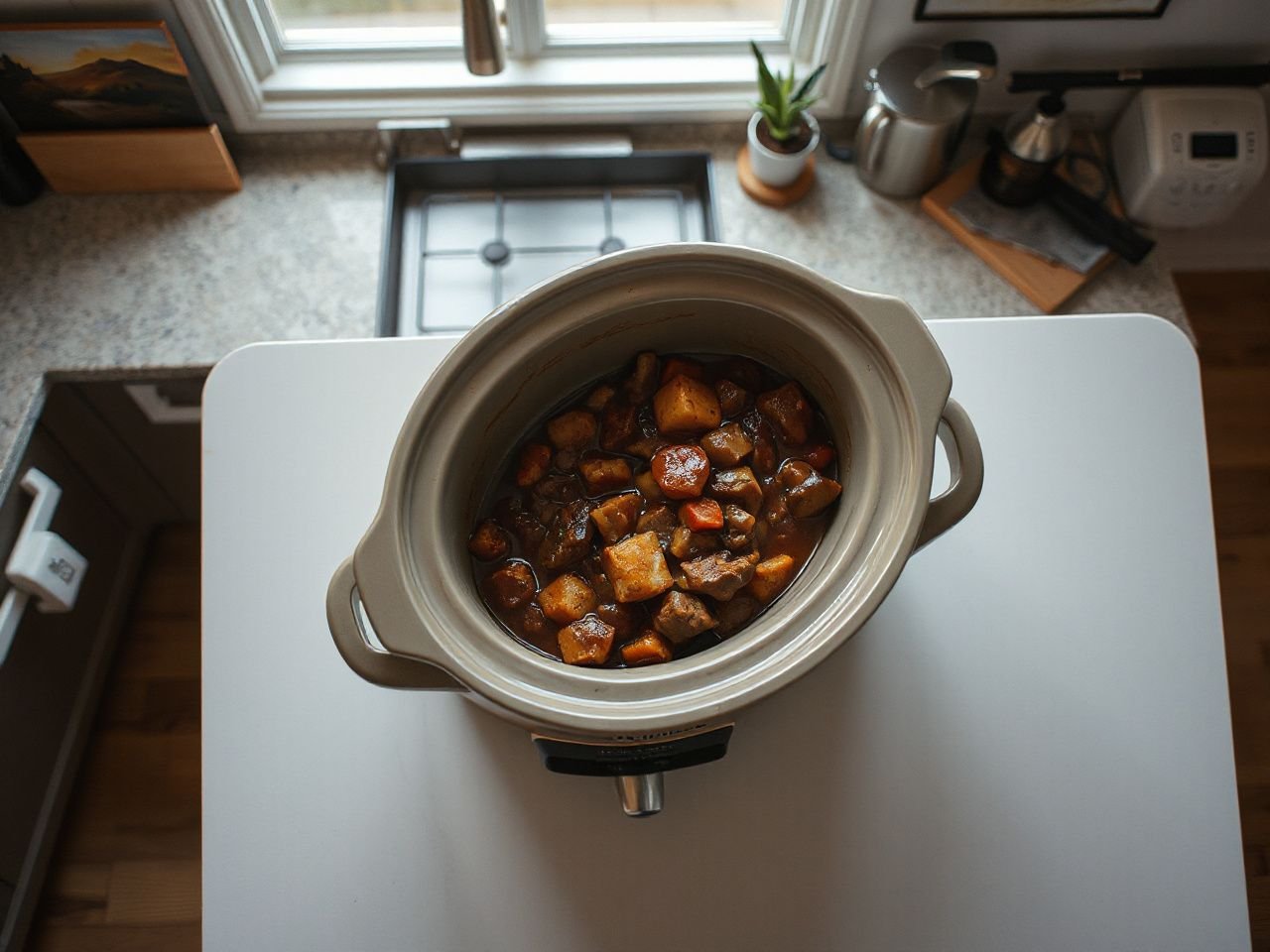
Causes: Why Fill Level Changes Cooking Results
Ingredient size changes the way heat moves
Large pieces of meat and root vegetables take longer to heat through than smaller pieces. The same quantity of food can cook differently if the pieces are rearranged, packed tightly, or cut into another size.
Before placing vegetables into the crock, slice them into 1/2-inch pieces when that suits the recipe. Consistent pieces give the dish a more predictable structure than a mixture of very large and very small chunks.
Layering matters too. Meat and root vegetables should be arranged as the recipe and manufacturer instructions describe, rather than packed tightly into a solid mass. Crowding blocks movement and can make it harder for the cooking liquid to reach every surface.
Liquid affects the result, but more is not always better
Cooking liquid helps transfer heat around ingredients and supports the texture of foods that need moisture. But adding too much liquid can produce a thin sauce because a slow cooker doesn’t reduce liquid like an uncovered pan.
When adapting a conventional recipe for a slow cooker, reduce the liquid by 30%–50% unless the recipe or manufacturer instructions tell you otherwise. That applies to adapting a recipe, not guessing how much liquid each slow-cooked dish needs.
A smaller batch doesn’t always need liquid reduced in exactly the same proportion as the food. Some recipes depend on enough liquid to cover or partly surround ingredients, while thick sauces may need less because they’re already concentrated.
Check the recipe’s intended texture before changing the amount. If the dish should coat a spoon, adding liquid just to make the crock look fuller can make it watery and delay thickening.
The lid controls more than splashes
The slow cooker lid keeps heat and moisture inside during cooking. Lifting, shifting, or not fitting the lid properly changes the conditions inside the crock and can make the cooking time less predictable.
Steam and liquid can collect under the lid when a crock is too full. As ingredients swell or move during cooking, the liquid might spill over the rim.
Cooking time cannot be calculated from fill level alone
Reducing the amount of food may alter cooking performance, but there is no universal time adjustment that can be safely calculated from the fill level alone. Ingredient size, density, starting temperature, liquid, layering, setting, and crock shape all matter.
Do not assume that halving a recipe means halving the cooking time. Smaller quantities can heat differently, while a dense arrangement of large pieces can remain tough even in a well-filled crock.
For guidance on how the selected setting changes results, use this guide to slow cooker high and low cooking times alongside the recipe and manufacturer instructions.
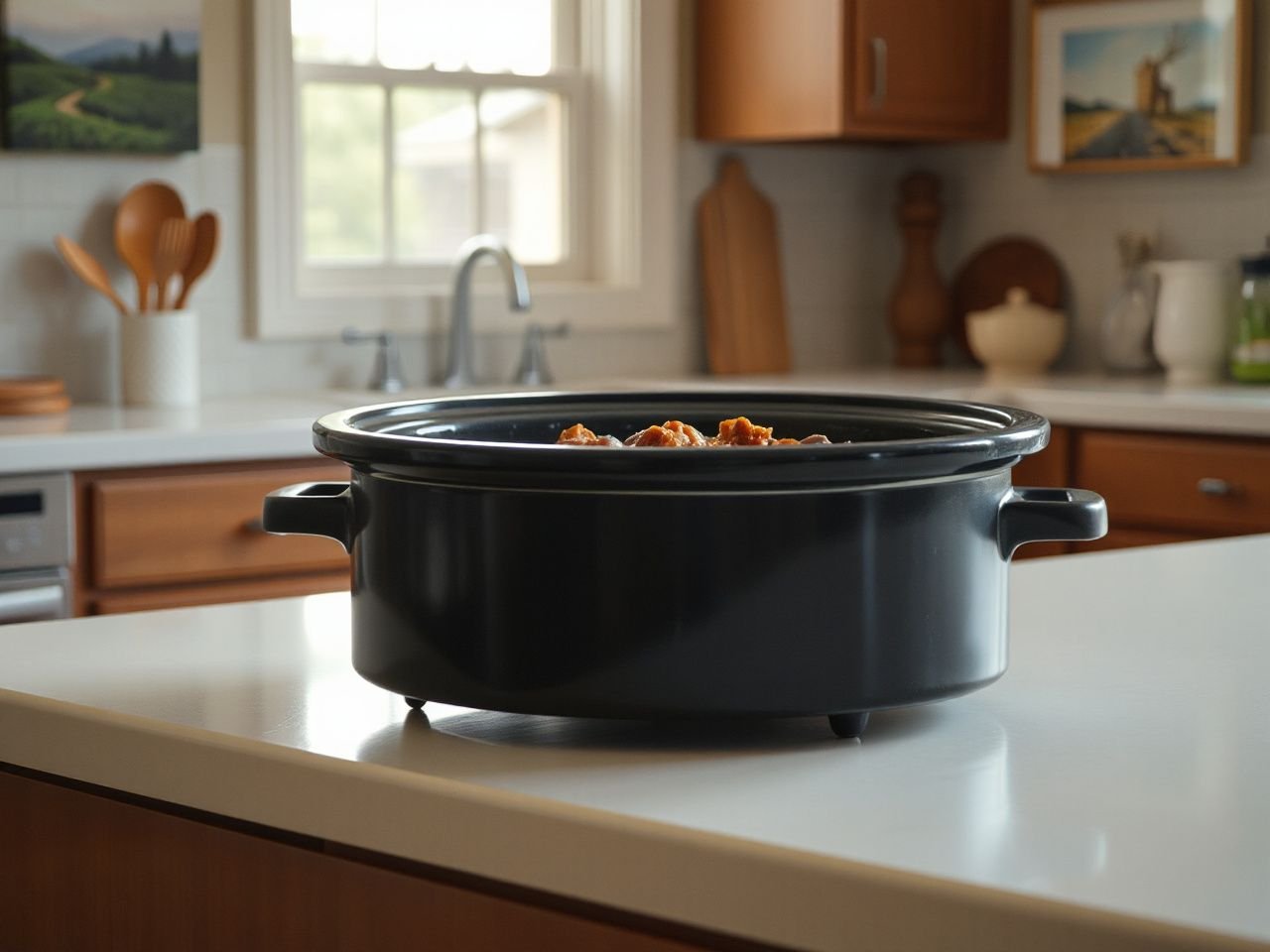
Solutions: How to Adjust a Batch Without Creating Problems
Step 1: Check the crock before scaling the recipe
Read the manufacturer’s instructions before changing the recipe size. Check the crock’s capacity or fill guidance, then compare that with the amount and shape of food the recipe makes.
A recipe is good for a crock when the ingredients fit within its stated cooking range without being packed against the lid or spread too thinly over the heated surface. Capacity alone isn’t enough. The recipe’s liquid, ingredient size, and layering instructions must also make sense in that crock.
Use a different approved crock when the batch is too large or too small for the one available. Don’t place a stoneware pot, crockery liner, or crockery cooker on a gas or electric range-top surface burner. You also shouldn’t put one inside a broiler.
Step 2: Scale ingredients with care
Scale solid ingredients only after checking how the reduced quantity will sit in the crock. A smaller batch may leave a thin layer across the base, which can be a problem. Conversely, a visually compact batch might still sit too close to the lid.
Keep ingredient pieces consistent with the recipe. Vegetables prepared in 1/2-inch pieces follow a different cooking path from oversized chunks. Changing both the batch size and the cut at once makes the outcome harder to predict.
Preserve the recipe’s structure instead of adding filler ingredients just to reach a certain visual level. Extra vegetables, stock, or sauce can change density, liquid balance, flavor, and thickening.
Step 3: Decide how much liquid the smaller batch needs
Start from the recipe’s purpose for the liquid. Liquid may surround meat, soften root vegetables, create a sauce, or prevent a dry mixture from clumping. A smaller amount of food may need less total liquid, but the ingredients still need the moisture the recipe calls for.
When converting a conventional stovetop or oven recipe, the verified guidance is to reduce liquid by 30%–50% for slow-cooker use. Don’t automatically apply that range to a recipe already written for a slow cooker.
If a sauce finishes watery, the issue may be excess liquid, a batch that is too small for the crock, or a lid that didn’t stay seated. Thickening should follow the recipe’s method rather than relying on extra cooking time as a guaranteed fix.
Step 4: Keep the lid seated and assess the food safely
Place the lid correctly before cooking and avoid lifting it for routine checks. If food touches the lid because it’s not seated properly, stop and fix the fill level instead of starting the appliance.
Food appearance can give clues about texture, but fill level doesn’t prove thick meat dishes are done. Use a food thermometer and compare the reading with safe preparation guidance in the manufacturer instructions or from the U.S. Food and Drug Administration.
For safe preparation, keep the heat control at a minimum of 180 F where the instructions say so. Heated food should be kept between 140F and 160F if that’s what the guidance indicates; the manual is the main reference for the appliance.
Step 5: Judge texture rather than relying on the clock
Tough meat in a well-filled crock doesn’t always mean the fill level is off. Large pieces, dense layering, a lower setting, high altitude, or not cooking long enough can all influence the texture.
At high altitude, add 30 minutes for each hour of cooking time listed in the recipe. Legumes often need double the cooking time at high altitude compared to sea level, so recipe timing might need adjustment.
Use a food thermometer to check meat and a utensil to test vegetables for the texture described in the recipe. Fill level is part of setting up cooking, not a sign of doneness.
Preventive Measures: Avoid Overflow, Tough Food, and Sink-Side Trouble
Plan the fill level before ingredients go in
Place the removable stoneware crock on a stable surface and arrange ingredients before putting it into the heating base. That way, it’s easier to see if the batch is crowded, too shallow, or likely to touch the lid.
Check the lid’s seating surface for food or dried sauce. A clean contact area helps the lid fit properly, while residue can interfere with a good seal and make cleaning harder later.
Don’t refrigerate the crockery liner. Follow the manufacturer’s storage instructions instead. This is especially important if the liner must cool before washing or returning to the appliance.
Prevent the most common overflow causes
- Food packed to the rim: Move some ingredients to another approved crock or reduce the batch.
- Too much cooking liquid: Follow the recipe’s liquid guidance instead of filling empty space with stock or water.
- A poorly seated lid: Rearrange food so the lid rests correctly before cooking begins.
- Ingredients cut inconsistently: Prepare vegetables in the size directed by the recipe, including 1/2-inch pieces where specified.
- Routine lid lifting: Leave the lid in place unless the recipe or manufacturer instructions require an intervention.
Overflow is easier to prevent than to clean from the heating base. If liquid reaches the base, switch off and unplug the appliance according to the manufacturer instructions before cleaning. Never immerse the electrical base in water.
Clean the crock and lid after a spill
A removable stoneware crock and slow cooker lid should be cleaned according to the manufacturer’s instructions after food spills or dries onto them. Let the components cool as directed. Remove loose food before washing so residue doesn’t spread around the sink.
Use the cleaning method approved for the crock and lid rather than assuming every liner or lid tolerates the same treatment. Do the sink-side check: inspect the rim, underside of the lid, lid vent if present, handles, and where the crock meets the heating base.
Dry the cleaned crock and lid before storing them. Food trapped around the rim can affect lid seating during the next use. Moisture left in storage can make old residue harder to remove.
Use the appliance in a way that supports safe operation
A properly filled slow cooker is easier to manage because the recipe has enough food to cook as intended. It doesn’t force liquid against the lid. Proper filling doesn’t make the appliance automatically safe, but it helps prevent overflow and uneven cooking.
Use the heat setting named by the recipe and manufacturer instructions. Avoid using a stoneware pot, crockery liner, or crockery cooker on a range-top surface burner. Keep the crock out of a broiler.
The U.S. Consumer Product Safety Commission publishes consumer safety information for household products, while appliance-specific operating and cleaning directions belong to the manufacturer. Check both kinds of guidance when a spill reaches the electrical base or when the appliance shows damage.
Does proper filling save energy?
A properly filled crock may support the cooking process the recipe expects. But no general energy saving figure can be assigned from fill level alone. The setting, cooking time, appliance design, room conditions, and batch size all influence energy use.
Don’t add food just to make the crock look full. A smaller recipe in a suitable crock is better than overfilling a larger one that can’t hold the full amount within the manufacturer’s range.
If you’re comparing controls and settings, the programmable slow cooker buying guide can explain which instruction details matter before changing a recipe.
Practical Checks Before, During, and After Cooking
Before cooking
- Read the manufacturer instructions for the crock’s fill range, approved heat settings, and cleaning method.
- Compare the recipe quantity with the crock’s usable cooking space, not just its physical capacity.
- Cut vegetables as directed and arrange meat and root vegetables without compressing the ingredients.
- Add only the cooking liquid the recipe requires.
- Seat the lid and confirm that food is not touching or lifting it.
These checks answer the main question before applying heat. The right fill level allows bubbling while keeping enough food in contact with the cooking environment for the recipe to work as intended.
During cooking
Keep the lid closed and only look from outside unless the instructions say otherwise. Check for liquid escaping around the rim, an ill-fitting lid, or signs that the appliance has been disturbed.
If overflow starts, follow the manufacturer’s shutdown instructions. Don’t move a hot crock casually, and avoid placing a hot stoneware pot on a range-top burner or under a broiler.
After cooking
Check thick meat dishes with a food thermometer instead of judging doneness by how full the crock was. Look at vegetable texture and sauce consistency, then note any changes if the batch size varies.
Clean the removable crock and lid promptly following the instructions. Wipe the heating base as directed, keep liquid away from electrical parts, and store the crockery liner according to the manufacturer’s advice rather than placing it inside a refrigerator.
For an example showing how ingredient quantity, sauce, and layering work together, see this slow-cooker honey mustard chicken thigh recipe. The aim isn’t to copy proportions blindly but to notice how a recipe’s structure depends on more than just the empty space in the crock.
Frequently Asked Questions
How full should a slow cooker be for normal cooking?
A slow cooker should stay within the fill range given by the manufacturer. Avoid both a nearly empty crock and food packed to the rim. Underfilling can change how it heats, and overfilling can restrict movement and let liquid bubble under the lid. There’s no universal fill line for every crock, so follow the instructions and the lid’s normal seating position.
Can ingredients partly cover the bottom of a slow cooker?
Partly covering the bottom is not automatically suitable. A shallow batch can expose some food to stronger heat near the crock surface and may cook unevenly, especially if the ingredients are dense or the liquid is poorly distributed. Use a crock and recipe intended for that quantity, or choose a smaller approved crock rather than adding unnecessary liquid to fill empty space.
Why is food still tough or undercooked when the crock was well filled?
A well-filled crock doesn’t guarantee tenderness or safe doneness. Large pieces, dense layering, ingredient size, the chosen setting, high altitude, and not enough cooking time can all play a role. At high altitude, add 30 minutes for every hour listed in the recipe, and use a food thermometer for thick meat dishes instead of just looking at fill level or appearance.
Should cooking time change when a recipe is reduced?
Don’t halve the cooking time just because the ingredients were halved. A smaller batch may heat differently, but the outcome also depends on ingredient size, liquid, layering, crock shape, setting, and starting conditions. Follow the recipe and manufacturer instructions, then check texture and meat temperature. If the smaller batch leaves the crock nearly empty, choose a more suitable crock or recipe.