Does a kitchen gadget remove a recurring problem, or does it merely make one occasional task feel more elaborate? That is the useful distinction when deciding which kitchen gadgets are actually worth keeping. A gadget earns drawer space when it repeatedly removes a measurable bottleneck—such as weighing, temperature checking, or repetitive cutting—rather than simply automating a task you rarely perform.
Evaluate usefulness across the whole ownership cycle: task frequency, consistency, cleanup, storage, safety, compatibility with existing equipment, and whether the working parts can be maintained or replaced. I am a unitasker sceptic, so my first question is always blunt: what does this replace?
Key Takeaways
- Keep gadgets that solve a frequent, measurable problem.
- Use simple hand tools when they match the task with less cleanup.
- Judge scales and thermometers by accuracy and maintenance, not display speed alone.
- Count storage, washing, batteries, replacement parts, and safety before buying.
Which Kitchen Gadgets Are Actually Worth It?
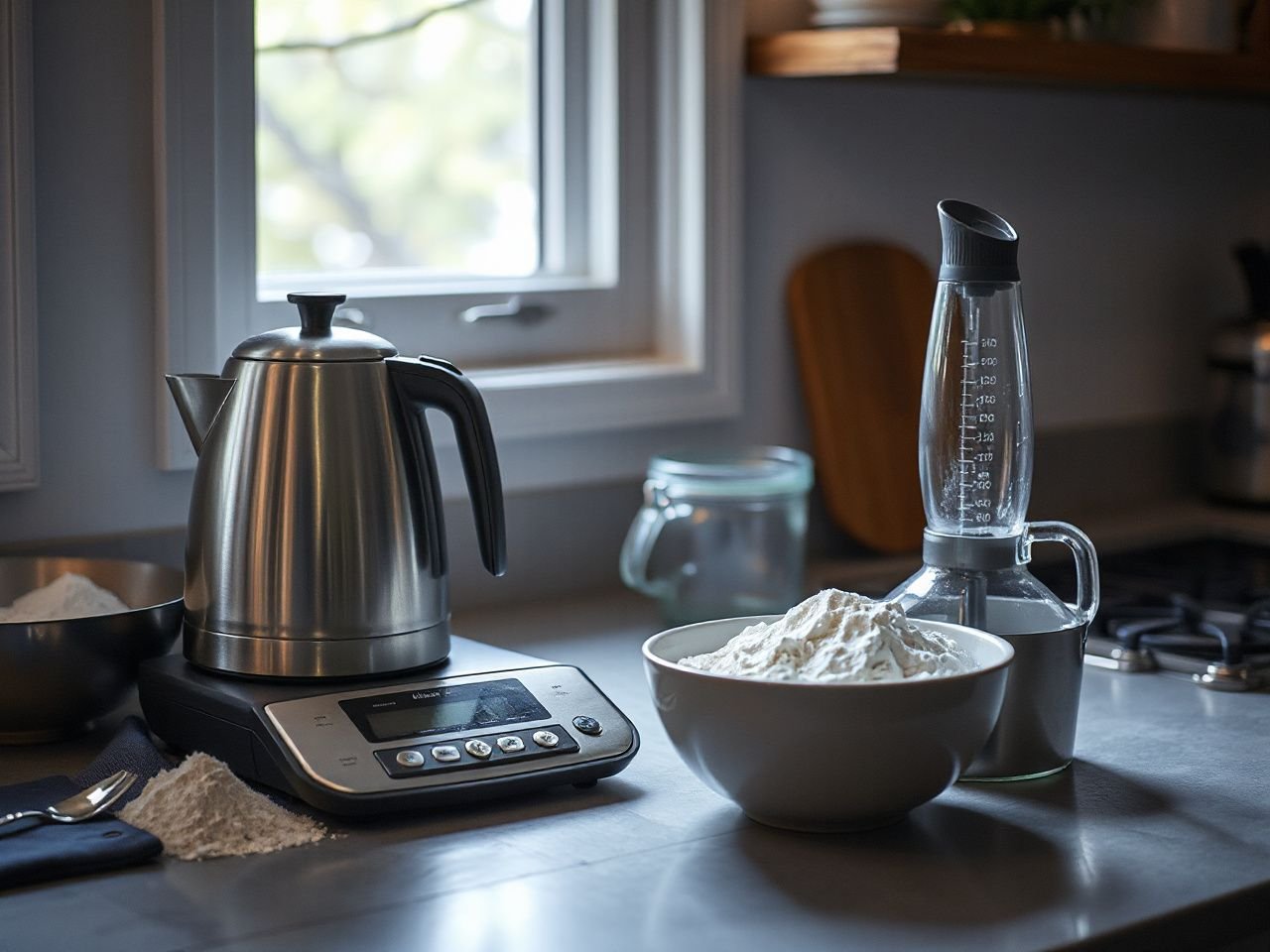
The strongest kitchen gadgets improve a result you can observe or measure. A digital kitchen scale makes ingredient quantities repeatable. An instant-read probe thermometer gives cooking decisions a reference point. A bench scraper gathers chopped food, divides dough, and clears a work surface without adding a motor, cord, or complicated washing routine.
A useful gadget should also fit the kitchen already in place. If a tool duplicates a chef’s knife, box grater, saucepan, or mixing bowl while taking longer to clean, its convenience is probably too narrow. A gadget that replaces several hand movements may still be a poor choice if its blade is difficult to clean or its motor cannot handle the intended food.
Start with frequency, not novelty
Write down the task rather than the gadget. “I want a spiralizer” is vague; “I prepare long vegetable ribbons several times a week” is a real use case. The second statement gives you something to assess: frequency, preparation time, storage, washing, and whether a knife can do an acceptable job.
A kitchen gadget is easier to justify when the task appears in your normal cooking routine. Repetition matters because the cost of setup and cleanup is spread across many uses. An occasional task can still justify a tool, but the tool must remove a substantial physical burden, produce a result that is difficult by hand, or address an accessibility need.
Frequency alone does not settle the matter. A small device used often may still be irritating if it requires several detachable parts, leaves food trapped around a seal, or needs batteries that are difficult to replace.
Measure the whole ownership cycle
Use this checklist before giving a gadget permanent storage:
- Task: What exact job does the gadget perform?
- Frequency: How often does that job occur in your kitchen?
- Replacement: Which hand tool or appliance does it replace?
- Consistency: Does the gadget make quantity, thickness, or temperature easier to control?
- Cleanup: Can food residue reach seams, blades, seals, or vents?
- Storage: Does the gadget need counter space or a dedicated drawer location?
- Maintenance: Can the blade be sharpened, the battery replaced, or the sensor checked?
- Compatibility: Does the tool work with your cookware, containers, ingredients, and electrical setup?
The real cost of a gadget includes cleaning time, storage, batteries, accessories, calibration, sharpening, and replacement parts. A low purchase price does not make a tool economical if a failed working part turns the entire gadget into waste.
A gadget earns permanent storage when its repeated savings exceed its cleaning, maintenance, and storage demands.
Beginner Choices: Simple Tools That Solve Real Problems
For most kitchens, the first useful tools are not elaborate appliances. They are instruments that reduce guesswork or make a frequent manual task easier without creating a second preparation process.
Digital kitchen scales improve repeatability
A digital kitchen scale is valuable because volume measures can vary with how an ingredient is packed, scooped, or levelled. Weight gives a direct quantity, which helps with baking, dough, portioning, coffee, and recipes that need a consistent ratio between ingredients.
The scale does not need a long feature list to be useful. Clear readings, a stable platform, an easy tare function, and a surface that can be wiped matter more than decorative modes. The listing should make clear how the scale is powered and whether the display remains visible when a large bowl sits above it.
Storage is simple if the scale is thin enough for a drawer, but moisture and food residue still deserve attention. Wipe the platform according to its care instructions rather than immersing the electronic body. The battery compartment is a maintenance point, not an afterthought.
A digital kitchen scale improves cooking consistency by replacing variable volume scoops with a repeatable weight.
Instant-read probe thermometers earn their place through accuracy
An instant-read probe thermometer is useful only when its reading is accurate. A fast display is secondary to calibration checks, correct probe placement, and safe handling around hot food. The probe must reach the part of the food you are trying to assess rather than touch a pan, bone, or another misleading surface.
Check the manufacturer’s calibration guidance. If the reading can be adjusted, calibration is part of ownership; if it cannot, a known reference check can still tell you whether the instrument deserves trust. The listing does not always state the allowed error or the method for recalibration, and that missing information matters more than a claim about speed.
Clean the probe between foods and follow the care instructions around water. A water-resistant probe is not automatically a waterproof electronic body. Keep the display and housing away from steam, splashes, and direct contact with hot cookware unless the manufacturer specifically permits it.
Food safety decisions depend on reliable internal-temperature control. The U.S. Food and Drug Administration publishes food-safety guidance and regulatory information, but a thermometer’s own accuracy and correct placement remain the user’s responsibility.
Bench scrapers and microplane graters are strong hand-tool candidates
A bench scraper is a classic example of a tool that replaces several small actions without requiring electricity. It can gather chopped ingredients, portion dough, lift stuck pieces from a work surface, and clean flour or vegetable fragments from a board. Its value comes from repeated use, not from a single dramatic function.
A microplane grater performs a narrower job, but fine zest, hard cheese, garlic, ginger, and spices can be awkward to produce with a standard grater. The working surface is sharp, so storage should protect both the edge and your fingers. A cover or drawer position that prevents accidental contact is more important than a novelty handle.
Hand tools are often the better choice for small quantities. They have fewer parts, no motor to weaken, and no battery to replace. Their limits are also clear: repetitive cutting, difficult textures, or a physical limitation may justify an electric tool.
Simple material choices affect daily use
Materials are not interchangeable. Stainless steel resists some forms of wear and staining, silicone handles heat differently from plastic, and nonstick coatings require care that avoids unsuitable utensils and abrasive cleaning. The listing should identify the material of the working surface, not merely describe the gadget as durable.
Food-contact equipment used in commercial settings may be evaluated against standards such as NSF/ANSI 2, which addresses food equipment. A household gadget that does not mention that standard is not automatically unsafe, but a certification claim should be traceable to the named standard rather than treated as general praise.
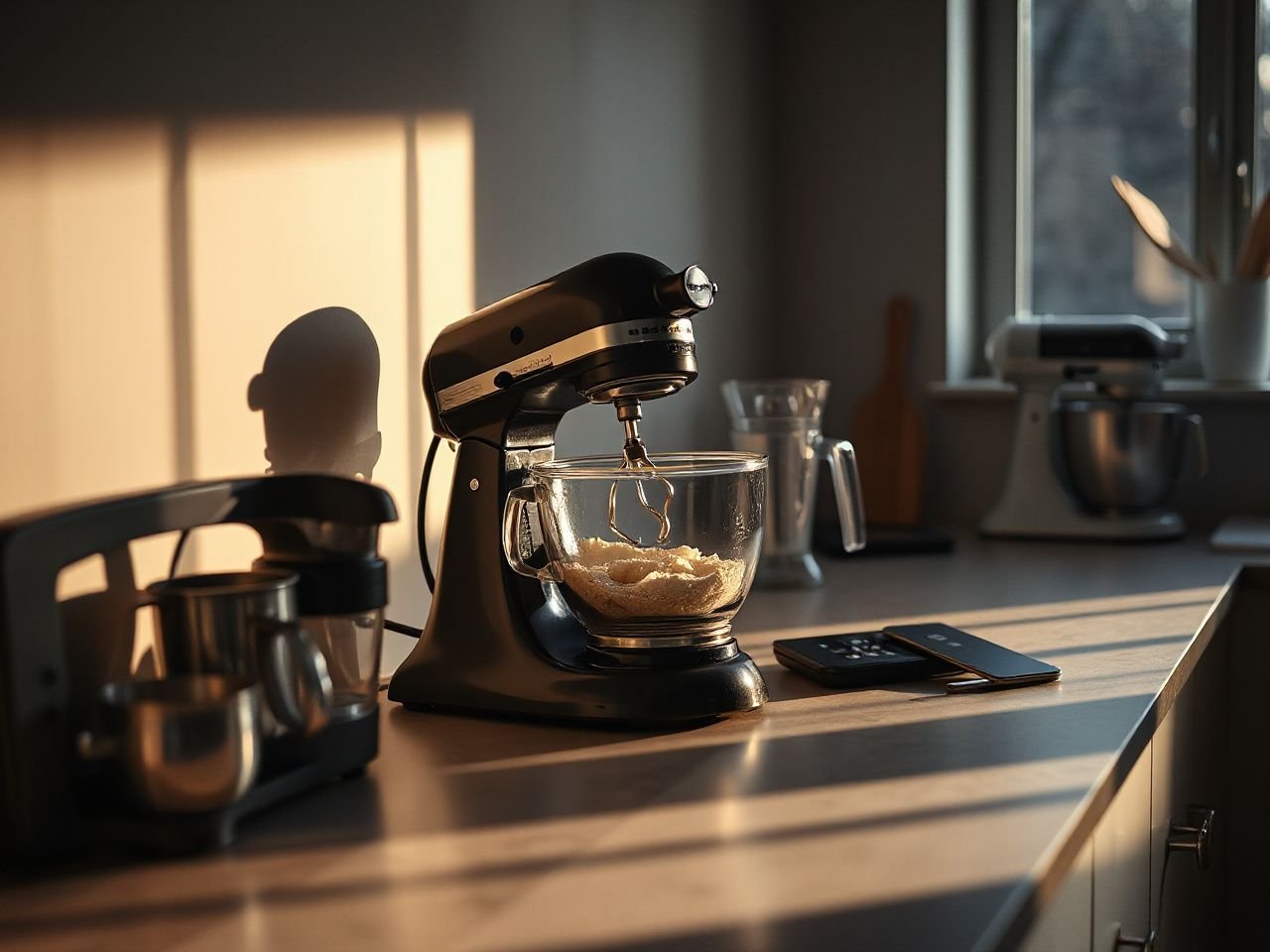
Intermediate Choices: Electric Gadgets and the Job They Replace
Electric tools become easier to justify when the task is repetitive, physically demanding, or difficult to perform consistently by hand. They also bring more failure points: motors, switches, cords, batteries, seals, sensors, and controls all need consideration.
Immersion blender, food processor, or countertop blender?
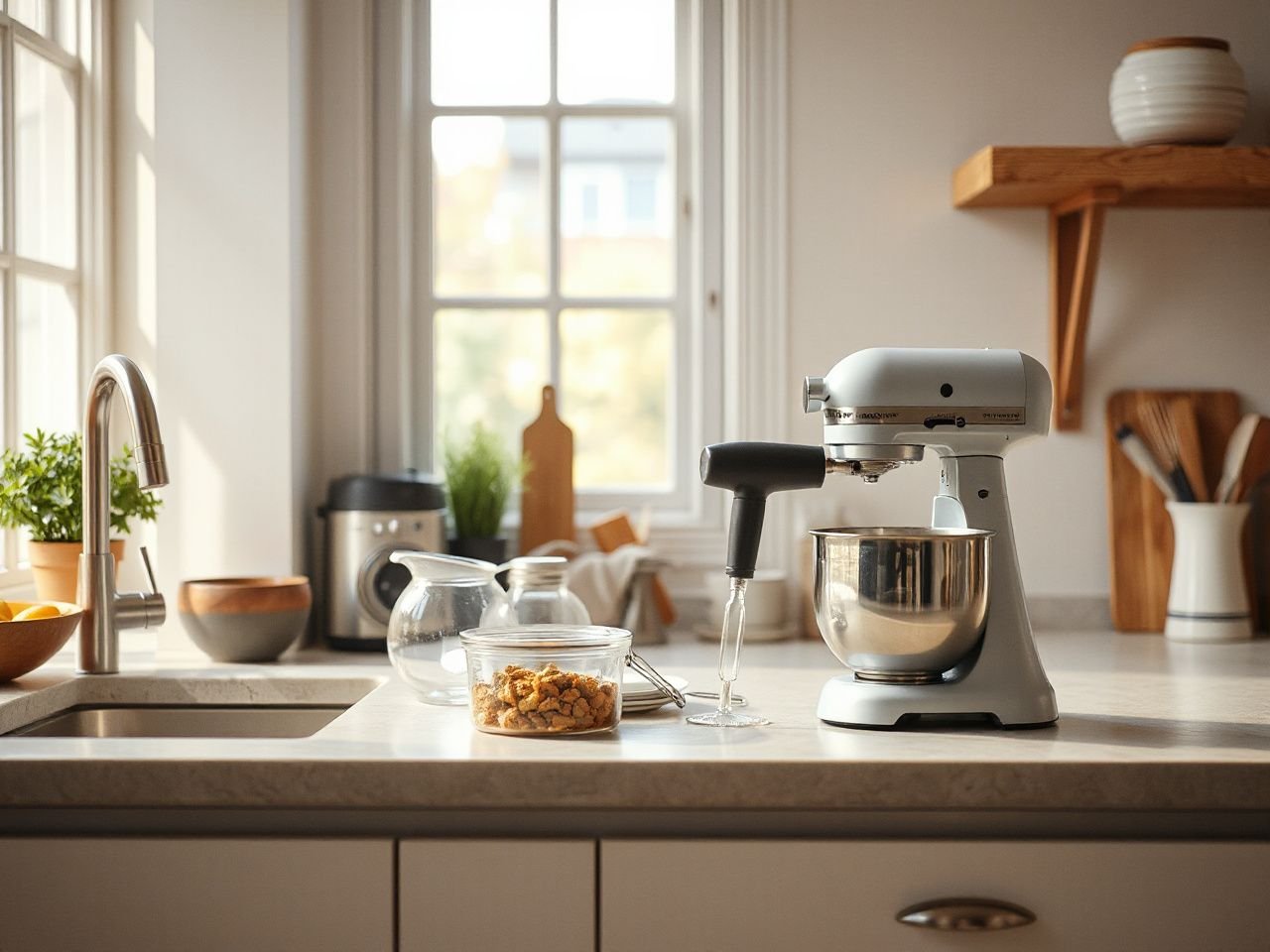
An immersion blender works directly in a tall container or cooking pot. It is suited to blending a soup or sauce in its existing vessel, especially when transferring hot liquid would add effort and spill risk. Its advantage is reduced handling of another container; its limitation is that the texture and volume depend on the design of the blending end and the ingredients.
A food processor is the more relevant choice for repetitive chopping, slicing, shredding, or combining ingredients with a broad work bowl and dedicated attachments. That versatility comes with more pieces to wash and store. Its usefulness depends on whether those repeated prep jobs actually occur in your kitchen.
A countertop blender is built around a dedicated jar and a fixed blending setup. It may suit larger batches or smooth mixtures, but the jar adds a separate vessel and cleaning task. The manufacturer’s listing should state motor information, blade construction, container material, and the treatment allowed for each removable part; missing motor data makes it harder to judge dense mixtures.
An immersion blender reduces transfer work, a food processor handles repetitive solid preparation, and a countertop blender suits dedicated jar blending.
Mandoline slicers save motion but add a sharp-edge risk
A mandoline slicer can create repeated slices with a more uniform thickness than casual knife work, which matters for cooking time and presentation. Its usefulness is strongest when the same cutting pattern appears often enough to justify setup, washing, and careful storage.
Exposed blades require a hand guard or a cut-resistant technique. Loose food should never be forced toward the blade with bare fingers. Keep the slicer stable, use the intended holder, and stop before the remaining piece becomes too small to control safely.
The guard is a working part, not an accessory to discard. A mandoline without a usable guard has a different risk profile from one that keeps the hand away from the blade. The listing should explain how the blade is adjusted and removed for cleaning.
Weak motors and dull blades change the value calculation
A motorised gadget can work well initially and become frustrating when the motor struggles with the foods it was bought to process. The listing may omit motor wattage, duty limits, or suitable ingredient guidance. That omission is important: a device designed for occasional light work should not be assumed to handle dense dough or repeated hard ingredients.
Blades also determine usefulness. A dull cutting edge creates more pressure and poorer control, while a blade that cannot be removed or replaced turns ordinary wear into a disposal problem. Check whether replacement blades, bowls, seals, and other working parts are listed separately.
Controls deserve the same scrutiny. A gadget with unclear buttons, a difficult lock, or a narrow feed opening can add friction to every use. Convenience disappears when the user must consult instructions for a task that a knife or bowl handles plainly.
Dishwasher-safe does not mean every part can be washed the same way
Dishwasher-safe claims commonly apply only to removable parts. Motors, electronics, wooden components, seals, and some coatings can be damaged by immersion, heat, moisture, or detergent. A safe reading of the label asks which part is covered and which part must be wiped or washed by hand.
Food residue is a maintenance issue as well as a hygiene issue. Inspect grooves around blades, seals, hinges, and attachment points. If the design makes those areas difficult to reach, the gadget carries a recurring cleaning cost that belongs in the buying decision.
Stainless steel, silicone, plastic, and nonstick coatings do not have identical resistance to heat, chemicals, staining, or abrasion. Use the care instructions for the exact material rather than applying one washing method to every tool.
If you are assessing the equipment around a range, cleaning burden also affects the value of the whole setup. Our guide to choosing oven-cleaning products for the work you actually face follows the same principle: the useful option is the one that fits the surface and the cleaning method, not the one with the loudest claim.
Advanced Evaluation: Failure Points, Cost, and Storage
Once a gadget passes the basic usefulness test, examine what happens after ordinary wear. The first question is not how attractive the device looks new. It is which part is likely to stop doing its job and what the owner can do next.
Identify the part most likely to fail
For a scale, inspect the display, buttons, battery compartment, and weighing platform. For a thermometer, inspect the probe connection, sensor, housing, and calibration process. For a food processor or immersion blender, inspect the blade assembly, coupling, seals, lid lock, cord, and motor information.
Do not assume a removable part is replaceable. The manufacturer should list replacement availability, compatible accessories, or service information. A working part that can be cleaned, sharpened, recalibrated, or replaced gives the gadget a stronger ownership case than a sealed unit with no maintenance path.
Some tools have no meaningful repair route. That does not automatically disqualify them, but it raises the standard for usefulness. A disposable unitasker needs frequent use or a very clear physical benefit before it deserves space.
Count batteries, accessories, and proprietary parts
The purchase price is only one line in the cost calculation. Add batteries, charging equipment, replacement blades, filters, special containers, calibration needs, and accessories required for the advertised function. A gadget that needs a proprietary attachment for ordinary use is less flexible than its headline feature suggests.
Battery use matters for storage and readiness. A tool that is empty when needed may be less useful than a manual alternative kept in the same drawer. Check whether the battery is replaceable, whether the device can operate while connected to power, and whether the listing explains what happens when the battery reaches the end of its service life.
A gadget’s total cost includes consumables, maintenance, replacement parts, cleaning, and storage—not only its purchase price.
Storage is a performance feature
A gadget that cannot be reached will not be used often. Countertop appliances need a stable home with access to their controls and cord, while sharp hand tools need storage that prevents accidental contact. Attachments should stay with the main tool without filling several unrelated drawers.
Measure the space before buying, but do not assume a listed dimension tells the whole story. A lid, handle, cord, feed tube, or removable bowl may require clearance beyond the body of the tool. The manufacturer does not always state the storage footprint with attachments fitted.
Kitchen storage also affects accessibility. A gadget can reduce physical effort while still being impractical if its controls are hard to read, its locking mechanism demands excessive force, or its working vessel is too heavy to move safely. The best tool for a particular household is the one that can be operated, cleaned, and put away without creating a new barrier.
When a unitasker deserves the drawer
Unitaskers are not automatically bad. A bench scraper is narrow in purpose but useful across dough work, chopping, and cleanup. A mandoline is specialised, yet its controlled slicing function may justify its careful storage for someone who prepares the same cuts regularly.
The weak unitasker is the gadget that duplicates a simple motion while adding setup. If a garlic press takes longer to load, empty, and wash than crushing garlic with a knife, its single function is not enough. If a specialised tool reduces hand strain or makes a repeated cut safer to control, the calculation changes.
Ask three final questions: Does the gadget solve a recurring nuisance? Can I clean and store it without resentment? Can I maintain the part that does the work? If the answer is no across the board, the gadget is convenience without enough return.
For cookware decisions, the same test applies. A pan must suit the foods, heat source, cleaning routine, and storage available. Our discussion of cast-iron griddles that justify their storage space applies the ownership-cycle test rather than treating a heavy pan as useful by default.
Preventive Measures: Buy Less, Maintain More
The most reliable way to avoid unused gadgets is to define the bottleneck before browsing. Keep a short list of repeated tasks, then match each task to the simplest tool that removes the specific difficulty. This prevents a colourful feature list from becoming the reason for a purchase.
Use a replacement test
Write the existing method beside the proposed gadget. If the gadget replaces a knife, note what the knife currently does and what the new tool would add. If it replaces an appliance, check whether the new device reduces cleanup or merely creates a smaller version of the same process.
Hand tools usually win for small quantities, quick garnishing, straightforward scraping, and tasks where washing a motorised device would take longer than the preparation. Electric gadgets earn consideration for repeated cutting, blending, shredding, or mixing when physical effort or consistency is the real obstacle.
Use measurements to control results
Scales and thermometers are valuable because they turn vague instructions into observations. Weigh flour rather than relying on an inconsistent scoop. Check the probe placement and calibration before trusting a temperature reading. A measured process is easier to repeat and easier to correct.
Do not confuse more information with better control. A thermometer with extra modes is not useful if the probe is inaccurate or hard to clean. A scale with many settings is not useful if the display is obscured by the bowl or the platform cannot be wiped properly.
Maintain blades, sensors, and seals
Sharp blades need safe handling and suitable storage. Sensors need calibration checks and protection from unsuitable moisture. Seals need inspection for trapped residue and damage. These tasks are small, but ignoring them is how a useful gadget becomes unreliable.
Keep manuals or care instructions with the device, especially for tools with removable blades, temperature sensors, coatings, or electrical parts. The instruction that says “wash removable parts only” is more valuable than a broad marketing claim about easy cleaning.
For bread tools, material and shape matter in the same way they do for gadgets. Our guide to loaf pans for sandwich bread and the details that affect everyday use shows why the working surface, cleaning method, and storage plan belong in the decision.
Keep safety proportional and specific
Sharp blades, hot liquids, electricity, and inaccurate readings create avoidable problems when a gadget is used outside its instructions. Keep hands away from exposed blades, avoid moving hot mixtures in unsuitable containers, and treat temperature readings as useful only when the instrument and placement are reliable.
Standards can help clarify claims, but a standard name is not a substitute for reading the product instructions. The U.S. Consumer Product Safety Commission provides consumer safety information and recall notices; checking official safety information is sensible for electrical or blade-equipped kitchen equipment.
Safe gadget use depends on the design, the care instructions, and the user’s control of blades, heat, moisture, and electricity.
Frequently Asked Questions
How often must I use a kitchen gadget for it to be worth keeping?
There is no universal number of uses. Judge the task’s effort, mess, consistency, and physical demand alongside frequency. A tool used rarely may still earn space if it solves a difficult accessibility problem or performs a cut that is hard to control by hand. A frequently used tool may still fail the test if cleaning, storage, or maintenance consumes more effort than the task itself.
Do digital kitchen scales really make cooking more consistent?
Yes, a scale can make ingredient quantities repeatable by measuring weight rather than relying on how an ingredient is scooped or packed. That matters most for baking, dough, portioning, and recipes built around ratios. The scale still needs a readable display, a stable platform, a working tare function, and careful cleaning around its electronic body.
How should I check whether an instant-read thermometer is reliable?
Follow the manufacturer’s calibration instructions and check the probe against the reference method specified for that instrument. Place the probe in the centre of the food or the intended measuring area, away from cookware or bone. Clean the probe between foods, protect the electronic housing from unsuitable moisture, and do not mistake a fast display for an accurate reading.
Which is more useful: an immersion blender, food processor, or countertop blender?
An immersion blender suits blending directly in a pot or container and reduces transfer work. A food processor suits repetitive chopping, slicing, shredding, and combining with its bowl and attachments. A countertop blender suits mixtures made in a dedicated jar. The right choice depends on the task that recurs in your kitchen, the cleanup you will accept, and the manufacturer’s information about motor, blades, container, and removable parts.
Are dishwasher-safe kitchen gadgets safe to put entirely in the dishwasher?
Usually, the claim applies to named removable parts rather than the entire gadget. Motors, electronics, wooden pieces, seals, and some coatings can be damaged by immersion, heat, moisture, or detergent. Read the care instructions for each component, remove residue from grooves and blade areas, and hand-wash parts when the manufacturer excludes them from dishwasher use.