One widely used coffee maker was evaluated at a brewing temperature of only 156°F (68.9°C), a reminder that a machine can look functional while its brewing performance has already slipped. The useful distinction is between a coffee maker’s expected service life and the point at which its brewing performance or safety becomes unacceptable: a machine may still switch on while its heating element, thermostat, pump, seals, or flow path are no longer working properly. Lifespan should therefore be assessed through symptoms, usage intensity, water and scale exposure, and maintenance history rather than an age cutoff alone.
So, how long does a coffee maker last? There is no single answer for every type or household. A lightly used, well-maintained drip machine may remain practical for years, while a heavily used model with hard-water exposure can become a poor use of counter space much sooner. The standard is simple: the machine has to brew properly, remain safe, and justify the room it occupies.
Key Takeaways
- A coffee maker’s useful life depends on machine type, daily workload, water hardness, cleaning, and access to correct replacement parts.
- Slow brewing, weak heat, leaks, unusual smells, electrical trips, and inconsistent flow separate cleaning problems from replacement problems.
- Scale control and routine washing protect performance, but a damaged cord, burning smell, exposed wiring, or electrical-base leak means the machine should stop being used.
How long does a coffee maker last in normal daily use?
A normal service life cannot be reduced to one dependable number because manufacturers build different machines around different workloads, controls, heating systems, pumps, and replaceable parts. The listing, manual, warranty terms, and parts availability for the exact model matter more than a general internet age rule.
Daily use does not automatically make a coffee maker disposable, but making several pots each day increases the work demanded from the heating element, thermostat, water pump, seals, and water path. A household that brews once each morning places a different load on the machine from an office or large family that runs repeated cycles throughout the day.
Service life versus acceptable performance
The machine may still power on even after the heating element no longer brings brewing water to a suitable temperature. A thermostat can become unreliable, a pump can lose flow, and mineral deposits can narrow internal passages. Those failures affect extraction, brew time, flavor, and the amount of water reaching the grounds.
Do not treat the first disappointing cup as proof that the whole appliance has failed. Old coffee, an incorrect grind, stale beans, a blocked filter, or a dirty brew basket can change the result without any internal defect. Start with the parts you can inspect, then move toward the machine’s heating and electrical systems.
What changes the answer?
- Machine type: Drip coffee makers, pod machines, espresso machines, and French presses have different failure points and different amounts of electrical hardware.
- Usage intensity: Several brewing cycles per day increase heat cycles, water movement, and contact with minerals.
- Water quality: Hard water leaves calcium carbonate scale that can restrict flow and interfere with heating.
- Maintenance: Descaling removes mineral buildup, but washing the reservoir, basket, carafe, lid, and removable parts handles a separate cleanliness problem.
- Parts access: A machine is harder to justify repairing if the correct carafe, lid, water filter, pump, or seal is unavailable.
For a broader look at appliance service life and the role of workload, this guide to how long air fryers last uses the same useful distinction between age and practical performance.
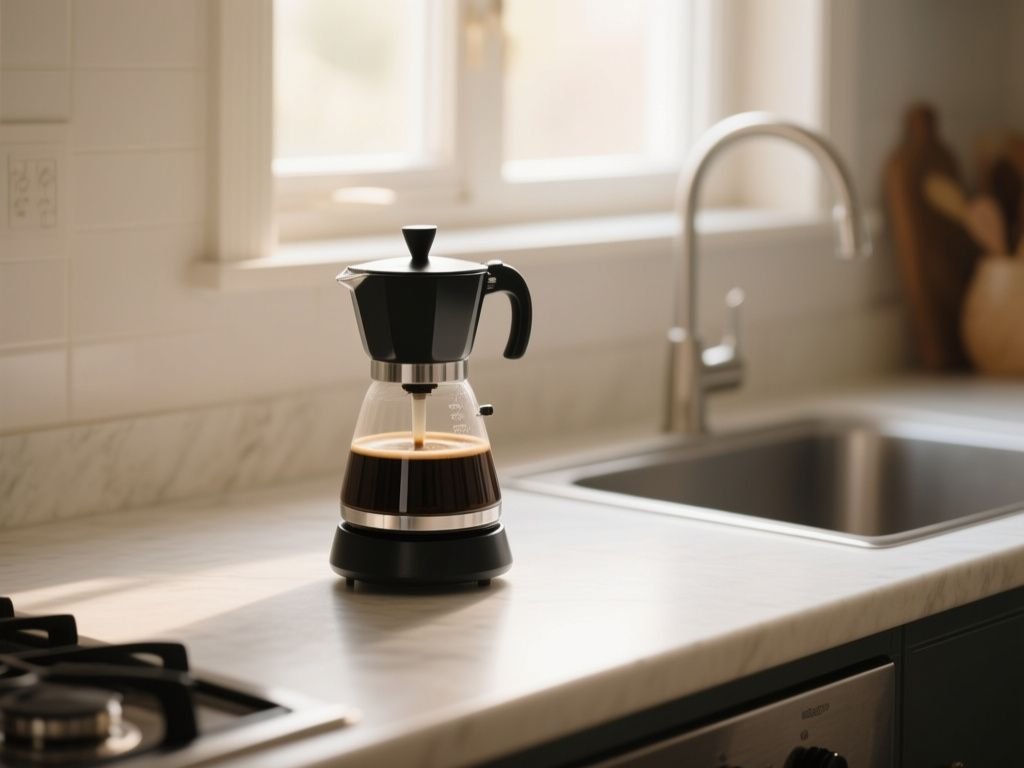
Causes of early coffee maker failure
Mineral scale from hard water
Hard water can shorten practical service life because dissolved minerals remain behind as water is heated and moved through the machine. Calcium carbonate buildup can restrict the flow path, place extra demand on the heating system, and contribute to inconsistent brewing temperature.
Calcium carbonate scale can change water flow and heating behavior even when the coffee maker still turns on. That makes water quality a maintenance issue rather than a minor taste preference. Filtration may reduce the mineral load, but the exact filter and replacement schedule should follow the machine’s instructions.
Water quality varies by location, so there is no honest universal descaling calendar for every household. Follow the manufacturer’s instructions first. If the manual gives a scale warning, cleaning light, or water-hardness setting, use that information rather than waiting for the machine to slow dramatically.
Heat, repeated cycles, and neglected residue
The heating element works every time the machine brews. The thermostat controls how that heat is managed, while the pump or gravity-fed path moves water toward the brew basket. Repeated use places more operating cycles on those parts than occasional use.
Routine residue creates another problem. Coffee oils and fine particles can collect in the brew basket, lid, valve, or carafe. Descaling will not remove all coffee residue, and washing the removable parts will not necessarily remove scale from the internal water path.
Parts that usually fail first
The first problem may appear in a low-cost, high-contact part rather than the main body of the appliance. Carafe lids crack, valves stop sealing, water reservoirs develop damage, and brew baskets warp or become difficult to clean. A replacement can make sense only if the part fits the exact model.
Internal failures often involve the heating element, thermostat, water pump, seals, or flow path. The visible symptom does not always identify the failed component. A slow brew may come from scale, a weak pump, a restricted valve, or a control problem, so opening the electrical base is not a sensible first repair for an unqualified user.
Counter space is part of the calculation
A machine that occupies permanent counter space should earn that space through reliable daily use. A coffee maker that requires repeated resets, leaks into a tray, produces unevenly heated coffee, or depends on an unavailable carafe has become a storage problem even if its power light still works.
A coffee maker earns its counter space only when it brews safely, performs consistently, and can be maintained with the parts available for its exact model. That standard is more useful than keeping an appliance simply because it has not reached a particular birthday.
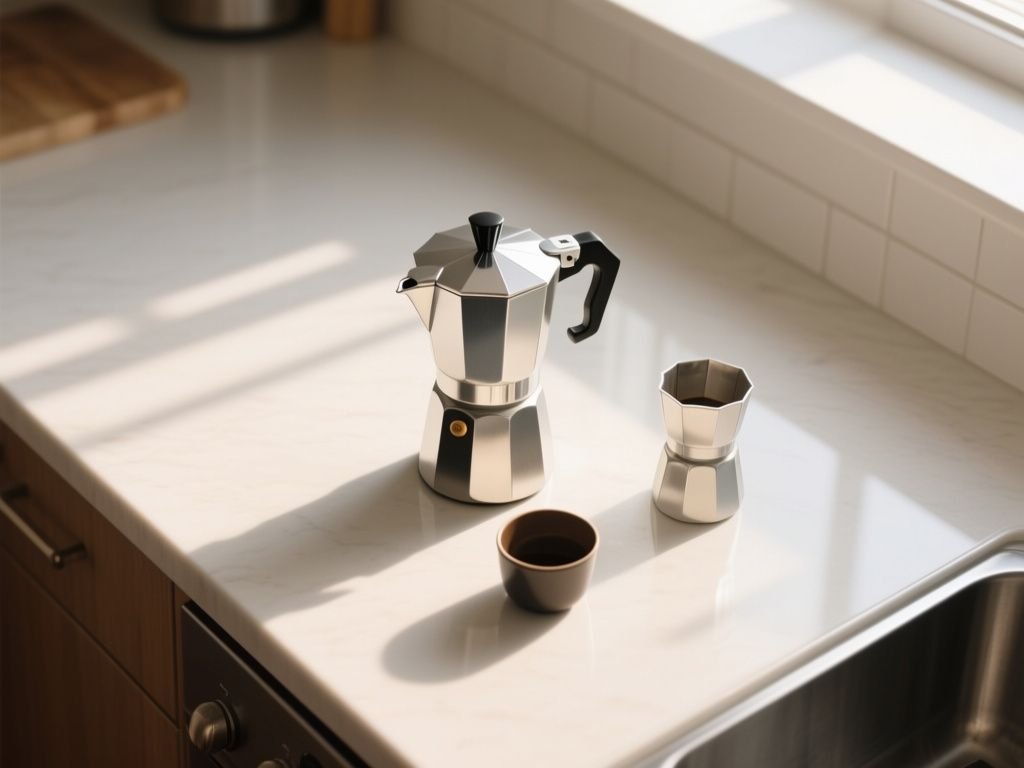
Solutions: clean, repair, or replace?
Step 1: Check the simple causes
Begin with the water reservoir, brew basket, carafe position, lid, and filter. Confirm that the reservoir is seated correctly and that the basket is not blocked by a collapsed paper filter or compacted grounds. Wash removable parts with the method specified by the manufacturer.
Check whether the problem follows the coffee itself or the machine. If the coffee tastes stale but the water flow and heat appear normal, fresh coffee and a clean basket may solve the issue. If the machine stops partway through a cycle, leaves water in the reservoir, or brews far more slowly than before, investigate the water path and scale next.
Step 2: Descale according to the manual
Use the descaling product and procedure approved for the exact coffee maker. Vinegar or citric acid is not automatically suitable for every machine, and a strong or incorrect solution can conflict with the manufacturer’s instructions or leave odor and residue behind.
Descaling removes mineral deposits, while routine washing removes coffee residue; one task does not replace the other. After descaling, complete the rinse procedure stated in the manual and wash the reservoir, basket, carafe, lid, and other removable components separately.
Citric acid may be specified for some machines, while another manufacturer may require a proprietary descaler or prohibit certain acids. Pod coffee makers and espresso machines can have narrower cleaning requirements because their internal pathways, valves, and pressure systems differ from those of a basic drip machine.
For questions about tap water and filtration, the practical tap-water guide for coffee makers explains why local water quality and the manufacturer’s instructions belong in the same decision.
Step 3: Decide if repair is practical
Repair is most sensible when the fault is clear, the part is available, and the machine’s remaining condition justifies the effort. A matching carafe, lid, basket, water filter, or reservoir may restore a machine without touching its electrical system. Compatibility matters because coffee maker parts are not universally interchangeable, even when two models look similar.
An internal heating element, pump, thermostat, or control fault is a different decision. A repair shop may be appropriate if the appliance has value and the model has service support. Avoid assuming that a replacement part will fit merely because the dimensions appear close or the brand is the same.
Step 4: Stop using the machine if safety symptoms appear
A damaged power cord, burning smell, repeated electrical tripping, exposed wiring, or leaking near the electrical base is a reason to stop using the coffee maker rather than continue troubleshooting. Unplug it when safe to do so, keep it away from water, and seek qualified service or replace it.
Electrical safety is not the place for an improvised repair. The U.S. Consumer Product Safety Commission provides consumer safety information about electrical products and hazards, while UL publishes information related to product safety standards such as UL 1082 for household electric coffee makers.
Food-contact and sanitation questions also deserve attention. NSF/ANSI 4 is a food-equipment standard administered through NSF; a listing that references a standard should be checked against the exact model and certification details rather than assumed from a brand name alone.
Preventive measures that protect useful life
Build a maintenance routine
Use the manufacturer’s schedule for descaling, especially if the household has hard water or makes several pots each day. Wash the water reservoir, brew basket, carafe, lid, and removable valves as directed. Empty standing water when the manual advises it, and allow washable parts to dry properly before reassembly.
Do not confuse a water filter with a complete cleaning system. A filter may address some water-quality concerns, but it does not remove coffee oils from the basket or scale from every internal surface. Clean both the brew side and the water side.
Choose the right carafe expectations
A borosilicate glass carafe and hot plate create a different ownership pattern from a thermal carafe. Glass makes the coffee level easy to see, but the carafe depends on careful handling and a working hot plate to maintain warmth. A thermal carafe avoids a hot plate during serving, yet its lid, seal, and vacuum performance still determine whether it remains useful.
A thermal carafe is not automatically more durable than a glass carafe because each design has different parts that can fail. Judge the exact carafe’s replacement availability, lid design, cleaning access, and compatibility with the coffee maker rather than assuming one format always lasts longer.
Compare machine types fairly
A French press has fewer electrical parts because it does not use a heating element, thermostat, or pump. Its glass beaker, plunger, screen, and frame still need care, and breakage or worn components can end its useful life.
Pod coffee makers add capsule mechanisms, puncture points, pumps, and model-specific internal pathways. Their practical longevity depends on the machine’s maintenance demands and the continued availability of compatible pods and parts. If pods become difficult to find or the machine’s format no longer suits the household, the appliance may stop earning its counter space before a mechanical failure occurs.
Espresso machines place greater demands on water delivery and pressure-related components than a basic drip machine. Cleaning instructions vary widely, so a descaling method suitable for one machine should not be assumed safe for another. A drip coffee maker with a grinder adds moving grinding parts and a more complicated cleaning burden compared with a simple brewer.
Consider energy use without overstating savings
A glass carafe machine may keep a hot plate active after brewing, while a thermal carafe model may handle serving without that same warming method. The actual energy use depends on the appliance’s controls and household habits. Check whether the machine has an automatic shutoff and follow its instructions rather than leaving a hot plate running unattended.
Replacing an older machine solely to chase a vague energy claim is weak reasoning. Compare the machine’s actual behavior, maintenance needs, safety condition, and counter-space value. A clean, safe machine that brews correctly may deserve continued use; a faulty machine that wastes coffee and demands constant attention may not.
How to judge the final replacement point
Performance symptoms
- The machine no longer completes a brew cycle.
- Water flow has become slow or irregular after correct cleaning and descaling.
- The coffee is repeatedly underheated, and the issue is not explained by the coffee, filter, or settings.
- The reservoir empties without a normal amount reaching the carafe.
- The machine leaks from a location that cannot be safely resealed or replaced.
- The carafe, lid, or basket is unavailable or no longer fits securely.
A single symptom does not prove replacement is necessary. A clogged valve may be cleanable, while a recurring leak near the electrical base is a safety stop. A machine that needs a correct, inexpensive carafe may be worth saving; one that needs uncertain electrical repair and has no parts support is harder to justify.
Repair cost versus replacement cost
No responsible comparison can provide a universal repair price because the cost depends on the model, diagnosis, labor, part availability, and local service rates. The practical calculation is broader than the repair bill: include the value of your time, the risk that another part will fail, the machine’s remaining condition, and the wasted coffee caused by poor brewing.
Older machines may also consume more of your attention through manual resets, extra rinse cycles, leaks, and repeated cleaning. That inconvenience has value even though it does not appear on an energy label. A repair is sensible when it restores a sound machine with a known fault; replacement is sensible when safety, parts access, or multiple failures make the appliance unreliable.
Use the listing carefully
Manufacturer listings usually identify the machine type, carafe style, controls, and cleaning features, but they may not disclose the expected service life of each heating element, thermostat, pump, seal, or control board. The absence of a lifespan promise is meaningful. Treat broad durability language as less useful than a clear manual, available parts, and specific maintenance instructions.
For a model-specific look at features and fit, the Bonavita coffee maker guide can help place listing details in the context of counter space and daily brewing habits, without turning an age estimate into a promise.
Frequently Asked Questions
How long should a drip coffee maker last with daily use?
A drip coffee maker has no universal service-life number that applies to every household. Daily workload, hard-water scale, cleaning, heat cycles, part availability, and the exact design all matter. Judge the machine by safe operation, consistent water flow, suitable brewing heat, and repairability. A machine that still switches on may already need cleaning, service, or replacement if those functions have declined.
Does hard water shorten the life of a coffee maker?
Hard water can shorten practical service life by leaving calcium carbonate scale in the water path and around heating surfaces. Scale can restrict flow and contribute to inconsistent heating. Use the manufacturer’s descaling instructions and any approved filtration method. Vinegar or citric acid should not be assumed safe for every model, because cleaning requirements vary among drip, pod, and espresso machines.
Is a thermal carafe more durable than a glass carafe and hot plate?
Neither design is automatically more durable. A glass carafe and hot plate have different failure points from a thermal carafe, whose lid and seal affect its usefulness. Check whether the exact replacement carafe and lid remain available. A repair is practical only when the replacement part fits the specific coffee maker and restores safe, dependable use.
Is it safe to keep using a leaking coffee maker or one that smells like burning?
No. A burning smell, damaged cord, exposed wiring, repeated electrical tripping, or leakage near the electrical base is a reason to stop using the machine. Unplug it when safe, do not continue resetting the circuit, and avoid improvised cord or housing repairs. Qualified service or replacement is the appropriate next step when electrical safety is uncertain.