Common wisdom tells you to buy the heaviest saucepan you can lift, with thick walls you can feel through the box. That advice is mostly wrong. In a tall, narrow saucepan almost all the cooking heat enters through the base, while the sides just hold liquid, so how the bottom is built matters far more than the heft your hand registers when you pick the thing up.
This guide to buying a saucepan skips the star ratings and gets to the part that decides whether your béchamel scorches or your milk climbs the walls. Get the base and the size right and a modest pan will beat an expensive one used badly. That is the whole game, and most shoppers judge it by the least important surface.
Key Takeaways
- Base construction beats side-wall thickness. A flat, evenly clad or disc base heats without hot spots; heavy sides do almost nothing for a sauce.
- Buy smaller than you think. A saucepan filled less than a third full loses the even simmer it was chosen for, so a 2-quart pan gets used daily while a 4-quart sits in the cupboard.
- Match the material to the job. Clad stainless suits reductions and delicate sauces; nonstick is a poor priority for a pan that mostly boils and simmers.
What a saucepan actually is (and what it is not)
A saucepan has straight, tall sides, a flat base, a single long handle, and usually a lid. That shape traps liquid and slows evaporation, which is exactly what you want for rice, oatmeal, custards, and small batches of stock.
People muddle three pans that look similar on a shelf. The differences are practical, not cosmetic.
- Saucepan: straight sides, high liquid capacity for its footprint. Best for anything you cover and simmer.
- Saucier: curved, sloping sides with no sharp corner where the base meets the wall. A whisk reaches everywhere, so reductions and pastry creams stir clean. The trade-off is faster evaporation from the wider mouth.
- Milk pan: small, often lidless, with one or two pouring lips. Built for heating a mug or two of liquid, and nothing larger.
The saucier is the quiet upgrade for anyone who cooks reduction sauces often, because the rounded corner is where a stiff spatula misses and scorching starts. A straight-sided saucepan is the more flexible daily choice for volume work like blanching or a pot of soup base. If you want that flexibility in action, a straight-sided pan is what carries a batch of my easy one-pot chicken dumpling soup from sauté to simmer without a second dish.
Size: the pan you reach for is smaller than the one you buy
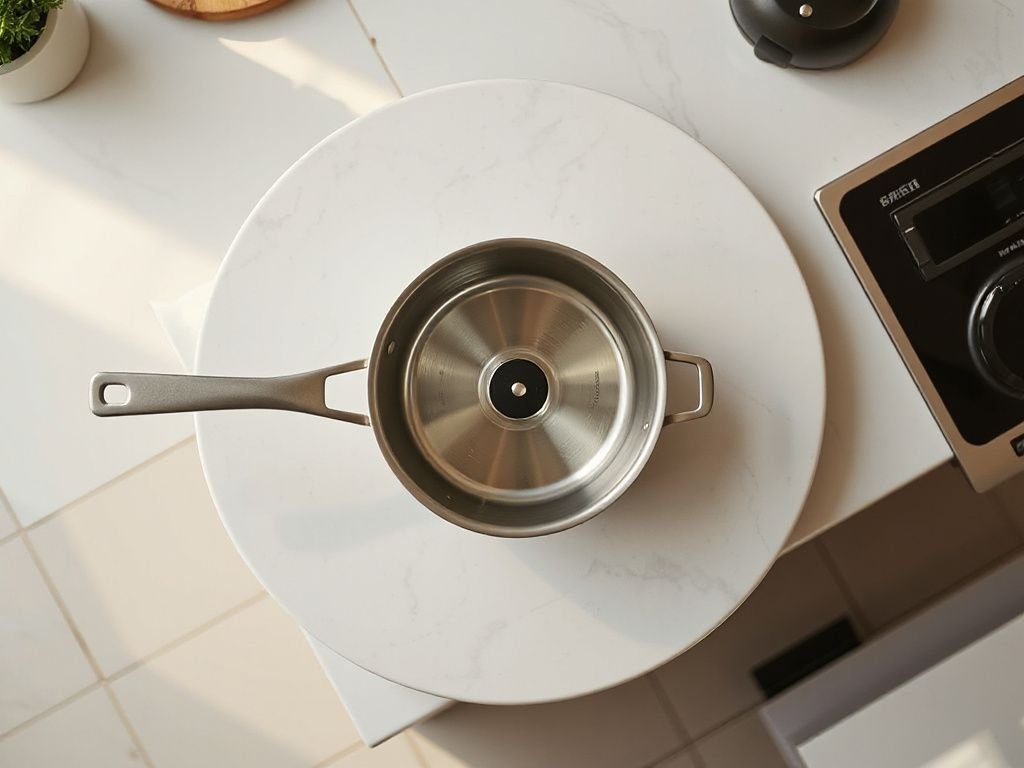
Here is the sizing mistake in one line. Buyers picture the biggest thing they will ever cook and size for that, then use the pan for oatmeal and gravy the other 360 days of the year.
A saucepan needs to be filled at least a third to hold a steady, even simmer. Under that line the liquid is a thin puddle over a big hot base, temperature swings widen, and the delicate control you paid for evaporates.
- Cooking for one or two: a 1.5 to 2-quart pan is the daily workhorse. Rice, sauces, a couple of eggs, reheated soup.
- Cooking for three or four: a 3-quart is the single most versatile size, roomy enough for pasta portions and small stocks without being clumsy.
- Occasional big batches: a 4-quart earns its place only if you actually cook large volumes weekly; otherwise a stockpot does that job better.
The honest recommendation is to own two: a small one you use constantly and a 3-quart for everything else. A single mid-size pan filled to a splash is the setup that makes people think their cooktop runs hot when the problem is the pan is nine-tenths empty. That same 2-quart is the right vessel for something quick like a 25-minute rotisserie chicken mushroom soup when you are feeding one or two.
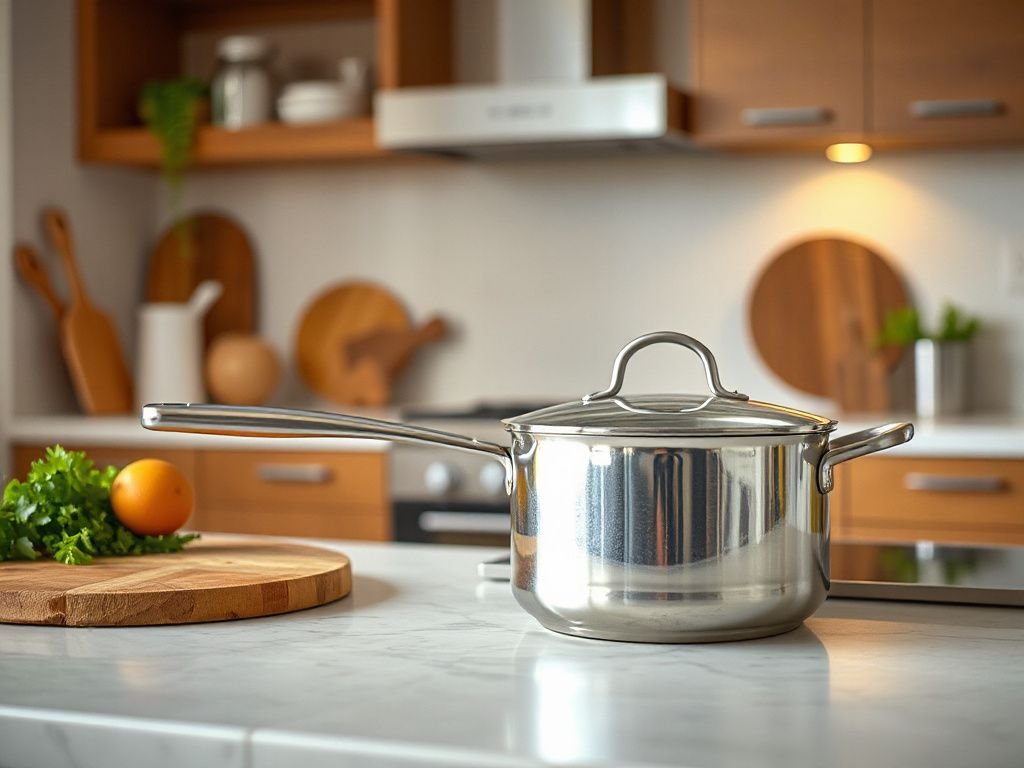
Materials and base construction: where your money should go
This is the section competitors skate over, and it is the one that determines whether the pan is good. The base does the cooking, so the base is what you evaluate.
Stainless steel and clad construction
Good stainless cookware uses AISI 304, often marked 18/10, which resists corrosion and does not react with acidic sauces. Steel on its own conducts heat poorly, so the base is where the design work happens.
Tri-ply (fully clad) construction sandwiches a layer of aluminum between two layers of stainless across the entire pan, base and sides. It heats evenly and responds quickly, which is why it suits reductions and anything that scorches in a hot spot.
Encapsulated (impact-bonded) disc base puts the aluminum or copper slug only in the bottom, with plain steel walls above. For a saucepan this is often the smarter buy: the sides barely cook anyway, so paying to clad them is money spent where it does the least. A thick disc base heats the bottom evenly and costs less than full cladding.
Either approach beats thin single-ply steel, which develops a scorching ring right over the burner. Base construction determines even heating far more than the brand on the handle or the thickness of the side walls.
Hard-anodized aluminum and nonstick
Hard-anodized aluminum conducts heat superbly and heats fast. The surface is electrochemically hardened so it resists scratching better than raw aluminum, though many of these pans are then coated with nonstick.
PTFE (the family that includes Teflon) and other PFOA-free nonstick coatings release food easily but degrade with high heat and metal utensils. For a pan that mostly boils water and holds a simmer, nonstick is the wrong priority: you rarely need release for boiling pasta, and you will wear the coating out on tasks it was never needed for. The U.S. Food and Drug Administration regulates the materials allowed in food-contact coatings, and reputable manufacturers now sell PFOA-free lines, but no coating survives a metal whisk and a dry pan left on high.
Enameled cast iron
Enameled cast iron, the kind made by Le Creuset and Staub, holds heat like nothing else and needs no seasoning because the enamel is inert. It is heavy, slow to change temperature, and excellent for long, gentle simmers. As a nimble everyday saucepan it is a poor fit, since its slow response fights you on anything that needs a quick turn-down.
Induction and matching the pan to your cooktop
Induction cooktops only work with cookware that has a ferromagnetic base. The reliable at-home test is a fridge magnet: if it snaps firmly to the bottom of the pan, the pan will work on induction. If it slides off or clings weakly, it will not heat properly.
This trips people up because material names do not settle it. All-aluminum and hard-anodized pans usually fail the magnet test, and even some stainless pans do, since the specific grade and the base build determine the magnetism. A disc base with a steel outer layer is a common way manufacturers make an otherwise non-magnetic pan induction-ready.
- Gas and electric coil: forgiving, they work with almost any flat-based pan.
- Ceramic and glass radiant: want a dead-flat base for good contact and to avoid scratching the top.
- Induction: require the magnet test, full stop.
If your kitchen already runs induction or you might switch, buy magnetic-base pans now and save yourself a duplicate purchase later. Building a coordinated set around one cooktop type is cheaper than replacing open-stock pieces piecemeal.
Handles, lids, and putting the pan in the oven
How the handle is attached
Handles come riveted or welded. Rivets are mechanically strong and rarely fail, but the interior rivet heads create crevices where food and grease trap, which means more scrubbing. Welded handles leave a smooth interior that wipes clean, though a poor weld can loosen over years of thermal cycling.
Handle material decides whether you can grab it bare-handed. Solid stainless handles conduct heat and get hot on a long simmer, while hollow stay-cool designs and Bakelite or phenolic handles stay much cooler. The trade-off is that plastic-family handles have a temperature ceiling, which matters the moment you want the oven.
Oven and broiler limits
A saucepan’s oven rating is set by its lowest-rated component, not the pan body. The steel bowl can take serious heat, but the handle, the lid knob, or the lid itself usually caps you far lower. A phenolic handle might top out around 350°F while an all-metal pan with a metal lid can go well past 500°F.
Glass lids are the common limiter, often rated to roughly 350 to 400°F and never broiler-safe. Check the manufacturer’s stated rating for the exact model before you trust it, and remember the broiler is a separate, harsher question than baking. When a listing gives an oven-safe number, it is describing the weakest link in the assembly.
Lids and simmering
A lid changes how a saucepan behaves. Glass lets you watch without lifting, which matters for rice you should not disturb; metal lids tolerate higher heat and the oven. A vented lid releases steam to prevent boil-over and keeps a simmer from turning into a rolling boil, while a tight seal traps moisture for faster heat-up and steamed dishes.
Stainless versus nonstick, and rainbow stains
For a saucepan, stainless steel is the better default. It handles acids, tolerates metal utensils, survives the oven, and lasts decades. Nonstick shines for eggs and fish in a frying pan, but a saucepan’s core jobs (boiling, simmering, sauce-making) do not need release, and high heat kills coatings faster than anything.
Stainless does two harmless things that alarm people. A rainbow tint, called heat tint, appears when the surface oxidizes from high dry heat; it is cosmetic and comes off with a paste of baking soda or a dedicated stainless cleaner like Bar Keepers Friend. Chalky white spots are calcium deposits from hard water and boiling; a splash of vinegar dissolves them. Neither means the pan is damaged. Certification bodies such as NSF test cookware for safe food contact, and 304 stainless is inert enough that these marks are surface chemistry, not contamination.
What lasts, and what you actually pay for
A well-made clad or thick disc-base stainless saucepan should last 15 to 30 years with basic care, because there is no coating to wear out and the steel does not degrade. A nonstick saucepan is a different lifespan entirely: even careful use tends to give 3 to 5 years before the coating loses release, and rough use halves that.
So what separates a $50 pan from a $200 one in a way you will feel? Not the logo. The differences that matter:
- Base flatness and thickness for even heat and stable contact with the burner.
- Full cladding versus a disc, which changes how the sides respond but matters less than marketing implies for a saucepan.
- Handle attachment and balance, so a full pan does not tip and the handle stays put after a decade of heating and cooling.
- Lid fit, since a lid that sits flush controls a simmer far better than one that rocks.
Plenty of the price gap above roughly $80 buys finish, brand, and a lifetime warranty rather than better cooking. A mid-priced disc-base 304 stainless pan with a snug lid and solid rivets will out-cook an expensive nonstick one on every task a saucepan is for. Spend where the physics lives, which is the base, and treat the rest as preference.
Once you have the right pan, it pays for itself in one-pot cooking; a 3-quart saucepan is exactly the vessel for a fast weeknight chicken tortilla soup that is ready in 25 minutes.
Frequently Asked Questions
What size saucepan do I need for a saucepan buying guide short list if I cook for one or two?
A 1.5 to 2-quart pan is the daily size for one or two people. It holds enough for rice, a sauce, or reheated soup while staying filled past the one-third mark that keeps a simmer even. Buy a 3-quart as a second pan for pasta or small stocks, and skip anything larger unless you regularly cook big batches.
How do I know if a saucepan will work on my induction cooktop?
Stick a fridge magnet to the bottom of the pan. If it clings firmly, the base is ferromagnetic and will heat on induction; if it slides off or barely holds, it will not work. Material names are not reliable, since most aluminum pans and even some stainless ones fail the test, so trust the magnet over the label every time.
Is stainless steel or nonstick better for a saucepan?
Stainless steel is the better choice for a saucepan. Its main jobs are boiling and simmering, which need no nonstick release, and stainless tolerates acids, metal utensils, high heat, and the oven while lasting for decades. Nonstick coatings degrade under the heat a saucepan sees and typically last only three to five years, so save nonstick for a frying pan.