Your eggs slide like the pan is showroom-new for about a year. Then they start grabbing, you nudge the heat up to compensate, and within a few months the center of the coating looks cloudy, faintly scratched, and permanently hungry. That slow betrayal is what sends most cooks hunting for a nonstick pan buying guide, usually convinced they bought a lemon.
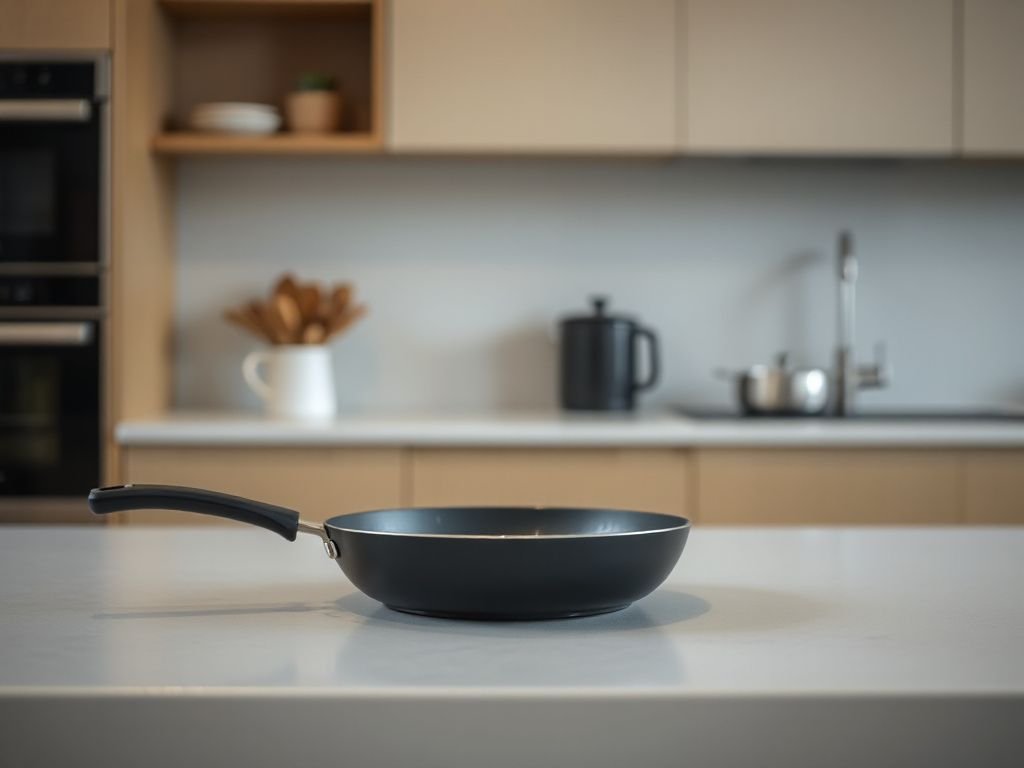
It probably was not a lemon. The useful frame here is that a nonstick pan is a specialized, consumable tool rather than a do-everything centerpiece. It earns its keep for eggs, delicate fish, crepes, and low-to-medium-heat cooking, and your buying decision should optimize for coating longevity and heat control, not the searing performance the pan was never built to deliver.
I come at cookware from the cast iron and carbon steel side of the drawer, where a pan is something you rebuild rather than replace. Nonstick asks for the opposite mindset, and getting that mindset right before you spend is the whole game.
Key Takeaways
- A nonstick pan is a consumable, not an heirloom. Even a well-treated coating wears out, so judge it by how many good years it gives you rather than by whether it lasts forever.
- Most coating failure comes from use, not price. Empty preheating, high heat, metal utensils, and the dishwasher kill coatings faster than a cheap pan ever could.
- Match the pan to the job. Keep nonstick below about 500°F (260°C) for eggs and fish, and switch to cast iron or stainless when you want a hard sear.
What a nonstick pan is actually good at
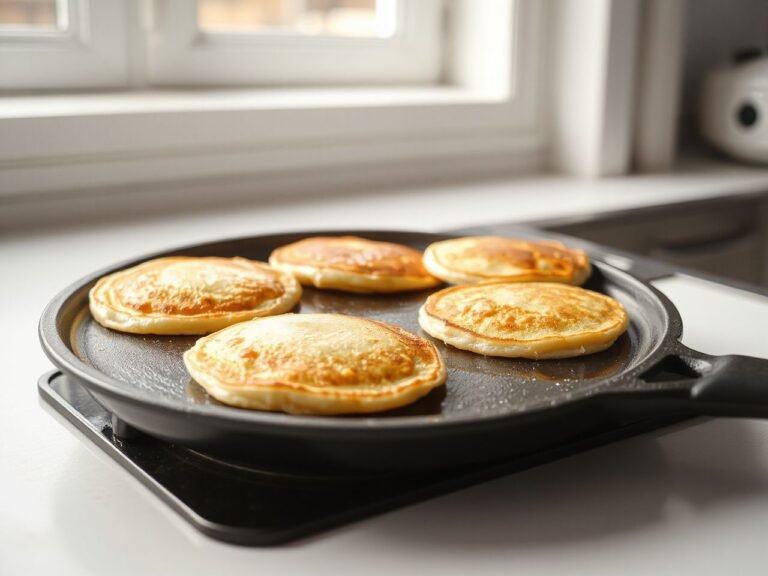
Nonstick shines at a narrow set of jobs. Eggs, omelets, crepes, pancakes, delicate white fish, and reheating without a puddle of oil, basically anything that tears or welds itself to bare metal, is where the coating earns its price.
What it does not do is sear. A proper crust on a steak or a scallop needs surface temperatures well above what any nonstick coating can tolerate, and pushing a nonstick pan that hot cooks the coating instead of the food. A nonstick pan is the wrong tool for browning meat, because the surface heat that builds a crust exceeds the coating’s safe limit. That work belongs to cast iron, carbon steel, or clad stainless.
This is the split most beginners miss. Treat nonstick as the gentle-heat specialist in the drawer, and let the iron handle anything that needs to hiss when it hits the pan.
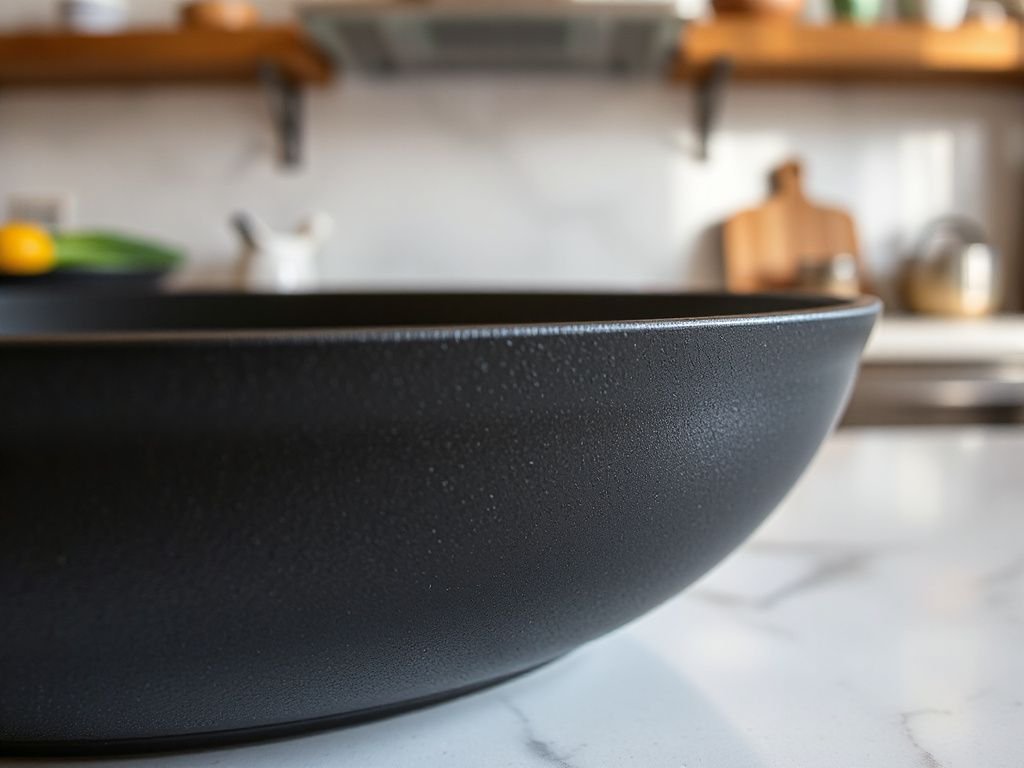
PTFE or ceramic? How to tell, and why it changes how you cook
Two coating families dominate the shelf, and knowing which one you are holding matters more than the brand stamped on the handle.
PTFE, the original nonstick
PTFE (polytetrafluoroethylene, still widely called Teflon) is the slick fluoropolymer that started the whole category. It releases food beautifully and holds that slickness for years. The trade-offs are firm: it will not survive metal utensils, and it breaks down at high heat.
Ceramic, the sol-gel newcomer
Ceramic nonstick is a silica-based sol-gel coating, sold under names like Thermolon and used by brands such as GreenPan. It contains no fluoropolymers, which is its main pitch. Here is the honest part most listings skip: ceramic is not inherently longer-lasting than modern PTFE. Ceramic sol-gel coatings often lose their slickness faster than PTFE, sometimes within a single year of regular use.
How do you tell them apart before buying? Read the spec sheet. PTFE pans usually carry a Teflon or fluoropolymer note, while ceramic pans lean on words like “ceramic,” “sol-gel,” or a branded coating name. If the listing is vague about which coating it uses, that silence is your answer. Some makers reinforce PTFE with a harder base layer, and our Scanpan frying pan review walks through one ceramic-titanium approach if you want to see how that plays out on a real product line.
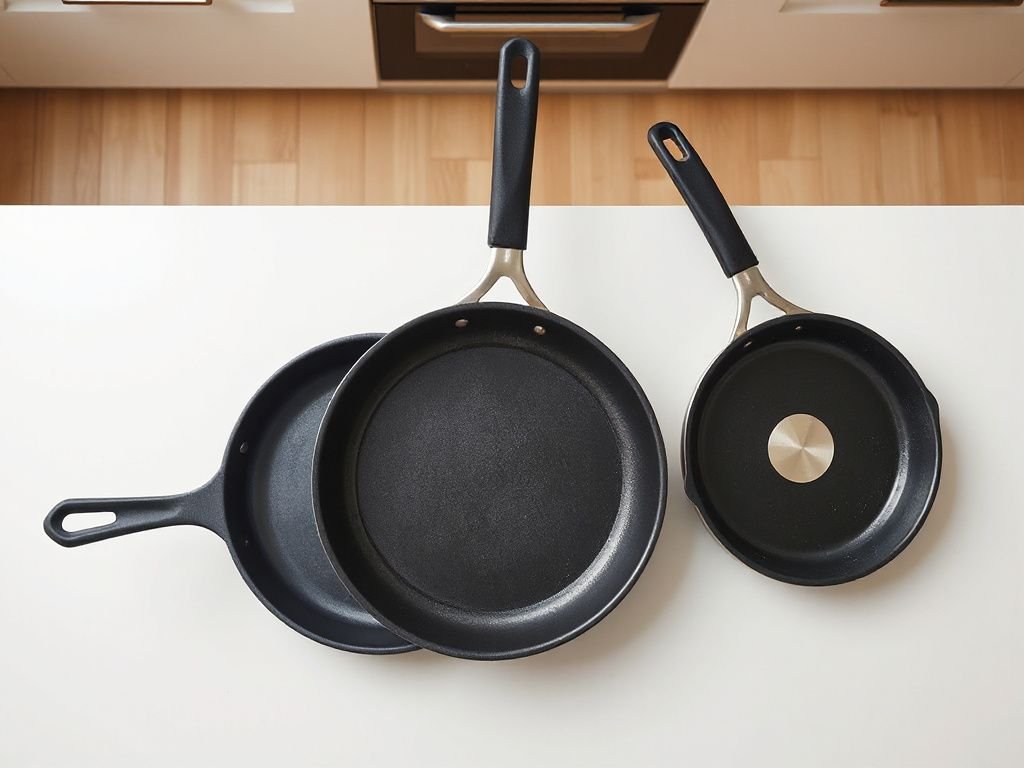
Why the coating quits after a year or two
A dying coating is rarely a manufacturing defect. Coatings are consumable by design, and your habits decide whether you get one year or five. The usual culprits are all avoidable.
- Empty preheating. A dry nonstick pan spikes in temperature fast with nothing to absorb the heat, and that is the quickest way to cook the coating.
- High heat. PTFE starts to degrade around 500°F (260°C), and habitual high-heat cooking shortens the coating’s life even below that point.
- Metal utensils. A steel spatula or a fork scores the surface, and every scratch is a spot where food starts to grab.
- The dishwasher. Harsh detergents and long hot cycles dull and micro-etch the coating, even on pans labeled dishwasher-safe.
- Thermal shock. Running a screaming-hot pan under cold water warps the base, and a warped base means uneven contact and hot spots that wear the coating unevenly.
None of that means your pan was bad. It means the coating did its job and then aged, which is exactly what coatings do. A nonstick pan is a replaceable item, unlike a seasoned cast iron skillet that improves for decades.
Is nonstick safe? The fumes question, answered plainly
Yes, with one real caveat about heat. Under normal cooking, PTFE is stable and inert, and food will not absorb it. The genuine risk is overheating an empty pan.
Heated past roughly 500°F (260°C), PTFE begins to break down and can give off fumes. The fix is not complicated: do not preheat a nonstick pan empty, and never use it for broiling or high-heat searing. That single habit removes almost all of the safety concern people worry about.
PFOA, a processing aid once used to manufacture PTFE, was phased out of cookware years ago. The U.S. Environmental Protection Agency tracks the broader class of PFAS chemicals that PFOA belonged to, and “PFOA-free” is now standard rather than a real point of difference. Read the label closely though: PFOA-free does not mean PFAS-free, and those two claims get conflated constantly.
If fluoropolymers bother you altogether, ceramic sol-gel pans contain none, which is a fair reason to choose them. Food-contact coatings sold in the United States are regulated as food-contact materials by the U.S. Food and Drug Administration, so a reputable pan from either family is safe within its intended heat range.
The build: weight, handles, and whether it works on induction
Does a heavier pan really perform better?
Up to a point, yes. Thickness buys even heat and a flat base that resists warping, and both protect the coating. Most quality nonstick pans use hard-anodized aluminum, sometimes wrapped in a three-ply or five-ply clad body with an aluminum core between steel layers. A too-thin pan develops hot spots and warps; those hot spots then wear the coating unevenly.
But weight past a certain point is not buying you better nonstick, because the coating sitting on top is the same either way. Extra thickness in a nonstick pan buys even heating and a flat base, not a tougher coating. Pay for the body, and understand the surface is still a wear item.
Riveted versus welded handles
Riveted handles are mechanically strong and rarely fail, but the rivet heads protrude into the pan and interrupt the cooking surface, giving food a spot to catch. Welded or rivetless handles leave a smooth interior that wipes clean in one pass, though weld quality varies by maker. Either works; just check that the handle feels solid and that oven-safe ratings cover how you cook.
Will it work on your induction cooktop?
Only if the base has a magnetic layer. Aluminum on its own will not work on induction, so the pan needs an induction-compatible base with a magnetic stainless steel layer bonded to the bottom. A nonstick pan works on an induction cooktop only if its base contains a magnetic stainless layer, which a fridge magnet confirms in two seconds. If a magnet snaps firmly to the bottom, you are set; if it slides off, that pan is for gas or electric only.
If you want to see how multi-ply clad construction is actually layered, the breakdown in our All-Clad frying pan review covers it, and our rundown of Made In cookware shows how another maker handles bonded stainless bases for induction.
Is an expensive nonstick pan worth it? A nonstick pan buying guide reality check
This is the honest crux of the whole decision. Because the coating is consumable, you are partly buying a wear item no matter what you spend, and no price tag changes that.
What extra money genuinely buys: a thicker, flatter body that heats evenly and resists warping, a more comfortable and better-attached handle, higher oven ratings, and sometimes a sturdier coating formulation. What it cannot buy is a coating that lasts forever, because even premium PTFE and ceramic wear on roughly the same schedule when treated the same way.
My take: buy in the middle. A well-built hard-anodized pan with a quality PTFE coating gives you flat, even heat and a surface that lasts years with care. The rock-bottom pans warp and their thin coatings fail early, while the luxury pans still wear out eventually, just with a nicer handle. Spend your “buy it for life” budget on cast iron or clad stainless, and treat nonstick as the affordable specialist you will replace every few years.
How to wash and store a nonstick pan so it lasts
Care is where a $40 pan outlives a $200 one that gets abused. The routine is short.
- Let it cool before washing. Dropping a hot pan into cold water warps the base and stresses the coating.
- Hand wash with warm, soapy water and a soft sponge. Skip abrasive pads and scouring powder entirely.
- Stay out of the dishwasher even when the label allows it, since the detergent and heat shorten coating life more than anything you would do by hand.
- Store with protection. If you stack pans, slip a cloth, paper towel, or pan protector between them so the coating never grinds against bare metal.
- Use wood, silicone, or nylon utensils and retire any tool with a chipped edge that could gouge the surface.
- Cook at medium or lower and always with a little fat, which keeps the coating cool and the release strong.
When a coating finally fails, most nonstick pans are not curbside-recyclable because the coating and mixed metals complicate processing, so check your local scrap-metal or recycling program rather than the blue bin. A well-cared-for nonstick pan typically gives three to five years of good release, after which the pan is spent rather than broken.
Frequently Asked Questions
How do I tell if a nonstick pan is PTFE or ceramic, and does it matter?
Check the spec sheet. PTFE pans note a fluoropolymer or Teflon coating, while ceramic pans use words like “ceramic” or “sol-gel” or a branded name such as Thermolon. It matters for how you cook: PTFE holds its release longer but hates metal utensils, while ceramic contains no fluoropolymers but often loses slickness sooner. Neither should ever be used for high-heat searing.
Why did my nonstick pan stop working after a year or two?
Because coatings are consumable, and use wears them out faster than age does. Empty preheating, high heat, metal utensils, and the dishwasher are the main killers. That gradual loss of release is normal, not a defect. A nonstick pan is a replaceable tool, unlike cast iron or clad stainless, so plan on replacing it every few years and treat it gently in the meantime.
Can I use metal utensils on a nonstick pan?
No, and this is the single fastest way to ruin a coating. A metal spatula or fork scores the surface, and every scratch becomes a spot where food grabs and the coating peels. Use wood, silicone, or nylon instead. This applies to both PTFE and ceramic, though ceramic is often marketed as tougher; in practice, keep metal away from either one.
What temperature is too hot for a nonstick pan?
PTFE begins to degrade around 500°F (260°C), so that is the ceiling, and honestly you should stay well below it. Medium heat covers nearly everything nonstick is meant for. Never preheat the pan empty and never put it under a broiler, since both push past the safe range quickly. If a dish needs high heat, that is a job for stainless or cast iron.
Can nonstick pans go in the oven or under the broiler?
Many go in the oven, but only up to their stated rating, commonly around 400 to 500°F, and the handle material matters as much as the coating. Broiling is different: it exposes the coating to direct radiant heat far above its limit, so keep nonstick out from under the broiler entirely. For high-heat oven work, our clad stainless options rundown covers pans built for it.