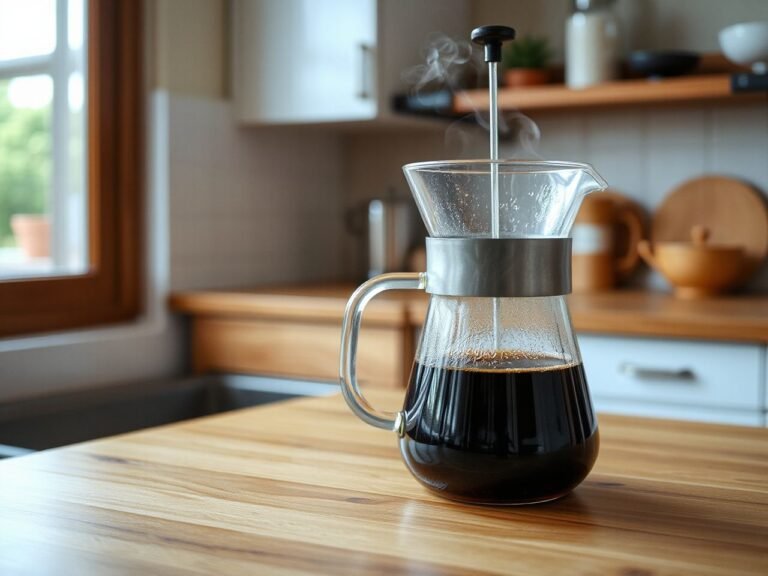
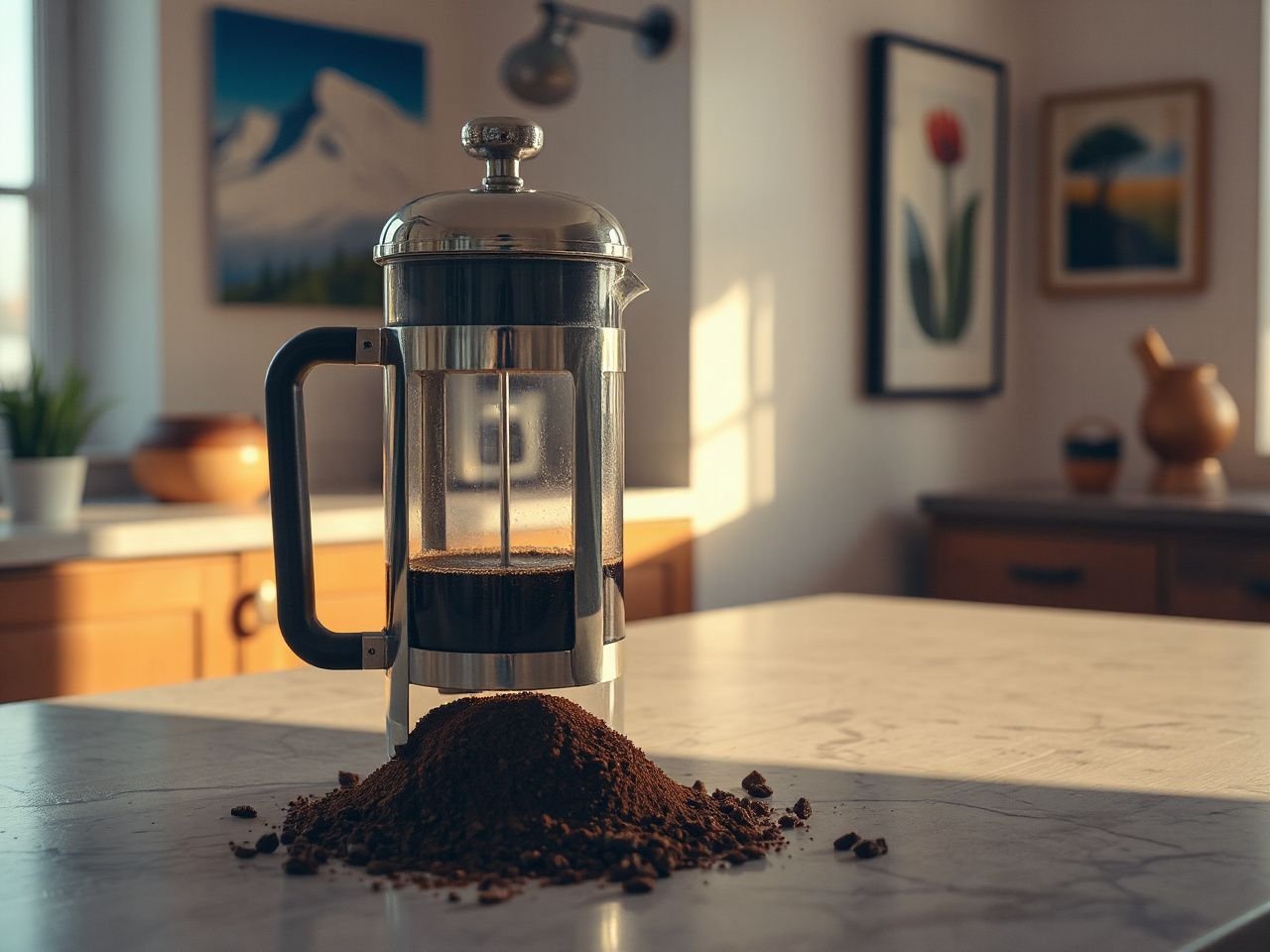
A French press uses a 1:15 coffee-to-water ratio: one cup of water for every three tablespoons of coffee. That simple proportion makes grind size easier to assess because the coffee grounds—not a changing dose—become the first variable to inspect. If you’re wondering what grind size a French press needs, start with coarse grounds. Then, judge the cup by its sediment, clarity, bitterness, and strength.
The key difference is between the nominal setting on a grinder and the particle distribution it actually produces. French press coffee needs grounds coarse enough to stay behind the mesh filter but fine enough for proper extraction during immersion. Diagnose the cup along with its sediment, clarity, bitterness, and strength, then adjust the grind size before changing several brewing variables at once.
Key Takeaways
- Use a coarse grind with particles resembling steel-cut oats or coarse sea salt.
- Move slightly finer only when the coffee tastes weak and the brewing process provides enough contact.
- Move coarser when the cup is bitter, harsh, muddy, or full of fine sediment.
What Grind Size Does a French Press Need?
Start with coarse grounds
A French press generally needs a coarse grind. The grounds should look like steel-cut oats or coarse sea salt rather than powder, sand, or table salt. Coarse particles allow water to move around them during immersion and help the mesh filter retain more of the coffee bed.
Coarse coffee grounds are the usual starting point for French press brewing. The appearance matters more than the label on the grinder dial because one grinder’s coarse setting might produce a different particle distribution from another’s.
Hold a small amount of ground coffee under good light before brewing. Large, distinct particles indicate a suitable starting point. If the mixture contains many powdery fragments, it shows the grinder produces fines alongside the larger grounds, even if the dial says coarse.
Choose medium-coarse when the cup needs more extraction
Medium-coarse grounds can make sense when a coarse brew tastes weak despite using the right ratio and following the standard method. The change should be small. A French press still needs enough particle size to prevent excess fines from passing through the mesh filter and ending up in the cup.
Very coarse grounds can produce weak or under-extracted coffee when the brewing process doesn’t give enough contact between water and coffee. A slightly finer setting increases surface area for the water to work on, but the grind should still look visibly coarse rather than like a pour-over grind.
Pour-over grind size is a useful contrast, not a target. A French press relies on immersion and a mesh filter, while a paper filter removes more fine material from a different brewing setup. Copying a pour-over setting into a French press can cause too much sediment and a harsher cup.
Why the grinder dial cannot answer by itself
A grinder’s setting is a reference point, not a guarantee of particle size. Burr shape, alignment, adjustment design, bean condition, and retained grounds can all influence the distribution a grinder produces. The cup supplies evidence: taste, visible sediment, and the resistance felt while pressing the plunger tell you more than just the word “coarse” on a dial.
A burr grinder produces more consistent particles than a blade grinder, making adjustments easier to judge. A blade grinder can break beans into large chunks and fine fragments. This makes it hard to know if bitterness came from the setting or from fines mixed throughout the batch.
Coffee Grinder Buying Guide: What to Know Before You Buy
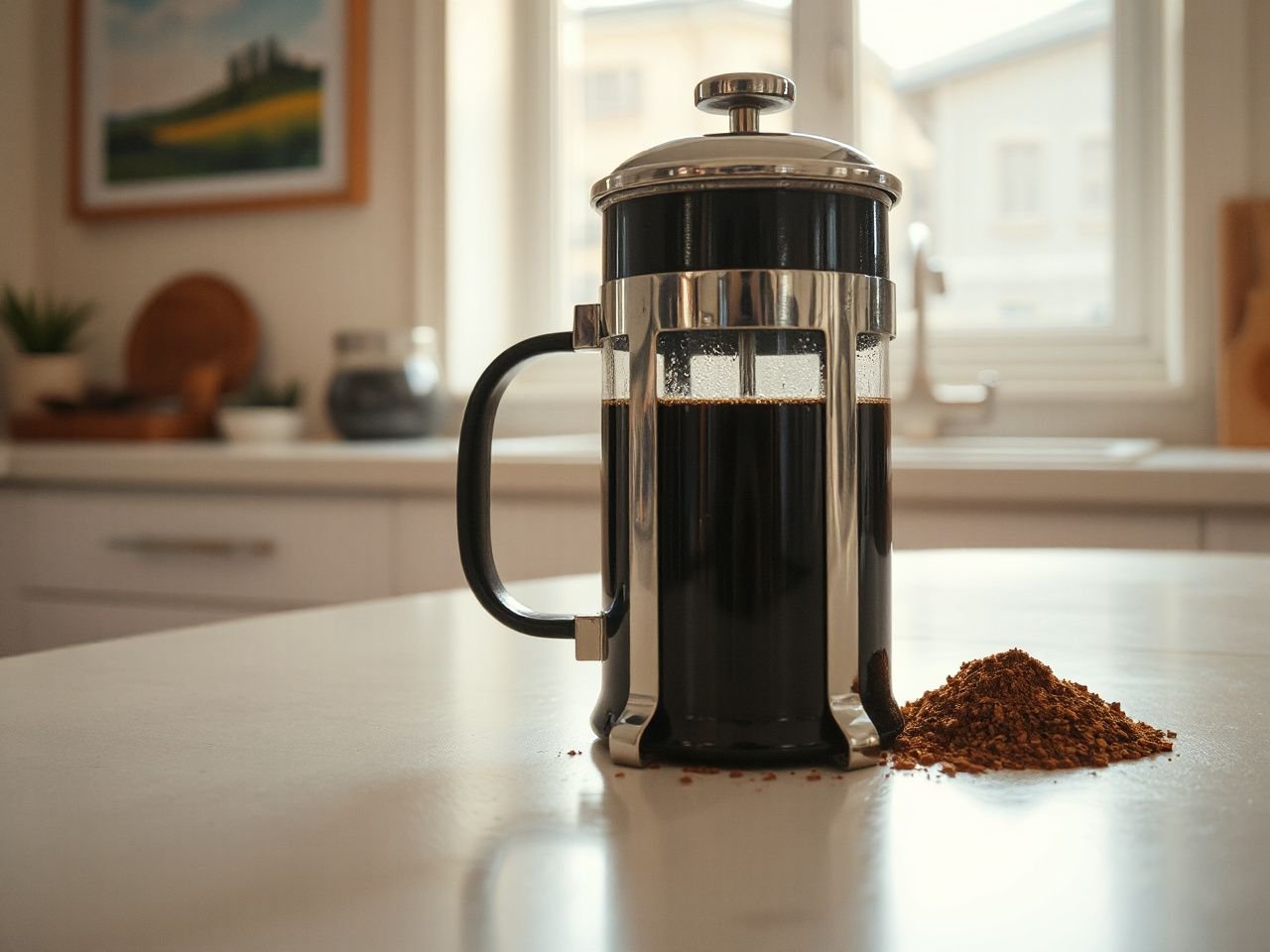
How Grind Size Changes French Press Extraction
Fine grounds extract more quickly
Smaller coffee particles expose more surface area to water. During immersion, this can speed up how fast soluble material moves from the coffee into the water. The same feature can also push fine particles through gaps in the mesh filter, leaving sediment and making the cup feel rough.
Very fine grounds can pass through the mesh filter, creating too much sediment, clogging the plunger, and over-extracting the coffee. Over-extraction often shows as bitterness, harshness, or a dry finish. These signs point to a coarser setting before making any other major change.
Fine particles extract readily and are more likely to increase sediment in a French press. The effect becomes especially noticeable when the ground coffee contains a broad spread of particle sizes rather than a mostly even coarse distribution.
Coarse grounds need enough contact
Larger pieces have less exposed surface area relative to their size. They can need enough immersion contact to produce a full-tasting cup. If the grounds are very coarse and the brewing process doesn’t provide enough contact, the coffee might taste thin, weak, or sour rather than balanced.
The usual French press brewing time is around four minutes, and the recommended water temperature is 200–205 degrees Fahrenheit. Keep these points steady when judging grind size. Changing grind, water temperature, ratio, and steeping time all at once makes it hard to tell what caused what.
A French press extracts coffee through contact between water and grounds during immersion. That’s why grind size impacts both how quickly extraction happens and how much fine material gets into the cup.
Read the cup and the sediment together
A bitter cup with heavy sludge suggests a different issue than a clean but weak cup. Taste alone can be misleading if there’s a lot of sediment because fine particles keep adding material even after brewing. Check the liquid and the bottom of the vessel before adjusting the recipe.
- Bitter or harsh with visible fines: move coarser and check whether the grinder is scattering powder through the batch.
- Weak with large, dry-looking particles: move slightly finer while keeping the other brewing variables steady.
- Strong but muddy: focus on particle consistency and gentle plunger technique rather than simply using less coffee.
- Clear but thin: assess grind size alongside the coffee-to-water ratio and the stated immersion duration.
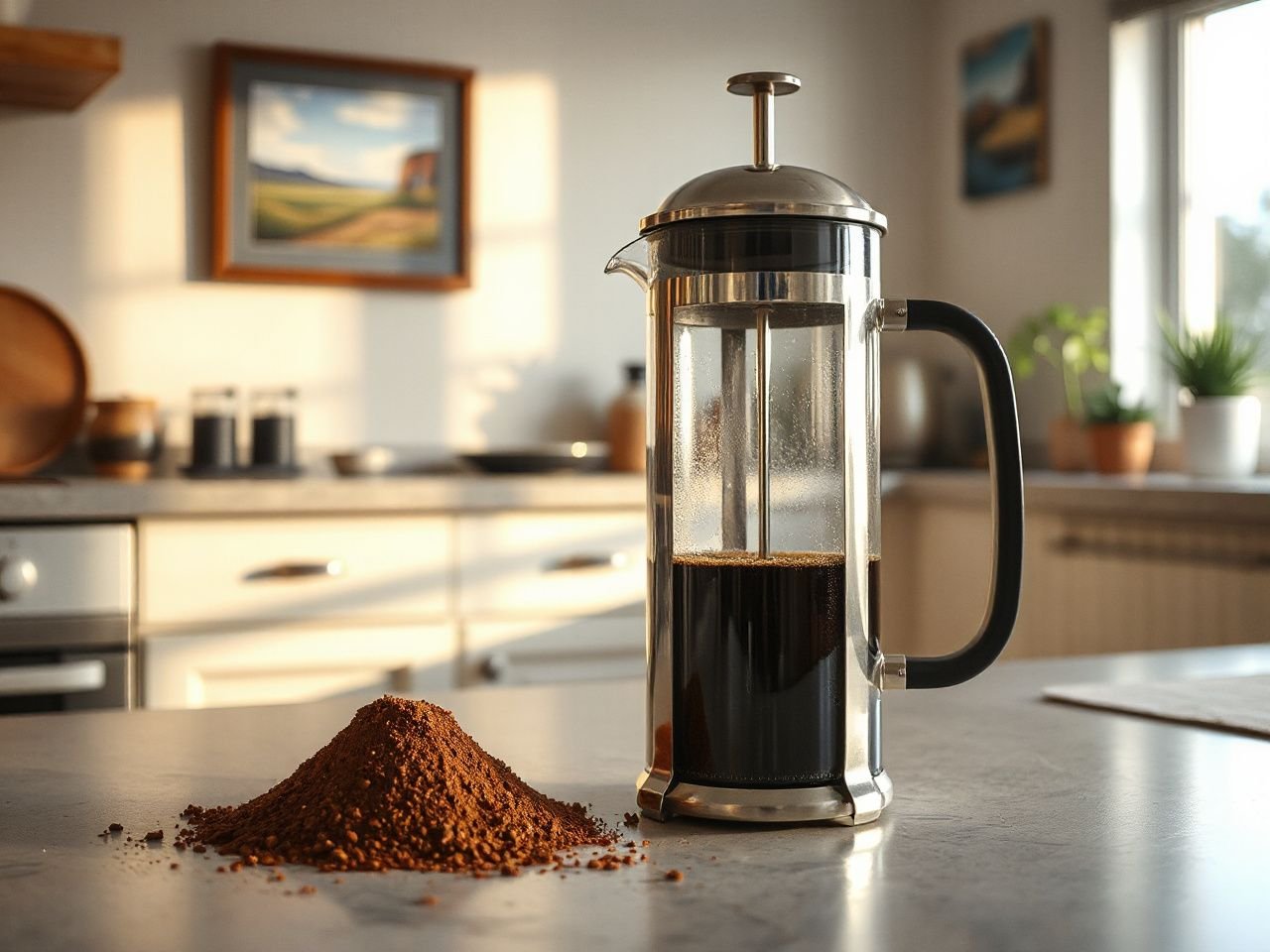
Step-by-Step: Adjust French Press Grind Size
Step One: Establish a repeatable starting point
Start with coarse grounds that look like steel-cut oats or coarse sea salt. Use the 1:15 ratio of one cup of water to three tablespoons of coffee, and keep the water temperature between 200–205 degrees Fahrenheit. Having a consistent starting point allows grind size to be the main variable for diagnosis.
Grind the beans shortly before brewing when possible. Freshly ground coffee makes it easier to evaluate adjustments because the batch is less likely to contain old particles from the grinder. Freshness doesn’t fix an unsuitable particle distribution, but it removes one potential source of confusion.
Step Two: Keep the brewing method steady
Use the standard brewing duration of approximately four minutes as your reference. Stirring, plunging, and pouring should be gentle and consistent from one brew to the next. A hard plunge can disturb the coffee bed and push more fine material through the mesh filter.
Water temperature for coffee brewing and the French press coffee-to-water ratio both influence extraction, so avoid changing them during the first grind adjustment. If the coffee tastes weak, do not immediately add more coffee and grind finer; first check that the grounds have actually been immersed and that the brewing duration has been reasonably consistent.
Step Three: Adjust coarser for harshness and sediment
Move to coarser grounds if the cup tastes bitter or harsh and there’s a noticeable layer of powder at the bottom. The goal isn’t maximum clarity at any cost. It’s to reduce fine material while keeping enough surface area for proper extraction.
Very fine grounds can also make pressing the plunger difficult. Stop forcing if resistance suddenly increases. A clogged mesh filter can cause pressure to build around the coffee bed, and forcing the plunger can disturb the grounds rather than produce a cleaner cup.
Step Four: Adjust finer for weakness
Go slightly finer if the coffee tastes weak and the grounds are large, as long as the water contact has been enough. Make the change gradually. If the next cup is bitter or muddy, the previous setting was probably closer to the right range.
Weakness can come from using an unsuitable ratio, not enough immersion, or water outside the recommended brewing range. Grind size is the first adjustment because it directly affects the coffee’s contact surface. But it’s not the only variable that influences strength.
Step Five: Record the result in plain language
Write down the grinder setting from the manual or dial, note how the grounds look, and identify the main defect in the cup. Notes like “coarse, clean, weak” are more helpful than vague judgments that the coffee was bad. Having clear notes gives each adjustment a specific purpose.
A grinder setting is useful only when it can be connected to the resulting particle distribution. The dial tells you where you started; the coffee tells you what the setting produced.
Choosing a Grinder and Managing Sediment
Why a burr grinder helps
A burr grinder creates more consistent particles than a blade grinder, which makes French press adjustments easier to judge. Consistent doesn’t mean every particle is exactly the same. It means the batch isn’t dominated by a confusing mix of large pieces and powder.
A blade grinder may still produce usable coffee, particularly if you inspect the grounds and accept that the cup may contain more sediment. Avoid treating repeated pulsing as a substitute for particle control. The motor, cutting action, and load all influence what reaches the mesh filter, and a heavier batch may behave differently from a small one.
From an appliance-analysis perspective, the motor deserves attention before the grind dial. A grinder intended for a light batch should not automatically be treated as suitable for repeated heavy loads. Read the manufacturer’s instructions for the permitted load and operating method, and clean retained grounds so old particles do not alter the next brew.
How to reduce sediment without making coffee thin
Start by reducing the fines at the grinder rather than removing the coffee’s body with an improvised paper filter. A paper coffee filter can trap more particles, but it also changes the amount of coffee oils and suspended material that reach the cup. A French press is designed around a mesh filter, so a coarse and more consistent grind is the simpler first correction.
Pour slowly after plunging and leave the last cloudy part in the press if it shows sediment. Don’t stir the bottom right before serving. Gentle handling keeps settled material from being stirred back into the drink.
A consistent coarse grind reduces sediment while preserving the coffee oils associated with mesh-filter brewing. If the cup becomes thin after filtering, the process has removed more suspended material than the recipe needed to remove.
Can pre-ground coffee work?
Pre-ground coffee can work in a French press when the grind is visibly coarse and the coffee has been stored well. The limitation is control: you cannot change the particle distribution after grinding, and the package may not match the coarse texture your press needs.
Pour a little of the pre-ground coffee into your hand or onto a clean surface and inspect it. Grounds that resemble coarse sea salt are closer to the intended starting point than grounds that look dusty or powdery. If the pre-ground coffee is too fine, a different brewing method may produce a cleaner result than forcing it through a French press mesh filter.
Cleaning the grinder and press
Empty the grinder after use and remove retained grounds according to the manufacturer’s cleaning instructions. Stale particles left inside can mix with a later batch, altering both flavour and the apparent grind size. Do not introduce water into a grinder unless its instructions specifically permit that method.
Disassemble the French press only as directed by its manufacturer, then remove coffee grounds before washing the mesh filter and glass or container. Coffee sediment can remain trapped around the plunger assembly, so inspect the filter rather than rinsing only the main vessel.
The U.S. Food and Drug Administration publishes general food-safety information, so its guidance is a suitable reference for questions about keeping food-contact equipment clean. The U.S. Consumer Product Safety Commission publishes consumer product safety information, which is useful when a damaged press, plug, or appliance raises a safety concern.
Cost, Batch Size, and Appliance Load
Does grind size change how much coffee you use?
Grind size does not change the stated amount in the 1:15 recipe by itself. Three tablespoons of coffee remains three tablespoons in that starting formula. Grind size changes how that coffee interacts with water and how much usable coffee reaches the cup after fines settle or remain suspended.
A finer grind can make a cup seem stronger because extraction and suspended material increase. But a stronger impression isn’t the same as balanced coffee. If bitterness rises, reducing the dose without fixing the particle distribution may leave the underlying problem untouched.
Does grind size affect ongoing cost?
Cost is more directly linked to dose, waste, and consistency than to the coarse setting alone. A grinder that produces an uneven batch may encourage repeated brews or discarded coffee while you chase a better cup. A consistent grinder can make adjustments more predictable, though the appliance’s suitability for the batch size still matters.
Check the grinder manual for its intended use before processing a heavy batch. A motor rating is relevant only when the manufacturer states what the appliance is designed to handle; a dial position cannot prove that the motor is suited to a demanding load. This is the same basic check used for any kitchen appliance: inspect the working limit before asking the mechanism to perform a difficult task.
Stand Mixer Bowl Sizes Explained: What Changes Results
How much coffee should one person brew?
For a smaller brew, apply the same ratio rather than guessing from the grind setting. The verified starting point is one cup of water for every three tablespoons of coffee. Keep the particle size coarse and judge the finished cup by strength, bitterness, clarity, and sediment.
Batch size can affect how a grinder behaves, especially if the manual gives separate instructions for light and heavy loads. Use the machine’s stated operating guidance. Don’t assume that a short batch and a large batch will produce the same distribution at an identical dial position.
Frequently Asked Questions
What grind size should I use for a French press?
Use a coarse grind that resembles steel-cut oats or coarse sea salt. Coarse grounds are less likely to pass through the mesh filter and usually provide a suitable extraction surface during immersion. If the coffee tastes weak with large particles, move slightly finer. If the cup tastes bitter, harsh, or muddy, move coarser and check for powdery fines.
How do I choose between coarse and medium-coarse grounds?
Start coarse, then only switch to medium-coarse if the cup remains weak despite a consistent ratio, water range, and about four minutes of brewing. Medium-coarse grounds increase contact surface, but they can also raise sediment levels. Make one small adjustment at a time to see if the taste and particle distribution improve.
Why is my French press coffee bitter or harsh?
Very fine grounds can over-extract during immersion and can pass through the mesh filter, creating a gritty cup. Move coarser, check for fines from the grinder, and avoid changing the ratio and brewing duration at the same time. A hard plunge can also disturb sediment, so press gently and leave visibly cloudy liquid at the bottom of the press.
Why is my French press coffee weak after steeping?
Very coarse grounds might produce weak coffee if there’s not enough contact between water and coffee. Confirm the 1:15 ratio and water range, then consider moving slightly finer. A burr grinder makes this easier to judge because its particles are more consistent than those from a blade grinder.
How can I reduce sediment without making coffee taste thin?
Use a more consistent coarse grind before adding a paper coffee filter. Very fine particles are more likely to pass through the mesh and stay suspended. Plunge gently, pour slowly, and avoid stirring the coffee settled at the bottom of the press. These steps help reduce disturbed sediment and keep more of the coffee oils, which are better preserved with mesh filtration.
Is a burr grinder better than a blade grinder for French press coffee?
A burr grinder is easier to adjust because it produces more consistent particles than a blade grinder. A blade grinder can create both large pieces and powder, making bitterness and sediment harder to diagnose. The motor and permitted load also matter. Follow the manufacturer’s instructions before processing a heavy batch.
Can I use pre-ground coffee in a French press?
Yes, provided the pre-ground coffee is coarse enough for the mesh filter. Check the grounds before brewing; a texture like coarse sea salt is closer to the desired starting point than a dusty or sandy texture. Pre-ground coffee offers less control because you can’t change the particle distribution after buying it.
Does grind size affect how much coffee I use or the ongoing cost?
Grind size doesn’t change the starting 1:15 ratio, which uses one cup of water for every three tablespoons of coffee. It can affect waste when an uneven grind produces bitter, muddy, or weak brews that get discarded. A consistent grind makes it easier to repeat the dose, while the grinder’s batch guidance should determine how much it can process.
How should I clean a grinder and French press after brewing?
Remove retained coffee grounds from the grinder according to its manual, and do not add water unless the instructions allow it. Empty the French press, inspect the mesh filter and plunger assembly, and wash the food-contact parts as directed. General cleaning questions can be checked against information from the U.S. Food and Drug Administration, while appliance hazards belong with the U.S. Consumer Product Safety Commission.