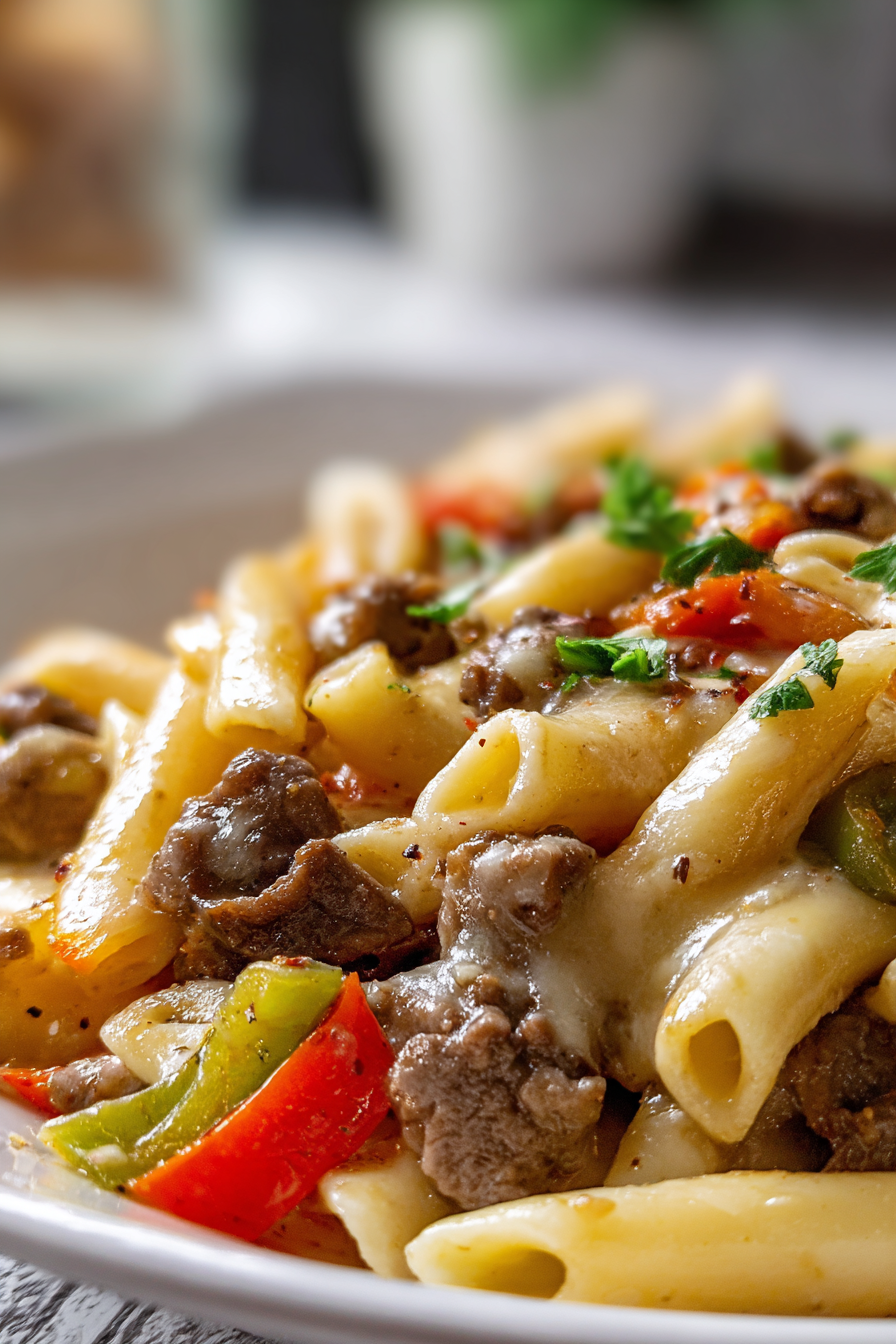
Nothing beats the satisfaction of combining two beloved comfort foods into one incredible dish. My Philly Cheesesteak Pasta brings together the iconic flavors of Philadelphia’s most famous sandwich with the hearty comfort of creamy pasta. This fusion creates a meal that’s both nostalgic and exciting, perfect for busy weeknights when you crave something special.
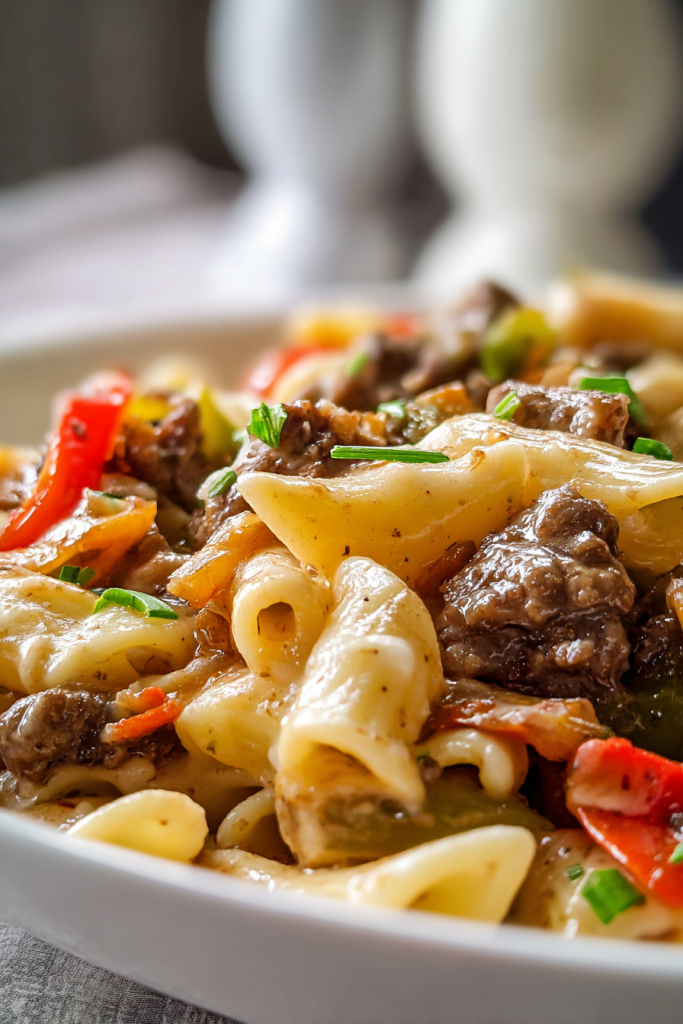
I discovered this recipe during a particularly hectic week when I wanted the flavors of a classic cheesesteak but needed something more filling for my family. The result exceeded all expectations. The creamy sauce perfectly captures the essence of melted cheese from the original sandwich, while the tender beef and sautéed vegetables provide that authentic Philly experience we all love.
The Story Behind Philly Cheesesteak
The original Philly cheesesteak emerged in Philadelphia during the 1930s. Brothers Pat and Harry Olivieri created this iconic sandwich using thinly sliced beef, onions, and cheese on a hoagie roll. The sandwich quickly became a local sensation and eventually gained nationwide popularity.
My pasta adaptation maintains the core elements that make a cheesesteak special. The combination of beef, onions, bell peppers, and melted cheese creates that unmistakable flavor profile. However, transforming it into a pasta dish makes it more family-friendly and filling.
Why This Recipe Works
This Philly Cheesesteak Pasta succeeds because it respects the original while embracing the comfort of pasta. The cream cheese creates a luxurious base that binds all ingredients together. Meanwhile, the provolone cheese provides that classic cheesesteak taste we crave.
The dish comes together quickly, making it perfect for weeknight dinners. You can have everything ready in just 25 minutes from start to finish. The one-pan approach also means minimal cleanup, which busy families appreciate.
Ingredients Breakdown
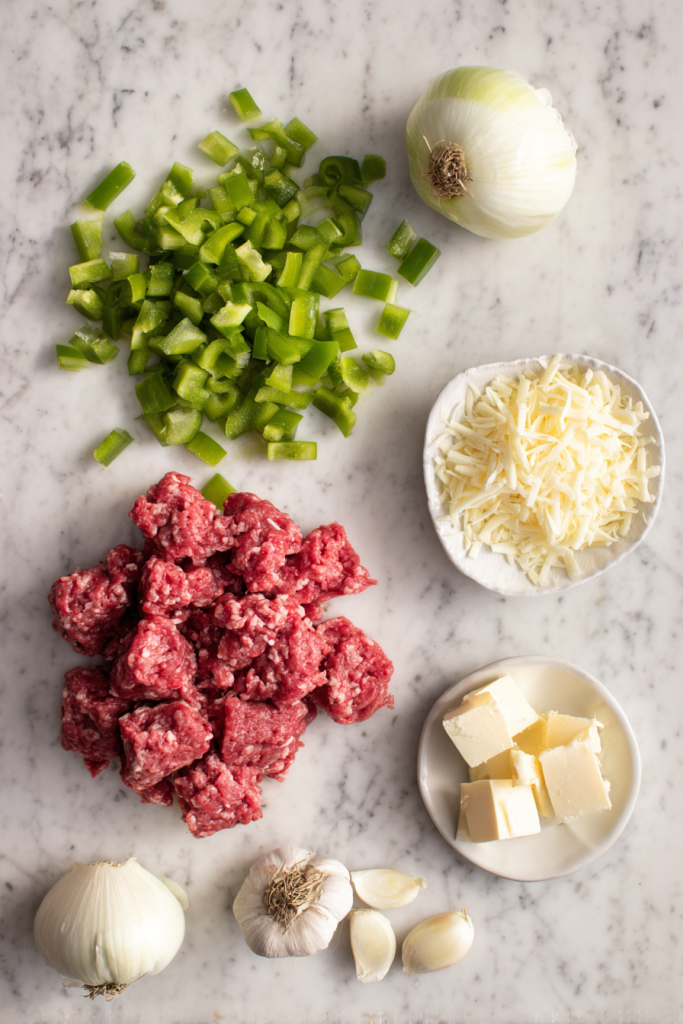
| Ingredient | Quantity | Notes |
|---|---|---|
| Ground beef or steak strips | 1 lb | Ribeye or sirloin work best for strips |
| Green bell pepper | 1 medium | Diced uniformly for even cooking |
| Onion | 1 medium | Yellow or white onion preferred |
| Garlic | 2 cloves | Minced fresh for best flavor |
| Cream cheese | 8 oz | Softened to room temperature |
| Provolone cheese | 1 cup shredded | Fresh shredded melts better |
| Pasta | 12 oz | Penne or rigatoni recommended |
| Beef broth | 1 cup | Low-sodium preferred |
| Olive oil | 1 tbsp | Extra virgin for best flavor |
| Salt and pepper | To taste | Adjust according to preference |
The beauty of this recipe lies in its simplicity. Each ingredient serves a specific purpose in creating the final dish. Ground beef provides convenience and quick cooking, while steak strips offer a more authentic cheesesteak experience.
Prep Time: 10 minutes | Cook Time: 15 minutes | Total Time: 25 minutes
Servings: 4 | Difficulty: Easy
Detailed Instructions and Cooking Process
Step 1: Preparing the Pasta Foundation
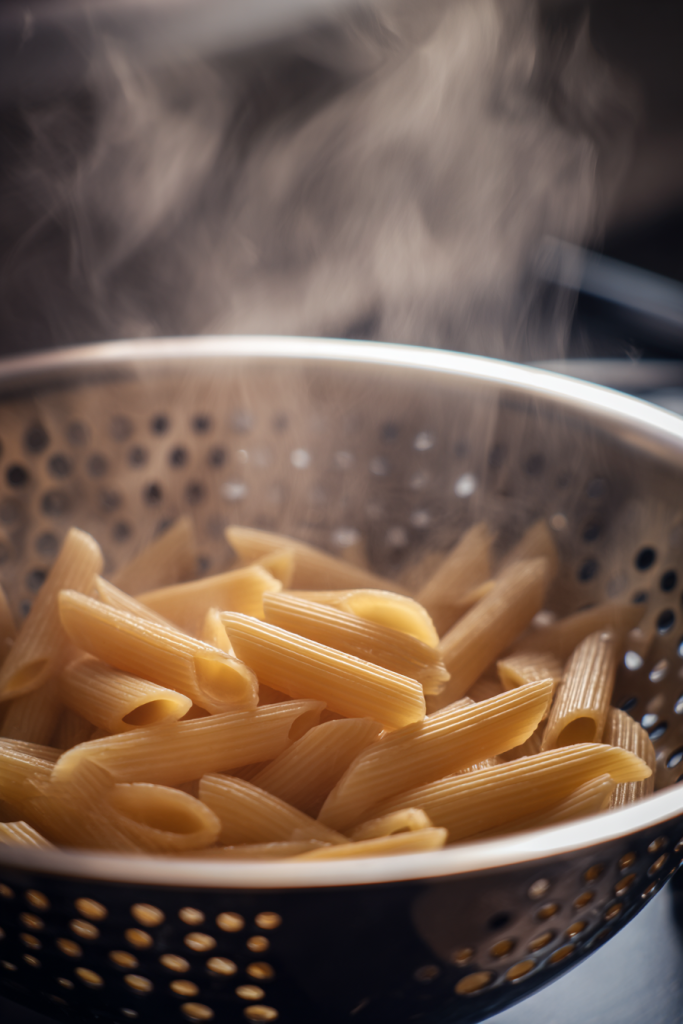
Start by bringing a large pot of salted water to a rolling boil. Use about 1 tablespoon of salt per 4 quarts of water. This step is crucial because it seasons the pasta from within as it cooks.
Add your 12 ounces of pasta to the boiling water and stir immediately. Cook according to package directions, typically 9-11 minutes for al dente. Test the pasta a minute before the recommended time by tasting it. You want it tender but with a slight firmness when bitten.
Drain the pasta and return it to the pot. Avoid rinsing it, as the starch helps the sauce adhere better. Toss with a light drizzle of olive oil if it needs to wait before being combined with the sauce.
Step 2: Building the Flavor Base
While the pasta cooks, heat 1 tablespoon of olive oil in a large skillet over medium heat. The skillet should be large enough to eventually hold all the pasta, so choose accordingly.
Add the diced onion and green bell pepper to the hot oil. Sauté for 4-5 minutes, stirring occasionally. The vegetables should soften and become fragrant, but maintain a slight bite. Overcooking makes them mushy and less appealing in the final dish.
During the last minute of cooking the vegetables, add the minced garlic. Garlic cooks quickly and can become bitter if added too early. Stir constantly for about 60 seconds until aromatic.
Step 3: Cooking the Perfect Beef
Push the vegetables to one side of the skillet and add your ground beef to the empty space. If using steak strips, season them with salt and pepper before adding to the pan.
For ground beef, break it up with a spatula as it browns. Cook for 6-8 minutes, stirring frequently to ensure even browning. The beef should be completely cooked with no pink remaining.
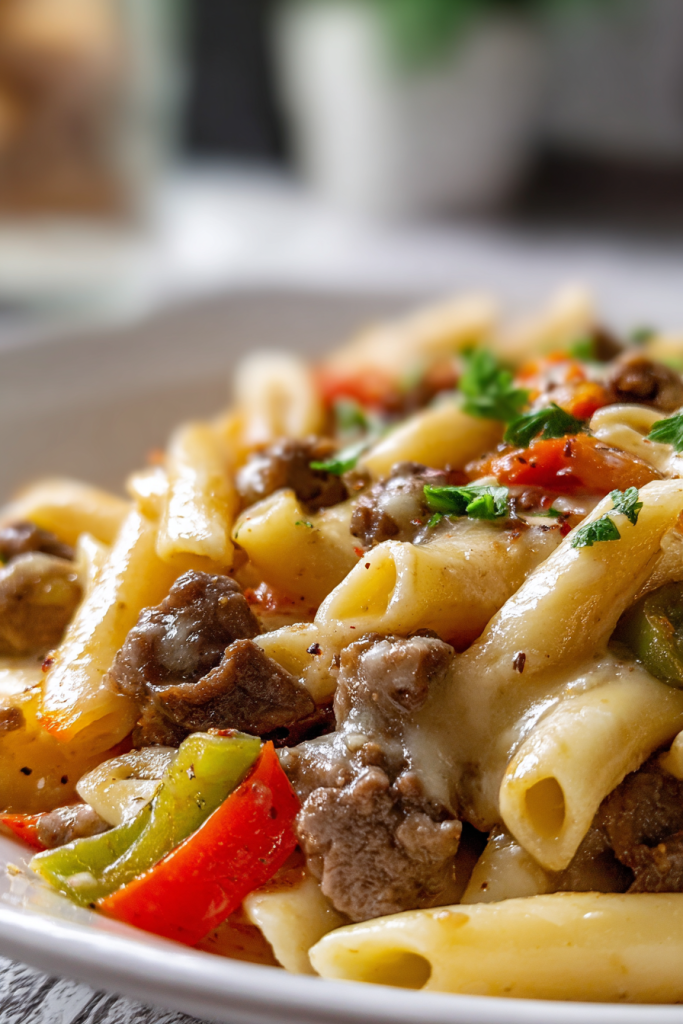
For steak strips, cook in a single layer for 4-5 minutes, turning occasionally. The goal is to develop a nice brown crust while keeping the interior tender and juicy.
Season the cooked meat with salt, pepper, and a dash of garlic powder if desired. This enhances the savory flavors that make the dish irresistible.
Step 4: Creating the Creamy Sauce
Reduce the heat to medium-low and add the softened cream cheese to the skillet. It’s essential that the cream cheese is at room temperature for smooth melting. Stir constantly to break it up and incorporate it with the meat and vegetables.
Once the cream cheese begins to melt, slowly pour in the beef broth while continuing to stir. The broth thins the cream cheese, creating a smooth, creamy sauce. If the sauce seems too thick, add more broth one tablespoon at a time.
The sauce should coat the back of a spoon but not be overly thick. If it appears to curdle, reduce the heat further and stir more vigorously until smooth.
Step 5: Combining and Finishing
Add the cooked pasta to the skillet and toss until every piece is coated with the creamy sauce. The pasta should be fully integrated, ensuring each bite delivers the complete flavor experience.
Sprinkle the shredded provolone cheese evenly over the top of the pasta. Place the entire skillet under the broiler for 3-5 minutes, watching carefully to prevent burning.
The cheese should be melted, bubbly, and lightly golden on top. Remove from the oven and let it rest for a minute before serving. This allows the cheese to set slightly, making it easier to serve.
Professional Tips for Success
Temperature control is crucial throughout this process. Keep the heat at medium or medium-low once you add the cream cheese to prevent curdling. If your sauce breaks, don’t panic – remove it from heat and whisk vigorously until it comes back together.
For extra richness, reserve a cup of pasta cooking water before draining. This starchy water can help adjust the sauce consistency if needed. Add it gradually while tossing the pasta with the sauce.
Timing is everything with this recipe. Have all ingredients prepped before you start cooking, as the process moves quickly once you begin.
Variations, Tips, and FAQs
Customization Options
This recipe is wonderfully adaptable to different tastes and dietary needs. For a spicier version, add sliced jalapeños with the bell peppers or include red pepper flakes when seasoning the meat. The heat complements the creamy cheese sauce beautifully.
Vegetarian families can substitute the beef with meaty mushrooms like portobello or cremini. Slice them thick and sauté until golden brown. Plant-based meat alternatives also work well, cooking them according to package directions.
For cheese lovers, experiment with different varieties. Sharp cheddar creates a more pronounced flavor, while mozzarella offers mild creaminess. You can even combine cheeses for a more complex taste profile.
Healthier Alternatives
Reducing calories doesn’t mean sacrificing flavor. Use light cream cheese instead of regular to cut fat content significantly. Greek yogurt can partially replace cream cheese for added protein and tanginess.
Whole wheat pasta increases fiber content and adds a subtle nutty flavor. For gluten-free diets, rice-based or chickpea pasta work excellently. Just follow the package cooking instructions carefully, as cooking times may vary.
Adding extra vegetables like spinach, zucchini, or mushrooms boosts nutritional value while maintaining delicious taste. These additions also help stretch the recipe to serve more people.
Storage and Reheating
Leftover Philly Cheesesteak Pasta stores well in the refrigerator for up to 3 days. Place it in an airtight container once completely cooled. The flavors often develop and improve overnight.
When reheating, add a splash of beef broth or milk to restore the creamy consistency. Heat gently in a skillet over medium-low heat, stirring occasionally. Alternatively, microwave in 30-second intervals, stirring between each heating.
For meal prep enthusiasts, this recipe can be partially prepared ahead. Cook the meat and vegetable mixture, then store separately from the cooked pasta. Combine and add the sauce when ready to serve.
Serving Suggestions
This rich pasta pairs beautifully with lighter sides. A crisp Caesar salad or simple mixed greens with vinaigrette balances the creamy richness. Garlic bread is always welcome, though it makes the meal quite indulgent.
For wine pairings, choose something that can stand up to the rich flavors. A medium-bodied red wine like Merlot or Chianti complements the beef beautifully. Beer lovers should try a crisp lager or wheat beer to cleanse the palate.
Frequently Asked Questions
Can I use different types of pasta?
Absolutely! While penne and rigatoni are ideal for their sauce-holding capabilities, other short pasta shapes work well. Fusilli, ziti, and farfalle all capture the creamy sauce effectively. Avoid long pasta like spaghetti, as it doesn’t hold the thick sauce as well and can become messy to eat.
What cheese can I substitute for provolone?
Mozzarella is the closest substitute, offering excellent meltability and mild flavor. American cheese provides that classic processed cheese taste many associate with cheesesteaks. Sharp cheddar adds more pronounced flavor but will make the dish tangier. For ultimate creaminess, try combining two different cheeses.
Can I make this dish ahead of time?
Yes, this recipe works well for advance preparation. Cook completely, then cool and refrigerate for up to 3 days. When reheating, add liquid (broth or milk) to restore creaminess and heat gently to prevent the sauce from breaking. The flavors often improve after sitting overnight.
How do I make this recipe gluten-free?
Use certified gluten-free pasta made from rice, corn, or chickpea flour. Ensure your beef broth is also gluten-free, as some brands contain wheat-based thickeners. All other ingredients in this recipe are naturally gluten-free.
Is there a dairy-free version?
Create a dairy-free version using plant-based cream cheese and dairy-free shredded cheese. Many brands now offer convincing alternatives that melt well. Cashew-based cream cheese provides particularly good results. Check that your broth is also dairy-free, as some brands contain milk products.
Final Thoughts
Philly Cheesesteak Pasta represents the best of both worlds – the iconic flavors of Philadelphia’s most famous sandwich combined with the comfort and satisfaction of creamy pasta. This recipe proves that fusion cuisine doesn’t have to be complicated to be extraordinary.
The beauty lies in its flexibility. Whether you’re cooking for picky eaters, health-conscious family members, or dinner party guests, this dish adapts to meet various needs and preferences. The one-pan approach makes it practical for busy weeknights, while the impressive presentation suits special occasions.
Don’t be afraid to make this recipe your own. Cooking should be an expression of personal taste and creativity. Start with this foundation, then experiment with different meats, vegetables, and cheeses to create your perfect version.
Remember that the best meals bring people together. This Philly Cheesesteak Pasta does exactly that – creating moments of shared enjoyment around the dinner table. Whether it becomes a regular weeknight favorite or a special occasion dish, it’s sure to create lasting food memories for you and your loved ones.
Easy Philly Cheesesteak Pasta
Ingredients
- 1 lb ground beef or steak strips
- 1 green bell pepper diced
- 1 onion diced
- 2 cloves garlic minced
- 8 oz cream cheese softened
- 1 cup shredded provolone cheese
- 12 oz pasta penne or rigatoni recommended
- 1 cup beef broth
- Salt and pepper to taste
- 1 tbsp olive oil
Instructions
- Bring a large pot of salted water to boil. Cook pasta according to package directions until al dente. Drain and set aside.
- Heat olive oil in a large skillet over medium heat. Add diced onion and bell pepper. Sauté for 4-5 minutes until softened.
- Add minced garlic and cook for 1 minute until aromatic.
- Add ground beef to skillet. Cook for 6-8 minutes, breaking up with spatula, until fully browned. Season with salt and pepper.
- Reduce heat to medium-low. Add softened cream cheese, stirring constantly until melted.
- Gradually pour in beef broth while stirring to create smooth sauce. Adjust consistency with additional broth if needed.
- Add cooked pasta to skillet and toss until well coated with sauce.
- Sprinkle provolone cheese evenly over top. Place under broiler for 3-5 minutes until cheese is melted and golden.
- Remove from oven and let rest 1 minute before serving.
Notes
Reserve pasta water to adjust sauce consistency if needed
Can substitute ground beef with steak strips for more authentic texture
Store leftovers in refrigerator for up to 3 days
Reheat gently with splash of broth to restore creaminess