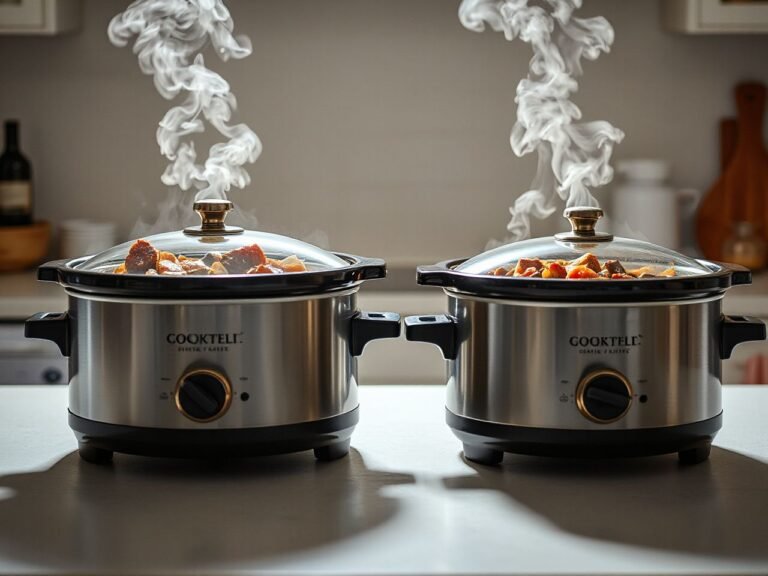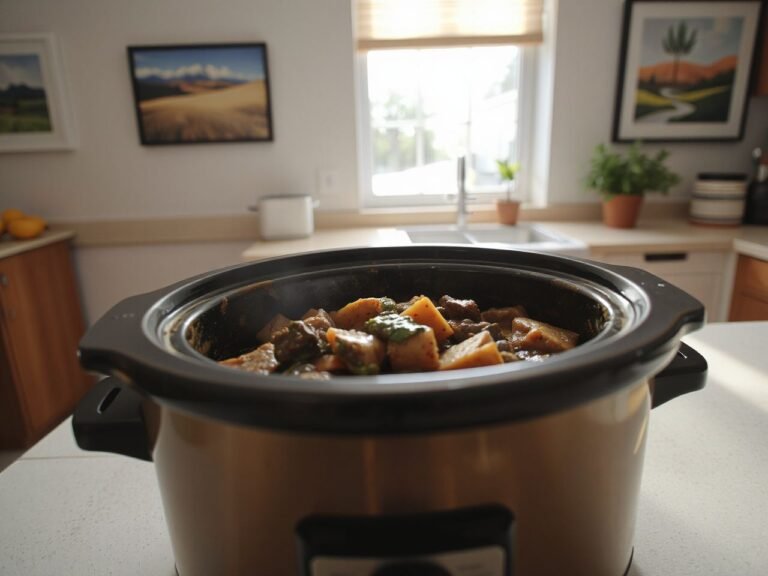
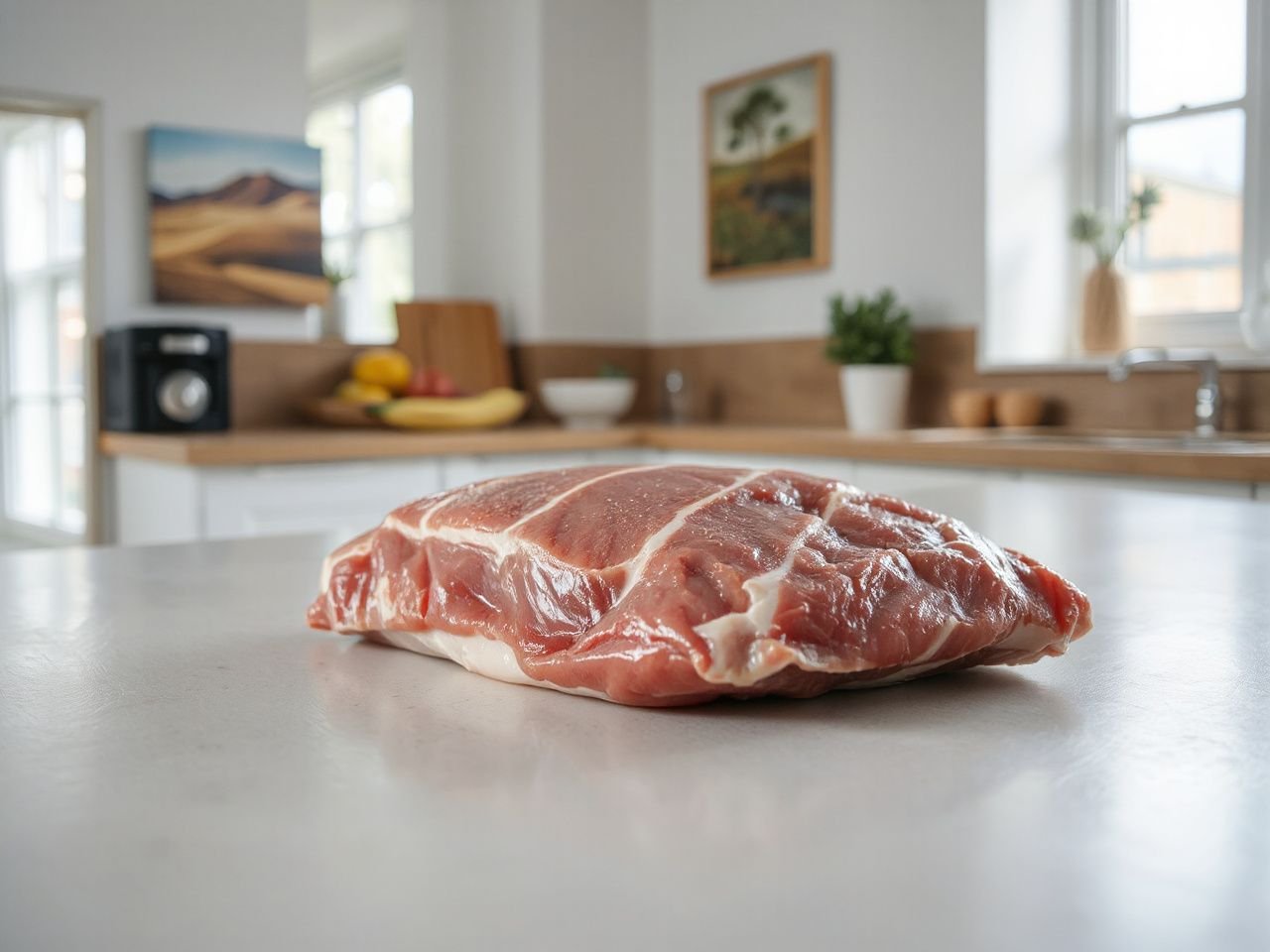
Frozen meat can stay in a bacterial growth range if it’s put directly into a slow cooker. It’s safer to thaw the meat first. Slow cookers are meant to cook food slowly, not to thaw a solid piece of meat safely. The early heating stage is where the risk is highest. Meat can become soft while the thickest part isn’t yet at a safe internal temperature, so tenderness and food safety are different issues. For more on how much space a cooker needs for even heating, see how full a slow cooker should be.
Key Takeaways
- Thaw frozen meat before placing it in a slow cooker.
- Use a refrigerator, cold-water bath, or microwave oven for thawing; avoid countertop thawing and warm water.
- Microwave-thawed meat should be cooked promptly rather than held for later.
- Check the thickest part with a food thermometer and follow a reliable recipe or food-safety authority.
Why is it unsafe to put frozen meat in a slow cooker?
Frozen meat isn’t safe to cook directly in a slow cooker because the center warms slowly, but the outside might look cooked. This can leave the inside in the bacterial growth zone for too long. While slow cookers are good for thawed ingredients, that gradual heat isn’t a safe way to thaw meat.
A frozen roast, chicken portion, or other solid piece does not heat as one uniform mass. The outer surface receives heat from the insert and surrounding liquid first, while the frozen center remains cold. A thick piece therefore creates a greater challenge than separated, thawed pieces because heat must travel farther before the middle reaches a safe endpoint.
Raw meat juices can spread on the insert, utensils, worktop, and fridge during handling. The risk isn’t gone just because the outside looks brown or the meat pulls apart easily. A soft texture means it’s cooked, not that it’s safe in the middle.
What happens inside the slow cooker?
A slow cooker warms the insert and food gradually. Frozen meat can stay in a partly frozen state for a long time before the center gets hot. The liquid around it might look hot, but the dense middle can stay much colder.
Slow-cooker cooking is therefore a poor way to thaw meat. A refrigerator, cold-water bath, or microwave oven performs the thawing job separately, allowing the slow cooker to focus on cooking rather than bringing a frozen block through its early heating stage.
The amount and arrangement of food matter as well. A single dense piece, several pieces pressed together, and separated thawed portions do not present the same heating path. The meat type, thickness, size, and position in the insert can all change how quickly the center heats.
Does the high setting make frozen meat safe?
Using a high setting on the slow cooker doesn’t make frozen meat safe to start with. It may change how the appliance heats, but it doesn’t fix the uncertainty caused by a frozen center, a thick piece, an overloaded insert, or tightly packed portions.
There’s no responsible way to give one cooking time for all frozen beef, pork, poultry, or lamb in a slow cooker. A recipe designed for thawed meat doesn’t automatically become suitable for frozen meat just because you change the setting. Use the recipe’s intended starting condition and verify the finished food with a thermometer.
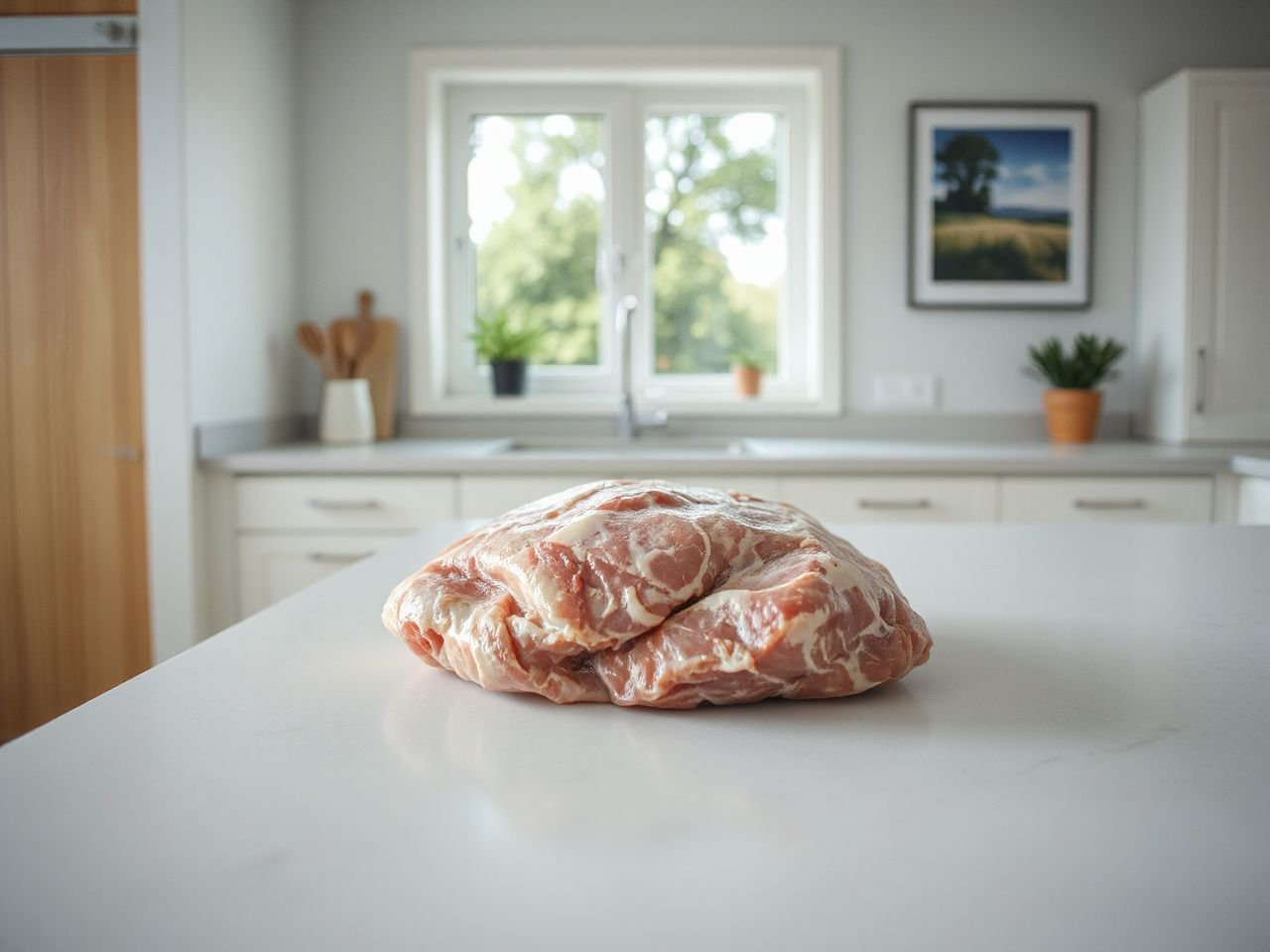
How should frozen meat be thawed before slow cooking?
Frozen meat should be thawed in the refrigerator before cooking in a slow cooker. Refrigerator thawing keeps the meat cold while the ice inside melts. It’s the simplest option if the meal can be planned ahead.
Step 1: Choose a safe thawing method
Use one of these methods:
- Refrigerator: Place the meat in a container or sealed package that can contain raw meat juices. Keep the package away from ready-to-eat food.
- Cold-water bath: Keep the meat sealed while it thaws, and use cold water rather than warm water. Prevent leakage and clean any surface touched by the package.
- Microwave oven: Use the microwave only when the meat can move promptly into cooking. Microwave thawing can begin warming parts of the meat, so the meat should not be held for later slow cooking.
Countertop thawing and warm water should be avoided. Both methods can warm the surface while the inside stays frozen, creating uneven conditions. These are hard to judge by touch or appearance.
Step 2: Prepare the thawed meat without spreading raw juices
Keep the thawed meat contained until it’s placed in the slow-cooker insert. Wash your hands after handling the package, and clean work surfaces, cutting boards, knives, and utensils that touched raw meat or its juices.
Do not rinse raw meat to make it cleaner. Rinsing can spread raw juices around the sink and nearby surfaces. Instead, handle the package carefully, discard wrapping promptly, and clean the area following instructions from a trusted food-safety authority.
The U.S. Food and Drug Administration offers food-safety info for handling raw foods and avoiding cross-contamination at FDA.gov. Follow the FDA’s guidance, especially if someone in your household is more vulnerable to foodborne illness.
Step 3: Check the recipe and insert arrangement
A good recipe should specify if the meat begins thawed, how the pieces should sit in the insert, and what liquid is needed. Don’t assume you can substitute frozen meat without changing the safety considerations.
Most slow cookers need a minimum amount of liquid to prevent unpredictable heating. Check the appliance manual and recipe together, because the right amount depends on the cooking method and the ingredients already in the dish.
Arrange the pieces so heat and liquids can reach them as the recipe requires. Avoid packing a solid mass of meat into the center or filling the insert beyond what the manufacturer allows. The short guide to slow-cooker fill levels explains why food amount and placement matter.
Can microwave-thawed meat go straight into a slow cooker?
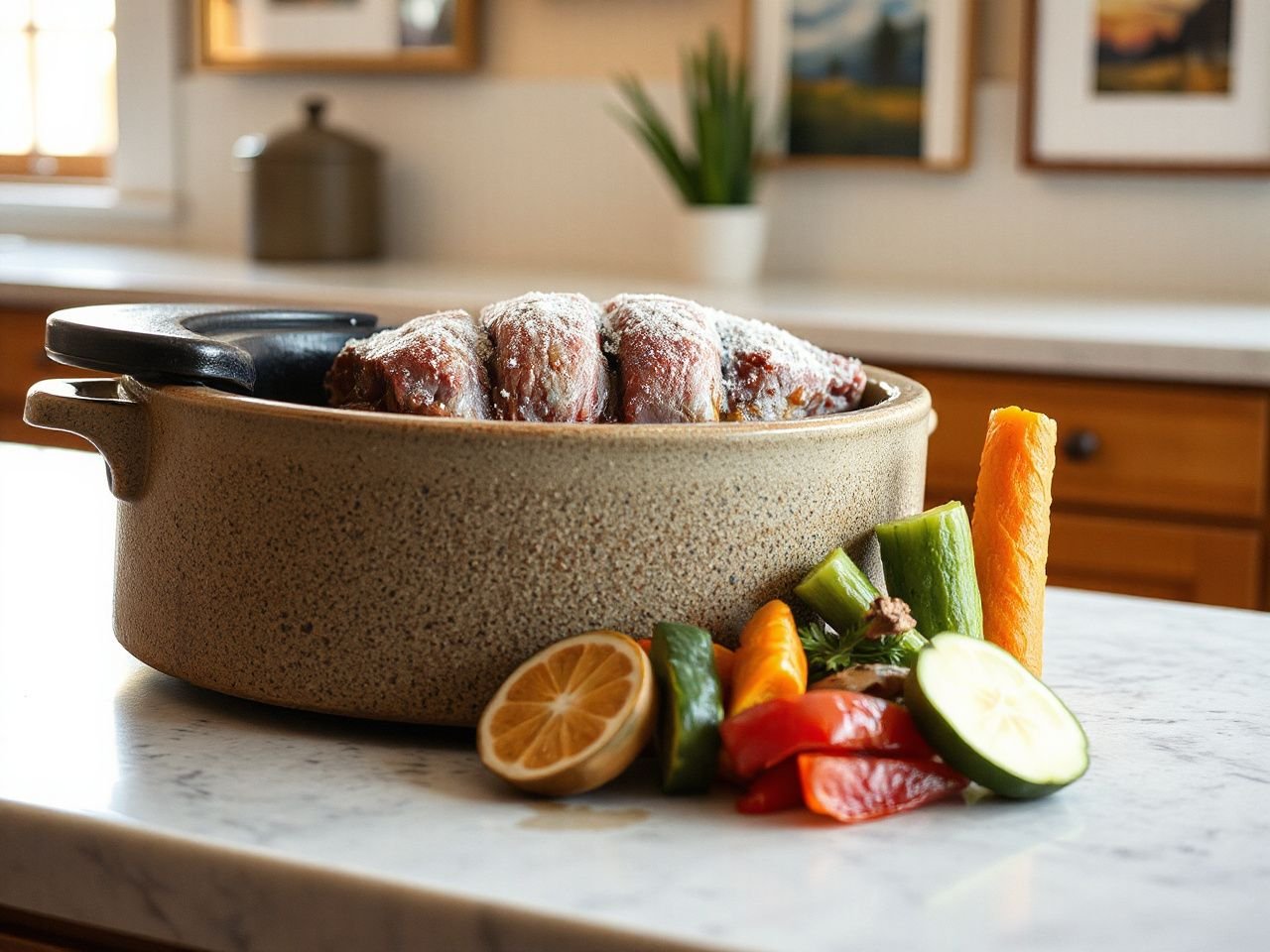
Microwave-thawed meat can go into a slow cooker only when it is transferred promptly into cooking rather than held for later. Microwave ovens can warm portions of the meat unevenly, so leaving the meat on the counter or returning it to storage creates another avoidable safety problem.
Use the microwave’s thaw setting or follow the manufacturer’s instructions. Remove packaging that isn’t microwave-safe and watch for areas that start to cook. The goal is to thaw the meat enough for immediate cooking, not to produce a partially warm package waiting for later.
After microwave thawing, place the meat directly into the prepared slow-cooker insert. Keep raw meat away from foods that won’t be cooked, and wash any surfaces touched by raw juices. If you can’t cook it right away, get advice from a food-safety professional instead of guessing based on its appearance.
Does thawing change cooking time, texture, or energy use?
Thawing before slow cooking changes the starting condition of the meat. Recipes written for thawed ingredients tend to be more predictable than ones using frozen meat. Frozen and thawed pieces may not reach the same texture because the frozen one starts colder and heats differently.
Thawing also influences how the slow cooker uses its heat cycle. A thawed piece doesn’t need the appliance to spend time bringing a frozen block up to temperature, but cooking times and energy use still vary based on the appliance, recipe, amount, and arrangement.
You can’t rely on a fixed time for every cut. Thickness and shape are more important than just the type, like beef, pork, poultry, or lamb. For example, a lamb rogan josh with yoghurt and spinach still needs proper handling based on its condition. The sauce doesn’t make frozen meat safe to put directly into the cooker.
How can you tell whether slow-cooked meat is safe to eat?
To verify that slow-cooked meat is done, check the thickest part with a food thermometer against the temperature specified by trusted recipes or food-safety guidelines. Don’t rely solely on tenderness or the surface look. Use the thermometer where the meat is thickest and the temperature is likely lowest.
The U.S. Department of Agriculture provides food-safety guidance for meat preparation and doneness at USDA.gov. Follow the current instructions from the USDA, the recipe author, and the slow-cooker manual rather than relying on a familiar cooking time.
A hot-looking exterior isn’t enough. Meat can brown, soften, or separate from the bone while the thickest part stays below the safe endpoint. A food thermometer gives information that sight, smell, and texture can’t provide.
What should be checked before serving?
- Confirm that the meat began thawed unless the recipe specifically provides another safe method.
- Check the thickest part with a clean food thermometer.
- Compare the reading with the current guidance from a reliable food-safety authority or recipe source.
- Check more than one area when the pieces differ greatly in thickness or arrangement.
- Do not taste meat to decide whether it is safe.
Do not use the slow cooker’s display, the appearance of the sauce, or the softness of the meat as a substitute for a doneness check. A display may tell you the appliance setting, but it does not tell you the internal condition of every piece in the insert.
Is a slow cooker safer than an oven or pressure cooker?
A slow cooker isn’t automatically safer than an oven or pressure cooker. Safety depends on the starting condition, the recipe, the heat pattern, how much food is in it, and verifying the meat’s doneness. A pressure cooker may have recipes for frozen meat, but that doesn’t mean the same frozen meat is suitable for a slow cooker.
Oven recipes and slow-cooker recipes aren’t interchangeable. Each transfers heat differently, and each recipe is designed with its own cooking environment in mind. Use instructions written for the appliance you’re using.
The useful question is not which appliance sounds safest in general. The useful question is whether the chosen method safely handles the actual piece of meat from the moment it leaves storage through cooking, serving, and leftover storage.
What are the common mistakes with previously frozen meat?
Most mistakes happen when people treat cooking time as proof of safety, ignore the size of the meat, or fail to control raw meat juices. Meat that was frozen needs the same careful handling after thawing as meat that was never frozen.
Mistake: relying on a long cooking time
Long cooking times don’t prove the center reached a safe internal temperature at the right time. The outside can cook and soften first, while the center stays colder because the piece is thick or packed tightly.
Mistake: using frozen pieces interchangeably with thawed pieces
Frozen pieces shouldn’t be treated as interchangeable with thawed ones. Meat type, thickness, amount, and arrangement all affect heat transfer. A recipe for thawed meat shouldn’t be casually converted to a frozen starting condition.
Mistake: filling the insert without checking the manual
Overfilled inserts or poorly arranged pieces can make heating unpredictable. Check the manufacturer’s instructions for the minimum liquid level and fill limit, then follow the recipe’s arrangement instead of cramming more meat into the vessel.
Mistake: leaving leftovers in the insert
Leftovers from the slow cooker should be handled according to current food-safety guidance. Store them properly and reheat following instructions that consider the food’s condition. The insert isn’t an excuse to leave cooked meat unattended indefinitely.
The what to know about leaving a slow cooker on overnight article covers unattended operation. But it doesn’t replace the need to thaw meat safely or verify doneness.
How should the slow-cooker insert and surfaces be cleaned?
Clean the slow-cooker insert and nearby surfaces after contact with raw meat juices. Use the care instructions for the appliance and the cleaning method suited to its materials. Keep raw-meat tools separate from ready-to-eat food during prep.
Wash hands after handling raw meat or its packaging. Clean the counter, sink, cutting board, knife, thermometer probe, and utensils touched by raw juices. Follow the manual before submerging an insert or cleaning the electrical base.
Use How to Clean a Slow Cooker: A Practical Step-by-Step Guide for a sequence covering the insert, lid, and surrounding surfaces. Cleaning is part of food safety, not an optional task.
What should you do if frozen meat was already placed in the slow cooker?
If frozen meat is already in the slow cooker, stop and evaluate. Don’t assume extra cooking time will fix the problem. Follow the appliance manual and current guidance from the USDA or FDA, especially if the meat has been warming for an unknown period.
- Do not judge safety from the exterior colour, sauce temperature, tenderness, or smell.
- Check whether a reliable recipe specifically permits the starting condition and appliance being used.
- Use a food thermometer only as part of proper guidance; a later hot reading cannot reconstruct how long the meat spent warming earlier.
- If the handling history is uncertain, contact a qualified food-safety professional or local public-health authority for advice specific to the situation.
- Clean surfaces and utensils that contacted raw meat juices.
Food safety isn’t just about how the meal looks at the end. If someone eating the food may be at higher risk from foodborne illness, it’s best to get advice from a qualified professional. Don’t rely on texture alone to judge safety.
A slow cooker can be useful for cooking ingredients gradually, but it shouldn’t be used to thaw food. For those considering its practical role in the kitchen, electricity use is explained in this guide to slow-cooker energy use. Energy savings aren’t more important than safe handling.
The Bottom Line
Thaw frozen meat before putting it in a slow cooker. Refrigerator thawing is the best planned method, with cold water or microwave transfer as alternatives. Slow cookers heat gradually, but that doesn’t make them safe for thawing a solid block of meat. Always check the thickest part with a food thermometer and follow trusted food-safety guidelines or recipes.
Frequently Asked Questions
Is it safe to put frozen meat in a slow cooker on high?
Don’t put frozen meat directly into a slow cooker just because you select a high setting. That setting doesn’t eliminate the risk of a cold center heating slowly or account for differences in thickness, amount, or arrangement. Thaw the meat first, use a recipe suited for the appliance, and check the thickest part with a food thermometer, following USDA or FDA guidance.
How long can you cook pork or beef from frozen in a slow cooker?
There’s no single safe cooking time for every piece of frozen pork or beef in a slow cooker. Factors like thickness, size, arrangement, recipe liquids, and the appliance all matter. A longer cooking time doesn’t prove the center was safe throughout. Always thaw meat beforehand, follow a reliable recipe, and verify internal temperature with a food thermometer.
What if frozen meat has already been cooking in the slow cooker?
Don’t assume meat is safe just because it’s tender or has a certain color on the outside, or because the cooker has been on for a while. Check the handling history, follow the appliance instructions, and stick to current food-safety guidance. If you’re unsure about how long it’s been warming or the starting condition, seek advice from a qualified professional. Clean all utensils, surfaces, and the insert that contacted raw meat juices.