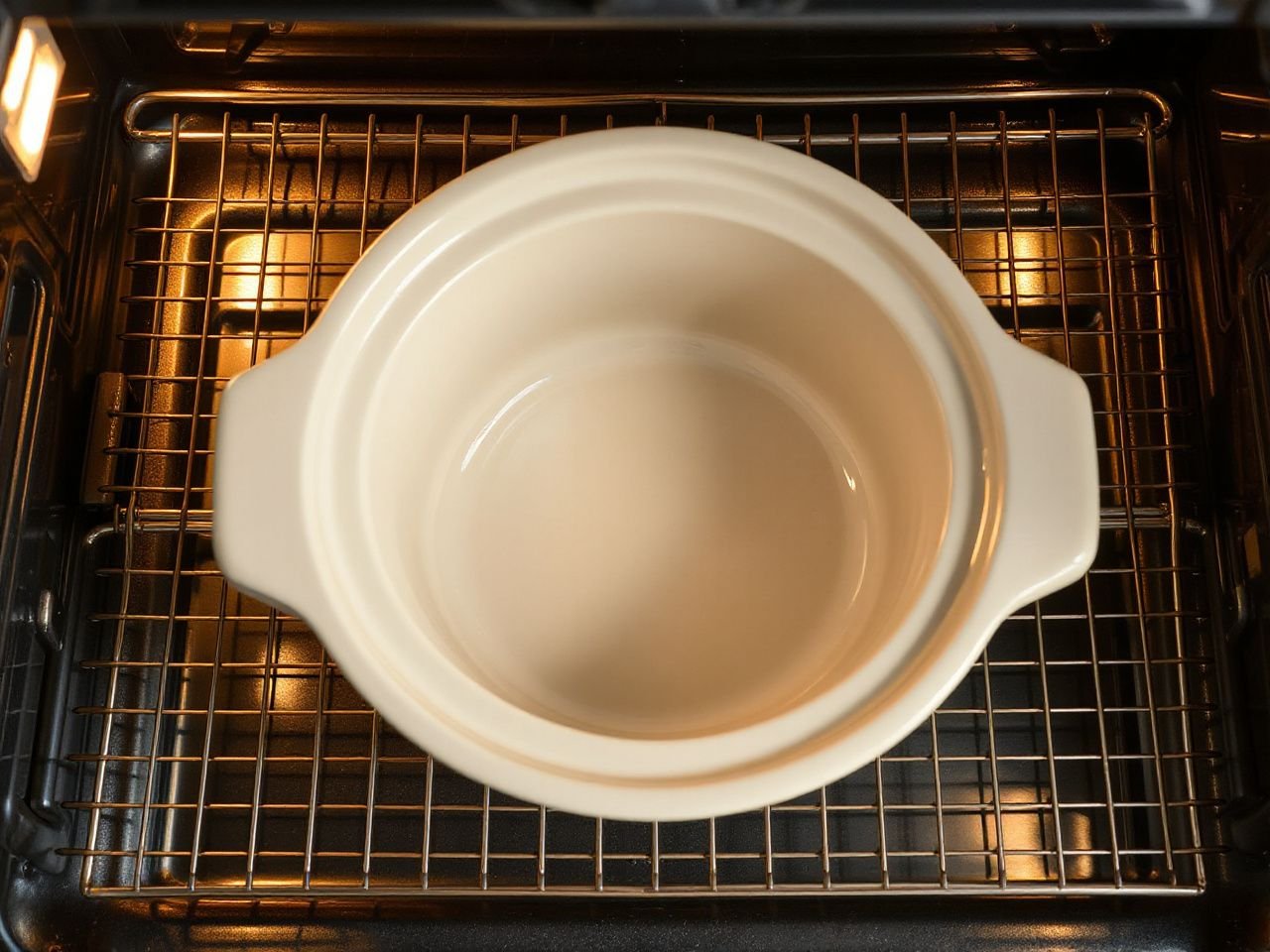
A removable slow cooker insert can crack if moved from a cold setting straight into a hot oven. The heating base can also pose an electrical hazard if treated like cookware. Can a slow cooker insert go in the oven? Sometimes it can, but it really depends on the specific insert and what its instructions say.
The main difference is between the insert’s oven compatibility and that of the whole slow cooker. The removable vessel might be oven-safe while the heating base isn’t. A good guide also separates oven safety from stovetop, broiler, lid, and thermal-shock limits, because those uses have different restrictions. I start there because a machine only earns counter space if each part is used within its actual limits.
Key Takeaways
- Check the manufacturer’s instructions for the exact removable insert before using oven heat.
- Keep the slow cooker heating base and its electrical parts out of the oven.
- An oven-safe insert is not automatically safe on a stovetop, under a broiler, or during sudden temperature changes.
- Use separate guidance for the insert, glass lid, liner, microwave, and cleaning process.
Can a slow cooker insert go in the oven? Start with the exact part
A slow cooker insert is the removable vessel that holds the food. The slow cooker heating base is the outer electrical part that supports and heats that vessel. These parts serve different purposes, so a statement about one shouldn’t be applied to the other.
The removable crock might be suitable for a conventional oven, but the entire appliance isn’t an oven pan. The base needs to stay outside the oven, unplugged and away from heat. The heating base contains electrical components, not cookware meant for direct oven exposure.
A slow cooker heating base must stay out of the oven because oven use applies heat to the appliance housing and electrical parts. That rule remains important even if the insert itself carries an oven-use statement.
Read the manual and the markings
Start by checking the care instructions for the exact slow cooker. Look for details about oven use, temperature limits, lid restrictions, stovetop warnings, broiler, microwave use, and how to handle a hot or cold insert. If the manual isn’t available, find the model info on the appliance and get the manufacturer’s instructions rather than guessing from how it looks.
Don’t assume a smooth ceramic surface, a heavy wall, or a familiar shape means it’s oven-safe. Not every slow cooker insert is suitable for the oven, and material alone doesn’t replace the manufacturer’s instructions.
If the manufacturer’s instructions don’t mention oven use, treat that silence as a reason to avoid putting it in the oven until they confirm it’s safe. An insert that looks like a Dutch oven might have different limits, handles, glazing, lid construction, or care requirements.
- Confirm that the instructions refer to the removable insert, not only the complete cooker.
- Check whether the oven statement applies to the insert without its lid.
- Look for a maximum oven temperature if one is supplied.
- Check separate rules for the broiler, stovetop, microwave, and sudden temperature changes.
- Keep a copy of the instructions with the appliance so future users do not have to infer the answer.
What the material can and cannot tell you
A removable stoneware crock, ceramic insert, and cast-aluminum insert may respond differently to oven heat. But the material name alone doesn’t determine if a model is oven-safe. Manufacturing details and the maker’s stated limits control the decision.
Stoneware needs special care during temperature changes. Moving a cold ceramic or stoneware insert directly into a hot oven can cause thermal shock. Placing a hot insert on a cold surface can also crack it. Damage may be visible immediately, or a crack might only show after handling or washing.
Thermal shock can crack a ceramic or stoneware insert when its temperature changes suddenly. A safe oven statement does not cancel that handling risk.
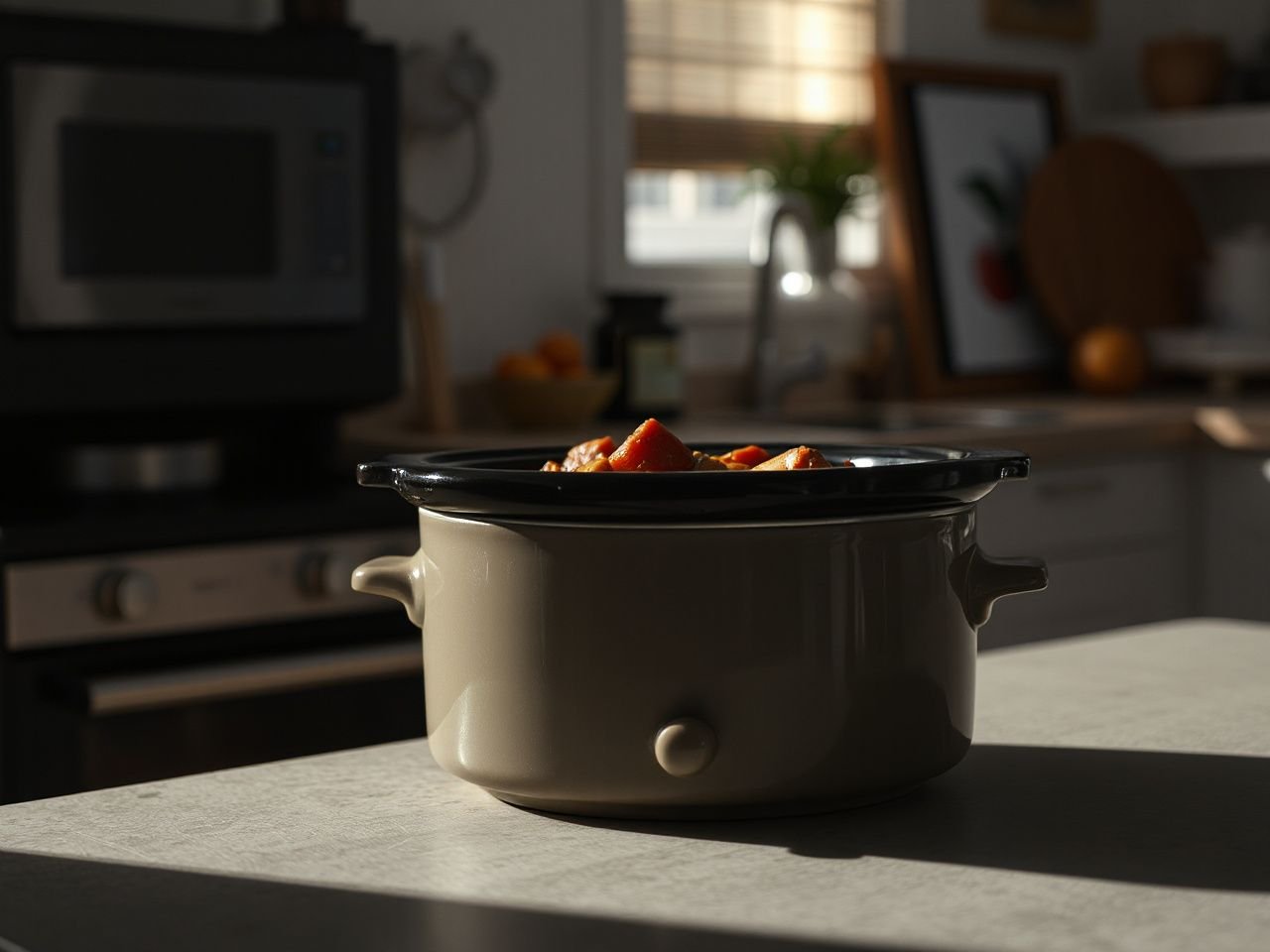
Step 1: Confirm the oven, insert, and lid separately
Do a quick identification check before transferring food. The point is to know exactly what will go into the oven, what stays outside, and which instructions to follow.
Check the removable insert
Lift the insert out of the heating base only when it’s safe to handle. Look at the underside and rim for model info, material description, warning label, or care symbol. Then compare those details with the manufacturer’s instructions.
If the instructions say oven use is allowed, follow that limit rather than assuming a higher temperature is okay. For Crockpot brand ceramic stoneware inserts, the verified oven limit is 400 degrees Fahrenheit. That applies to Crockpot’s guidance, not every slow cooker insert made by other brands.
A temperature limit applies only to the product and part identified by the manufacturer. Never copy that limit from one slow cooker to another.
Check the glass lid
A glass lid might have different oven limits from the insert. Sometimes, instructions specify that the lid can’t be used in the oven or microwave, even if the stoneware insert can. Remove the lid unless the manufacturer’s instructions clearly say it’s okay for your planned conditions.
Don’t use a glass lid as a substitute for an oven-safe cover. The lid may have a handle or fitting with its own limits, and the insert’s oven statement doesn’t automatically include those parts.
A Crockpot stoneware insert can be oven-safe, but the lid isn’t allowed in the oven. These two statements need to be read separately.
Check the heating base
Leave the slow cooker heating base on the counter. Unplugging it doesn’t turn the base into oven cookware. The electrical housing is a separate part and shouldn’t go into a conventional oven.
Manufacturers can set different restrictions for complete cooking systems. For example, Ninja’s guidance for its 4-in-1 Cooking Systems says to keep those appliances off the stove and out of the oven. That advice applies to the entire system, not as a rule for every removable crock.
Step 2: Prevent thermal shock before and after oven use
Oven compatibility tells whether the insert can be heated in the oven under specific conditions. It doesn’t answer if the insert can go directly between very different temperatures. That second concern is about thermal shock.
Cold insert into a hot oven
Don’t move a cold ceramic or stoneware insert directly into a hot oven. The vessel can develop uneven temperature stress, which might cause cracking. Follow the manufacturer’s temperature-change instructions; if they don’t cover this, opt for gradual heating or cookware meant for the transfer.
Food temperature is important too. A cold insert with cold food still poses a sudden-change risk, even if the insert was stored at room temperature. The safest way is to follow the manufacturer’s instructions for that specific insert.
A cold stoneware insert should not be placed directly into a hot oven because sudden heating can produce thermal shock.
Hot insert onto a cold surface
A hot insert can crack if placed on a cold or wet surface. Use a dry, heat-safe resting surface listed in the care instructions. Never set a hot vessel on a wet countertop, a cold metal surface, or anything else that causes sudden temperature changes.
Handle the insert carefully after oven use. It might look intact while hot, but small cracks can become easier to see once it cools. Always check the crock before putting it back on the heating base.
Inspect before the next use
Once the insert has cooled, check the rim, walls, handles, and underside. Look for cracks, chips, flakes, or any new rough areas. A damaged insert shouldn’t be used just because it still holds liquid.
Replacing a damaged insert is usually more practical than continuing to use it if there’s a crack, chip, or structural issue. Also, follow the manufacturer’s instructions to stop using it or if it no longer fits securely in the base. The maker’s parts guidance should guide your decision, not an improvised repair.
A cracked or chipped slow cooker insert should be removed from service and assessed against the manufacturer’s replacement guidance.
Step 3: Separate oven use from stovetop, broiler, and microwave use
Oven-safe isn’t a broad term. It doesn’t automatically mean stovetop-safe, broiler-safe, or safe for sudden temperature changes. Different heat sources put different demands on the vessel.
Stovetop use
Don’t put an insert on a stovetop unless the manufacturer explicitly says it’s designed for that. A cast-aluminum insert may look like a pan, and a ceramic one may resemble a casserole, but appearance doesn’t mean it’s approved for stove use.
Crockpot states that its stoneware inserts shouldn’t be placed on any stovetop. That specific instruction is more reliable than assuming shape alone indicates safety.
A stovetop-safe slow cooker insert must be identified as such by its manufacturer. An oven-safe insert without that statement should stay off the burners.
Broiler use
Broiling exposes the top of the cookware to intense direct heat, which is different from normal oven use. Do not put a slow cooker insert under a broiler unless the manufacturer specifically allows it.
Crockpot’s verified guidance says its stoneware inserts should not be placed inside a broiler. A conventional oven statement therefore does not authorize broiler use.
Broiler safety must be confirmed separately from oven safety because a broiler is a different cooking method.
Microwave use
Some stoneware inserts can be used in a microwave, but the metal outer layer of the slow cooker must stay out. Crockpot stoneware inserts are marked as microwave-safe in verified guidance, while the metal exterior isn’t.
Always check each part individually for microwave safety. A glass lid might not be microwave-safe, and a liner has its own instructions. Never put the entire slow cooker into a microwave.
The word ceramic doesn’t mean every microwave model can use it. Always follow the manufacturer’s instructions for the exact insert and remove all prohibited metal parts.
Liners and cleanup
A slow cooker liner isn’t the same as the insert. Hamilton Beach says its liners are safe in both an oven and microwave. Nylon liners, on the other hand, are usually not suitable for ovens. The liner package and appliance instructions are what control.
Never assume a liner can be used on ceramic, stoneware, glass, or metal parts. After oven use, let the insert cool as the manufacturer recommends before cleaning. Check the surface for cracks or chips while washing, because new damage might mean it shouldn’t be used again.
For related prep tips, see How Full Should a Slow Cooker Be? The Short Version. It explains why fill level still matters when food starts in a slow cooker, even if the vessel later goes in the oven.
Step 4: Use the insert without treating it like a Dutch oven
A Dutch oven and a slow cooker insert can both hold a braise. But they aren’t automatically interchangeable. A Dutch oven is designed for certain cooking methods and is labeled as such. A slow cooker insert belongs to a specific appliance with separate instructions for the vessel, lid, and base.
That difference is important for counter space. If the insert can’t be used on the stovetop or under the broiler, it doesn’t replace other cookware. Its value depends on what the manufacturer allows, not how much it looks like a Dutch oven.
A slow cooker insert should be treated as model-specific cookware rather than as a universal Dutch oven substitute.
For a broader explanation of the distinction, see this practical look at Dutch oven cooking for beginners. The comparison can help clarify which cooking steps belong in a separate pan before food reaches the slow cooker.
A practical transfer sequence
- Read the instructions for the exact slow cooker and identify the removable insert.
- Confirm the oven permission and any stated temperature limit.
- Remove the insert from the heating base and keep the base outside the oven.
- Remove the glass lid unless the instructions clearly permit its use in the oven.
- Check that the insert is not cold if the instructions warn against sudden heating.
- Place the insert in the conventional oven only under the permitted conditions.
- Use a suitable resting surface after cooking and avoid sudden cooling.
- Inspect the cooled insert before cleaning and before returning it to the base.
The process is careful because the slow cooker works best when its parts stay intact and undamaged. If you need stovetop browning, broiling, or quick temperature changes, a separately rated pan might be better suited for that part of cooking.
Do not infer oven performance from slow-cooking settings
A slow cooker setting describes how the appliance cooks while the insert sits in its heating base. It does not establish what the insert can withstand in a conventional oven. The settings and transfer rules belong to different parts of the cooking process.
If you plan to return the vessel to the slow cooker after oven use, let it cool as directed before placing it into the base. A hot insert, a cold base, and an unverified transfer can cause handling issues even if the insert itself is approved for oven use.
Cleaning, inspection, and decisions after oven use
Cleaning begins only after the insert has cooled according to its instructions. Avoid actions that cause a sudden temperature change, and follow the manufacturer’s directions for washing, soaking, dishwasher use, and approved tools.
The dishwasher question is separate from oven safety. A ceramic part that can enter an oven isn’t automatically approved for a dishwasher, and a dishwasher-safe part isn’t automatically approved for an oven. Use the care instructions for the exact component.
Inspect the surface
Inspect the inside and outside of the insert under good light. Look for cracks crossing the cooking surface, chips at the rim, loose fragments, or damage around the base. Do not keep using an insert that shows damage the manufacturer says makes it unsafe.
Check the glass lid separately. Look for damage around the glass and handle, and follow the cleaning and storage instructions specific to the lid. An unsuitable lid for oven use might still be fine for slow-cooker use if it remains intact and the manufacturer allows that.
Oven use does not change the need to inspect a slow cooker insert before its next cooking cycle.
When replacement makes sense
Replacement is sensible when the insert has a visible crack, a chip affecting the rim or cooking surface, or a fit problem in the heating base. Continuing to use damaged cookware to avoid replacing it can jeopardize the whole appliance’s usefulness.
Make sure the manufacturer offers the correct replacement insert for your model. Don’t substitute just because it looks like it fits. The base, insert, lid, and controls are designed as a set, and instructions for one model don’t guarantee compatibility with another.
The same counter-space test applies here: a slow cooker with a damaged insert is not earning its footprint until the correct part is restored or the appliance is retired.
Use outside safety guidance carefully
The U.S. Consumer Product Safety Commission provides consumer-safety information for household products, while the U.S. Food and Drug Administration provides food-safety information; neither replaces the manufacturer’s instructions for a particular slow cooker insert.
The manufacturer’s manual remains the first reference for oven limits, lid use, thermal shock, cleaning, and replacement parts. If the instructions conflict with a generic cooking habit, follow the product-specific instructions and contact the manufacturer for clarification. Always check the manual before making assumptions.
Frequently Asked Questions
Can a slow cooker insert go in the oven without the heating base?
Sometimes. The removable insert may be approved for conventional oven use, but you need to confirm that with the manufacturer’s instructions. The heating base must stay out of the oven because it’s the electrical housing. Remove the glass lid unless its instructions separately permit oven use, and avoid moving a cold ceramic or stoneware insert directly into a hot oven.
Does an oven-safe ceramic insert also work on a stovetop or under a broiler?
No automatic transfer exists between those uses. Oven safety does not mean stovetop or broiler safety. Crockpot guidance says its stoneware inserts should not be placed on a stovetop or inside a broiler. A cast-aluminum insert might have different instructions, but its material still can’t replace the manufacturer’s directions for that model.
What should I do if the manufacturer’s instructions do not mention oven use?
Do not assume that silence means approval. Keep the insert in the slow cooker heating base for the uses the instructions describe, and contact the manufacturer if oven use matters to your cooking plan. The same caution applies to the glass lid, microwave, stovetop, broiler, liner, and dishwasher. Unverified compatibility is not a sound basis for heat exposure.
Can a glass slow cooker lid go in the oven with the insert?
The lid may have different limits from the insert. Some manufacturer guidance excludes the lid from oven use even when the stoneware vessel is approved. Remove the lid unless the exact care instructions clearly permit it under the planned oven conditions. A lid handle or fitting also needs to be covered by that instruction.
Why can a ceramic or stoneware insert crack during oven use?
Sudden temperature changes can cause thermal shock. Moving a cold ceramic or stoneware insert into a hot oven might crack it, and placing a hot insert on a cold surface can cause damage too. Follow the manufacturer’s transfer instructions, use a suitable resting surface, and inspect the cooled vessel before cleaning and reuse.
For readers comparing appliance roles, this explanation of slow cooker high and low settings helps separate slow-cooker operation from oven transfers. Those settings do not establish permission to use in the oven, stovetop, or broiler.