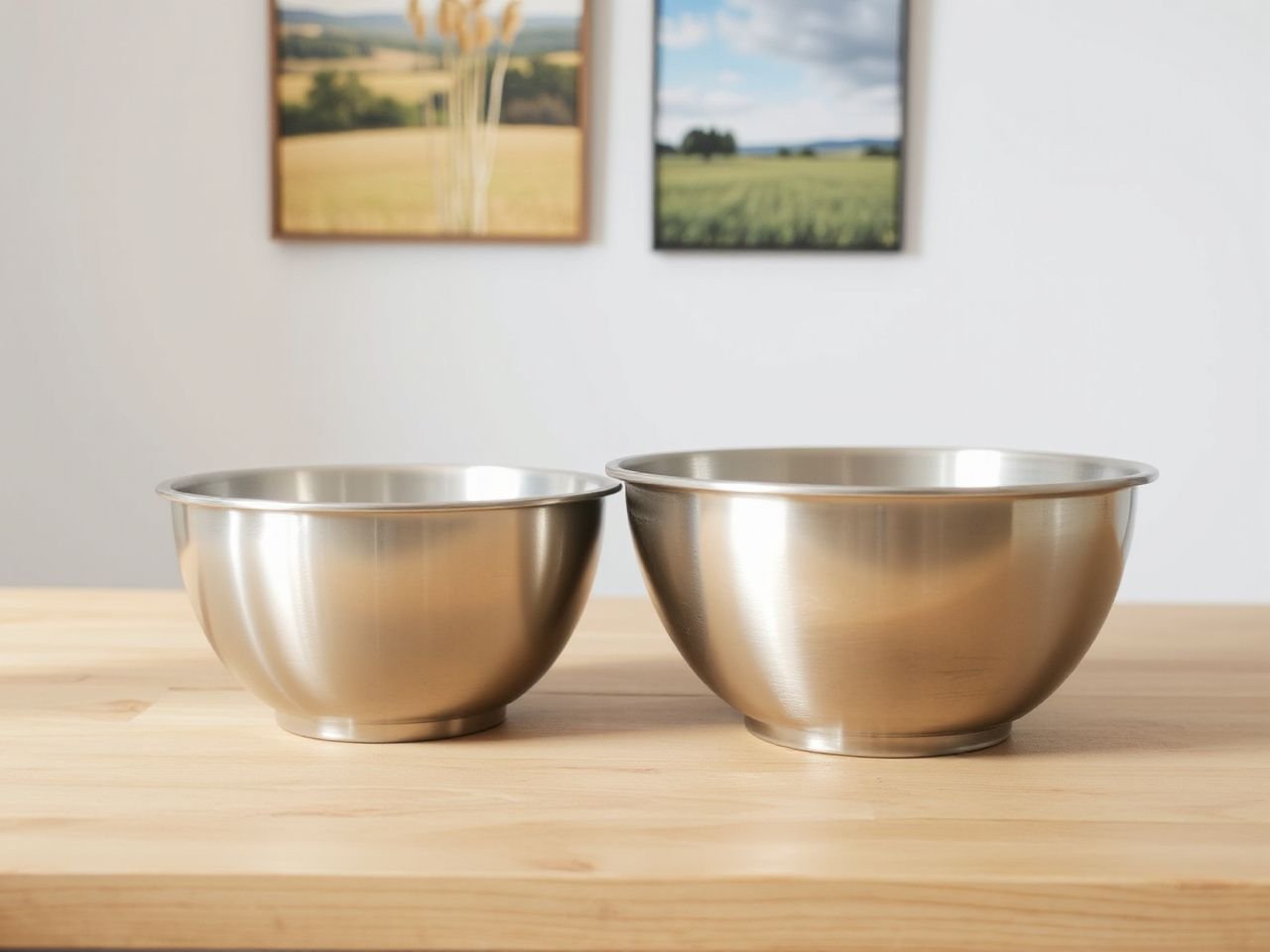
A standard bowl on many light commercial and home mixers is about 1 US gal (3.8 L). But that label doesn’t tell you how much food the machine can mix well. You should understand the difference between nominal bowl capacity and effective mixing capacity: the latter depends on the food, its expansion, the attachment, and how well that attachment reaches the ingredients. Bowl size is also a compatibility issue because tilt-head and bowl-lift designs use different mounting and clearance setups, even if their bowls look similar. That’s the practical starting point for understanding stand mixer bowl sizes explained clearly, especially if the machine needs to earn its place on the counter.
A capacity label shows the space inside a bowl. It doesn’t promise that every part of that space will be useful for dough, batter, whipped ingredients, or a small amount of sauce. The right bowl is the one that allows the usual batch to move freely while keeping the attachment close enough to incorporate the ingredients.
Key Takeaways
- Nominal capacity is larger than the practical working capacity for many mixtures.
- Tilt-head and bowl-lift mixers accept different bowls and use different clearance arrangements.
- A bowl that is too large can leave a small batch below the attachment’s reach.
- Material affects weight, visibility, cleaning, heat retention, and breakage risk.
Stand Mixer Bowl Sizes Explained by Capacity
Nominal capacity is only the starting point
A stand mixer bowl’s capacity refers to the total volume it can hold, not how much you should put in during each mix. You need to leave space above the ingredients because mixtures can expand, climb the attachment, spill over, or splash. Filling a bowl nearly to the rim might leave too little room for controlled mixing, even if the ingredients fit.
Advertised bowl capacity is not the same as usable working capacity. The difference becomes especially important with dough, aerated mixtures, loose flour, and wet ingredients that travel upward on a dough hook or flat beater.
Countertop mixers usually have models measuring 5 US gal (19 L) or less. Bowls of about 1 US gal (3.8 L) are common on light commercial and home units. These figures show why capacity labels need context: a bowl’s volume can describe a broad range of machines without indicating the batch size that works best for a particular recipe or attachment.
What the ingredients do matters more than the empty bowl
Different mixtures use space differently. Dense dough might gather around a dough hook and lift upward. Cake batter can spread over the base and rise along the flat beater. Whipped ingredients can increase in volume as air is incorporated. Dry mixtures can also sit high in the bowl before liquid brings them together.
- Dough: Leave room for kneading movement and for the dough to climb the hook. A crowded bowl can make incorporation uneven and may push ingredients over the rim.
- Cake batter: Keep enough space for flour and liquid to combine without spraying outward. A flat beater needs room to sweep the sides and base.
- Whipped mixtures: Allow room for expansion and for the wire whisk to move through the mixture without forcing it upward.
- Small quantities: A large bowl may place the ingredients below the attachment’s most effective reach.
The practical question isn’t just how much the bowl can hold. Ask how much food the attachment can reach and move while leaving enough room for expansion.
Choosing a bowl for the food you usually make
Start with the recipe type you most often make, then think about how the mixture behaves. Scaling recipes up for baking can change what size bowl you need: doubling a recipe might require more space, while making small batches regularly favors a bowl that keeps ingredients close to the attachment.
- List the usual mixture. Decide whether your routine is mainly dough, cake batter, whipped ingredients, or smaller jobs.
- Check the recipe’s ingredient volume. Use the recipe as the guide rather than assuming the bowl’s full advertised capacity is available for food.
- Look for expansion and movement. Ingredients that climb, splash, or gain volume need more empty space above them.
- Check the attachment’s reach. The beater should work through the ingredients rather than passing above them.
- Compare the result with your counter space. A larger bowl has value only if its added room serves the batches you actually make.
A bowl that fits the usual batch size can cut down on scraping, spilling, and repeated mixing. A larger bowl might be useful for occasional volume, but its extra size is an ownership cost for counter space, cupboard space, washing effort, and compatible replacement parts.
How Mixer Design Controls Bowl Compatibility
Tilt-head and bowl-lift mixers use different arrangements
A tilt-head mixer raises the motor head away from the bowl. A bowl-lift mixer lifts the bowl toward the stationary head. These movements affect the bowl’s mounting points, rim position, attachment path, and clearance during use.
A stand mixer bowl must match the mixer’s mounting system and head movement, not merely its advertised capacity. Two bowls can appear similar in volume while using different supports, rim shapes, locking features, or working clearances.
The bowl needs to sit in the right position before lowering the attachment or switching on the machine. A replacement bowl from another stand mixer might not lock properly, sit too high or low, or interfere with the head. Similar shape isn’t enough, and matching capacity doesn’t guarantee compatibility.
Why mounting points matter
Mounting arrangements decide whether the bowl stays stable as the attachment moves through the mixture. A bowl-lift design might rely on supports that raise the vessel into a precise position. A tilt-head design could depend on a base or locking setup that holds the bowl beneath the hinged head.
Read the mixer manual and the replacement bowl’s compatibility details together. Match the model info on the rating label to the manual before trusting a bowl from another machine. If the manual doesn’t list the replacement, capacity alone isn’t enough to confirm fit.
Compatibility also includes the head’s movement. A bowl may look correct but still block the head from lowering, raising, or locking properly. The attachment must have room to enter the bowl without touching the rim or base.
Attachment clearance changes the answer
Clearance is the space between the attachment and the bowl. It needs to be enough for movement, but the attachment shouldn’t sit so high that small amounts of food stay below its reach.
- The dough hook needs room to work through a dense mixture without forcing dough over the rim.
- The flat beater needs a useful path around the base and sides so batter does not remain untouched.
- The wire whisk needs appropriate space to move through the mixture and incorporate air.
Different attachments may need different clearance from the bowl. A bowl that fits the mixer can still produce poor results if the attachment needs adjustment or if the bowl changes the gap in a way the machine cannot correct.
Attachment clearance is a key part of bowl compatibility, not a minor detail. If the attachment touches the bowl, stop and check the manual instead of assuming contact will go away during mixing.
Small Batches, Large Bowls, and Crowded Bowls
Why a larger bowl can mishandle a small batch
A large bowl creates more open space around the food. That sounds helpful, but a small amount of mixture can spread thinly across the base or stay below the attachment’s path. The wire whisk may go above the mixture, while the flat beater might leave ingredients at the edges or on the bottom.
A bowl that is too large for a small batch can leave ingredients below the effective reach of the beater. The visible signs include dry ingredients remaining at the base, streaks of unmixed batter on the side, or a whisk moving through empty space.
Scraping the bowl can help, but doing it repeatedly shows the bowl-and-attachment combo isn’t naturally suited to the batch. Lowering the attachment might fix an adjustment problem if the manual allows it. Don’t bend an attachment or force the head into a different position.
What happens when the bowl is too small
An undersized bowl limits the space ingredients need to move. Flour can escape before it’s absorbed. A dough hook can pull a mass over the rim. Wet batter might splash, and larger mixtures can contact the attachment or lid area.
A small bowl can hide poor mixing because food packed around the attachment may seem mixed on the surface but dry material stays underneath. Stop the mixer, scrape the sides and base with a suitable spatula, and follow the recipe’s mixing instructions instead of adding more ingredients to a crowded vessel.
An undersized bowl can cause overflow and poor incorporation because ingredients have too little room to circulate. That is why the practical working capacity must be lower than the bowl’s full physical volume for many recipes.
How to judge the working level without a new measurement
You don’t need an unverified fill line to check a batch. Look and listen while the machine is off and unplugged before touching the attachment or scraping the bowl. Signs are pretty straightforward:.
- Ingredients remain below the attachment rather than being gathered into the mix.
- Dry flour or other unmixed material collects at the base.
- The mixture climbs the hook or beater toward the rim.
- Liquid splashes against the sides instead of moving within the bowl.
- The attachment contacts the bowl or leaves visible scrape marks.
These signs tell you more than the label alone. The machine earns its space when the normal batch moves predictably without constant intervention.
Material, Cleaning, and Ownership Space
Stainless steel mixing bowls
Stainless steel is light-sensitive in the sense that it doesn’t show the mixture as clearly as glass or a pale ceramic bowl. It’s also usually less fragile than glass or ceramic during normal handling, but the exact design still matters.
In terms of biological cleanability, stainless steel often performs as well as glass and can do better than aluminium and copper. That’s why stainless steel is a good choice when cleaning is a key factor, but the bowl still needs prompt washing and thorough drying per the manufacturer’s instructions.
Stainless steel can also show marks that are hard to interpret, like residue or water spots. A clean look doesn’t mean it’s properly washed. Pay attention to the seams, underside, locking points, and any coating because food residue can stay where a cloth doesn’t naturally reach.
Glass mixing bowls
Glass makes the ingredients visible from the side and often from below if the bowl is clear. That visibility can help you check whether dry material remains on the base or whether batter has collected along the wall.
Glass is heavier than many metal bowls and can break more easily. You need to lift, store, and wash it with care. It also retains heat differently from stainless steel, so the recipe and manufacturer’s instructions should guide its use.
Ceramic mixing bowls
Ceramic can offer a substantial feel and a solid, opaque surface. The trade-offs include weight, possible breakage from impact, and more limited visibility of the mixture compared with clear glass.
Cleaning depends on the finish and construction of the bowl. Check the rim and underside for residue. Follow the care instructions instead of assuming a bowl’s material alone determines the right cleaning method.
Material and counter-space decisions
Material influences more than just how the bowl looks. It affects how easy it is to lift, how well you can see the mixture, how carefully it needs to be stored, and how much cleaning it requires.
A bigger bowl costs more than just its purchase price. It might take up more space on the counter and need a larger storage area. It also demands more sink space and makes extra bowls or replacements more costly to keep around. Space and handling are real costs, and no specific price claim is needed to make that clear.
Stainless steel, glass, and ceramic bowls differ in weight, heat retention, visibility, breakage risk, and cleaning needs. These differences matter every time you lift, wash, store, or check the bowl during mixing.
Care and material warnings
Corrosive environments combined with tensile stress can cause stress corrosion cracking, which might lead to sudden failure of a stainless steel part. Keep corrosive cleaners away unless the manufacturer says it’s okay. Inspect the bowl and fittings for damage, since stainless steel isn’t immune to every type of deterioration.
The U.S. Consumer Product Safety Commission publishes product safety and recall information at cpsc.gov, so a reader can check official notices for a mixer or bowl before continuing to use a damaged or recalled item. The National Sanitation Foundation describes its public-health standards work at nsf.org; any certification mark on an appliance or food-contact component should be verified through the named organization rather than inferred from a material label.
Making the Bowl Earn Its Counter Space
Use a practical decision sequence
The right capacity is one that supports your food prep without causing issues at either end. Use this approach before choosing a bigger bowl or replacing one.
- Identify the mixer style. Confirm whether the machine is a tilt-head or bowl-lift design.
- Confirm the mounting system. Check how the bowl locks or rests in place.
- Review each attachment. A dough hook, flat beater, and wire whisk may require different clearance.
- Describe the usual batch. Note whether the mixture expands, climbs, splashes, or stays dense.
- Check the smallest regular batch. A bowl that handles a large batch may leave a small batch below the attachment.
- Check the largest regular batch. An undersized bowl can create overflow and uneven incorporation.
- Account for material care. Include weight, visibility, breakage risk, cleaning, and storage.
- Compare the result with the counter footprint. Extra capacity has no value if the bowl is rarely used and constantly occupies valuable space.
This process keeps the decision tied to actual use rather than to a capacity label. Readers comparing the machine itself may also consult the Stand Mixer Buying Guide: What to Know Before You Shop, while a kitchen built around smaller batches may benefit from the separate discussion of a compact stand mixer and the space it requires.
Check the bowl before mixing
Place the bowl on its mount and make sure it locks or rests as the manual explains. Lower or raise the head based on your mixer’s design, then check that the attachment can move freely without touching the rim or base.
Start with the machine off when inspecting the gap. Only add ingredients after the bowl and attachment are in the correct position, and stop the machine before scraping or adjusting anything.
For another example of how vessel size changes practical results, the guide to loaf pan sizes and what actually fits applies the same useful principle: stated capacity matters, but the food’s movement and expansion determine the working space.
When a larger bowl is justified
A larger bowl earns its space when the usual mixture regularly needs more room. When expansion makes a smaller bowl awkward, a bigger one helps. It is less convincing if the main batches are small and the attachment already struggles to reach the ingredients.
Capacity should serve a repeated kitchen task. Large batches can often be handled by scaling the recipe across separate mixes. This works if the recipe and machine instructions allow it, rather than keeping a large vessel on the counter for rare use.
A stand mixer’s useful capacity is the amount it can mix with proper clearance, ingredient movement, and room for expansion. That’s more helpful than considering the largest empty volume as the machine’s everyday limit.
Frequently Asked Questions
How should stand mixer bowl sizes be explained for everyday baking?
Explain them in two layers: nominal capacity describes the bowl’s total volume. Effective capacity is the amount that can mix properly with a specific attachment. Dough may climb, batter may splash, and whipped ingredients may expand. The mixer style, mounting system, attachment reach, and clearance all affect whether the stated capacity is useful for a specific batch.
Can a replacement bowl from a different stand mixer fit?
Capacity and appearance can’t determine compatibility. A replacement bowl must suit the mixer’s mounting points, locking system, head movement, rim position, and attachment clearance. Tilt-head and bowl-lift designs use different arrangements. Always check the model info and manual before use. If the bowl doesn’t lock, leaves unusual clearance, or interferes with head movement, don’t operate the mixer.
Which bowl material is easiest to clean and maintain?
Stainless steel performs as well as glass in biological cleanability and outperforms aluminium and copper. Cleaning still depends on the bowl’s construction and care instructions. Glass offers better visibility but is heavier and can break. Ceramic is opaque and may be heavy or vulnerable to impact. Always inspect rims, seams, undersides, and mounting areas, no matter what material is used.
Understanding stand mixer bowl sizes means considering the whole working setup: food volume, expansion, attachment reach, mounting, material, and counter space. A machine is useful when all those parts work together for the batches you actually prepare.