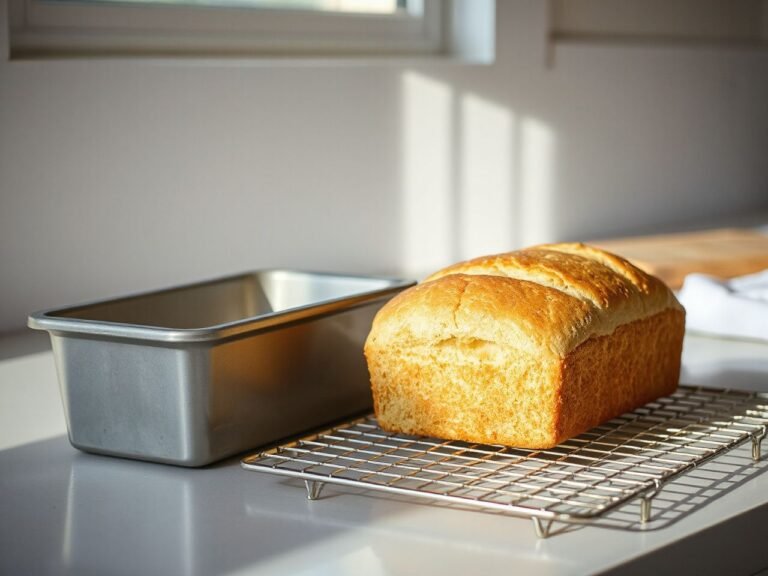
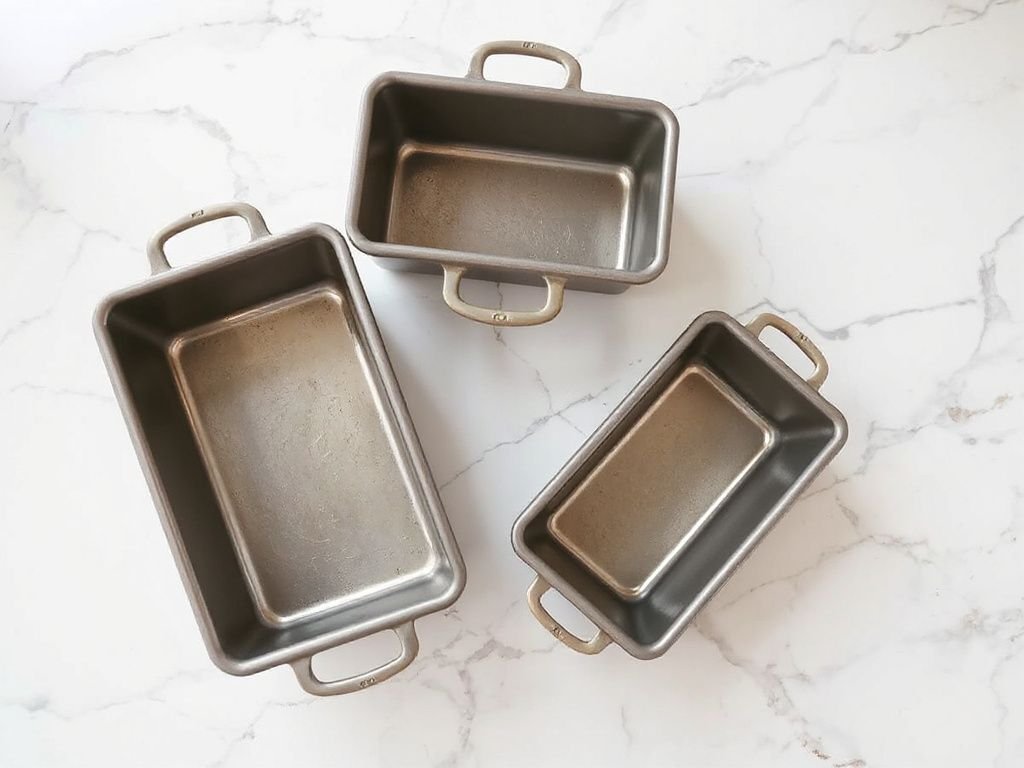
Loaf pan labels don’t tell the whole story. If you’ve ever looked for loaf pan sizes explained online, you’ve likely seen two pans with the same label hold completely different amounts of batter. That discrepancy comes down to sloped sides, depth, and material. The first thing worth doing is ignoring the length and width printed on the box, because those figures describe the outside of the pan rather than the space inside it. The most important thing beginners miss is that loaf pan sizes refer to the top rim dimensions, not the bottom or the true volume—a 9×5 pan can have a slanted or straight profile, which changes how much batter it actually holds. I always tell readers: ignore the length and width labels and concentrate on the cup capacity, because a recipe‘s rise and bake time depend on how deep the batter is. When in doubt, fill the pan with water to the rim and count the cups—that’s the measurement that really matters.
Key Takeaways
- A standard 9×5-inch loaf pan typically holds 8–10 cups, while an 8.5×4.5-inch pan holds about 5–6 cups; the top dimension label alone is not enough to match a recipe.
- Glass loaf dishes heat slower but retain heat longer than metal, so you should lower the oven temperature by 25°F and check doneness earlier when using glass.
- Measure a pan’s true volume by filling it with water to the rim, one cup at a time—that number is the only reliable way to know if a recipe will fit and bake properly.
- Dark-coated or non-stick metal loaf pans absorb more heat; reduce the oven temperature by 25°F unless your recipe specifically compensates for that type of pan.
Loaf Pan Sizes Explained: Dimension vs Capacity
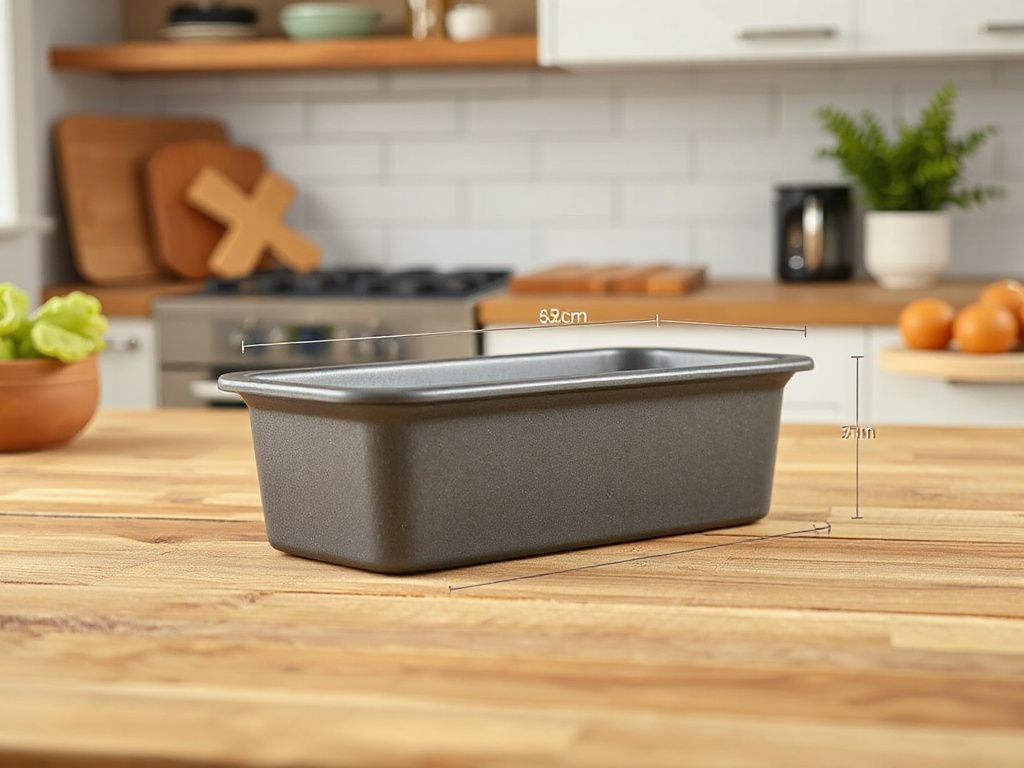
Bakers get tripped up because they trust the sticker on the pan. A pan labeled 9×5 inches tells you the length and width of the top rim, not the bottom, not the depth, and certainly not how many cups of batter it will hold. The bottom of that pan might be 7.5×3.5 inches, and the depth could be 2.5, 2.75, or 3 inches. Those variables change the volume dramatically.
According to King Arthur Baking, the same recipe baked in a 9×5 pan and an 8.5×4.5 pan will produce noticeably different loaves because the batter depth and surface area change the rate of heat penetration. That is exactly why a heat-distribution obsessive like me starts every loaf project by measuring the pan’s water capacity. My rule: the printed dimensions are a suggestion; the cup measurement is the specification.
Top Rim Dimensions vs. Bottom Dimensions
Most loaf pans are stamped or rolled from a single sheet of metal, which means the sides angle outward slightly. A 9×5-inch top rim might taper down to a 7.5×3.5-inch bottom. If the pan has straight, vertical sides—like some commercial Pullman pans—the bottom dimensions stay close to the top. That difference changes how much batter the pan holds even when the top label is identical.
If you bake the same amount of batter in a sloped-side pan versus a straight-side pan, the sloped one spreads the batter wider and shallower. The straight one piles it deeper. Deeper batter takes longer to bake through the center, so the same recipe can undercook in one pan and overbrown in another. This is why I never assume a pan is the right size until I check its actual liquid volume.
The Capacity Problem: Cups vs Quarts
Recipes rarely list the pan’s cup capacity. They list a nominal size like 9×5 or 8.5×4.5. But those numbers are only accurate if the pan’s depth and side angle match the recipe developer’s pan. A 9×5 pan with a 2.5-inch depth holds about 7 cups. A 9×5 pan with a 3-inch depth holds closer to 10 cups. That three-cup gap is enough to turn a perfectly domed loaf into a sunken brick.
To cut through the confusion, measure every loaf pan you own right now. Fill it with water to the very top rim, then pour that water into a liquid measuring cup, one cup at a time. Write the cup capacity on the bottom of the pan with a permanent marker. That single number will save you more failed bakes than any label ever printed.
Standard Loaf Pan Sizes and Their True Capacities
Most home bakers encounter three loaf pan shapes regularly. Each has a different capacity range, and each works best for specific types of batter.
The 9×5-Inch Loaf Pan
The 9×5-inch loaf pan is the most common size in American kitchens. It typically holds 8 to 10 cups depending on depth and side slope. That volume suits recipes using about 3 to 3.5 cups of flour, which covers most banana breads, pumpkin breads, and sandwich breads from standard cookbooks.
A 9×5 pan gives the batter a wide, shallow footprint relative to smaller pans. That means the center of the loaf reaches the target internal temperature faster than a deeper, narrower pan would. For quick breads, I aim for an internal temperature of 200°F to 205°F; for yeast breads, 190°F to 200°F. The wider surface area also promotes a larger domed top, which many bakers prefer.
The 8.5×4.5-Inch Loaf Pan
The 8.5×4.5-inch pan holds significantly less batter: 5 to 6 cups. That capacity matches recipes using about 2 to 2.5 cups of flour. If you use a 9×5 pan for a recipe designed for 8.5×4.5, the batter spreads too thin, the loaf bakes dry, and you lose the tall, proud rise. If you do the reverse, the batter overflows the smaller pan, creating a mess and an underbaked center.
Many older recipes from the 1950s and 1960s were written for the 8.5×4.5 pan because that was the standard size then. Modern recipe developers often default to 9×5, so if you bake from vintage cookbooks, expect to need the smaller pan or to scale the recipe up by about one-third to fill the larger one.
Pullman Loaf Pans and Specialty Shapes
A Pullman loaf pan is a rectangular pan with a sliding lid. The lid creates a perfectly squared-off loaf with a tight, even crumb—ideal for sandwich bread. Pullman pans come in several sizes, but the most common is 13x4x4 inches, which holds about 14 to 16 cups of batter. That’s roughly double a 9×5 standard pan, so a Pullman pan cannot be substituted directly without doubling the recipe.
According to the official specifications from USA Pan Bakeware, their 13x4x4 Pullman pan has a 4-inch depth, which is deeper than any standard open loaf pan. That extra depth means the batter depth is much greater, so the center takes longer to set. Pullman breads often require a lower oven temperature and a longer bake time than an open pan of the same volume would.
Matching Your Pan to the Recipe
Once you know your pan’s true cup capacity, matching it to a recipe becomes mechanical. The goal is to fill the pan so the batter depth stays within the range the recipe expects—usually between halfway and two-thirds full before rising.
What Size Loaf Pan Should I Use for Banana Bread?
Most banana bread recipes produce about 6 cups of batter, which fills a 9×5 pan to roughly two-thirds full and bakes into a loaf about 2.5 to 3 inches tall after rising. If your 9×5 pan holds 8 cups, that same batter fills it only halfway, which produces a squat, dry loaf. If your 9×5 pan holds 10 cups, the batter would be even shallower.
For a standard banana bread recipe using 3 medium bananas and 2 cups of flour, a 9×5 pan with an 8-cup capacity is ideal. If your pan holds more, scale the recipe up by 20 to 30 percent. If your pan holds less, use an 8.5×4.5 pan instead, or reduce the recipe slightly. Baking time will shift about 5 to 10 minutes either way depending on batter depth.
Can I Use an 8×4 Pan Instead of a 9×5?
The 8×4-inch pan is an older, less common size, but it still shows up in thrift stores and hand-me-down collections. A true 8×4 pan typically holds 4 to 5 cups. That is significantly smaller than a 9×5, so using it as a direct substitute will overflow unless you reduce the recipe by about one-third. The smaller pan also creates a deeper batter layer, which means the center takes longer to bake. If you make the substitution, lower the oven temperature by 25°F and start checking for doneness 10 minutes early.
What If My Recipe Calls for a 9×5 but I Only Have a Pullman Pan?
Because a Pullman pan holds roughly double the volume of a 9×5, you cannot bake a standard quick bread recipe in it without doubling the batter. Even then, the deep 4-inch sides mean the center will lag far behind the crust. To use a Pullman pan for a quick bread, bake with the lid off, reduce the oven temperature by 25°F, and extend the baking time by 15 to 20 minutes. Expect a rectangular loaf with less doming—a fair trade for sandwich slices but not ideal for banana bread.
How Do I Adjust Baking Time When I Change Loaf Pan Size?
Baking time scales with batter depth, not pan volume. A shallow batter layer bakes faster; a deep layer slower. If you move a recipe from a 9×5 pan to an 8.5×4.5 pan, the batter gets deeper, so add 5 to 10 minutes to the bake time and lower the temperature by 25°F to prevent the crust from overbrowning before the center sets. If you move from a smaller pan to a larger one, the batter gets shallower, so reduce the time by 5 to 10 minutes and keep the temperature the same.
I use a probe thermometer for every loaf regardless of pan size. Quick breads finish at 200°F to 205°F internal temperature. Yeast breads finish at 190°F to 200°F. These numbers remain constant no matter what pan you use, which makes them far more reliable than a printed bake time.
Material and Heat: Why Your Loaf Pan Choice Matters
Heat distribution is my obsession, and loaf pans reveal it perfectly. Metal pans conduct heat quickly and radiate it into the batter from the sides and bottom. Glass pans absorb heat slowly but hold onto it once hot. Stoneware sits somewhere in between, and silicone barely conducts at all. Each material changes the crust, the rise, and the baking time.
Glass vs Metal Loaf Pans
Glass loaf dishes—like those from Pyrex—behave the opposite of metal. Glass is an insulator, so it heats slowly, but once hot, it stays hot for much longer. That means the sides of the pan continue baking the loaf even after you pull it from the oven. Because of that retained heat, recipes designed for metal pans often overbake and overbrown in glass. The standard adjustment is to lower the oven temperature by 25°F and start checking for doneness 10 minutes early.
Glass also produces a thicker, darker crust on the bottom and sides because the heat radiates back from the glass walls. Some bakers like that for sandwich bread, but quick breads can turn tough. If you only have glass, you can line the bottom with parchment paper to soften the crust and prevent sticking—glass is notorious for releasing poorly once cooled.
Dark-Coated and Non-Stick Metal Pans
Dark metal absorbs more radiant heat than light metal. A dark-coated or non-stick 9×5 pan will brown the loaf faster and darker than a bare aluminum pan of the same size. The common fix—recommended by nearly every bakeware manufacturer—is to reduce the oven temperature by 25°F when using a dark pan unless the recipe explicitly calls for a dark pan. This prevents the crust from turning too dark before the center reaches the proper internal temperature.
Bare aluminum pans from makers like Nordic Ware or Chicago Metallic conduct heat evenly but do not have a non-stick coating. You must grease and flour them carefully or the loaf will stick. Non-stick pans release cleanly but the coating degrades with metal spatulas and high-heat cleaning. Aluminum pans are often preferred for delicate quick breads, while non-stick pans are better suited for yeast breads with sticky doughs.
Stoneware and Silicone Loaf Pans
Stoneware loaf pans heat very slowly and evenly, producing a thick, crisp crust and a moist interior. They are excellent for yeast breads but poor for quick breads that need a fast rise. Stoneware also retains heat like glass, so lower the oven temperature by 25°F and extend the baking time by 5 to 10 minutes compared to metal.
Silicone loaf pans are the worst performers for heat distribution. Silicone is a thermal insulator, so the sides of the loaf barely brown at all. The loaf gets all its heat from the top and bottom, which leads to a pale, soggy side crust and an overbaked bottom. If you must use silicone, place it on a metal baking sheet to encourage more even bottom heat, and never fill it more than two-thirds full because the flexible walls can bow outward.
Common Mistakes and How to Avoid Them
Most failed loaves trace back to pan size, pan material, or prep technique. Fixing these three areas solves the vast majority of sunken centers, raw middles, and burnt crusts.
Why Does the Center of My Loaf Sink and What Does Pan Size Have to Do With It?
A sunken center almost always means the middle of the loaf was underbaked when the structure set. If the pan is too deep for the batter, the heat cannot reach the center before the outer parts finish, so the middle collapses as it cools. Using a pan with a smaller capacity than the recipe expects makes the batter too deep, which is the most common cause of sinking in quick breads.
The fix: measure the pan’s capacity against the recipe. The batter should fill between half and two-thirds of the pan before baking. If it’s deeper, use a larger pan or divide the batter between two smaller pans. Also check your oven temperature with an independent thermometer—many ovens run 25°F too cool, which slows the center bake just enough to cause sinking.
Overbrowning and Undercooking
Overbrowning happens most often with dark metal pans because they absorb more heat. The crust darkens before the center sets. Undercooking happens with glass or deep Pullman pans because heat takes too long to reach the center. Both problems share a solution: adjust the temperature and time for the pan you actually use, not the pan the recipe assumes you have.
For dark pans, reduce by 25°F. For glass or stoneware, reduce by 25°F and add time. For Pullman pans, reduce by 25°F and add 15 to 20 minutes. Always check the internal temperature with a probe; no pan substitution should override the final temperature target.
Should I Grease and Flour a Loaf Pan or Use Parchment Paper?
Grease and flour works for bare metal pans; it creates a reliable release layer. Non-stick pans can be greased lightly, but do not flour—flour abrasions can damage the coating over time. Glass and stoneware need a more generous grease layer because they do not have any natural non-stick properties. Parchment paper guarantees release and makes lifting the loaf out effortless. Cut a strip that covers the bottom and two long sides, leaving overhangs to use as handles. For yeast breads, just grease the pan because the loaf will release more easily after cooling.
Can I Double a Loaf Recipe and Bake It in Two Pans?
Yes, doubling a recipe and dividing it between two identical pans works perfectly as long as each pan is filled to the same depth as a single loaf would be. Do not double the recipe and bake it in one large pan unless that pan’s capacity is exactly double the original—for example, a Pullman pan for a recipe written for a 9×5. Baking a doubled amount in two pans may require 5 to 10 minutes less time per pan because the oven has more mass to heat, but the internal temperature target stays the same.
How Do I Store Loaf Pans So They Don’t Rust or Warp?
Bare aluminum and uncoated steel loaf pans can rust if stored damp. Always dry them completely before stacking. Stack pans with a sheet of parchment or a soft cloth between each to prevent scratches on non-stick coatings. Avoid nesting heavy glass or stoneware pans inside metal ones; the weight can warp the metal edges. If a metal pan warps, you can often flatten it by placing it on a flat surface and gently pressing the edges back, but a badly warped pan will never heat evenly again—replace it.
For the home baker who wants consistency, owning two loaf pans of different sizes: one 9×5 and one 8.5×4.5 is advisable. Measure their cup capacities, write them down, and never guess again. That simple habit will eliminate most loaf pan guesswork before you even preheat the oven.
Frequently Asked Questions
What size loaf pan should I use for banana bread?
Use a 9×5-inch loaf pan that holds about 8 cups of water. Most banana bread recipes produce roughly 6 cups of batter, which fills that pan two-thirds full and bakes evenly. If your 9×5 pan holds 10 cups, the loaf will be shallow and dry; if it holds less than 7 cups, the batter may overflow.
How many cups does a 9×5 loaf pan hold?
A standard 9×5-inch loaf pan holds between 8 and 10 cups of liquid, depending on depth and side angle. Pans with 3-inch deep sides and vertical walls hold closer to 10 cups; pans with 2.5-inch depth and sloped sides hold about 8 cups. Always measure your own pan with water to know the exact number.
Can I use an 8×4 pan instead of a 9×5?
An 8×4-inch pan holds only 4 to 5 cups, about half the volume of a 9×5. You would need to reduce the recipe by one-third, lower the oven temperature by 25°F, and check doneness early. A better substitute is an 8.5×4.5-inch pan, which holds 5 to 6 cups and works with minimal recipe adjustment.
How do I measure the actual capacity of my loaf pan?
Fill the pan with water to the very top rim. Pour that water into a liquid measuring cup one cup at a time, counting cups until the pan is empty. That number is the pan’s true capacity. Write it on the bottom of the pan with a permanent marker so you never have to measure again.
What’s the difference between baking in glass versus metal loaf pans?
Glass heats slowly but retains heat long after it leaves the oven, so the loaf continues baking and browning for several extra minutes. Metal heats fast and cools quickly. For glass, lower the oven temperature by 25°F and start checking doneness 10 minutes early. Glass also produces a thicker, darker side crust.
Why does my loaf sink in the middle even when I follow the recipe?
A sunken center almost always means the middle was underbaked when the crust set. If your pan is deeper than the recipe expects, the batter layer is too thick for heat to reach the center before the outside finishes. Use a shallower, wider pan or divide the batter between two pans to solve the problem.