A salad spinner earns drawer space only by replacing work.
A useful salad spinner guide distinguishes washing capacity from drying capacity: a large bowl does not help if the basket is crowded or the lid cannot drain efficiently. The whole mechanism and care routine matter too, because an easy-to-spin design can still be inconvenient if the basket, lid, brake, or drive mechanism is difficult to clean or dry.
I approach this tool as a unitasker sceptic. A salad spinner should make washing and drying leafy greens easier than using a colander and towel, not simply add another bowl to the kitchen. The right choice depends on what the spinner replaces, how much produce you prepare, and how willing you are to clean moving parts after every use.
Key Takeaways
- Judge the perforated basket separately from the outer wash bowl; washing capacity and drying capacity are different.
- Fill the basket only halfway to two-thirds full for more effective drying and gentler handling.
- Choose a mechanism that you can rinse, dry, and repair rather than one that merely looks quick to operate.
Beginner: Start With What the Spinner Must Replace
Decide whether you need washing, drying, or both
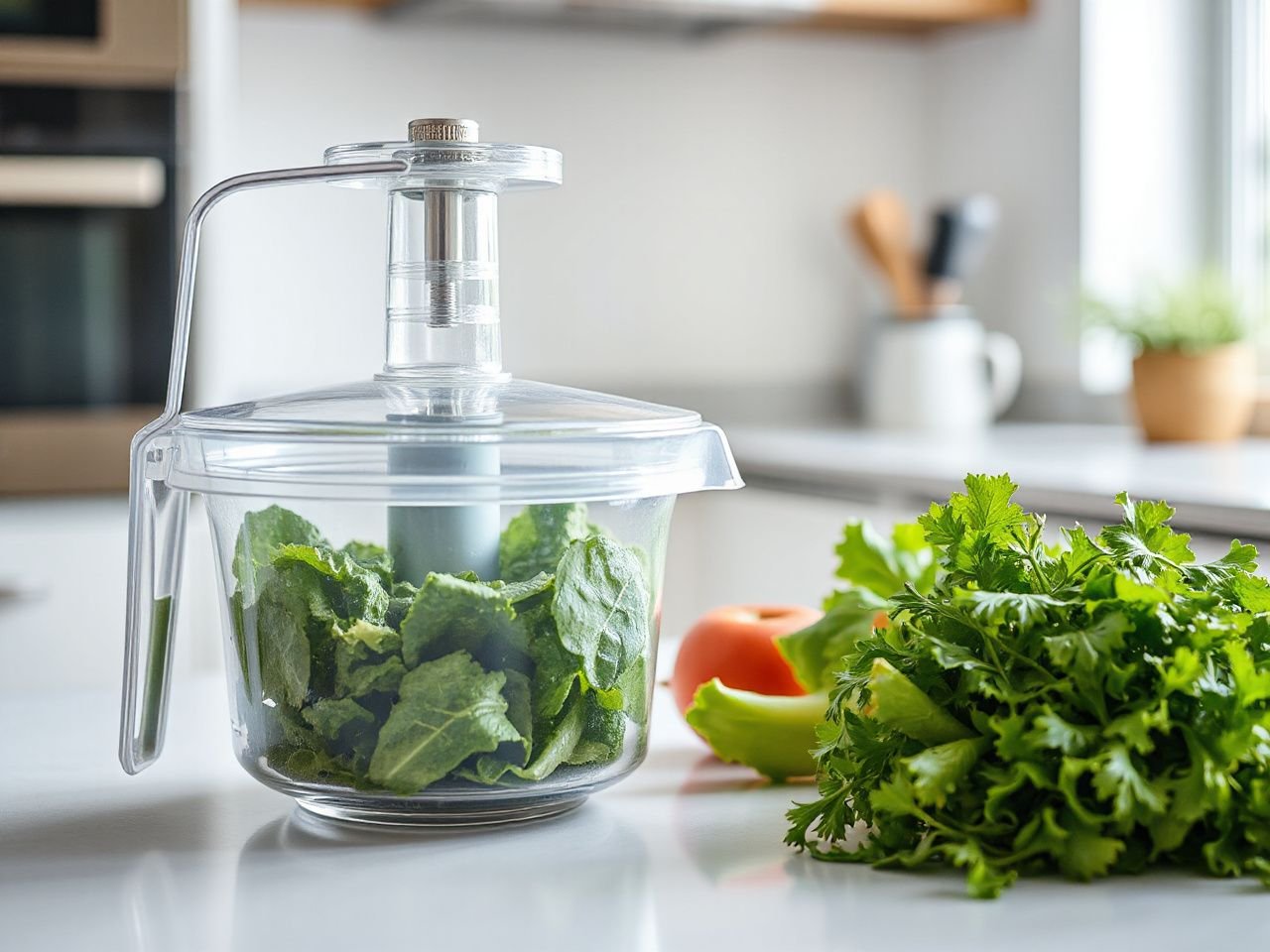
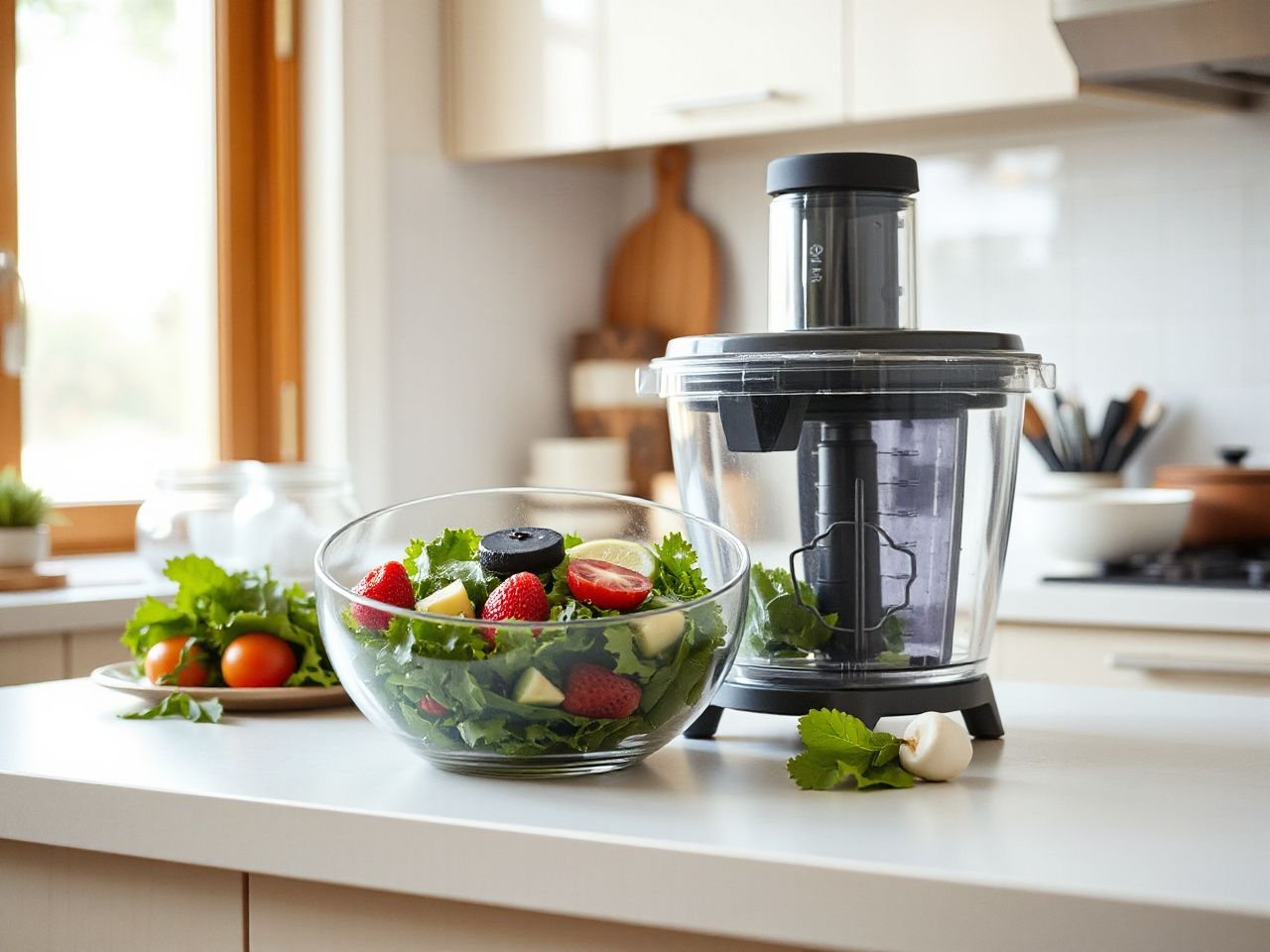
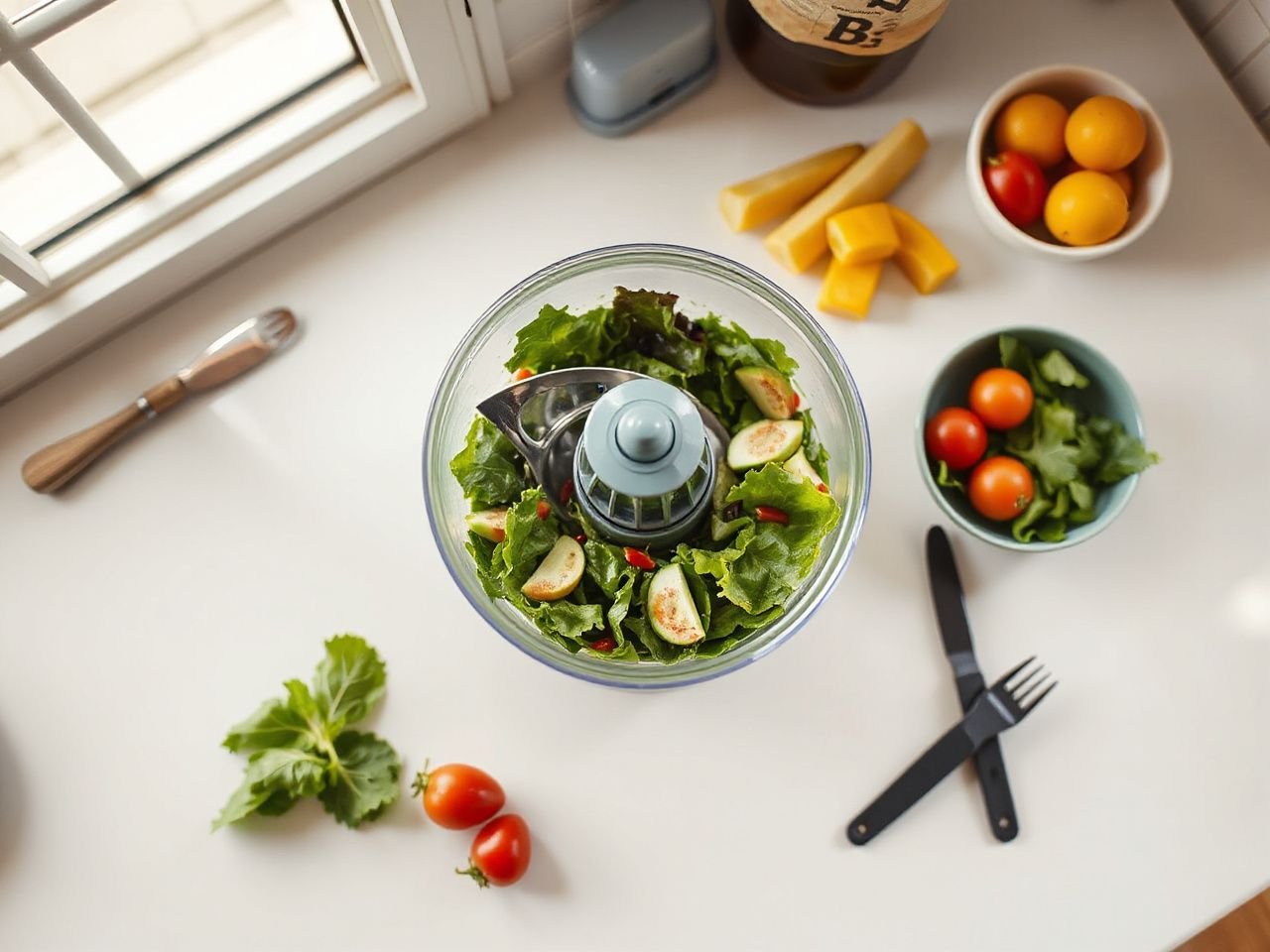
A salad spinner combines an outer wash bowl, a perforated spinner basket, and a lid with a drive mechanism. Water drains through the basket as the basket rotates inside the bowl. The bowl catches the water, while the greens remain in the basket.
Spinning removes surface water through centrifugal action. As the basket turns, water moves away from the leaves and passes through the perforations, which leaves the produce less wet for serving or storage.
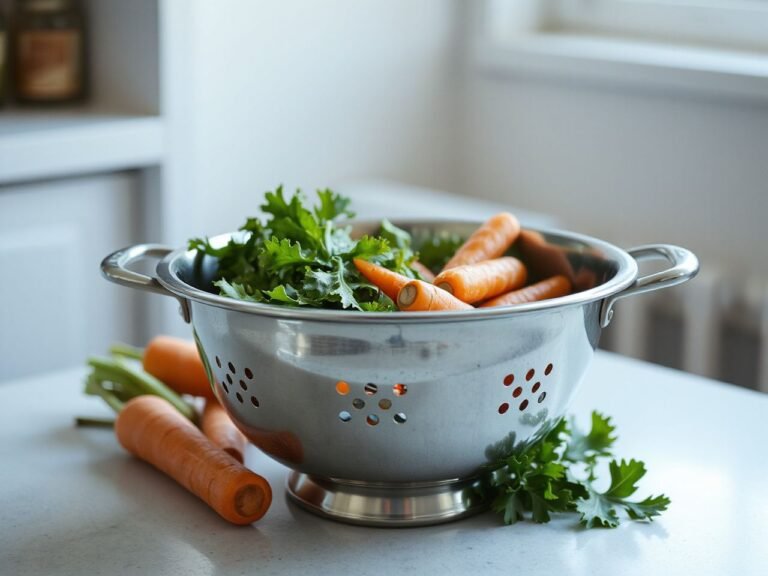
A colander can rinse leafy greens and other salad vegetables, but a colander does not actively separate surface water from the leaves. A clean towel can finish the job, yet towels require handling, counter space, and enough care to avoid pressing delicate leaves too hard.
The useful question is not simply whether a spinner works. Ask what task it replaces in your routine:
- If washing greens is the main problem, look for a basket that lifts easily from the bowl and leaves room for rinsing.
- If drying is the main problem, inspect the basket’s open area and the lid’s ability to keep water moving out of the spinning chamber.
- If storing washed greens is part of the routine, consider how quickly the basket, lid, and bowl can be dried after use.
- If you already use a colander and towel without frustration, a spinner may be unnecessary drawer space.
A salad spinner is most useful when drying leafy greens repeatedly takes more effort than the tool’s cleaning routine. That is a practical threshold, not a claim that every kitchen needs one.
Capacity means more than bowl size
Salad spinner capacity typically falls between 4 and 8 quarts for the majority of units. That figure describes the advertised volume of the bowl, but it does not tell you how much produce can dry effectively in one load.
The basket should be filled only halfway to two-thirds full for optimal drying efficiency. A basket packed to the rim may still hold a large amount of lettuce, yet the leaves have less room to move and shed water.
Overcrowding prevents thorough drying and can bruise delicate leaves. A large outer bowl therefore does not automatically provide large usable drying capacity.
Capacity is a two-part decision:
- Washing capacity: the room available for water and produce before rinsing becomes awkward.
- Drying capacity: the amount the basket can hold while leaves still have room to move during spinning.
The basket is the limiting part for drying leafy greens. If the basket looks shallow, narrow, or difficult to lift when full, treat its practical capacity as smaller than the bowl’s advertised volume.
Inspect the basket before the bowl
The basket should have perforations that allow water to leave while keeping the produce contained. Look for openings that are easy to rinse and a rim that feels secure when the basket is lifted from the outer bowl.
A basket that traps plant debris around its rim or base will add cleaning work after every salad. The basket should also sit steadily in the bowl rather than wobble when you turn the drive mechanism.
Leafy greens need room to move without being crushed against a tight lid or crowded into a small base. Delicate produce and fresh herbs deserve especially gentle handling, so a smaller load may be sensible even when the bowl can hold more.
The perforated basket determines drying capacity because water can leave only through the space and openings available around the produce.
Check the outer wash bowl for useful work
The outer bowl has two jobs: it holds the basket during washing and catches the water released during spinning. A bowl that doubles as a serving bowl can reduce the number of dishes in use, but that advantage matters only if the bowl is comfortable to lift, rinse, and dry.
Inspect the bottom and the area where the basket rests. Food particles and moisture often collect in joins, recesses, or around supports. A smooth interior is easier to wipe than a bowl with narrow spaces that require a small brush or repeated rinsing.
The bowl should remain stable while the mechanism is operated. A slick or unstable base makes the spinner harder to control and may encourage users to hold the lid or bowl in ways the design did not intend.
An outer wash bowl is useful only when its shape supports both rinsing and water collection without making cleanup awkward.
Intermediate: Compare the Lid and Spinning Mechanism
Pull-cord mechanisms
A pull-cord spinner uses a cord to turn the basket. The operating action is a repeated pull, and the cord retracts into the lid after use.
This design can feel direct because the hand motion is separate from the basket. The important inspection points are the cord’s exit, the grip, the way the lid closes, and whether food debris or moisture can collect around the moving parts.
A pull-cord mechanism is not automatically easier to use than a crank mechanism. It may suit someone who prefers a straight pulling motion, while another person may prefer the continuous control of a handle.
Crank mechanisms
A crank spinner turns the basket through a handle mounted on the lid. The handle may fold or sit above the lid, so check whether it can be stored without obstructing a cabinet or drawer.
A crank offers visible mechanical control, but the lid needs to remain seated while the handle turns. A lid that shifts, flexes, or collects residue around the crank can make the tool unpleasant to wash and dry.
Neither mechanism deserves an automatic advantage. The better choice is the one that matches your hand comfort and has moving parts you can inspect and clean.
A pull-cord spinner and a crank spinner can both remove surface water; the meaningful difference is how their moving parts fit your hand and your cleaning routine.
The brake button matters
Some spinner lids include a brake button that stops the basket. A brake can be useful when you want to end the spin without waiting for the basket to slow on its own, but the button is also another seam and moving part to keep free of plant debris.
Pressing a brake button repeatedly with force is poor practice. Use the control as the manufacturer directs, and stop if the mechanism jams, grinds, or requires unusual pressure.
A brake button should return cleanly and should not remain sticky after rinsing. If the lid cannot be separated or rinsed according to the care instructions, trapped moisture around the button can become a long-term nuisance.
Read the lid as a drainage system
The spinner lid keeps the basket enclosed while the produce turns. Its underside, central drive area, and rim should be easy to inspect because those spaces may collect water and small pieces of leaf.
A lid that drains poorly can leave the basket sitting in water after rinsing or retain moisture after spinning. The basket should be drained between rinsing and spinning so the greens are not left sitting in wash water.
That sequence matters. Rinse the greens in the basket and outer bowl, lift the basket, allow the wash water to drain from the basket, return the basket to the bowl, then spin. Repeating the spin after an initial drain may help remove remaining surface water, but the load still needs enough room to move.
The lid should close securely without forcing it. A jammed mechanism should never be overcome by pushing harder, twisting the lid aggressively, or using a utensil.
Use the basket without bruising the greens
Place leafy greens into the basket without compressing them into a dense mass. Large leaves can be torn into manageable pieces before washing, but sharp utensils should not be used inside the basket or near the lid.
Run the mechanism with controlled movement. Excessive force can stress a pull cord, crank, brake, or lid connection, while an overloaded basket can press leaves against one another and against the sides.
Delicate herbs can be spun, but they should receive a lighter load and gentler handling than sturdy lettuce. If the leaves emerge crushed, split, or tangled, reduce the amount in the basket and handle the produce less aggressively.
Sharp utensils and hot contents are unsuitable for a salad spinner because they can damage or deform its parts.
Advanced: Judge Cleaning, Materials, and Ownership
Cleaning is part of the performance
Moving parts, the lid, and the basket need cleaning and complete drying because trapped moisture and plant debris can create odors or residue. A spinner that dries greens well but remains damp inside the lid is not a low-maintenance tool.
After use, separate the basket, bowl, and lid as far as the care instructions allow. Rinse away leaf fragments, wash the surfaces with the stated method, and leave components open so water can escape before storage.
Pay close attention to:
- The underside of the spinner lid.
- The pull-cord exit or crank connection.
- The brake button and its surrounding seam.
- The basket rim and base.
- The point where the basket sits inside the outer bowl.
A complete drying routine matters more than a quick wipe of the visible surfaces. Storing a damp basket inside a damp bowl can preserve the moisture that cleaning was meant to remove.
Dishwasher claims apply to specific parts
Dishwasher suitability varies by component and material, so check the care instructions before using heated drying or washing removable parts. Do not assume that a dishwasher-safe bowl makes the lid, brake, pull cord, or crank dishwasher safe.
The OXO Good Grips 6.22 Qt Salad Spinner is listed as dishwasher safe, and that product is also identified as BPA-free. Those are product-specific facts, not a rule for every salad spinner.
The PrepWorks Collapsible Salad Spinner is identified as BPA-free as well. A material statement still does not replace the manufacturer’s cleaning directions for the mechanism and lid.
The U.S. Food and Drug Administration provides food-safety information through its main site at FDA.gov, but the spinner’s own care instructions remain the direct source for component-specific washing guidance.
The U.S. Consumer Product Safety Commission publishes consumer product safety information at CPSC.gov; consult that body for broader safety guidance rather than treating a food-preparation tool as indestructible.
Look for replaceable parts before purchase
A salad spinner has more wear points than a plain colander because the lid contains a drive mechanism. The pull cord, crank, brake, lid connection, and basket rim deserve attention before the bowl’s appearance.
Ask whether the manufacturer identifies replacement lids, baskets, or moving parts. If the answer is not clear, treat a damaged mechanism as a possible reason the entire unit may leave service.
A replacement basket can preserve the useful part of a spinner if the outer bowl and lid remain sound. A replacement lid can matter even more because the lid contains the controls and drive components.
Long-term ownership depends on parts support, cleaning access, and careful operation. A low-complexity unit may be preferable when replacement information is absent or the mechanism cannot be opened for routine care.
Judge construction by what you can inspect
Do not infer durability from a heavy-looking bowl, a glossy finish, or a large capacity claim. Inspect the contact points, lid fit, basket stability, and control movement instead.
The basket should lift without catching. The lid should sit evenly. The crank or pull cord should move without grinding or requiring force, and the brake button should operate without sticking.
These checks do not predict an exact lifespan. They do reveal whether the spinner’s main parts are accessible, aligned, and sensible to maintain.
A salad spinner’s most important ownership question is whether its working parts can be cleaned, dried, and replaced when necessary.
Preventive Measures: Get Drier Greens and Fewer Problems
Use a simple washing and spinning sequence
- Step 1: Put the leafy greens in the perforated basket and place the basket in the outer wash bowl.
- Step 2: Add cool water as directed for washing the produce, and move the leaves gently rather than crushing them.
- Step 3: Lift the basket and drain it between rinsing and spinning. The greens should not sit in the wash water.
- Step 4: Return the basket to the bowl, close the spinner lid, and operate the pull cord or crank with controlled movement.
- Step 5: Use the brake button only as directed, then inspect the leaves and repeat a controlled spin if surface water remains.
- Step 6: Remove the basket, transfer the greens for serving or storage, and clean and dry every component.
Greens sometimes stay wet because the basket is overcrowded, the basket was not drained before spinning, or the leaves are packed together. A full outer bowl does not solve any of those problems.
Water left between folded leaves can also remain after the basket has spun. Separate dense clusters gently and use a smaller load rather than increasing force on the mechanism.
A drained, partly filled basket gives surface water more room to leave the produce during spinning.
Know when a colander or towel is enough
A colander is a sensible choice for a small amount of produce, quick rinsing, or a kitchen with very limited storage. A towel can finish drying greens when the leaves are sturdy and the quantity is manageable.
A spinner becomes more useful when water on the leaves affects dressing, storage, or the texture of a salad. Even then, the tool is worthwhile only if its washing and drying routine takes less effort than the alternative.
Using a colander and towel avoids a drive mechanism, brake button, and lid to clean. That simplicity has real value for anyone who prepares leafy greens only occasionally.
A salad spinner is not automatically superior to a colander and towel; its advantage is concentrated surface-water removal with less direct contact from a towel.
Store the parts so they can dry
Do not close a wet basket inside a wet bowl and place the lid on top. Separate the components, empty any collected water, and allow air to reach the basket and lid before storage.
Keep the drive area free of leaf fragments. If the lid has a pull-cord mechanism, crank mechanism, or brake button, inspect those parts after rinsing instead of assuming water has reached every surface.
Store the spinner where the basket and lid will not be crushed by other tools. A bent basket or stressed lid can make the mechanism harder to operate.
A dry spinner is easier to keep clean because moisture and plant debris have less opportunity to remain trapped between uses.
Connect the decision to the rest of the kitchen
A spinner belongs in a prep setup only if it supports the meals you actually make. Someone comparing several countertop tools may also benefit from the practical questions in this compact stand mixer buying guide, especially the focus on storage and whether a specialized tool earns its space.
The same unitasker test applies to other prep tools. A bowl that serves for washing, drying, and serving has a clearer role than a spinner that is used rarely and stored wet.
Storage matters because a bulky bowl and basket are inconvenient if they must be dismantled every time another tool is needed. Measure the space you can actually spare rather than choosing by advertised bowl capacity alone.
Frequently Asked Questions
How does a salad spinner remove water from leafy greens?
A salad spinner turns a perforated basket inside an outer wash bowl. Centrifugal action moves surface water away from the leaves and through the basket openings, while the bowl catches the water. The basket should be drained between rinsing and spinning, and it should not be crowded because restricted movement leaves more water behind.
Is a pull-cord spinner easier to use than a crank spinner?
Neither mechanism is automatically easier for every user. A pull-cord design uses a pulling motion, while a crank design uses a turning handle. Judge the grip, lid stability, cord or crank connection, and cleaning access. The best fit is the mechanism that operates without force and can be rinsed and dried without trapping debris.
How much leafy produce can a salad spinner handle?
Most salad spinners are advertised within a capacity range of 4 to 8 quarts, but effective drying depends on the basket rather than the outer bowl. Fill the basket only halfway to two-thirds full. A crowded basket restricts movement, leaves greens wetter, and may bruise delicate leaves.
Can the bowl and basket go in the dishwasher?
Dishwasher suitability varies by component and material. Some products list dishwasher-safe care, while their lids or mechanisms may need separate handling. Check the manufacturer’s instructions before using a heated drying cycle. The OXO Good Grips 6.22 Qt Salad Spinner is listed as dishwasher safe, but that product-specific statement should not be applied to every spinner.
Why do greens sometimes stay wet after spinning?
The usual causes are an overcrowded basket, water left in the basket after rinsing, or leaves packed into dense clusters. Drain the basket before spinning, reduce the load to halfway or two-thirds full, and separate leaves gently. More force is not the solution if the basket has no room for the greens to move.
Can a salad spinner be used for herbs and delicate produce?
A spinner can be used for herbs and delicate produce, but the basket should hold a smaller, looser load and the mechanism should be operated gently. Crowding and force can bruise leaves. Remove sharp utensils from the basket, and follow the care instructions for the particular spinner after washing and drying the produce.
What usually wears out on a salad spinner?
The moving parts receive the most attention: pull cords, cranks, brake buttons, lid connections, and the basket’s contact points. Plant debris and trapped moisture can create residue around these areas. Before buying, check whether replacement lids, baskets, or mechanisms are identified. Parts support can determine whether a worn component ends the tool’s useful life.
Is a salad spinner better than drying greens in a colander or with a towel?
A colander is simpler and works well for rinsing small amounts, while a towel can dry leaves through direct contact. A spinner removes surface water through centrifugal action with less towel handling. The tradeoff is another bowl, lid, basket, and mechanism to clean. Choose the spinner only if that repeated drying task justifies its storage and care routine.
Can hot contents go in a salad spinner?
A salad spinner is intended for cool washed produce. Hot contents may deform parts, and sharp utensils or a forced mechanism can cause damage. If the basket or lid jams, stop and follow the care instructions instead of pushing harder. The tool is designed for preparation of produce, not for handling hot food or resisting abuse.
For readers comparing kitchen tools by storage burden and practical use, the guide to budget baking pans offers the same useful question: what does the tool replace, and how often will it earn its space?