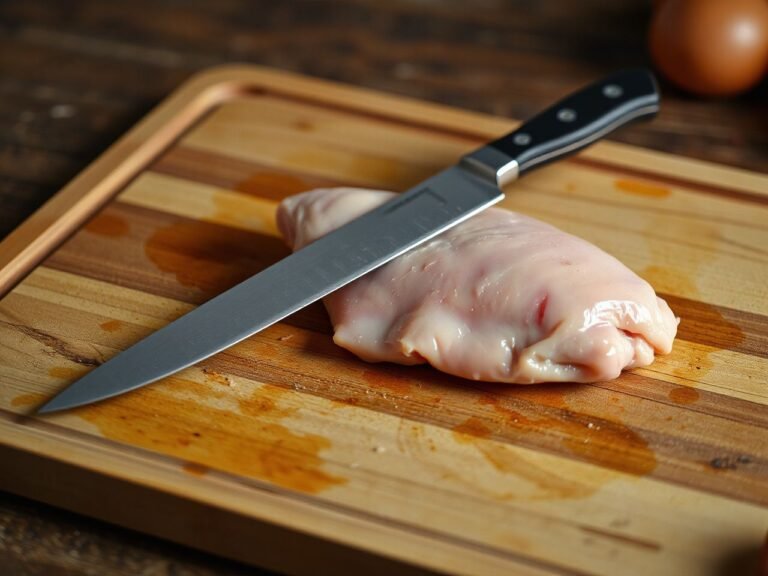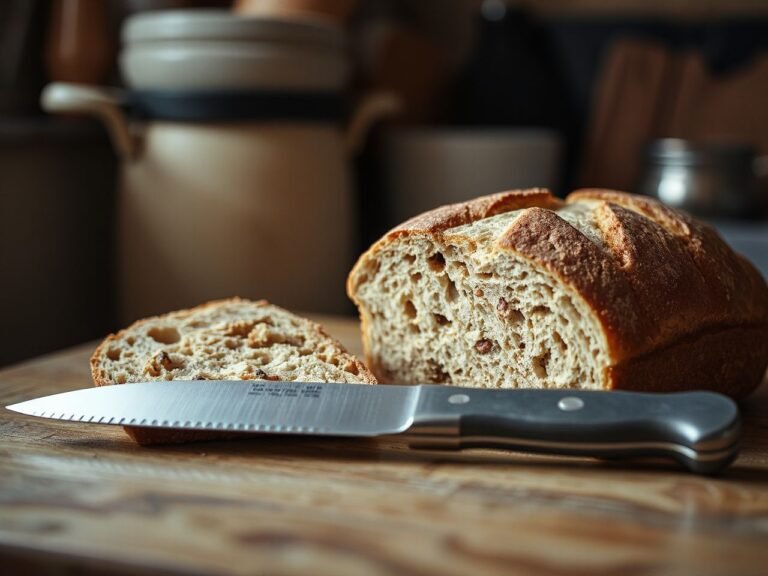
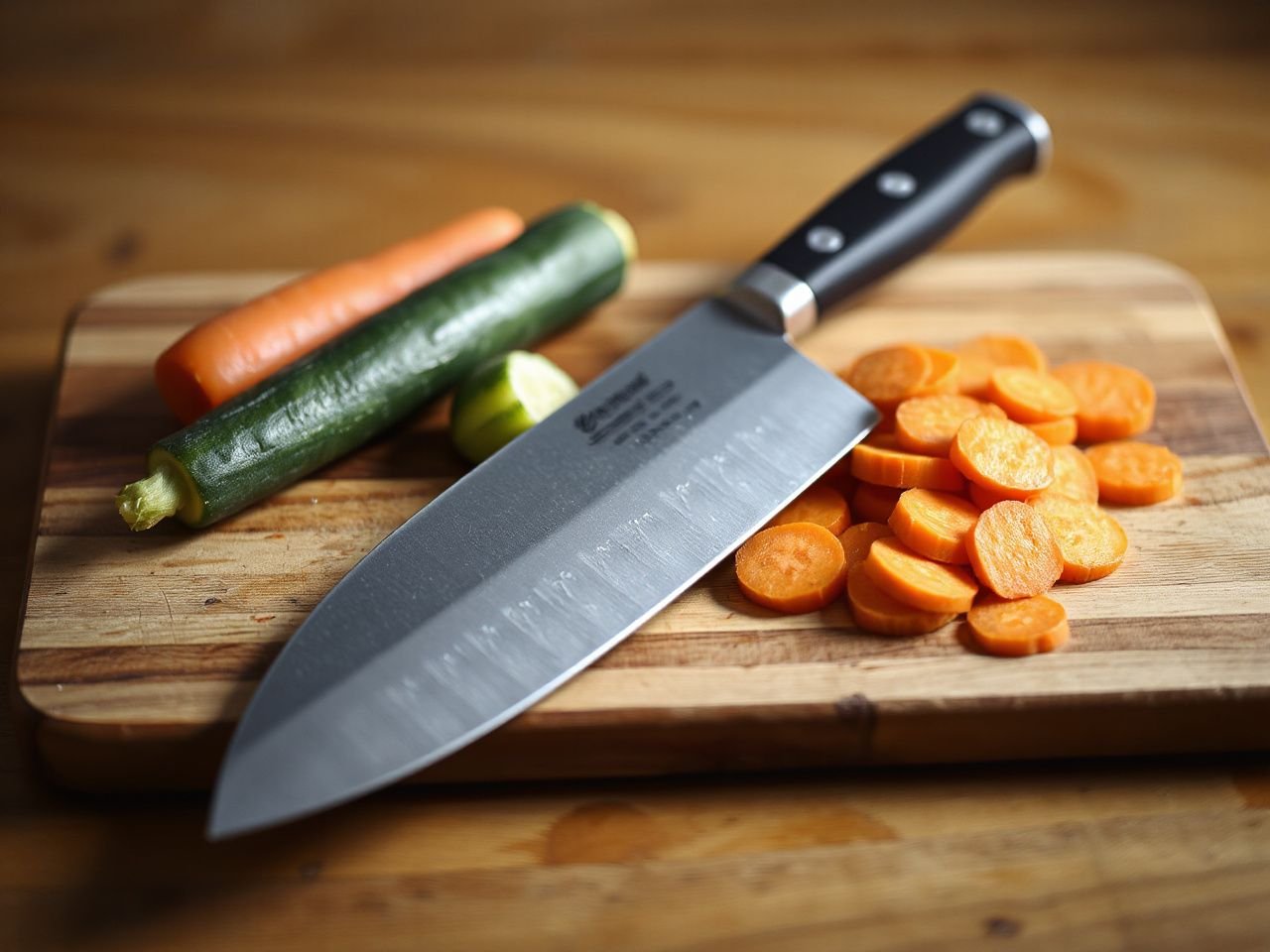
Are you choosing a santoku because of its familiar shape, or because its cutting behavior suits the way you prepare food? The useful distinction is between a santoku’s silhouette and its actual cutting behavior: a broad blade and flatter edge support controlled push cuts, while the limited pointed tip and reduced belly make sustained rocking less natural. Selection also depends on the trade-off between edge retention, ease of sharpening, corrosion care, handle fit, and tolerance for chipping rather than on the santoku label alone. This santoku knife selection guide focuses on the twentieth cut, not only the impressive first slice.
Key Takeaways
- A santoku favors push cutting and chopping because its edge is relatively straight and its tip is sheep’s-foot shaped.
- Blade length, handle shape, steel, and edge geometry should match your board space, grip, and maintenance habits.
- Scallops can reduce sticking with some foods, but they do not replace a sharp, properly supported edge.
- Hand washing, immediate drying, suitable cutting boards, and protected storage help preserve the edge.
Beginner: Understand the Santoku Before Choosing One
What a santoku is designed to do
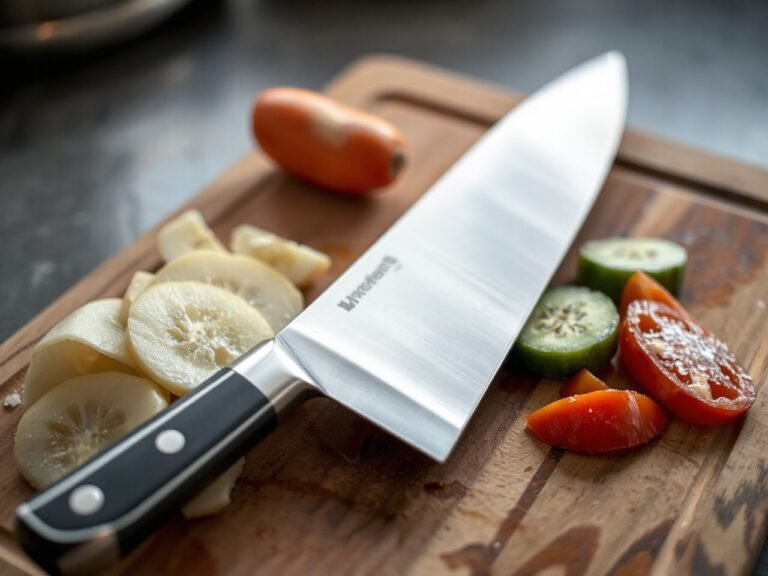
A santoku is a general-purpose kitchen knife with a broad blade, a relatively flat cutting edge, and a sheep’s-foot tip. The shape suits vegetables, herbs, boneless meat, and fish prepared on a board. Its broad face can also give the user useful knuckle clearance and a stable surface for guiding food.
A santoku knife is designed primarily for controlled push cuts and chopping rather than extended rocking. The cutting edge generally stays in contact with the board through a deliberate forward or downward motion, while the blunt tip limits the sweeping arc associated with many chef’s knives. A santoku’s flatter edge favors push cutting because more of the edge can meet the board in a controlled stroke.
That difference matters more than the name printed on a package. A chef’s knife usually has a more pronounced belly and a more pointed tip, so it suits cooks who naturally roll the blade through food. A nakiri knife has a straighter profile and a squared-off front, making it especially focused on vegetable work. A utility knife is usually narrower and more suited to smaller ingredients or tasks where a broad blade feels cumbersome.
How the shape affects vegetables, herbs, meat, and fish
For vegetables, the broad blade gives a stable guide while the flatter edge supports repeated downward cuts. The shape is also useful for transferring chopped ingredients from the board, provided the cutting edge is not scraped sideways across the surface. Herbs can be sliced cleanly with a controlled forward motion; excessive rocking is less natural and can make the tip do work it was not shaped to do.
Boneless meat and fish are reasonable uses when the food is placed securely and the cut is made without twisting. A santoku is not a bone knife, frozen-food knife, or splitting tool. Bones, frozen food, hard squash, and forceful twisting can chip, roll, or deform the cutting edge.
Food preparation should begin with a stable cutting board and a clear path for the blade. The U.S. Consumer Product Safety Commission provides general consumer guidance through its official website at CPSC.gov, and that resource is a suitable place to review broader kitchen-product safety information rather than treating a knife as a toy or casual utensil.
Blade length, shape, and working space
Typical santoku measurements fall within the 5 to 7 inches range, while many santoku blades sit between 5 and 8 inches. Those overlapping ranges tell you something useful: published measurements are not perfectly uniform, so the number alone cannot describe how a knife will feel.
A shorter blade can feel easier to place on a compact board or in a crowded prep area. A longer blade can provide more cutting surface for larger ingredients, but its suitability still depends on your board, grip, and ability to keep the whole edge under control. Measure the actual blade and handle if the manufacturer provides those details, then compare the shape with your available workspace.
Blade profile deserves as much attention as blade length. Look for a cutting edge that matches your natural motion. If your cuts are mostly forward-and-down, a flatter profile makes sense. If you routinely roll a chef’s knife from heel to tip, the reduced belly of a santoku may require a change in technique.
Beginner: Read the Steel, Edge, and Handle
Stainless steel, carbon steel, and high-carbon stainless steel
Stainless steel generally asks for less surface maintenance because it resists corrosion more readily than carbon steel. Carbon steel can develop patina and corrosion without prompt drying, so a carbon-steel santoku needs attention immediately after washing or contact with wet ingredients. High-carbon stainless steel sits between those practical concerns, but the label alone does not tell you how the knife will feel or how easily it will sharpen.
Steel affects the balance between edge retention, sharpening effort, corrosion care, and tolerance for rough treatment. A harder edge may hold its working bite longer, yet a hard, thin edge can be less forgiving of twisting or contact with a hard surface. An elevated HRC commonly spans 56–65+ HRC, but a hardness figure should never replace inspection of the edge geometry, handle fit, and stated care instructions.
Carbon steel requires a deliberate drying habit. Stainless steel still benefits from prompt drying because water, food residue, and storage conditions can affect the surface over time. Neither steel type makes a santoku suitable for bones or frozen food.
What scallops and hollow grounds actually do
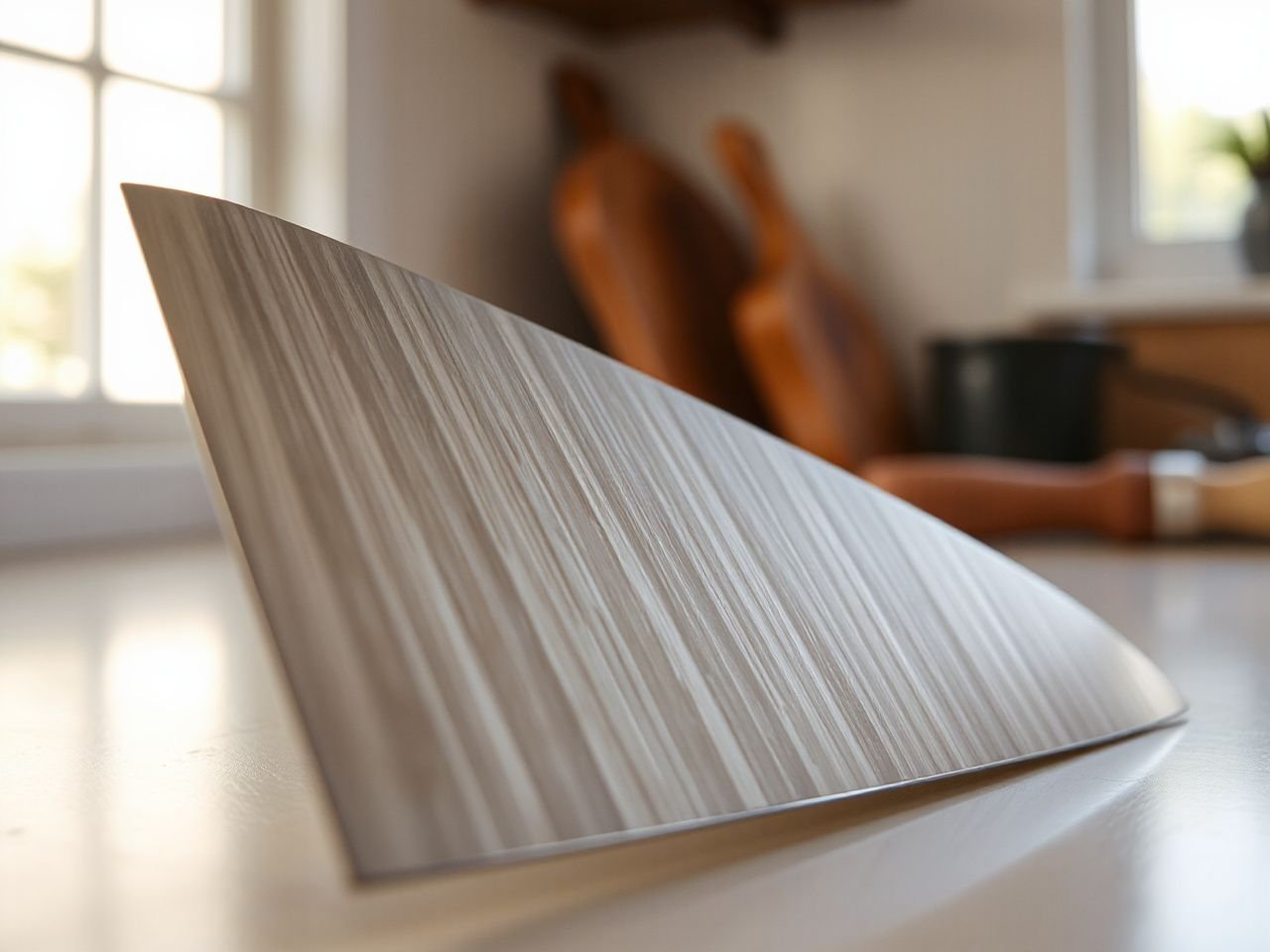
Some santoku blades have scalloped, dimpled, or hollow-ground sections along the blade face. These recesses reduce the area of direct contact between food and steel, which can lessen sticking and allow more air around the cut surface with some ingredients. The effect depends on the food, slice thickness, moisture, and sharpness of the edge.
A scalloped blade edge does not make food adhesion disappear. It also does not compensate for a dull edge, poor technique, or a blade face that is pressed against a wet ingredient. Friction can still hold food to the steel, and soft foods can still cling to any broad knife.
The scallops should not be confused with the cutting edge itself. They are usually found on the blade face, while the actual edge remains the part that contacts the board and separates the food. Examine the transition carefully; visible dimples do not prove that the knife has a particular steel, hardness, or sharpening angle.
Handle fit and balance
A Japanese wa-handle is often simpler in shape and can feel different from a Western-style handle with a fuller, more familiar contour. Neither format is automatically correct for every hand. The important checks are grip security, clearance, comfort during a pinch grip, and whether the handle makes the blade feel controllable rather than nose-heavy.
Look at the handle where it meets the blade, including the spine and the heel. A smooth transition can reduce pressure points during repeated cuts. A handle that feels secure when dry may feel different after contact with water or food, so examine its texture and shape instead of judging by appearance alone.
Handle fit is personal, but the decision can still be made systematically:
- Place your index finger and thumb in a comfortable pinch position behind the blade’s heel.
- Check that your remaining fingers can close around the handle without squeezing hard.
- Move the knife through a slow push-cut motion and watch for wrist strain or finger contact with the board.
- Confirm that the handle does not rotate easily when your grip is relaxed.
A handle that forces a tight grip can make ordinary preparation tiring and can encourage the user to steer the edge with excess pressure. A santoku handle should support control without making the hand do all the work.
How edge damage begins
A santoku edge can chip from impact, roll from force or poor contact, and become dull through ordinary contact with food and the cutting board. Hard surfaces, sideways scraping, twisting in dense ingredients, and careless storage all increase the chance of damage. The twentieth cut reveals these weaknesses more clearly than the first cut.
Intermediate: Match the Santoku to Your Cutting Habits
Choose by motion, not by label
Start by identifying your dominant cutting motion. A push cut moves the blade forward as it descends. A chop brings the edge down with limited forward travel. A rocking cut keeps part of the blade near the board while the tip or belly rises and falls. Santoku geometry favors the first two motions more than the third.
The cutting motion should also match the ingredient. A firm vegetable can be divided with a measured push, while delicate fish benefits from a clean pass that avoids repeated sawing. Herbs need a sharp edge and light control; pressing harder will not make a dull knife precise.
People who prefer a chef’s knife’s pronounced belly may find a santoku less natural at first. That is a technique difference, not a defect. If you want one knife that encourages deliberate contact with the board, the santoku profile may suit you. If your preparation depends on long rocking strokes, inspect the blade curvature before buying.
Check the spine, heel, and tip
The blade spine is the thick upper portion, while the heel is the rear section of the cutting edge near the handle. These areas affect how the knife enters food and how much clearance your fingers receive. A blunt sheep’s-foot tip gives the santoku its distinctive profile, but it offers less fine-point work than a chef’s knife.
Use the tip for tasks that suit its shape, such as controlled detail work that does not require a needle-like point. Do not force the tip into hard food or use it to pry. The transition from spine to tip should look even, and the cutting edge should appear straight or gently shaped according to the intended profile.
A santoku’s blunt tip limits point work, so cooks who frequently trim, pierce, or make fine incisions may need another knife in addition to the santoku. That is a role distinction, not a reason to grind the tip into a different form.
Consider the edge retention trade-off
Edge retention describes how well the cutting edge continues to perform before sharpening becomes necessary. It does not mean the knife remains perfect indefinitely, and it cannot be judged from sharpness at the moment of purchase. Steel hardness, edge geometry, cutting-board material, food preparation, and storage all influence the working result.
A harder edge can appeal to someone who wants longer intervals between sharpening, but greater hardness can also make careless impacts more costly. A more forgiving edge may be easier to maintain for a cook who values simple touch-ups and accepts more frequent sharpening. I would choose the balance that matches your habits rather than chasing a hardness number.
Edge retention is useful only if the knife remains easy enough to maintain. A santoku that stays sharp but is neglected after use may develop corrosion or damage that no steel label can prevent.
For a broader look at how one kitchen knife fits into a larger collection, the Kitchen Knife Set Buying Guide: What Matters in 2026 provides useful context without requiring you to treat a santoku as a complete replacement for every blade.
Sharpening and the role of a honing rod
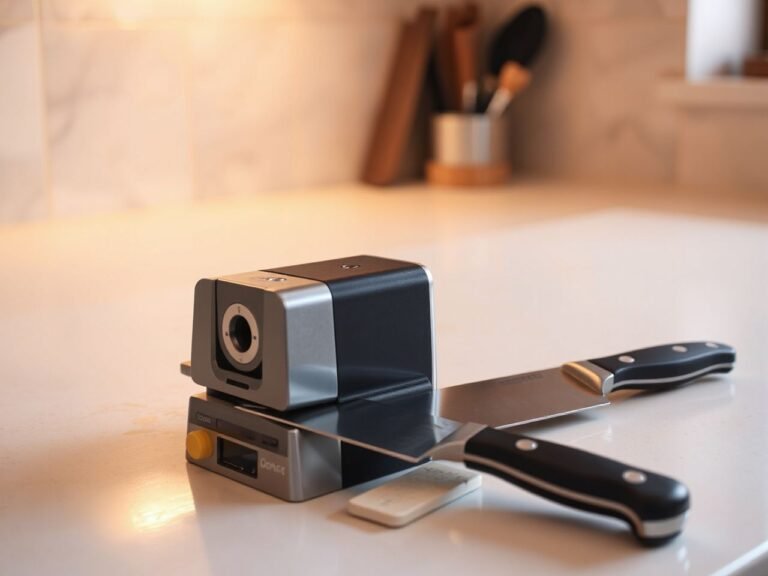
Sharpening removes material to create a new cutting edge, while honing typically realigns or refreshes an existing edge. A honing rod is not a substitute for sharpening a visibly dull or damaged santoku. A rod can also be unsuitable if its surface or technique is too aggressive for the knife’s edge.
Use a sharpening system that matches the knife maker’s instructions and the edge geometry. Keep the blade stable, maintain a consistent motion, and remove only the material needed to restore the edge. If the edge has chips or a pronounced roll, a simple honing pass will not correct the underlying damage.
Do not use a pull-through sharpener automatically. Some systems remove more steel than necessary or impose an edge shape that does not match the knife. The instructions supplied with the knife should guide the method, and a sharpening service may be sensible when the damage is beyond your control.
The Knife Sharpener Buying Guide: What’s Worth Knowing First can help you compare sharpening approaches, but the central rule remains simple: choose a method you can use consistently without forcing the blade into an unsuitable angle.
Advanced: Protect the Knife Over Its Working Life
Washing, drying, and corrosion care
Careful hand washing is the safest default for a santoku unless the manufacturer gives different instructions. Use a mild cleaning approach, rinse away food residue, and dry the entire blade, spine, heel, handle, and junction before storage. A carbon-steel knife left wet will rust, so it needs drying straight after washing.
Stainless steel needs less surface attention than carbon steel, but stainless does not mean indestructible or maintenance-free. Acidic foods, salts, moisture, and residue can still make cleaning and drying worthwhile. Avoid leaving any santoku submerged where the edge can contact other utensils.
The U.S. Food and Drug Administration publishes food-safety information for consumers and food handlers through FDA.gov. That guidance is broader than knife maintenance, but it reinforces the practical value of clean food-contact tools and prompt removal of residue.
Cutting boards and storage
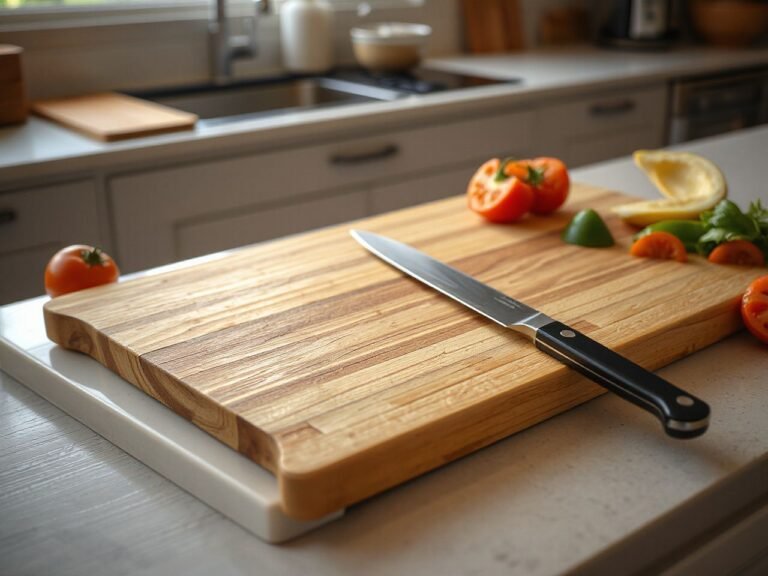
A suitable cutting board supports the edge by providing a surface that is appropriate for knife work. Very hard surfaces can be unforgiving, while a board with loose debris or an unstable base can create control problems. Keep the board steady and replace or repair it when its surface no longer supports clean preparation.
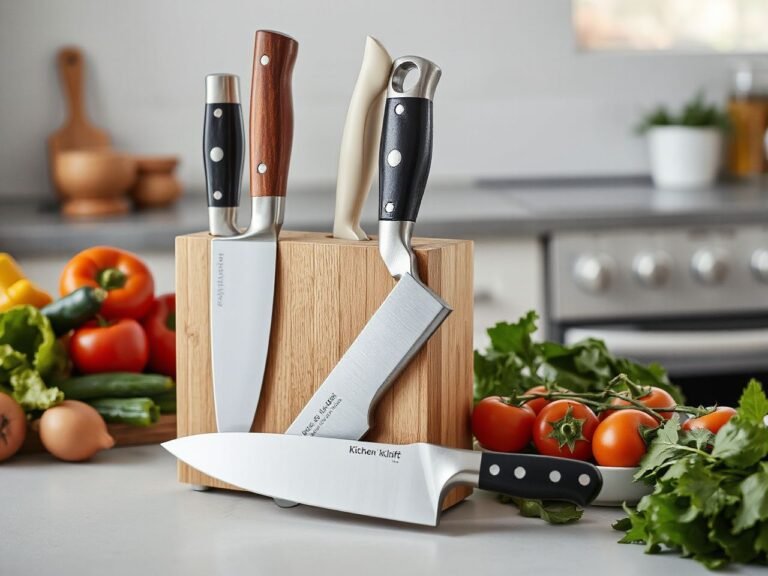
Storage should prevent the cutting edge from rubbing against other metal objects. A blade guard, knife block, magnetic storage system, or another protected arrangement can work if the edge is covered or separated and the knife cannot fall. Do not place a loose santoku in a drawer where hands may meet the edge during retrieval.
Knife storage protects the edge from contact damage and protects the user from accidental contact. The storage method should also allow the knife to be removed without dragging its cutting edge across another object.
Tasks that require another knife
A santoku should not be used on bones, frozen food, or hard squash with forceful twisting. Dense food can resist the edge, and twisting turns that resistance into lateral stress. That stress can chip or deform the edge even when the knife feels sharp before the cut begins.
For hard squash, stabilize the ingredient and use a suitable method that does not ask the santoku to pry. For bones, use a tool intended for that task. For frozen food, allow the ingredient to become workable rather than striking through it with a kitchen knife.
Separate tools also make sense for bread, detailed boning, and tasks that require a narrow or highly pointed blade. The boning knife guide covering common selection mistakes explains why a specialist blade should handle work that would place unnecessary stress on a santoku.
A practical selection sequence
Use this sequence before committing to a santoku:
- Define the motion. Decide whether your normal cuts are push cuts, chops, or extended rocking motions.
- Check the size. Compare the stated blade length with your board and the ingredients you prepare most often.
- Inspect the profile. Look at the straightness of the cutting edge, the sheep’s-foot tip, the spine, and any scalloped sections.
- Choose maintenance deliberately. Pick carbon steel only if prompt drying and surface care fit your routine; stainless steel generally asks less of you in that area.
- Test the handle fit. Hold the knife in a relaxed pinch grip and check clearance, control, and comfort.
- Plan sharpening. Confirm that you have a suitable sharpening method before the edge becomes dull.
- Plan storage. Choose a protected place where the edge will not strike other tools.
A santoku selection should follow your cutting motion and maintenance routine rather than the blade name alone. That sequence keeps the decision tied to observable features instead of marketing language.
Frequently Asked Questions
Is a santoku better for push cutting than a chef’s knife?
A santoku’s relatively flat cutting edge and sheep’s-foot tip favor push cuts and chopping. Many chef’s knives have more belly, which supports a rocking motion. Neither shape is universally superior; the better match depends on how your wrist moves and how you prefer to contact the board. Choose the profile that makes your normal motion controlled rather than forced.
Do scalloped santoku blades prevent food from sticking?
Scalloped or hollow-ground sections can reduce direct contact between some foods and the blade face. They may help with adhesion, but they do not create a nonstick surface and do not replace a sharp edge. Moist foods can still cling, especially when slices are broad or the blade is pressed against the ingredient. Treat scallops as a helpful design feature, not a guarantee.
Is stainless steel easier to live with than carbon steel?
Stainless steel generally requires less surface maintenance because it resists corrosion more readily. Carbon steel can develop patina and corrosion if it remains wet, so it needs prompt washing and thorough drying. Carbon steel may suit someone comfortable with that routine, while stainless steel suits a cook who wants simpler day-to-day care. Both types still need protected storage and appropriate sharpening.
Can a santoku cut bones, frozen food, or hard squash?
A santoku is not intended for bones or frozen food, and it should not be forced through hard squash with twisting. Those tasks can place lateral stress on the edge, leading to chips, rolls, or deformation. Use a suitable tool and technique for hard materials. A santoku is better reserved for vegetables, herbs, boneless meat, and fish that can be cut without prying.
Is a honing rod suitable for a santoku?
A honing rod may refresh or realign a lightly affected edge, but it will not replace sharpening when the edge is genuinely dull or damaged. The rod’s surface and your technique must suit the knife. Excessive pressure can cause harm, especially on a thin or hard edge. Follow the manufacturer’s care instructions, and use a proper sharpening method when honing no longer restores clean cutting.
How should a santoku be stored after washing?
Wash the knife carefully by hand, dry the blade and handle completely, then place it where the cutting edge cannot touch other tools. A blade guard, block, magnetic storage system, or separated drawer arrangement can work if the knife remains protected and easy to retrieve. Carbon steel needs especially prompt drying because retained moisture can lead to corrosion and discoloration.
How does this santoku knife buying guide apply to a first Japanese knife?
Start with the working profile rather than the country of manufacture. Check the blade length, edge shape, steel-care demands, scallops, handle fit, and sharpening plan. A first Japanese knife should match the user’s motion and willingness to maintain it. The santoku label alone cannot tell you how the knife will behave on a board or how forgiving its edge will be.