Choosing a knife set can leave you with several nearly identical blades, a crowded block, and no knife suited to the food you actually prepare. A useful kitchen knife set buying guide evaluates a set as a group of cutting tools rather than treating the matching appearance as evidence that every piece is necessary.
The key distinction is between blade shape, edge type, steel behavior, handle construction, and maintenance needs: these determine how a set performs and ages, while the number of included pieces often says little about its practical coverage. As a handle-ergonomics critic, I pay particular attention to what a grip does to the wrist after an hour of chopping, slicing, and detail work.
Key Takeaways
- Match the knife group to your real preparation tasks before counting the pieces.
- Compare blade shape, edge type, steel behavior, and handle construction separately.
- Honing realigns an edge; sharpening removes material and creates a new edge.
- Safe storage, a suitable cutting board, hand washing, and regular maintenance protect both edges and hands.
Beginner: Start with the work, not the piece count
Step 1: List the preparation tasks you actually repeat
A set earns its place through useful coverage. Write down the foods and jobs that occur in your kitchen: preparing vegetables and fruit, slicing raw meat or fish, trimming small ingredients, cutting bread, opening packages, or handling demanding jobs that need a thicker blade. The list should describe your habits rather than an idealized kitchen routine.
A knife set can contain duplicate or rarely used knives while still lacking a blade suited to the reader’s actual preparation tasks. That is why a block filled with matching handles may provide less practical coverage than a smaller group assembled around real work.
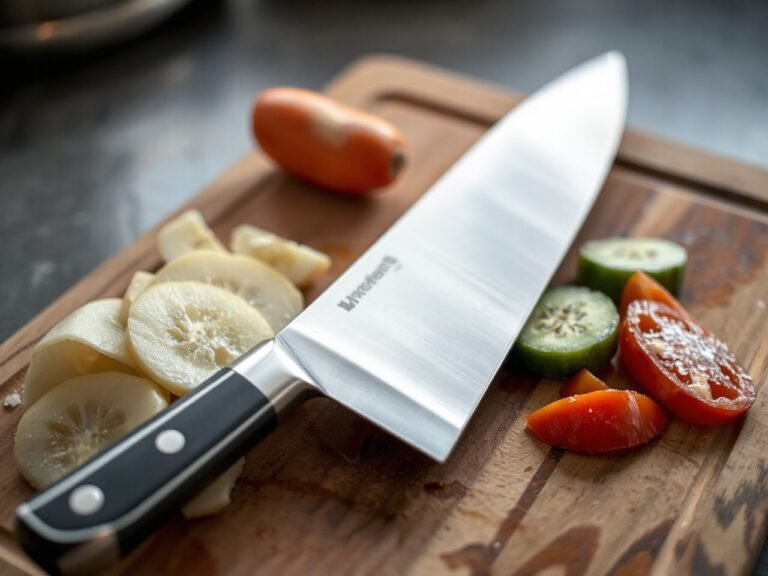
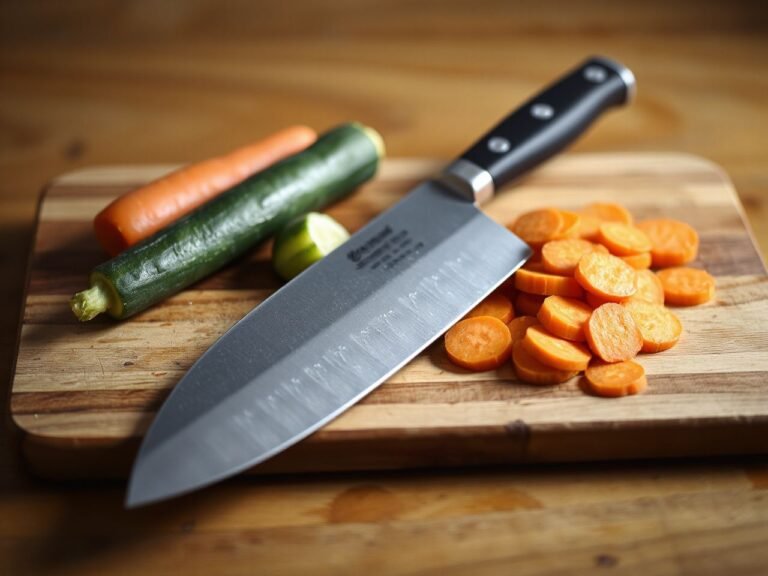
- Vegetables and fruit: Wider blades are designed for cutting vegetables and fruit, and their broad faces can give the hand room to guide the cut.
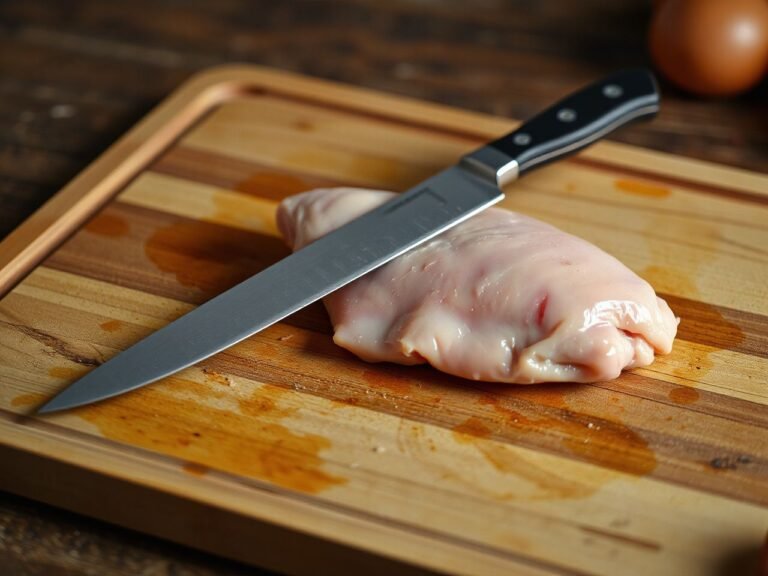
- Raw meat or fish: Narrow blades suit slicing raw meat or fish, although narrow blades are less effective for rapid chopping.
- Small ingredients: A paring knife handles detail work where a larger chef’s knife feels cumbersome.
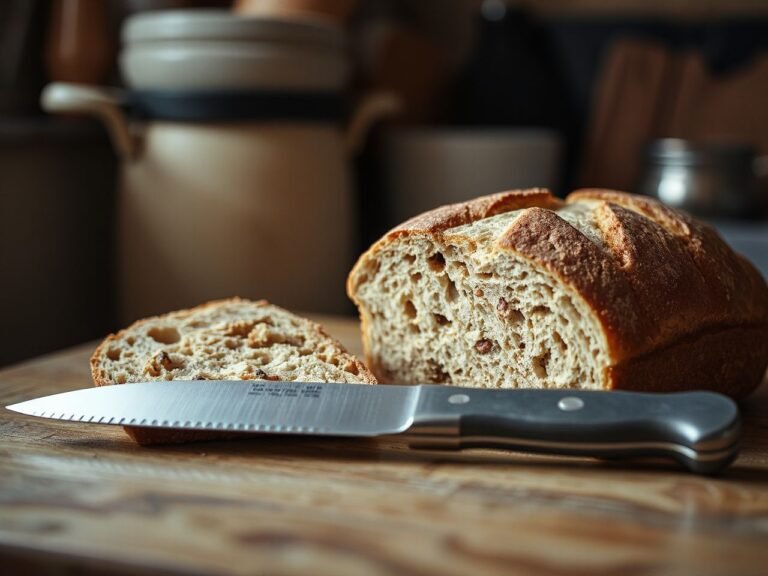
- Bread: A serrated bread knife uses teeth along the edge rather than a continuous straight edge. Those teeth can engage a crust while limiting the need for downward pressure.
- Heavy preparation: Demanding kitchen chores call for thicker knives, such as a cleaver or Deba. A thin, delicate blade is the wrong tool for work that asks for substantial force.
The cutting tasks in a kitchen determine whether a knife set has useful coverage. A long list of included pieces does not prove that a set matches those tasks.
Step 2: Understand the core knife shapes
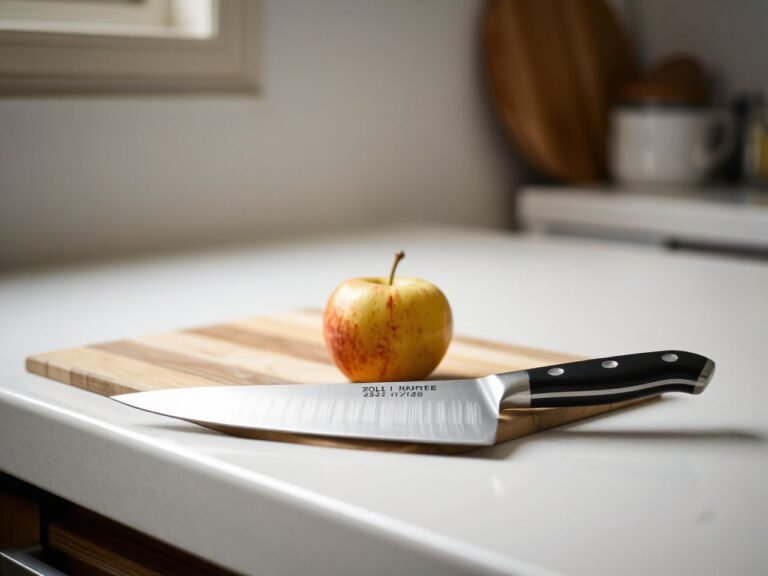
A chef’s knife is the general-purpose anchor in many kitchens. Its wider blade supports chopping and vegetable preparation, while the shape can also handle larger ingredients. The handle should let the wrist stay neutral rather than forcing the fingers to clamp tightly around a narrow or sharply angled grip.
A utility knife sits between a chef’s knife and a paring knife in size and handling. It can suit smaller slicing jobs that feel awkward with a large blade, but the label alone does not tell you whether its shape adds useful coverage or repeats another knife in the set.
A santoku knife has a different blade profile from a chef’s knife and is commonly associated with vegetable preparation and controlled slicing. The important buying question is not which name sounds more refined. Compare the blade height, point shape, edge profile, and handle position with the work your hands perform.
A paring knife is useful for small ingredients and close, controlled cuts. A serrated bread knife addresses a different problem because its toothed edge works across a crust instead of relying on one continuous sharp line. A set containing both can cover distinct jobs; several similar small knives may not.
Step 3: Check the edge type
Most everyday kitchen knives use a straight edge, while bread knives use a serrated edge. A straight edge gives a continuous surface for slicing and chopping. A serrated edge contacts food through individual teeth, which makes it suited to crusts and other surfaces that benefit from a sawing action.
Some knives use a double-bevel edge, with material removed from both sides of the blade. A chisel-ground blade has one primary bevel. The edge geometry affects how the knife meets food and how maintenance must be performed, so a matching appearance should not conceal a different care routine.
Serrated knives do not receive the same maintenance treatment as straight-edged knives. A honing rod designed for a straight edge is not a substitute for the method suited to serrations. Read the manufacturer’s care instructions before attempting maintenance on a toothed blade.
Beginner: Read the blade material without chasing labels
Steel affects care as much as sharpness
Stainless steel is valued for resistance to corrosion, but stainless does not mean maintenance-free. Food residue, moisture, dishwasher conditions, and poor storage can still create problems for a blade, its handle, or its edge. Drying the knife after washing remains a sensible part of care.
High-carbon steel can support an extremely fine edge, and Japanese knives are characterized by exceptional hardness. Those qualities can make precise sharpening rewarding, but a harder, finer edge also deserves careful handling and suitable storage. A carbon-steel knife left wet will rust, so it needs drying straight after washing.
Blade material also influences how a knife ages. A steel that resists corrosion may suit a kitchen where knives are used quickly and cleaned often. A blade chosen for a very fine edge may suit a person willing to maintain it carefully. The right question is not which material sounds strongest; it is which maintenance routine you will actually follow.
Laminated blades and the visible construction
Laminated steel blades combine layers of material. Their visible pattern can be attractive, but appearance does not establish whether a knife suits your grip, cutting board, or maintenance habits. Examine the edge type and handle construction separately.
A full tang extends the blade material through the handle, which can influence balance and give the handle a continuous structural connection to the blade. Full tang construction does not automatically make a handle comfortable. The scales, rivets, contours, and transitions still determine where pressure lands on the fingers and palm.
The handle should provide a secure, controlled grip without sharp interruptions. Look closely at the area near the bolster, the underside where the index finger rests, and the end of the handle. A handle that feels acceptable for a few cuts can become tiring during extended prep if the wrist has to compensate for poor balance.
Full tang construction changes the relationship between blade and handle, but full tang alone cannot predict wrist comfort. Handle shape, balance, surface feel, and the user’s grip all matter together.
Compare blade width and thickness with the food
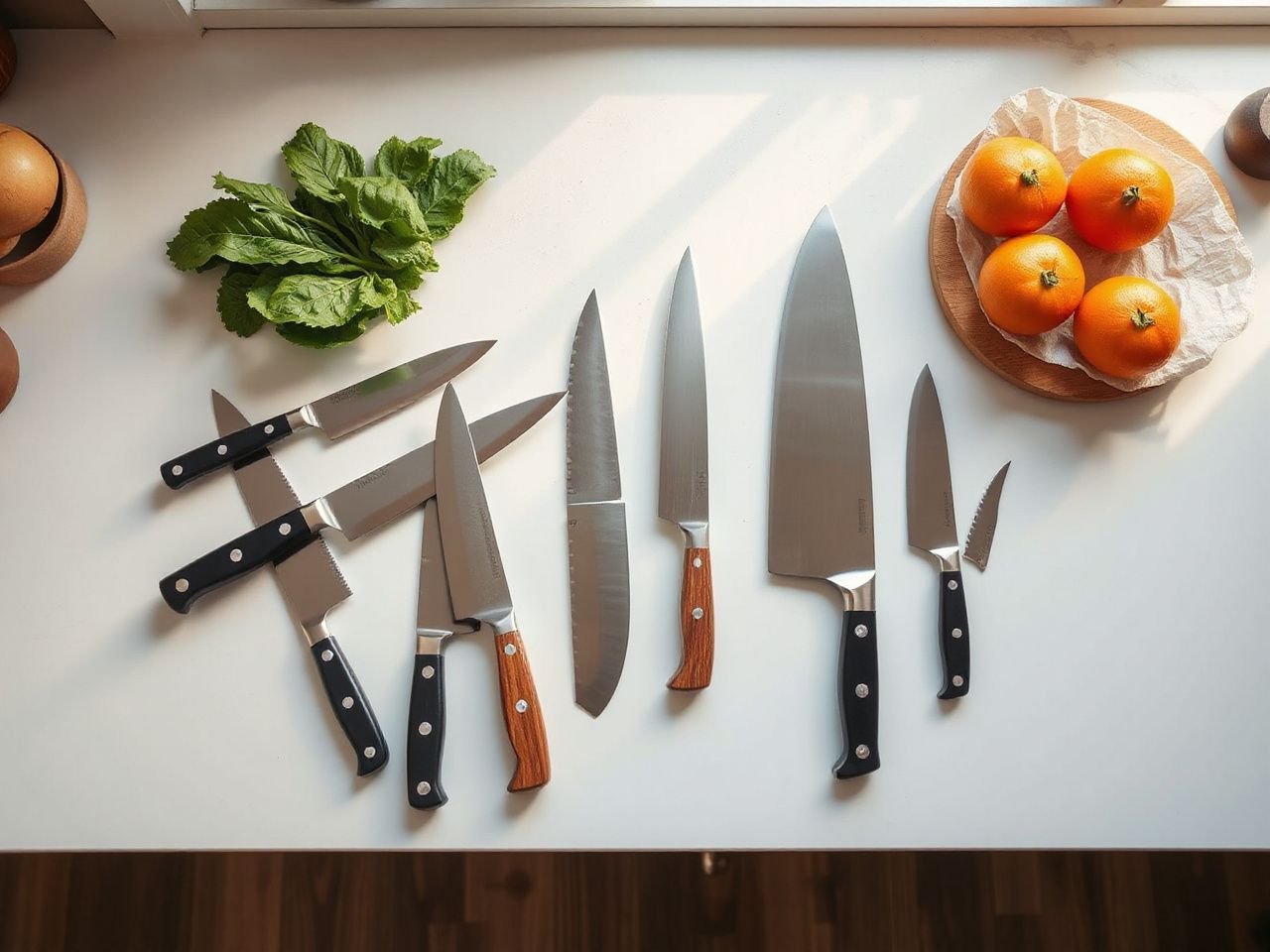
Wider blades are more suited to cutting vegetables and fruit. Narrow blades are useful for slicing raw meat or fish, but they are ineffective for rapid chopping. Thinner blades offer sensitivity for fish slicing, cutting bones, or opening a coconut, while thicker knives are appropriate for demanding kitchen chores.
Those descriptions are not invitations to use a delicate knife carelessly. Cutting bones and opening a coconut can demand a blade intended for that force, such as a cleaver or Deba. A chef’s knife or paring knife should not be treated as a universal substitute for every heavy task.
Intermediate: Judge comfort, balance, and daily handling
Use the wrist as the main fit check
Knife comfort is personal, but the signs are observable. Place your hand in the grip you would use for chopping. Notice whether the handle presses into one finger, whether the thumb has a natural resting place, and whether the wrist remains aligned with the forearm.
A handle that is too narrow may encourage a tight pinch. A handle that is too bulky can make fine control awkward. An abrupt bolster or exposed transition can rub the finger during repeated movement. These issues matter because repetitive preparation magnifies small pressure points.
I would judge the handle while imagining the full sequence of work rather than a single cut. A knife that feels lively during a short inspection may still ask the wrist to correct the blade repeatedly. Balance should support control, not force the hand to carry the blade’s weight at an uncomfortable angle.
Handle comfort is a functional part of knife selection because wrist position affects control during repeated cutting. The most attractive set is a poor fit if the grip causes tension or makes the user squeeze harder than necessary.
Inspect the handle and tang
Look for a handle that joins the blade cleanly and gives the fingers enough room to settle without crowding. Rivets should not create sharp pressure points. A full tang may be visible along the handle or implied by the construction, but the visible feature should be considered alongside the actual feel of the grip.
Handle material can affect cleaning and long-term care, but the manufacturer’s instructions remain important because construction varies. Do not assume that a durable-looking handle welcomes a dishwasher. Heat, water, detergent, and contact with other utensils can affect different parts of a knife in different ways.
Decide whether a block helps your kitchen
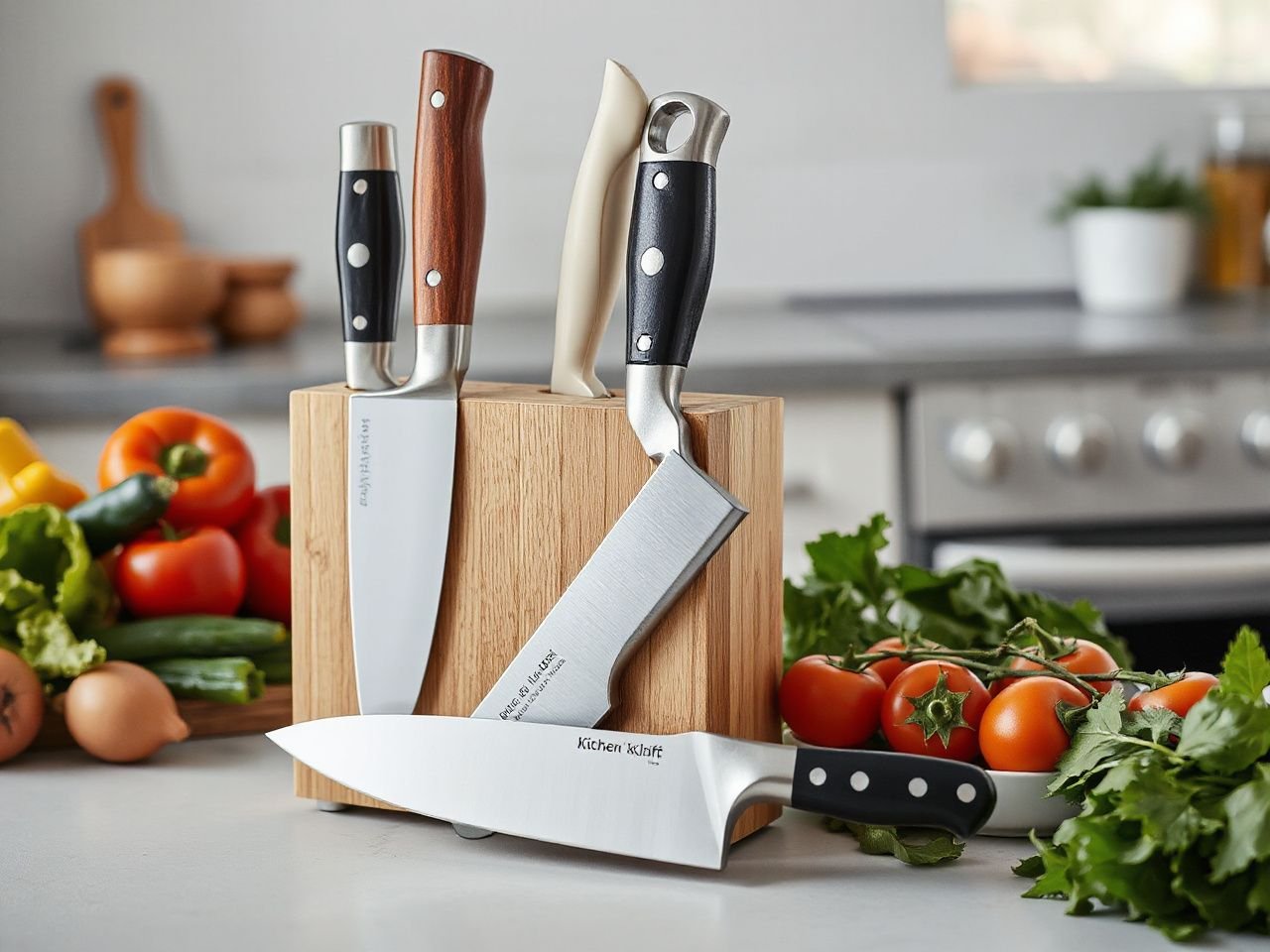
A knife block keeps blades separated and can make storage easy to see. It also occupies counter space and may include slots for knives you do not use. The block should be judged as storage, not as proof that every included knife deserves a place in the kitchen.
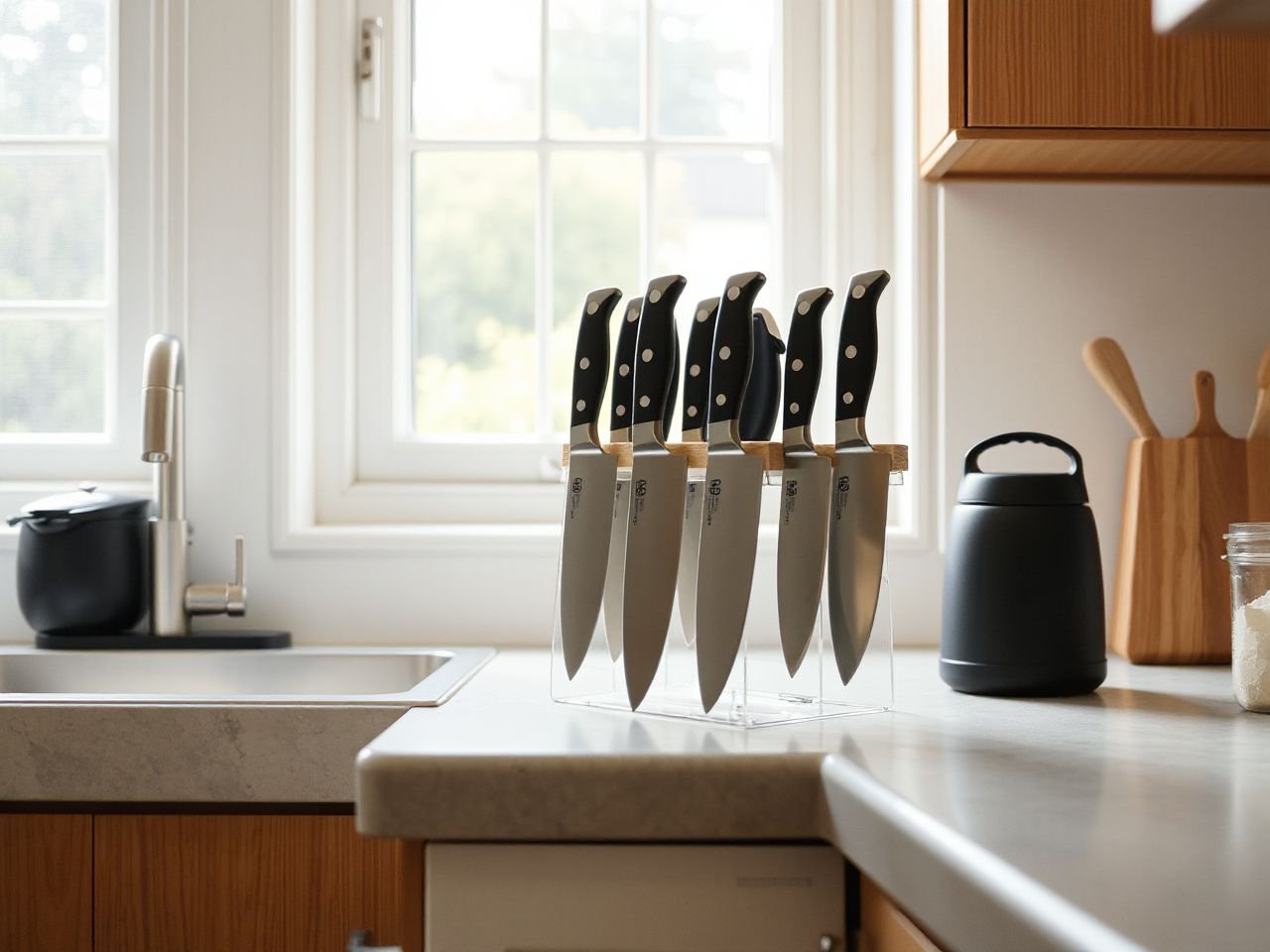
Loose drawer storage creates another problem. Blades can contact one another or collide with utensils, damaging edges and exposing hands to a sharp object during retrieval. Blade guards, a suitable block, or another protected storage method keep sharp edges away from loose tools.
Keep safety connected to control
Safe handling requires a stable board, a controlled grip, protected storage, and keeping sharp blades away from loose utensils and hands. The board should sit securely on the work surface, and the guiding hand should stay clear of the knife’s path.
The U.S. Consumer Product Safety Commission provides consumer safety information at cpsc.gov, including guidance relevant to products that can cause household injuries. Knife safety begins with ordinary control: do not catch a falling knife, do not leave a blade hidden in a sink, and pass a knife with the handle presented to the other person.
Food-contact materials and kitchen equipment also fall within the broader food-safety framework overseen by the U.S. Food and Drug Administration at fda.gov. A clean knife is not a substitute for a clean, suitable cutting board or careful separation of preparation tasks.
Advanced: Build a maintenance plan before choosing the set
Know the difference between honing and sharpening
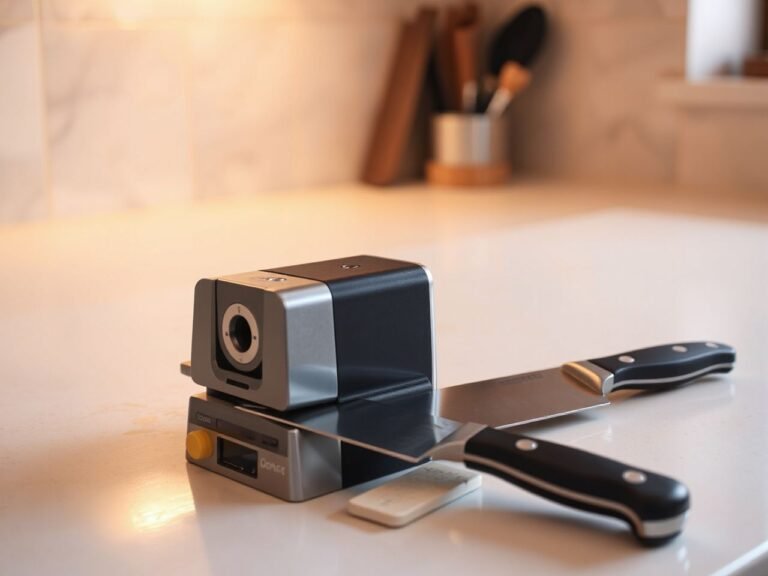
Honing realigns an edge, whereas sharpening removes material to create a new edge. These are not interchangeable maintenance steps. A honing rod can help maintain the alignment of a straight edge, but it cannot replace sharpening when the edge has lost enough material or shape to stop cutting properly.
A knife that slides across a tomato skin, crushes food instead of entering it, or needs extra force may need attention. Start by checking the edge under good light and considering how the knife behaves on a suitable cutting board. Do not press harder simply because the knife feels dull; extra force reduces control.
Sharpening removes material from the blade, so it should be approached with the correct method for the edge geometry and steel. Japanese knives can achieve an extremely fine edge when sharpened, but a fine edge still requires a compatible board and careful storage.
Honing realigns an edge without serving as a replacement for sharpening. A knife that remains dull after proper honing needs a sharpening method suited to its construction.
Choose a compatible cutting board
The cutting board must provide a knife-compatible surface. Glass, stone, and other very hard surfaces can accelerate edge damage, even when the knife itself is made from hard steel.
A board should also be stable enough to keep the knife path predictable. Board condition matters as much as board material: deep grooves can hold food residue, while movement creates a control problem. Replace or reposition a board when it no longer provides a steady working surface.
Cutting board materials affect edge care because the blade meets the board on every cut. A knife set cannot compensate for a surface that is too hard or unstable.
Wash and store knives correctly
Dishwashers can expose knives to heat, detergent, water, and contact with other objects. Those conditions can damage blades, handles, and edges, even when a manufacturer describes the knives as durable. Hand washing and prompt drying give you more control over what touches the knife.
Never toss knives loose into a drawer. A loose blade can strike another tool, lose edge alignment, or injure a hand searching through the drawer. Use a block, blade guard, or another storage method that separates the cutting edge from other objects.
A honing rod should be stored so that its surface remains protected and accessible. It belongs in a maintenance routine, not as a reason to force a damaged edge back into service. Straight-edged knives and serrated knives need different care decisions.
Dishwashers, loose drawers, and hard cutting surfaces can damage blades, handles, and edges even when a knife appears durable. Protected storage and a suitable board prevent avoidable wear before sharpening becomes necessary.
Account for ongoing costs and effort
The initial set is only part of ownership. A knife group creates continuing needs for sharpening, storage, replacement guards, and sometimes a better cutting board. A block may require counter space, while individual blade protection may require a separate storage solution.
Maintenance effort also has a cost in attention. Stainless steel may reduce concern about corrosion, but the knife still needs cleaning and drying. High-carbon steel may reward careful edge maintenance, but it leaves less room for neglect. Select the construction that matches your habits instead of choosing a material solely for its label.
Assembling knives individually can be more practical when your tasks are narrow or your hand has a strong preference for one handle shape. A set can be practical when its included knives cover distinct jobs and the storage arrangement suits the kitchen. Neither format is automatically superior.
A matching knife set is practical only when its blades cover distinct tasks and its maintenance demands fit the owner’s routine. Matching handles and a full block do not establish practical value by themselves.
Advanced: Make the final coverage check
Compare the set against a working inventory
Place the included knives into three groups: essential for repeated work, useful for occasional work, and unlikely to be used. This exercise reveals duplication quickly. Two knives may share nearly the same blade shape while the set lacks a useful serrated bread knife or a suitable blade for a specific preparation task.
- Essential: A chef’s knife or santoku for the main chopping pattern, a paring knife for small work, and a bread knife if bread is a regular part of the kitchen routine.
- Task-dependent: A utility knife, narrow slicing blade, or thicker knife for particular ingredients and preparation styles.
- Potentially redundant: Extra blades whose size, edge, and purpose repeat tools already present.
This is a framework, not a required inventory. Someone who rarely chops vegetables may need a different balance from someone who prepares produce daily. A person who handles fish or heavy ingredients should assess those tasks directly rather than assuming a general-purpose knife will cover them.
Consider a specialist knife separately
Boning work deserves a purpose-built blade and a separate evaluation of flexibility, handle control, and edge care. If that task is part of your routine, consult this boning knife selection guide focused on common mistakes rather than treating a general knife set as complete by default.
Bread has the same logic. A serrated bread knife works differently from a straight-edged knife, and its value depends on whether the kitchen regularly cuts crusted loaves or other foods that benefit from a toothed edge. This bread knife guide explains how the serrated edge supports cleaner slices.
Use a simple decision sequence
- List the work: Name the foods and preparation tasks you actually repeat.
- Match the shapes: Connect each task with a chef’s knife, santoku, utility knife, paring knife, serrated bread knife, or specialist blade as appropriate.
- Inspect the edges: Identify straight, serrated, double-bevel, or chisel-ground construction and note the maintenance each requires.
- Assess the grip: Check wrist alignment, finger pressure, bolster transitions, tang construction, and balance.
- Plan care: Confirm the board, storage, washing routine, honing method, and sharpening method before choosing the group.
The best decision is the one that leaves fewer unused pieces and fewer awkward workarounds. A compact set with distinct roles can be more useful than a larger block full of repetition.
Frequently Asked Questions
What should a kitchen knife set include?
A useful set commonly covers a general-purpose chef’s knife or santoku, a paring knife, and a serrated bread knife, with a utility knife or specialist blade depending on the kitchen’s tasks. Names and piece counts are less important than distinct coverage. Check whether the included shapes match your preparation habits before treating the set as complete.
What is the difference between honing and sharpening?
Honing realigns an existing edge, while sharpening removes material to create a new edge. A honing rod can support routine care for a straight-edged knife, but it cannot restore an edge that has become genuinely dull. If the knife still slips or crushes food after honing, use a sharpening method suited to its edge geometry and steel.
Is a matching knife set more practical than buying knives individually?
A set is practical when its knives cover distinct jobs, its handles suit the user’s wrist and grip, and its storage method fits the kitchen. Individual selection can make more sense when a set includes repeated shapes or when one handle style causes discomfort. Compare practical coverage and maintenance demands rather than choosing by appearance alone.
Why should knives stay out of the dishwasher and loose drawers?
Dishwashers expose knives to heat, detergent, water, and contact with other objects, which can damage blades, handles, and edges. Loose drawers allow blades to collide with utensils and place hands near unprotected cutting edges. Hand wash and dry knives, then use a block, blade guard, or other protected storage that separates each edge.