A sharpener can shorten a knife’s life.
The useful distinction in a knife sharpener buying guide is between the sharpening mechanism and the user interface: an angle guide may improve repeatability, but it cannot make an unsuitable abrasive or edge profile compatible. Metal removal is the central ownership issue, because a fast method may restore an edge while removing more blade material than a controlled abrasive method.
I approach every unitasker by asking what it replaces before it earns drawer space. A sharpener should replace guesswork, not create another tool that leaves the knife harder to maintain.
Key Takeaways
- Match the abrasive and angle control to the knife’s edge type, bevel, steel, and hardness.
- Honing realigns an existing edge; sharpening removes metal to form a new edge.
- Choose control over speed when repeated sharpening could change the blade profile.
Beginner: identify what the knife actually needs
Start with the edge, not the sharpener
A straight-edged kitchen knife, a serrated knife, and a single-bevel knife do not present the same sharpening problem. The edge geometry determines where an abrasive must contact the blade, so a guide designed for one profile may damage another.
A serrated edge has recessed areas that a flat abrasive surface may not reach correctly. A single-bevel knife has one primary bevel rather than matching bevels on both sides. An unusual profile needs the same care: the guide must follow the existing shape instead of forcing the blade into a standard slot.
A sharpener must suit the knife’s edge type before its speed or convenience matters. The safest first check is visual and physical: look at the edge from above, identify whether it is straight or toothed, and inspect whether one side has a noticeably wider bevel.
Read the bevel and steel as a pair
The bevel is the sloping surface that meets the final edge. A sharpener removes material at that surface, so the abrasive needs to contact the existing bevel closely enough to create one continuous edge. If the angle does not match, the abrasive may create a secondary bevel, a flat spot, or an uneven shoulder instead of restoring the original geometry.
Blade steel and hardness also matter, although a label rarely tells the whole story. A diamond abrasive, ceramic abrasive, abrasive belt, and whetstone do not remove material in the same way. A method suitable for one knife can be too aggressive, too difficult to control, or simply incompatible with another knife’s edge.
The sharpening angle should follow the knife’s existing bevel closely enough to form a continuous edge. Japanese-style knives exhibit distinct angles compared with Western-style knives, so a generic pull-through guide should never be assumed to suit both groups.
Decide whether the edge needs honing or sharpening
Honing and sharpening are often treated as interchangeable, but they perform different jobs. A honing rod is generally made from fine ceramic or steel and is designed to straighten steel fibers along the edge. That makes honing suitable when the edge is present but has moved out of alignment.
Sharpening removes portions of metal to create a new edge. Abrasive sharpening rods use a coarser texture for that purpose, while stones and other abrasive surfaces remove metal through contact with the bevel. The practical distinction is easy to state: if the edge can be restored by realignment, honing may be enough; if material is missing or the edge remains dull, sharpening is required.
Look for the result rather than trusting a product label. A honing rod should not produce a visible stream of metal filings or noticeably change the bevel. An abrasive sharpener will remove some steel, and repeated use can alter the blade shape.
Intermediate: compare sharpening mechanisms with metal removal
Whetstones give the hand the most responsibility
A whetstone sharpens by allowing the user to move the knife across an abrasive surface while holding the bevel against it. The user controls the contact, pressure, stroke direction, and consistency. That can preserve the existing profile when handled carefully, but the same freedom makes poor angle control more likely.
The surface must meet the bevel rather than the flat side of the blade. Work along the portion of the edge that needs attention, keep the movement controlled, and check the edge frequently for a consistent burr. A burr is a fine fold of metal that forms at the edge as the abrasive reaches it from one side; its presence indicates contact has reached the edge, not that the final finish is complete.
A whetstone removes metal under direct user control, so angle consistency determines whether the bevel remains even. A rough or jagged edge can result when pressure varies, contact skips across the stone, or one section receives more passes than another.
Pull-through sharpeners trade control for repeatability
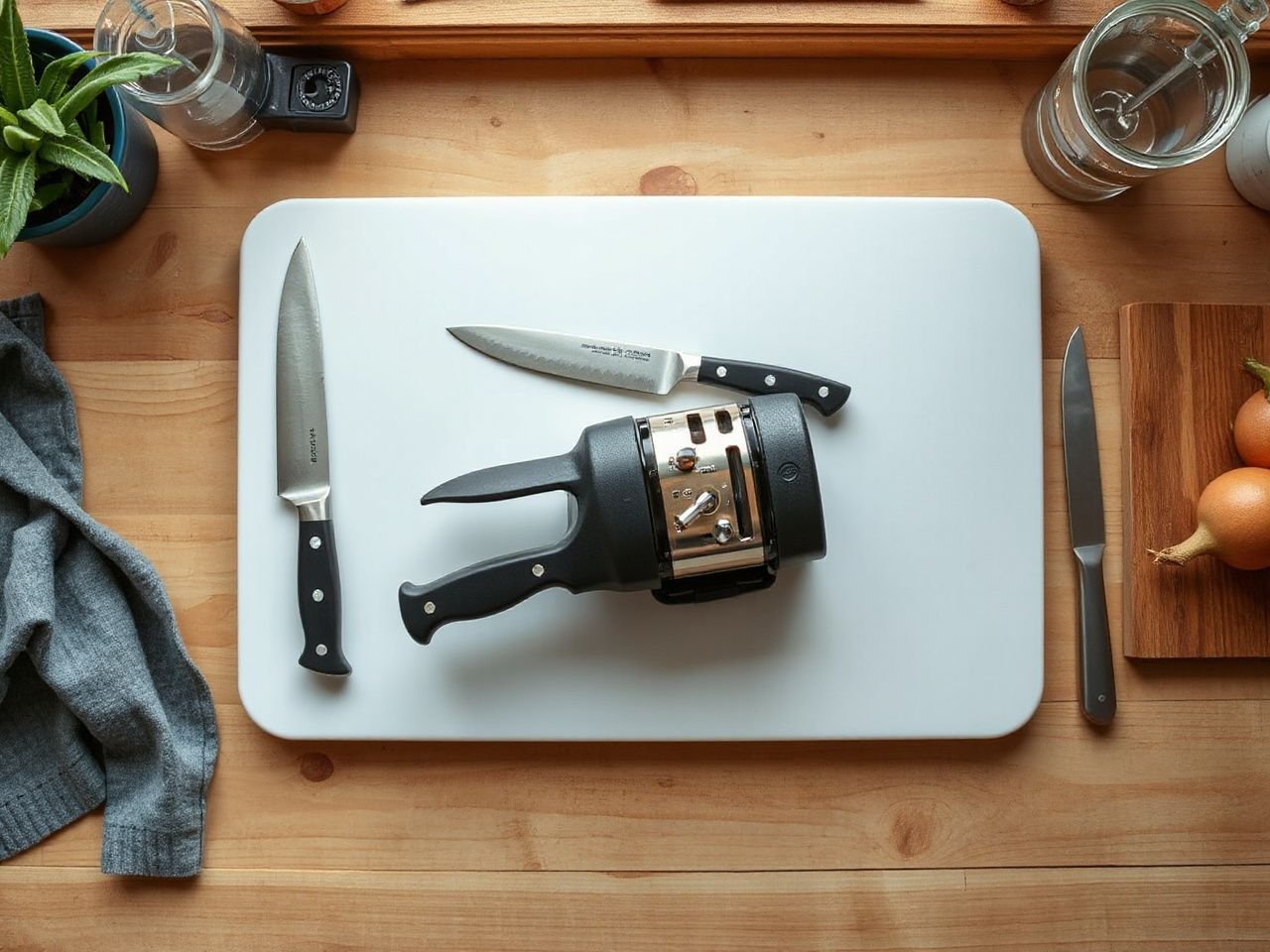
Manual or pull-through sharpeners are held against a counter by the handle while the knife is drawn across one or more abrasive slots. The guide helps repeat the path, which can make the movement easier for a beginner to reproduce. It does not guarantee that the slot suits the knife’s steel or edge geometry.
A pull-through design may remove material from both sides, or use separate stages with different abrasives. The key question is not how many slots appear on the housing. Ask what each abrasive does, which bevel it expects, and whether the guide can accommodate the knife in front of you.
Fast material removal can restore a visibly dull edge, but it may also consume more blade than a controlled stone method. Excessive sharpening leads to metal loss, and metal loss eventually wears out the blade. A unitasker that saves hand movement but encourages unnecessary passes may not save anything important.
Powered belts and exposed abrasives require restraint
An abrasive belt can remove steel quickly because a moving abrasive surface keeps contacting the bevel. That makes pressure and dwell time especially important. A belt that remains in one place can change the edge profile rather than evenly refreshing it.
Loose abrasive particles, exposed belts, and unstable sharpening equipment create cut and equipment hazards. Secure the sharpener, keep fingers away from the abrasive path, and clean particles from the work area before handling the knife or storing the tool. The U.S. Consumer Product Safety Commission provides consumer safety information, but the instructions supplied with the specific sharpener remain the first source for its handling procedure.
An unstable sharpener is a safety problem and an accuracy problem. Movement at the base can make the angle wander, cause uneven contact, and force the user to compensate with extra pressure.
Angle guides help only when the angle belongs there
An angle guide is an interface feature, not a sharpening method. It can make repeated positioning easier, but it cannot change the abrasive’s character or correct a mismatch between the guide and the knife’s existing bevel.
A guided slot can also encourage the user to push through the process without inspecting the edge. That is how a rough, uneven, or jagged result develops: the knife is drawn through repeatedly even after one section has reached the edge while another has not.
Look for a continuous edge rather than a polished patch. A secondary bevel may appear as a new narrow strip near the edge. A flat spot interrupts the intended curve. An uneven shoulder shows that the abrasive has met the blade inconsistently.

Intermediate: choose a method that earns its storage space
Use the replacement test
Before adding a sharpener to a drawer, name the task it replaces. A whetstone may replace repeated dependence on a pull-through slot by giving the user direct control. A honing rod may replace unnecessary sharpening for an edge that is merely misaligned. A purpose-built tool for serrated care may replace attempts to force a toothed blade through a flat guide.
If the answer is only “it looks easier,” examine the maintenance cost. Some systems require replacement abrasives or consumables. Others need cleaning after loose particles collect around the abrasive. A tool that adds a recurring supply requirement should earn that space through a clear function.
A sharpener deserves drawer space when its mechanism solves a defined maintenance problem without creating a new edge-geometry problem. That is a better test than counting stages or judging the size of the housing.
Compare speed with material removed
Speed and preservation are connected. A coarse abrasive removes more steel than a fine finishing surface, and an aggressive method can change the blade more quickly if the user repeats passes without checking the result.
Consider the knife’s condition before selecting the mechanism. A badly damaged edge may need more material removed than a slightly dull edge, but the appropriate amount still depends on the existing bevel and the damage visible at the edge. A knife that only needs realignment should not enter a metal-removing process.
- Inspect the edge before sharpening.
- Choose the least aggressive method that addresses the actual problem.
- Check for a consistent burr instead of counting passes.
- Stop when the edge is continuous and test it with a safe cutting task.
Do not test sharpness by dragging a finger along the edge. Use safe knife handling and a suitable cutting board, then store the knife so the edge does not strike loose tools or hard surfaces.
Account for serrated and single-bevel knives
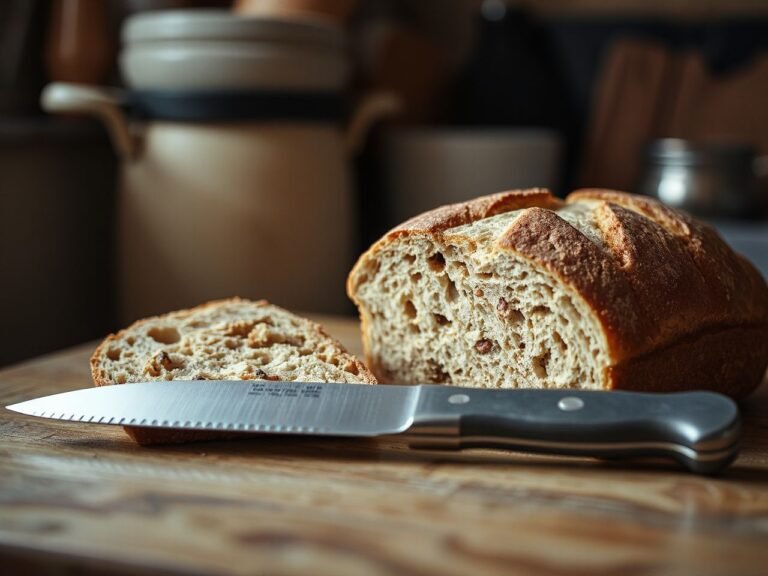
The same sharpener should not be assumed to work for straight-edged and serrated knives. Serrated care requires an abrasive that can reach the recessed sections without flattening the teeth. A flat pull-through guide may contact the peaks while leaving the valleys untreated.
Single-bevel knives require attention to the intended bevel side. A two-sided slot can remove material from the wrong face and alter the knife’s geometry. If the edge is unusual, expensive, badly damaged, or difficult to identify, home sharpening may create a larger repair than the original dullness.
Serrated edges and single-bevel knives can be damaged by unsuitable guides or abrasive surfaces. The decision is structural, not a matter of user confidence.
Know when professional sharpening is the sensible choice
Professional sharpening makes sense when the knife has a damaged tip, a visibly uneven edge, a complex profile, or a bevel that the available home tool cannot follow. It is also sensible when preserving the blade matters more than learning a new abrasive technique.
A professional service should be able to explain what edge geometry it will maintain and how much material it expects to remove. Ask how serrated or single-bevel knives are handled rather than assuming the same process is used for every blade.
Home sharpening is reasonable when the knife is ordinary, the edge is easy to identify, and the user can hold or follow the correct angle consistently. It is a poor choice when the tool requires force, the base slides, or the result becomes rough after repeated attempts.
Advanced: maintain the abrasive and preserve the blade
Clean without damaging the sharpening surface
Cleaning instructions depend on the mechanism. A whetstone may retain loose particles on its surface, while a pull-through sharpener can collect filings in its slots. A belt system may need particles removed from the surrounding area rather than rubbed into the belt.
Follow the manufacturer’s cleaning directions, use only the method specified for that abrasive, and avoid scraping a surface with a hard object unless the instructions expressly permit it. Water, oil, or a brush should not be introduced merely because they are available; the wrong cleaning method can load or damage an abrasive.
Abrasive surfaces need cleaning that preserves their texture and shape. Remove loose filings before storage, keep the tool dry when its instructions require that, and inspect the base, handle, guide, and abrasive for damage.
Secure the station before the blade
Place a manual sharpener on a stable counter and hold its handle as directed. Keep the knife’s path clear of dishes, towels, and other tools. A loose abrasive particle can affect contact, while a moving tool can turn a controlled stroke into a slip.
The National Sanitation Foundation, known as NSF, develops standards and certification programs for products and systems in areas that include food equipment. A certification mark should be read as a claim about the product’s covered use, not as proof that the sharpener suits every blade.
Cleaning the knife after sharpening matters because filings can remain on the blade. Wipe the knife according to its care instructions, dry it where required, and store it so the cutting edge is protected. Cutting board materials and storage habits can shorten the interval between sharpening sessions when they repeatedly expose the edge to hard contact.
Use a burr as a check, not a target to chase
A burr helps show that the abrasive has reached the edge. It should develop consistently along the section being sharpened, not only at the heel or tip. If the burr appears in patches, the angle or pressure is changing.
Once the bevel is continuous, further aggressive passes remove steel without solving the original problem. Refinement with a suitable finer abrasive or careful stropping can improve the edge, but those processes still require compatibility with the knife’s geometry.
A burr that appears only in patches signals uneven abrasive contact. Correct the angle and stroke before increasing pressure.
Recognize a rough or jagged result
A rough edge may come from a coarse abrasive, inconsistent pressure, an incomplete burr, or a guide that meets the bevel unevenly. A jagged edge can also appear when the user changes direction or lifts the blade during a stroke, leaving sections with different contact.
Do not solve a rough finish by applying more force. Inspect the edge under good light, check whether the bevel looks continuous, and return to a controlled method that matches the knife. If the edge has a flat spot, a deep chip, or a visibly altered profile, professional correction may preserve more of the blade than repeated home attempts.
For related edge decisions, the Bread Knife Buying Guide: How It Works for Better Slices explains why a serrated edge needs a different approach. Readers choosing a different blade shape can also use the Boning Knife Buying Guide: Mistakes to Avoid When Choosing to connect knife geometry with the work the knife must perform.
Frequently Asked Questions about a knife sharpener buying guide
How do I choose a sharpener for a knife’s steel and edge geometry?
Identify whether the knife is straight-edged, serrated, single-bevel, or an unusual profile. Then compare the existing bevel with the guide and abrasive. Blade steel and hardness affect how the abrasive behaves, but compatibility remains the first filter. A method that removes metal quickly can still be unsuitable if it changes the bevel or cannot reach the entire edge.
How can I tell whether a sharpener removes metal or only straightens the edge?
A honing rod made from fine ceramic or steel is intended to straighten steel fibers along an existing edge. An abrasive sharpener removes portions of metal to create a new edge. Visible filings, a developing burr, or a changed bevel indicate material removal. If the edge only needs realignment, sharpening adds unnecessary wear and can shorten the blade’s useful life.
Can one sharpener handle straight-edged and serrated knives?
Do not assume so. A straight-edged knife can contact a flat abrasive surface continuously, while a serrated knife has recessed sections that a flat guide may miss. Single-bevel knives also require attention to the intended bevel side. Use a method designed for the profile, or seek professional sharpening when the guide cannot contact the edge without forcing it.
When should a knife be professionally sharpened?
Choose professional help for a damaged tip, deep chips, a severely uneven bevel, a complex edge, or a knife whose geometry you cannot identify. Professional sharpening is also sensible when home equipment is unstable or repeatedly leaves a jagged result. Ask what bevel will be maintained and how much material will be removed before handing over a valuable blade.
A sharpener is a maintenance tool, not a permission slip to remove steel whenever a knife feels less lively. Match the mechanism to the edge, distinguish honing from sharpening, and stop when the blade is restored rather than continuing until the abrasive has done everything it can.