
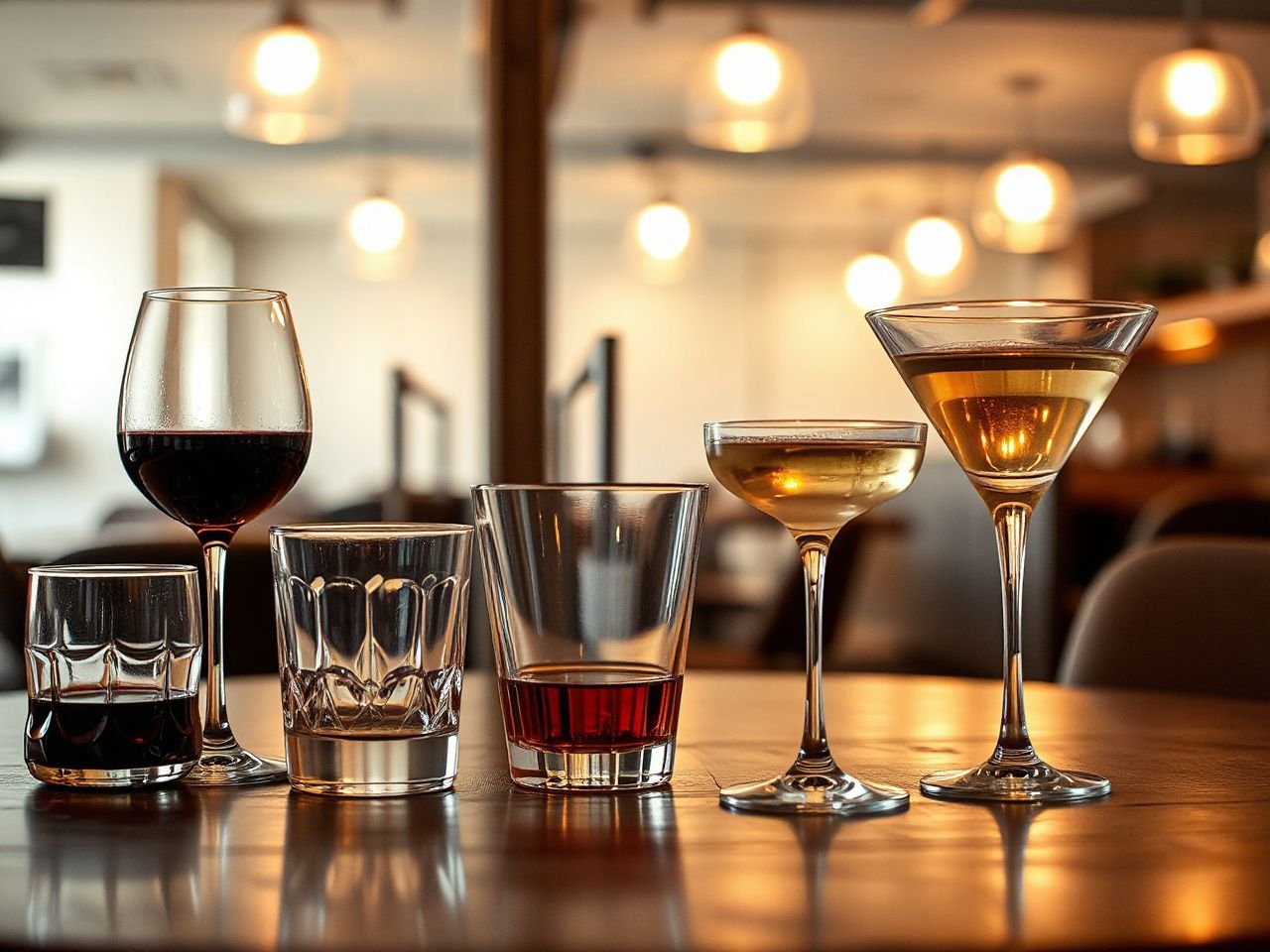
The pattern is not the first thing to inspect on a drinking glass; the rim is. A chipped edge affects comfort and can signal rough handling, while decoration tells you little about how a vessel serves a drink. The useful distinction in glassware types is between the vessel’s form and its material: a rocks, Collins, or flute shape describes how a drink is presented, while soda-lime, borosilicate, tempered glass, or crystal describes how the vessel behaves and should be cared for.
A knowledgeable guide also treats names as practical conventions rather than rigid specifications, explaining the drink-related function of each shape while acknowledging regional and manufacturer variation in capacity. I read glassware through that lens: check the rim, understand the shape, then consider the material and cleaning demands.
Key Takeaways
- Glass shape affects aroma, temperature, carbonation, head formation, ice capacity, and the feel of each sip.
- Rocks, highball, and Collins glasses overlap in use, but their proportions create different serving experiences.
- Soda-lime, borosilicate, tempered glass, and crystal need different expectations for heat, impact, washing, and storage.
- Glassware names and capacities vary by maker, country, and serving custom, so the shape matters more than the label alone.
Glassware types begin with function, not decoration
A glass is a small piece of serving equipment. Its bowl, rim, stem, base, height, and material all influence what reaches the drinker. A broad bowl gives wine more room to interact with air, while a smaller opening can concentrate aromas and slow the loss of temperature or carbonation. Tall sides can accommodate a long drink and its ice; a low bowl suits a drink served over ice without requiring a tall vessel.
Shape is functional rather than merely decorative: bowl width, rim diameter, stem, and height influence aroma, temperature, carbonation retention, head formation, and the amount of ice a drink can hold. The right form also affects hand placement. A stem keeps the hand away from the bowl, reducing the transfer of body heat to wine.
Why names are useful but not absolute
Glass names describe familiar serving conventions, not a universal engineering specification. A highball and a Collins glass overlap in use, and capacities vary by country, manufacturer, and serving convention. One maker may use a broader bowl for a highball name, while another uses the term for a taller, narrower glass.
The same caution applies to wine glasses, beer glasses, cocktail glasses, and dessert vessels. A “martini glass” may have the inverted cone associated with classic cocktails, while another version has a wider bowl or a different stem. The label helps you start, but the actual silhouette tells you more.
How size and shape change a drink
A larger bowl can give red wine more surface area for contact with air and enough room to swirl. White wine glasses usually have a smaller bowl and mouth, helping concentrate aromas, preserve freshness, and slow warming. The stem allows the drinker to hold the glass without placing a warm hand around the bowl.
A narrow opening can help sparkling wine retain its bubbles for longer than a broad, shallow bowl, while a broad opening releases aroma more readily. Glasses designed for beer also make a visible head part of the presentation; a pilsner glass emphasizes a tall pour, while a tulip shape directs aroma toward the nose. These are serving effects, not strict rules.
A glass’s rim diameter changes how aroma and liquid reach the drinker. A narrow rim directs the pour more precisely, while a broad rim offers a wider aromatic opening and a different contact point on the lips.
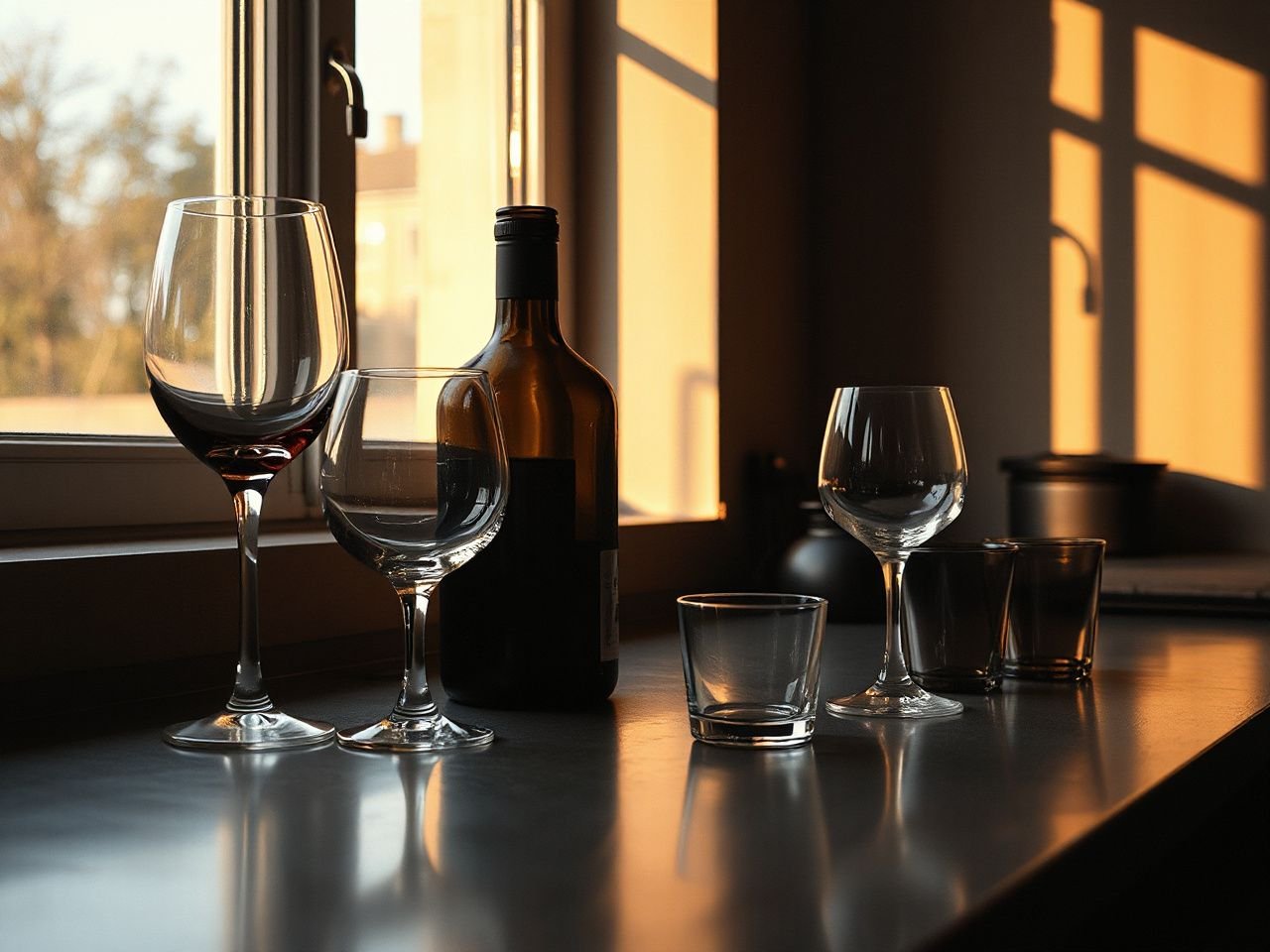
Everyday drinking glasses and cocktail forms
Rocks glass
A rocks glass is a short, sturdy-looking vessel used for spirits served neat, over ice, or in compact mixed drinks. Its lower profile suits a drink that does not need a long column of mixer. The broad opening also allows aroma to rise easily, while the base generally leaves room for a large amount of ice relative to the glass’s height.
The term does not guarantee one exact capacity or wall thickness. Some rocks glasses have heavy bases and thick rims; others are lighter and more refined. For chip resistance, inspect the rim and the transition from bowl to base before admiring pressed patterns or etched decoration.
Highball glass
A highball glass is a tall drinking glass for a spirit-and-mixer serve, often with ice and carbonation. Its height separates the drink from a rocks glass and gives the mixer, ice, and garnish a vertical presentation. The narrow form can also help preserve a clear distinction between the liquid, ice, and any foam or bubbles at the top.
“Highball” is not a fixed capacity across markets. A glass sold under that name may overlap considerably with a Collins glass, so the practical question is whether the vessel gives the drink enough height and ice space for the intended serve.
Collins glass
A Collins glass is generally associated with a taller, often narrower long drink than a rocks glass. It is suited to drinks built with a generous mixer, carbonation, and ice. The tall shape supports a layered visual presentation and keeps a long drink from appearing lost in a broad, low bowl.
Highball and Collins glasses should not be treated as completely separate categories. Their uses overlap, and the name may change between manufacturers or regions. A label cannot replace checking the actual height, rim, base, and stated capacity.
Classic cocktail, martini, and coupe glasses
A classic cocktail glass has an inverted cone-shaped bowl and is typically used for cocktails served without ice, often called “up.” The verified serving range for this classic form is commonly described as **3 to 6 ounces**, but a manufacturer may use the name for a different capacity or proportion.
A martini glass is a familiar version of the broad, cone-shaped cocktail form. A coupe has a rounded, shallow bowl and is also used for cocktails served up. I would choose a coupe when a rounded silhouette, a softer rim profile, or a different visual presentation suits the drink; a flute makes more sense when preserving sparkling wine’s bubbles is the priority.
The choice between a coupe and flute is therefore about the drink’s behavior as well as appearance. A coupe releases aroma readily but exposes more surface area, while a flute’s tall, slender bowl and small opening help sparkling wine retain carbonation. A martini glass gives a classic wide-rimmed presentation but can feel less secure if filled heavily.
Shot glasses, mugs, cups, and saucers
A shot glass is a small vessel for a measured serving of spirits or for layered tasting presentations. Its compact shape places the emphasis on the liquid rather than aroma development. Capacity and legal serving conventions can vary, so the name alone should not be treated as a measurement.
Mugs and cups serve hot or cold drinks through a different combination of body shape, handle, and saucer. A handle keeps the hand away from a hot wall, while a saucer catches drips and supports a table-setting convention. The listing or maker should state whether the vessel is intended for heat; ordinary cold-drink glassware should not automatically receive hot liquid.
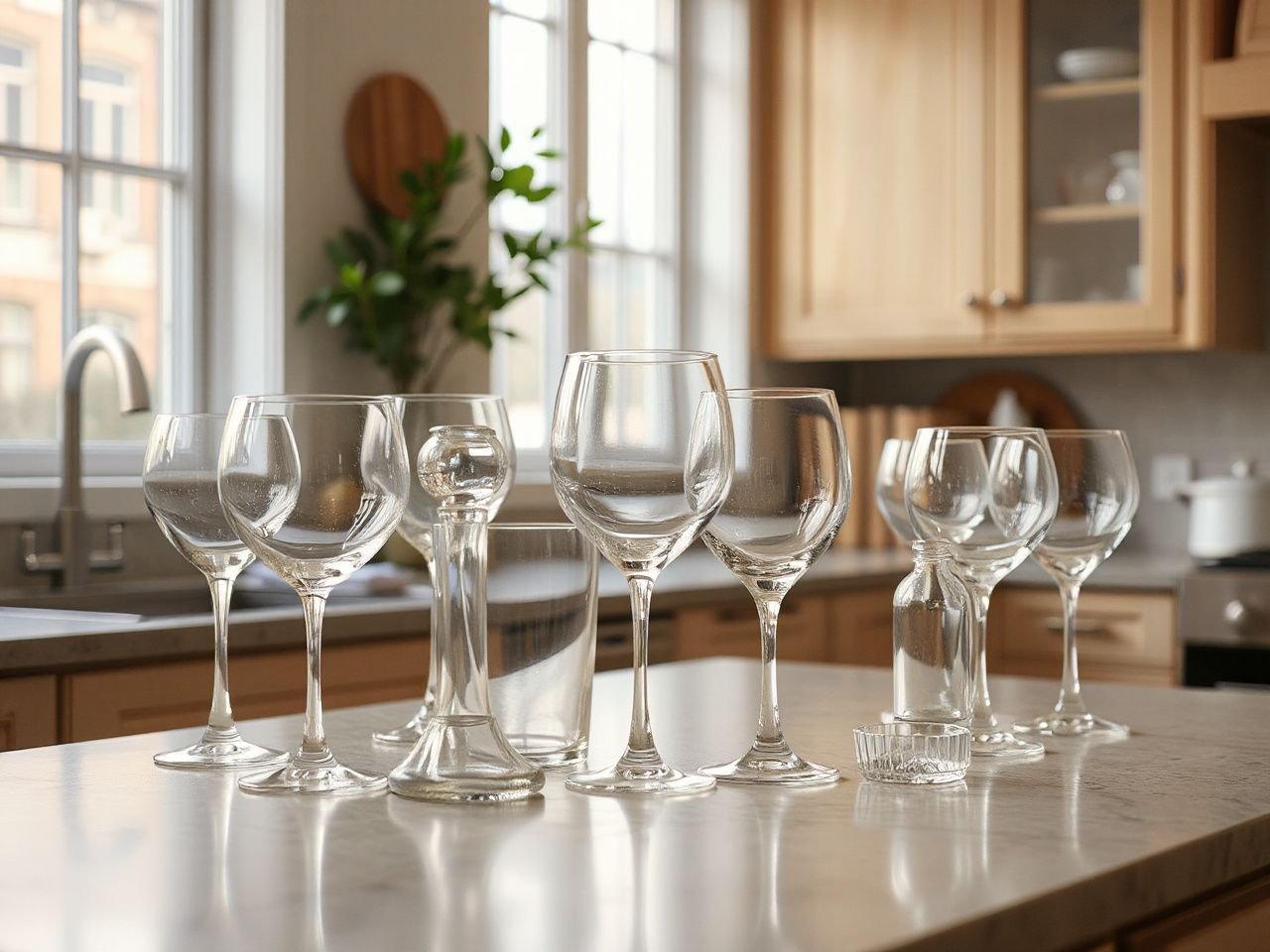
Wine, beer, dessert, and serving vessels
Red and white wine glasses
Red wine glasses are typically larger and rounder than white wine glasses. The broader bowl gives red wine room to interact with air and allows swirling, which can increase the wine’s contact with the surrounding air and direct aromas toward the nose.
White wine glasses usually have a smaller bowl and mouth. That shape concentrates aromas, limits the exposed surface area, and helps the wine stay cooler for longer than it would in a larger, wider bowl. The stem also keeps a hand from warming the wine directly.
Wine glass shape is a serving tool, not a rule that overrides personal taste. A single multipurpose wine glass can cover many table settings if storage space is tight, but it will not create the same aroma or temperature experience as forms designed around red or white wine.
Beer glasses and pilsner forms
Beer glass styles include pint forms, tulip glasses, and pilsner glasses. A pilsner glass is tall and often narrows or widens in a way that emphasizes the beer’s color, head, and upward presentation. A tulip form is associated with directing aroma toward the drinker, while a pint-style vessel favors straightforward serving and handling.
The glass does not change the beer’s recipe, but shape changes the way carbonation, head, aroma, and the first sip are presented. A broad rim can make aroma more immediate, while a narrower opening can keep the aromatic experience more focused.
Dessert glasses and specialty forms
Dessert glassware includes small bowls, coupes, parfait-style vessels, and stemmed dishes. The important distinction is usually access and layering: a clear wall can show color and texture, while a wide opening makes a spoon or garnish easier to use. Capacity should match the portion rather than the decorative height of the vessel.
Specialty glassware includes decanters, carafes, and serving pitchers. A decanter’s main role is to separate sediment that may have formed in wine over time, producing a clearer pour. It also allows wine to interact with air, which can change how aroma and flavor present themselves. A carafe is often chosen for serving rather than for the same sediment-focused purpose.
A decanter is a serving vessel that can separate wine sediment and increase the liquid’s contact with air. Its shape should therefore be judged by pouring control, stability, cleaning access, and storage as well as by appearance.
Glass materials: soda-lime, borosilicate, tempered glass, and crystal
Soda-lime glass
Soda-lime glass is common in everyday drinkware. It is a practical material for ordinary cold drinks, table settings, and replacement-friendly service. That description does not mean every soda-lime glass has the same thickness, rim quality, or resistance to impact.
Ordinary glass can fracture from thermal shock. Pouring a hot liquid into a cold glass, or exposing a cold glass suddenly to high heat, creates a rapid temperature difference through the material. Unless the vessel is specifically designed for that use, allow temperatures to change gradually.
Borosilicate glass
Borosilicate glass is valued for handling temperature changes better than ordinary soda-lime glass in applications designed for that purpose. “Better” does not mean invulnerable. A borosilicate drinking glass can still chip, crack, or break from impact, manufacturing flaws, sudden extreme changes, or rough handling.
For drinkware, the specification must match the task. A manufacturer may list borosilicate glass but omit information about dishwasher suitability, direct heat, or thermal limits. If those details are missing, do not infer that the vessel is safe for every hot or cold use.
Tempered glass
Tempered glass is processed to improve resistance to certain impacts and stresses compared with untreated glass. It is still breakable, and a damaged edge can compromise the vessel. Tempering also does not remove the need to follow the maker’s care instructions.
Thicker walls and tempered construction may tolerate everyday knocks better than very thin glass, but the rim remains a vulnerable point. A thick body with a chipped lip is not safer to drink from merely because the base feels substantial.
Lead crystal
Lead crystal is a decorative and specialty material associated with brilliance, weight, and a distinctive appearance. The material affects maintenance, and lead crystal should not automatically be treated as interchangeable with ordinary everyday glass. Food-contact guidance matters, particularly for prolonged storage of drinks.
For questions about food-contact safety, consult the U.S. Food and Drug Administration, which publishes food-contact guidance and information. The maker’s instructions should also state whether the vessel is intended for routine drink service, storage, or display only.
Lead crystal requires more deliberate care than ordinary everyday glassware because its decorative material and food-contact use are not identical concerns. Hand washing, careful drying, and avoiding long storage of liquid are sensible precautions when the manufacturer provides no clearer instruction.
Why glassware cracks, chips, clouds, or breaks
Thermal shock
Thermal shock is one of the clearest risks in glass care. A cold ordinary glass should not receive a hot liquid suddenly, and a hot glass should not be plunged into cold water. The inside and outside can change temperature at different rates, placing stress through the vessel.
Thermal resistance belongs to the specific material and design, not to the general word “glass.” Borosilicate or purpose-designed tempered drinkware may have different instructions, but the label should provide the limits. Do not use a decorative tumbler over direct heat unless the maker explicitly permits it.
Rims, stems, and impact points
Thin rims and stems are more vulnerable to chips and breakage than thicker sections. Clinking glasses, forcing a glass into a crowded cupboard, stacking forms that were not designed to stack, and placing stemware against hard surfaces can create small defects.
A chip may begin as a barely visible mark. Light across the rim can reveal an uneven reflection, and a careful fingertip check can find a rough spot before the glass is filled. Retire any vessel with a damaged drinking edge rather than treating the defect as cosmetic.
Clouding and detergent residue
Clouding can come from mineral deposits, detergent residue, or changes to the glass surface caused by repeated washing. A cloudy appearance is not always dirt, so harsher scrubbing can make the problem worse. The dishwasher’s detergent, water quality, rack position, and wash setting all affect the result.
Not every type of glassware belongs in a dishwasher. Thin-rimmed stemware, lead crystal, decorated glasses, and pieces with delicate finishes are safer candidates for hand washing unless the manufacturer expressly marks them dishwasher safe. Hand washing does not make a damaged rim safe, but it reduces the impact and heat exposure that can occur in a crowded machine.
Cleaning and storage that protect the rim
Dishwasher or hand washing?
Follow the manufacturer’s care statement before choosing a wash method. Place dishwasher-safe glasses so they cannot touch one another, avoid forcing tall pieces beneath a spray arm, and check for detergent residue after the cycle. A glass that comes out cloudy may need a change in washing practice rather than more abrasive cleaning.
Hand washing is the prudent default for thin-rimmed glasses, stemware, lead crystal, and decorated or specialty pieces when the care label is silent. Use a soft cloth or sponge, support the bowl rather than twisting the stem, and dry without gripping the rim tightly.
A standard can describe a class of glassware without making every piece suitable for every temperature, dishwasher, or storage condition.
Storing thin-rimmed glasses and stemware
Store stemware upright unless the manufacturer specifically designs it for hanging or inverted storage. The rim should not bear the weight of the glass against a hard shelf, and stems should not be wedged tightly among neighboring pieces. Leave enough space for removal without twisting.
Thin-rimmed glasses should have separate clearance from heavy cocktail glasses and serving pieces. Heavy glass can strike a delicate bowl during ordinary cupboard use. For long-term storage, clean and dry the glass fully, then keep it away from vibration, crowded shelves, and sudden temperature changes.
Storing rocks glasses and heavy cocktail forms
Heavy cocktail glasses and rocks glasses are less awkward to place upright, but a thick base can still chip if it hits a hard shelf. Keep the base level and avoid stacking unless the design is made for stacking. Decorative etching should not be allowed to hide a rough rim or a hairline crack.
Glassware storage should protect the rim from contact, pressure, and neighboring pieces. That rule applies to inexpensive tumblers as well as specialty stemware.
Choosing a versatile set for real table settings
Space, breakage, and replacement cost matter as much as formal serving etiquette. A small collection can cover many drinks with a durable rocks glass, a tall highball or Collins-style glass, a wine glass, and one stemmed or coupe-shaped form. That arrangement will not reproduce every traditional presentation, but it handles common water, juice, mixed drink, wine, and celebratory serves.
For beer, a general glass may serve adequately, while pilsner or tulip forms provide a more specific presentation. For cocktails, choose by the presence of ice, dilution, and carbonation: a rocks glass suits ice-led drinks, a tall glass suits long carbonated drinks, and a coupe or classic cocktail glass suits a drink served up.
Nonalcoholic drinks deserve the same thought. Sparkling water benefits from a form that respects carbonation, iced tea needs room for ice, and a warm drink belongs in a vessel designed for heat. A decorative shape is useful only when it supports the temperature, aroma, volume, and handling demands of the drink.
Common pairing mistakes
- Using a broad coupe for a highly carbonated drink when keeping bubbles is more important than immediate aroma.
- Serving red wine in a very small bowl that leaves little room for swirling or air contact.
- Choosing a narrow tall glass for a drink that needs substantial ice and a wide garnish.
- Assuming a highball and Collins glass have identical capacities because the names overlap.
- Putting delicate stemware in a dishwasher without checking the manufacturer’s care instructions.
- Judging safety by thickness alone while ignoring chips, cracks, thermal shock, and food-contact guidance.
Frequently Asked Questions
What are the main glassware types and what drink is each one meant for?
Rocks glasses suit neat spirits, drinks over ice, and compact cocktails. Highball and Collins glasses serve taller mixed drinks with ice, mixers, and often carbonation. Wine glasses use bowl shape and stems to manage aroma and temperature. Flutes suit sparkling wine, while coupes and classic cocktail glasses serve drinks up. Pilsner, pint, and tulip forms present beer differently.
What is the difference between a rocks glass, highball glass, and Collins glass?
A rocks glass is short and suited to spirits or compact drinks over ice. A highball is tall and intended for a spirit-and-mixer drink with ice. A Collins glass is also tall and commonly associated with a longer drink. The highball and Collins categories overlap, and capacities vary by maker, country, and serving convention, so proportions matter more than the name alone.
Is borosilicate glass better than ordinary soda-lime glass for drinkware?
Borosilicate glass can be better suited to temperature changes than ordinary soda-lime glass when the vessel is designed and labeled for that purpose. It is not unbreakable, and the material alone does not confirm dishwasher, direct-heat, or hot-liquid suitability. Check the maker’s instructions. Soda-lime remains a practical material for ordinary cold drink service when handled and washed correctly.
Are lead crystal glasses safe for everyday drinks, and how should they be maintained?
Lead crystal should not automatically be treated as ordinary everyday glassware. Food-contact guidance and the maker’s intended use matter, especially if drinks will remain in the vessel for extended periods. Hand washing, careful drying, and avoiding harsh handling are prudent. Consult the FDA for food-contact information and follow any specific instructions supplied with the glass.
Can all glassware go in the dishwasher?
No. Dishwasher suitability depends on the glass’s material, rim, decoration, construction, and the manufacturer’s instructions. Thin-rimmed stemware, lead crystal, and decorated specialty glasses often deserve hand washing when the label is unclear. Crowding, contact between pieces, heat, detergent residue, and mineral deposits can contribute to chips or clouding.
Why do glassware names and capacities differ between countries?
Names are serving conventions rather than universal specifications. Highball and Collins glasses overlap, and regional table-setting customs influence serving volumes. Manufacturers also use familiar names for different proportions and capacities. Read the stated capacity and examine the height, bowl, rim, and base instead of assuming that one name guarantees one exact size.
When should I use a coupe instead of a flute or martini glass?
Use a coupe when a rounded, shallow bowl and open aromatic presentation suit a cocktail served up. Choose a flute when sparkling wine’s bubbles and slender presentation are the priority. A martini glass offers a broad inverted-cone form and a classic cocktail appearance. The choice should follow carbonation, aroma, ice, and handling needs rather than decoration alone.
How should thin-rimmed glasses and stemware be stored?
Keep thin-rimmed glasses upright with clearance around the rim and stem. Do not force them into a crowded cupboard or let heavy tumblers strike them during removal. Avoid stacking unless the design specifically permits it. Clean and dry the pieces before storage, and keep them away from sudden heat, vibration, and hard shelf contact.
