The smoothie comes out of the jar the same chunky mess it went in as. You ran the blender for a full two minutes, yet half a strawberry still sits whole at the bottom. Figuring out how long you should blend a smoothie isn’t about watching a clock. It’s about matching blend time to the blender’s power and the density of what you dumped in the jar.
A high-speed machine can emulsify frozen fruit and greens into a fine puree in under a minute. A standard blender will need several times longer, with periodic scraping, and even then may leave fibrous bits. The practical skill is recognizing the vortex pattern that indicates full circulation. Once you see a steady draw-down into the blades and no movement at the top, you’re close to done—whatever the clock says.
Key Takeaways
- Standard blenders need 1–2 minutes with occasional scraping; high-speed blenders (2+ horsepower) finish in 30–45 seconds.
- The vortex is the real timer. When ingredients pull down from the top into a continuous swirl, stop blending.
- Longer blending thins the smoothie. Friction heat melts frozen fruit and oxidizes vitamin C, so don’t overdo it.
- Use 1 1/4 cups of liquid and 1/2 cup of thickener (yogurt, banana, avocado) for a drinkable but thick consistency.
Step 1: Know Your Blender’s Real Power
Blenders are not all built to the same spec. The motor’s wattage and the blade assembly’s speed determine how quickly it can break down ice and fibrous greens. A 2-horsepower Vitamix or Blendtec spins its blades at over 20,000 RPM and will liquefy a smoothie in 30 to 45 seconds. A 500-watt Ninja or Breville may run below 10,000 RPM and can need two to three minutes, plus a few stops to scrape the sides.
The listing on a budget blender rarely states the motor wattage plainly, and for dense frozen batches that’s the number you want to know. On paper, a blender that claims “600 watts” but has a small blade assembly will stall on a cup of frozen mango. A motor-noise sceptic like me pays less attention to the wattage label and more to whether the jar’s blade housing is metal or plastic. Metal gears hold up under repeated stiff loads; plastic ones strip after a few heavy batches.
Blenders that carry UL certification meet electrical safety standards set by Underwriters Laboratories. That matters if you’re pushing the motor hard enough to hear it struggle. A certified unit won’t overheat and shut down mid-blend the way a cheap import sometimes does.
What the Horsepower Rating Actually Tells You
Horsepower is a marketing number more than a physical one. Blender motors are rated by their peak output, which they can sustain for only a second or two. A “2-horsepower” motor might deliver 1,200 watts of continuous power. The continuous rating, not the peak, determines how fast you can blend a thick smoothie without the motor bogging down.
Tritan plastic jars, found on many high-speed blenders, are impact-resistant and handle thermal shock better than polycarbonate. If you blend hot soups after a smoothie, that jar material matters. Stainless steel blades stay sharp longer than stamped steel, but sharpness matters less at high RPM. What actually breaks down ice and frozen fruit is blade speed plus turbulence, not blade edge.
Step 2: Load the Jar for Full Circulation
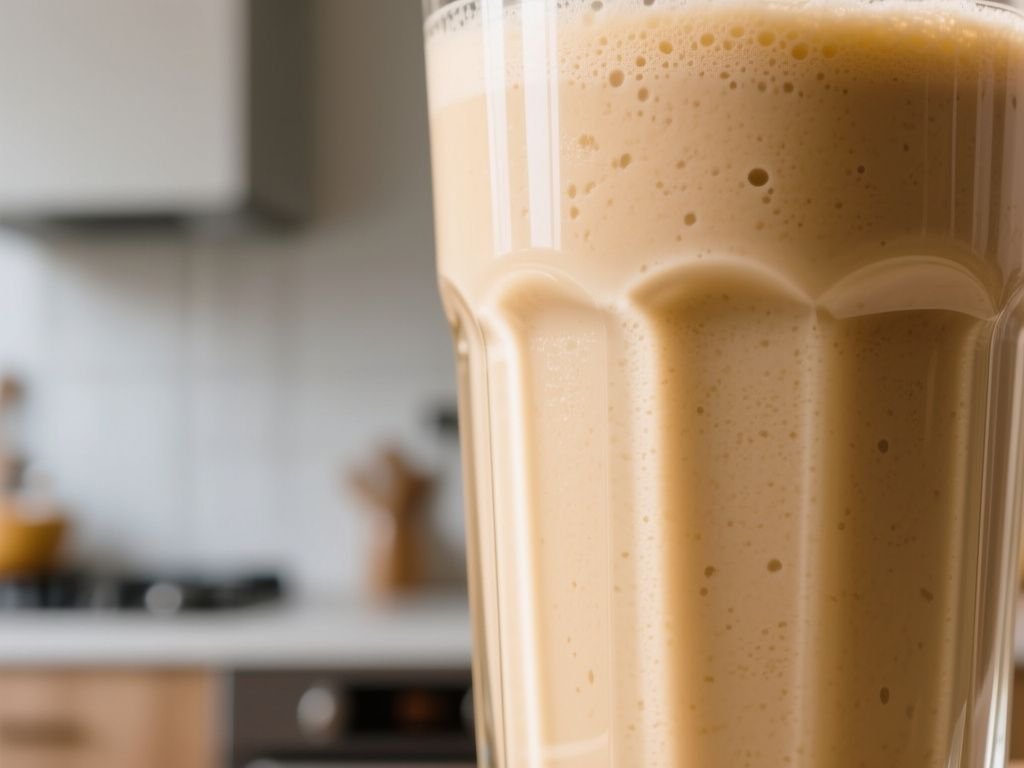
How long you blend a smoothie depends heavily on the order you add ingredients. A proper load creates a vortex that pulls everything down into the blades. A bad load traps air at the bottom and leaves a stagnant layer of unblended fruit on top. Start with the liquid, then soft ingredients, then frozen or hard items last.
Use 1 1/4 cups of liquid per blender batch as a starting point. That’s enough to create a slurry without turning the smoothie into juice. If you’re making a thick smoothie bowl, cut the liquid to 3/4 cup and add a 1/2 cup of thickener like Greek yogurt, banana, or avocado. A thicker mixture needs more blade contact per cubic inch, so add 15 to 20 seconds to your normal blend time.
Overloading the jar with frozen solids is the fastest way to double your blend time. Most blenders have a max fill line for frozen ingredients. Stay below it. If you have to add ice one cube at a time because the motor stalls, you’ve exceeded your blender’s real capacity, and whatever the clock says, you’ll never get a smooth result.
Frozen Fruit, Ice, and Greens: Different Densities, Different Times
A smoothie with frozen fruit or ice needs longer blending than one with only fresh fruit. Frozen blueberries are denser than frozen strawberries, so a cup of each will blend at different rates. Plan for 45 to 60 seconds on a high-speed blender with frozen fruit. A standard blender may need two to three minutes with a stop to scrape the sides halfway through.
Leafy greens like kale and spinach are lightweight but fibrous. They don’t break down from speed alone. They need liquid contact and time. Add your greens with the liquid first and blend for 15 seconds before adding frozen fruit. That pre-blitz hydrates the cell walls and drastically shortens the total time.
If your smoothie recipe calls for ground chia or flax, grind those seeds separately in a dry jar or spice grinder before adding them. Whole chia seeds will never fully break down in a wet blend, no matter how long you run the machine. For a thick strawberry smoothie bowl, stop blending as soon as the fruit breaks down but before it turns runny—you want a spoonable texture, not a drink.
Step 3: Read the Vortex and the Sound
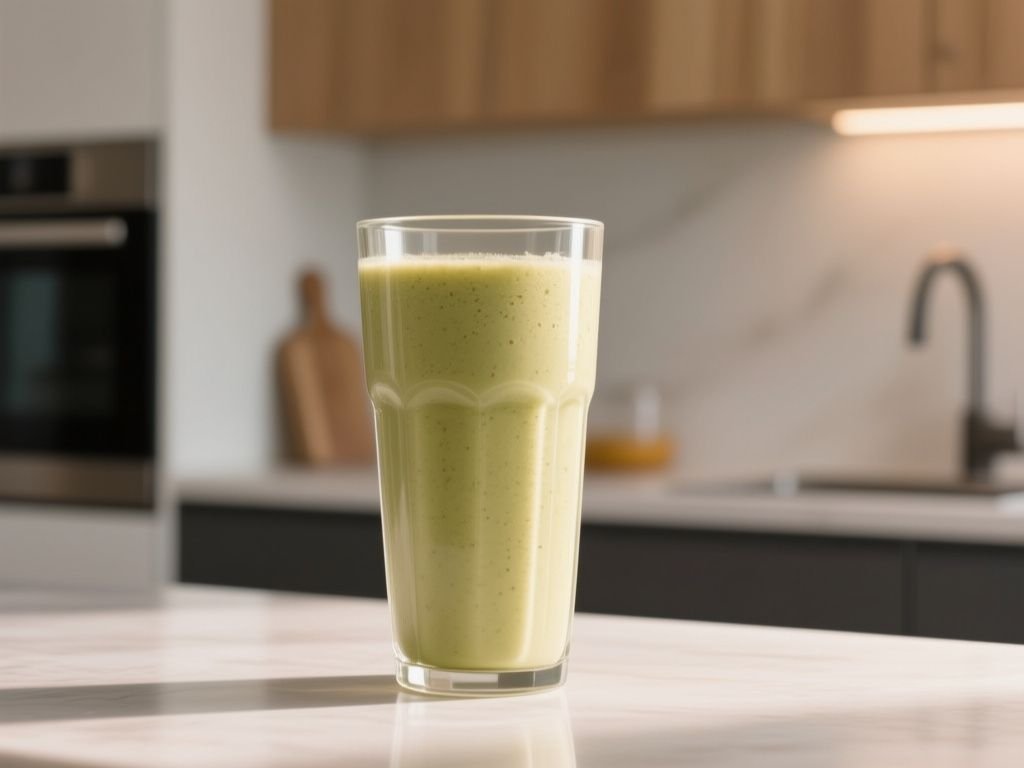
You can hear when a smoothie is close to done. The motor’s pitch rises as the mixture thins out and the blades spin more freely. A low, laboring groan means there’s still a dense mass sitting on the blades. A high, smooth whir means the mixture is circulating fully. Combine that sound with the visual vortex test.
The vortex test is simple. Look through the jar while blending. If you see a continuous swirl drawing ingredients from the top down into the blades, the blender is working efficiently. If the top layer sits still while the bottom churns, stop blending. Scrape down the sides, add a splash of liquid, or reduce the jar’s contents. Longer blending won’t fix a stagnant layer. It will just heat the mixture and oxidize the fruit.
A high-speed blender achieves a full vortex in under 10 seconds with a proper load. A standard blender may take 30 seconds just to get the vortex going. That’s the real difference in blend time between the two classes of machine. You’re not waiting for the fruit to pulverize. You’re waiting for the circulation pattern to establish itself.
Should You Blend in Short Bursts or Continuously?
For most smoothies, continuous blending on high is best once the vortex forms. The constant blade speed keeps ingredients moving and breaks them down evenly. Short bursts work when you’re crushing ice or starting a very thick load, because they let the motor recover between pulses and prevent overheating.
A low-wattage blender generates more heat per minute of blending than a high-speed one. Running a 500-watt motor continuously for three minutes can raise the smoothie’s temperature by 10 to 15 degrees Fahrenheit, which thins the mixture and slightly degrades vitamin C. If you hear the motor laboring and see steam rising, stop for 30 seconds. Let the motor cool. The smoothie will be fine.
Step 4: Finish with Short Bursts and the Spoon Test
You’ve watched the vortex. The sound has gone from groan to whir. Now stop blending and check the consistency with a spoon. Scoop a small amount and let it fall back into the jar. A properly blended smoothie coats the back of the spoon evenly with no visible chunks. If you see flecks of kale or bits of strawberry, blend for 10 more seconds and check again.
The spoon test is more reliable than any preset timer because it accounts for ingredient variety. A banana-berry smoothie may be perfectly smooth at 35 seconds; a green smoothie with kale stems and frozen mango may need 50 seconds. Trust the spoon, not the clock.
Blending longer than necessary turns a thick smoothie into a thin, watery one. Friction heat melts the frozen fruit and breaks down the fiber that gives smoothies their body. If you’re after a thick, creamy texture, stop as soon as the spoon test passes. The mixture will continue to relax for a minute or two after you turn the motor off, so it will actually be slightly thicker in the glass than it looked in the jar.
For a recipe like a healthy pumpkin pie smoothie with canned pumpkin and oats, the mixture is more like a batter than a juice. Blend for the same vortex-based time, but expect a denser result. Stop when the oats have completely disappeared into the liquid. Over-blending a pumpkin smoothie produces a gluey texture because the oats release too much starch.
Cleaning and Next Batch Prep
Rinse the blender jar and blade assembly immediately after blending. Dried smoothie residue on the blade shaft creates drag the next time you run the machine, which lengthens every future blend time. A quick rinse with warm water and a drop of dish soap, run on high for 10 seconds, keeps the blade assembly clean and the motor running cool.
If you batch-prep smoothies ahead of time, blend each one just before drinking. A blended smoothie left in the fridge for more than two hours falls within the FDA’s food safety guidelines for perishable items and should be discarded if not consumed. The texture also changes as the fruit oxidizes, turning the smoothie watery and brown at the surface.
Frequently Asked Questions
How long should you blend a smoothie with frozen fruit?
With frozen fruit, a high-speed blender needs 45 to 60 seconds total. A standard blender will take two to three minutes with one scrape-down halfway through. The frozen fruit’s density matters: frozen mango and pineapple take longer than frozen berries. Use the vortex test rather than the clock.
Does blending longer make a smoothie thinner or watery?
Yes. Longer blending introduces friction heat, which melts frozen fruit and breaks down fiber. The smoothie releases more liquid from the fruit cells, so it thins out. Stop as soon as the spoon test passes to keep a thick, creamy texture.
Can blending too long destroy nutrients or make a smoothie bitter?
Prolonged blending oxidizes vitamin C and other heat-sensitive nutrients. It can also release bitter compounds from leafy greens like kale and spinach if they get too hot. Blend just long enough to achieve the consistency you want. Thirty seconds on high is enough for most high-speed blenders.
Why does my blender leave chunks even after a long time?
Chunks remain when the vortex stalls. That happens if the jar has too little liquid, too many frozen solids, or an air pocket under the blades. Stop, scrape down the sides, add a splash of liquid, and restart. Longer continuous blending without fixing the circulation won’t remove the chunks.
Should I start on low speed and then go high to reduce blending time?
Yes. Starting on low for 5 seconds settles the ingredients and establishes the vortex without creating an air pocket. Then ramp to high. High speed from the start can trap air under the blades and actually increase the total time needed to get a smooth result.