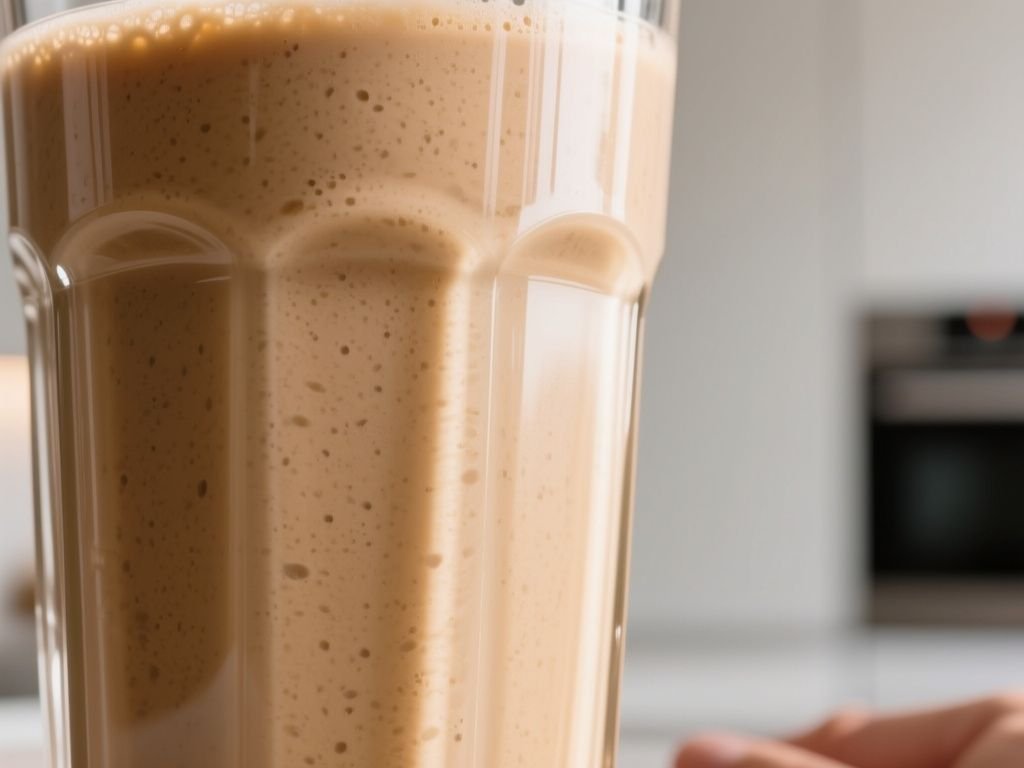
You toss frozen berries, a banana, spinach, and almond milk into the pitcher, flip the switch, and let it run for a full minute. What comes out is warm, foamy, and clings to the sides in a thick sludge that separates within five minutes. The mistake was not the ingredients or the machine. It was treating blend time as a fixed number instead of a signal to watch.
How long you should blend a smoothie for is never a single number. It shifts with blade speed, jar geometry, and whether your frozen fruit came straight from the freezer or thawed for ten minutes first. A high-speed blender breaks down cell walls in seconds, so the real risk is over-blending. A low-power model needs longer, but you are not aiming for complete liquefaction. The practical distinction is to watch the vortex and listen for the motor: when the mixture flows smoothly and no chunks cling to the jar, stop immediately. Time is a byproduct, not the goal.
Key Takeaways
- Blend until a smooth vortex forms and no visible chunks remain, typically 30–60 seconds on a high-watt blender and 60–90 seconds on a low-watt one.
- Over-blending for even 10 extra seconds can raise the mixture’s temperature enough to degrade heat-sensitive vitamin C and turn the texture slimy.
- If the motor strains or the mixture stalls in a thick mass, add liquid or use short pulses rather than extending the same continuous blend.
- Frozen fruit and leafy greens need pulsing first, not more time, to prevent blade stall and uneven breakdown.
What Actually Determines Blend Time
Three factors decide how many seconds you need: motor power, jar shape, and ingredient state. Understanding these removes the guesswork from any recipe, whether you are using a Vitamix 5200 or a Hamilton Beach Smoothie Blender.
Motor Wattage and Blade Speed
A 1,000-watt blender can turn frozen fruit and liquid into a smooth drink in roughly 30 seconds. A 300-watt model may need 90 seconds or longer. High-performance machines like the Blendtec Designer 725 or the Ninja BN701 push blade tips fast enough to crush ice, break down fibrous stems, and emulsify everything into a uniform texture quickly. Lower-wattage blenders, such as many Oster Reverse-A-Matic models, require more time because the blades spin slower and rely on repeated passes over the same material.
The blade material matters less than the blade speed. Stainless steel blades are standard and stay sharp for years, but a 700-watt motor with stainless blades will still take longer than a 1,400-watt motor with the same blade set. If your blender lists wattage on the base, that is your starting point. If it does not, the manufacturer’s website or manual will state it.
Counter-space realist note: a blender that takes 90 seconds to do what a better one does in 30 is not necessarily a bad purchase. If you make one smoothie a week, the extra minute costs nothing. But if you blend daily, that time adds up and the motor works harder, which shortens its life. Check the wattage before buying a dedicated smoothie maker.
Jar Geometry and Blade Position
A tall, narrow jar with blades at the very bottom creates a stronger vortex because the liquid column is deeper and the blades pull material downward. The Vitamix 5200’s classic tall jar is a good example. Wide-based jars, common on Ninja models, need more liquid to cover the blades and often require shaking or scraping during blending. Jar material also influences heat transfer: a borosilicate glass jar holds up to thermal shock but conducts heat slowly, so friction from the blades stays in the mixture longer. A BPA-free plastic jar is lighter and less prone to shattering, but it can scratch over time and harbor odors if you blend turmeric or garlic.
BPA-free claims are regulated; the U.S. Food and Drug Administration maintains current safety information on BPA in food contact substances at https://www.fda.gov. For blender jars specifically, manufacturers must meet the same food contact standards as any container that touches your smoothie.
The blade assembly height also matters. If the blades sit a half-inch above the jar bottom, frozen chunks can bounce around without being drawn into the cutting zone. That forces you to blend longer, which heats the mixture. A low blade assembly with a close clearance to the jar base is more efficient.
Ingredient State: Frozen, Fresh, or Powdery
Frozen fruit is the biggest variable. Solid fruit at freezer temperature (around 0°F) starts hard and takes longer to break down than refrigerated fruit at 40°F. Ice crystals add bulk and require the blades to work harder. Adding protein powder, nut butter, or chia seeds changes viscosity: powders absorb liquid and thicken the mixture, which slows the vortex and requires either more liquid or a pulse strategy. Leafy greens like spinach and kale are low-density but high-fiber; they need enough liquid to circulate, or they will wrap around the blade shaft and stall the motor.
The ratio of ice to liquid is the single most controllable factor. A standard smoothie uses about 1 cup liquid to 1½ cups frozen fruit. Reduce the liquid to get a thicker smoothie bowl, and you will need longer blending or manual scraping. Increase the liquid, and blend time drops because the mixture flows more easily. For a seasonal recipe that illustrates this balance, try a healthy pumpkin pie smoothie made with pumpkin puree and warm spices; the puree replaces some frozen volume and shortens blend time.
Step-by-Step: How Long to Blend at Each Stage
Instead of setting a timer, follow this sequence. It works for any blender, from a 300-watt budget model to a high-performance machine, and it prevents the two most common failures: under-blending with chunks and over-blending with heat.
Step 1: Add Liquids First, Then Soft, Then Frozen
Pour the liquid base (milk, water, juice, or coffee) into the jar before anything else. This prevents dry ingredients from packing under the blades. Add soft items next — banana, yogurt, nut butter, protein powder. Add frozen fruit and ice last, on top. This layering order means the blades always have liquid to start with, reducing the time needed to get everything moving. For a caffeinated twist on this method, see our easy coffee smoothie recipe, which uses brewed coffee as the liquid base.
Start the blender on its lowest speed for 10–15 seconds. This gets the mixture circulating without spraying frozen chunks against the lid. You are looking for the liquid to start moving and the frozen pieces to sink into the vortex. If nothing moves after 10 seconds, stop and add 2–3 tablespoons more liquid.
Step 2: Ramp to High and Watch the Vortex
After the initial low blend, turn the speed to high (or the highest setting your blender has). For a 1,000-watt or higher blender, continue for 30–45 seconds. For a 300–700-watt blender, continue for 60–90 seconds. Do not take your eyes off the jar.
The key signal is the vortex: a deep, stable whirlpool in the center of the liquid. When the vortex forms and holds its shape, ingredients are being pulled down into the blades continuously. No chunks should be clinging to the sides above the liquid line. If chunks cling, use a blender tamper (if your jar has a lid opening for one) to push them into the blades, or stop and scrape down the sides with a spatula, then blend for another 10 seconds.
Step 3: Listen for the Motor Sound to Change
A properly blended smoothie makes a steady, even hum. When there are still unblended chunks, the motor sound wavers or labors because the blades are hitting resistance intermittently. When the sound becomes smooth and consistent, the mixture is nearly done. Stop and check: tilt the jar slightly. The smoothie should flow evenly, not in clumps. If it is still too thick or has visible pieces, pulse for 5–10 seconds at a time, checking after each pulse.
This is where the timer fails. A timer tells you to stop after 45 seconds, but your mixture might have been done at 30 seconds. Those extra 15 seconds of high-speed blending create friction heat. You can feel it: put your hand on the jar after blending. A smoothie blended for 90 seconds in a high-power blender will be noticeably warmer than one blended for 45 seconds. Warmth is the enemy of fresh fruit flavors and heat-sensitive nutrients.
Over-Blending and Its Consequences
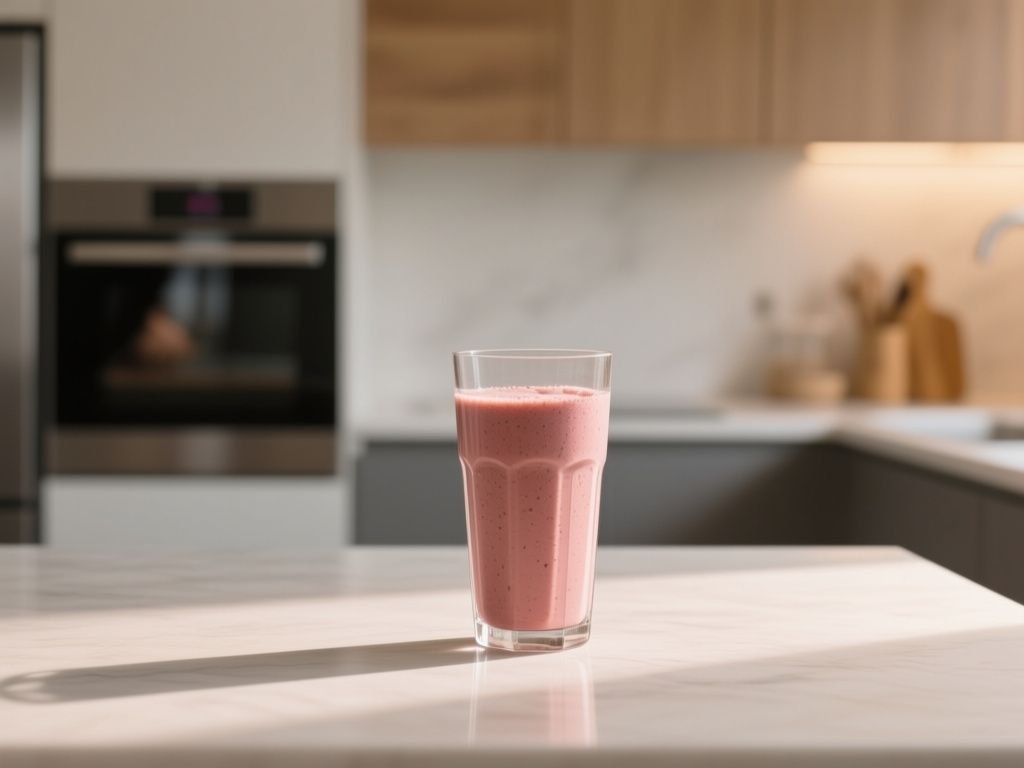
The biggest mistake people make is assuming longer is better. With smoothies, longer is worse after a point. The blades spin at thousands of revolutions per minute, and that mechanical energy transfers to the liquid as heat. A high-speed blender running for two minutes can warm a smoothie by 15–20°F above the starting temperature of its ingredients. The mixture will not be hot, but it will be noticeably tepid, which dulls the flavor and can make the texture foamy.
Heat also degrades vitamin C and some B vitamins. The U.S. Food and Drug Administration notes that vitamin C is water-soluble and sensitive to heat; prolonged blending accelerates that breakdown. While a 30-second blend has minimal effect, a 2-minute blend in a high-power machine does measurable damage. If you add protein powder, over-blending can also denature some proteins, making the smoothie taste chalky or gritty rather than creamy.
Beyond heat, over-blending destroys structure. Dietary fiber in fruits and vegetables gives smoothies their body. Blend too long and that fiber breaks down into a fine paste that feels slimy on the tongue and separates quickly once the blending stops. You see a foamy layer on top and watery liquid below. That is a sign you blended about 30 seconds too long.
For a thick smoothie bowl, over-blending is less of a heat issue because there is less liquid to conduct heat, but the texture problem remains. A properly blended smoothie bowl should hold its shape on a spoon but still have tiny, dispersed ice crystals for a cold, almost sorbet-like texture. If it turns into a uniform slurry, you lost the structure. Our thick strawberry smoothie bowl with chia guide shows the right consistency; the chia seeds thicken the mixture without needing extra blend time.
What to Do When Your Blender Struggles
A stalling motor is not a sign to blend longer. It is a sign to change the physical conditions. Stalling happens when the mixture is too thick, the frozen pieces are too large, or the jar is overloaded. The correct response is to stop, add liquid, and use short pulses.
If your blender has only two speeds—high and low, like some Hamilton Beach Smoothie Blender models—use low for the initial 10 seconds, then high for the main blend, but be ready to pulse. The pulse button is your best tool for thick mixtures. Five or six quick pulses can break up a frozen mass that would stall a continuous high-speed run. Pulsing also incorporates less air, which means less foam.
Another common issue is large frozen chunks: a whole frozen banana or big strawberries. Cut frozen fruit into pieces no larger than an inch before freezing. If you already froze them whole, let them sit at room temperature for 5 minutes before blending, or break them apart manually. Large chunks bounce off the blades instead of being cut, which extends blend time and heats the mixture.
Leafy greens deserve special attention. Spinach blends easily because it is soft and high in water. Kale, especially mature kale with thick stems, can wrap around the blade assembly and stop the motor. The fix is to remove the stems before freezing or blending, and to add kale in small handfuls while the blender is running on low, letting each handful incorporate before adding the next. This takes an extra 30 seconds of your time but prevents a 2-minute struggle.
Smoothie Bowls vs. Drinkable Smoothies: Timing Differences
The target consistency changes the blend time, but not in the way you might think. A drinkable smoothie needs enough liquid to flow, so a 45-second blend on high is usually enough. A thick smoothie bowl uses less liquid, so the mixture is denser and resists the vortex. You will need more total blending time—often 60–90 seconds—but you must break that time into short bursts with scraping in between.
For a smoothie bowl, start with half the normal liquid. Blend on low for 10 seconds, then pulse 5–10 times. Stop and scrape down the sides. Repeat this cycle two or three times. The goal is a soft-serve consistency that holds a spoon upright but still has some frozen texture. Do not blend continuously for 90 seconds; that will overheat the small amount of liquid and create a warm, dense paste. Use a blender tamper if your jar has one, pushing the thick mixture into the blades between pulses.
The choice of jar material matters here. A borosilicate glass jar stays cold longer than a plastic jar, which helps keep a smoothie bowl frozen during the extra blending time. If your blender came with a plastic jar, chill it in the freezer for 10 minutes before making a smoothie bowl. That small step reduces the need for extra blend time because the mixture stays colder and more viscous, which actually helps the blades cut through frozen fruit rather than turning it into soup.
Frequently Asked Questions
How long should I blend a smoothie with frozen fruit to get it smooth without chunks?
For a high-watt blender (1,000 watts or more), blend on high for 30–45 seconds after an initial 10-second low-speed start. For a low-watt blender (300–700 watts), blend for 60–90 seconds total. The key is to watch for a stable vortex and no chunks clinging to the jar. If chunks remain after that time, pulse for 5–10 seconds at a time rather than extending the continuous blend.
Does blending time depend on how powerful my blender is?
Yes, dramatically. A 1,000-watt blender can liquefy frozen fruit in roughly 30 seconds because the blade tips move fast enough to cut through ice crystals and cell walls quickly. A 300-watt model may need 90 seconds or longer because the blades spin slower and must make repeated passes over the same material. If your blender lists wattage, that number is the best predictor of blend time. If it does not, use the vortex and motor sound as your guide.
Can I blend leafy greens like spinach or kale too long and ruin them?
Yes. Over-blending leafy greens breaks down their fiber into a fine paste that feels slimy and can separate upon standing. Spinach tolerates blending well because it is soft and high in water, but even spinach can turn unpleasantly smooth if you blend it for over two minutes. Kale is more fibrous; remove thick stems and add it gradually while the blender runs on low to prevent the motor from stalling. Stop as soon as the greens are fully incorporated and no visible pieces remain.
How do I know when the smoothie is done—should I just time it or look for something?
Look and listen, do not time. When done, the mixture should have a stable vortex in the center, no chunks should be visible above the liquid line, and the motor sound should be a steady, even hum. If the motor sound wavers or the blades hit resistance, there are still unblended pieces. Tilt the jar slightly; a done smoothie flows evenly. Use short pulses to finish rather than more continuous blending.
Is there a risk of overheating the smoothie if I blend for too many seconds?
Yes. Blades spinning at high speed transfer mechanical energy to the liquid as heat. A high-power blender running for two minutes can raise the temperature by 15–20°F, which is enough to degrade heat-sensitive vitamin C and make the drink taste dull. The mixture will not be hot, but it will be noticeably warm, and the texture can become foamy. Stop as soon as the smoothie looks uniform; do not blend for a set time if it is already smooth.
Cleaning and Maintenance: The Counter-Space Angle
A blender that is hard to clean will not earn its spot on your counter. The longer food residue sits on the jar and blades, the harder it is to remove. Rinse the jar and blade assembly immediately after pouring your smoothie. A quick rinse while the jar is still wet takes 10 seconds and prevents fruit sugars from hardening into a sticky film. If left unrinsed, that film builds up and eventually affects the vortex because the jar walls become textured.
Most blender jars, whether BPA-free plastic or borosilicate glass, are dishwasher-safe on the top rack, but the blade assembly should be hand-washed to preserve the bearing seal. Stainless steel blades do not rust, but the seal around the blade shaft can degrade if soaked for long periods. For a deeper clean, blend warm water with a drop of dish soap on high for 20 seconds, then rinse. This also tells you something about your machine: if it cannot blend water and soap into a froth in 20 seconds, the blade assembly or motor is wearing out.
Safety standards for blender motors and electrical components fall under Underwriters Laboratories (UL) and the U.S. Consumer Product Safety Commission. A blender sold in the United States should bear a UL or ETL certification mark, which indicates that the motor and wiring meet basic electrical safety requirements. Counter-space realists know that a certified blender that blends efficiently is more valuable than a flashy one that takes up room and needs constant babysitting.
Final Word on Blend Time
The answer to “how long should you blend a smoothie” is not a number you memorize. It is a behavior you learn. Watch the vortex, listen for the change in motor sound, and stop when the mixture flows smoothly with no chunks. On a high-power blender, that will be 30–45 seconds. On a low-power one, 60–90 seconds. The moment it looks done, it is done.
Every extra second beyond that point converts fresh fruit into a warm, foamy, separated slurry. The blades have done their job; your job is to recognize it. A good blender earns its counter space by giving you that clear signal quickly. A bad one forces you to guess, and you end up over-blending or under-blending every time. Trust your eyes and ears more than a timer, and your smoothies will improve immediately.