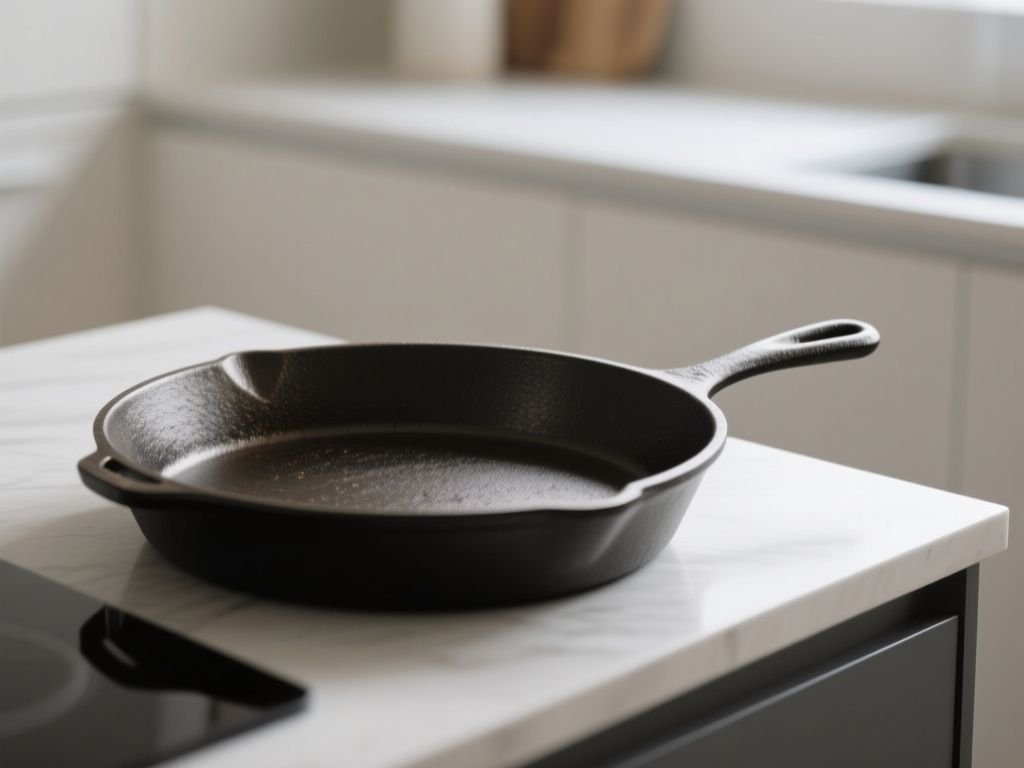
Why does a skillet you dried with a towel still bloom with rust a week later? Because the towel left something behind. The real distinction in storing cast iron cookware is not the shelf you choose but the final drying step after washing. Many beginners wipe the pan dry and consider the job done, yet microscopic water remains trapped in the iron’s pores. Rust appears within days. The correct move is to heat the pan on the stove top until it’s bone-dry, then apply a micro-thin oil film while it’s still warm. That single extra minute separates a pan that stays perfect for months from one that needs scrubbing before every use. Whether you’re storing a Lodge cast iron skillet or a vintage Griswold, the same physics applies.
Key Takeaways
- Always heat the skillet on the stove top until no steam rises before oiling—towel drying alone leaves water in the iron’s pores.
- Apply only a few drops of oil and wipe it off completely; excess oil turns sticky and attracts dust.
- Store in a dry, low-humidity spot, never with a tight lid, and place paper towels between stacked pans.
The One Mistake That Causes Rust Before You Even Store It
Towel drying gives you a false sense of security. The towel absorbs surface water, but cast iron is porous at a microscopic level. Those tiny pits hold water that evaporates slowly over hours. If you put the skillet away cool, that trapped moisture condenses on the iron and triggers oxidation. A skillet dried with a paper towel still retains microscopic water in its pores, which is why heating it on the stove until it’s bone-dry matters more than any storage trick.
Heating works because water turns to vapor and leaves the pores entirely. The pan should feel hot to the touch but not smoking. If you see faint wisps of steam, keep heating. When the steam stops, give it another 30 to 60 seconds to be certain. Then you move to the oil step, which seals those now-dry pores.
Step-by-Step: Preparing Your Cast Iron for Storage
Step 1 – Clean Thoroughly Without Stripping Seasoning
Use warm water and a chainmail scrubber or stiff nylon brush. For stuck food, simmer a quarter-inch of water for a minute and scrape with a wooden spatula. A paste of kosher salt and a few drops of water works as a mild abrasive that does not remove seasoning. Modern dish soap is safe because it no longer contains lye, but avoid soaking the pan or scrubbing with steel wool, which cuts through the polymerized oil layer. If the pan has rust or thick carbon buildup, that is a separate restoration job—details in the troubleshooting section below.
Step 2 – Dry Completely on the Stove Top
Place the clean skillet over medium heat for two to five minutes. You will see steam first, then nothing. Continue until the entire pan, including the handle, feels warm and dry. Heating a freshly washed skillet on a medium burner until all steam stops takes about three minutes and eliminates the hidden moisture that causes rust. This step matters regardless of brand, whether you own a Stargazer cast iron skillet or a thrift-store find. For multiple pans, you can set them in a 200°F oven for 15 minutes instead.
Step 3 – Apply a Micro-Thin Oil Film While Warm
While the pan is still warm (not smoking hot), pour about 1/4 teaspoon of neutral oil—Crisco, flaxseed oil, or bacon grease if you cook often—into the center. Use a paper towel to rub it over the entire interior, exterior, and handle. Then take a clean, dry paper towel and wipe as if you made a mistake and want to remove all of it. The remaining film is exactly the right amount. According to Lodge’s cast iron care guidelines, a light coating after each wash maintains seasoning. Flaxseed oil has a lower smoke point and forms a harder but somewhat brittle layer; Crisco is more forgiving and less likely to chip.
Choosing Where to Store Your Cast Iron
Cabinet Storage vs. Hanging Pot Rack
Keep cast iron in a low-humidity environment. A cabinet away from the sink and dishwasher works well. A hanging pot rack works even better because air circulates freely, but avoid hanging directly over the stove, where steam and heat fluctuations cause condensation to form on the iron. In a small kitchen, a wall-mounted rack or under-shelf hooks are the best use of vertical space. Carbon steel pans need the same dry environment, though their thinner walls make them even more prone to rust if humidity creeps in.
Stacking Multiple Skillets
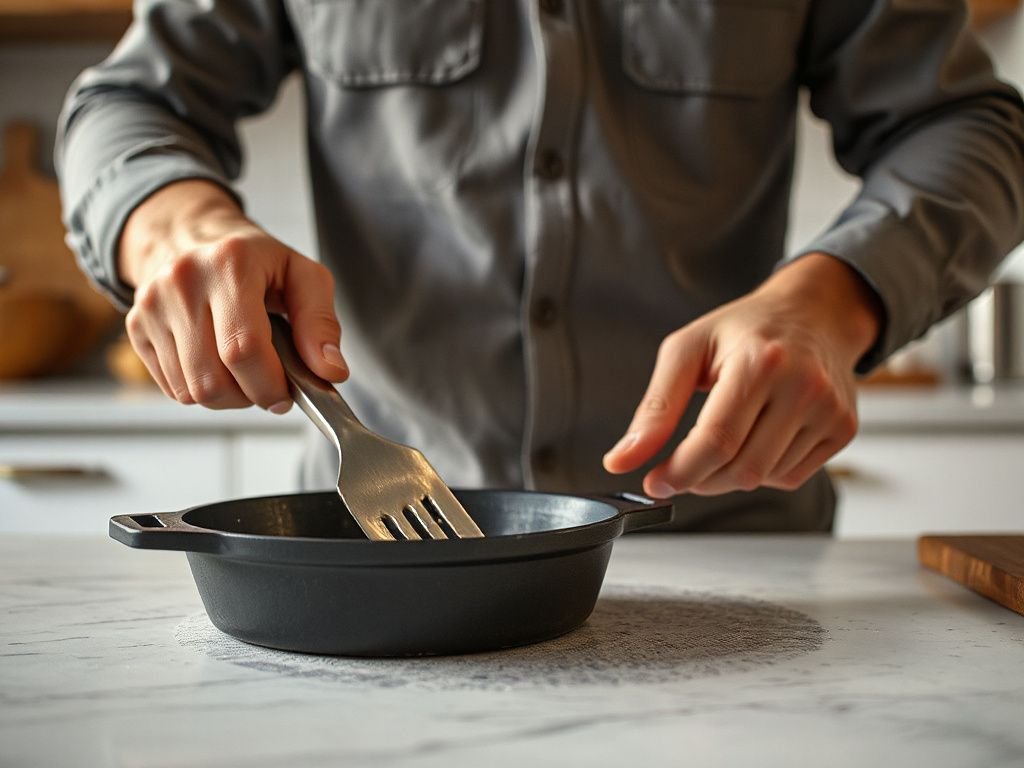
Yes, you can stack cast iron skillets on top of each other. Always place a paper towel or thin cloth between each pan. This prevents metal-on-metal contact that can scratch seasoning and also absorbs any residual moisture. Never stack more than three high without solid support because the weight can crack the seasoning on the bottom pan. If you have different sizes, nest smaller pans inside larger ones with towels in between.
Lids and Coverings
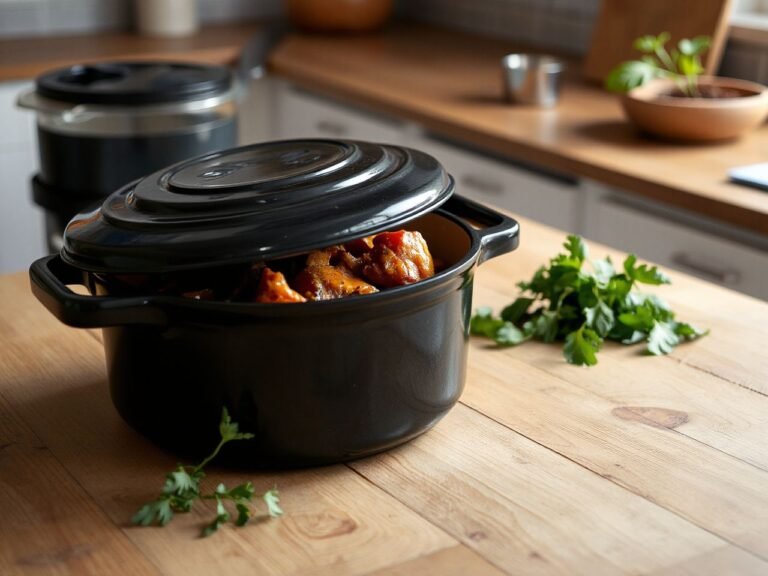
Never store cast iron with a tight-fitting lid. Trapped air becomes humid, causing rust and musty smells. If you must cover the pan, use a breathable cloth or a sheet of paper towel draped loosely over the top. Store lids separately, ideally on a rack with a paper towel between the lid and the pan surface. Plastic wrap or airtight containers are the worst choices; they create a sealed moisture chamber.
Oven Storage
You can store cast iron in the oven, but it is risky. If you forget and preheat the oven to 400°F for a pizza, the oil layer smokes and may carbonize into sticky flakes. The oven may also not be completely dry after roasting vegetables. A cabinet or pot rack is a safer default. If you do use the oven, leave a note on the control panel.
Long-Term Care: Re-Seasoning and Troubleshooting
How Often to Re-Season a Stored Skillet
If you use the skillet regularly, cooking with oil naturally maintains seasoning. For a pan that sits for months, re-season every 6 to 12 months. A full seasoning cycle involves coating with a thin layer of oil (flaxseed oil or Crisco) and baking upside down at 350°F for one hour. This builds a harder polymer layer than the quick post-wash oil wipe. The quick oil is maintenance, not full seasoning. If the pan starts to look dull or gray in patches, it is time.
Fixing Rust Before You Put It Away
If you see orange or brown spots, do not ignore them. Scrub the area with a chainmail scrubber or fine steel wool until bare metal shows. Wipe with a 50/50 vinegar-water solution to neutralize rust, rinse, dry thoroughly on the stove, and immediately re-season. For heavy rust covering more than half the pan, a full restoration with lye or electrolysis works, but that is a separate project. Brown spots that do not scrub off and are smooth to the touch are often polymerized oil, not rust. If a brown spot wipes off onto a paper towel with a little oil, it is just old seasoning residue, not corrosion.
Preventing Bad Smells
Rancid oil is the main culprit. If you used bacon grease or olive oil and stored for months, the oil can oxidize and stink. Use a neutral, high-stability oil like Crisco for long-term storage. If the pan smells musty, wash with warm water and mild soap, dry completely on the stove, and apply fresh oil. Also check the storage area for dampness—a dehumidifier in a basement cabinet solves most odor problems.
Frequently Asked Questions
Should I oil my cast iron pan before storing it?
Yes, but only a micro-thin film. After heating the pan dry, apply a few drops of oil and wipe it off completely. This prevents oxygen from reaching bare iron while leaving no sticky residue. The right way to store cast iron is to oil it only after it’s completely dry. If you use the pan daily, a quick wipe after each wash is enough; for long-term storage, do a full seasoning cycle first.
Can I stack cast iron skillets on top of each other?
Stacking is fine with protection. Place a paper towel or cloth between each pan to prevent scratches and absorb any hidden moisture. Never stack more than three pans high without a solid support because the weight can compress seasoning. If you own a Victoria cast iron skillet or any other brand, the same rule applies. If you have different sizes, nest smaller pans inside larger ones with towels in between.
Is it okay to put a lid on a cast iron pan for storage?
No, not a tight-fitting lid. Trapped air increases humidity and causes rust and mildew. When you store cast iron cookware, always leave the lid off or offset it so air can circulate. If you must cover, use a breathable cloth or a sheet of paper towel draped over the top, never plastic wrap or an airtight container.