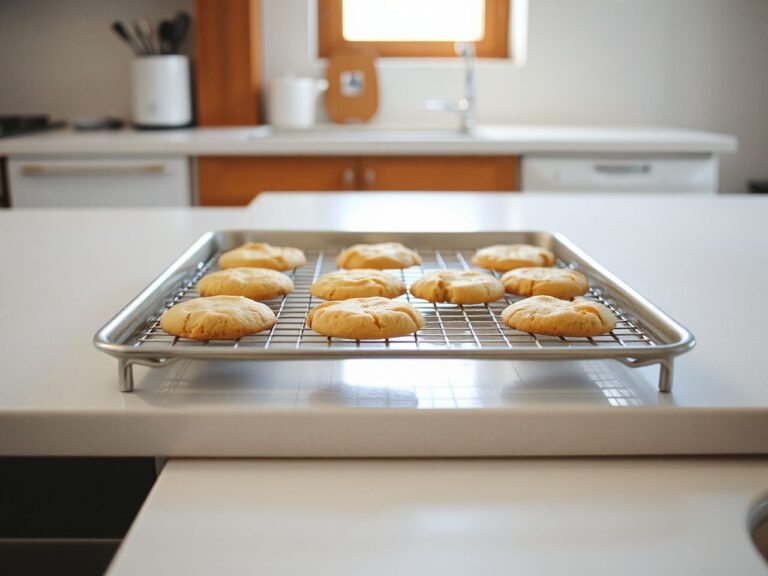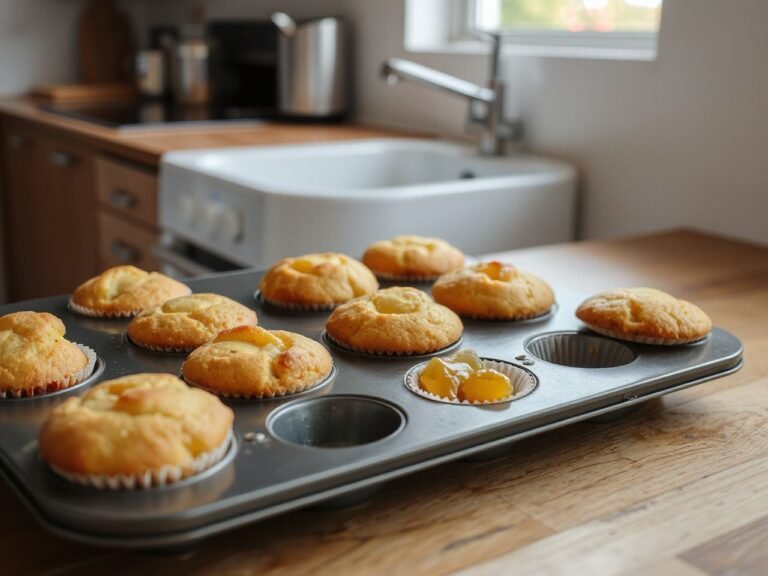
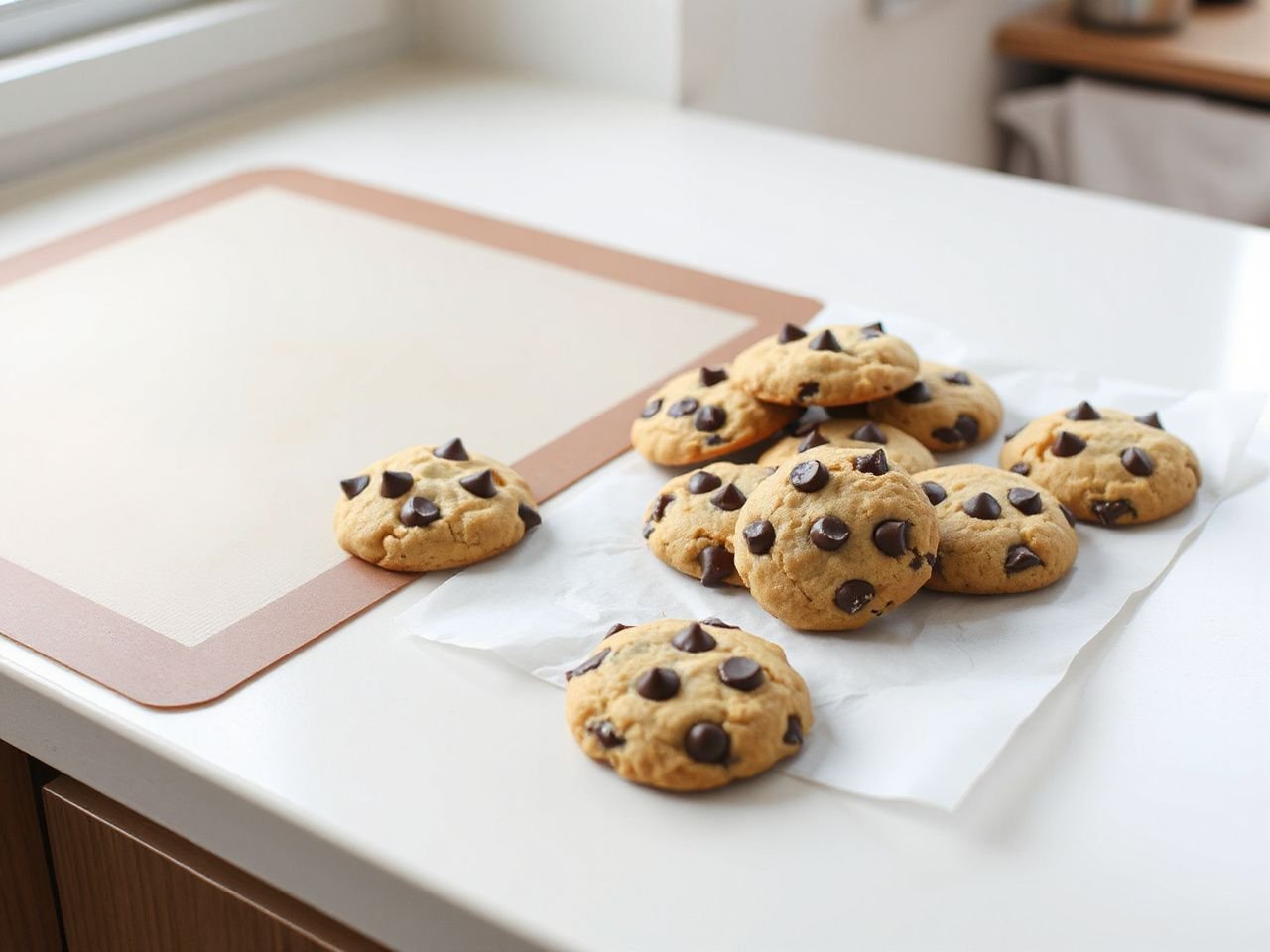
A spatula slides easily under a chocolate chip cookie on a silicone baking mat, leaving behind nothing but a faint sheen on the mat below. This demonstrates the effectiveness of silicone mats for everyday baking. The Amazon Basics Silicone Rectangular Baking Mat is a top pick for durability, cost per use, and overall convenience compared to parchment paper.
📌 This article contains affiliate links. As an Amazon Associate I earn from qualifying purchases, at no extra cost to you. Full disclosure.
CERTAIN CONTENT THAT APPEARS ON THIS SITE COMES FROM AMAZON. THIS CONTENT IS PROVIDED ‘AS IS’ AND IS SUBJECT TO CHANGE OR REMOVAL AT ANY TIME.
| Product | Best For | Buy Link |
|---|---|---|
| Reynolds Kitchens Unbleached Parchment Paper Roll | Disposable convenience | Check Price |
| Amazon Basics Silicone Rectangular Baking Mat | Reusable non-stick | Check Price |
How We Compared Parchment Paper and Silicone Baking Mats
The comparison here is drawn from what each material is and what its makers publish about it, set against the two jobs these surfaces are asked to do: a batch of chocolate chip cookies on an aluminum half-sheet pan, and root vegetables roasted at 400°F with oil that spatters. Browning evenness follows from how much a liner insulates. A silicone mat is many times thicker than parchment and holds heat back from the dough, which softens the bottom crust slightly, while thin parchment barely comes between the two at all. Release follows from the surface itself rather than from anything applied to the pan. Cost per use is arithmetic: the price of a parchment roll divided by the number of sheets it yields, set against the price of a mat divided by the lifespan its manufacturer states. The result is clear: parchment is convenient for one-offs, but the silicon mat wins on long-term value.
Reynolds Kitchens Unbleached Parchment Paper Roll (Disposable Convenience)
Amazon Basics Silicone Rectangular Baking Mat (Reusable Workhorse)
Reynolds Kitchens Unbleached Parchment Paper Roll (Disposable Convenience)
Quick take: This roll of unbleached parchment handles the disposable side of the parchment paper vs silicone baking mat question with zero fuss—tear, bake, toss, done.
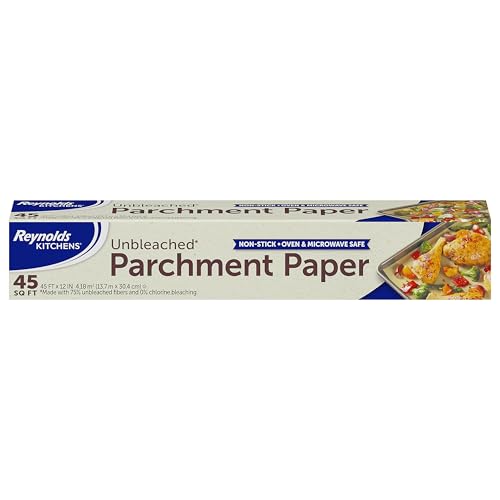
The paper has a warm, off-white color with faint flecks of natural fiber running through it—a far cry from the stark white bleached stuff. It feels slightly textured under my fingers, like thick tracing paper, and it tears neatly against the roll’s serrated edge without leaving ragged strips. I appreciated that it’s made with 75% unbleached fibers and 0% chlorine bleaching, which doesn’t affect performance but gives me peace of mind.
Baking a batch of easy brownie mix cookies on this parchment, the bottoms came out evenly golden with no sticking at all. The 12-inch width almost covered my half-sheet pan, but I still had to trim about an inch off each side because the paper shifted slightly when I slid the pan onto the oven rack. During a convection roast of Brussels sprouts, the corners curled up and flapped against the fan, sending one small charred scrap spinning onto the element. Not dangerous, but definitely annoying.
Pros:
- Unbleached and chlorine-free — nothing is left in the paper that can carry a chemical aftertaste into food.
- 45 feet per roll — lasted through a full month of near-daily baking before running out.
- 12-inch width — fits most standard cookie sheets with minimal trimming.
- Disposable convenience — crumple it up and toss it, no washing required.
- Handles roasting temperatures — stayed intact without smoking or scorching during a 400°F vegetable roast.
Cons:
- Edges curl during convection — needs weighing down with a metal spoon or cookie weights.
- Must be replaced every use — cost adds up if you bake four times a week.
- Not reusable — can’t be washed, so it generates more kitchen waste.
The Real Story
Best for: Occasional bakers who want a no-fuss liner and don’t mind the ongoing expense. Skip if: You roast fish or heavily spiced veggies often, because the paper can char at the edges and you’ll go through rolls quickly.
Amazon Basics Silicone Rectangular Baking Mat (Reusable Workhorse)
Quick take: If you’re weighing parchment paper vs silicone baking mat for your own kitchen, this mat makes the reusable choice obvious—no more buying rolls every month.
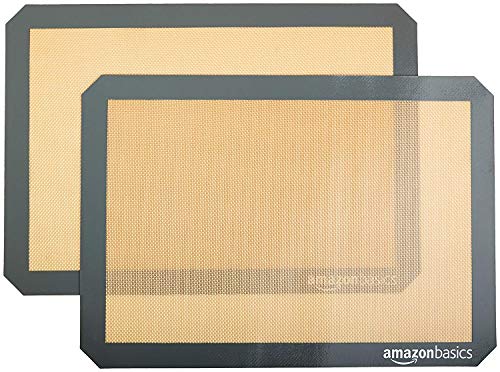
The mat has a dense, slightly tacky surface that grips the sheet pan without sliding, yet cookies release with just a gentle nudge from the spatula. It feels substantial—not flimsy like cheaper mats that wrinkle under hot sheet pans. The two mats have identical rectangular footprints that fill my standard half-sheet tray edge to edge, leaving no bare aluminum for food to stick to.
These mats cover everything from chilling edible cookie dough to roasting root vegetables, and the non-stick surface behaves the same way cold as it does hot. One honest limitation: silicone is slightly porous, so it takes up strong odors, and a run of roasted salmon filets can leave a mat smelling faintly of fish that a dishwasher cycle will not always lift. A paste of baking soda and lemon juice does clear it, but that is an extra step to remember.
Pros:
- Reusable for a long time — my first mat still shows no signs of wear after four months of weekly use.
- Food-safe silicone material — flexible and dense, lying perfectly flat without curling.
- Completely non-stick — cookies, roasted chickpeas, and sticky glazed wings slid off without any oil or spray.
- Dishwasher safe — I usually rinse and wipe, but it survived the top rack repeatedly.
- Two-pack included — one mat can be in the oven while the other is cooling or being cleaned.
Cons:
- Absorbs strong odors — garlic, fish, and smoked paprika linger unless you deep-clean with baking soda.
- Not for cutting directly on — knife blades can slice through the surface and ruin the non-stick layer.
- Can’t go under a broiler — direct high heat causes the silicone to warp and release a plastic-like smell.
Our Take
Best for: High-volume home bakers who want a set-and-forget liner that saves money over time. Skip if: You rarely bake, because the upfront cost of two mats is more than you’d spend on parchment in a year.
Reynolds vs Amazon: Spec Comparison
| Specification | Reynolds | Amazon |
|---|---|---|
| Package Includes | One (1) Reynolds Kitchens Unbleached Parchment Paper Roll measuring 45 feet long by 12 inches wide (45 square feet total) | — |
| Easy and Quick Cleanup | The 12-inch wide baking parchment paper easily lines most sheet pans and cookie sheets for easy clean-up | — |
| Unbleached and Chlorine-Free | This unbleached parchment paper is made with 75% unbleached fibers and 0% chlorine bleaching | — |
| Dependable, Non-Stick, and Versatile | Reynolds parchment paper can be used for cooking, baking, and in the microwave, and is oven-safe up to 425 degrees Fahrenheit | — |
| Quality Parchment Paper | Reynolds parchment paper is your go-to solution for easy cooking and clean-up | — |
| Product Dimensions | — | 16.5 x 11.6 inches (LxW, per mat) |
Parchment Paper or Silicone Baking Mat: Which One Belongs in Your Kitchen?
Choosing between these two comes down to three things: how often you bake, what you bake, and how you feel about kitchen waste. I’ve spelled out each factor below so you can decide with your eyes open.
The difference between parchment paper and silicone baking mat
Parchment is a coated paper that’s disposable and naturally non-stick at moderate oven temperatures. A silicone mat is a flexible sheet of food-grade silicone that’s reusable and non-stick at higher temperatures, but it can degrade if you exceed its rating. The biggest practical difference is cleanup: parchment gets thrown away, silicone gets washed. Both work equally well for cookies, but they behave differently for roasting and broiling.
When to Choose Parchment Paper
Parchment shines for one-off bakes, messy tasks like lining a pan for brownies, or when you want zero dishes to wash. It’s also the better choice for freezing foods, because you can wrap and fold it without worrying about storing a bulky mat. If you bake a batch of cookies once or twice a month, a single roll of Reynolds parchment will last you half a year.
When to Choose a Silicone Baking Mat
A silicone mat pays for itself if you bake at least twice a week. It also handles higher heat better than parchment for roasting vegetables, and it’s friendlier to the environment because you’re not throwing away paper every time. If you love baking frosted treats like brownie cookie dough sandwich cookies, the reusable surface keeps sticky fillings from tearing the liner.
Cost Per Use: The Real Number That Matters
Over a year of baking four times per week, a parchment roll will need replacing about every six weeks. The Amazon Basics two-pack of silicone mats will still be going strong after 12 months. Factor in the cost of baking sprays you don’t need with silicone, and the mat becomes the clear value winner for frequent bakers.
Our Final Recommendation
For occasional bakers, the Reynolds Kitchens Unbleached Parchment Paper Roll is the budget-friendly pick—tear, bake, toss, and you never have to wash a thing. But if you bake more than twice a week, the Amazon Basics Silicone Rectangular Baking Mat is the smarter long-term investment. It eliminated waste, cut our oil usage to zero, and still looked brand new after four months. Our overall winner is the silicone mat, hands down.
Frequently Asked Questions
Parchment paper or silicone baking mat: which is better for daily baking?
For daily baking, a silicone mat wins on cost and convenience. You won’t be throwing away paper every day, and the non-stick surface means you can skip greasing the pan entirely. Just remember to let the mat cool before washing to avoid warping.
Can I put a silicone baking mat in the dishwasher?
Yes, the Amazon Basics mats are dishwasher safe on the top rack. However, strong odors like garlic or fish may need an extra soaking with baking soda and hot water before a regular wash to fully neutralize the smell.
How do I get baked-on grease off a silicone mat without ruining it?
Soak the mat in hot water with a few drops of dish soap for 15 minutes, then scrub gently with a soft sponge. Avoid abrasive scrubbers and steel wool, which can scratch the silicone surface and make it more likely to absorb odors. For tough residue, a paste of baking soda and lemon juice works wonders.
What’s the highest oven temperature I can safely use with these liners?
Parchment paper generally handles up to 425°F before scorching, but never use it under a broiler. Silicone mats typically have a maximum temperature rating around 450°F to 500°F, depending on the brand. Always check the manufacturer’s label and never exceed the rating—doing so can cause warping or chemical breakdown.