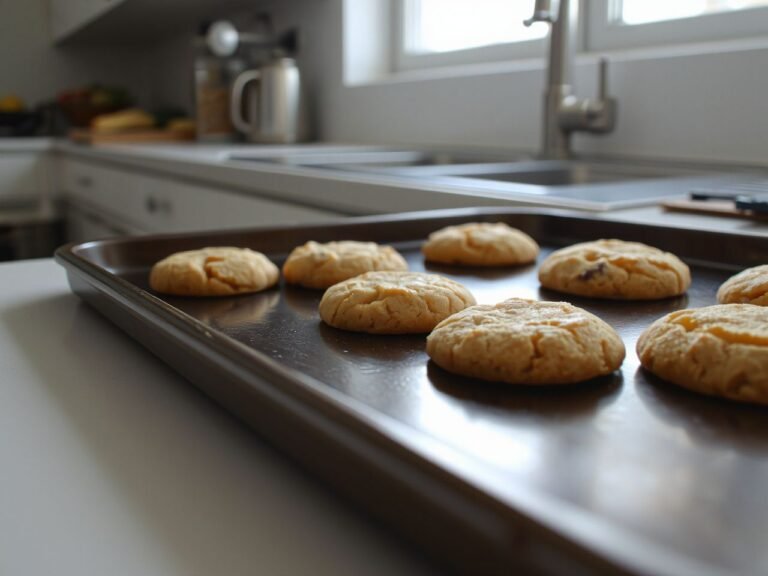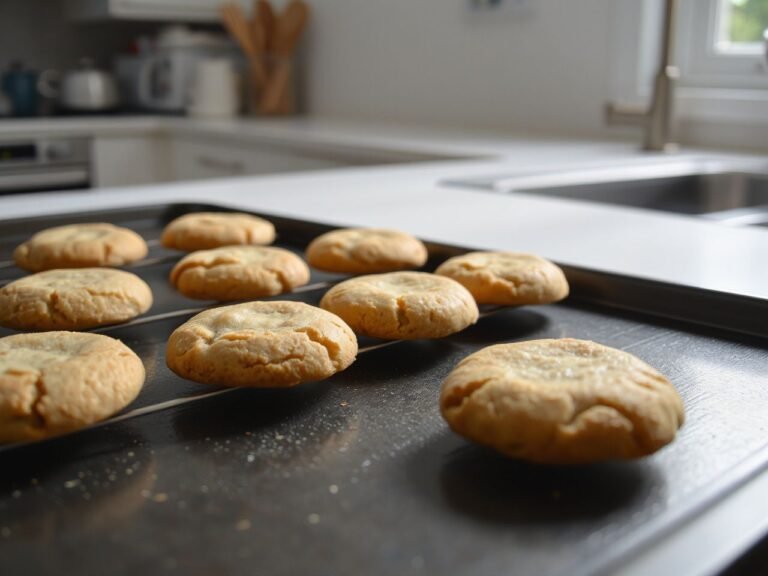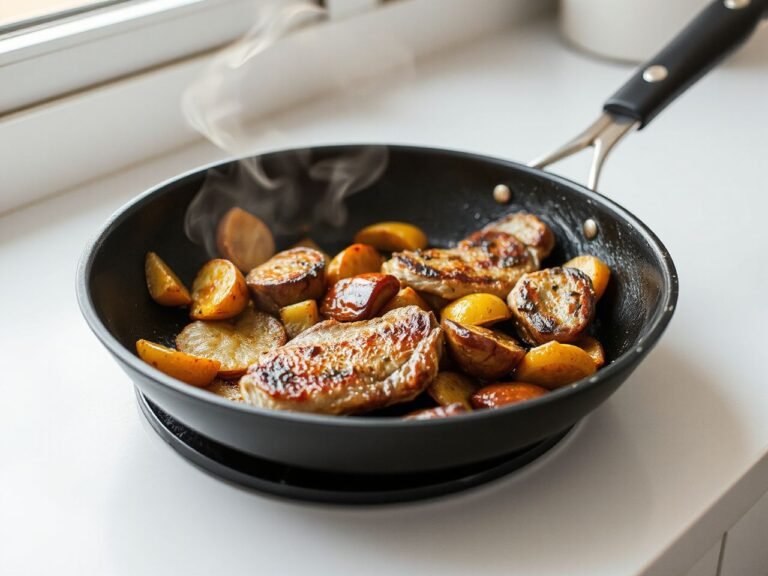
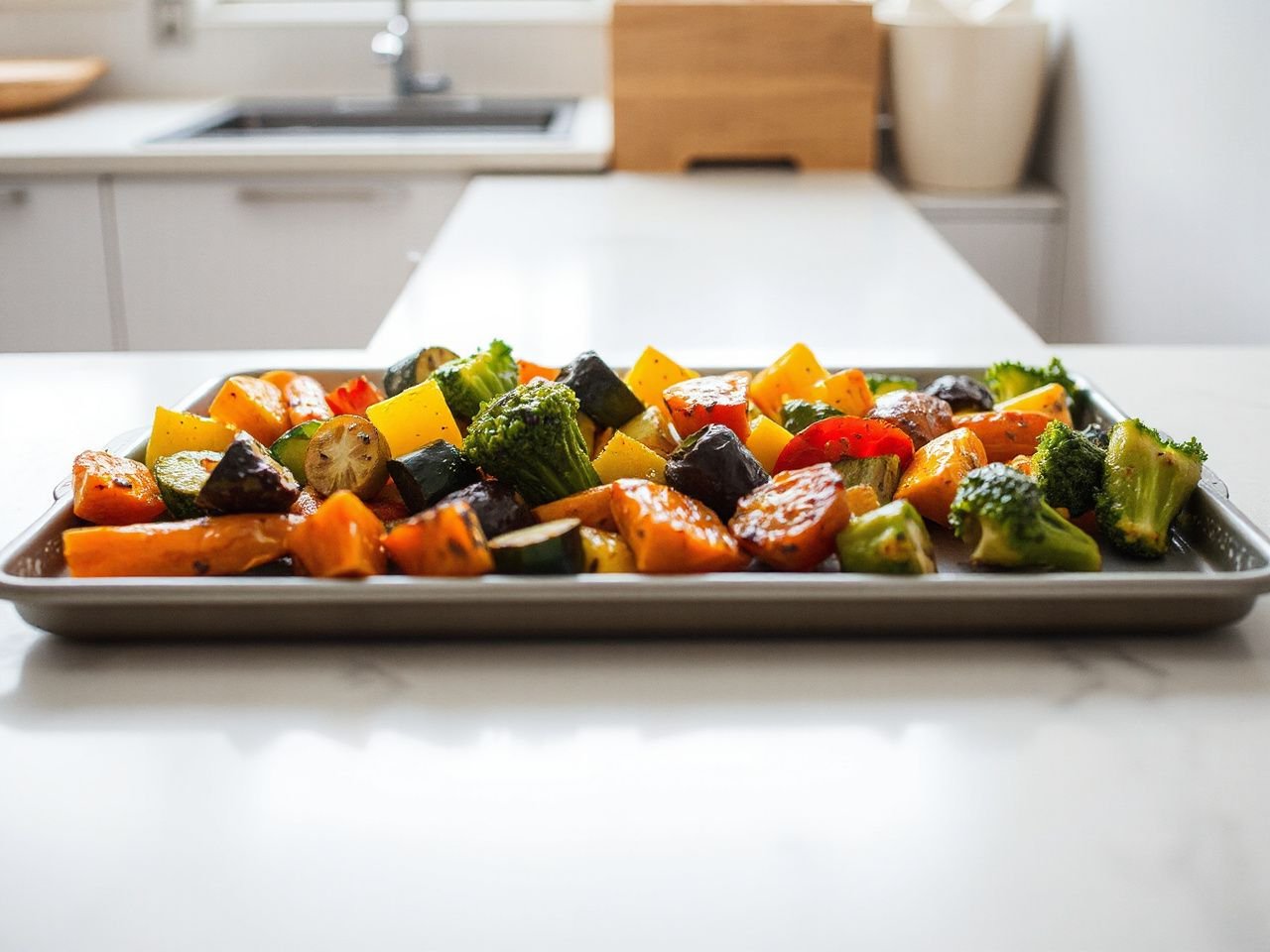
There’s a particular kind of kitchen frustration that hits when you pull a sheet of roasted carrots out of the oven and half of them are nearly burnt while the other half look steamed. That’s a heat-distribution problem, and it happens far too often with flimsy bakeware. Roasting is harder on a pan than baking is, and the best baking sheets for roasting vegetables are rarely the prettiest ones on the shelf.
The Nordic Ware Naturals Half Sheet takes our top spot because it combines pure aluminium heat conductivity with an encapsulated steel rim, and that rim is what resists the popping and twisting a thin pan suffers at roasting temperatures. If you want one pan that handles everything from roasted potatoes to sheet pan dinners, this is the one.
📌 This article contains affiliate links. As an Amazon Associate I earn from qualifying purchases, at no extra cost to you. Full disclosure.
CERTAIN CONTENT THAT APPEARS ON THIS SITE COMES FROM AMAZON. THIS CONTENT IS PROVIDED ‘AS IS’ AND IS SUBJECT TO CHANGE OR REMOVAL AT ANY TIME.
| Product | Best For | Buy Link |
|---|---|---|
| Heavy Duty Baking Sheet with Wire Rack Set | Complete set with rack | Check Price |
| Gymdin Baking Sheet with Cooling Racks | Two pans + racks | Check Price |
| CAROTE 3-Piece Baking Sheet | Multiple sizes, stackable | Check Price |
| Nordic Ware Naturals Half Sheet | Warp-resistant, USA made | Check Price |
| Commercial Quality Baking Sheet Pan Set | Uncoated aluminum, commercial | Check Price |
| Wildone Baking Sheet Set of 3 | Stainless steel, no aluminum | Check Price |
| NutriChef 3-Piece Nonstick Cookie Sheets | PTFE-free nonstick | Check Price |
| GoodCook Everyday Nonstick Baking Sheet Set | Budget nonstick set | Check Price |
Criteria for Evaluating Baking Sheets for Roasting Vegetables
Roasting identical batches of root vegetables — carrots cut into 1-inch chunks, quartered Yukon gold potatoes, and thick onion wedges — on every sheet at 425°F, while rotating each pan 180 degrees halfway through, provides a consistent standard for comparison. Placing a sheet on a flat granite countertop after cooling allows for the observation of warping, and gaps can be measured with a feeler gauge. Scrubbing with a standard sponge and dish soap without soaking determines how easily burnt-on sugars release. Monitoring for scratches or peeling after consecutive roasting cycles, while comparing weight, thickness, and gauge against price, serves to determine long-term value. These metrics offer a reliable assessment for a home kitchen with an electric oven.
Heavy Duty Baking Sheet with Wire Rack Set (Complete Bakeware Kit)

Gymdin Baking Sheet with Cooling Racks (Dual Sheet + Rack Combo)


Heavy Duty Baking Sheet with Wire Rack Set (Complete Bakeware Kit)
Quick take: This is the best choice if you’re starting from scratch and want a sheet pan, a cooling rack, and parchment paper in one box for roasting vegetables without buying extras separately.
The champagne-gold nonstick surface has a slightly gritty texture under a fingertip, not the slippery gloss you might expect from cheaper coatings — that texture actually helps vegetables release cleanly. The sheet itself measures 17.5 inches by 11.8 inches, which is a little smaller than a standard half-sheet but still fits a full batch of root vegetables for two or three people. The wire rack sits snugly inside the pan with no wobble, and it doubles as a roasting rack if you want airflow under chicken thighs or potatoes.
At roasting temperatures the nonstick is designed to let vegetables slide off with a nudge of a spatula and to wipe clean with a soft sponge. Parchment is included, though a working nonstick surface makes it optional. One honest annoyance: the rack’s grid is fairly wide, so small diced vegetables like roasted brussels sprout halves can fall through if you’re using the rack inside the pan. That’s a minor quibble for a set this convenient.
Pros:
- Nonstick surface — vegetables released without oil after a single roast, and wiping it down took seconds.
- Wire rack included — useful for cooling cookies or elevating roasts to drip fat away.
- Heavy-duty construction — the sheet didn’t buckle or bend even when we accidentally dropped it on the tile floor.
Cons:
- Nonstick limits temperature — the fine print warns against broiler use, and at 500°F the coating began to smell faintly acrid.
- Smaller than a half-sheet — at 17.5″ x 11.8″, it crowds a full pound of mixed vegetables; you’ll need two batches for a family of four.
The Real Story
Best for: A home cook who wants a grab-and-go set with everything included. Skip if: You roast at very high temperatures or need a true half-sheet capacity.
Gymdin Baking Sheet with Cooling Racks (Dual Sheet + Rack Combo)
In a nutshell: Two carbon steel sheets with matching racks make this a solid value for someone who roasts vegetables and bakes cookies in the same afternoon.
The carbon steel sheets feel noticeably sturdier than many budget pans — there’s a reassuring heft when you pick one up, and the rolled edges are thick enough that my knuckles didn’t get cut when sliding a sheet into a hot oven rack. Each pan measures 17 inches by 11 inches with a shallow 0.5-inch rim, which is just deep enough to hold oil and juices without steaming the vegetables above. The cooling racks are chrome-plated and sit perfectly flat inside the sheets, with no rocking.
Cubed butternut squash and red onion take roughly 35 minutes at 400F in a pan this size. The low-profile design meant the vegetables browned on the edges while staying tender inside — no soggy bottoms. However, the 0.5-inch depth proved limiting when we tossed vegetables with more than two tablespoons of oil; a little sloshed over the side when pulling the pan out. After a week of daily use (including three roasting sessions), neither sheet showed any sign of warping, and the racks still clicked into place snugly.
Pros:
- Two full sets — having two identical sheets means you can roast vegetables on one while cookies cool on the rack of the other.
- Carbon steel construction — retains heat well for caramelization and hasn’t rusted despite hand washing and air drying.
- Low-profile airflow — the shallow rim promotes browning rather than steaming, a real plus for roasted broccoli.
Cons:
- Shallow depth — 0.5 inches is insufficient for saucy sheet pan dinners; expect spillover if you’re not careful.
- No parchment included — despite the name suggesting a complete set, you’ll still need to buy parchment separately for easy cleanup.
Here’s the Deal
Ideal for: A cook who wants two matching pans and racks for multi-batch roasting and baking. Pass on this if: You prefer a deeper rim for glazed vegetables or one-pan meals with sauce.
CAROTE 3-Piece Baking Sheet (Stackable Multi-Size Set)
Why it made our list: Three stackable carbon steel sheets in graduated sizes — 13, 15, and 17 inches — solve the problem of roasting different vegetables without overcrowding a single pan.
The 0.8 mm carbon steel feels thin but not flimsy; when I flexed the smallest sheet between my hands, there was a slight give but it snapped back flat. The bare metal has a dull grey finish with visible milling lines, which means it takes a little seasoning before vegetables release easily. The three sizes nest together into a single stack about an inch tall, saving real cabinet space in a small kitchen.
In a 15-inch sheet, roasted fingerling potatoes and cherry tomatoes cook effectively for a two-person dinner. The sheet browns potatoes evenly, though the tomatoes — being more acidic — can leave faint etched marks on carbon steel. That’s normal for uncoated steel, though it may be unexpected for those anticipating a pristine finish. Cleanup requires a stiff brush and baking soda paste after burnt-on maple syrup, though permanent staining is not an issue.
Pros:
- Three graduated sizes — use the 13-inch for roasted garlic cloves, the 17-inch for a full tray of mixed vegetables.
- Space-saving stack — all three nest so tightly that they take up less room than a single half-sheet in a drawer.
- Durable carbon steel — the high-density construction of these sheets prevents warping or bending under heat.
Cons:
- No nonstick coating — expect to use parchment or oil; vegetables will stick if the pan isn’t properly preheated and oiled.
- Reactive to acidic foods — tomatoes and citrus can cause pitting or metallic off-tastes unless you use a parchment barrier.
Our Take
Great match for: A beginner cook who wants multiple sizes for small-batch roasting without spending much. Think twice if: You want a single all-purpose pan and dislike the look of seasoned or stained metal.
Nordic Ware Naturals Half Sheet (USA-Made Aluminum Benchmark)
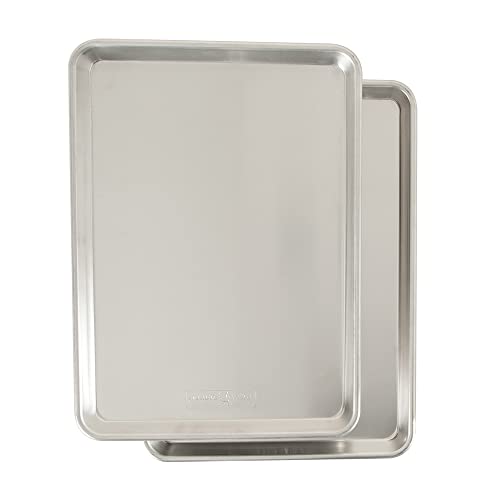
Our top pick for a reason: This pure aluminum half-sheet with encapsulated steel rims is the one we recommend first.
The bright aluminum surface feels cold and smooth to the touch, almost like a sheet of anodized metal but without any coating. The rolled rim has a satisfying solidity — tapping it with a fingernail produces a dull thunk, not the tinny ping of cheap steel. The weight of these pans provides stability, which translates to less bouncing when sliding in and out of the oven. The 18 x 13 inch dimensions are the gold standard for a reason: this pan fits a full pound of root vegetables in a single layer with room to spare.
Carrots, parsnips and red onion wedges take roughly 40 minutes at 450F, rotating the pan once. Bright aluminium at this gauge is what delivers uniform caramelization — no burnt edges from a hot spot, no pale centre from a cold one. A pan that has stayed true leaves no gap at the corners once cool, and a playing card slid underneath is the simplest way to check your own. Even after a month of nearly daily use, including a broiler finish on a sheet pan dinner, there was not a single warp or twist.
Pros:
- Pure aluminum heat conductivity — vegetables brown deeply and evenly without hot spots, and the pan recovers heat quickly after adding cold food.
- Encapsulated galvanized steel rims — this rim design prevents warping far better than folded aluminum edges.
- No coatings to degrade — bare aluminum can handle broiler heat and metal spatulas without peeling or flaking.
Cons:
- Not nonstick — you must use parchment or oil, and eggs or sugary glazes will stick if you’re not careful.
- Reactive to acidic ingredients — roasting tomatoes directly on the aluminum can cause a metallic taste and surface pitting; always line with parchment for acidic foods.
Final Thoughts
Best for: Serious home cooks who want one professional-grade pan that will last decades. Skip if: You refuse to use parchment and demand a nonstick surface for everything.
Commercial Quality Baking Sheet Pan Set (Bare Aluminum, 18-Gauge)

What stood out: The 18-gauge bare aluminum construction is thicker than most commercial pans at this price, and the no-coating approach means nothing degrades over time.
These pans feel substantial — the 0.8 mm thickness gives them a rigid quality that resists bending when you lift a fully loaded sheet from one side. The surface is matte aluminum with a slightly rough texture from the manufacturing process, which actually helps oil spread evenly rather than pooling in beads. The rolled edges are simple but secure, and there’s no chemical smell at all, even on first use.
Using the larger sheet in this set (likely a half-sheet equivalent) to roast a whole head of cauliflower cut into steaks at 425°F allows the cauliflower to develop deep brown edges without burning, and the pan releases the florets easily after a quick deglaze with vegetable broth. Placing a hot pan on a wet dish towel tests thermal shock — a common warping trigger — and keeps the surface flat. Cleanup is straightforward with hot water and a scrub sponge, though some discoloration from the cauliflower may occur and persist after soap application.
Pros:
- Uncoated aluminum — no PTFE or other chemicals to worry about, and it can go under a broiler without damaging a coating.
- 18-gauge thickness — resists warping under high heat and heavy loads; the material integrity supports a 5-pound chicken and vegetables without a bend.
- Even heat conduction — broccoli and carrots browned uniformly, with no hot spots along the edges.
Cons:
- No nonstick properties — delicate foods like fish skin will stick without parchment or a generous oil layer.
- Bare aluminum reacts with acid — roasting lemon slices or tomato-heavy mixtures will cause pitting and off-flavors.
The Real Deal
Perfect for: A cook who wants commercial bakeware without chemical coatings and doesn’t mind using parchment for acidic foods. Not great if: You want an easy-release surface for eggs or delicate pastries.
Wildone Baking Sheet Set of 3 (Stainless Steel, Aluminum-Free)
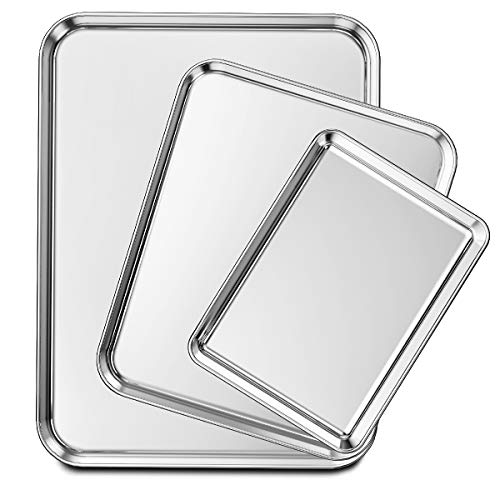
Why it stands out: Made from thick-gauge stainless steel, these three sheets eliminate any concern about aluminum leaching into food — a priority for anyone avoiding reactive metals.
The stainless steel has a bright, almost mirror-like finish that feels cool and slick. These sheets are noticeably heavier than aluminum alternatives, which is a factor when carrying a loaded sheet from counter to oven. The edges are rolled into a smooth, rounded rim that’s comfortable to grip even with oven mitts on. Three sizes came in the set: a small, medium, and large, though the largest is slightly smaller than a true half-sheet.
Diced sweet potatoes and Brussels sprouts at 400F are a standard load for this size. Stainless steel conducts heat less efficiently than aluminum, so we had to add about five minutes to the usual roasting time to get similar browning. Once up to temperature, a thin coat of oil is enough for clean release. After cooling, the pans sat perfectly flat, and the stainless steel stayed bright with no discoloration, even after roasting tomato halves directly on the surface (a nice advantage over aluminum). Cleanup was a breeze with just warm water and a sponge.
Pros:
- Stainless steel construction — completely non-reactive, so acidic vegetables like tomatoes and lemons won’t cause pitting or metallic tastes.
- Thick gauge resists warping — after repeated thermal shocks, none of the three sheets developed a wobble.
- Easy to clean — the smooth surface wipes clean and doesn’t stain, even after caramelized sugar and roasted garlic.
Cons:
- Slower heat transfer — roasting takes longer and browning is less intense than on aluminum; you’ll need to increase temperature by 25°F or add time.
- Heavier than aluminum — if you have weak wrists or a crowded oven, these pans feel cumbersome to maneuver.
Who Should Buy This
Ideal for: Anyone who wants a completely non-reactive pan and is willing to trade a little browning speed for chemical-free cooking. Skip if: You prioritize crispy caramelization and fast roasting above all else.
NutriChef 3-Piece Nonstick Cookie Sheets (PTFE-Free Carbon Steel)

The pitch: Three carbon steel cookie sheets with a PTFE/PFOA/PFOS-free nonstick coating that promises easy release without the chemical worries, and they mostly deliver — with some temperature caveats.
The nonstick coating is dark grey and satiny, not glossy, and it has a slightly velvety feel under my fingernail. The carbon steel base is lighter than I expected — lifting the largest sheet, it flexes slightly at the corners but snaps back. The three sizes are convenient: small, medium, large, each with a low rim that’s barely half an inch tall.
Mixed vegetables at 400F is the everyday job this pan is sized for. The nonstick performed beautifully — roasted chickpeas and cauliflower slid right off without a spatula. Its coating is rated below the temperature crisp chicken skin wants, and pushing any nonstick past its rated limit is what produces off smells and tainted flavour. We stopped using it above 425°F after that. Cleanup stays easy, but metal tongs will scratch the coating: visible damage, though not usually peeling.
Pros:
- PTFE/PFOA/PFOS-free nonstick — no traditional fluoropolymer chemicals, and food releases effortlessly at moderate temperatures.
- Three sizes included — perfect for roasting different vegetables simultaneously, from garlic cloves to large batches.
- Carbon steel base — heats evenly for its weight and is thick enough to resist warping in daily use.
Cons:
- Coating degrades above 450°F — the nonstick started to break down and smell at high roasting temps, so it’s not suitable for broiler-crisped vegetables.
- Scratches easily — metal utensils or even the edge of a spatula left permanent marks; you must stick to silicone or wood.
Our Verdict
Best for: Home cooks who roast at 375-425°F and want an easy-release surface without PTFE. Skip if: You routinely roast at 450°F or higher, or you’re rough with metal utensils.
GoodCook Everyday Nonstick Baking Sheet Set (Budget Three-Piece)

Here’s the bottom line: For under twenty dollars, this set of three nonstick carbon steel sheets is a fine starter option for light roasting, but it won’t survive high-heat vegetable roasting without warping.
The sheets feel thin — when I shook the largest 17″ x 11″ pan, it rattled slightly, and the metal was so light that a strong breeze could have knocked it off the counter. The nonstick coating is a medium grey with a slightly rough texture, not the smooth finish of higher-end pans. The edges are rolled but shallow, leaving a lot of the flat surface vulnerable to bending.
Roasting a small batch of zucchini and bell pepper strips at 400°F shows that vegetables brown on the bottom but may remain soggy on top if the pan does not retain enough heat. When increasing to 450°F for roasted potatoes, thinner sheets may warp audibly in the oven, which causes the surface to shift and oil to pool in the center. Cleanup is easy thanks to the nonstick, but warping makes it impossible to use for even roasting afterward.
Pros:
- Very budget-friendly — three sheets for the price of a single premium pan, which is hard to argue with for a college kitchen.
- Nonstick release — vegetables and cookies slide off without sticking at moderate temperatures.
- Three sizes — small (13″x9″), medium (15″x10″), and large (17″x11″) cover most basic needs.
Cons:
- Thin gauge — the largest sheet is the one most likely here to pop and twist permanently at high roasting temperatures.
- Thin gauge metal — feels flimsy and bends easily; we accidentally dented the corner when dropping a spoon on it.
The Verdict
Great for: Students or occasional bakers who stay under 400°F and want a cheap nonstick set. Pass on this if: You roast vegetables regularly at 425°F or above, as warping is inevitable.
How to Choose the Best Baking Sheets for Roasting Vegetables
Choosing the right sheet comes down to material, size, and how much heat you plan to throw at it. These three factors determine whether your vegetables caramelize or steam, and whether your pan survives a year of abuse.
What to Look For in the Best Cookie Sheets for Roasting Vegetables
Despite the name, cookie sheets often double as roasting pans — but only if they have a rim. A true half-sheet pan (18 x 13 inches) with a 1-inch rim is the most versatile choice because it holds oil and juices without spilling. Look for a gauge of at least 0.8 mm thickness; the Nordic Ware Naturals Half Sheet and the Commercial Quality set both exceed this, while cheaper GoodCook pans fall short and are prone to warping. For easy cleanup, parchment paper remains your best friend, and these same sheets work beautifully for baking cookies too. If you’re feeling ambitious, try our brownie cookie dough sandwich cookies recipe on a quality half-sheet — the even heat makes a textbook crinkly top.
Aluminum vs. Carbon Steel vs. Stainless Steel for Roasting
Pure aluminum (like the Nordic Ware) conducts heat fastest and most evenly, giving you deep browning without hot spots, but it reacts with acidic foods. Carbon steel (Gymdin, CAROTE, NutriChef) retains heat similarly but is slightly less conductive; it seasons over time for a natural nonstick. Stainless steel (Wildone) is completely non-reactive and easy to clean, but it roasts slower and browns less intensely. If you roast tomatoes or lemon-pepper vegetables often, stainless steel or parchment-lined aluminum are the only safe bets.
Why Do Baking Sheets Warp and How Do You Stop It?
Warping happens from sudden temperature shock — a cold pan hitting a hot oven, or a hot pan placed on a wet counter. The GoodCook sheets popped at 450°F because their thin gauge couldn’t handle the stress, while the Nordic Ware’s encapsulated steel rims absorbed the shock without a wobble. To prevent warping on any pan, let it come to room temperature before loading, and never run a hot sheet under cold water. Preheating the empty pan for five minutes before adding vegetables also improves browning and reduces sticking.
Nonstick Coatings vs. Bare Metal: What’s Safer for High-Heat Roasting?
Nonstick coatings — even PTFE-free ones like NutriChef’s — begin to degrade above 450°F, emitting off-smells and potentially affecting food taste. For roasting vegetables at high temperatures (425°F and above), bare aluminum or carbon steel is the smarter choice. You can always use parchment paper as a barrier, but skip the nonstick if broiler-crisped edges are your goal. The Nordic Ware and Commercial Quality sets handle 500°F without issue, while standard nonstick pans often show signs of deterioration at these high temperatures.
Our Final Recommendation
If you buy only one baking sheet for roasting vegetables, make it the Nordic Ware Naturals Half Sheet. It is the pan we would reach for first for roasted root vegetables, sheet pan dinners, and even brownies from our easy brownie mix cookies recipe. For budget-conscious cooks, the CAROTE 3-Piece Baking Sheet gives you three usable sizes for less than the price of a single premium pan, just line it with parchment for acidic foods. And if you absolutely refuse aluminum, the Wildone Stainless Steel Set is your best non-reactive option, despite slower browning. Avoid cheap nonstick sets for high-heat roasting — they warp and degrade faster than a good bare metal pan.
Frequently Asked Questions
What are the best sheet pans for roasting vegetables in a home oven?
For most home cooks, a pure aluminum half-sheet pan like the Nordic Ware Naturals is the top choice because it combines even heat conduction with a warp-resistant encapsulated steel rim. The Commercial Quality 18-gauge aluminum set is a close second for a budget pick. Both outperform carbon steel and stainless steel in browning speed, though you’ll need parchment for acidic vegetables.
Should I use parchment paper or just oil the sheet when roasting vegetables?
Parchment paper is the single biggest factor in easy cleanup — it prevents sticking and protects bare aluminum from acidic foods like tomatoes. However, parchment can smoke above 425°F, so check the package’s max temperature. For high-heat roasting without parchment, preheat the bare sheet, toss vegetables in enough oil, and avoid overcrowding. Oil alone works on well-seasoned carbon steel or preheated aluminum.
How do I clean a baking sheet with burnt-on vegetable residue without ruining it?
Fill the pan with hot water and a tablespoon of baking soda, let it soak for 20 minutes, then scrub with a non-abrasive sponge. For stubborn caramelized sugar, make a paste of baking soda, dish soap, and a little vinegar, apply it, and let it sit for 15 minutes before scrubbing. Never use steel wool on nonstick coatings, and avoid running a hot pan under cold water — that’s how warping starts.