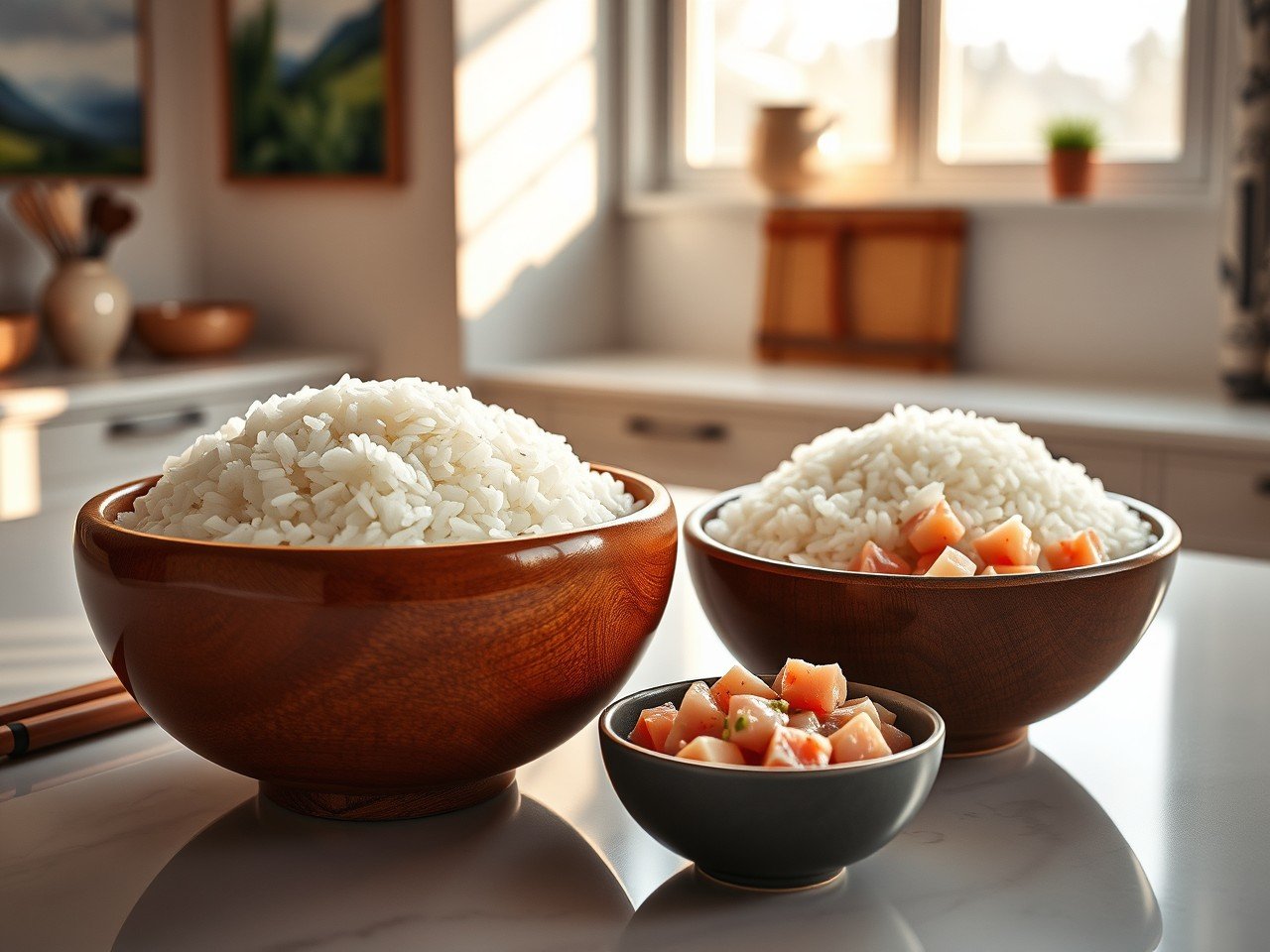
Short-grain or medium-grain japonica rice, cooked soft and served slightly warm, is the best pick for a poke bowl. Get the grain wrong, or pour piping-hot rice under raw fish, and the bowl falls apart into loose grains or starts cooking the cube edges. When you’re weighing what rice is best for poke bowls, think in terms of stickiness and seasoning. Grain type decides whether the bowl holds together. Sushi vinegar only changes flavor, and it can clash with a soy-based marinade.
Temperature matters as much as variety. Slightly warm or room-temperature rice supports the texture of the fish. Piping hot rice turns the outside of raw cubes opaque, while cold rice from the refrigerator turns hard and dry. It’s a deliberate base, matched to the marinade and the fish, not neutral filler.
Key Takeaways
- Short-grain or medium-grain japonica (sushi rice, Calrose, Koshihikari) clings together under toppings; long-grain jasmine and basmati stay separate.
- Rinse until the water runs mostly clear to remove surface starch and avoid a gluey bowl.
- Seasoning is a choice: Hawaiian-style poke is often served over plain steamed white rice, while vinegared sushi rice is a common mainland adaptation.
- Serve the rice slightly warm or at room temperature, and cool leftovers promptly because cooked rice carries a food safety risk.
What Kind of Rice Do You Actually Use for a Poke Bowl?
Japanese-style short-grain rice, the kind sold as sushi rice, is the standard answer. Close behind is medium-grain japonica such as Calrose, which acts almost the same under toppings.
Both belong to the japonica family. Starch is the reason they work. Short-grain and medium-grain japonica rice has a higher share of amylopectin, the branching starch that turns sticky and soft when cooked. That stickiness lets a scoop of rice hold its shape and stay in contact with the fish instead of scattering across the bowl.
Is Sushi Rice the Same Thing as Regular Short-Grain Rice?
Not quite, really. Sushi rice is short-grain japonica. Its name usually points to a variety sold for that purpose, often a Japanese-grown type such as Koshihikari. The finished sushi preparation is also seasoned with vinegar, sugar and salt. Plain short-grain rice is the same grain family without the seasoning step.
The distinction is useful because grain and seasoning are separate decisions. A cook can buy sushi rice and serve it plain, or season ordinary short-grain rice with sushi vinegar. The bowl doesn’t care about the label. It cares about the starch.
Is Calrose a Good Choice, or Should You Look for Japanese-Grown Rice?
Calrose is a good choice. It’s a medium-grain japonica, so it cooks up soft and clingy, which is exactly what a poke base needs.
Japanese-grown short-grain varieties such as Koshihikari tend to be prized for texture and aroma. They’re worth choosing when the rice is meant to be tasted on its own, as in a lightly marinated bowl. When a bold shoyu and sesame marinade dominates the bowl, the gap between the two narrows considerably. The nature of the grain matters more than its country of origin.
Can You Use Jasmine or Basmati for Poke?
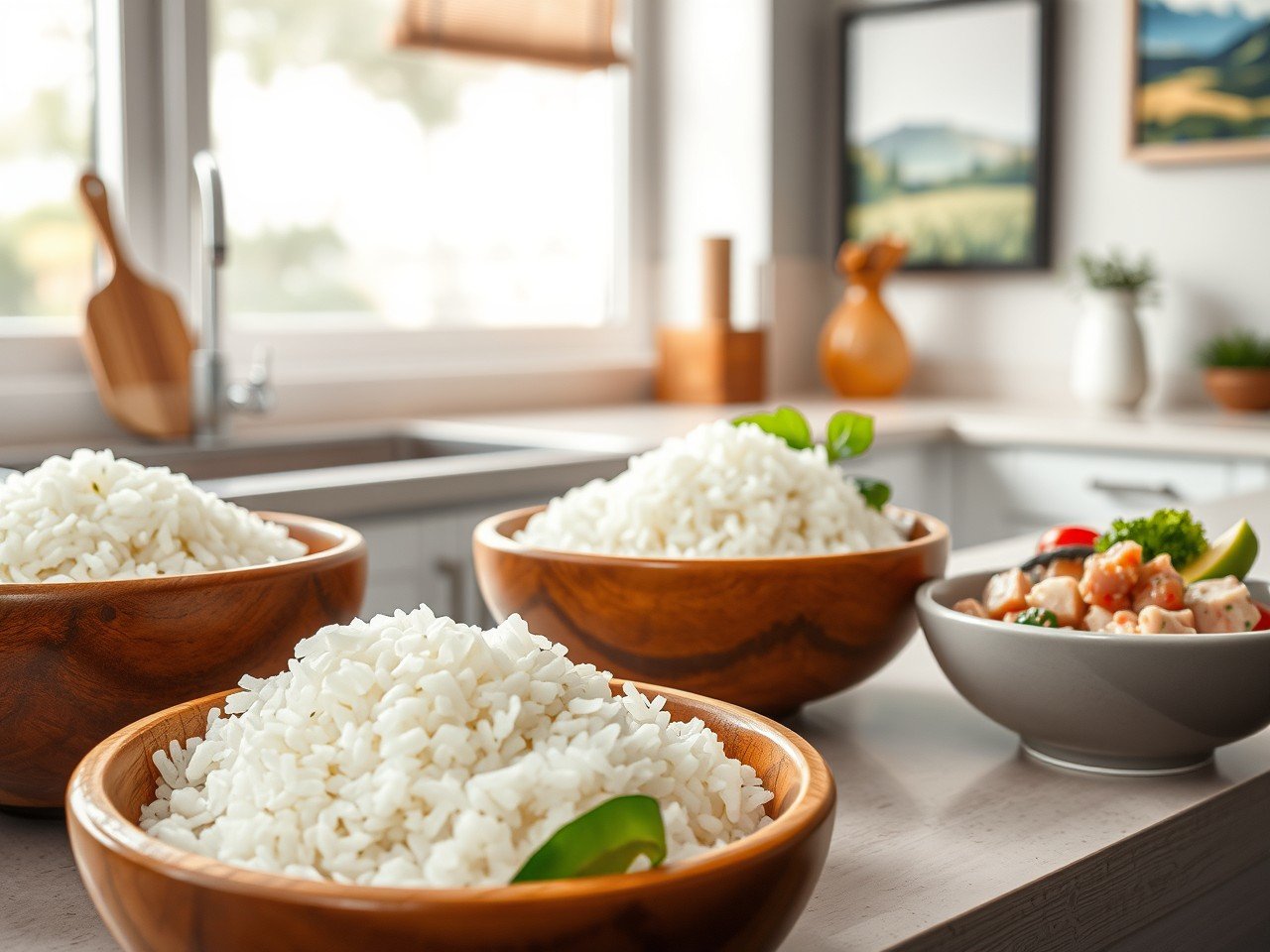
Jasmine and basmati can be used, but they act differently. Long-grain rice stays separate and fluffy. That means the bowl loses the cohesive, scoopable base poke usually has.
Long-grain varieties are lower in sticky amylopectin relative to their other starch, which is why the grains stay apart. Under cubed, marinated fish, that means grains slide around. The marinade pools at the bottom. Flavor can compete too. Jasmine and basmati carry a noticeable aroma that sits awkwardly beside delicate raw fish.
For anyone stuck with long-grain rice in the pantry, a slightly shorter cooking time helps. Pair it with a touch less water. The grains come out firmer and clump a little more. A short rest after cooking helps them settle. That’s a workaround, not an equal substitute.
A Quick Grain Comparison in Plain Terms
- Short-grain japonica (sushi rice): sticky, soft, holds together. The most dependable base.
- Medium-grain japonica (Calrose): slightly less sticky, still cohesive. A reliable everyday option.
- Long-grain (jasmine, basmati): separate, fluffy grains with their own aroma. Works, but the bowl does not hold together.
- Brown rice: chewier, nuttier, and its bran layer changes how it sits under fish.
White rice is made by removing the bran, husk and germ from whole-grain brown rice. That’s why it cooks softer and tastes milder. Its mildness is the reason it suits raw fish, because the base stays out of the way.
Do You Need to Season Poke Rice with Sushi Vinegar?
No. Seasoning poke rice with sushi vinegar is optional. That’s because traditional Hawaiian poke is often served over plain steamed white rice. Vinegared sushi rice is a common mainland adaptation.
Sushi vinegar is a mix of rice vinegar, sugar and salt. It adds sweetness and acidity. That can be pleasant with a mild, lightly dressed fish. With a soy-based poke marinade that is already salty and savory, the vinegar adds a second layer of seasoning. It can clash or tip the bowl toward sour.
When Plain Rice Is the Better Call
Plain steamed rice is the better call whenever the marinade is assertive. Shoyu, sesame oil and onion marinades carry plenty of salt and depth. The rice only needs to be a neutral, soft base that soaks up the juices.
When Seasoned Rice Earns Its Place
Seasoned rice earns its place with lighter dressings, such as citrus, a little salt and oil, or a creamy sauce. In those cases, the rice supplies the acidity and sweetness the marinade leaves out. A hangiri is the wide wooden tub used for sushi rice. It helps cool and season the rice evenly. A wide shallow bowl does the same job at home.
Warm or Cooled: What Temperature Should Poke Rice Be?
Poke rice should be slightly warm or at room temperature when assembled. That’s the range that keeps the fish firm and the rice soft.
Piping hot rice starts to cook the edges of raw cubes. It turns the surface opaque and changes the texture the bowl depends on. Cold rice straight from the fridge goes hard and dry, because the starch firms up as it chills. The grains lose the softness that made them cling.
How to Reach the Right Temperature
- Cook the rice and let it rest, covered, so the steam finishes the grains.
- Spread it in a wide, shallow container to release steam quickly.
- Fold gently with a flat paddle or spatula, without mashing, until it stops steaming.
- Assemble when the rice is comfortable to touch and no longer hot.
Cooling it in a thin layer matters for safety as well as texture, as the next section explains.
Food Safety: Cooked Rice and Raw Fish
Cooked rice left at room temperature can be a food safety risk because of Bacillus cereus. It’s a bacterium whose spores survive cooking and can multiply in rice that sits out. That matters more in a dish served beside raw fish, where there’s no final cooking step to fall back on.
The practical rule is to cool the rice promptly, refrigerate leftovers promptly, and not hold it at room temperature for long. Skip the rule of thumb and check the guidance from a food-safety authority such as the U.S. Food and Drug Administration for exact time and temperature limits. The same applies to the fish, though sushi-grade handling and cold storage are separate questions from the rice.
How Do You Rinse and Cook the Rice Properly?
Rinse the rice in cool water until the water runs mostly clear, because that removes the loose surface starch that turns a bowl gluey.
Rinsing Step by Step
- Place the rice in a bowl or the cooker’s inner pot and cover with cool water.
- Swirl briefly with your hand, then pour off the cloudy water.
- Repeat until the water looks only faintly milky.
- Drain well, so the rice does not carry extra water into the pot.
Rinsing is the main defense against clumpy, paste-like rice. A rice cooker handles the rest consistently, since it measures the heat and shuts off at the right point. The stovetop works with a tight lid and low heat. Use the water ratio given on the rice package or in the cooker’s manual, since the amount varies by grain and by cooker.
Why Is the Rice Mushy or Gluey?
Mushy or gluey rice usually has one of four causes:
- Too little rinsing, leaving surface starch that gelatinizes into paste.
- Too much water, which overhydrates the grains.
- Stirring while it cooks, which rubs starch off the grains.
- Heavy mixing after cooking, which breaks grains and smears starch. Fold, do not stir.
Cooked white rice is mostly water by weight. So a small change in the water ratio shows up quickly in the texture.
Is Brown Rice a Decent Option for Poke?
Brown rice is a legitimate option for poke, but it has a chewier texture and a nuttier flavor that can compete with delicate fish.
The bran that white rice loses is the part that adds chew and flavor. Short-grain brown rice still clumps reasonably well, so it holds a bowl together better than long-grain brown does. Bold marinades such as spicy mayo, shoyu and sesame, or fish with a stronger flavor, stand up to it, while a very mild white fish or a lightly dressed tuna can be overwhelmed.
A mix of half white and half brown is a common compromise, giving some of the whole-grain character with a softer bite.
Can You Make Poke Rice Ahead of Time?
Yes, but the rice needs careful handling. Cool it quickly and store it airtight in the refrigerator. Warm it gently before serving so it doesn’t go hard.
Refrigerated rice hardens. The starch firms up as it chills. A short stint in the microwave, covered, with a splash of water, brings back the softness. Then rest it so it drops to a slightly warm temperature. Reheated rice shouldn’t be hot when it meets the fish, so let it sit briefly before assembling.
For storage times and temperatures, follow guidance from a food-safety authority such as the FDA. Cooked rice falls under those rules. They’re written for exactly this kind of food.
How Do You Stop Rice from Getting Soggy Under Marinated Fish?
Drain the marinated fish before it goes on the rice. Assemble just before serving. Rice soaks up liquid, so excess marinade turns the layer under the fish to mush.
- Drain the fish briefly in a sieve or spoon it out with a slotted spoon.
- Keep sauce for the side and drizzle sparingly, so the rice is not flooded.
- Use slightly firmer rice, cooked with a little less water, if the bowl will sit for a while.
- Assemble late, because marinated fish and rice only get wetter the longer they sit together.
The teriyaki chicken poke bowl recipe suits a cooked-protein version where juices behave differently. It shows how a glazed topping sits over rice without going soggy. Another rice-base bowl with a saucy topping is the street corn chicken rice bowl, a useful comparison.
What Are Good Lower-Carb or Grain Alternatives?
Cauliflower rice, mixed greens and quinoa are the usual alternatives to rice for a poke bowl, and each changes the character of the dish.
- Cauliflower rice: low in carbohydrate, mild, and light. It does not hold together, so it works as a loose bed.
- Greens: crisp and fresh, which suits a salad-style bowl. Dress lightly, because wet greens wilt quickly.
- Quinoa: fluffy and slightly earthy, with a distinct texture that stays separate rather than clumping.
None of these provide the soft, sticky base that japonica rice does. They are choices for a different style of bowl rather than substitutes that behave the same way.
The Bottom Line
A soft, slightly clingy short-grain or medium-grain japonica rice, rinsed well and served around room temperature, gives a poke bowl its base. Whether it’s plain or vinegared should follow the marinade. Anything that isn’t short-grain trades cohesion for a different style of bowl. Careful cooling and storage keep the rice safe next to raw fish.
Frequently Asked Questions
What rice is best for poke bowls if I only have one option?
Short-grain japonica rice, sold as sushi rice, is the most dependable option. Its high amylopectin content makes it sticky enough to hold under toppings. Calrose, a medium-grain japonica, comes a close second. Both cook soft and cling together, which suits cubed, marinated fish far better than long-grain rice.
Can I use jasmine rice for poke bowls?
Yes, but the bowl behaves differently. Jasmine is a long-grain rice. Its grains stay separate and fluffy instead of clinging, so the marinade tends to pool at the bottom. The floral aroma can also compete with delicate fish. Cook it slightly firmer and let it rest if it’s the only option.
Should poke rice be hot or cold?
Slightly warm or room temperature is best. Piping hot rice starts to cook the edges of raw fish cubes and changes their texture. Fridge-cold rice turns hard and dry. Spread freshly cooked rice in a wide, shallow container and fold gently until the steam stops before you assemble.
Do I have to use sushi vinegar on poke rice?
No, traditional Hawaiian poke is often served over plain steamed white rice. Seasoned sushi rice is a mainland adaptation. Sushi vinegar, a blend of rice vinegar, sugar and salt, can clash with salty soy-based marinades. Use it when the fish is lightly dressed and the bowl needs acidity.
How do I keep poke rice from going hard in the fridge?
Cool it quick, store it airtight. Reheat it gently with a splash of water, covered, so the starch softens again. Let it come down to slightly warm before it meets the fish. Check a food-safety authority such as the FDA for storage limits on cooked rice.