Parchment paper guarantees release on flat surfaces and speeds cleanup. Grease, often with a flour or sugar dusting, releases the sides of a pan. It also fills textured detail where paper cannot conform. A cake that tears away from a bundt pan is the classic failure, with half its crust left behind. Parchment paper vs greasing a pan is a question of pan geometry and batter behavior. Either choice also changes browning and spread, so it belongs to the recipe, not just the nonstick step.
Key Takeaways
- Parchment suits flat surfaces such as sheet pans and the bottoms of cake pans; grease suits sides, corners, ridges and bundt detail.
- Parchment on the bottom does not release the sides of a cake pan, so the walls still need fat or a knife run around the edge.
- Parchment is not wax paper. Wax paper in an oven causes smoke and off flavors.
- The choice changes the bake: extra fat makes cookies spread and fry on the bottom, while parchment gives a more even, paler base.
What Does Each Method Actually Do?
Parchment and grease both keep batter from bonding to metal, but they work in different ways. Understanding the difference makes the choice almost automatic.
How parchment paper works
Parchment paper is a cellulose-based paper treated to resist heat, humidity and grease, and to be nonstick. Its nonstick quality comes from a coating of silicone, or from treatment with quilon, which is a chromium-based process. It acts as a physical barrier. The batter never touches the pan at all.
That barrier is only as good as its contact. Parchment lies flat against a flat surface, which is why it excels on a sheet pan or the floor of a cake pan. It can’t press into a fluted groove or a sharp seam.
How grease works
Butter, shortening and cooking spray coat the metal with a thin film of fat between batter and pan. That film follows every contour, so it reaches the details of a bundt pan or the corners of a loaf pan. Butter also has milk solids and water in it, so it browns differently than pure shortening.
A flour dusting over the fat adds a dry layer that helps batter let go. Sugar-heavy batters tend to caramelize and grip metal. They often release better when the dusting is sugar, or when the pan is lined instead.
Why baked goods stick in the first place
Sugar, protein and the pan surface are the three drivers. Sugar melts and glues itself to bare metal. Egg and dairy proteins set against the surface, and a worn or rough pan gives both something to grip. Anything that interrupts that contact solves the problem, which is the job of both liner and fat.
When Is Parchment Paper Better Than Greasing the Pan?
Parchment is the better choice on flat surfaces where release and cleanup matter most. It’s the stronger option for sheet pans, cake pan bottoms, and anything sticky that spreads across a surface.
Flat, wide, spreading bakes
- Sheet pan cookies: parchment lifts off cleanly and the pan needs only a wipe.
- Sticky roasted items: sugary glazes and caramelizing edges stay off the metal.
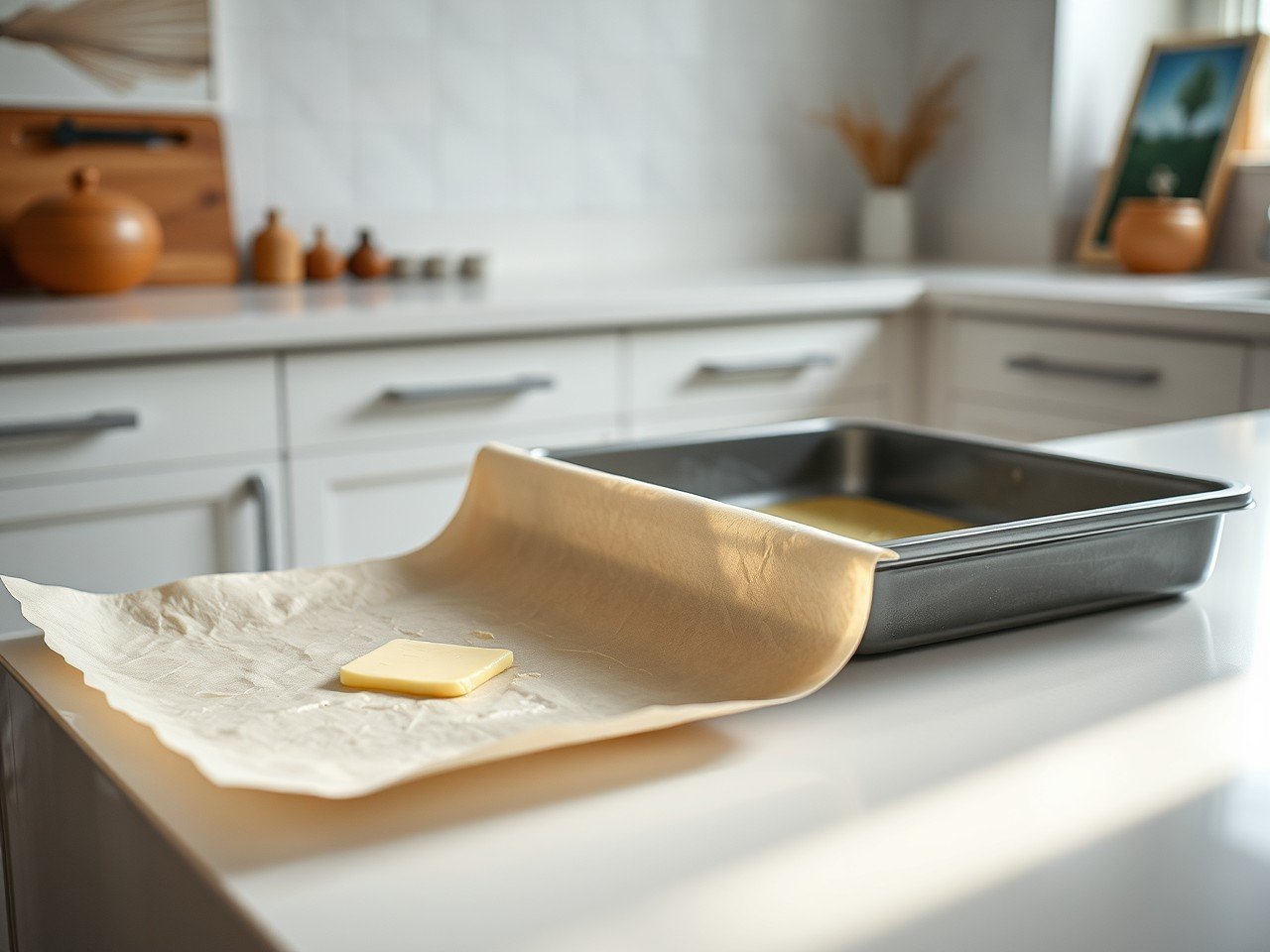
- Brownies and bar cookies: a sling of paper lets the whole slab lift out in one piece.
- Delicate layers: the bottom of a cake pan lined with a paper round turns out intact.
How parchment changes browning and spread
Extra fat makes cookies spread and fry on the bottom. Parchment gives a more even, paler base instead. A greased pan puts oil right under the dough, so the underside browns harder and the edges run further. Parchment slows that. That’s why the same dough can look different depending on the surface.
Pan color matters too. Light and dark metal bakeware brown at different rates. A liner adds another layer between the dough and that metal.
Parchment and silicone mats
A reusable mat does a similar job on flat surfaces. Under the dough, though, it behaves differently. The comparison of parchment paper and a silicone baking mat covers where each one fits.
When Does Greasing the Pan Win?
Greasing wins wherever a pan has a shape paper can’t follow. Bundt pans, fluted tins, muffin cups without liners, and tall-sided molds all fall here.
Intricate and textured pans
Parchment makes a poor release for tall batters in a bundt pan, where grease and flour reach into every detail paper can’t. Paper folded into a ridged cavity leaves gaps and wrinkles. Batter pushes into those creases and bakes into them. A brushed layer of fat, followed by a dusting, covers every surface.
The sides of a cake pan
Parchment on the pan bottom doesn’t stop sticking on the sides. A paper round handles the floor. But the walls are still bare metal, so they need grease or a knife run around the edge before turning out.
Why many recipes call for both
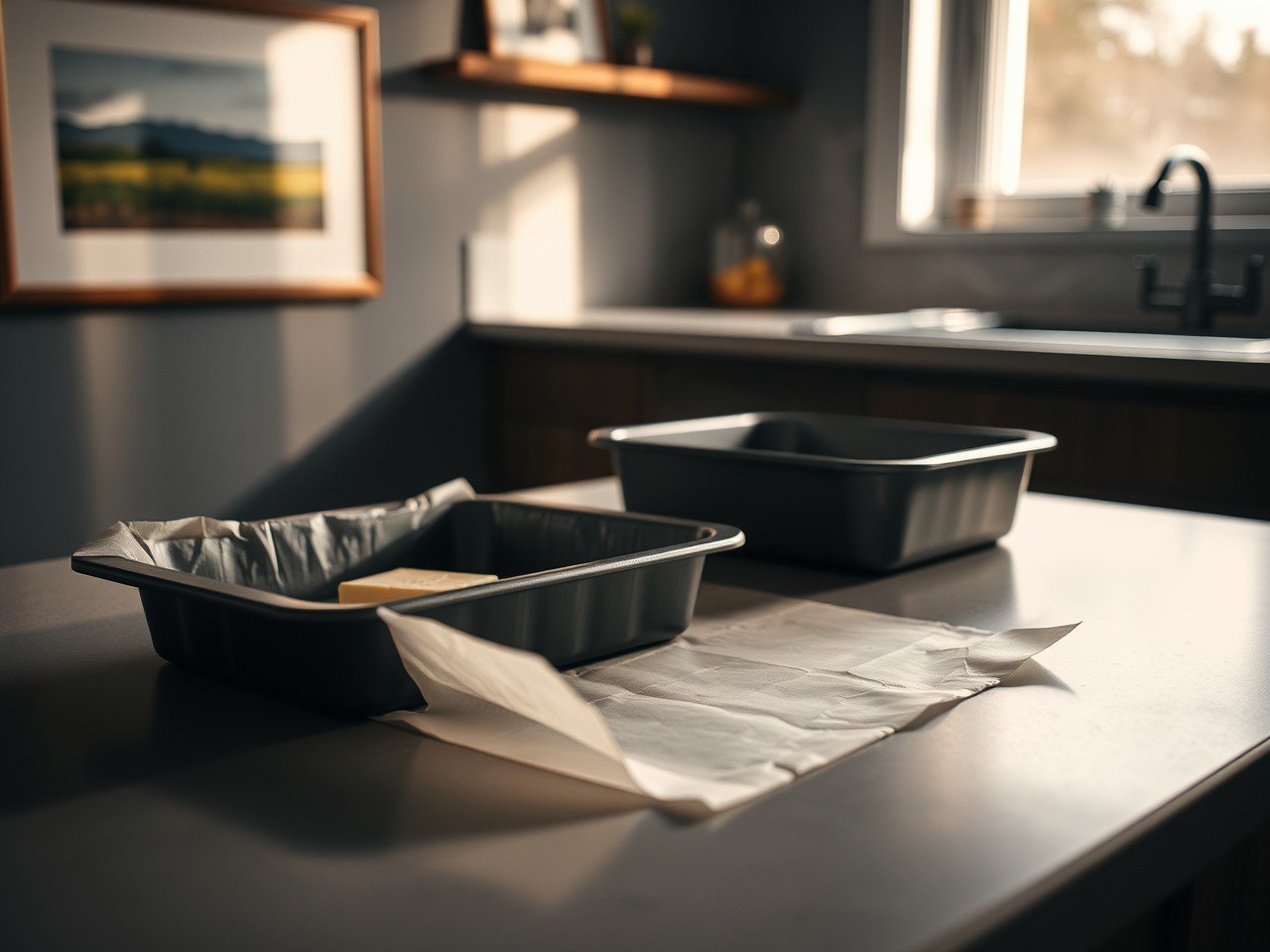
Recipes that ask for a greased pan lined with parchment are covering two separate surfaces. The fat releases the sides. It also acts as glue that holds the paper in place on the base. Paper then guarantees a clean release on the floor, the hardest area to rescue if it sticks.
Cast iron and carbon steel
Seasoned cast iron has its own release, built from layers of polymerized oil bonded to the metal. Dumping a sticky batter into a pan with a thin or patchy finish can pull seasoning away with it. Then the pan needs rebuilding with thin coats of oil baked on. A parchment liner on the floor of a cast iron skillet protects that finish during a sugary bake. Meanwhile, fat on the sides keeps the seasoning topped up.
Acidic or sugar-rich batters sit longest against the finish, so they test it hardest. A well-maintained surface releases most batters with a little fat alone. For the rest, a liner is insurance.
Can Wax Paper Replace Parchment in the Oven?
Wax paper isn’t a safe stand-in for parchment in the oven. Parchment and wax paper aren’t the same. Put wax paper in an oven and it creates smoke and unwanted flavor changes, because the wax can melt.
Wax paper still has a place away from heat. It works for lining a counter when you roll dough, or for separating cookie layers once they’re cool. Keep it out of any oven. Also keep it away from a hot pan.
Can Parchment Burn, and What Is Its Heat Limit?
Parchment can scorch, brown, and turn brittle in a very hot oven. Each box lists a temperature limit. Some labels handle temperatures as high as 420 °F (216 °C), but limits differ, so the packaging has the final word for any particular roll.
Keeping paper away from the element
Paper that overhangs the pan edge can drift toward a heating element or a fan. Trim it so it sits inside the pan and keeps clear of the element. Where the roll gives no temperature at all, treat it with caution. Check with the manufacturer before using it at high heat.
Paper under a hot broiler, or in a pan with no food weighing it down, is the riskiest setup. Preheating a pan with loose paper in it lets the sheet curl and lift.
Is parchment microwave safe?
Microwave use has its own rules. The page on whether parchment paper is microwave safe explains what to check before heating.
How Do You Cut and Fit Parchment Without It Curling?
Parchment fits a pan best when it’s cut to the pan’s footprint and held down by the batter or a dab of fat. Curling comes from the paper’s rolled shape. It’s been stored on a roll, so it wants to go back to that shape.
Cutting a round for a cake pan
- Trace the base of the pan onto the paper with a pencil.
- Cut just inside the line so the round sits flat without riding up the walls.
- Grease the pan, press the round in, and smooth out any bubbles.
Fitting a square or loaf pan
For a square pan, cut a sheet wider than the base so two sides overhang as handles. Snip the corners on a diagonal so the paper folds in without bunching. That overhang makes lifting a brownie slab out far easier.
Stopping slide and curl
- Dab a little fat under the corners to anchor the sheet to the pan.
- Flatten the paper under a heavy object for a few minutes before use.
- Crumple the sheet and open it out again; it will drape more easily.
- Load the pan with dough or batter right away so the weight holds the paper down.
Which Gives Better Results for Cookies?
Parchment gives cookies a more even, paler base with less spread. A greased sheet gives a darker, crisper bottom and more spread. Neither’s wrong, but each makes a different cookie.
Dough with plenty of butter will spread anyway, so a recipe tested on parchment can turn flat and greasy on a freshly oiled pan. Recipe writers pick the surface on purpose. Swap it, and the result shifts.
Can Parchment Be Reused, and Which Costs Less?
Parchment can often be reused for another batch if it’s still flat, clean and not scorched. Once it turns dark, brittle or cracked, the coating’s done its work. Then the sheet should go.
Cost over time
Parchment is a recurring purchase, while butter, shortening or spray coats many pans per use. The cheaper route depends on what the household already stocks and how often it bakes. Fat is the lower-waste option for textured pans; paper is the lower-cleanup one for flat ones.
Disposal
Silicone-coated parchment can’t be composted, since silicone doesn’t break down in the composting process. Quilon-coated parchment contains trivalent chromium. Check how the roll is described on its packaging before deciding where it goes. For food-contact materials in general, the U.S. Food and Drug Administration regulates what may touch food. Its guidance is the reference for questions about coatings.
Do Nonstick Pans Still Need Grease or Parchment?
A nonstick pan in good condition can often go without either one. Still, a light film of fat or a liner helps with sticky batters. The coating wears over time. A scratched surface loses its release first at the edges.
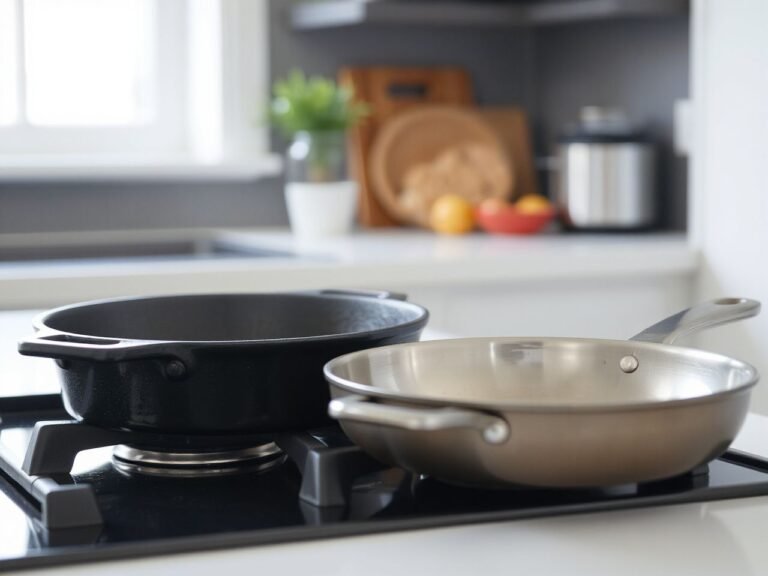
A liner on a nonstick pan also limits knife and utensil contact, which protects the coating. The pan maker’s care instructions still decide what is safe, though. Where seasoning rather than a coating is the surface, the rules change, as in cast iron and carbon steel above.
A Practical Decision Guide
Choose by pan shape first, then by what the batter does. The list below gives the usual match.
- Sheet pan cookies or roasting: parchment, or oil for vegetables that should brown hard.
- Layer cake pans: grease the sides, line the base with paper, dust if the recipe calls for it.
- Bundt or fluted pans: fat applied with a brush, then flour or sugar.
- Brownies and bars: a paper sling over a greased pan.
- Cast iron bakes: fat on the sides, a liner on the base for sugary batters.
Cooling and release finish the job. Let baked goods rest in the pan for the time the recipe gives. Then turn them onto a rack. Turning out too hot tears the crumb, and leaving them too long lets sugar re-set against the metal. For more on how the paper itself behaves in baking, see what parchment paper does and how it works in baking.
The Bottom Line
Paper handles flat surfaces and cleanup; fat handles sides, corners and detail. Many bakes need both. The surface under the dough also shapes how it browns and spreads, so it deserves the same attention as any ingredient.