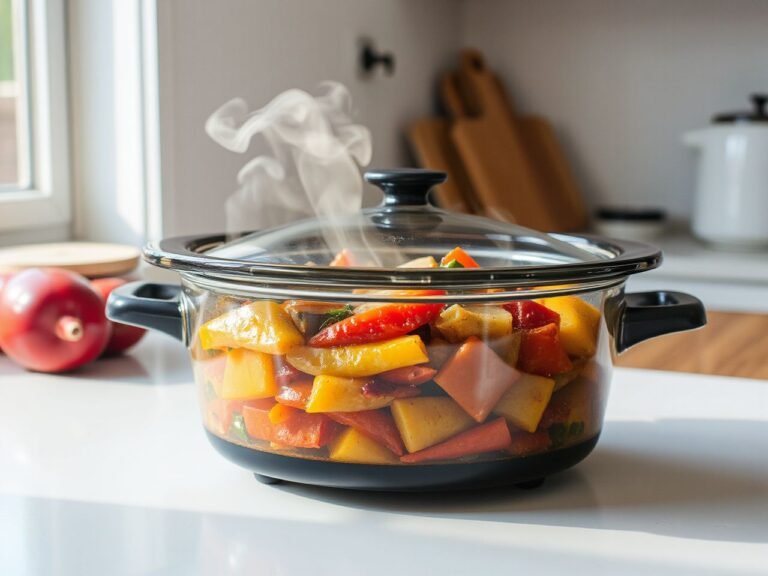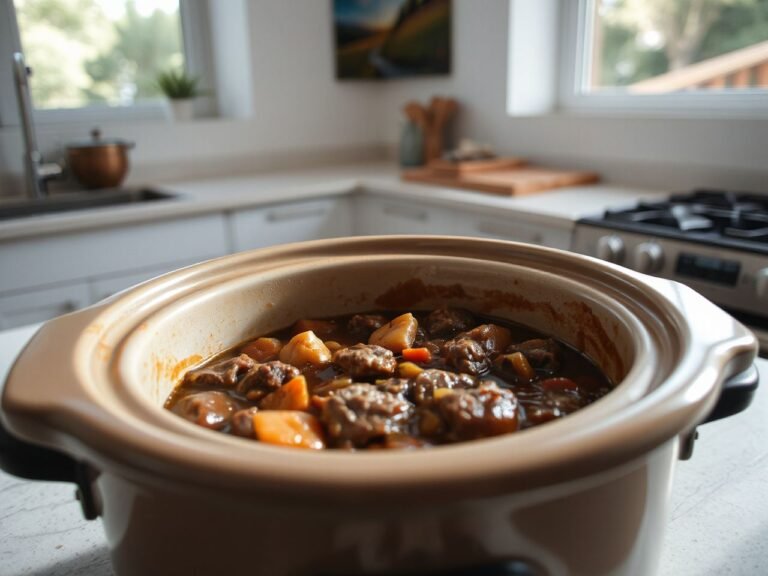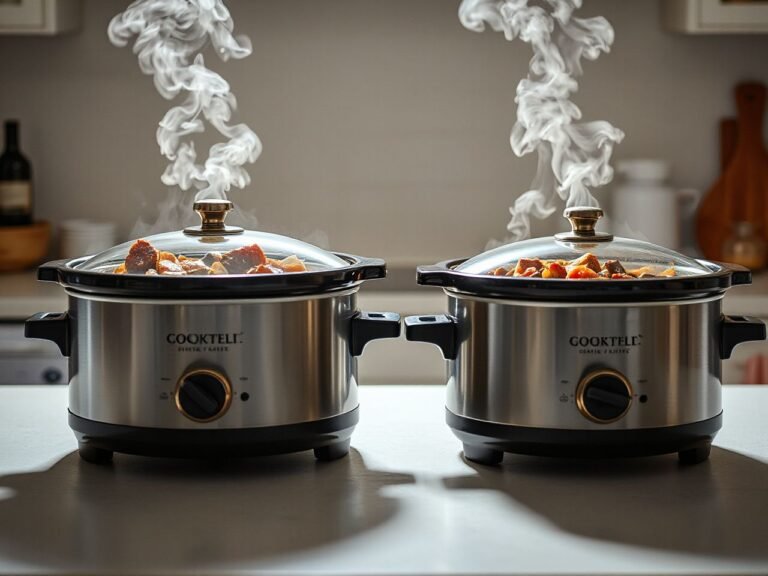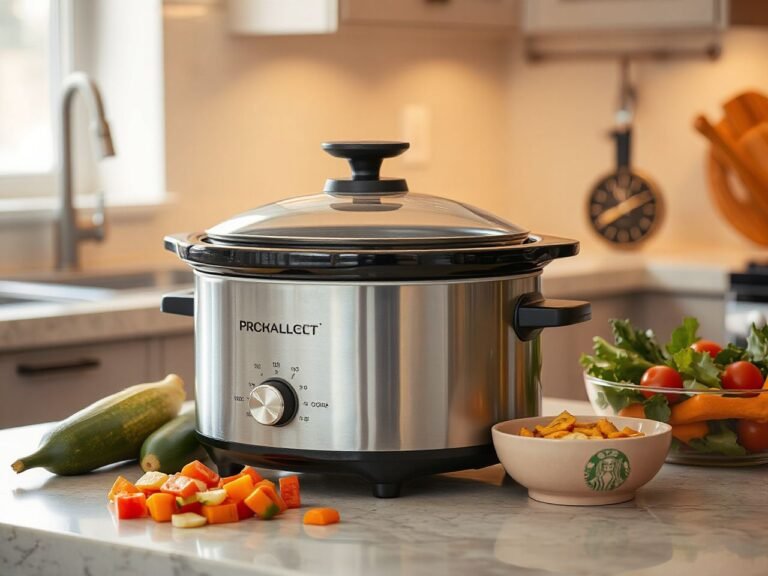
A slow cooker that’s too big for small batches can cook poorly. Overfilled inserts can also prevent food from heating evenly. What size slow cooker do I need? Start with your usual recipe batch. Then match that to the insert’s recommended fill range instead of just household size.
The key difference is between the slow cooker’s total capacity and its practical cooking capacity. You need to consider the recommended fill level and space for food to circulate and cook evenly. Serving counts can help, but recipe shape, batch size, leftovers, and the insert’s physical dimensions often give a more reliable answer than household size alone.
Key Takeaways
- Choose capacity by recipe yield, batch size, and desired leftovers.
- The stated capacity describes the insert’s total internal volume, not the amount you should always fill.
- A small batch in an excessively large insert may cook poorly, while overfilling can prevent even cooking.
- Check the insert’s shape, fill guidance, storage space, and cleaning requirements before deciding.
What Size Slow Cooker Do I Need for My Usual Meals?
The right size slow cooker is the one that fits your usual recipe batch within the manufacturer’s recommended fill range. It should also leave room for even cooking. Headcount can be a starting point, but recipe yield and ingredient shape usually provide a better final answer.
Step 1: Start with the recipe yield
Write down the meals you expect to make most often and note how much each recipe produces. A stew, soup, casserole, pulled meat dish, or sauce can fill the same volume very differently. Solid pieces, liquids, and large cuts don’t pack in the same way.
Recipe yield is more useful than a serving label when batch cooking. If your normal recipe makes the amount your household eats, pick a cooker that can hold that batch without pressing food against the lid. If you often double recipes, the larger batch should guide your choice.
A slow cooker should be sized around the food batch you actually prepare. Not an idealized serving count. This way, there’s room for leftovers, and you’re not forcing a recipe into an unsuitable insert.
Step 2: Account for leftovers and batch cooking
Desired leftovers change the practical capacity you need. A cooker used for one meal can be smaller than one meant to make dinner plus portions for storage, freezing, or other meals.
Batch cooking needs more than just enough room for ingredients. The insert must stay within the fill guidance in the manual. The lid should sit properly in its groove along the rim so the cooking environment remains covered.
Freezing leftovers makes the recipe’s final yield important. A container-ready batch might need more room than a same-day meal, especially if it has large vegetables, pieces of meat, or ingredients that shouldn’t be tightly packed.
Step 3: Check the physical space
A slow cooker has to fit the available counter, cupboard, and storage space before capacity matters. Measure where the heating base will sit and think about where the stoneware insert and tempered-glass lid will go after washing.
Shape impacts storage just as much as volume. A round insert might fit a cupboard better, while an oval one could suit long cuts of meat or casserole recipes but will need a different shelf setup. The outer housing also needs space around it as the manual indicates.
How Full Should a Slow Cooker Be?
A slow cooker should be filled within the range specified in its manual. There needs to be enough food and liquid for proper cooking but not packed so tightly that the lid doesn’t fit. Since the range varies by appliance, follow the manufacturer’s instructions.
Why stated capacity can mislead
The stated capacity usually describes the insert’s total internal volume. That volume includes space that should remain available for the food to cook evenly, for liquid to move around ingredients, and for the lid to sit correctly.
Slow cooker volumes typically range from 500 mL (17 US fl oz) to 7 L (7.4 US qt). These figures cover the broad range of capacities available, but it doesn’t mean every recipe should be cooked right up to the brim.
The practical cooking capacity is lower than the total internal volume. A label alone can’t tell you how much of a certain recipe will fit well because dense casseroles and liquid soups use the space differently.
What happens when the insert is overfilled?
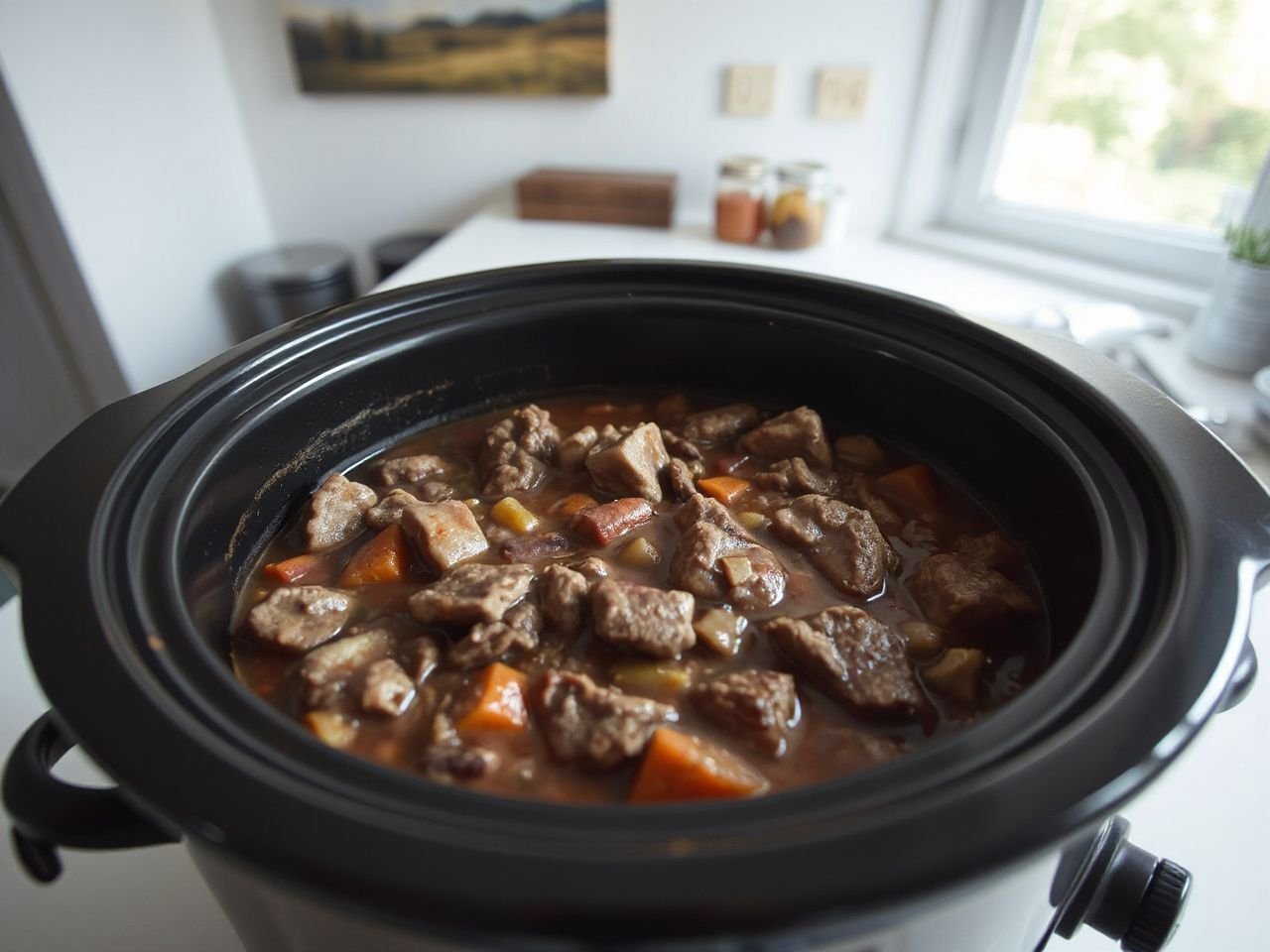
Overfilling a slow cooker can lead to uneven heating because ingredients are crowded and the lid might not sit properly. The liquid can also rise toward the rim as it heats, creating a mess, so sticking to the recommended fill range is important.
Most slow cookers specify a minimum recommended liquid level to reduce the risk of uncontrolled heating. Read the manual for the appliance rather than adding an arbitrary amount of liquid because recipe ingredients and insert design both affect the required level.
Food in a slow cooker continues increasing in temperature until the boiling point is reached. Crowding changes how ingredients sit in relation to the heated insert, so overfilling should be seen as a cooking problem rather than just a spill risk.
What happens when the batch is too small?
A small batch in an excessively large slow cooker may cook poorly because the food sits in a thin layer across a broad surface. Ingredients could also be positioned far below the lid’s intended relationship to the food, making the result less predictable.
Don’t solve a small-batch problem by guessing extra liquid or extending the cooking time. Check the manual, use a better-matched insert size, or pick a recipe whose yield fits the appliance you already have.
The fill guidance in the manual is the most useful boundary for both problems. A cooker shouldn’t be treated as a container you can fill to any level just because the lid closes.
How Full Should a Slow Cooker Be? The Short Version
Should I Choose by Serving Count or Recipe Batch Size?
Recipe batch size should matter more than serving count because estimates don’t show the food’s shape, density, liquid level, or leftover plans. Serving count is a quick starting point, but the recipe itself decides if the insert is suitable.
Serving estimates are only a starting point
A label listing servings can hide important differences. A dish mostly made of liquid may sit differently in the insert compared to a dense stew, and large pieces of meat may require an oval shape even if the total amount is modest.
Household size doesn’t always reveal eating habits. One person might cook a small meal and eat it right away, while another prepares larger batches for lunches, freezing, or a second dinner. The capacity needed depends on the batch plan.
Use this order of importance:
- Identify the recipe yield you make most often.
- Decide how much you want left after the first meal.
- Check the insert’s recommended fill range.
- Confirm that the shape suits the ingredients.
- Verify that the heating base and insert fit the kitchen and storage area.
Match the recipe to the cooker you have
Check the recipe’s stated capacity and compare it with your manual’s practical capacity. A recipe made for a different insert might need adjusting. Scaling ingredients alone doesn’t ensure the food will sit at a good depth.
Keep the proportions consistent when scaling a recipe. Before starting, check the fill level to make sure it’s right. A big cut of meat might need a different insert shape, not just more or fewer ingredients.
Cooking times can change when you alter the batch size or depth. Follow the recipe and appliance instructions, then check the food using the signs and safety guidance for that dish. Don’t just guess based on the capacity label.
Food safety guidance usually comes from public authorities like the U.S. Food and Drug Administration. Use the manual and trusted government advice when checking, cooling, storing, or reheating leftovers.
Does size affect the way food cooks?
Slow cooker size can influence cooking because the amount and arrangement of food change how ingredients sit in the heated insert. A smaller batch in a broad insert and a crowded batch in a smaller insert will cook differently, even if the ingredients are the same.
The heating base has an electric heating element under a lidded cooking pot. The pot can be round or oval and is often made from glazed ceramic. The glass lid usually fits in a groove along the rim to help contain the heat and steam.
Size doesn’t give a universal cooking-time rule. Use the settings and timing suggested in the recipe or manual, then judge if the food is done by its texture and appearance.
Which Insert Shape Works for Stews, Casseroles, and Large Cuts?
Insert shape should match the physical form of the ingredients, with round and oval designs serving different recipe layouts. The capacity label matters, but the way food sits inside the insert can matter just as much.
Round inserts
A round insert works well for recipes that naturally gather toward the centre, like many soups, sauces, and stews. The shape can also fit compact counter and cupboard arrangements, but the outside housing still determines how much space you’ll need.
Check the depth and usable cooking area in the manual instead of assuming that a round insert’s total volume tells the whole story. A narrow, deep pot and a broad, shallow one can hold similar amounts but will position ingredients differently.
Oval inserts
An oval insert can give a longer cooking area for large cuts of meat, elongated vegetables, or casserole-style dishes. Its shape might be more useful than capacity if fitting ingredients without folding or stacking is a main concern.
Shape doesn’t eliminate the need to follow fill guidance. A long insert can still be overfilled, and a large cut may leave an awkward amount of unused space if the batch is too small.
Stoneware, glass, and the heating base
The stoneware insert, tempered-glass lid, and heating base should be treated as separate parts during cleaning, storage, and use. The insert holds the food, the lid covers the pot, and the base supplies heat; each part has its own handling instructions.
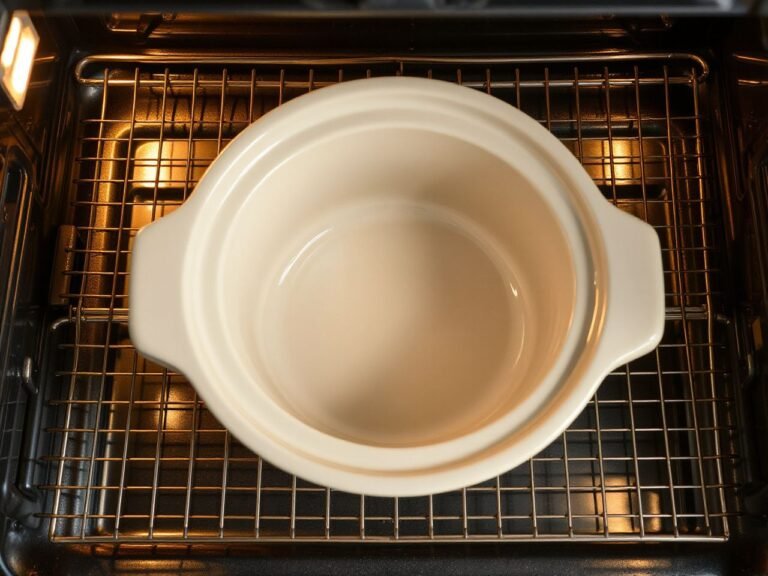
Don’t put the stoneware insert on a hob or in an oven unless the manufacturer specifically allows it. Some slow cookers use steel or coated aluminium crocks that can brown on a stovetop, but you can’t assume that for a ceramic stoneware insert.
For a safety mark or certification claim, check the appliance, plug, and manual for the independent laboratory or body named by the manufacturer. The NSF explains its public health and safety certification work, but don’t assume an unmarked appliance is certified.
Can a Slow Cooker Insert Go in the Oven? What to Know
How Do I Clean and Store the Right-Size Slow Cooker?
Cleaning and storage considerations should influence slow cooker size because each includes an insert and lid that need handling at the sink and space for storage. A cooker that fits the recipe but can’t be washed or stored safely isn’t a practical choice.
Clean the parts according to the manual
Allow the insert and lid to cool as directed by the manufacturer before washing them. Use the cleaning method specified for the stoneware and tempered glass. Keep the electrical heating base away from water unless the manual gives a specific cleaning instruction.
Food residue is easier to address before storage. Inspect the rim groove, underside of the lid, and outside of the insert. Make sure residue doesn’t remain where the lid seats or where the insert contacts the base.
A clean lid rim helps the lid sit correctly. A clean insert makes the next batch easier to judge. The appliance manual remains the authority for dishwasher use, soaking, abrasive tools, and handling a damaged part.
Plan for cupboard space
Store the insert and lid where they won’t be struck by other cookware. The lid is fragile compared with the heavy ceramic body. The heating base may have a shape that takes up more space than the insert alone.
Measure the cupboard opening before choosing a size. Then account for the shape of the lid and base. Countertop space matters during cooking, while cupboard space matters every day after the meal.
Consider electrical use without assuming capacity is the whole story
A larger capacity doesn’t automatically mean a higher electrical cost. Electrical consumption depends on the appliance and cooking pattern, not just capacity. The rating info and how the cooker is used matter.
For a fuller explanation of the factors involved, read how slow cooker electricity use depends on the appliance and cooking pattern. Capacity can help inform your decision, but it can’t predict the running cost by itself.
Beginner, Intermediate, and Advanced Size Checks
A reliable size decision gets easier when checks go from basic household needs to recipe geometry and long-term use. Start with the food, then confirm the appliance’s practical limits and the kitchen’s physical limits.
Beginner: use the normal batch
Choose a capacity that matches the recipe you make most often. Don’t pick the largest meal you might prepare once. Always read the manual’s fill guidance before trusting the label on the box or appliance.
A beginner’s size check should answer three questions: how much food does the usual recipe produce, how much will be saved, and where will the cooker be stored? If any answer remains unclear, the capacity decision isn’t finished yet.
Intermediate: assess ingredient shape
Intermediate planning involves the physical arrangement of the food. Check whether vegetables, meat, and other large ingredients fit without being forced into an unsuitable position.
A casserole recipe may need a broad cooking area, while a soup might be easier to arrange in a more compact insert. The best match is the one that holds the recipe at a suitable level, not just the one with the most stated volume.
Advanced: plan for several cooking patterns
Advanced planning considers weekday meals, leftovers, batch cooking, freezing, and occasional large cuts as separate use cases. If those recipes vary greatly, compare their fill levels and shape requirements before choosing a single appliance.
A programmable slow cooker may change how you schedule meals, but programmability doesn’t eliminate the need to match capacity and fill level. Read the programmable slow cooker guide to common selection mistakes if controls and scheduling are part of your decision.
The Bottom Line
The right slow cooker size is based on practical batch volume, recipe shape, desired leftovers, and the fill range in the manual. Treat the advertised capacity as the insert’s total volume, then see how much food the recipe can hold comfortably while leaving room for proper cooking.
Choose an insert that suits the food, your kitchen, and your household. Countertop space, cupboard storage, cleaning, lid fit, and approved use matter just as much as the number on the appliance.
Frequently Asked Questions
What size slow cooker do I need for two people?
Start by considering the quantity your usual recipe produces, rather than assuming household size determines it. Check the manual’s recommended fill range, and leave room for the lid and even cooking. If you want leftovers, size the cooker for the full batch instead of the amount served at one meal. Recipe shape might also influence whether a round or oval insert is better.
Is a larger slow cooker useful for leftovers?
A bigger slow cooker can be handy when a recipe includes portions for storage containers, freezing, or another meal. The batch still needs to stay within the recommended fill range, and a large insert may cook a small batch poorly. Opt for larger capacity only when the recipe yield and leftover plan regularly justify the extra space.
What happens if a slow cooker is overfilled?
Overfilling a slow cooker can crowd the ingredients, disrupt even cooking, and leave insufficient space below the lid. Liquid might also rise toward the rim as things heat up. Follow the appliance manual’s fill and minimum liquid guidelines, and reduce the batch or choose a larger, better-matched insert instead of relying on a tightly closed lid.
Can a slow cooker insert go on a hob or in an oven?
Don’t use a stoneware insert on a hob or in an oven unless the manufacturer specifically allows it. Some appliances use steel or coated aluminium crocks that can support stovetop browning, but ceramic stoneware usually can’t. Read the manual for the exact insert and follow its handling instructions.
Does a larger slow cooker cost more to run?
Capacity alone doesn’t determine how much electricity a slow cooker uses. The appliance itself and your cooking pattern both matter, so ratings and your schedule give a better idea of running costs. A larger cooker might be practical for regular batch cooking, but size isn’t a direct cost multiplier. Check the explanation of slow cooker electricity use for more context.