Parchment paper is often suitable for microwave use.
The key distinction is between the parchment material itself and the conditions around it: ordinary microwave heating is different from exposure to direct heat, arcing, hot surfaces, or concentrated grease and sugar. A sound guide should separate using parchment as a loose cover or liner from using it as a container, and should treat package instructions, visible damage, and the distance from microwave surfaces as decisive practical checks. That is the useful way to approach the question of whether parchment paper is microwave safe.
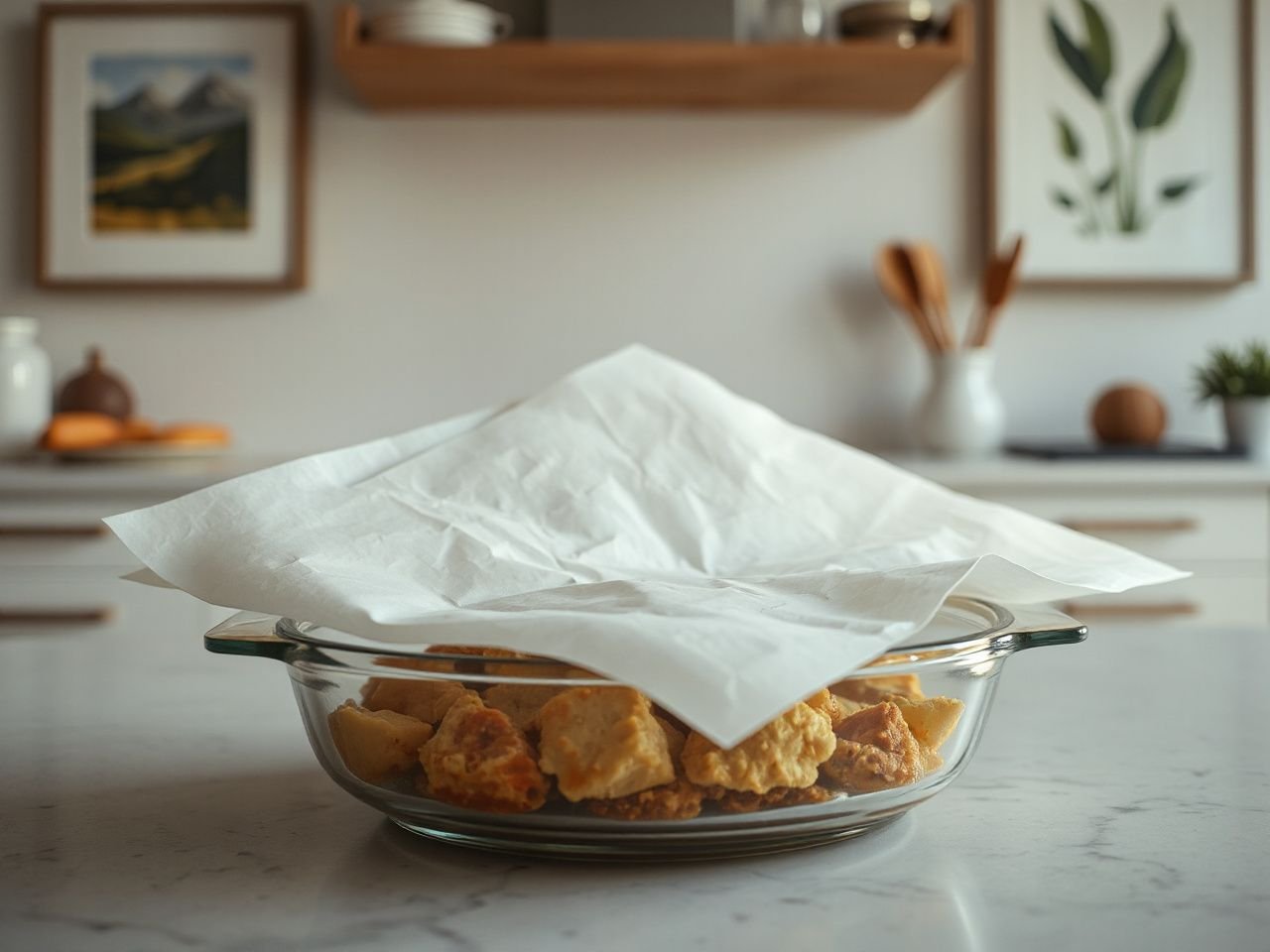
Parchment paper can cover food or sit beneath it inside a suitable microwave-safe container, provided the package allows microwave use. It should never be treated as a stand-alone cooking vessel, and a loose sheet must not drift toward the microwave walls, ceiling, floor, or heating elements.
Key Takeaways
- Check the package directions before placing parchment paper in a microwave oven.
- Use parchment as a cover or liner inside a microwave-safe container, not as the container itself.
- Remove parchment if it browns heavily, smolders, burns, shifts, or touches microwave surfaces.
Is Parchment Paper Microwave Safe?
What the material can and cannot do
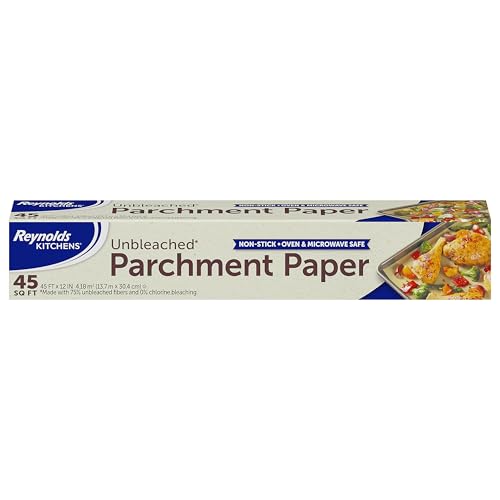
Parchment paper is a cellulose paper made for food contact, often with a silicone coating. It is generally intended for use around food and can often be used during microwave heating, but the packaging remains the first authority for a particular sheet or roll. A manufacturer warning overrides a general rule.
Greaseproof paper is produced using densification and supercalendering techniques, and it has no wax coating or lamination. In microwave use, that neutral material will neither spark, smoke, nor melt under the conditions described by the verified information. Parchment paper may include a silicone coating, and paper with that coating offers superior heat resistance compared with greaseproof paper. Those material differences are why labels matter.
A sheet that is suitable for conventional oven baking is not automatically approved for every other appliance. A microwave oven heats food in a different setting, and the paper still has to remain clear of direct heat, hot surfaces, arcing, and concentrated residues.
Parchment paper is generally a microwave liner or cover, not a microwave cooking vessel. The food should remain in a microwave-safe container whenever parchment paper is used as a liner or cover.
Why the surrounding conditions matter
Microwave heating does not make every paper product interchangeable. Wax paper has a wax coating that can melt or smoke, so wax paper should not be treated as a substitute for parchment paper simply because both appear thin and semi-transparent. Paper towels also serve a different purpose and need their own package guidance.
Grease, oil, sugary residue, charring, and prolonged heating can make paper products smoke or ignite. The risk rises when a small area of paper becomes heavily coated, folded tightly against food, or left in contact with a hot surface after heating.
Use the visible condition of the paper as a practical check. Heavy browning, a burned smell, smoke, smoldering, or a charred edge means the paper should be removed and discarded rather than placed back into the microwave.
The U.S. Consumer Product Safety Commission provides consumer safety information for household products and appliances, so its guidance is a suitable place to check broader microwave safety advice. Product packaging remains more specific because it applies to the exact parchment paper in hand.
How to Check Whether Parchment Paper Is Suitable
Step 1: Read the package first
Look for the manufacturer’s microwave-use instruction, warning, or limitation. The label may identify parchment paper as suitable for microwave heating, or it may limit use to a different appliance. If the packaging gives no clear direction, do not treat silence as approval.
Check the whole package rather than relying on the word “parchment” alone. Terms such as baking paper, cellulose paper, greaseproof paper, silicone coating, or oven paper describe materials or uses, but the appliance guidance is the part that answers the microwave question for that product.
Package instructions take priority over general advice about parchment paper. A material name cannot replace a manufacturer’s instruction for a specific product.
Step 2: Inspect the sheet
Use a fresh, clean section when possible. A sheet with grease marks, sugary residue, dark spots, tears, or charring deserves more caution than an intact sheet. Damage can make the paper shift, expose food directly, or leave a concentrated residue in one area.
Do not use parchment that already smells burned. Do not trim a damaged edge and assume the remaining sheet has returned to its original condition. The paper may look serviceable while its surface has already been affected by heat or food residue.
Step 3: Check the container and placement
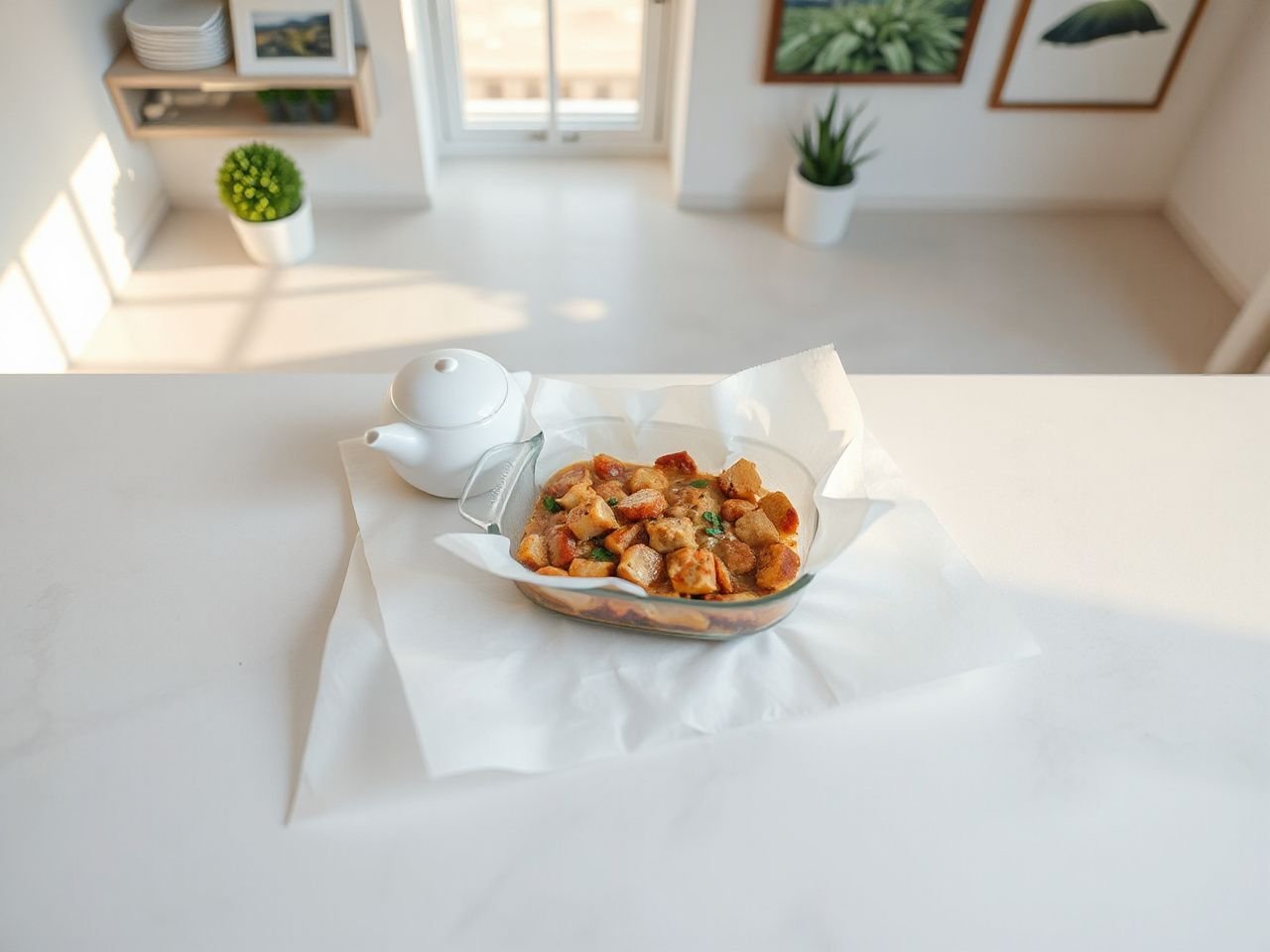
Place the food in a microwave-safe container made from material approved for microwave use, such as suitable glass or ceramic. Set the parchment beneath the food as a liner or over the food as a cover, depending on the package directions and the job it needs to perform.
The sheet should remain away from the microwave walls, ceiling, floor, and heating elements. Do not use a loose piece that can lift, curl, or slide toward those surfaces as the microwave turntable moves.
Keep the parchment contained rather than allowing a large overhang to flap around the cavity. A smaller, properly positioned cover is easier to monitor than a sheet that reaches beyond the dish.
Step 4: Watch the first use closely
Stay nearby and observe the paper through the microwave door. Look for browning, curling, smoke, smoldering, or a burned smell. Stop the microwave if any of those signs appear, then allow the paper and container to cool before handling them.
Food splatter can change the result during heating. A clean sheet beneath a moist food may behave differently from the same sheet beneath a greasy or sugary food, so the paper’s condition and the food’s residue both matter.
The U.S. Food and Drug Administration publishes food and packaging safety information for consumers, making its main site a useful reference for general food-contact and microwave questions. That general information does not replace the directions printed on a particular parchment package.
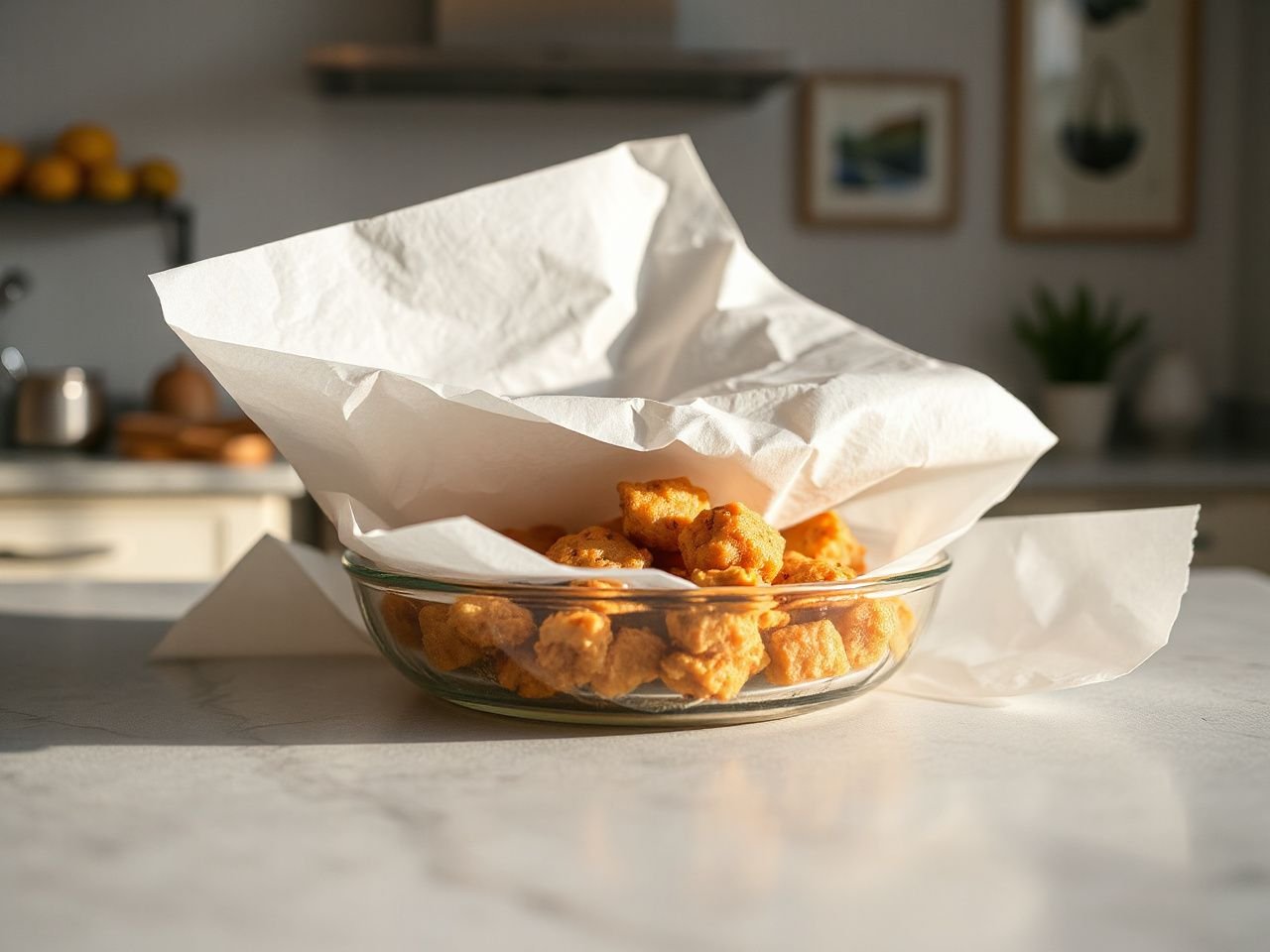
Safe Ways to Use Parchment in a Microwave
Use it as a cover
A parchment cover can help contain splatter while food warms in a suitable microwave-safe container. Keep the cover positioned over the food without sealing the container in a way that prevents normal venting. The container, not the parchment, remains responsible for holding the food.
For a cover, choose a piece that stays within the dish. A sheet that curls upward or catches movement from the turntable is a poor choice, even if the parchment itself carries microwave-use instructions.
Parchment paper should stay inside the boundaries of the microwave-safe dish. Keeping the paper contained reduces the chance that it will touch the microwave cavity or move toward a heating element.
Use it as a liner
A parchment liner can sit beneath food inside a microwave-safe container. This may help reduce direct contact between the food and the dish, but parchment does not make an unsuitable container safe for microwave use.
Keep the liner flat and avoid folds that hold concentrated grease or sugary residue. If food leaks underneath the paper, stop and clean the container once it has cooled. Food residue left in the microwave can continue to smoke during later heating.
Readers comparing parchment with reusable baking surfaces can review how parchment paper compares with a silicone baking mat. That comparison belongs to baking-sheet use; neither material should be assumed suitable for every microwave arrangement without its own instructions.
Use a loose cover only when it stays put
A loose cover is acceptable only when the sheet remains safely positioned during heating. Avoid placing parchment directly on the microwave turntable as a free-floating sheet beneath food. The turntable should support the suitable container, while the paper remains inside that container.
Paper that curls may touch a surface it was meant to avoid. Curling can also bring a dry edge closer to a hot or exposed area, so the paper should be removed if it no longer stays in its intended position.
Why Parchment Can Curl, Scorch, Stick, or Smoke
Curling and shifting
Parchment can curl when one side becomes more affected by moisture or heat than the other. A curled edge may move as the turntable rotates, especially if the sheet extends beyond the food or dish. That movement is a practical reason to stop using the sheet.
Keep the paper sized to the container and avoid unnecessary overhang. If the sheet will not remain inside the dish, select another cover or use the container’s own microwave-safe lid according to its instructions.
Scorching and burning
Paper products can smoke or ignite when exposed to concentrated grease, oil, sugary residue, charring, or prolonged heating. The material may be suitable in ordinary microwave heating while still becoming unsafe under a particular food or placement condition.
Scorching usually appears as a darkened or browned patch, a burned smell, smoke, or a smoldering edge. Stop the microwave as soon as these signs appear. Do not continue heating to see if the mark becomes worse.
Heavy browning, smoke, smoldering, and burning are stop signs for microwave parchment paper. Remove the paper after the container has cooled enough to handle safely.
Sticking to food
Parchment may stick when food contains concentrated sugar or grease, or when residue dries against the paper. A stuck sheet should not be pulled aggressively while the food is hot. Allow the food to cool and separate the paper carefully.
Discard parchment that is torn, charred, heavily stained, or fused to food. Reusing compromised paper adds uncertainty without providing a clear benefit.
Direct contact with microwave surfaces
Parchment paper should not touch the microwave walls, ceiling, floor, or heating elements. The same rule applies to a loose sheet that can shift toward those surfaces while the turntable rotates.
This point matters even when the food itself sits in a safe dish. A suitable container does not correct unsafe paper placement. Set the container in the center of the turntable, then check that the paper stays within it before starting the microwave.
Preventive Measures for Reliable Microwave Use
Choose the simplest arrangement
The simplest method is food in a microwave-safe container, parchment used only as a correctly positioned cover or liner, and the package directions visible before heating. Fewer loose parts make it easier to see whether the paper has moved or changed.
For many reheating jobs, a suitable glass or ceramic container with its approved cover may be a better choice than a separate sheet of paper. A paper towel may also serve as a splatter cover when its own package guidance permits, but it is not interchangeable with parchment.
A microwave-safe container remains necessary when parchment paper is used as a cover or liner. Parchment does not change the microwave suitability of the dish beneath it.
Match the paper to the food
Take extra care with food that releases grease, oil, or sugar. These ingredients can collect on one area of the sheet and create a condition in which the paper smokes or burns. Keep the heating arrangement visible and stop if the paper changes colour or produces an odor.
Do not assume that food beneath parchment is automatically protected from overheating. The paper may reduce splatter, but it does not remove the need to follow the food container’s directions or monitor the heating process.
Use undamaged paper
Inspect the paper before every use. Fresh, clean material is easier to position and assess than a sheet with residue from conventional oven baking or a prior microwave use.
Reusing parchment after microwave heating depends on its condition and the package directions. A clean sheet that remains flat and undamaged may appear usable, but the cautious choice is to discard paper that has touched greasy or sugary food, curled, browned, smoked, or torn. There is no reason to reuse paper with visible heat damage.
Keep conventional oven advice separate
Parchment paper used in a conventional oven faces a different arrangement of heat and surfaces than parchment placed in a microwave oven. An instruction for baking sheets does not automatically answer how a sheet should be positioned in a microwave.
The same distinction applies to air fryers, toaster ovens, and other appliances. Use the instructions for the appliance and the paper together rather than transferring a baking habit without checking the new setting.
When Another Cover Is the Better Choice
Microwave-safe glass or ceramic
A microwave-safe glass or ceramic container with an approved cover can simplify reheating because the food remains in a purpose-made vessel. The cover still needs to follow its own instructions, including any direction about venting or placement.
This option is especially practical when the food is greasy, sugary, or likely to splatter heavily. It avoids placing a loose paper sheet directly over a residue that may darken or smoke.
Paper towels
Paper towels are commonly used as a temporary cover for splatter, but the package guidance and the condition of the towel still matter. Keep the towel away from microwave surfaces, and remove it if it browns, smolders, or burns.
Do not confuse a paper towel with wax paper or parchment paper. Each product has a different construction and intended use, so the label should settle the question for the item in hand.
Wax paper
Wax paper has a wax coating that can melt or smoke and is not automatically interchangeable with parchment paper for microwave use. If the wax paper packaging does not clearly permit microwave use, choose a different cover rather than transferring parchment guidance to it.
Plastic wrap
Plastic wrap has its own microwave instructions and may need venting or a specified distance from food. Do not substitute plastic wrap simply because parchment is unavailable. Follow the wrap’s label and keep it away from direct contact when the instructions require that arrangement.
Practical Decision Guide
Use parchment when all checks agree
- The package permits microwave use.
- The paper is clean and undamaged.
- The food is inside a suitable microwave-safe container.
- The sheet stays within the container and away from microwave surfaces.
- The food does not create an uncontrolled pool of grease, oil, or sugary residue.
- You can monitor the paper while the microwave runs.
These checks do not make a product suitable against its label. They create a practical screening process for a product that already carries appropriate microwave guidance.
Stop and choose another method when a check fails
- The package warns against microwave use.
- The paper is already charred, torn, heavily stained, or burned-smelling.
- The sheet cannot remain inside the dish.
- The paper touches or may move toward the microwave walls, ceiling, floor, or heating elements.
- Smoke, smoldering, heavy browning, or burning appears.
- The food has made the paper wet, greasy, sugary, or stuck in a way that cannot be monitored safely.
When one of these conditions applies, use a suitable container with its approved cover or another clearly labelled microwave cover. Stopping early is better than trying to rescue a paper sheet that has already changed.
A failed placement check is enough reason to remove parchment from a microwave. The paper does not need to show flames before it becomes the wrong choice for that arrangement.
Frequently Asked Questions
Can parchment paper go in the microwave?
Often, yes, if the package permits microwave use and the paper is used as a cover or liner inside a microwave-safe container. Keep the sheet away from the microwave walls, ceiling, floor, and heating elements. Monitor it for curling, browning, smoke, smoldering, or burning, and stop heating if any of those signs appear.
Is parchment paper safer than wax paper for microwaving?
Parchment and wax paper are different materials. Wax paper has a wax coating that can melt or smoke, so wax paper is not automatically interchangeable with parchment paper. Parchment may be suitable when its package permits microwave use, but that label check still matters. Use the directions for the exact paper rather than relying on appearance.
Can parchment paper cover food in the microwave?
Yes, parchment can serve as a cover when the packaging allows microwave use and the sheet remains safely positioned over food in a suitable microwave-safe container. Keep the paper within the dish, prevent it from shifting toward microwave surfaces, and monitor greasy or sugary food closely. Parchment should not be used as a stand-alone container.
Why does parchment paper sometimes curl, scorch, or stick?
Curling can occur when the sheet changes unevenly with moisture or heat. Scorching or smoke can result when grease, oil, sugary residue, charring, or prolonged heating affects the paper. Sticking is more likely when residue dries against the sheet. Remove paper that browns heavily, smolders, burns, tears, or becomes fused to food.
Can parchment paper catch fire in a microwave?
Paper products can smoke or ignite when exposed to concentrated grease, oil, sugary residue, charring, or prolonged heating. Parchment should therefore be monitored rather than left unattended. Keep it away from microwave surfaces and remove it if it browns heavily, smolders, smokes, or burns. Package instructions remain the controlling guidance for the product.
How can I tell whether a particular parchment paper is suitable?
Read the package for a clear microwave-use instruction or warning. Then inspect the sheet for damage, residue, scorching, and tears. Use it only inside a microwave-safe container, keep it away from the microwave cavity surfaces, and watch the paper during heating. If the package gives no clear microwave direction, choose a cover with explicit instructions instead.
Can parchment paper be reused after microwave heating?
Reuse depends on the package directions and the paper’s condition. A sheet that is clean, flat, and undamaged may appear suitable, but paper that touched greasy or sugary food, curled, browned, smoked, burned, or tore should be discarded. Visible damage is a decisive practical check. Do not reuse parchment merely because it still looks mostly intact.
Should parchment paper touch the microwave walls or heating elements?
No. Parchment paper should stay away from the microwave walls, ceiling, floor, and heating elements. Do not use a loose sheet that can shift toward those surfaces during heating. Keep the paper inside the microwave-safe container, and stop the appliance if the sheet curls or moves out of position.