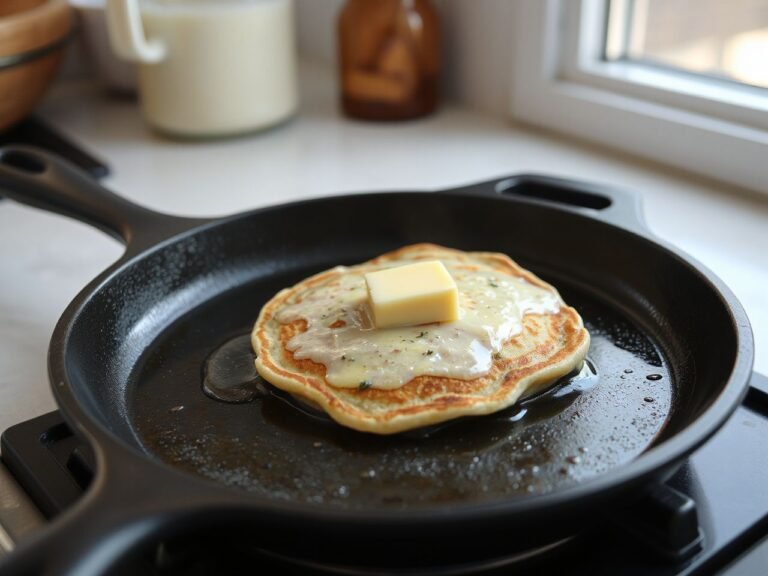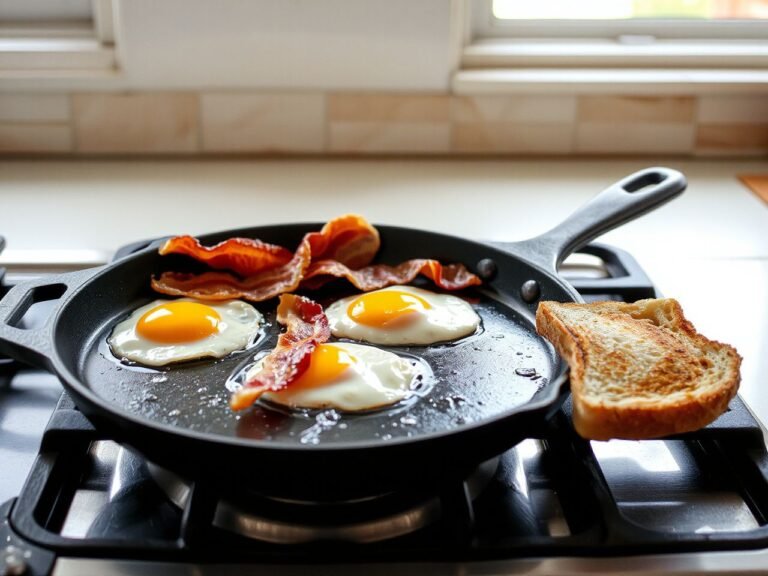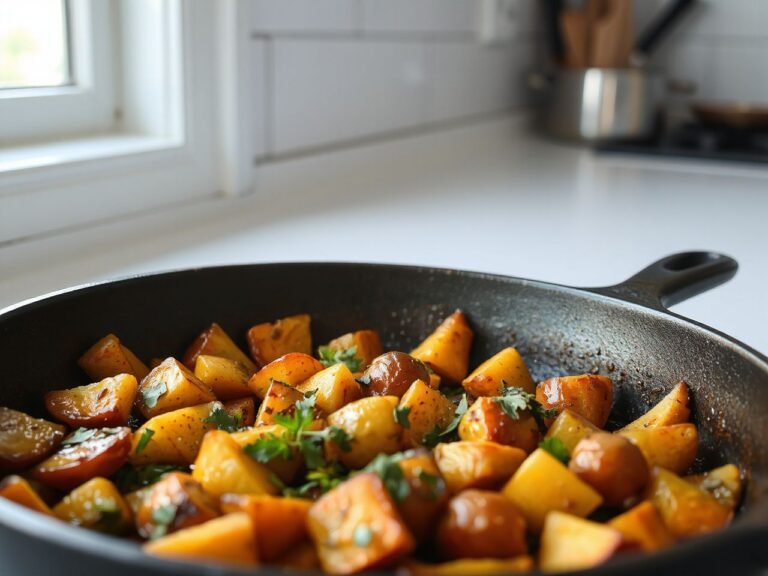
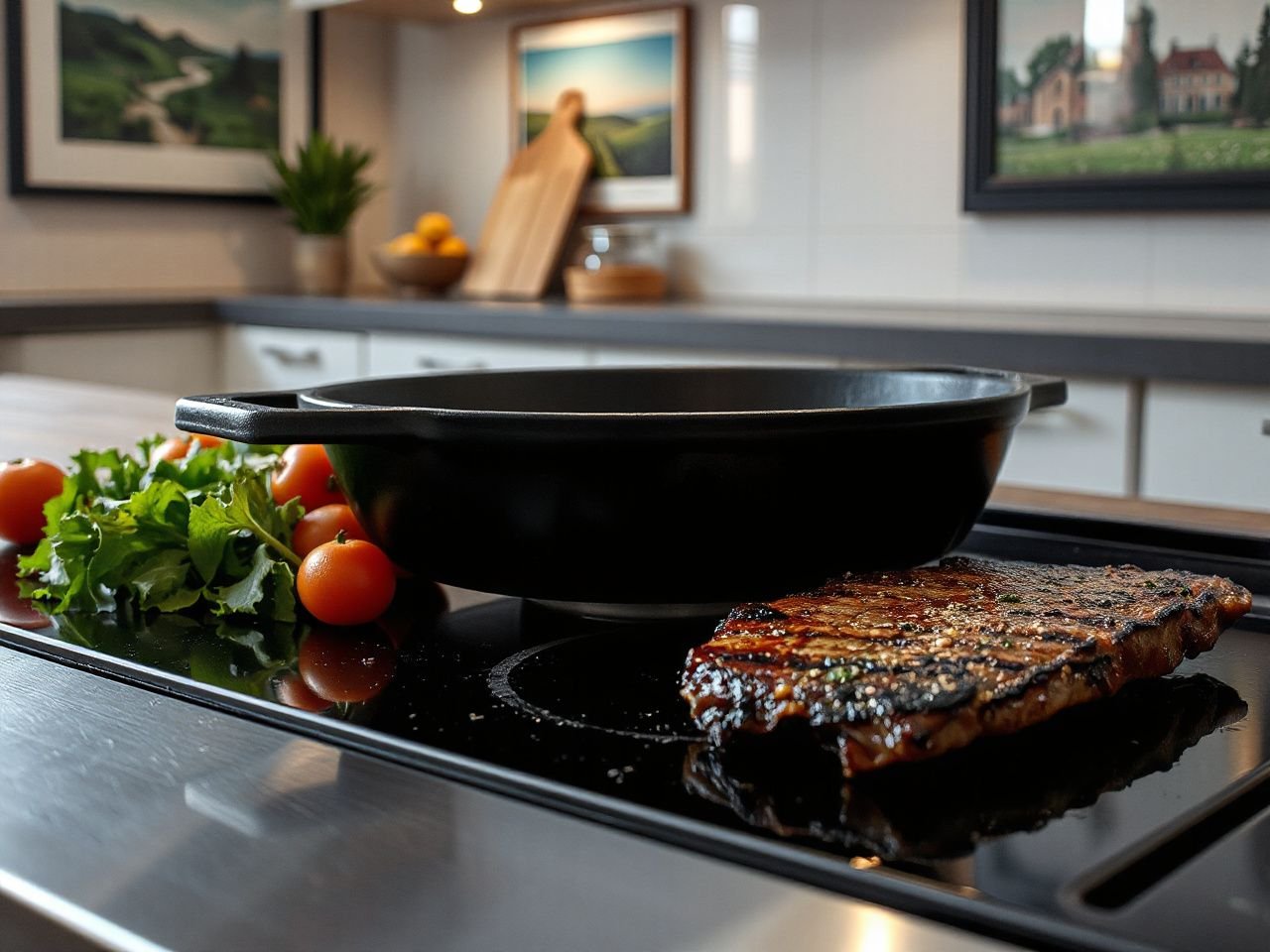
Why use a cast iron skillet when stainless steel and nonstick pans are already part of most kitchens? The answer depends on the heat pattern your recipe needs, not on a claim that one pan suits every task. The key distinction is between heat retention and heat responsiveness: cast iron is useful when stable, sustained heat matters, but it is less forgiving when a cook needs rapid temperature changes. Bare cast iron and enameled cast iron also need separate treatment, because their seasoning, cleaning, acidity, and maintenance considerations are not interchangeable.
Key Takeaways
- Cast iron holds heat well, making it useful for browning, searing, baking, and steady stovetop cooking.
- Bare cast iron depends on seasoning made from polymerized cooking oil, while enameled cast iron does not use that same cooking surface.
- Acidic foods can weaken bare-iron seasoning and may develop a metallic flavor during long cooking.
- Weight, slow heat response, careful drying, and cooktop handling matter as much as the skillet’s cooking strengths.
Why Use a Cast Iron Skillet for Cooking?
Start with the pan before starting the recipe. A cast iron skillet is most useful when the cooking surface needs to stay hot after food touches it and when the recipe benefits from sustained heat. That makes cast iron a natural fit for browning, searing, skillet baking, roasting, and dishes that move from stovetop cooking to the oven.
Cast iron retains heat well, so a properly preheated skillet can keep supplying heat as ingredients are added. Cast iron also responds more slowly than a thinner pan when the heat source changes. That combination explains both the appeal and the learning curve: the pan stays steady, but the cook must adjust earlier.
Heat retention is different from heat responsiveness
Heat retention describes how well a pan remains hot. Heat responsiveness describes how quickly the pan changes after the burner is raised or lowered. A cast iron skillet is strong in the first area and slower in the second, so turning down a burner does not produce an immediate change at the cooking surface.
Cast iron cookware is useful for recipes that need a stable cooking surface. A skillet can be preheated on a stovetop or in an oven, and it can also be used on an outdoor grill or open campfire. The important check is whether the cooking setup can support the pan safely and whether the pan can be moved without dragging it across a delicate surface.
A cast iron skillet holds heat after the heat source is reduced, so cooks should lower the setting before the food reaches the desired stage rather than waiting for an instant response. That habit prevents the common mistake of correcting too late.
How cast iron differs from stainless steel and nonstick cookware
Stainless steel skillets are often chosen when a cook wants a responsive metal surface and does not want to maintain seasoning. Cast iron instead asks for more attention to preheating, oil, heat control, and drying. The choice is therefore about the cooking process as much as the food.
Nonstick cookware uses a manufactured nonstick surface, while bare cast iron relies on seasoning. Seasoning is a layer of polymerized cooking oil bonded to the iron surface. It is not the same thing as a factory nonstick coating, and it can become patchy, sticky, thin, or rusty if the pan is overheated, left wet, scrubbed harshly, or coated with too much oil.
Cast iron is a sensible choice when the recipe benefits from retained heat and a surface that can move between stovetop cooking and the oven. Stainless steel is often easier to choose for quick heat changes, while nonstick may be more convenient for foods that need gentle release without seasoning maintenance.
If you are comparing pan shapes and surfaces before deciding how cast iron fits your kitchen, this cast iron skillet value guide can provide additional context without changing the basic cooking principles.
Foods that suit cast iron particularly well
Recipes that benefit from browning and steady heat are natural candidates for a cast iron skillet. Examples include seared meat, roasted vegetables, cornbread, skillet breads, baked fruit dishes, and foods that need a firm cooking surface as they develop color.
- Searing: Stable heat helps the pan remain hot as food contacts the surface.
- Oven cooking: The skillet can be preheated in the oven and used as part of a bakeware setup.
- Stovetop-to-oven recipes: One pan can support browning first and baking afterward, provided the handle and pan instructions permit the transition.
- Outdoor cooking: Cast iron is compatible with an outdoor grill or open campfire, with careful handling and a stable cooking position.
A cast iron skillet is especially useful for recipes that need sustained heat rather than instant temperature changes. Delicate foods that require constant adjustment may be less comfortable in the same pan.
Bare Cast Iron, Enameled Cast Iron, and Seasoning
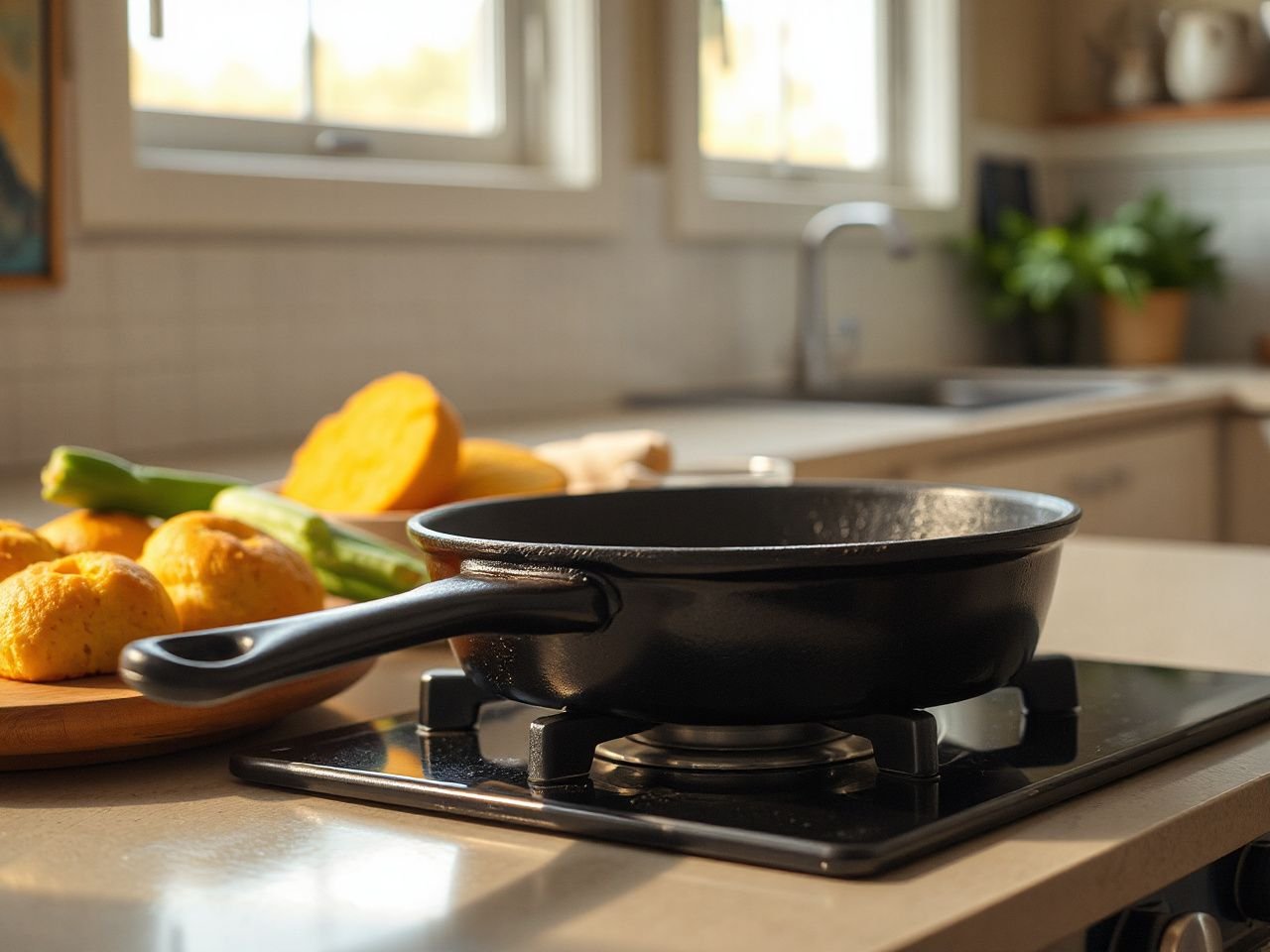
The words cast iron cookware cover two surfaces that behave differently in daily use. Bare cast iron has an exposed iron cooking surface protected by seasoning. Enameled cast iron has a glasslike enamel surface over the iron, so the seasoning routine used for bare iron does not transfer directly.
Why bare cast iron needs seasoning
Bare cast iron needs seasoning because its cooking surface is protected by polymerized cooking oil rather than a factory nonstick coating. During oven seasoning, a thin oil film is heated until it changes into a bonded protective layer. Repeated care builds a cooking surface that can release food more readily, but the surface remains dependent on how the pan is used and cleaned.
Seasoning is not a single permanent event. It is a surface condition that can improve with suitable cooking and decline through moisture, abrasion, excess oil, or prolonged contact with acidic ingredients. A thin, even coat of vegetable oil is more useful than leaving a visibly wet film on the pan.
Bare cast iron seasoning protects the iron from moisture, but the pan still needs to be dried thoroughly after washing. A light coat of oil helps protect the surface after drying.
How to choose between bare and enameled cast iron
Bare cast iron suits cooks who want a seasoned cooking surface and do not mind drying and oiling the pan after washing. Enameled cast iron suits cooks who want the iron’s retained heat while avoiding the same bare-surface seasoning routine. The two versions should not be treated as interchangeable.
- Choose bare cast iron for: searing, oven seasoning, campfire cooking, and recipes where a maintained seasoned surface is part of the appeal.
- Choose enameled cast iron for: cooking that calls for an enamel-covered surface and less attention to bare-iron seasoning.
- Check the care instructions first: surface coatings can have different limits for utensils, cleaning products, heat sources, and abrasion.
Enameled cast iron does not need bare-iron seasoning, and bare cast iron should not be assumed to have enamel’s resistance to acidic ingredients. The surface determines the care routine.
What acidic foods do to bare cast iron
Acidic ingredients can weaken seasoning and may contribute to metallic flavors, especially during long cooking in bare cast iron. Tomatoes, vinegar-heavy mixtures, wine-based sauces, and citrus-rich preparations deserve more caution than short contact with neutral ingredients.
This does not mean every acidic ingredient is forbidden in every bare cast iron skillet. It means the surface, cooking duration, and recipe deserve attention. A well-maintained surface may tolerate brief contact better than a patchy or newly repaired one, but the observable result matters: seasoning may look thinner, and the food may taste metallic.
Enameled cast iron is a separate case because the food contacts enamel rather than bare iron. Follow the pan’s care instructions instead of applying bare cast iron assumptions to the enamel surface.
How to Use and Maintain a Cast Iron Skillet
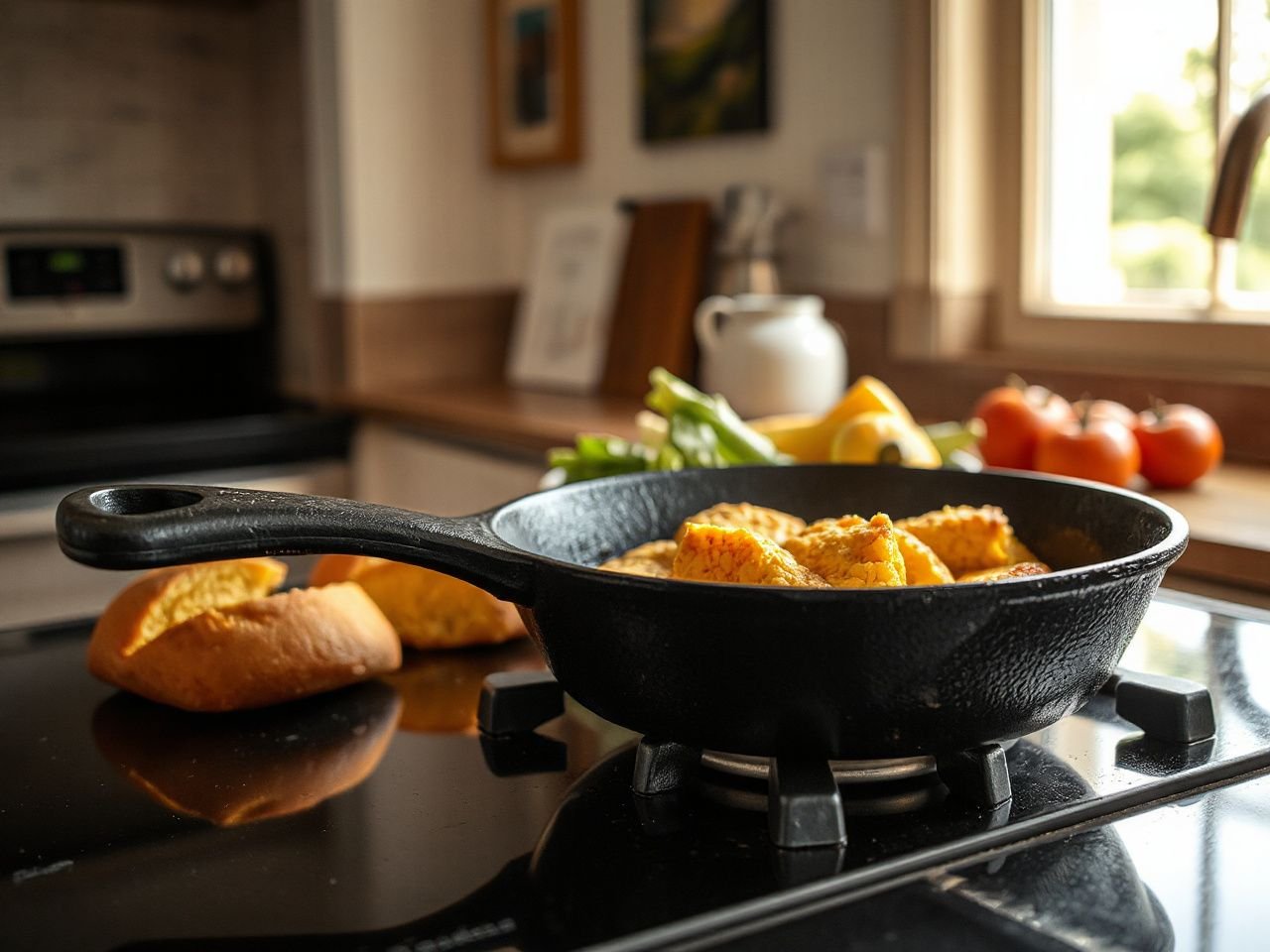
Good cast iron cooking begins before the food enters the pan. Preheating, controlled oiling, and early heat adjustments are more important here because the skillet changes temperature slowly.
Step 1: Inspect the surface
Look for a dry, even surface. Sticky areas suggest excess oil or incomplete bonding. Rust indicates that moisture has affected exposed iron. Patchy seasoning means the protective layer is uneven, so foods may release differently across the pan.
A cast iron skillet with sticky seasoning should be corrected before delicate cooking because excess oil can remain tacky instead of forming a smooth protective layer. Rust removal from cast iron should be followed by thorough drying and renewed seasoning rather than simply covering the rust with more oil.
Step 2: Preheat gradually
Use the stovetop or oven as the recipe requires, and give the heavy pan time to warm through before adding food. The reader can check the surface by following the recipe’s visual cues and by observing how oil moves across the pan; no universal setting should replace the instructions for the specific appliance.
Cast iron cookware should be handled carefully on glass or ceramic stove tops because dragging or dropping the pan can scratch or smash those surfaces. Lift rather than slide. The Consumer Product Safety Commission provides consumer safety information, so consult its guidance alongside the cooktop and cookware instructions when evaluating household risks.
Step 3: Add a suitable amount of oil
Oil helps food contact the cooking surface more evenly, but a heavy layer does not automatically improve release. Use enough for the recipe and spread it across the surface before the food goes in. Vegetable oil can serve as a cooking oil and as a light protective coat after cleaning.
Food sticks to cast iron when the surface is not adequately preheated, when the seasoning is uneven, when the food is moved too early, or when the pan lacks enough cooking fat for the recipe. Sticking is a signal to inspect heat, surface condition, and timing rather than proof that all cast iron is naturally nonstick.
Step 4: Let the food develop a release point
Food may cling at first and release more readily after browning develops. A metal spatula can be used carefully on a suitable cast iron surface, but aggressive scraping with a metal scouring pad is different. Metal scouring pads can damage the seasoning and remove layers from the pan.
Metal utensils are not automatically forbidden with cast iron cookware. The useful boundary is controlled cooking use versus abrasive cleaning that strips the seasoning.
Step 5: Clean without soaking
Allow the pan to become safe to handle, then remove food residue with suitable washing and gentle scrubbing. Do not let bare cast iron sit in water. Soap can be used when needed to remove food residue, but harsh abrasion and prolonged soaking place more stress on seasoning.
A cast iron skillet should be dried thoroughly after washing because trapped moisture can lead to rust. Put the pan over gentle heat if the care instructions allow it, or dry it carefully by another suitable method, then apply a light coat of oil and wipe away visible excess.
The dishwasher is a poor fit for bare cast iron because prolonged water exposure can encourage rust and disturb the seasoning. Enameled cast iron still needs its own manufacturer instructions, since an enamel surface is not the same as bare iron.
Step 6: Re-season when the surface needs repair
Re-seasoning is not required after every use. Routine care generally means cleaning, thorough drying, and a light protective coat of oil. Re-season when the surface becomes persistently sticky, rusty, or noticeably stripped.
One established oven method is to place the pan in a 500˚ oven for one hour, then allow it to cool entirely inside the oven. This process should be followed by sensible surface inspection rather than repeated automatically after every meal.
Drawbacks, Safety, and Everyday Fit
Cast iron’s strengths create its drawbacks. The same mass that helps the skillet retain heat also makes it heavy and slower to cool. A person who needs cookware that is easy to lift or quick to cool may find daily use inconvenient.
Weight and handling
Lift a cast iron skillet with a secure grip, especially when it contains food. Avoid dragging it across glass or ceramic stove tops, which may be scratched or smashed by rough handling. The pan should also be placed where its weight will not strain a delicate surface.
Cast iron is heavy and slow to cool, so cooks should plan where the skillet will rest after cooking. That practical limitation matters more in a small kitchen or for anyone with limited lifting strength than it does in a recipe description.
Heat control and delicate food
A cast iron skillet can overshoot the desired cooking stage if the heat is lowered only after food appears finished. Lower the heat earlier and watch the food’s color, texture, and rate of browning. A pan that stays hot is helpful for a sear but less convenient for rapid corrections.
Thin pans may feel easier for recipes that move quickly between high and low heat. Cast iron earns its place when the recipe benefits from staying hot, not because it replaces every other pan in the kitchen.
Iron in food and food safety
The iron content of food might rise when food is cooked in cast iron. The amount can vary with the food and the cooking conditions, so this fact should not be treated as a precise nutritional promise or a substitute for medical advice.
For general food-safety guidance, consult the U.S. Food and Drug Administration, which publishes information about safe food handling and preparation. Cookware material does not remove the need to handle, cook, and store food according to reliable food-safety guidance.
Does cast iron save money over time?
Cast iron can save money over time when the pan remains useful for many cooking methods and receives proper care, but no universal saving should be assumed. The practical value comes from versatility: one skillet can support stovetop cooking, oven work, outdoor grilling, and campfire cooking.
That value disappears if the pan is too heavy to use comfortably, if its heat response frustrates the recipes you make, or if maintenance becomes a burden. A durable pan is economical only when it fits the cook’s actual habits.
Cost is best judged in relation to use rather than price alone. A pan that sits unused is not economical, even if its surface can last through careful maintenance.
For readers studying how different cast iron shapes affect cooking tasks, the guide to cast iron grill pans for steak offers a related comparison of cooking surfaces without changing the care principles described here.
Common Questions About Using Cast Iron
Is a cast iron skillet naturally nonstick?
Bare cast iron is not naturally nonstick in the same way as cookware with a manufactured nonstick coating. Its release depends on seasoning made from polymerized cooking oil, suitable preheating, enough cooking fat for the recipe, and allowing food to brown before moving it. A patchy, sticky, rusty, or stripped surface will usually need attention before delicate food releases well.
Can I cook acidic foods in bare cast iron?
Acidic ingredients can weaken bare-iron seasoning and may contribute to metallic flavors, particularly during long cooking. Brief contact may produce a different result from a long simmer, but the pan’s condition matters. If the recipe is strongly acidic or cooks for a long period, enameled cast iron may be the more suitable surface, subject to its care instructions.
Do I need to season a cast iron skillet every time I use it?
No. Routine care is usually cleaning, thorough drying, and applying a light coat of oil to bare cast iron. Full oven seasoning is for a surface that has become rusty, sticky, patchy, or stripped rather than an automatic step after every meal. A pan placed away while still damp is more likely to develop trouble than one that receives simple, consistent drying.
Can I use soap, metal utensils, or a dishwasher with cast iron?
Soap can be used to remove food residue, but bare cast iron should not be soaked. Controlled use of metal utensils is different from abrasive scouring, which can remove seasoning layers. A dishwasher exposes bare cast iron to prolonged water and is therefore a poor fit for the surface. Enameled cast iron requires separate care instructions.
Why use a cast iron skillet instead of stainless steel or nonstick cookware?
Use cast iron when retained heat, browning, oven cooking, or outdoor cooking suits the recipe. Stainless steel may be more responsive for rapid heat changes, while nonstick cookware may require less surface maintenance for delicate foods. Cast iron is a choice for stable heat and a maintained seasoned surface, not a universal replacement for every pan.
Will cooking with cast iron boost my iron levels?
The iron content of food might rise during cooking in cast iron, but the result is not a dependable nutritional dose. Food type, acidity, cooking conditions, and the pan’s surface all affect what happens. Anyone concerned about iron intake or deficiency should use advice from a qualified health professional rather than treating cookware as a medical tool.
What should I do if seasoning becomes rusty or patchy?
First remove loose residue and rust using a method that does not unnecessarily damage the pan, then wash, dry thoroughly, and restore the surface with oven seasoning. One verified method uses a 500˚ oven for one hour, followed by complete cooling inside the oven. A light oil coat after routine washing helps protect the restored surface.
The short answer to why use a cast iron skillet is simple: choose it when stable, sustained heat matters more than quick temperature changes. Check the surface before the recipe, separate bare iron from enamel, dry the pan completely, and accept the weight as part of the tool’s design. That approach makes cast iron useful without asking it to behave like stainless steel or nonstick cookware.