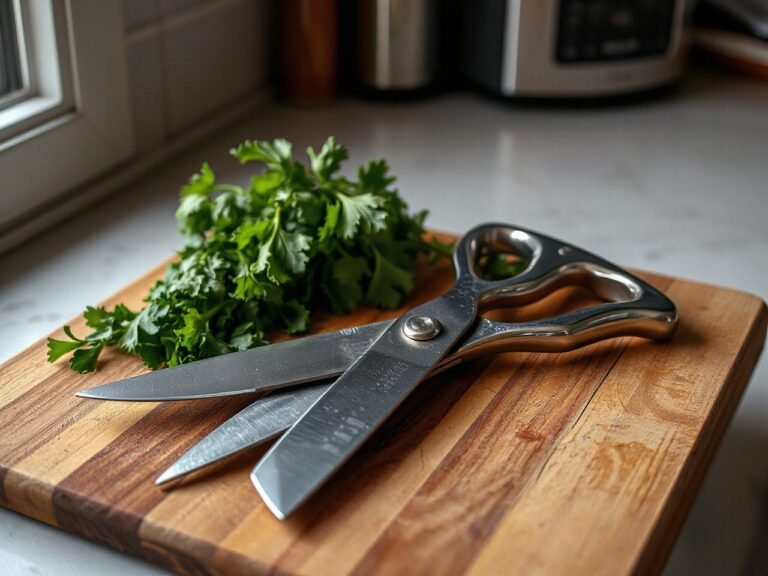
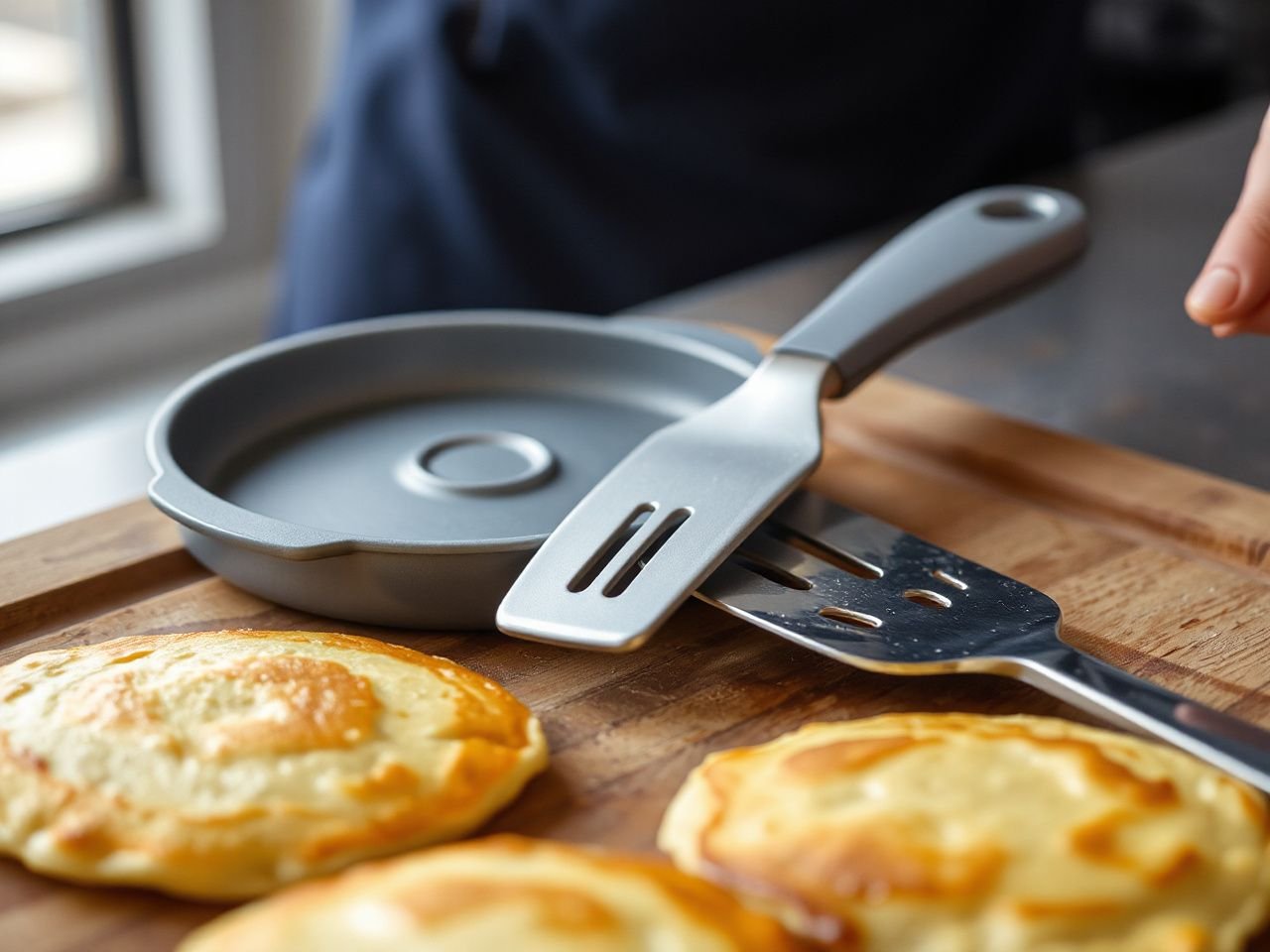
A poor spatula can scratch a coated pan, tear delicate food, bend under a heavy portion, or trap residue where the blade meets the handle. A useful spatula buying guide separates the shape and flexibility of the working edge from the material of the handle and blade, because a spatula that protects cookware may still be poor at sliding under food or supporting it during lifting.
Cookware compatibility and cleanability are operating constraints, not secondary preferences. The right turner for cast iron can be the wrong choice for a coated pan, and a durable blade is not useful if its joins retain food or its handle fails under heat.
Key Takeaways
- Choose the working edge for the food you lift most often, then match the material to your cookware.
- Flexible edges slide beneath delicate food, while thicker or more rigid blades support heavier portions.
- Inspect joins, coatings, handles, and edges regularly; cracks, melting, peeling, looseness, or trapped residue are reasons to stop using a spatula.
Beginner: Start With the Job, Not the Material
Step 1: Identify the food you cook most often
A turner is the broad category for a tool that slides beneath food and helps lift or turn it. That description covers several very different working shapes. Eggs, fish, pancakes, roasted vegetables, burgers, and baked goods do not place the same demands on an edge.
If delicate foods appear often, start by looking for a thin edge with enough flexibility to follow the curve of a pan. A fish spatula is commonly shaped with a narrow, angled, flexible blade that can enter beneath fragile food without forcing a wide section of the food upward at once. That same flexibility can help with eggs and thin pancakes.
A heavier food needs more support. A broad turner with a firmer blade is more suitable for lifting a substantial portion without allowing the food to fold over the edge. The useful question is not whether a blade feels strong in the drawer; the useful question is whether the blade supports the food during the complete lift.
A spatula should be selected according to the food it must support, not according to its appearance alone.
- Delicate foods: Look for a thin, flexible leading edge that can slide below food without excessive pressure.
- Heavier portions: Look for a broader, more supportive blade that resists bending during lifting.
- Draining tasks: Consider a slotted turner when liquid or rendered fat needs to pass through the blade.
- Mixing and scraping: Use a silicone or rubber spatula with a shaped edge that can follow bowls and pans.
Step 2: Choose among a turner, fish spatula, and slotted turner
A conventional turner is a sensible general-purpose shape for moving food from a flat cooking surface to a plate. The blade may be broad enough for larger pieces, but the exact balance between width, thickness, and flexibility determines how confidently it lifts.
A fish spatula suits food that benefits from a narrow entry point and a flexible blade. The design can also help with foods that break when a stiff, thick edge presses underneath them. Flexibility has a limit, though. A blade that bends too readily may let a heavy portion sag or slide away during the lift.
A slotted turner has openings in the working surface. Those openings allow liquid or oil to drain instead of remaining between the food and the blade. Drainage is useful for foods lifted from a pan with excess fat, but slots also reduce the continuous support available for small, soft, or crumbly food.
A slotted spatula is useful for draining liquid, but its openings can make small or delicate foods harder to support.
Match the slot design to the food. Large openings may let small pieces fall through, while narrow slots may provide more support but allow less liquid to escape. The reader can judge this directly by placing the empty blade over the food: the openings should remove unwanted liquid without removing the food’s support.
Step 3: Separate the blade from the handle
Many buying decisions stop at the blade material. That misses the joint, which is often the point where food residue, water, heat, and force meet. A continuous silicone coating can block debris from collecting along the utensil and can shield the handle from heat, but a coated surface still deserves inspection at its edges and connections.
Hold the spatula as if the blade were carrying food. The handle should feel secure without requiring a tight grip. A handle that feels excessively heavy can make the working end harder to control, while a very light handle may provide little support when a firm lift is needed.
Handle comfort is a practical safety issue because a slippery or poorly balanced tool encourages awkward wrist angles and rushed movements near a hot pan. The reader can check balance by holding the spatula at the normal gripping point and observing whether the blade drops sharply or remains easy to guide.
A well-balanced spatula keeps the hand in control of the blade during sliding, turning, and lifting.
Intermediate: Match Materials to Cookware and Heat
Metal, nylon, silicone, and wood
Stainless steel provides a firm working edge and suits tasks that need direct contact with uncoated cast iron or stainless steel cookware. A thin metal edge may slide beneath food effectively, but metal can scratch or damage some nonstick coatings. Metal should therefore be kept away from coated frying surfaces unless the cookware maker specifically permits that use.
Nylon is useful for cookware that needs a non-scratching edge. Nylon turners can include slots for draining liquid and may be dishwasher safe according to their design. Nylon can tolerate temperatures up to 446°F, yet nylon utensils risk becoming soft or melting when exposed to environments hotter than 400°F. Those figures show why a label about heat tolerance does not automatically make a utensil suitable for every hot-pan situation.
Silicone is commonly used for flexible turners and scraper-style spatulas. A continuous silicone surface can reduce places where food collects and can cover a handle that would otherwise be exposed to heat. Silicone remains a material category, not a complete performance description; the blade may still be too flexible for heavy food, too thick for delicate food, or poorly joined to the handle.
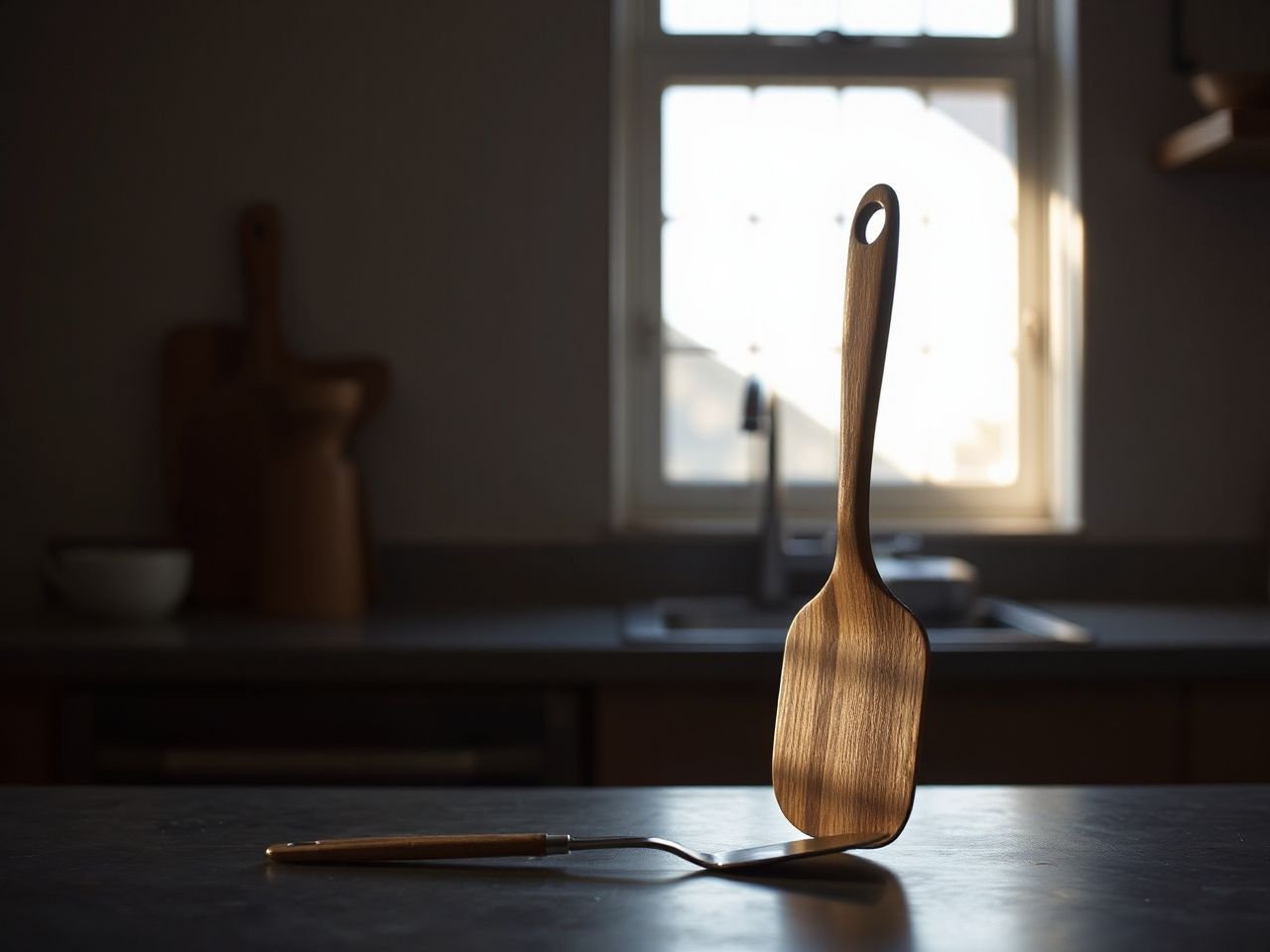
Wooden spatulas can be useful for stirring, scraping, and working with cookware that should not receive a metal edge. Wood is porous and needs different care from silicone or metal. Prolonged soaking can affect wood, and damp storage can leave the utensil in poor condition, so washing and drying should be handled promptly.
Nylon, silicone, stainless steel, and wood each solve a different utensil problem; no single material determines the quality of the whole spatula.
Nonstick cookware needs a cautious edge
For nonstick frying pans, choose silicone, nylon, plastic, or wooden spatulas rather than metal. A coated surface can be damaged by an edge that is harder than the coating or by scraping that concentrates force on a small point.
That rule does not make every non-metal spatula suitable. A nylon blade may soften in excessive heat. A silicone blade may be safe for the pan but too flexible for a large portion. A wooden edge may protect the coating but become rough, split, or difficult to clean if care is neglected.
Nonstick cookware care begins with respecting the contact surface. If the coating is visibly scratched, peeling, or changing texture, stop using the pan and follow the cookware maker’s care instructions rather than trying to compensate with a different spatula.
Heat resistance is not the same as pan-contact suitability
A utensil may tolerate heat near the working end while its handle, adhesive, coating, or joint fails sooner. Heat can also soften nylon, discolor surfaces, damage exposed joins, or make a handle uncomfortable to hold. A label that names a maximum temperature should be read as a limit for the stated use, not as permission to leave the spatula against a hot pan.
Direct contact with a hot surface is a separate demand from brief contact with food. Keep handles away from burners and hot pan walls when the design does not clearly support that use. If the working edge softens, warps, smells unusual, or leaves residue, remove the spatula from service.
Heat resistance does not guarantee that a handle, join, adhesive, or coating will remain sound during direct contact with a hot pan.
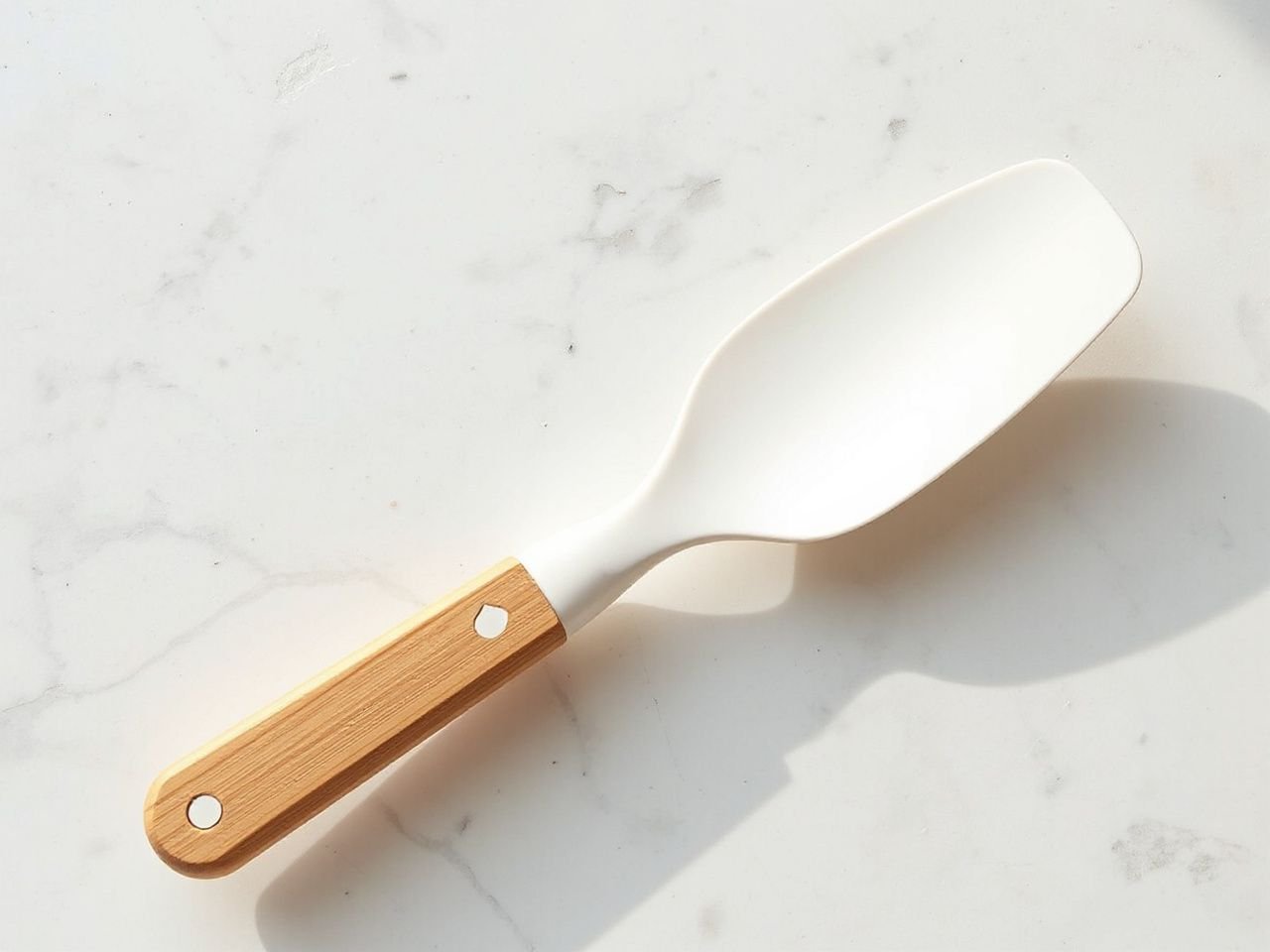
Advanced: Inspect Flexibility, Construction, and Failure Points
Flexibility, thickness, and edge shape
Flexibility determines how easily the edge follows a cooking surface. A flexible blade can slide beneath a thin omelet or fragile fish with less upward pressure. A rigid blade provides more support when the food is heavy or the lift requires a stable platform.
Thickness changes the entry point. A thin edge can get under food that sits close to the pan, while a thick edge may push into the food before it reaches the center. Thickness also affects support, so the thinnest blade is not automatically the right blade for every task.
Look at the edge from the side. The working end should form a clean transition into the blade rather than presenting a blunt step that forces food upward. Check the corners as well. A sharply shaped corner may reach beneath food in a tight space, while a broad rounded corner may be gentler around soft food.
Blade flexibility, thickness, and edge shape work together to determine whether a spatula slides, supports, or drains effectively.
Slots and drainage
Slots are valuable when liquid needs to leave the blade before food reaches the plate. They are especially useful for food lifted from oil or liquid because the openings reduce the amount carried along with the portion.
Drainage comes with a trade-off. Slots remove solid support from parts of the blade, and small food can catch in or pass through the openings. A solid blade may be easier for pancakes, soft vegetables, and crumbly portions, while a slotted blade may be more useful for foods surrounded by excess liquid.
Do not judge a slotted turner by the presence of slots alone. Examine their size, position, and relation to the edge. The openings should help liquid escape while leaving enough continuous blade beneath the food you intend to lift.
Why spatulas bend, crack, melt, or lose their edge
Repeated force can permanently bend a thin blade or loosen the connection between blade and handle. Excessive heat can soften nylon or melt plastic. Sharp cookware edges can nick silicone, nylon, wood, or plastic. Scraping hard residue with a tool not designed for that task can damage the working edge.
Cracks create places where moisture and food residue can remain. Peeling surfaces can release fragments into food and expose material beneath the coating. A loose handle makes the blade harder to control, while a rough or melted edge can damage cookware or tear food.
Replace or discard a spatula if you find:
- Cracks in silicone, nylon, plastic, wood, or a coating.
- A melted, warped, blistered, or rough working edge.
- Peeling material or exposed adhesive.
- A handle that shifts, twists, or separates from the blade.
- Food residue trapped in a joint that cannot be removed through normal cleaning.
- A blade that no longer returns to its intended shape or cannot support food safely.
A damaged spatula is no longer a reliable food-contact tool, even if the damage appears small.
Cleaning and dishwasher use
Dishwasher compatibility depends on the complete utensil, not only the blade material. A nylon turner may be dishwasher safe, but a wooden handle, exposed adhesive, decorative coating, or poorly sealed joint may require hand washing. Follow the care instructions supplied with the utensil whenever they are available.
Silicone usually benefits from thorough washing around its edges and joins, where grease can remain. Nylon should be checked for softening, warping, or roughness after heat exposure. Metal should be dried if water collects around a joint, and wood should not be left submerged for prolonged periods.
Wash a spatula promptly after sticky or fatty foods. Use a brush or cloth to reach slots and seams, then inspect the tool before storing it. A dishwasher can remove visible soil while leaving a damaged surface or trapped residue unnoticed, so cleaning does not replace inspection.
Dishwasher cleaning can affect wood, silicone, nylon, and metal differently, so the utensil’s construction matters as much as its headline material.
Storage and daily use
Store spatulas where the working edges will not press against sharp knives or rough cookware. Contact with sharp objects can nick flexible materials and damage a carefully formed metal edge. A drawer divider, utensil crock, or hanging arrangement can work if the blades remain clean and dry.
Keep scraper-style silicone or rubber spatulas separate from tools that carry hard, sharp edges. Avoid placing a wet wooden spatula in a closed container. If several tools share a drawer, arrange them so the blade—not the handle—does not bear the weight of other utensils.
Storage can shorten a spatula’s useful life when blades rub against sharp cookware or remain damp after washing.
Preventive Measures: Build a Small, Purposeful Utensil Set
Use the replacement test
I would start with the question, “What does this gadget replace?” A new spatula earns drawer space if it performs a task that an existing tool cannot perform well, such as sliding under delicate food, draining liquid, scraping a bowl clean, or supporting a heavy portion without bending.
A second turner with the same edge, flexibility, and cookware compatibility may add little value. A different shape can be worthwhile when it solves a clear problem. This approach also exposes the real cost of a low-cost utensil that needs frequent replacement: the purchase may be small, but repeated failures consume money, storage space, and attention.
A spatula earns its place when its shape solves a distinct cooking problem that another utensil does not solve adequately.
Match tools to the rest of the kitchen
Cookware should guide utensil selection. If the kitchen relies on coated frying pans, read the care instructions and keep metal edges away from the cooking surface. If uncoated cast iron or stainless steel receives regular use, a thin metal turner may offer the firm edge needed for sliding and lifting, provided the cook accepts the different care requirements of that cookware.
The surrounding equipment matters too. Readers choosing pans can consult this practical explanation of cookware types before deciding which spatula materials make sense across the kitchen. A cast iron griddle also creates different edge and support demands, which are covered in the cast iron griddle buying guide.
For baking, a rubber or silicone spatula needs to scrape bowls and fold mixtures without leaving a thick layer behind. A turner is a separate tool for lifting baked items from a surface. Readers setting up a baking area may also find the budget baking pans guide useful for matching pan surfaces with suitable utensils.
Check safety information without guessing
Food-contact suitability depends on the utensil’s materials, construction, and intended use. Product labels and care instructions should provide the primary guidance. For food-equipment standards and certification information, consult NSF International rather than treating a vague heat claim as proof of every form of safety.
Consumer product safety information is also available from the U.S. Consumer Product Safety Commission. The agency is a useful reference for general product hazards, recalls, and safe-use information, but it does not replace the manufacturer’s instructions for a particular spatula.
Black plastic is not automatically unsafe because of its color. Material, intended food contact, heat exposure, condition, and manufacturer instructions matter more than color alone. If a black plastic edge is melting, cracking, or shedding material, stop using it.
Frequently Asked Questions
What should a spatula buying guide prioritize for eggs and fish?
Prioritize a thin, flexible edge that can slide beneath delicate food without forcing the blade upward through it. A fish spatula often suits this task because its shape can enter beneath fragile portions. Check that the blade still provides enough support for the food’s size. For a nonstick pan, choose a material such as silicone, nylon, plastic, or wood rather than metal.
Is a metal spatula safe for nonstick cookware?
Metal spatulas can scratch or damage some nonstick coatings, so use a non-metal edge unless the cookware maker clearly permits metal utensils. A thin stainless steel turner may be appropriate for uncoated cast iron or stainless steel cookware, where a firm edge can help with sliding and lifting. Cookware condition also matters; a damaged coating should not be treated as normal wear.
Can a slotted turner replace a solid spatula?
A slotted turner can replace a solid spatula for tasks where draining liquid or oil is useful. It cannot always provide the same continuous support, particularly for small, soft, or crumbly food. A solid blade is usually more practical for portions that might fall through openings. Choose the slot pattern by looking at the food you lift, not by assuming drainage is always an advantage.
Can spatulas go in the dishwasher without shortening their useful life?
Some nylon spatulas are dishwasher safe, but dishwasher compatibility depends on the whole construction. Wood, exposed adhesive, coatings, and joints may need gentler care even when the blade itself tolerates machine washing. Prolonged soaking can affect wood, while heat and repeated washing can reveal warping, cracking, or separation in other materials. Follow the utensil’s care instructions and inspect it after cleaning.
How does a spatula buying guide help avoid waste?
A useful guide begins with the task the utensil must replace or improve. That prevents buying several tools with the same edge and flexibility while leaving a real gap, such as the need for a delicate fish spatula or a scraper-style silicone tool. Check the blade, handle, joint, cookware compatibility, cleaning method, and storage needs before adding another utensil to the drawer.