The twentieth cut tells the real story.
A useful chef knife guide separates the steel’s corrosion behavior and edge retention from the blade’s geometry, balance, handle fit, and maintenance demands; steel labels alone do not explain cutting feel. It also treats ownership as an ongoing system involving sharpening, cleaning, storage, and cutting-board compatibility rather than as a one-time choice based only on sharpness. This chef knife buying guide follows that distinction, with the edge-retention tester’s priority fixed on how the knife behaves after repeated work rather than how impressive it feels during a brief first cut.
Key Takeaways
- Match blade shape and edge geometry to the food preparation tasks you actually perform.
- Steel affects corrosion behavior and edge retention, but geometry, balance, and handle fit determine much of the cutting feel.
- Honing can realign an edge; sharpening removes material and is needed when the edge is genuinely dull or damaged.
- Cleaning, drying, storage, board choice, and safe technique determine how long a chef knife remains useful.
Beginner: Build a Chef Knife Buying Guide Around the Task
Start with the food, not the steel label
A chef knife should be matched to the cutting task, because no single blade shape is suited to every job. General preparation may include vegetables, fruit, herbs, cooked food, and boneless ingredients, but hard or awkward work calls for a different tool. A chef knife should not be used on bones, frozen food, or for prying.
That rule protects the edge and gives you more control. A cleaver or a deba is appropriate for demanding culinary jobs such as splitting a coconut or chopping bones, while a paring knife can give better control for small hand-held work. A utility knife may sit between those roles, but it should not be treated as a substitute for a tool designed for heavy impact.
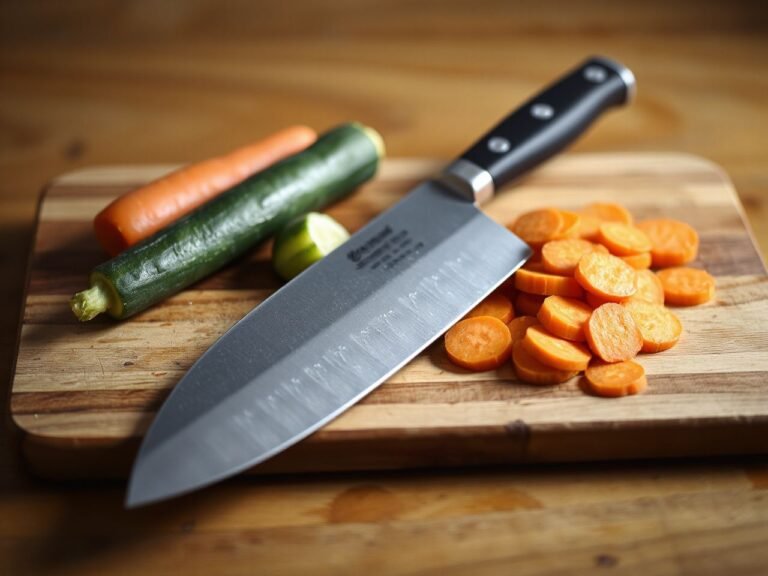
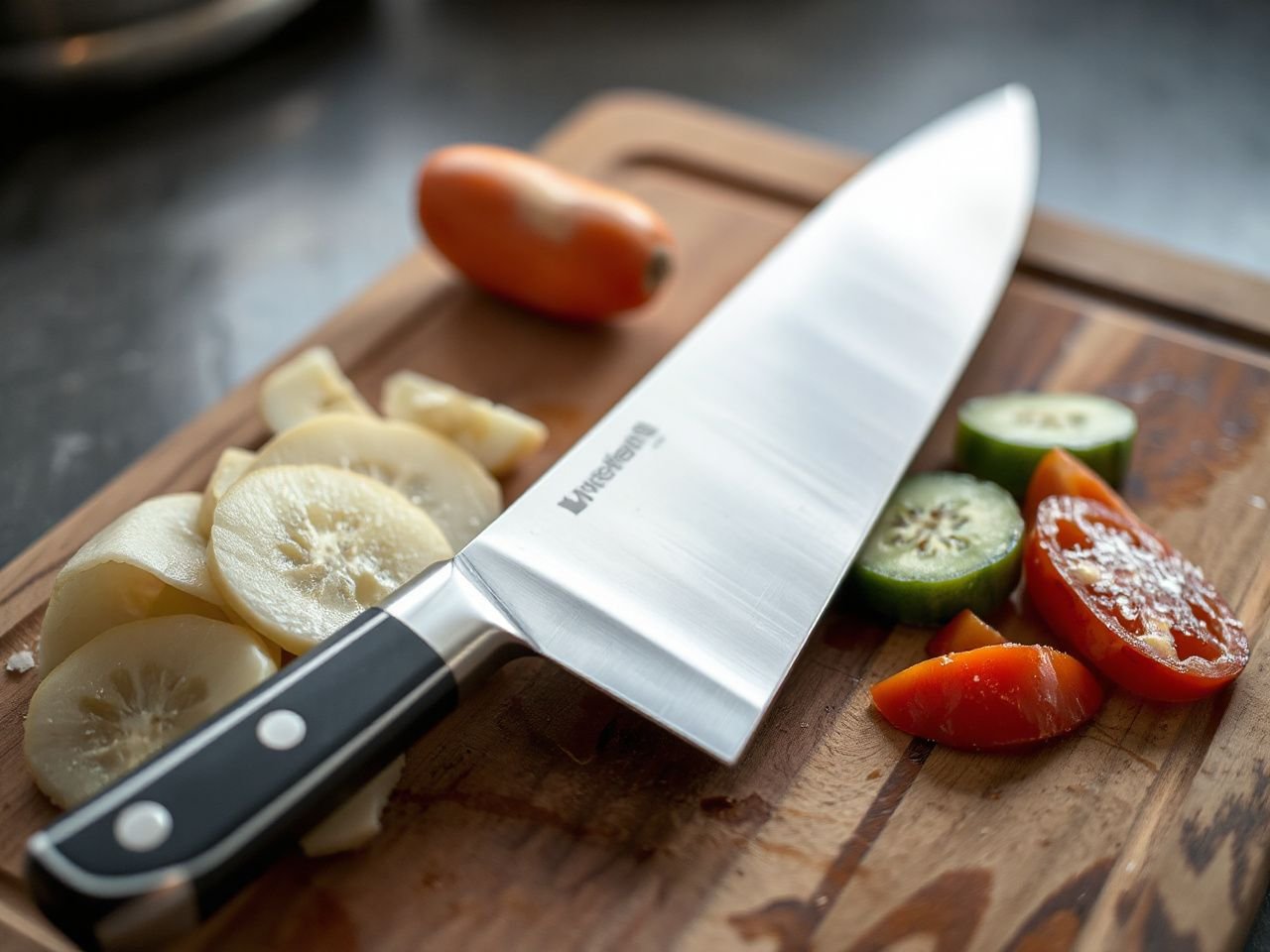
Raw fish or meat is better handled with a narrow blade, while increased blade width correlates with a design intended for slicing fruit and vegetables. The point is practical: a broad blade can offer useful knuckle clearance and a generous surface for moving cut food, while a narrower profile can feel more precise around raw ingredients. The right shape reduces the need to force the knife through food.
Read the blade shape and edge
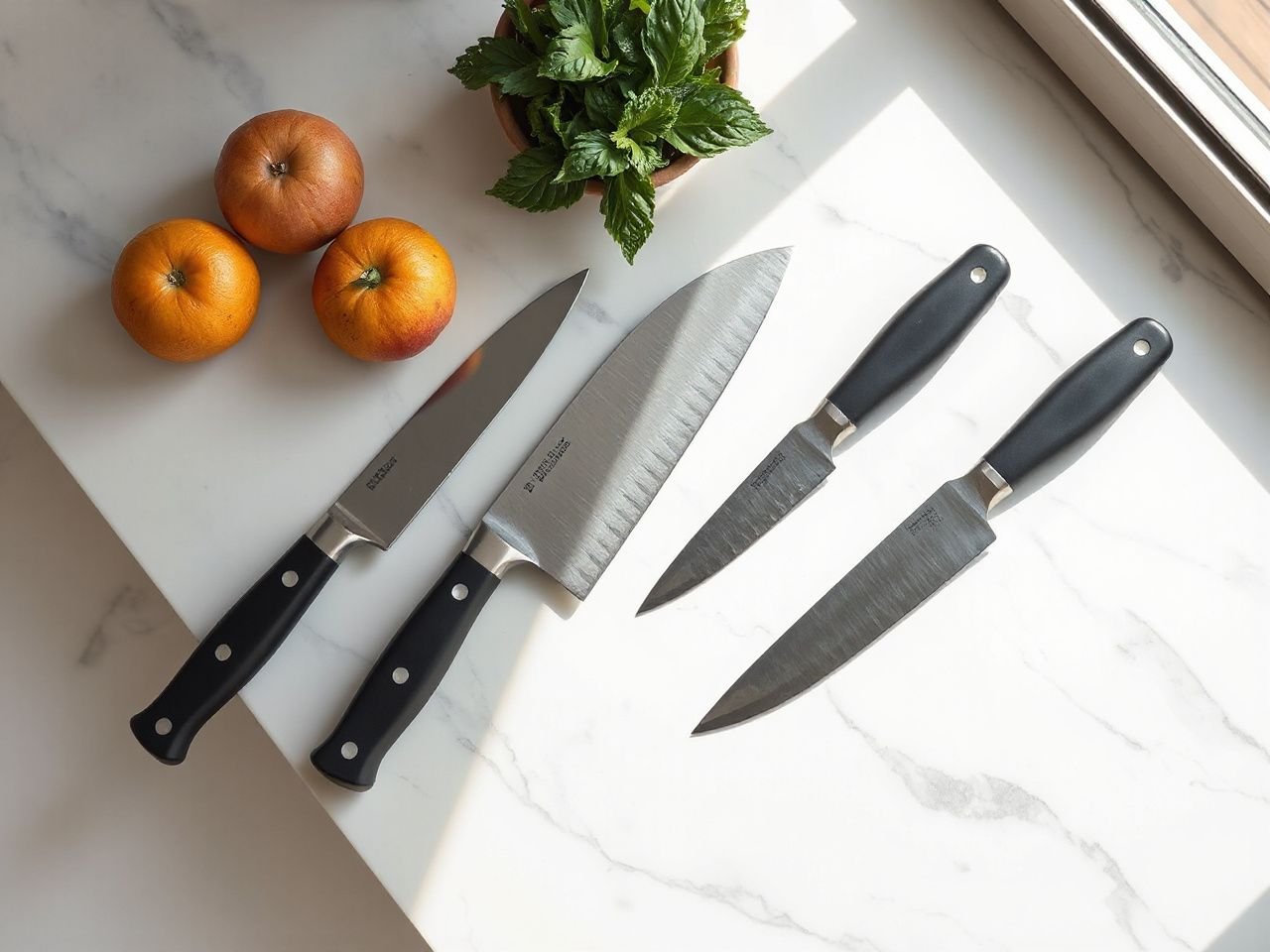
Look at the blade from the side and from above. A pronounced curve supports a rocking motion, while a flatter section supports a push cut in which the blade travels forward through the food. Neither approach is automatically superior. The useful choice is the one that matches your hand motion and the ingredients on your board.
An edge may be double-bevel, with material ground from both sides, or chisel ground, with the primary bevel on one side. A double-bevel edge tends to feel familiar to people who change hands or use a general-purpose chef knife. A chisel-ground edge can demand more deliberate handling because the blade’s geometry directs the cut differently. The visible bevel is more informative than a marketing label.
Edge geometry affects how a blade enters food, how much resistance you feel, and how carefully the knife must be used. A thin, acute edge can feel very direct but may be less forgiving of twisting, hard contact, or careless board technique; a more substantial edge can tolerate ordinary preparation better while feeling less eager in delicate cuts. The exact balance depends on the knife’s design, not on steel name alone.
Assess the handle, bolster, and tang
Hold the knife in a controlled grip if a safe demonstration is available. Your fingers should not need to squeeze hard to keep the blade stable, and the handle should not create a pressure point at the base of the thumb. The bolster may change how the knife sits in the hand, while the tang can affect the handle’s balance and construction.
A handle that feels comfortable in a short inspection can still become tiring if its shape encourages excess gripping force. I would pay attention to contact points rather than to decorative materials. A smooth transition between handle and bolster is easier to clean, and a handle that stays stable in your grip supports more consistent cuts.
A handle problem usually appears as pressure, slipping, looseness, or discomfort; an edge problem appears as food crushing or requiring extra force; a blade problem appears as visible bending, a chip, or a warped path through food. Separating those symptoms prevents a sharpening session from being used to solve the wrong fault.
Consider the whole kitchen system
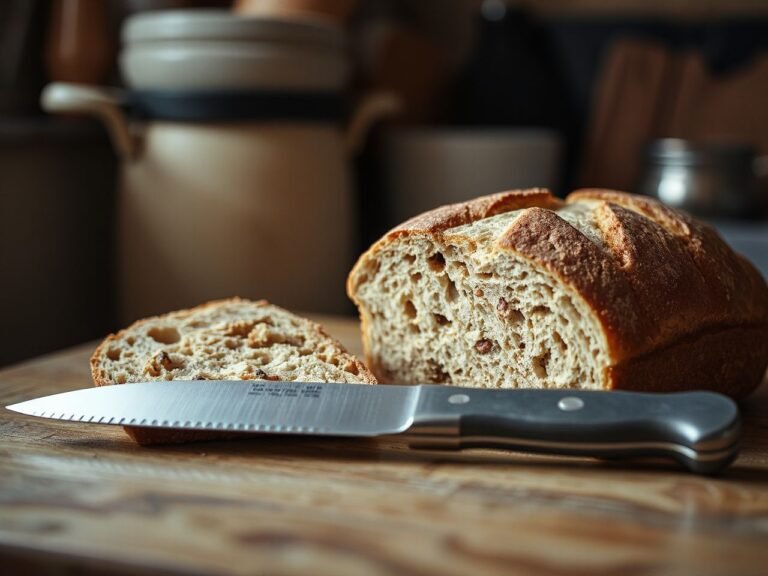
A chef knife works alongside other tools rather than replacing them. Bread requires a bread knife for clean, sawing-style slices, while separating meat from bone belongs to a boning knife. A cutting board also matters: a stable, knife-friendly board gives the edge a predictable surface and reduces movement during the cut.
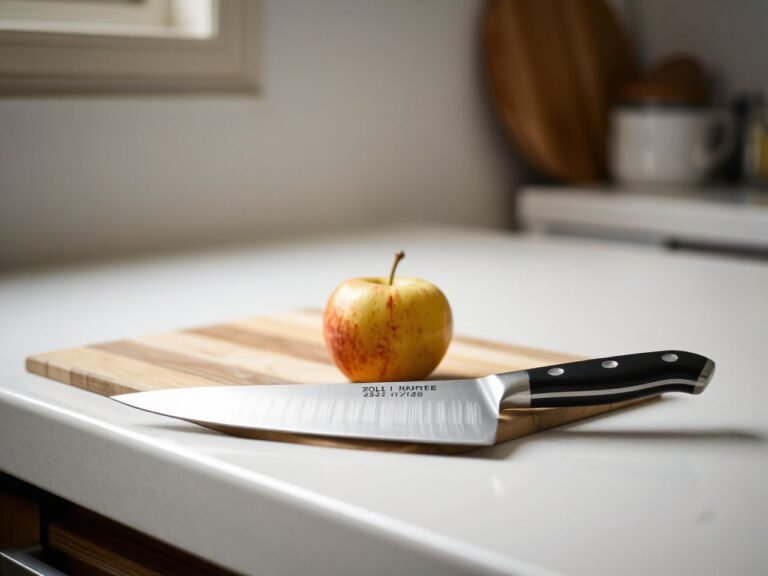
Cutting-board materials vary in how they feel under a blade, but the reader can check the important signs directly. A board that slides, rocks, or has a damaged surface is a poor partner for any sharp knife. Board stability and controlled technique matter as much as the knife itself for safety and edge preservation.
Intermediate: Separate Steel, Geometry, and Daily Feel
Carbon steel and stainless steel serve different routines
Carbon steel can react with acidic or wet foods and needs prompt cleaning and drying to limit discoloration and corrosion. Stainless steel generally asks less of the owner in that specific area, but stainless construction does not make a knife immune to damage from neglect, careless storage, or unsuitable use. Steel choice is therefore a maintenance decision as much as a cutting decision.
Carbon steel is a poor fit for someone who regularly leaves a knife wet or allows food residue to sit on the blade. A cook who enjoys wiping, washing, and drying promptly may accept that routine in exchange for the way a particular carbon blade feels. Stainless steel may better suit a shared kitchen where care is less predictable, though every blade still needs sensible cleaning and storage.
Steel labels alone do not tell you how a knife will cut. Two blades made from different steels can feel similar if their geometry is alike, while two knives with similar steel descriptions can feel very different because their thickness, grind, balance, and handle shape differ.
Carbon steel requires prompt drying because moisture and acidic residue can discolor or corrode the blade. Stainless steel still requires cleaning and drying because food residue and prolonged moisture can affect the blade, handle, tang, or finish.
Understand edge retention without chasing a label
Edge retention means how well the cutting edge continues to perform during repeated use. That performance is separate from the first impression of sharpness. A blade can feel extremely sharp at the beginning and become less useful if its geometry does not suit the work, its edge meets an unsuitable board, or the user twists it through food.
My testing perspective is simple: the twentieth cut deserves more attention than the first. In practical terms, watch for the change in behavior. A healthy edge enters the ingredient with controlled pressure; a tired edge starts to slide, crush, or demand a heavier stroke. Those signs tell you more about ownership than a brief paper-cutting demonstration.
Edge retention is influenced by steel, edge geometry, cutting material, technique, and maintenance. The owner controls several of those factors without changing the knife. Using the correct board, keeping the blade clean, avoiding bones and frozen food, and sharpening before severe damage all reduce unnecessary stress on the edge.
Distinguish honing from sharpening
Honing can realign an edge but cannot remove enough metal to replace proper sharpening when the edge is genuinely dull or damaged. A honing rod is therefore a maintenance tool, not a complete sharpening system.
Use the observable result as your guide. If a clean, lightly used blade feels slightly less direct but has no chips and still responds to careful maintenance, honing may help realign the edge. If the knife continues to crush food, slips from the surface, or has a visible chip, it needs sharpening that removes material and creates a new working edge.
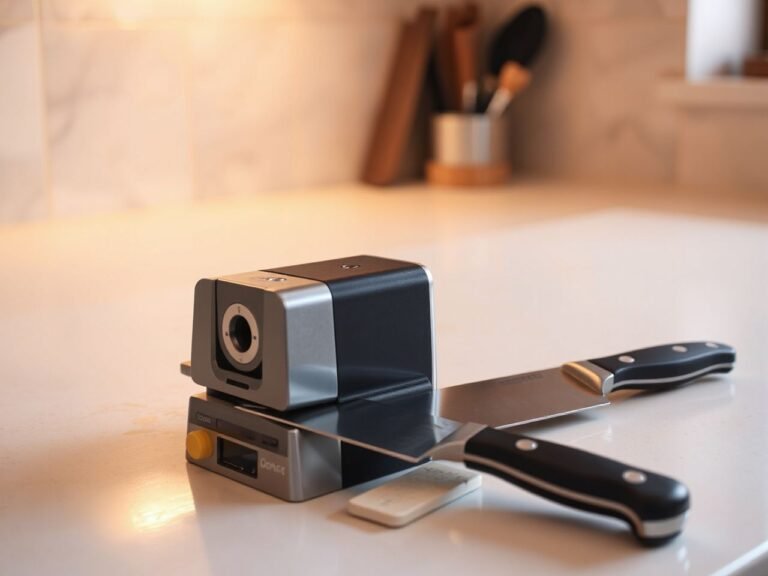
A sharpening stone gives the owner control over the edge through an abrasive surface, but the process requires steady technique. Keep the blade’s existing geometry in mind rather than grinding aggressively. A rod is not suitable for every chef knife, especially when the edge is damaged or when the rod’s contact does not suit the blade’s geometry.
Think about laminated construction without assuming a result
Laminated steel blades combine layers of material, and the visible pattern can be attractive. That appearance does not by itself prove superior edge retention, easier care, or better cutting feel. Judge the blade’s actual geometry, construction quality, handle fit, and maintenance demands separately.
A patterned finish may also make residue or discoloration easier or harder to notice, depending on the surface. The useful inspection is simple: look for a clean transition, a straight blade, a secure handle, and an edge that appears even. Decorative treatment should remain secondary to function.
Advanced: Match Technique and Maintenance to the Edge
Use a controlled cutting motion
A chef knife is designed to cut through food, not to serve as a lever. Keep the guiding hand’s fingers arranged so the fingertips stay behind the knuckles, and move the blade with a controlled stroke rather than stabbing or twisting. The exact grip can vary, but the knife should remain predictable throughout the cut.
Do not scrape chopped food across the board with the knife’s edge. Turn the blade and use its spine or another suitable tool to move food, because dragging the edge sideways across the board can affect its alignment. A bench scraper can handle that job without placing the cutting edge under sideways stress.
A chef knife should not be used for bones, frozen food, or prying because those tasks can damage the edge or bend the blade. Use a cleaver or deba for the demanding work those tools are built to handle, and use a paring or utility knife when a smaller blade gives better control.
Clean and dry the knife promptly
Dishwasher cleaning can damage the edge, blade finish, handle, or tang. Heat, water movement, contact with other objects, and prolonged wetness create a harsher environment than careful hand cleaning. Wash the blade with a suitable cloth or sponge, keep your fingers away from the edge, rinse away residue, and dry the knife promptly.
Carbon steel deserves particular attention after contact with acidic or wet foods. Do not leave residue sitting on the blade while other kitchen work continues. Stainless steel also benefits from prompt drying because the handle, tang, finish, and edge all remain part of the ownership system.
The knife should be fully dry before it goes into storage. A carbon-steel knife left wet can rust, so it needs drying straight after washing. For general food-contact and kitchen safety information, consult the U.S. Food and Drug Administration, which publishes guidance for food safety and food-contact practices.
Choose storage that protects the edge
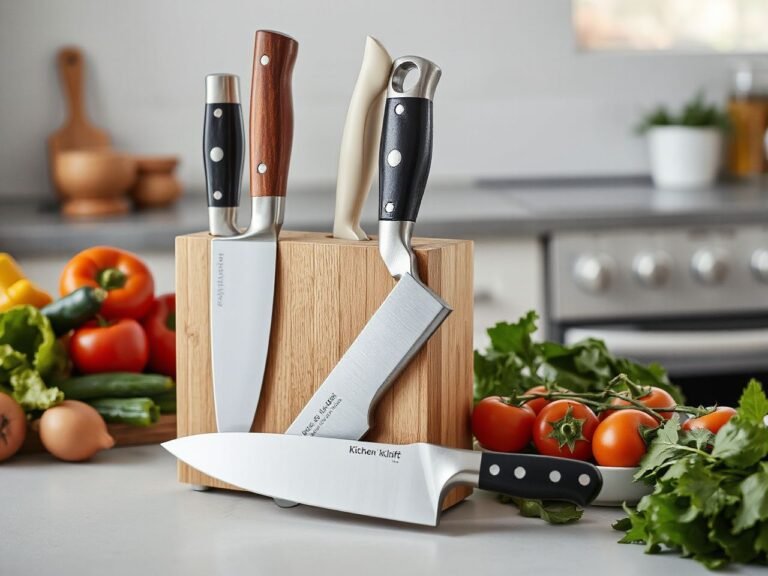
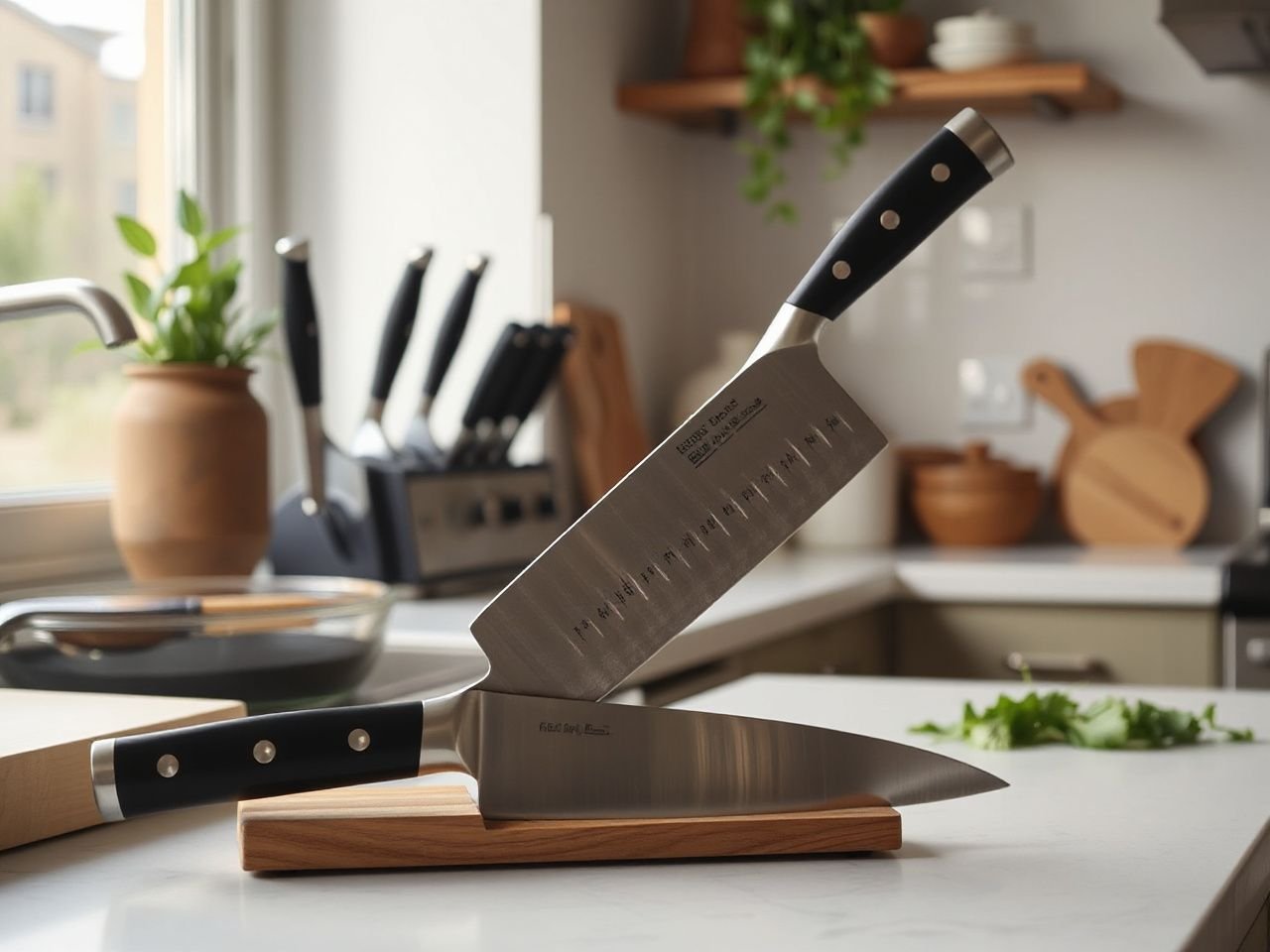
Loose knives in a drawer can strike other utensils, and careless contact can damage the edge or expose a hand to the blade. A knife block, protective guard, or magnetic strip can work if the storage method keeps the cutting edge from unwanted contact and the knife remains secure.
Storage should also keep the blade dry and prevent the handle from becoming contaminated by residue. A magnetic strip needs careful placement and controlled removal; pulling the blade sideways against a hard surface can affect the edge. A guard must fit securely without pressing harshly against the cutting edge.
Knife storage is part of knife maintenance because every contact between the edge and another object changes the conditions under which the blade is kept. The safest arrangement is the one that prevents movement, protects the edge, and allows the owner to retrieve the knife without reaching blindly among other tools.
Use the cutting board as an edge-preservation tool
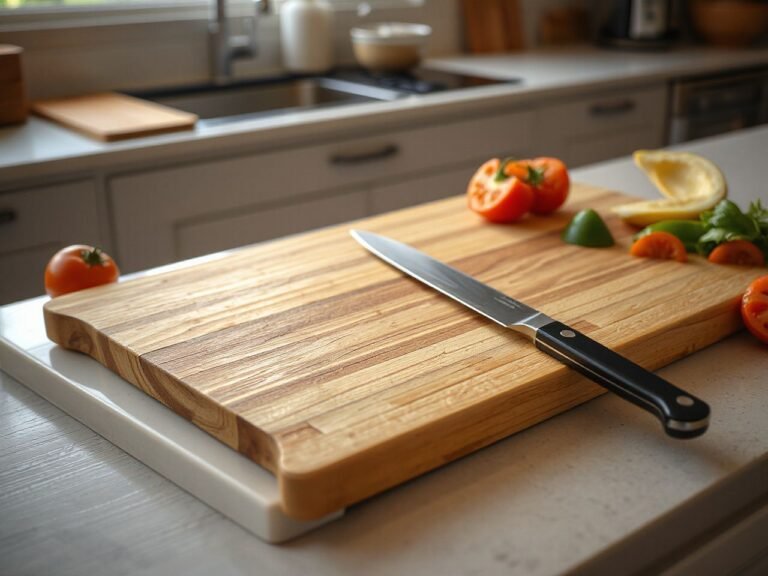
A stable, knife-friendly cutting board supports safer technique and more consistent edge contact. If the board moves while you cut, your hand may compensate with extra force or a less controlled motion. Check the board before starting: it should sit firmly, offer a clean working surface, and have no damaged area that catches the blade.
Board material affects how the knife feels, but the more important practical question is compatibility with your technique and maintenance habits. Avoid cutting directly on hard household surfaces, and do not treat a serving platter, countertop, or plate as a substitute for a proper board.
Edge damage often comes from a mismatch between knife, board, and motion. A perfectly maintained blade can lose its useful behavior if it is twisted in food, dragged sideways, or repeatedly brought into harsh contact with an unsuitable surface.
Budget for maintenance, not only the initial purchase
The ongoing cost of a chef knife includes sharpening supplies or professional sharpening, replacement or repair when a handle or blade is damaged, and a suitable storage method. A cutting board may also need replacement when its surface becomes unstable or heavily damaged. These costs belong in the decision before the knife enters the kitchen.
Maintenance effort is another ownership cost. Carbon steel asks for faster cleaning and drying after acidic or wet ingredients, while any knife requires storage that prevents contact damage. A knife that demands more care than the owner will provide is a poor practical match, regardless of its material or first impression.
I would choose a knife whose care routine fits the kitchen’s real rhythm. The right question is not only how sharp the blade is at purchase; it is whether the owner can keep the edge clean, dry, supported, and correctly sharpened.
Advanced: Diagnose Problems Before Replacing the Knife
Separate edge damage from blade damage
Food crushing or sliding usually points toward an edge that is dull or misaligned, while a visible chip indicates edge damage that honing cannot remove. A blade that bends away from its intended path may have a structural problem, and sharpening will not correct every problem that appears during a cut.
Handle movement, a sharp pressure point, or slipping belongs to the handle and grip rather than the edge. Stop using a knife that cannot be held securely until the handle issue is corrected. A loose tang or damaged connection is not a sharpening problem.
Clean the knife before diagnosing it. Residue can obscure the edge and make a blade feel rough or sticky, while moisture can change how the surface looks. Once the blade is clean and dry, inspect it under ordinary light and pay attention to the way it enters food.
Know when the chef knife is the wrong tool
A chef knife is a general preparation tool, not an all-purpose substitute for every blade. Bread needs a serrated bread knife, fine trimming may suit a boning knife, and heavy chopping belongs to a cleaver or deba. Small garnishes may be easier with a paring knife.
Using the correct knife reduces force and helps preserve control. If the task requires striking, splitting, prying, or cutting through frozen food, set the chef knife aside. The replacement tool should be selected for the task rather than chosen because it happens to be nearby.
For readers comparing adjacent kitchen equipment, our practical explanation of cookware types uses the same principle: select the tool by the job it must perform and the care it requires afterward.
Apply a long-term decision test
Before choosing a chef knife, write down the foods you cut most often, the motion you naturally use, and the maintenance you will realistically perform. Then inspect the blade shape, edge geometry, handle, bolster, tang, steel, and storage plan as separate parts of the decision.
- Choose a broader profile when fruit and vegetables make up much of the preparation and the extra clearance helps your grip.
- Consider a narrower blade for raw fish or meat when precision and access matter more than moving large quantities of chopped food.
- Choose carbon steel only if prompt cleaning and drying fit your routine.
- Choose a double-bevel or chisel-ground edge according to your control, hand use, and willingness to adapt your cutting motion.
- Plan sharpening before the first serious dullness appears, and keep honing separate from sharpening in your maintenance routine.
A chef knife’s useful life depends on the relationship between its edge, blade, handle, board, storage, and owner. The blade is only one part of the system, and the twentieth cut exposes that system more clearly than the first.
Frequently Asked Questions
How should steel influence a chef knife decision?
Steel should guide your maintenance expectations rather than decide the purchase by itself. Carbon steel can react with acidic or wet foods, so prompt cleaning and drying are essential to limit discoloration and corrosion. Stainless steel may demand less attention in that specific respect, but it still needs sensible cleaning, drying, storage, and task selection. Geometry and handle fit remain separate factors.
Is a honing rod suitable for every chef knife?
No. Honing can realign an edge, but it cannot replace sharpening when the edge is genuinely dull, chipped, or damaged. A rod also needs to suit the knife’s geometry and your technique. If the knife still crushes food after careful honing, or if you can see damage, stop relying on the rod and use a sharpening stone or qualified sharpening service.
What should I look for in a chef knife buying guide?
Look for a guide that separates steel, geometry, balance, handle fit, board compatibility, storage, and maintenance. A useful guide should explain blade shapes for different foods, distinguish honing from sharpening, and warn against bones, frozen food, and prying. It should also discuss ongoing sharpening and care costs instead of treating sharpness at purchase as the whole decision.
How can I tell whether a knife problem comes from the edge, blade, or handle?
Food crushing, slipping, or requiring extra force often points to the edge, while a visible chip needs sharpening rather than simple honing. A bent path through food may indicate a blade problem. Pressure points, looseness, or slipping in the grip belong to the handle. Clean and dry the knife first, then inspect each part separately before choosing a remedy.
For a broader preparation setup, readers can also compare this decision with our boning knife buying guide and its common selection mistakes. Different tools earn their place by solving different cutting problems.