A poorly matched personal blender can stall, trap ingredients above the blades, leak through a neglected seal, or make far more noise than its wattage suggests. The advertised motor number tells only part of the story, especially if you expect one compact machine to handle frozen fruit, leafy greens, ice, and thick mixtures.
A useful personal blender comparison separates peak motor power from performance under load: liquid ratio, cup geometry, blade design, ingredient order, and thermal protection determine whether frozen or fibrous mixtures actually circulate. It also treats the cup-and-blade assembly, seals, cleaning access, battery or cord system, and replacement-part availability as part of ownership rather than judging the motor base alone. A blender should be judged by what happens when the mixture gets stiff, heavy, and loud.
Key Takeaways
- Motor wattage matters less than circulation, liquid ratio, blade design, and protection against overload.
- Frozen ingredients and ice need a suitable sequence, enough liquid, and a cup that keeps food near the blades.
- Seals, removable parts, electrical safety, charging design, and replacement availability determine ownership quality.
Beginner: Start with the Load, Not the Label
Step 1: Match the blender to the food
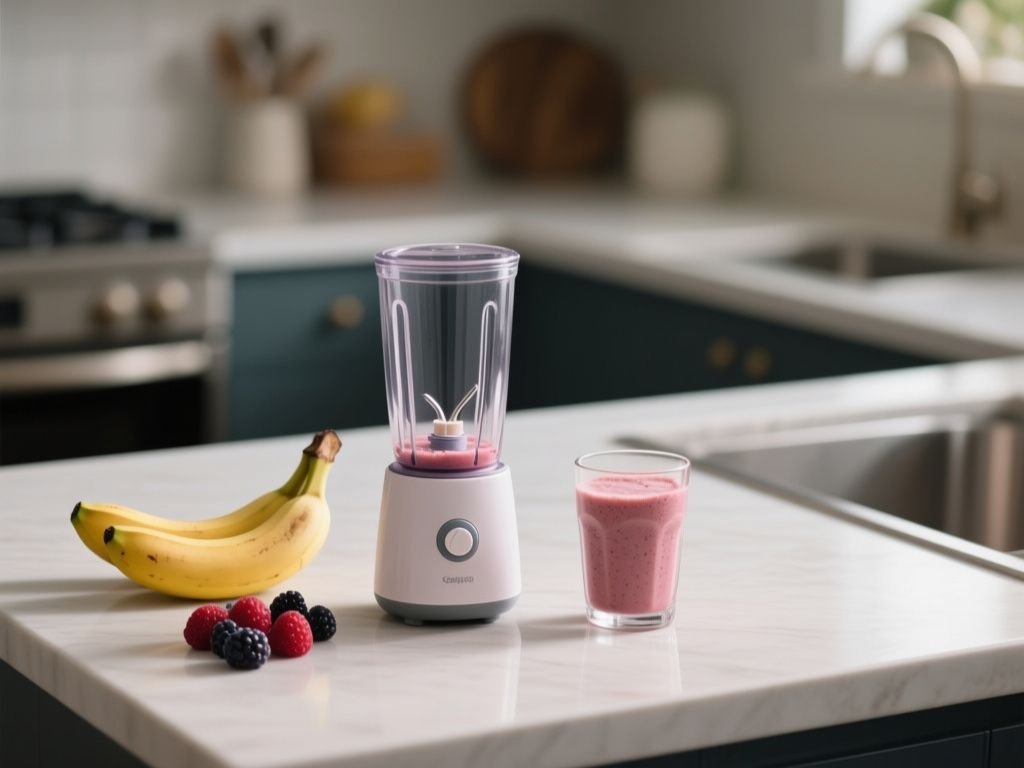
A personal blender is well suited to single-serve smoothies, protein-shake preparation, dressings, and other mixtures that can move through a narrow cup. A compact vessel saves counter space, but its small footprint leaves less room for ingredients to fall back toward the blade after they are thrown outward.
A personal blender is the wrong tool for large family batches, repeated servings, or mixtures that remain almost solid. A full-size countertop blender gives a larger working chamber, while an immersion blender is more practical for blending directly in a saucepan or another broad container.
Do not assume that a machine capable of blending a thin smoothie can also process nut butter or stiff dough. Thick foods resist movement, so the blades may spin in an air pocket while the mass around them stays in place. That condition increases noise without proving that the motor is doing useful work.
Step 2: Read wattage as one clue
Motor wattage describes electrical input or a stated power level; it does not fully describe the force delivered to the food. The listing states a 600-watt power level for a standard Nutribullet model, 1,200 watts for the Nutribullet Ultra, 1,380 watts inside the Vitamix 5200, and 1,200 watts for the Beast Mega 1200 Plus Blender. Those figures are useful points of comparison, but they do not reveal cup shape, blade angle, control behavior, or how the motor responds to resistance.
A higher figure can still disappoint if the cup leaves ingredients perched above the blade. A lower figure may be adequate for liquid-heavy drinks if the geometry keeps food circulating. A clearly specified load limit and sensible instructions are preferable to a large wattage figure presented without operating conditions.
The Nutribullet Ultra listing includes 24-ounce and 32-ounce cups, while the Ninja BlendBoss DB301 includes a 3-cup capacity. Capacity affects batch size, but the usable quantity depends on the minimum liquid requirement, the fill line, and the space needed for ingredients to move. The manufacturer does not provide those operating details here, so they should be checked in the manual before purchase.
Step 3: Check the liquid ratio
Liquid creates the movement that carries food into the blade path. Too little liquid leaves frozen fruit and leafy ingredients wedged against the walls; too much liquid can produce a thin drink when a spoonable texture was intended.
Use the manufacturer’s fill line and minimum-liquid instruction rather than guessing from the cup’s total capacity. Put liquid in first unless the manual specifies another order, then add softer ingredients before frozen or dense pieces. That arrangement gives the blade something that can move immediately.
Beginner: Understand Blades, Cups, and Ingredient Order
Blade design changes the job
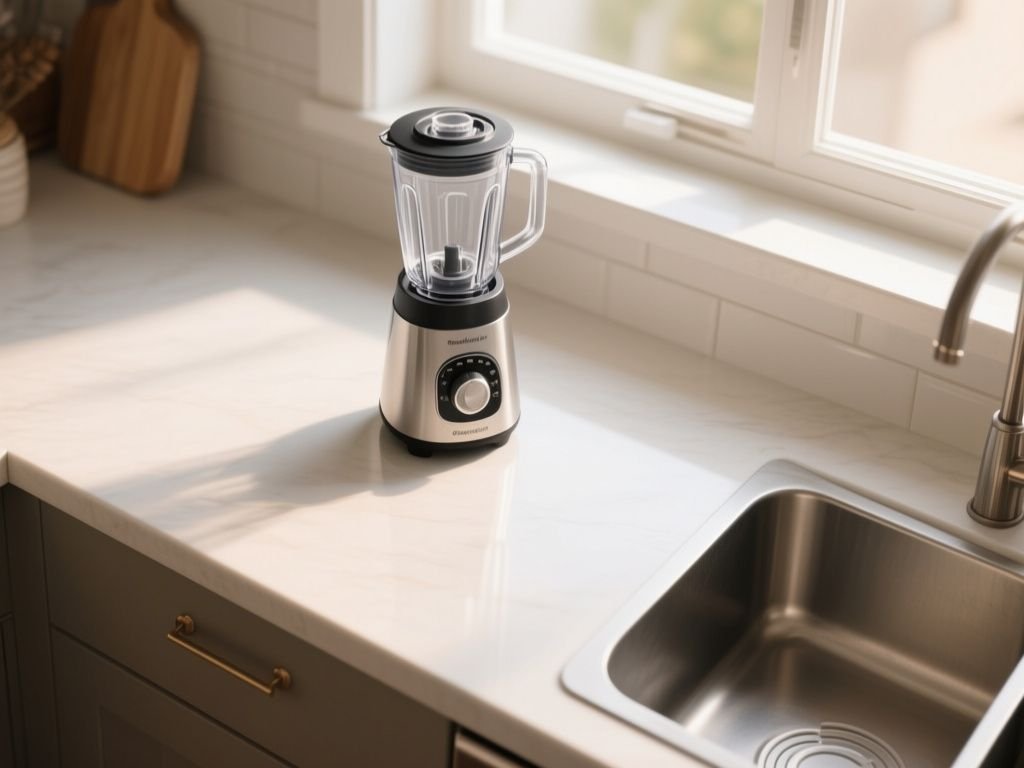
Blade shape affects how ingredients are pulled into the cutting area and how much resistance the motor faces. A personal blender with a compact blade assembly may handle liquid mixtures efficiently but remain unsuitable for hard, dry, or paste-like foods.
Ice and frozen ingredients require enough liquid and an appropriate blade and motor design; adding hard ingredients without a suitable blending sequence can stall the motor or damage the drive coupling. The listing must state that the appliance supports the intended food before ice becomes part of the routine.
Leafy greens bring a different problem. Fibres can wrap around a blade or sit above the liquid if the leaves are added in a dense layer. Cutting large leaves into smaller pieces and placing them between liquid and softer ingredients can improve circulation, but the manual remains the authority for permitted ingredients and quantities.
Cup geometry controls circulation
A narrow cup can help keep food close to a small blade, while a broad cup may leave ingredients spread around the perimeter. Ridges, tapered walls, and the distance between the blade and the base all influence how readily a mixture returns to the cutting zone.
The cup-and-blade assembly is a working system, not an accessory that can be judged separately from the motor base. Threaded connections, seals, and electrical contacts are often model-specific, so a replacement cup or blade from another machine is not automatically compatible.
Tritan copolyester and polypropylene may appear in food-contact components, but the listing should identify which material belongs to the cup, lid, or other part. BPA-free language describes a material claim; it does not establish that every component is dishwasher-safe or suitable for hot blending.
Ingredient order prevents dead zones
Ingredient order matters because the blade needs a movable layer beneath heavier food. A practical cold-drink sequence is liquid first, followed by powders or soft foods, then leafy ingredients, frozen fruit, and ice if the manufacturer permits ice.
Dense ingredients should not be packed tightly around the blade. Nut butter is especially demanding because it can cling to the cup walls and offer little free liquid for circulation. A personal blender may be able to make a small nut-butter mixture, but the specification must support that use; otherwise a food processor or full-size blender is the more sensible tool.
Intermediate: Choose Corded or Rechargeable Power
Corded personal blenders
A corded personal blender draws power from the electrical supply while operating. That arrangement avoids charging a battery before use and generally makes the appliance dependent on a suitable outlet and a safe, dry counter position.
Corded power does not guarantee quiet operation or successful thick blending. A motor working against dense food can produce a harsh mechanical sound, and a compact housing may transmit that sound directly to the counter. Treat noise as a warning signal when it rises sharply during a stall, not as evidence of strength.
The listing should identify the electrical safety basis for the appliance.
Rechargeable personal blenders
A rechargeable model uses a lithium-ion battery and commonly charges through USB-C. Portability can make it useful away from a wall outlet, but the buyer must account for charging habits, battery condition, and the protection provided around the electrical contacts.
Battery capacity, operating time, charging duration, and permitted charging conditions are not supplied in the available listing data. The manufacturer does not list those figures here, so a rechargeable blender should not be selected on portability alone.
Water must not enter the motor base or charging port. Rechargeable models should be inspected for damaged batteries, swelling, overheating, or compromised seals, and a questionable unit should be removed from service rather than charged again.
IPX4 is a water-resistance rating, not permission to submerge a motor base or rinse a charging port under running water. The product manual should explain the permitted cleaning method and charging conditions.
Interlocks and overload protection
A lid lock or motor interlock can prevent operation when the cup is incorrectly attached. That feature matters because a threaded cup, blade assembly, or contact point that is only partly engaged may leak or fail to transmit power correctly.
Overheat protection can stop or limit the motor when temperature rises during a heavy load. Thermal protection protects the appliance, but it does not turn a personal blender into a dough mixer. Repeatedly restarting a stalled motor is a poor substitute for using a thinner mixture or a different appliance.
A certification mark should still be verified against the exact model, because a general statement about a brand does not establish compliance for every appliance.
Intermediate: Make Cleaning and Ownership Part of the Decision
Removable parts are essential
Food residue around blade seals and threads can cause odors, microbial growth, and leaks, so disassembly and cleaning instructions matter as much as the blending specifications. A removable cup, lid, and blade assembly expose the areas where pulp and powder collect.
The blade assembly should be removable only if the manufacturer designs it for removal. Forcing a permanently fitted assembly can damage the seal or create a leak path. Look for clear instructions covering the cup, lid, gasket, blade unit, and motor base separately.
Dishwasher guidance must be model-specific. A cup may tolerate dishwasher cleaning while a lid gasket, decorated surface, blade assembly, or charging component may require hand washing. The listing does not provide universal dishwasher permission, so the manual should decide the method.
Clean without harming the base
Unplug a corded blender before cleaning and remove a rechargeable blender from its charger. Wash the removable food-contact parts according to the instructions, paying particular attention to the threads and the underside of the blade seal.
Keep water away from the motor base and charging port. Wipe the base with a damp cloth rather than immersing it, and allow electrical surfaces to dry before reconnecting power.
Do not scrub blades with metal tools or reach into a blade assembly while it is attached to the motor base. A soft brush can reach residue around threads and seals without placing fingers near cutting edges.
Replacement parts and recurring costs
Ownership costs include more than electricity. Replacement cups, seals, and blade assemblies may be needed at different times, while a rechargeable model also carries battery aging as a future concern.
Availability matters because a proprietary cup or blade can make a functioning motor base unusable if the matching part disappears. The cup, blade assembly, lid, and motor base should be treated as model-specific unless the manufacturer confirms compatibility.
The Nutribullet Ultra listing states a one-year limited warranty for the blender and a five-year limited warranty for the blade. A two-year warranty is listed for the Beast B10 personal blender. Warranty length is useful, but coverage terms, exclusions, registration requirements, and replacement-part access deserve equal attention.
For a wider look at motor sizing and appliance ownership, the Blender Buying Guide: Mistakes to Avoid Before You Start provides useful context beyond single-serve machines.
Advanced: Diagnose Noise, Stalls, and Texture
Why air pockets form
An air pocket forms when the blade moves liquid or a thin layer of food without drawing the rest of the mixture downward. Frozen fruit pressed against the cup wall, dry powders sitting on top, and an overfilled vessel can all interrupt the path back to the blade.
A personal blender leaves chunks when ingredients are too dry, too large, too cold for the stated instructions, or arranged so that liquid cannot reach the blade. Pulse controls may help redistribute a permitted mixture, but repeated high-load cycling can stress the drive system and raise motor temperature.
High noise during a stall is a mechanical clue. A sharp whine with little movement suggests the blade is not receiving a normal food load, while a heavy, strained sound indicates resistance; either condition calls for stopping the machine and checking the mixture rather than continuing blindly.
Use a sequence suited to frozen food
Frozen fruit should be paired with enough liquid to move through the cup. Ice needs the same discipline, along with a blade and motor design that expressly supports it.
Start with ingredients that can move, then add dense frozen pieces. If the manufacturer specifies a maximum quantity or a particular order, follow that instruction instead of treating the cup as a miniature full-size blender.
Do not add hot liquid to a sealed cold-drink cup. Hot liquids can create pressure inside a sealed blending cup, so a personal blender designed for cold drinks should not be used for hot blending unless the manufacturer explicitly permits it.
Know when the personal format has reached its limit
A personal blender makes sense for one drink or a small cold preparation that fits the cup and can circulate. It becomes a poor choice for large batches, stiff dough, dry grinding, prolonged processing, or hot blending without explicit manufacturer approval.
A full-size countertop blender provides a larger chamber for batch work, while an immersion blender offers direct access to a pot or bowl. Neither option removes the need to follow food, temperature, and cleaning instructions.
Don’t choose a personal blender for stiff dough merely because the wattage looks impressive. Dense dough places a sustained load on the drive system and needs an appliance designed for that job, not a compact cup marketed around smoothies.
For readers comparing personal and full-size machines, a detailed Vitamix Blender Review: Top Picks and Buying Guide can help clarify which tasks belong in a larger blending chamber.
Advanced: Use a Spec-Sheet Checklist
Mechanical questions
- Does the manufacturer state a minimum liquid amount, maximum fill line, and permitted ingredients?
- Is the blade assembly removable, and can its seal be inspected?
- Do the cup threads, drive coupling, and electrical contacts belong to the exact model?
- Does the manual describe overload, overheat, and motor-interlock behavior?
Material and cleaning questions
- Is the cup made from a stated food-contact material such as Tritan copolyester or polypropylene?
- Are the lid, cup, gasket, and blade assembly separately identified?
- Which parts may go in the dishwasher, and which parts must stay away from water?
- Can replacement cups, seals, and blade assemblies be obtained for the model?
Electrical and battery questions
- Does the corded model provide a clear safety certification reference?
- Does the rechargeable model specify USB-C charging behavior and battery protection?
- Does an IPX4 statement apply to the motor base, and what does the manual prohibit?
- What signs require a lithium-ion battery to be taken out of service?
A personal blender should be selected by its complete operating system rather than by motor wattage alone. The right specification sheet explains what the appliance can process, how it must be assembled, and how its food-contact parts can be maintained.
Frequently Asked Questions
How much liquid does a personal blender need?
The required amount depends on the cup geometry, blade design, ingredient load, and manufacturer instructions. Use the stated minimum and fill line rather than copying a recipe designed for a full-size blender. Liquid should reach the blade area sufficiently for circulation, while dense ingredients should be added in an order that prevents a compact plug from forming.
Can a personal blender handle ice, frozen fruit, leafy greens, or nut butter?
Ice and frozen fruit require enough liquid plus a blade and motor design rated for those ingredients. Leafy greens need room to circulate and may need smaller pieces. Nut butter is a particularly heavy, low-liquid load, so the manual must explicitly support it. A smoothie specification should not be treated as permission to process stiff dough or dry ingredients.
What is the difference between a corded and rechargeable personal blender?
A corded blender operates from an electrical outlet, while a rechargeable model uses a lithium-ion battery and may charge through USB-C. Rechargeable operation adds battery condition, charging safety, and port protection to the ownership decision. The available listing does not establish runtime or charging duration, so those figures must come from the exact manufacturer manual.
Why does my personal blender stall or leave chunks?
Stalling and chunks usually indicate poor circulation, too little liquid, an unsuitable load, an overfilled cup, or ingredients arranged above the blade. Stop the motor, disconnect power, and inspect the mixture rather than inserting a utensil while the blade is connected. Rebuild the load with liquid first and hard ingredients later, staying within the manufacturer’s instructions.