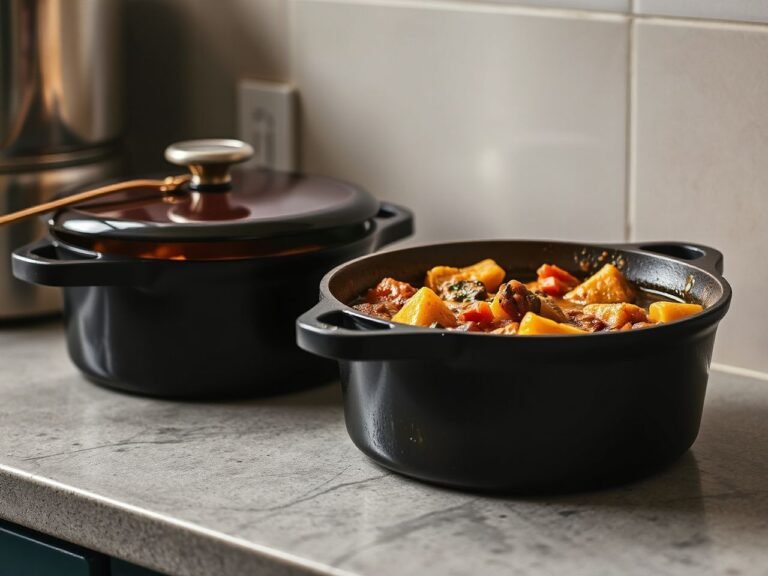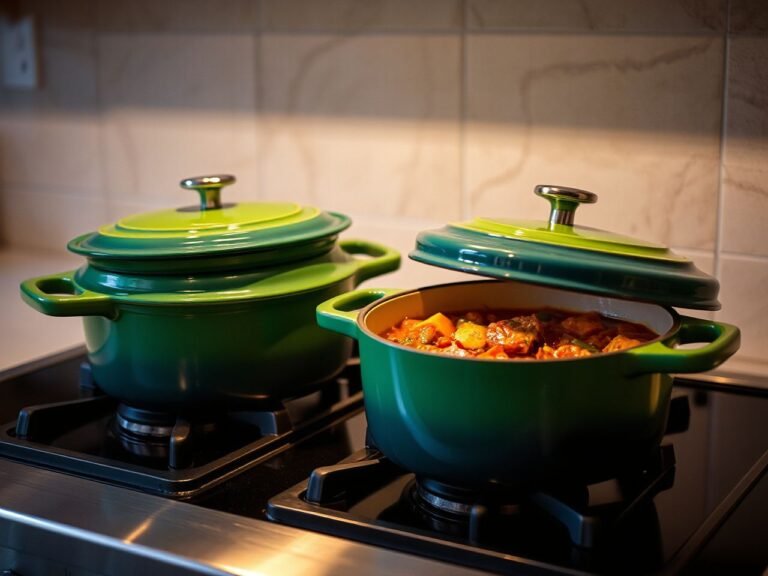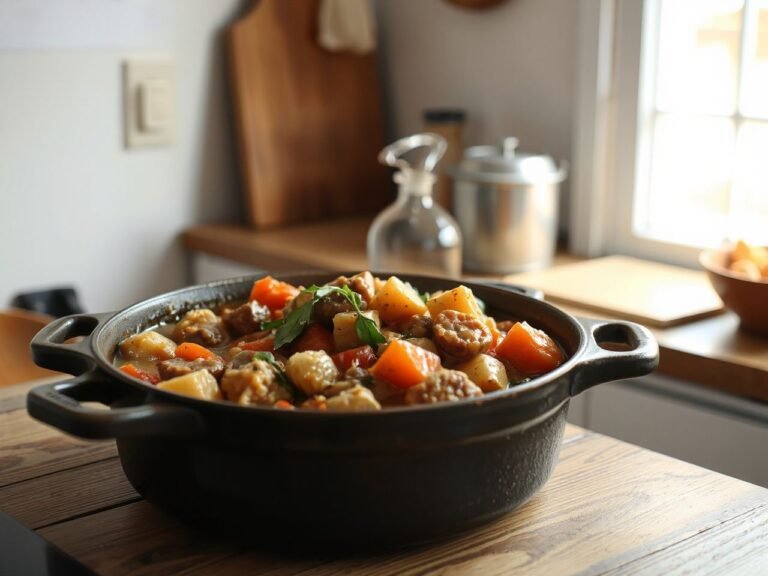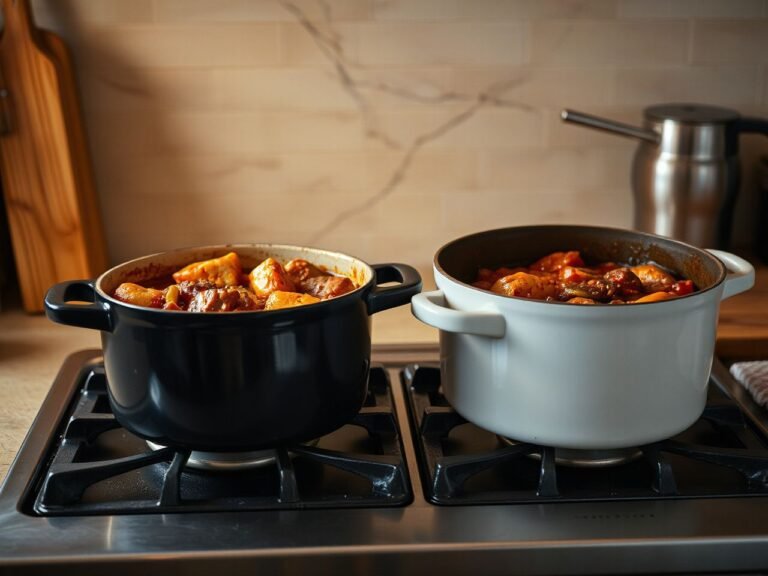
Temperature shock breaks Dutch ovens. You didn’t drop it, your oven didn’t overheat, and the pot wasn’t defective—something changed its temperature too fast. Understanding why your Dutch oven cracked comes down to one physics lesson: cast iron and enamel expand and contract at different rates, and when that difference is large enough, something has to give.
Key Takeaways
- Thermal shock from a temperature swing of more than 200°F is the leading cause of cracks in both enameled and bare cast iron Dutch ovens.
- An enamel crack may be cosmetic and leave the iron body safe, but a crack through the cast iron itself means the pot is structurally compromised.
- Never plunge a hot Dutch oven into cold water or add cold liquid to a screaming hot pot—that single habit causes more cracks than any other mistake.
- Check your manufacturer’s warranty before throwing anything away. Some brands cover thermal shock defects under lifetime policies, while others explicitly exclude it.
What Actually Makes a Dutch Oven Crack
Cast iron is brittle. That is a feature, not a flaw—it holds heat with remarkable evenness precisely because it is dense and rigid. But that rigidity means the material cannot flex to absorb stress. When one part of the pot expands while another part stays cool, the internal stress has nowhere to go. Eventually, the material fractures.
Enamel adds a second layer of vulnerability. Enamel is glass fused to the iron surface at high heat. Glass and iron expand at different rates. ASTM standards for thermal shock testing of ceramic materials measure exactly this mismatch, and the gap between cast iron and enamel is significant. A sudden temperature change can crack the enamel without harming the iron, or it can crack the iron itself if the shock is severe enough.
Thermal Shock: The Most Common Culprit
The most common scenario is this: you sear a roast at high heat on the stovetop, then pour cold wine or stock into the pot. The liquid hits iron that is easily 400°F or hotter. The enamel surface cools and contracts instantly, while the iron underneath is still trying to expand. A hairline fracture appears. Or worse, the iron splits with a sound like a rifle shot.
The same failure happens in reverse. You finish braising in a 350°F oven, pull the pot out, and set it on a cold stone countertop. That rapid heat transfer out of the bottom can crack the base. Thermal shock does not require water—it requires a large temperature differential, fast.
Enamel vs. Bare Cast Iron: Different Failure Points
Enameled Dutch ovens crack differently than bare cast iron. Bare cast iron is a single material, so thermal shock usually causes a full-thickness fracture—a crack you can see on both the inside and outside. Enameled pots have a composite structure: glass coating on an iron core. The enamel can crack while the iron remains intact, or vice versa.
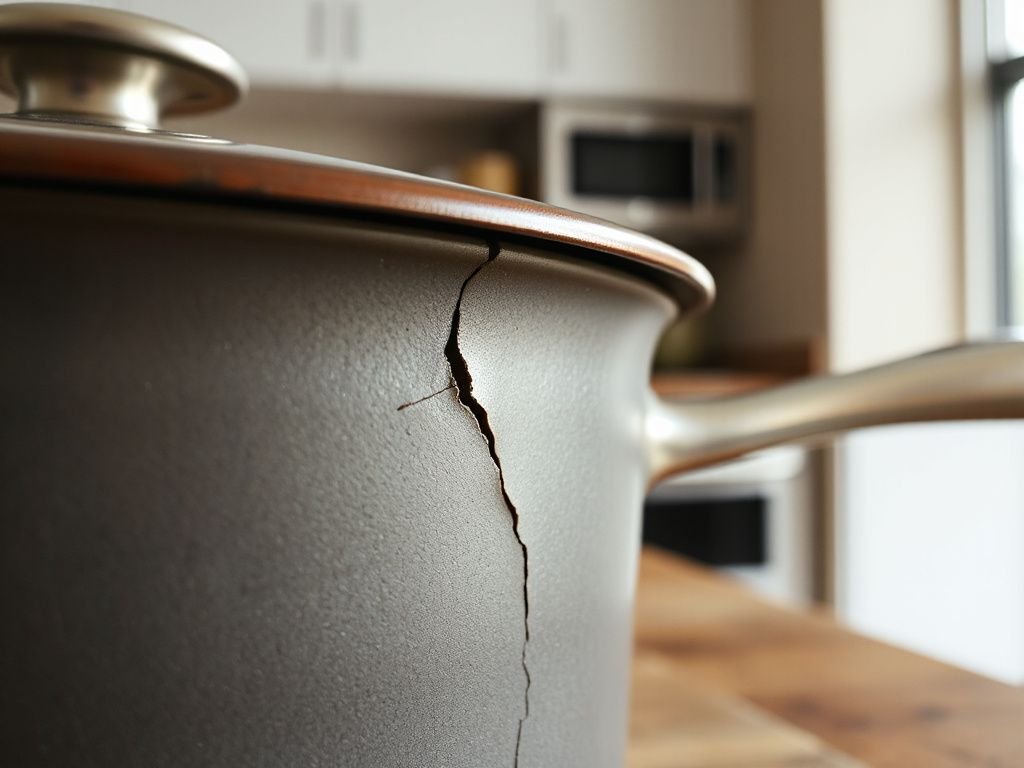
Hairline cracks in enamel are called crazing. They look like spiderweb lines across the interior surface, often faint and catching the light. Crazing does not necessarily mean the pot is unsafe, but it does mean moisture can reach the iron underneath, which will eventually rust. A crack that goes through the iron is different—you will see the line on the outside of the pot too, or the pot will leak when filled with water.
The distinction matters because the hazard is different. A crazed enamel surface can continue to cook food, though the finish will degrade. A cracked iron body cannot hold liquid and can fail catastrophically under heat, shattering mid-recipe.
Impact Damage and Manufacturing Defects
Dropping a Dutch oven can crack it, but not in the way most people assume. A direct impact on the rim or side will usually chip the enamel rather than crack the iron. The real danger is a drop followed by rapid heating—the impact creates a microfracture in the iron, invisible to the eye, and the next time the pot goes into a hot oven, that fracture propagates into a full crack.
Manufacturing defects do happen, though they are rare in reputable brands. Air pockets in the cast iron near the surface can expand when heated and blow out a chunk of enamel. This looks different from thermal shock: a defect blowout is a localized pit with rough edges, while thermal shock cracks run in clean radiating lines. The Consumer Product Safety Commission maintains recall records for cookware with spontaneous failure, and those records show that genuine manufacturing defects are far less common than consumer mishandling.
Assessing the Damage: Is Your Dutch Oven Dead?
Not every crack means the end. The first diagnostic step is to identify the crack location and pattern. Radial cracks from the center suggest thermal shock from a cold liquid dumped into the middle of a hot pot. A chip at the rim suggests an impact, not a temperature event. A crack running from the rim down the side often means the pot was dropped while hot.
Crack Location and Pattern Tell the Story
Examine the crack under bright light. If it is on the interior surface only and the exterior is unmarked, you are looking at enamel damage. If the crack lines up on both interior and exterior at the same spot, the iron itself has split. A thermal shock crack on the bottom of a pot often forms a starburst pattern—multiple cracks radiating from one point where cold liquid pooled.
Impact cracks are usually single, straight lines. They start at the point of impact and travel away from it. A crack that curves or branches into multiple paths is more consistent with thermal stress, because the stress radiates outward from the point of greatest temperature difference.
Hairline Enamel Crazing vs. Structural Cracks
Run your fingernail across the crack. If it catches, the crack is open enough to trap food and bacteria. If it is completely smooth, you have superficial crazing. Superficial crazing may be cosmetic for a while, but it will deepen with repeated heating and cooling cycles. Moisture works its way into the micro-cracks, rusts the iron beneath, and eventually the enamel pops off in flakes.
A structural crack in the iron is unambiguous: you can see daylight through it, or the pot leaks. Do not cook in a pot with a through-crack. The metal will continue to expand and contract with each heat cycle, widening the crack. Eventually the pot can break into pieces while full of hot food.
When a Chip Becomes a Crack
Enamel chips are separate from cracks but can become cracks over time. A chip exposes bare iron at the rim or side. That exposed iron rusts, and rust expands as it forms, prying the enamel away from the edges of the chip. The chip grows into a crack. If you have a small chip on the rim and you keep using the pot, you are betting that the rust expansion never reaches a critical point. That is a bad bet.
Can a Cracked Dutch Oven Be Saved?
Bare cast iron with a hairline crack can sometimes be welded, but the repair is rarely worth it. Cast iron welding requires preheating the entire piece to 900°F, specialized nickel rod, and slow cooling. Few welders do this for cookware. And even a good weld will fail at the heat-affected zone under another thermal shock. I would not trust a welded Dutch oven with a full pot of boiling stew.
Enamel cracks cannot be repaired in any food-safe way. Enamel repair kits exist, but they are cosmetic fillers, not structural fixes. The repaired spot will not survive oven heat, will not match the thermal expansion rate of the original enamel, and will leach chemicals into food. No legitimate repair shop will recoat a cracked enameled pot.
Warranty Considerations
Before you throw a cracked pot in the trash, check the warranty. Le Creuset offers a lifetime warranty that covers manufacturing defects, but it explicitly excludes thermal shock damage caused by misuse. Staub offers a similar policy. Lodge’s enameled line has a more limited warranty but still covers defects in materials and workmanship. The distinction hinges on whether the crack resulted from a flaw in the casting or from a 200°F temperature swing the user created.
If you believe the crack came from a defect—for example, the pot cracked on its first use with no temperature abuse—document everything. Take photos of the crack pattern, your stovetop settings, and the cooking timeline. Send these to the manufacturer’s warranty department. Some companies will replace a pot even when misuse is suspected, simply to keep a customer, but you need to make the case clearly.
Preventive Measures: How to Never Crack Another Dutch Oven
Prevention is not about being gentle with the pot. Dutch ovens are built for hard use—searing, braising, bread baking at 500°F, open-fire cooking. The key is controlling how heat enters and leaves the metal.
Heat Gradually, Cool Gradually
Start on low or medium-low heat, even when you are planning to sear. Let the entire pot come up to temperature slowly—two to three minutes on low, then increase. The iron needs time to equalize across its thickness. If you blast a cold pot on high, the bottom expands faster than the walls, and that internal stress can crack the pot just as effectively as adding cold water.
Cooling matters just as much. After cooking, move the pot to a dry trivet, a folded towel, or a wooden cutting board. Do not set it on a cold stone counter, a metal sink, or a wet surface. Let it cool for at least 20 minutes before adding any room temperature or cold liquid. That includes washing.
Stovetop and Oven Transitions
The stovetop-to-oven transition is where most cracks happen. A pot sitting on a gas burner reaches 500°F on the bottom while the walls are 300°F. Slide that into a 350°F oven and the bottom actually cools while the walls heat up. That is a thermal shock event, just a slow one. To avoid it, transfer the pot to the oven after the stovetop phase is finished and the burner is off. Let it sit for one minute to equalize before opening the oven door.
If you are doing a braise that starts on the stovetop and finishes in the oven, reduce the stovetop heat for the last two minutes before transferring. That narrows the temperature gap. The same rule applies in reverse: when taking a hot pot out of the oven, set it on a trivet and do not add any liquid for several minutes. If you’re making cookies or other baked goods, a proper guide to choosing bakeware will remind you that thermal mass matters on every pan.
Bread Baking Specifics
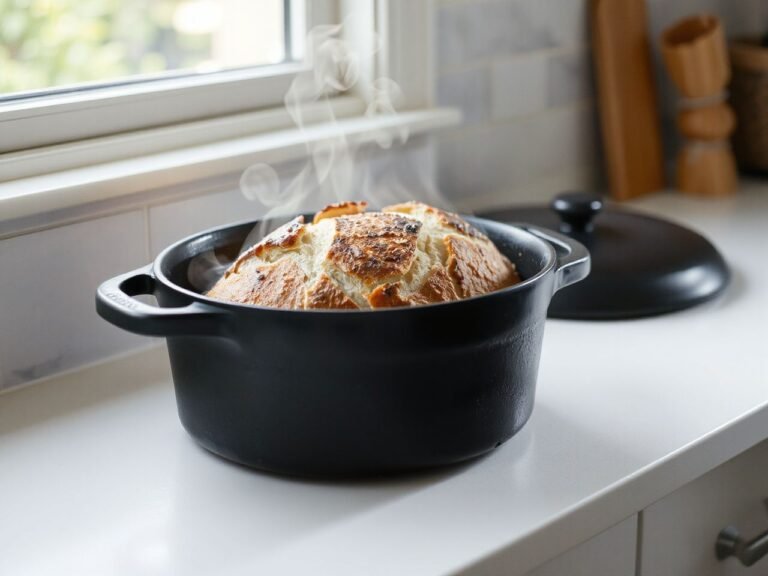
Bread baking in a Dutch oven is a special risk. You preheat the pot empty to 500°F for 45 minutes, then drop a room-temperature or cold dough into it. The dough itself is not the problem—it is small mass. The problem is that the dough releases moisture as steam, and steam conducts heat away from the enamel surface very fast. This can cause micro-crazing over repeated bakes. To reduce the risk, preheat to 475°F instead of 500, use parchment paper as a barrier between dough and pot, and never add ice cubes to the pot for steam (a common bread baking technique) because ice on a 475°F enamel surface is the definition of thermal shock.
If you like adding cold ingredients to hot pans, the same principle applies to any dough. Dropping cold cookie dough straight into a scorching pot or pan creates the same kind of temperature differential that cracks cast iron. Let cold dough come to room temperature for 10 minutes first, or add it to a pan that has been taken off the heat.
Storage and Handling
Store Dutch ovens dry, with the lid slightly ajar to allow airflow. Moisture trapped inside can condense into droplets on the enamel surface during temperature swings in your kitchen, and those droplets can cause localized cooling when the pot is next heated. Also, never stack heavy pans on top of a Dutch oven lid. The lid is cast iron too, and a point load from above can create a microfracture that turns into a crack later.
Frequently Asked Questions
Is it normal for a Dutch oven to crack?
No, cracking is not normal wear. A properly used Dutch oven should last decades. Cracks indicate either a manufacturing defect or—far more often—a thermal shock event from a rapid temperature change exceeding roughly 200°F. If a pot cracks during normal cooking with gradual heating, contact the manufacturer; that is a warranty issue.
Did cracking occur when putting a hot Dutch oven in cold water?
Almost certainly yes. Plunging a hot Dutch oven into cold water is the single most common cause of cracking. The enamel cools and contracts in seconds while the iron underneath is still expanded. The stress at that interface can shatter the enamel, crack the iron, or both. Let the pot cool to room temperature for at least 20 minutes before washing.
Can I still cook in a Dutch oven with a hairline crack in the enamel?
No. Even a hairline crack in enamel exposes the iron underneath, which will rust and can contaminate food with iron flakes. More concerning, pieces of cracked enamel can break off into your food, and glass shards are a serious ingestion hazard. The FDA’s food contact materials guidance advises against using any cookware with visibly damaged coatings for food preparation. Retire the pot from cooking use.
Why did the enamel on my Dutch oven crack but not the iron?
Enamel is a glass coating with a different coefficient of thermal expansion than cast iron. When temperature changes quickly, the enamel expands or contracts at a different rate than the iron it is bonded to. This differential stress can crack the glass layer without cracking the iron underneath. The iron remains structurally sound, but the cracked enamel means the pot is no longer food-safe.
Should I throw away a cracked Dutch oven?
If the crack goes through the cast iron—meaning the pot leaks or you can see the crack from both sides—yes, dispose of it. A structurally cracked pot can shatter under heat, potentially causing burns. If only the enamel is cracked, the pot is still unsafe for cooking but can be repurposed as a non-food container, such as a planter with a drainage hole drilled through the bottom, provided you handle it carefully.