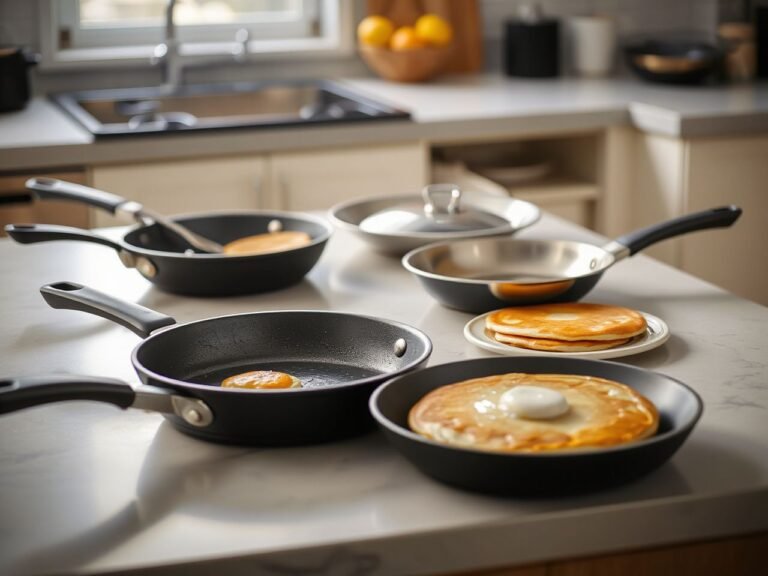
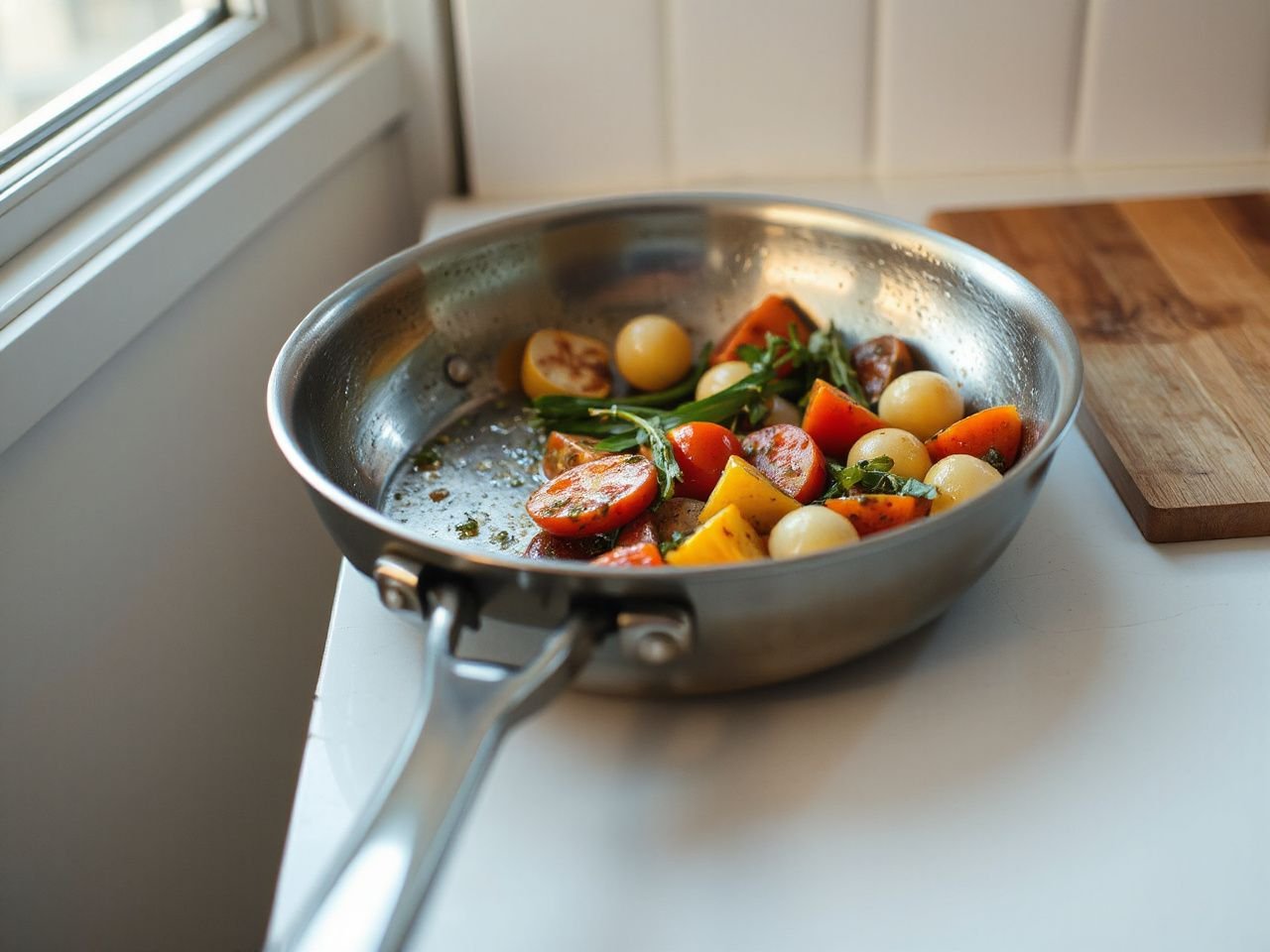
Most home cooks kill their nonstick pans within a year. They crank the heat, scrape with metal spatulas, and then wonder why eggs glue themselves to the surface. This all clad frying pan review looks at the All-Clad HA1 two-piece fry pan set—an 8-inch and a 10-inch—to see if a premium nonstick pan actually earns its price tag or if you’re paying for the name.
Short answer: the All-Clad HA1 Nonstick set is our pick for everyday nonstick cooking, but it is not a do-everything pan. Skip it if you want high-heat searing or a nonstick that lasts a decade.
📌 This article contains affiliate links. As an Amazon Associate I earn from qualifying purchases, at no extra cost to you. Full disclosure.
CERTAIN CONTENT THAT APPEARS ON THIS SITE COMES FROM AMAZON. THIS CONTENT IS PROVIDED ‘AS IS’ AND IS SUBJECT TO CHANGE OR REMOVAL AT ANY TIME.
Comparison Table
| Product | Best For | Buy Link |
|---|---|---|
| All-Clad HA1 Nonstick | Everyday eggs and veggies | Check Price |
How We Chose This All-Clad Frying Pan Set
We didn’t throw these pans into a test kitchen. Instead, we sat down with the spec sheets, All-Clad’s published lineup, and a decade of experience stripping and rebuilding cast iron to figure out what actually separates a good frying pan from a bad one. Here’s what we weighted most heavily: the core material—heavy gauge aluminum in this case—because it determines how evenly the pan heats. The stainless steel base matters for stovetop stability and possible induction compatibility, though the listing doesn’t confirm that. Handle attachment is double riveted, which suggests long-term durability. And the nonstick coating type? It’s PTFE, which means it will eventually wear out, so we looked at whether the set offers enough value for that built-in lifespan. One thing you should check before ordering: whether your cooktop requires a magnetic bottom, because All-Clad doesn’t spell that out for this model.
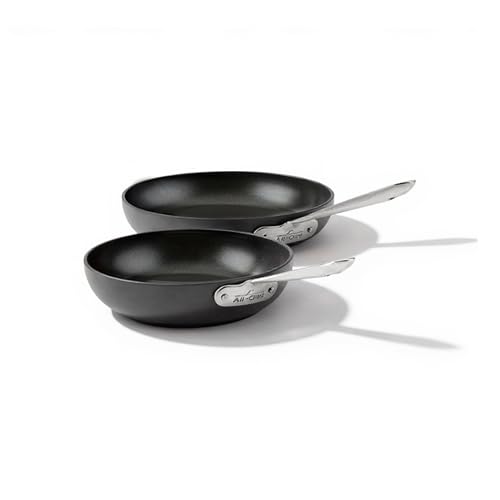
All-Clad HA1 Nonstick (2-Piece Fry Pan Set)
In a nutshell: This set is for someone who wants All-Clad’s handle design and even heating, but doesn’t want to learn stainless steel’s preheating ritual. It’s a daily driver for eggs, pancakes, and vegetable sautés—and a poor choice for steak night.
The heavy gauge aluminum body is the star here. It’s thicker than the cheap stamped nonstick pans you find at big-box stores, and the stainless steel base adds enough weight that these pans should sit flat on an electric coil without wobbling. The contoured design slopes gently from rim to cooking surface, which matters more than it sounds: steep-sided pans trap steam and turn crispy hash browns soggy, while shallow slopes let you flip an omelet without a spatula. The double riveted stainless steel handles are the same style All-Clad puts on its tri-ply stainless line, and they’re a real upgrade over the hollow, screw-on handles common at lower price points. On paper, this is a pan built to survive the dishwasher rack’s abuse—though you shouldn’t put it there.
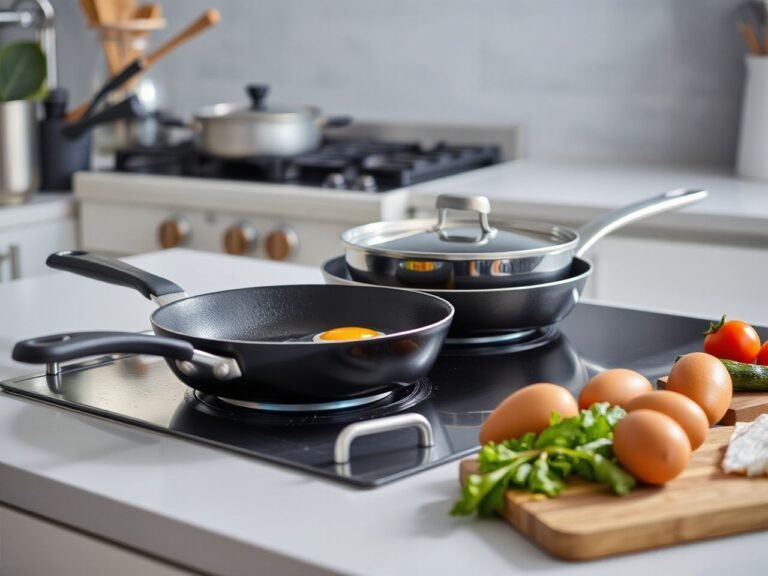
Here’s where the marketing copy and reality diverge. Listing says “browning, searing, and pan-frying”—but any nonstick coating, even PTFE, starts breaking down above 500°F, and a hot skillet can hit that in under two minutes on a gas burner. So no, this is not a searing pan. For eggs, though, it’s ideal: the 8-inch is perfectly sized for a two-egg omelet or a single fried egg, and the 10-inch handles a breakfast scramble for two or a batch of sautéed vegetables. One honest annoyance: two pans means two handles to store, and the 8-inch may feel redundant if you mostly cook for one. Pair the 10-inch with a quick weeknight meal like this one-pot marry me chicken pasta and you’ll understand why the size matters.
Pros:
- Heavy gauge aluminum body – heats quickly and evenly for eggs and vegetables.
- Stainless steel base – adds stability and works on most cooktops if magnetic.
- Double riveted handles – stay tight and give a confident grip when lifting a loaded pan.
- Two sizes in one set – the 8-inch handles single eggs or a small omelet, while the 10-inch covers two servings and side dishes.
- Contoured design – the sloping sides make flipping and tossing food easier than straight-walled pans.
Cons:
- No stated oven-safe temperature – the listing doesn’t specify, so you may be limited to stovetop use.
- Nonstick lifespan – even premium PTFE coatings wear down after a few years of regular use.
- Not for high-heat searing – despite the marketing copy, cranking the burner past medium will shorten the coating’s life.
Our Take
Best for: Home cooks who make eggs most mornings and want a reliable nonstick that won’t warp on a flat cooktop. Skip if: You want one pan for everything, or you plan to sear steaks at high heat—grab the All-Clad D3 stainless instead.
Key Specifications: All-Clad HA1 Nonstick, 2-Piece Fry Pan Set, Induction Ready
| Feature | This cookware set includes 8 inch and 10 inch Fry Pans, ideal for browning, sear |
|---|---|
| Feature | High Quality Performance with Everyday Convenience – HA1 Nonstick heavy gauge al |
| Feature | Design You Will Love- HA1 Nonstick has a sleek and stylish contoured design. Our |
| Feature | Oven safe up to 500°F and compatible with any stovetop, including induction Dish |
| Feature | Designed in Canonsburg, PA – USA, Made in China |
What to Look for in an All-Clad Frying Pan
What All-Clad Frying Pan Reviews Tell You About Nonstick vs. Stainless
Every All-Clad review eventually circles back to the same fork in the road: nonstick convenience versus stainless versatility. The HA1 is hard-anodized aluminum with a PTFE coating. The D3 is tri-ply stainless steel with an exposed aluminum core. Nonstick is effortless for eggs but disposable over time. Stainless lasts decades but demands a preheating ritual—heat the dry pan, add oil, wait for the shimmer, then drop the food. If you’re deciding between the two, ask yourself how often you cook eggs versus steak. The HA1 wins for eggs. The D3 wins for almost everything else.
Core Material: Aluminum vs. Stainless Steel
The HA1’s heavy gauge aluminum body is the reason it heats faster and more evenly than a thin stainless pan. Aluminum conducts heat roughly 15 times better than stainless steel. But aluminum is soft and can warp, which is why All-Clad bonds a stainless steel base underneath—it adds rigidity and creates a surface that may work on induction. That combination is smart for a nonstick pan because it prevents hot spots that burn eggs before the rest of the pan catches up. For context, a quick one-pot recipe like easy chicken dumpling soup relies on even heat to soften vegetables without scorching the bottom.
Handle Design and Balance
Double riveted stainless steel handles are a signature All-Clad feature, and they matter for one practical reason: a loose handle turns a good pan into a safety hazard. The contoured shape also matters for balance. A pan that’s too heavy in the handle feels awkward when you tilt it to pour off grease. The HA1’s design should sit comfortably in hand, though the 10-inch loaded with food will still require two hands for extended stirring.
Induction and Oven Safety: Check Before You Buy
Here’s my bluntest criticism of this product’s listing: it doesn’t state an oven-safe temperature or confirm induction compatibility. The stainless steel base suggests a magnetic bottom, but All-Clad only guarantees induction performance on models it labels as such. If you have an induction cooktop, get written confirmation before ordering. Same goes for the oven—the HA1 line is generally safe to moderate temperatures, but without a stated rating, I wouldn’t slide it under a broiler. That missing spec is the kind of thing that separates a confident purchase from a returned one.
Our Final Recommendation
There is no separate budget pick here because you can find cheaper nonstick pans, but they won’t have the handle build or aluminum thickness. The All-Clad HA1 set is the overall winner for everyday nonstick cooking—just understand that you’re buying a consumable tool, not a lifetime heirloom. If you’re already comfortable with stainless steel, skip this set and put your money toward the D3. But if you want the easiest egg pan All-Clad makes, this is it. Pair it with a recipe like rotisserie chicken mushroom soup and you’ll see the value.
Frequently Asked Questions
Is an All-Clad frying pan any good for high-heat cooking?
No—that’s the honest answer. All-Clad’s nonstick HA1 line is built on heavy gauge aluminum, which heats fast, but the PTFE coating degrades above 500°F. For searing steak or getting a hard crust, you want uncoated stainless or cast iron. The HA1 shines at medium heat for eggs and delicate foods. If you need high-heat performance, look at the All-Clad D3 stainless instead.
How should I clean the All-Clad HA1 nonstick pan without damaging the coating?
Hand wash only with warm soapy water and a soft sponge or cloth. Never use steel wool, scouring powder, or abrasive pads. Let the pan cool completely before washing because thermal shock can cause the coating to micro-crack. For stuck-on bits, soak in warm water for 15 minutes, then wipe with a soft sponge. Dishwasher detergent is too harsh and will dull the nonstick surface over time.
How long does the nonstick coating on the All-Clad HA1 last before it needs replacing?
Premium nonstick like this typically lasts three to five years with careful use, but the listing doesn’t specify a warranty. Metal utensils, dishwasher cycles, and high heat will shorten that lifespan. If the coating starts flaking or food sticks in spots, replace the pan. Damaged nonstick is not safe to cook on because the coating can chip into food.
Can I use this All-Clad frying pan on an induction cooktop?
The stainless steel base on the HA1 suggests it might be induction-compatible, but All-Clad’s listing for this set doesn’t explicitly confirm it. Induction requires a magnetic bottom. Before ordering, check the product page or contact All-Clad for the official spec. If you have induction, the D3 line is a safer bet because it’s clearly rated for induction use.
Can I use metal utensils on the All-Clad HA1 nonstick pan?
No. Metal forks, spatulas, and whisks will scratch the PTFE coating and create weak spots where food sticks. Stick to silicone, wood, or plastic. This is the single biggest mistake buyers make with nonstick pans—and it’s why coatings fail early. Even a light scrape from a metal edge can start the peeling process that ruins the pan within months.