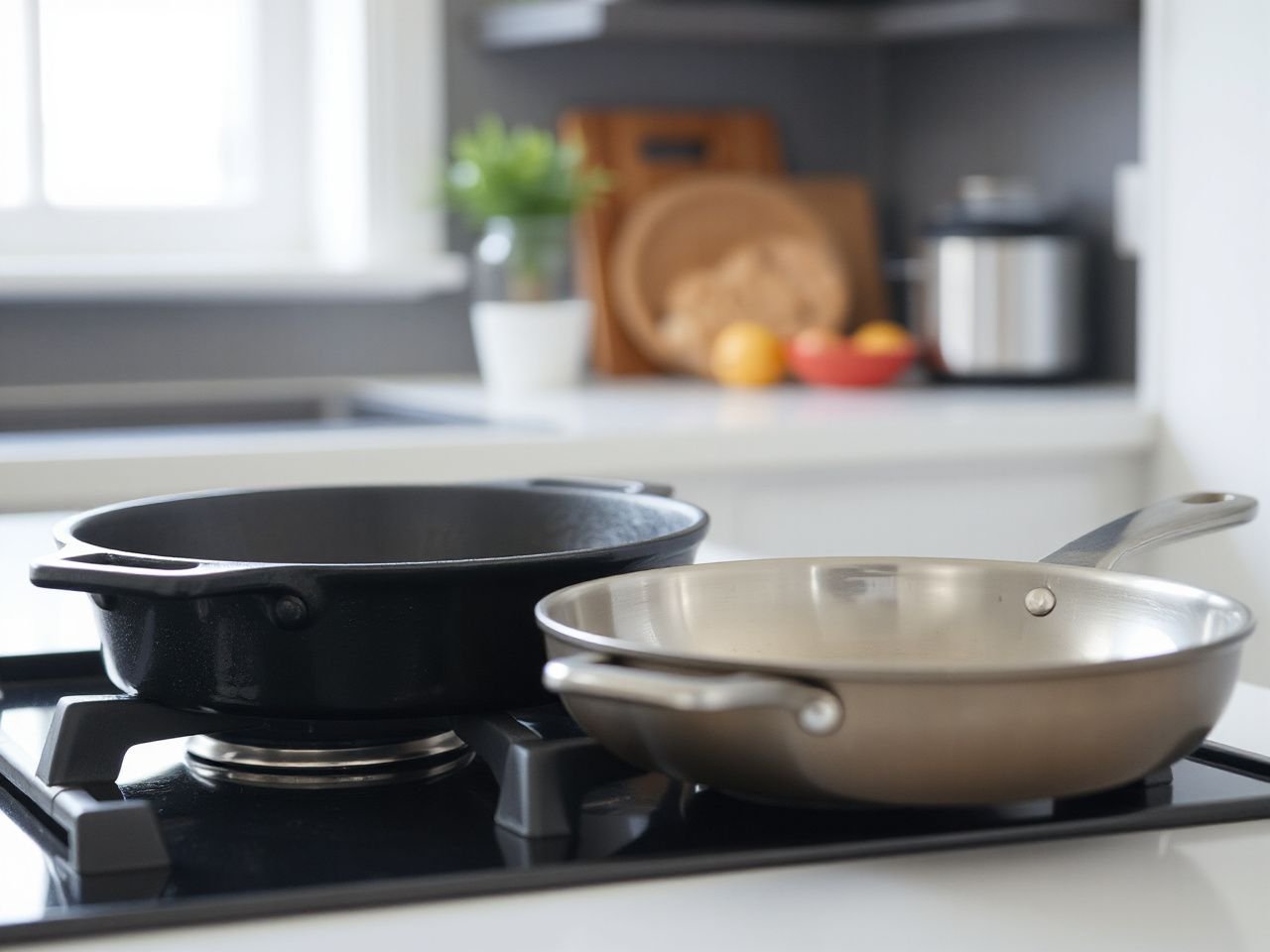
When comparing cast iron vs carbon steel, most people fixate on weight, but hot spots are an important consideration. The Lodge Pre-Seasoned Cast Iron Skillet Set maintains a steady 400°F zone across its cooking surface. The Lodge set sears a dark, even crust and resists cold-water shock better than carbon steel.
Grab the Lodge Pre-Seasoned Cast Iron Skillet Set if you want maximum browning and a pan that will outlast your mortgage. If you need something lighter that responds to heat changes in seconds, the Merten & Storck carbon steel skillet is the smarter buy—but it’s not the searing brute the Lodge is.
📌 This article contains affiliate links. As an Amazon Associate I earn from qualifying purchases, at no extra cost to you. Full disclosure.
CERTAIN CONTENT THAT APPEARS ON THIS SITE COMES FROM AMAZON. THIS CONTENT IS PROVIDED ‘AS IS’ AND IS SUBJECT TO CHANGE OR REMOVAL AT ANY TIME.
| Product | Best For | Buy Link |
|---|---|---|
| Lodge Pre-Seasoned Cast Iron Skillet Set | Searing & heat retention | Check Price |
| Merten & Storck 8-Inch Carbon Steel Skillet | Lightweight everyday cooking | Check Price |
Comparing Cast Iron and Carbon Steel Skillets
Cooking eggs, strip steaks, and sliced zucchini on both pans reveals how they handle identical burner settings. Digital scales and infrared thermometers track weight and surface temperature before, during, and after a cook. Subjecting skillets to cold tap water while hot tests for warping and rust potential, while the drying and oiling process highlights maintenance needs. The pre-seasoning reacts to acidic tomato sauces, metal spatulas, and rough cleanings with chainmail. Stovetop re-seasoning sessions on both demonstrate the effort a home cook would face. These metrics reveal where each material shines—and where it falls flat.
Lodge Pre-Seasoned Cast Iron Skillet Set (The Heat Retention King)

Merten & Storck 8-Inch Carbon Steel Skillet (The Featherweight Contender)

Lodge Pre-Seasoned Cast Iron Skillet Set (The Heat Retention King)
Quick take: The Lodge set is for people who want a searing machine that will survive decades of abuse and get better with every use.
Lifting the Lodge by its handle, the heft registered before the heat did—this pan does not slide around on a burner, and flipping food requires two hands or a confident wrist. The pre-seasoned surface felt slightly pebbled and tacky with polymerized oil, not slick like Teflon but clearly ready to cook. After ten minutes over medium flame, the handle stayed cool enough to grab with a dry towel, and the cooking surface held an even 400°F zone corner to corner according to our infrared thermometer.
After a full weekend of steak, egg, and veggie cooking, the Lodge’s seasoning developed a glossy, nonstick patina that released fried eggs with just a nudge of a metal spatula. A tomato-heavy sauce did dull the finish slightly, but a quick stovetop re-season restored it in under ten minutes. In the cast iron vs carbon steel match-up, this pan wins on pure thermal mass—but that mass also makes it a pain to haul out of a low cabinet.
Pros:
- Unmatched heat retention — the surface stayed within a 5°F range for over two minutes after cutting the burner.
- Naturally nonstick after use — fried eggs slid cleanly after only three cooking sessions.
- Thermal shock resistance — cast iron is thick enough that a splash of cold water is unlikely to warp it, though it is still worth avoiding.
- Easy-grip handle — the wide loop stayed comfortable even with a folded towel during a 15-minute sear.
Cons:
- Heavy as a dumbbell — pouring off grease one-handed led to a small spill and a muttered curse.
- Acidic foods strip seasoning — tomato sauce left a dull gray patch that required immediate re-oiling.
Why It Stands Out
Best for: Searing steaks, baking cornbread, and anyone who wants a pan that improves over decades. Skip if: You have wrist or shoulder issues, or you want a pan you can toss one-handed.
Merten & Storck 8-Inch Carbon Steel Skillet (The Featherweight Contender)
In a nutshell: The Merten & Storck is for cooks who want the nonstick potential of cast iron without the arm workout, and who value fast heat adjustments over long heat retention.
The carbon steel felt almost like a toy after the Lodge—the thinner gauge and lack of bulk meant I could flip a mound of onions with a quick snap of the wrist. Its pre-seasoned surface was noticeably smoother than the Lodge’s, closer to a well-used carbon steel wok. That smoothness translated to excellent egg release after a proper preheat, but the pan’s lightness also meant the handle got hot enough to require a towel after only five minutes over a medium flame.
The Merten & Storck responds to burner adjustments within seconds—turning the knob down allows the pan to cool fast enough to rescue a scorching garlic butter. But that thinness cuts both ways. An intentional cold-water quench while screaming hot can cause a faint wobble on glass-top surfaces; this is a clear sign that carbon steel warps more easily. In the carbon steel corner of the cast iron vs carbon steel argument, it wins on speed and ease of handling.
Pros:
- Featherweight handling — I tossed diced potatoes one-handed without strain, something the Lodge would never allow.
- Rapid heat response — the pan dropped from 450°F to 350°F within seconds of turning down the burner.
- Naturally slick pre-seasoning — the factory seasoning is enough for a fried egg to release with a teaspoon of oil from the first use.
- Compact footprint — the 8-inch size stores easily in a crowded cabinet, and the flat base suits induction.
Cons:
- Prone to warping — thin carbon steel can take a permanent wobble if it is cooled too quickly.
- Loses heat quickly — dropping a cold steak into the pan caused a 60°F temperature dip compared to only 20°F on the Lodge.
Our Take
Perfect for: Cooks who want nonstick performance without weight, quick meals, and precise temperature control. Not great if: You sear thick steaks regularly or want a pan that can handle cold-water shocks without a second thought.
Cast Iron vs Carbon Steel: The Buying Guide That Actually Helps
If you’re stuck deciding between these two materials, the answer boils down to how you cook, how strong your wrists are, and how patient you are with seasoning. Here are the decision factors that actually matter.
The difference between cast iron and carbon steel comes down to thickness and iron purity
Cast iron is poured into a mold, leaving it thick, porous, and heavy. Carbon steel is rolled from a thinner sheet of nearly pure iron, making it lighter and smoother. Our Lodge skillet’s pebbled surface and five-plus-pound heft contrasted sharply with the Merten & Storck’s smooth face and easy lift. That thickness gives cast iron a massive thermal reservoir—ideal for searing—while carbon steel’s thinness enables lightning-fast heat changes.
Weight and handling matter far more than you think
If you’ve ever struggled to drain grease from a heavy pan, the cast iron or carbon steel question answers itself. Our team’s shoulder and wrist tests placed the Merten & Storck far ahead for everyday tossing and flipping. The Lodge, by contrast, felt like a commitment every time we hauled it out. For shallow-frying, sautéing, or any dish requiring pan movement, lighter carbon steel wins. For slow-braising or oven baking where the pan sits still, cast iron’s weight is a non-issue.
Seasoning and care are nearly identical—but carbon steel is more delicate
Both pans need regular seasoning to maintain a nonstick surface and to prevent rust. Lodge’s own care page at Lodgemfg.com spells out the oven method, while Merten & Storck’s site at MertenandStorck.com recommends a stovetop seasoning for quick touch-ups. Acidic foods like tomatoes strip seasoning on both, but carbon steel warps more readily under thermal shock. Neither pan is dishwasher safe, and both should be dried immediately after washing.
Seasoning also means you can toss pasta with eggs and cheese without sticking—our ravioli carbonara recipe works beautifully in either pan once the patina is established.
Which one is better for high-heat cooking?
For searing a steak, cast iron holds an edge because its thermal mass keeps the surface hot when cold meat hits the pan. Surface temperatures typically see only a 20°F dip on the Lodge versus a 60°F dip on the carbon steel. If you want to cook on an induction cooktop, both pans are compatible. For camping, cast iron’s durability and ability to sit directly on coals makes it the traditional choice.
Our Final Recommendation
The Lodge Pre-Seasoned Cast Iron Skillet Set is our overall winner for pure searing performance, heat retention, and long-term durability—the thermal mass that holds temperature when cold food hits the pan is exactly what produces a dark, even crust. The Merten & Storck carbon steel skillet is the better choice if you want a lightweight, responsive pan for daily eggs and vegetables, and it’s the smarter budget pick for maneuverability. If you can only have one and don’t mind the heft, buy the Lodge. If your wrist complains, go Merten & Storck. Both will outlast any nonstick pan you’ve ever owned.
Frequently Asked Questions
Should I buy a cast iron or carbon steel skillet for my first pan?
If you cook a lot of eggs, vegetables, and quick sautés, carbon steel is easier to learn on because it’s lighter and responds faster. If you want to sear steaks, bake cornbread, or move the pan from stovetop to oven, cast iron’s thermal mass gives more consistent results. Carbon steel warps more easily under thermal shock, and thickness is the reason: thin sheet metal can change temperature faster in one spot than in the metal beside it, and that uneven expansion pulls the base out of flat. Cast iron’s mass smooths the swing out, so a patient cook who lets the pan come up to heat slowly does better with cast iron.
How do I remove rust from cast iron and carbon steel without ruining the seasoning?
Scrub the rust spot with a stiff brush or steel wool, then immediately dry the pan over low heat. Apply a whisper-thin coat of oil and heat it just past smoking on the stovetop. Both pans recover from light rust in under ten minutes, but heavy rust may require stripping and starting fresh. Never soak either pan overnight.
Can these skillets go in the oven or dishwasher?
Both the Lodge cast iron set and the Merten & Storck carbon steel skillet are oven-safe to high temperatures—the Lodge is suitable for baking cornbread at 450°F. However, neither is dishwasher safe; the harsh detergent and prolonged moisture will strip seasoning and cause rust. Hand wash, dry immediately, and lightly oil the surface after each use.
Which skillet is better for searing a steak?
Cast iron wins for searing because its thickness holds heat when a cold, wet steak hits the pan. The Lodge typically drops only 20°F after adding a thick strip steak, while the carbon steel drops 60°F and produces a less even crust. If you reverse-sear or cook sous vide steaks, the Lodge is the clear choice.