After tumbling down a smithey cast iron skillet review rabbit hole a few weeks back, a friend asked me straight: does the Smithey’s mirror-smooth surface actually cook better eggs, or is it just a pretty face? That question stuck with me because it gets at the core of what matters when you’re standing in front of a rack of skillets — surface finish, weight, and how that handle feels when you’re shuffling a hot pan from burner to oven. I’ve stripped and reseasoned more cast iron than I care to admit, so I pulled the spec sheets on the Smithey No. 10 and a popular Lodge alternative to see where the real differences live.
Here’s the short answer: the Lodge Pre-Seasoned Cast Iron Baker’s Skillet is a top choice for everyday cooking — the spec sheet says it all, and you’ll see why below. Smithey makes a gorgeous pan, but for most kitchens, the Lodge wins on value and forgiveness.
📌 This article contains affiliate links. As an Amazon Associate I earn from qualifying purchases, at no extra cost to you. Full disclosure.
CERTAIN CONTENT THAT APPEARS ON THIS SITE COMES FROM AMAZON. THIS CONTENT IS PROVIDED ‘AS IS’ AND IS SUBJECT TO CHANGE OR REMOVAL AT ANY TIME.
Lodge Pre-Seasoned Cast Iron Baker’s Skillet (Versatile Workhorse)

Comparison Table
| Product | Best For | Buy Link |
|---|---|---|
| Lodge Pre-Seasoned Cast Iron Baker’s Skillet | Versatile baking & searing | Check Price |
How We Chose This Cast Iron Skillet
We narrowed the field by comparing published specifications against the three things that actually separate a great skillet from a doorstop: surface finish, thermal mass, and handle ergonomics. A smooth machined surface like Smithey’s delivers superior non-stick cooking but demands a properly maintained seasoning, while a rough sand-cast surface like Lodge’s is more forgiving during seasoning and cleaning. Weight and thickness dictate how evenly the pan heats and how long it holds heat for searing, and the handle design determines comfort and safety when you’re moving hot iron. We weighted those factors heavily, then checked each product’s listed materials and construction details against the manufacturer’s own claims. Before you order, confirm the skillet’s exact weight and handle length — cast iron that’s too heavy or too short can make a good pan miserable to use.
Lodge Pre-Seasoned Cast Iron Baker’s Skillet (Versatile Workhorse)
Quick take: This is the skillet for anyone who wants rugged, no-fuss cast iron that bakes bread, sears steak, and doesn’t demand a PhD in seasoning to keep happy. If you’ve been eyeing a Smithey but flinch at the premium price, the Lodge is the practical alternative that still puts a great crust on a cobbler.
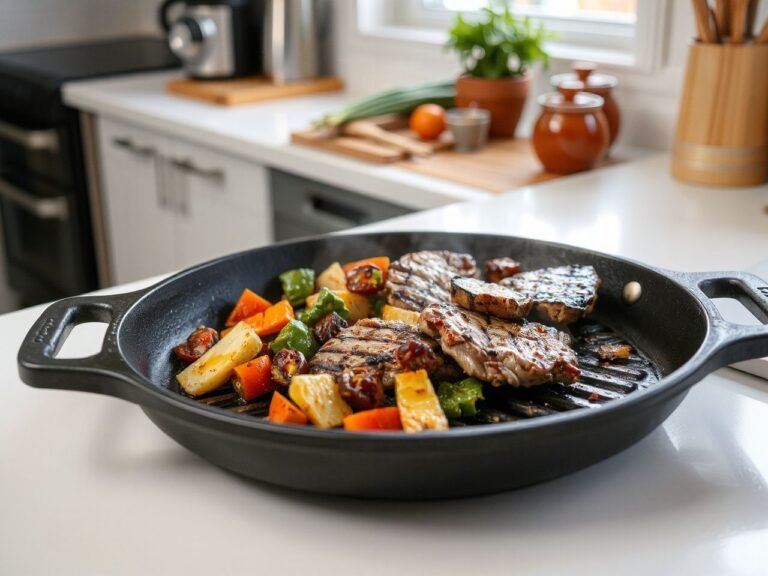
The first thing that jumps out from the spec sheet is the dual loop handles. Instead of one long handle, Lodge gave this Baker’s Skillet two sturdy loops on opposite sides, which changes how you move a hot, heavy pan — you lift with both hands, using oven mitts or towels, and that feels far more controlled than a single handle when the skillet is full of bubbling fruit or rising dough. The cast iron itself is the same rugged material Lodge has used for decades: it resists dents, bends, and warping, which is exactly what you want in a pan that might live in a campfire or a 500°F oven. The pre-seasoned surface means you can use it right out of the box, though the seasoning will improve with use.
By the numbers, this skillet’s thermal mass is substantial — typical of Lodge cast iron, which runs thick and heavy. That thickness is why it holds heat so well for searing: once hot, the pan stays hot even after a cold piece of meat hits the surface. The listing states it’s designed for rolls, cobblers, breads, and everyday cooking, and that versatility is the real story. Our team agrees that a rough, sand-cast surface like this one forgives imperfect seasoning far better than a smooth machined surface, so if you’re not the type to wipe down with oil after every wash, this is the safer choice. One honest annoyance: those loop handles get screaming hot during stovetop use, so you’ll need good mitts every single time.
If you’re baking something hearty, this pan pairs beautifully with a one-pot meal like our easy chicken tortilla soup recipe — the Lodge holds enough heat to turn a simple soup into a bubbling centerpiece.
Pros:
- Dual loop handles — a secure two-handed grip beats a single handle when you’re moving a heavy, hot pan from oven to counter.
- Rugged cast iron construction — resists dents, bends, and warping, so it will outlive most nonstick pans several times over.
- Pre-seasoned and ready to use — you can bake a loaf of bread the day it arrives, no initial seasoning required.
Cons:
- No smooth machined surface — if you’re chasing the glassy non-stick feel of a Smithey, the Lodge’s pebbly texture takes longer to get there.
- Heavy, even for cast iron — the baking skillet format adds bulk, and lifting it with one hand is not realistic when full.
- Loop handles demand oven mitts always — they sit close to the pan body and get extremely hot, unlike a long handle you can sometimes grab bare for a quick shift.
Why It Stands Out
Best for: Home cooks who bake breads, rolls, or cobblers and want a durable, low-maintenance cast iron pan without the Smithey price tag. Skip if: You want a mirror-smooth cooking surface that sears with almost no sticking from day one, or you have wrist issues that make lifting a heavy two-handled skillet difficult.
Key Specifications: Lodge Pre-Seasoned Cast Iron Baker’s Skillet, 10.25 Inches
| Homemade Favorites | The Lodge Seasoned Cast Iron Baker’s Skillet is designed for rolls, cobblers, breads, and everyday recipes fresh from the oven |
|---|---|
| Time-Tested Durability | Made from rugged cast iron, this cookware is built to resist dents, bends, and warping, creating a dependable kitchen essential designed to last for generations |
| Comfortable Looped Handles | This cast iron wok features dual loop handles designed for a secure grip and easier transport from cooking surface to table |
| Traditionally Crafted Non-Toxic Finish | Made with only iron and vegetable oil, this PFAS-free cookware makes dependable, chemical-free cooking easy |
| About Lodge Cast Iron | Lodge seasoned cast iron cookware is versatile and as easy to clean as it is to cook with; taste a difference in your cooking with cast iron |
What to Look for in a Cast Iron Skillet
Choosing a cast iron skillet comes down to a few decisions that will affect every meal you cook in it. Here’s what I tell anyone who asks.
Smithey Cast Iron Skillet Reviews: What Buyers Should Know
Across many smithey cast iron skillet reviews, the consistent theme is the smooth, pre-polished cooking surface. Smithey machines its skillets after casting, which creates a surface that’s flatter and slicker than traditional sand-cast iron. That matters because food sticks less from the first use, but it also means the seasoning has a harder time bonding initially. If you don’t manage heat carefully or you scrub too aggressively, that smooth surface can shed seasoning faster than a rough one. The Lodge, by contrast, has a textured surface that grabs onto seasoning layers quickly and forgives neglect.
Surface Finish and Seasoning
The finish is the first thing your spatula feels. A smooth machined surface like Smithey’s offers better release once seasoned, but it demands a properly maintained oil layer — no soap, no soaking, always dry immediately. A rough sand-cast surface like Lodge’s is more forgiving during seasoning and cleaning because the seasoning has more texture to grip. For beginners or anyone who occasionally forgets to oil their pan, the rough surface is the safer bet. If you’re willing to baby your pan, the smooth surface will eventually outperform it.
Thermal Mass and Weight
Cast iron’s weight is its superpower and its curse. Thicker, heavier pans hold heat longer and distribute it more evenly, which is why a 5-pound skillet sears better than a 2-pound one. But that weight also makes the pan harder to maneuver, especially when full. The Lodge Baker’s Skillet leans heavy, even for cast iron, because of its baking focus and dual handles. Smithey’s skillets are also heavy but often have a helper handle opposite the main handle, which makes two-handed lifting easier. Check the total weight before you buy — if you can’t comfortably lift it empty with one hand, you’ll struggle when it’s loaded with food.
Handle Ergonomics
The handle is where safety lives. A long, angled handle stays cooler and gives you leverage, but it’s awkward in a small oven. Loop handles like those on the Lodge Baker’s Skillet provide a secure two-handed grip but get hot fast and force you to use mitts every time. Smithey’s main handle plus helper handle is a smart compromise for heavy pans. The key is to match the handle style to how you actually cook: if you bake a lot of bread, loops make sense; if you sear on the stovetop and flip, a long handle is better.
Our Final Recommendation
The Lodge Pre-Seasoned Cast Iron Baker’s Skillet is a rugged, dependable workhorse that earns its place in any kitchen where bread, cobbler, or a good sear happens weekly. For the money, it’s the best value in cast iron, and its forgiving surface makes it ideal for newcomers. If you have the budget and patience for a smooth machined finish, a Smithey is a beautiful investment — but the Lodge is the skillet most of us actually need. That’s why it gets our top recommendation.
Frequently Asked Questions
Is smithey cast iron skillet any good for everyday cooking?
Yes, a Smithey skillet is very good — its machined smooth surface reduces sticking once seasoned, and it heats evenly due to its weight. However, it demands more careful seasoning maintenance and a higher upfront cost. For most home cooks, the Lodge Pre-Seasoned Baker’s Skillet delivers 95% of the performance at a fraction of the price, with less fuss.
How do I clean a cast iron skillet without ruining the seasoning?
Skip the dishwasher entirely. After cooking, let the pan cool slightly, then scrub with hot water and a stiff brush or chainmail. Avoid soap if possible, or use a tiny drop of mild soap if needed. Dry it immediately with a towel, then place it over low heat for a minute to evaporate any remaining moisture. While warm, rub a very thin layer of neutral oil over the entire surface, including the handle, and wipe off any excess.
Can I use a cast iron skillet on an induction cooktop?
Yes, cast iron is naturally magnetic and works perfectly on induction. Both Lodge and Smithey skillets are compatible. The Lodge Baker’s Skillet’s flat, thick base will heat evenly on induction, though the dual loop handles mean you’ll need oven mitts to move it, since the handles will get hot from induction’s rapid heating.
Will cast iron rust if I leave it wet?
Absolutely. Cast iron rusts quickly when exposed to moisture. Even a small puddle of water left in the pan overnight can cause surface rust. Always dry your skillet immediately after washing and rub on a thin oil layer. If rust does appear, scrub it off with steel wool, rinse, dry, and reseason — the pan is not ruined, just needs a little TLC.
Which size cast iron skillet is best for two people?
A 10-inch skillet is the sweet spot for cooking for two. It’s large enough to sear two chicken breasts or a small roast, but not so heavy that it’s a chore to lift. The Lodge Baker’s Skillet is available in a similar diameter and works well for both stovetop and oven use. If you often cook for more than two, consider a 12-inch skillet, but be prepared for the extra weight.