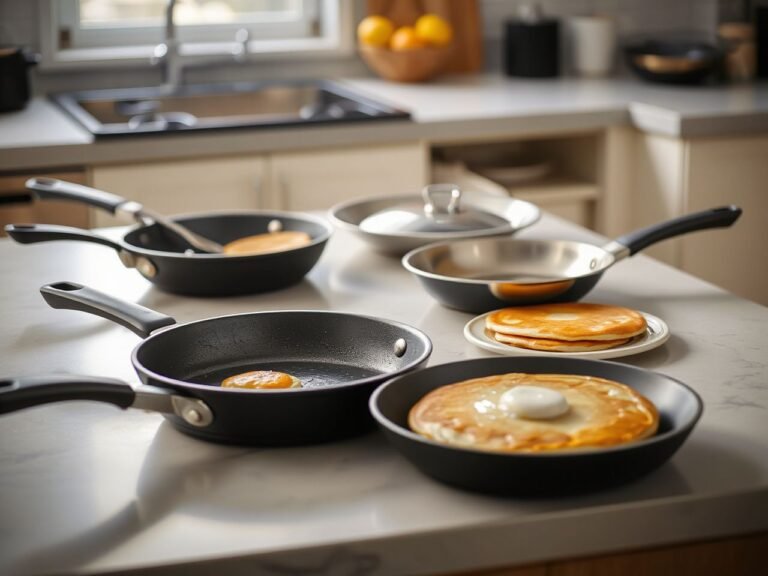
Most ceramic nonstick pans have a metal body beneath a coating, so the label alone doesn’t tell the whole safety story. The key difference is between the ceramic label and the actual coating system: most ceramic nonstick pans use a thin sol-gel layer on a metal base. Safety depends on both the coating chemistry and how the pan is used. A good assessment separates exposure concerns from practical coating failure because a pan can stay chemically safe while losing its nonstick ability through heat, abrasion, or wear. Measure the opening first to see if it’s safe for your needs. That’s the right way to ask, is ceramic nonstick cookware safe?
Key Takeaways
- Ceramic nonstick cookware usually has a silica-based sol-gel coating over aluminum or stainless steel, rather than a solid ceramic body.
- The word ceramic does not, by itself, prove that a pan contains no PTFE, PFAS, heavy metals, or other substances.
- High heat, empty preheating, abrasive cleaning, and unsuitable utensils can make the coating lose its nonstick function.
- Minor surface wear and peeling or exposed metal deserve different decisions; follow the maker’s care guidance and replace cookware with serious coating damage.
Is ceramic nonstick cookware safe? Start with the coating
What ceramic nonstick actually means
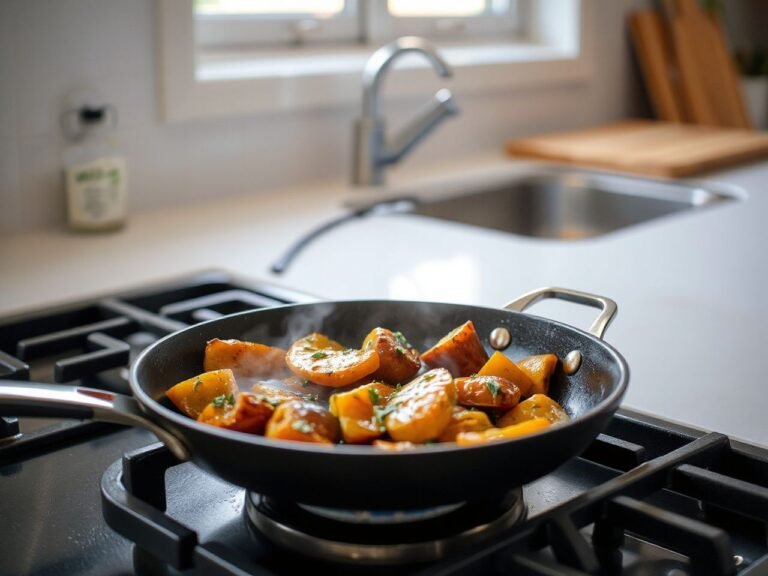
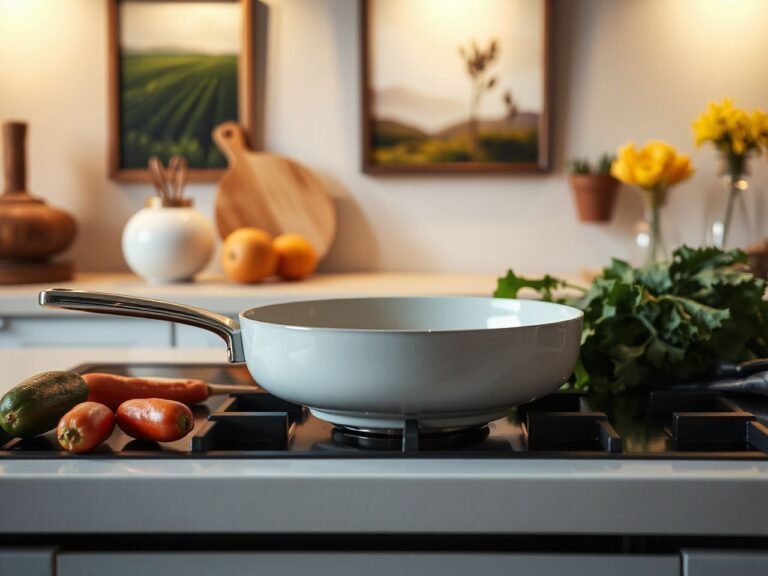
A ceramic nonstick pan is usually a metal pan with a silica-based sol-gel coating. Ceramic particles can be part of that coating, but the finished cooking surface is a thin layer applied rather than a pan made entirely from fired ceramic.
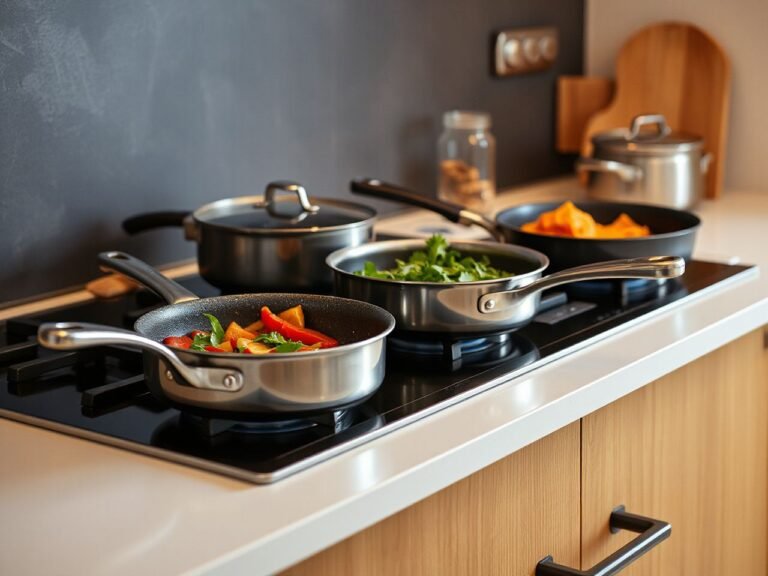
The underlying body might be aluminum cookware or stainless steel cookware. It conducts and supports the cooking surface. The coating supplies the low-stick behavior. So, the label describes the surface system, not every material in the pan.
Ceramic nonstick cookware is usually a coated metal pan, not solid ceramic cookware. This matters because the body, coating, manufacturing process, and care instructions all influence how the pan behaves.
Does ceramic nonstick contain PTFE or PFAS?
Some ceramic coatings are marketed as free from PTFE or PFAS. Product disclosures vary from one manufacturer to another. The term ceramic doesn’t guarantee the pan is free from PTFE, PFAS, heavy metals, or other substances someone might want to avoid.
Verified product claims show why reading labels carefully is important. The Calphalon Premier Hard-Anodized Ceramic 12-Piece Cookware Set features a PFAS-free ceramic coating. The Cuisinart GreenGourmet 12-Piece Ceramic Nonstick Cookware Set states it has no PTFE or PFOA. The Carote 16-Piece Nonstick Ceramic Cookware Set claims to contain no PFAS or PTFE. These are specific claims for each product, not a universal rule for all ceramic cookware.
PTFE and PFAS are related but distinct terms, so a statement about one does not automatically answer every question about the other. Look for the exact wording on the package, care booklet, or manufacturer’s material disclosure. If the wording is vague, treat the composition as unknown rather than filling in the gap.
How to read a label without guessing
Look at the carton, pan base, manual, and the official product page. Search for a clear statement about the coating and any specific claims about PTFE, PFOA, or PFAS.
- Separate claims about the coating from claims about the handle, lid, or metal body.
- Notice whether the wording says “free of” a named substance or merely uses broad terms such as “natural” or “ceramic.”
- Check whether the care instructions warn against high heat, metal utensils, abrasive sponges, or cooking sprays.
- Keep the manual if the pan’s coating becomes worn, because replacement guidance may depend on the stated construction.
The U.S. Food and Drug Administration offers guidance about substances used in food-contact materials. Its advice is usually a better resource for general food-contact questions than vague marketing claims. A manufacturer’s specific disclosure is still needed to identify the coating on a particular pan.
Causes of coating failure and possible exposure concerns
Why the nonstick surface loses performance
Loss of nonstick performance is a common practical failure mode for ceramic-coated cookware. The surface can become less slippery even before a reader sees dramatic damage.
Exposing the pan to excessive heat can stress the coating. Preheating an empty pan can heat the surface without food or liquids to help regulate the temperature. Harsh cleaning methods and using unsuitable utensils can cause abrasion. Also, cooking sprays may leave baked-on residues that are hard to remove without aggressive scrubbing.
Heat, abrasion, and residue can make a ceramic coating lose nonstick performance even when the pan still looks usable. A pan that releases food poorly is not automatically chemically dangerous, but the change is a useful signal to reassess heat and cleaning habits.
Can overheating release harmful substances?
Overheating behavior depends on the actual coating system and the manufacturer’s instructions. Ceramic labeling alone cannot establish how every pan behaves under excessive heat.
Use ventilation while cooking, and don’t leave an empty coated pan over an active burner. Follow the temperature guidelines in the manual. If you notice unusual smoke, a sharp smell, discoloration, or bubbling on the surface, turn off the heat and let the pan cool before inspecting it.
Overheating a coating might cause it to lose functionality without obvious flakes. That’s why safety checks and performance evaluations should be kept separate. Just because food doesn’t stick doesn’t mean the coating hasn’t been stressed, and a smooth surface isn’t proof it’s never been damaged.
The U.S. Consumer Product Safety Commission publishes consumer safety information, including guidance relevant to household products and fire prevention. For an immediate overheating event, follow the cookware manual and ordinary kitchen fire precautions rather than trying to cool a hot pan with water.
What scratches, chips, and peeling mean
Cosmetic marks and structural damage to the coating shouldn’t be treated as the same. A faint surface mark can impair food release without exposing much of the underlying material. But a chip or peeling section clearly breaks the coating system.
Stop and inspect the pan if you can see flakes, lifted edges, exposed metal, bubbling, or a patch that continues to spread. Do not scrape at the damaged section to determine its size. Food can collect around a lifted edge, and further use can enlarge the defect.
Peeling or visibly chipped nonstick coating is a reason to stop using the pan for routine cooking and check the manufacturer’s replacement guidance. If the surface is visibly failing, it’s no longer a reliable nonstick. The response depends on the damage type and the maker’s instructions.
For a narrower discussion of worn surfaces, see what scratched nonstick pans mean for safe use. That question deserves its own assessment rather than a blanket statement about every coated pan.
Solutions: safer daily use and gentler cleaning
Use the pan in a way that protects the finish
Start with the manual’s heat guidance. If it’s missing, avoid extreme heat and don’t preheat an empty coated pan for longer than necessary to start cooking.
- Inspect before cooking. Look for chips, peeling, bubbling, or exposed metal. Set aside cookware with obvious coating failure.
- Choose moderate heat. Ceramic nonstick surfaces do not need aggressive heat to perform their basic function. Avoid leaving an empty pan over a burner.
- Use suitable utensils. Silicone utensils reduce scraping and are a sensible default for coated surfaces. Metal utensils can scratch or mark the finish, particularly if dragged across it.
- Control residue. Cooking sprays can leave a sticky film that builds during heating. Use the cooking fat and method permitted by the manufacturer instead of relying on repeated spray applications.
- Move the pan carefully. Avoid stacking cookware directly on the cooking surface when the manufacturer does not provide a protective storage method.
These steps are preventive, not a way to restore a worn coating. Once a sol-gel surface loses its release properties through wear, gentler treatment might slow further damage but can’t rebuild the original finish.
Cleaning without unnecessary abrasion
Let the pan cool before washing, then follow the cleaning instructions in the manual. Using a soft sponge and dish soap is gentler than an abrasive sponge or scouring powder.
- Do not use abrasive cleaners unless the manufacturer expressly permits them.
- Avoid steel wool and rough scouring pads on the coated surface.
- Do not attack baked-on residue with a sharp tool.
- Rinse away cleaning product fully and dry the pan before storage.
- Follow the manual’s dishwasher instruction rather than assuming that a dishwasher is harmless because the pan is labeled nonstick.
Abrasive cleaners can shorten the useful life of a ceramic nonstick coating by removing or roughening the working surface. Gentle washing protects both the coating and the information needed to evaluate its condition later.
Storage and cookware stacking
Storage damage often starts when one pan rests directly inside another. Contact between hard surfaces can mark the coating, even if cooking technique has been careful.
Use a soft barrier if stacking is allowed by the manufacturer, and keep utensils from being stored loose against the cooking surface. Store the pan dry, and ensure the coating is free of trapped food residue.
Preventive measures and comparisons with other cookware
Ceramic nonstick compared with PTFE nonstick
Both ceramic nonstick and PTFE nonstick cookware use a coating over a metal body, but the coating chemistry is different. A ceramic label does not automatically answer questions about PFAS, and a PTFE label does not describe every other component of a pan.
The useful comparison is specific: identify the coating, read the manufacturer’s care directions, and consider how the surface will be heated and cleaned. Both types can lose nonstick performance through unsuitable heat, abrasion, or wear.
Ceramic nonstick compared with stainless steel
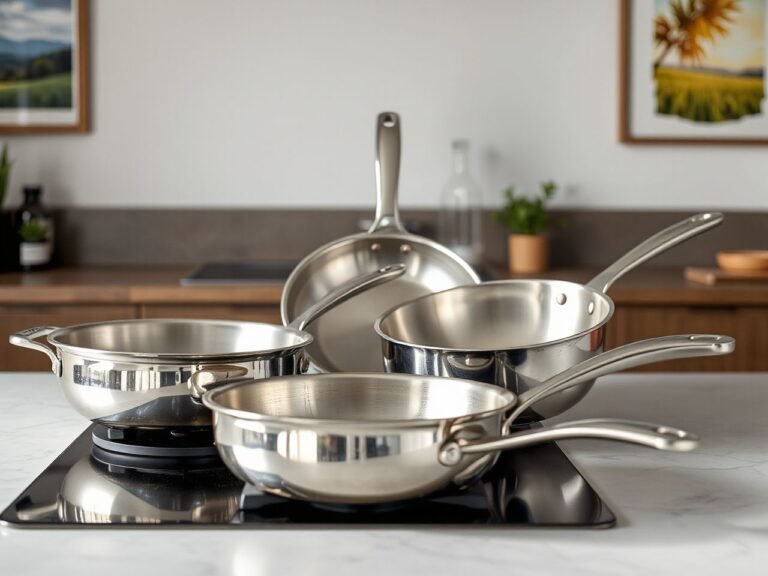
Stainless steel cookware has an uncoated cooking surface, so it does not present the same type of applied nonstick layer. Food release depends more on preheating, cooking technique, and the food itself.
A stainless steel body may still have other components, such as a bonded base or a separate coating on another surface, so the word stainless does not by itself describe every part of a pan. Read the product information for the actual construction.
Ceramic nonstick compared with uncoated cast iron
Uncoated cast iron relies on a maintained seasoning layer rather than a factory-applied ceramic sol-gel coating. Seasoning is a surface built from repeated cooking and care, and it can be rebuilt if it becomes thin or uneven.
Cast iron seasoning can be rebuilt, while a damaged ceramic sol-gel coating is not restored by ordinary home seasoning. That difference should guide maintenance: protect a ceramic finish from abrasion, but assess cast iron through the condition of its seasoning and the condition of the iron beneath it.
Cast iron also needs attention to drying and storage, while ceramic-coated cookware needs special attention to heat, utensils, and cleaners. Neither material is automatically right for every task.
When replacement makes sense
Replacing a pan is reasonable when the surface is peeling, flaking, bubbling, or exposing the underlying metal, or when the coating no longer performs acceptably despite careful use. Do not keep scraping a damaged area in an attempt to make it smooth.
A pan that has just become less nonstick may not show the same concern as one with visible delamination. Poor release can make cooking frustrating and lead to higher heat or excess oil. If the coating looks like it’s failing, it’s best to retire the pan from regular use. Check local options for recycling or disposal of cookware.
Cookware replacement should account for both coating condition and cooking behavior, not only the date of purchase. A pan remains useful only while its surface, body, and care requirements fit the way it is being used.
Readers comparing materials for a lower-exposure kitchen can also review this practical guide to ceramic pan safety. The claim about composition still needs to be checked for each individual pan.
How to make a careful safety decision
Use a four-part check
A clear decision does not require guessing. Work through four separate questions:
- What is the coating? Find the manufacturer’s direct description instead of relying on the word ceramic.
- How was the pan used? Consider empty heating, extreme heat, utensils, sprays, and cleaning products.
- What does the surface look like? Check for ordinary wear, scratches, chips, lifted edges, bubbling, or exposed metal.
- What does the manual say? Follow the stated care and replacement guidance, especially if the pan has been overheated or damaged.
This process separates chemical makeup from practical wear. It also prevents two opposite mistakes: thinking every ceramic surface is the same and assuming every small mark means the same thing.
What not to infer from appearance
A shiny surface doesn’t prove a pan is PFAS-free. A dull surface doesn’t prove harmful substances have been released. Descriptions like “stone” or “natural” don’t replace a clear material disclosure.
Likewise, a pan that releases food well might still be unsuitable if someone wants a specific coating claim. The label and manufacturer info answer questions about composition; the surface and care history reveal condition.
Use ventilation and avoid improvised fixes
Ventilation makes sense during cooking, especially if food or residue starts to smoke. Don’t pour water into a hot pan to cool it down. Also, avoid using damaged pans as test surfaces for high-heat cooking.
Don’t sand, scrape, repaint, or season a ceramic nonstick pan. Those actions change the cooking surface and can create more debris or damage. If the coating is peeling, replacing the pan is a better choice than trying a home repair.
Frequently Asked Questions
Is ceramic nonstick cookware safe for everyday cooking?
Ceramic nonstick cookware can be suitable for everyday cooking if the coating composition is disclosed. Use the pan within its instructions, and keep the surface intact. The word ceramic alone doesn’t prove that every pan is free from PTFE, PFAS, or other substances. Check the maker’s material statement and avoid overheating, abrasive cleaning, and damaged cookware.
Does ceramic nonstick cookware contain PTFE or PFAS?
Some products explicitly state their ceramic coatings contain no PTFE or PFAS, but that isn’t true for every ceramic-labeled pan. Product information will specify the coating used. Look for direct wording about PTFE, PFOA, and PFAS instead of assuming ceramic means free from all fluorinated materials or other substances.
Can a scratched or peeling ceramic nonstick pan still be used?
A light mark and a peeling or chipped surface should be treated differently. Visible peeling, bubbling, lifted edges, or exposed metal indicate coating failure. Stop routine use and consult the manufacturer’s replacement guidance. Do not scrape the damaged area or try to rebuild the coating at home. More details are available in our guide to scratched nonstick pan safety.
Can I use metal utensils, cooking sprays, or abrasive sponges?
Metal utensils can scratch or mark a ceramic coating, so silicone utensils are a gentler choice. Cooking sprays might leave stubborn residues that make cleaning harder. Abrasive sponges and cleaners can wear down the surface. Follow the cookware manual if it permits certain utensils or cleaning methods, but don’t assume that every ceramic pan’s instructions are the same.
How does ceramic nonstick compare with cast iron and stainless steel?
Ceramic nonstick uses an applied sol-gel coating over a metal body, while stainless steel has an uncoated cooking surface. Uncoated cast iron depends on seasoning, which can often be rebuilt. Ceramic coating damage can’t usually be repaired with home seasoning. Cast iron seasoning can be restored, but ceramic cookware should be protected from abrasion and replaced when the coating visibly fails.
For those comparing several cookware materials, a broader shortlist for safer kitchen materials can help organize the questions to ask. Ultimately, the final choice depends on the specific coating disclosure, condition, and care instructions.