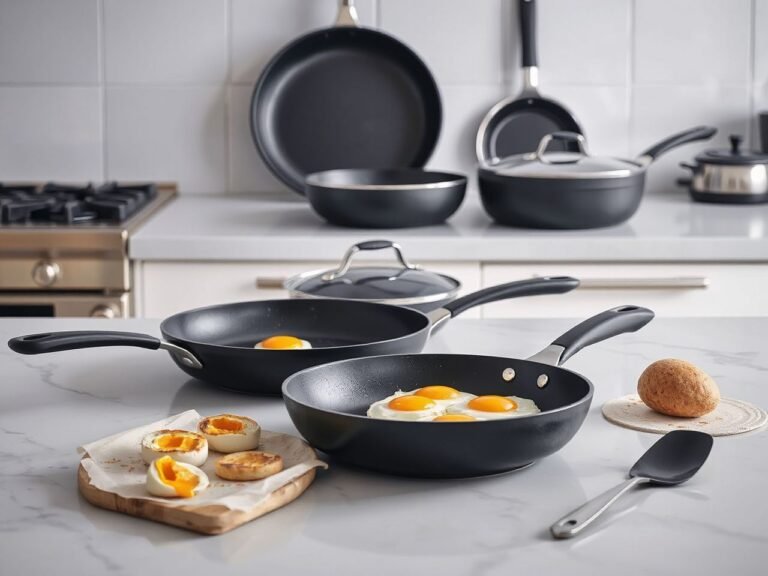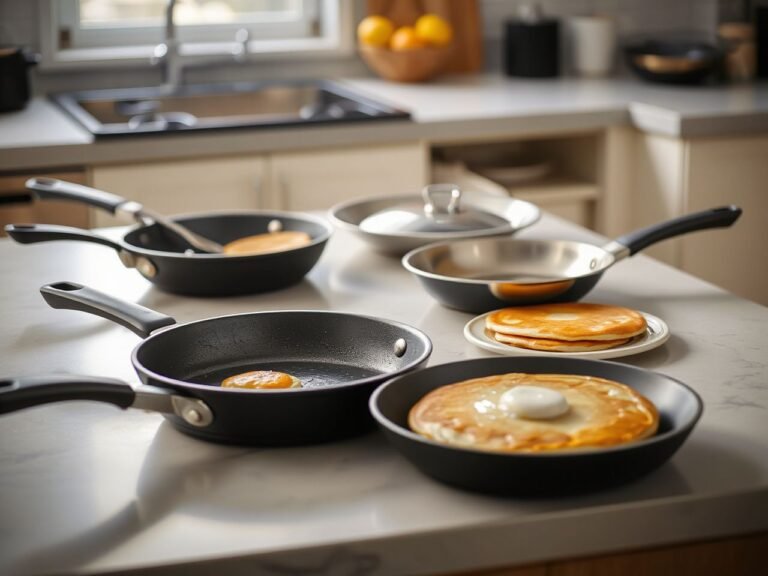
A ceramic pan can be safe and still be a poor pan. Safety and cooking performance are separate questions. Treating them as one causes unnecessary confusion. When asking if ceramic pans are safe, first identify the pan before judging the recipe. A ceramic-coated metal pan and solid ceramic cookware are made of different materials, have different failure modes, and different limits for use.
The key difference is between chemical exposure and coating performance. A pan can avoid PTFE concerns yet still become less nonstick from heat and abrasion. The article should also clarify ceramic-coated metal pans versus solid ceramic cookware because their failure modes, limits, and contamination risks are different. In practical terms, a coating that no longer releases food may be frustrating but isn’t automatically harmful.
Key Takeaways
- Most ceramic pans are metal pans with a sol-gel ceramic coating, not solid ceramic cookware.
- Heat, abrasion, harsh cleaning, and ordinary wear can reduce nonstick performance.
- Lead and cadmium concerns relate to contaminated materials, pigments, glazes, or poor manufacturing controls.
- Use the complete pan design and manufacturer instructions to judge cooktop, oven, utensil, and cleaning compatibility.
Are Ceramic Pans Safe? Start With the Material
Most ceramic pans are coated metal
The term ceramic pan usually refers to a metal pan covered with a ceramic-like coating. The metal underneath might be cast iron, stainless steel, cast aluminum, or another type. A ceramic coating is applied over that core, so the pan combines a metal body with a separate cooking surface.
Most of these pans have a coating primarily made of silicon dioxide, created through a sol-gel process. That detail matters because the coating is just a thin surface layer, not a solid piece of ceramic inside. If there’s a scratch, chip, or worn spot, it affects the cooking surface first. The metal underneath might stay structurally sound.
A ceramic-coated metal pan is a metal pan with a ceramic-like cooking surface. This is the key point for judging safety, durability, and compatibility, without relying solely on labels.
Solid ceramic cookware is a different category
Solid ceramic cookware is made from clay, water, and natural minerals, then fired in a kiln at temperatures reaching 2,500°F. Its body is ceramic, not metal, with a ceramic surface coating. This difference influences how you think about heating, breakage, thermal shock, and the risk of contamination from the material or glaze.
A solid ceramic vessel can be damaged by sudden changes in heat or temperature. In contrast, a coated metal pan has a metal core beneath its surface. Because of this, you shouldn’t treat these products as interchangeable just because both use the word ceramic. Always check the care instructions for the actual piece you have.
Decorative ceramicware also needs separate consideration from cookware meant for food contact. Concerns about lead and cadmium mostly come from contaminated materials, glazes, pigments, or poor manufacturing practices. A pan meant for contact with food should be judged as cookware, not just because it looks like a decorative ceramic object.
Why labels need careful reading
Terms like ceramic nonstick, ceramic coating, PFAS-free cookware, and PFOA-free cookware describe specific properties, not every part of a pan. A PFAS-free or PFOA-free claim doesn’t automatically mean every component is safe, durable, or suitable for a certain cooking method. Check what the labels actually mean.
Look at the intended use, care instructions, and cooking surface description together. The handle, lid, exterior finish, base, and bonding layers might have limits that a quick front-of-package claim doesn’t explain. Treat marketing phrases as a starting point and then check the manufacturer’s instructions for the full design details.
How Ceramic Coatings Differ From PTFE
Different coating families
A ceramic coating and a PTFE coating are different materials. Ceramic-coated cookware uses a sol-gel coating with silicon dioxide as its main component, while PTFE cookware uses a fluoropolymer nonstick coating. Both are surface treatments applied over another pan material, but they behave differently due to their composition.
That difference explains why someone can ask two separate questions: whether a coating causes chemical concerns when heated, and whether the pan will keep releasing food easily. The answers don’t have to be the same. A pan might avoid PTFE concerns but still lose its smooth release from overheating, abrasion, harsh cleaning, or normal wear.
Nonstick performance is not a complete safety test for cookware. Food that begins sticking tells you that the cooking surface has changed; it does not, by itself, identify the substance involved or prove that the pan is unsafe.
High heat requires a precise claim
Conventional nonstick pans can emit harmful toxins when heated past 570°F. That concern mainly applies to traditional nonstick cookware, not necessarily every ceramic-coated pan. Just because a pan is labeled ceramic doesn’t mean it’s safe at any heat level, since it still has a recommended use range.
Overheating can damage a ceramic coating even if the metal pan underneath stays intact. Preheating an empty pan, setting the burner too high, or heating for too long after the food has evaporated can stress the surface unnecessarily. Follow the manufacturer’s heat guidance instead of guessing based on the word ceramic.
The type of burner also matters. A gas flame heats the base and sides differently from an electric element, while an induction cooktop needs a compatible magnetic base and a properly designed pan. A ceramic coating alone can’t make a pan induction-compatible.
What PFAS and PFOA claims do and do not tell you
PFAS and PFOA are often mentioned in discussions about PTFE cookware safety. A claim that a pan is free from one substance does not answer every question about the body, coating, pigments, glaze, adhesive layers, or intended use. It also says nothing by itself about how long the cooking surface will retain its release.
For a careful assessment, separate the questions:
- What material forms the cooking surface?
- What does the manufacturer say about heat and cooking methods?
- Is the pan intended for food contact?
- What care does the surface require?
- Does the pan show damage that changes how food contacts the surface?
The U.S. Food and Drug Administration handles information and requirements related to food-contact materials, so its food-safety resources are a better source for general food-contact questions than a vague product slogan. The agency doesn’t replace the instructions for a specific pan, but it’s a more suitable public authority on the subject.
Causes of Damage, Scratches, and Loss of Release
Why ceramic pans stop acting nonstick
Ceramic-coated cookware can lose its nonstick qualities through overheating, abrasion, harsh cleaning, and normal wear. The pan might still heat food normally, but the surface no longer provides easy release. This is a performance issue, and it can happen before any visible damage appears on the metal body.
Repeated rubbing from metal utensils can mark the coating. Scouring powders and abrasive pads can remove or roughen the surface. A dishwasher may also be unsuitable if the manufacturer excludes it, because detergents, heat, water action, or contact with other items can affect the finish. The safe choice is to follow the actual care instructions, not a general rule about all ceramic pans.
Harsh cleaning can shorten the useful performance of a ceramic coating even when the pan has no visible chip. A smooth-looking surface is not proof that the original release properties remain unchanged.
What a scratch or chip means
A scratch, chip, or flaking area shows the cooking surface has been altered. It can cause food to stick, expose a layer underneath, or create loose fragments that shouldn’t be part of normal cooking. The importance depends on how big and where the damage is, which is why manufacturer guidance on replacement is important.
Don’t scrape at a raised edge to see how deep the damage goes. Stop using metal tools on that spot, wash the pan gently, and check if the coating is lifting or shedding. If the surface is flaking actively, replacing the pan is the sensible choice because it no longer provides the surface it was made for.
Small cosmetic marks aren’t automatically proof of toxic exposure. They still mean you should change your care habits and review the pan’s instructions. For a broader explanation of damaged coated cookware, see what to know about scratched nonstick pans and their cooking surfaces.
Lead and cadmium concerns
Lead and cadmium concerns mainly come from contaminated materials, pigments, glazes, or poor manufacturing controls. The risk is higher for a ceramic item whose glaze or decoration wasn’t made for food contact. A pan meant for cooking should be checked based on its intended food-contact use and the manufacturer’s info.
Do not confuse the presence of a ceramic name with proof that a pan contains lead or cadmium. Conversely, do not treat a claim such as PFAS-free as proof that every possible material concern has been addressed. Those are separate questions involving different materials and controls.
The U.S. Consumer Product Safety Commission provides public safety information about consumer products and recalls. If a specific cookware item is subject to a public recall or safety notice, check the agency’s current information and the manufacturer’s instructions rather than relying on appearance or online comments.
Solutions: Use and Clean a Ceramic Pan With Less Damage
Choose utensils that respect the surface
Use utensils that the manufacturer allows, and pick tools with smooth edges rather than those that scrape the surface. Metal utensils can scratch or damage a ceramic coating, so they’re not a good default unless the instructions say otherwise.
Don’t cut food in the pan. Keep heavy tools, lids, or other pans from dragging across the surface. A pan that’s easy to clean now might become harder to use if repeated contact roughens the coating over time.
Utensil compatibility is determined by the pan’s instructions, not by the word ceramic. That rule also applies to silicone, wood, nylon, and any other utensil material because shape, edge, pressure, and the complete surface design all matter.
Clean without unnecessary abrasion
Allow the pan to cool according to its instructions before washing. Sudden changes from a very hot pan to cold water can stress cookware, especially solid ceramic pieces and any pan whose manufacturer warns against thermal shock. Use the cleaning method specified for the model.
Use a soft sponge and handle the pan gently if no other instructions are available. Avoid abrasive powders, scouring pads, and tools that scrape. Soaking can soften stuck food without damaging the coating with a sharp edge.
Dishwasher safety is not established by the coating alone. The handle, exterior, bonding, finish, and contact with other items in the rack all belong to the complete design. For the same reason, a general dishwasher article such as this explanation of how to check whether blender jars are dishwasher safe offers a useful principle: inspect the item-specific instructions rather than assuming that a material label answers everything.
Store the pan so surfaces do not rub
Stacking can cause one pan’s base or rim to press against another pan’s cooking surface. Follow the manufacturer’s storage guidance if stacking is necessary, and avoid dragging hard surfaces across the coating. Keep lids from shifting and pressing against the interior when storing the pan.
Storage is part of coating care. A ceramic-coated pan can get damaged if another piece repeatedly touches its cooking surface while sitting in a cupboard.
Use the right cooktop and oven setting
Gas burners, electric cooktops, and induction cooktops transfer heat differently. Induction needs a compatible base, but ceramic coating alone doesn’t make a pan induction-ready. Check the base, packaging, or manual for the actual compatibility statement.
Oven use depends on the entire pan. The cooking surface might handle the oven setting, but the handle, lid, exterior coating, or attachments might not. Never assume oven safety based on stovetop use, and remember that removable handles or lids might have different limits than the pan body.
If you cook over gas and want a different type of heat response, a discussion of cast iron grill pans for steak covers a separate cookware category. Cast iron should not be treated as a substitute for a ceramic-coated pan’s care rules, but knowing that the materials behave differently helps prevent careless comparisons.
Preventive Measures and Long-Term Maintenance
Inspect the pan before cooking
Start with the pan, not the recipe. Look for flaking, raised chips, deep scratches, or visible changes in the finish on the cooking surface. Also check the base, handle, and lid for damage that could impact stability or heat transfer.
This inspection takes little effort and answers a more useful question than whether ceramic cookware is safe in the abstract: is this particular pan still in the condition its instructions describe? If the surface is shedding or the pan has damage that affects safe handling, retire it rather than trying to restore the coating at home.
A pan with active flaking should be removed from cooking use because its food-contact surface is no longer intact. Cleaning cannot rebuild a damaged ceramic coating, and home refinishing is not a reliable way to restore the original surface.
Keep heat within the stated range
Use the burner setting and cooking method specified by the manufacturer. Never leave an empty ceramic-coated pan over heat while attending to other tasks. Watch for a burning smell, smoke, discoloration, or surface change. When you see these signs, turn off the heat and let the pan cool safely.
No universal heat rule can cover every ceramic-coated pan because the metal core, coating, handle, lid, base, and bonding differ. Solid ceramic cookware has its own limits as well. A claimed high-heat advantage does not erase those design differences.
Separate safety from replacement cost
A ceramic pan might stay structurally usable after its nonstick surface declines. That doesn’t mean it will cook the same way as when it was new. More sticking can mean extra oil, longer cleanup, or different cooking techniques. These are maintenance issues, not necessarily signs of harmful substances.
Deciding whether to replace a pan depends on its surface condition and how you plan to use it. If food sticks but the coating is intact, gentler heat and cleaning might help preserve it. Still, there’s no guaranteed home method to reverse normal coating wear. If the surface chips or flakes, continuing to use it becomes harder to justify.
Don’t compare ceramic-coated cookware with seasoned cast iron as if their finishes are maintained the same way. Cast iron seasoning is created through cooking and care, while a ceramic coating is a manufactured layer. Their repair processes are different.
Use authoritative information for unusual concerns
For questions about a recall, a food-contact claim, or a material disclosure, use the manufacturer’s documentation and information from public safety bodies. The NSF explains its role in standards and certification for products and systems, but a certification mark should still be matched to the exact product and claim rather than treated as a universal approval of every cookware feature.
Keep the product instructions with the pan or save the relevant care page. That record is more useful than relying on a generic rule copied from another ceramic-coated design.
Frequently Asked Questions
Are ceramic pans safe to use when the coating is scratched?
A scratch doesn’t automatically mean harmful exposure, but it shows the cooking surface has changed. Stop using tools that deepen the mark, wash the pan gently, and check whether the coating is lifting or flaking. Active flaking is a clear reason to stop cooking with it. A surface that just sticks more may mean performance loss, but follow the manufacturer’s replacement guidance.
Are ceramic pans safer than PTFE-coated pans?
They use different coating families, so the answer depends on what concern you’re considering. Ceramic-coated cookware uses a sol-gel coating, whose main component is silicon dioxide. PTFE cookware uses a different nonstick material. A ceramic label doesn’t guarantee better durability or that it can handle high heat. Plus, a claim that it’s PFAS-free or PFOA-free doesn’t answer every food-contact concern.
Can ceramic pans go in the dishwasher, oven, or on induction?
Compatibility depends on the entire pan design, not just the ceramic coating. Check the manufacturer’s instructions for dishwasher, oven, gas burner, electric cooktop, and induction cooktop use. The base must support induction, but handles and lids might have different oven limits from the pan itself. Never assume one type of compatibility applies to another.
Should I worry about lead or cadmium in ceramic cookware?
Lead and cadmium concerns mainly involve contaminated materials, pigments, glazes, or poor manufacturing controls. Cookware meant for food contact should be evaluated separately from decorative ceramicware. Review the manufacturer’s food-contact info and any current public safety notices. A PFAS-free claim addresses a different material category and doesn’t, by itself, answer questions about lead or cadmium.
Can a ceramic pan’s nonstick performance be restored?
Gentler heat, compatible utensils, non-abrasive cleaning, and careful storage can help prevent further loss. Ordinary wear is not reliably reversed at home. If the coating is scratched, chipped, or flaking, do not scrape or refinish it yourself. A pan that sticks may still be structurally sound, but a damaged food-contact surface should be replaced according to the manufacturer’s guidance.