A shot glass is a small vessel designed for spirits and holds a maximum of four ounces, yet capacity alone does not explain why one glass feels right and another feels awkward. A useful drinking-glass guide separates the drink’s serving function from the material’s breakage and care behavior: shape affects aroma, pouring, grip, and stability, while material affects thermal-shock tolerance, weight, clarity, and maintenance. The distinction matters at the table. A glass can look refined while proving inconvenient under everyday washing, storage, and repeated handling.
Key Takeaways
- Choose shape according to the drink, pouring method, grip, and serving setting.
- Inspect the glass rim, base, walls, and decoration before judging appearance.
- Material labels such as soda-lime glass, borosilicate glass, tempered glass, and lead-free crystal describe different care considerations.
- Remove chipped or cracked glasses from service, and follow manufacturer guidance for dishwasher cleaning and temperature changes.
Beginner: Start with the drink, then inspect the glass
Step 1: Match the shape to the serving job
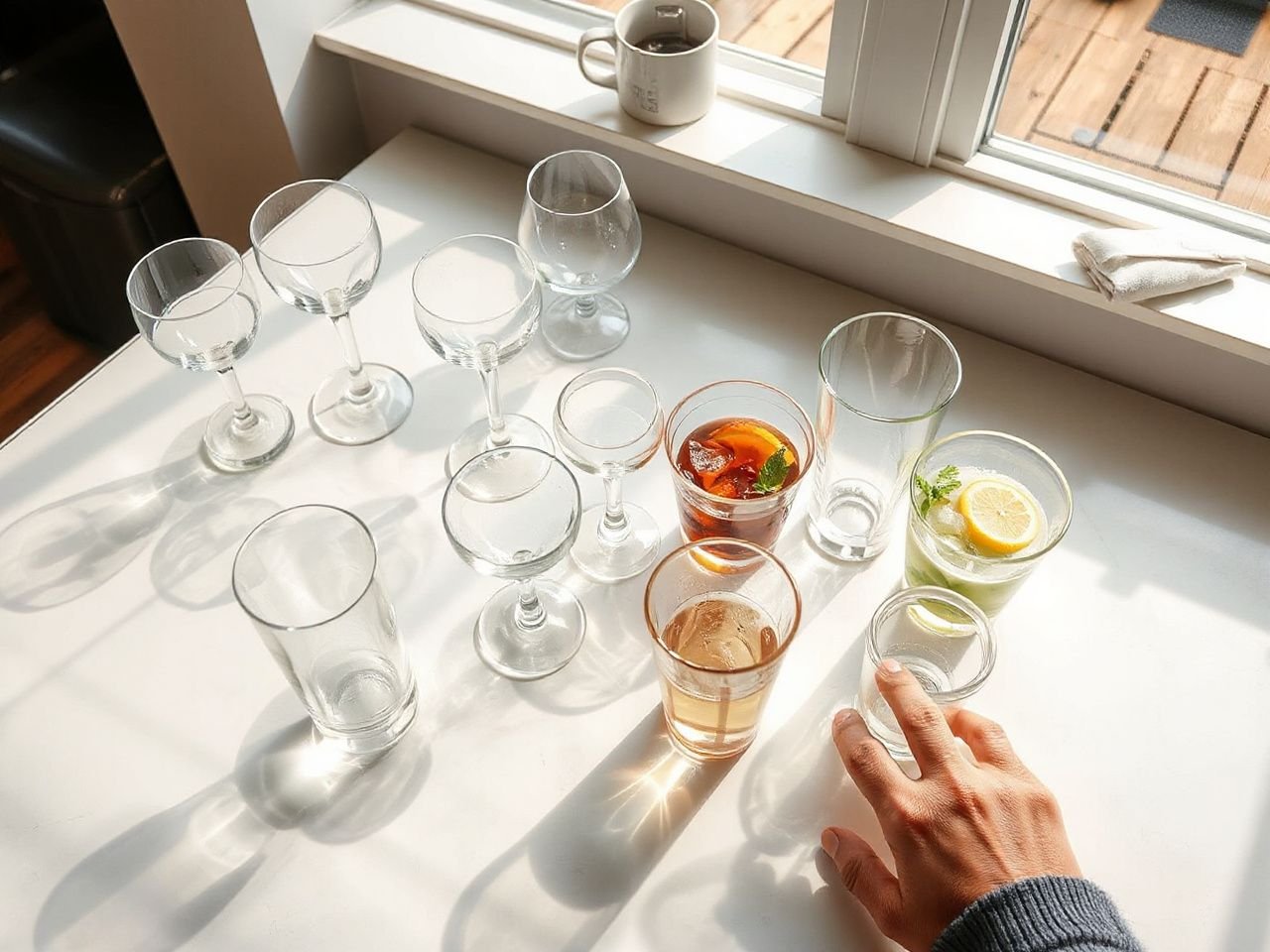
Shape is the first practical decision. A water glass needs a stable base, a comfortable rim, and a form that suits repeated refilling. A juice glass should pour cleanly and feel secure when held with one hand. A tumbler usually offers a straightforward grip and a low center of gravity, while a stemmed glass separates the bowl from the hand.
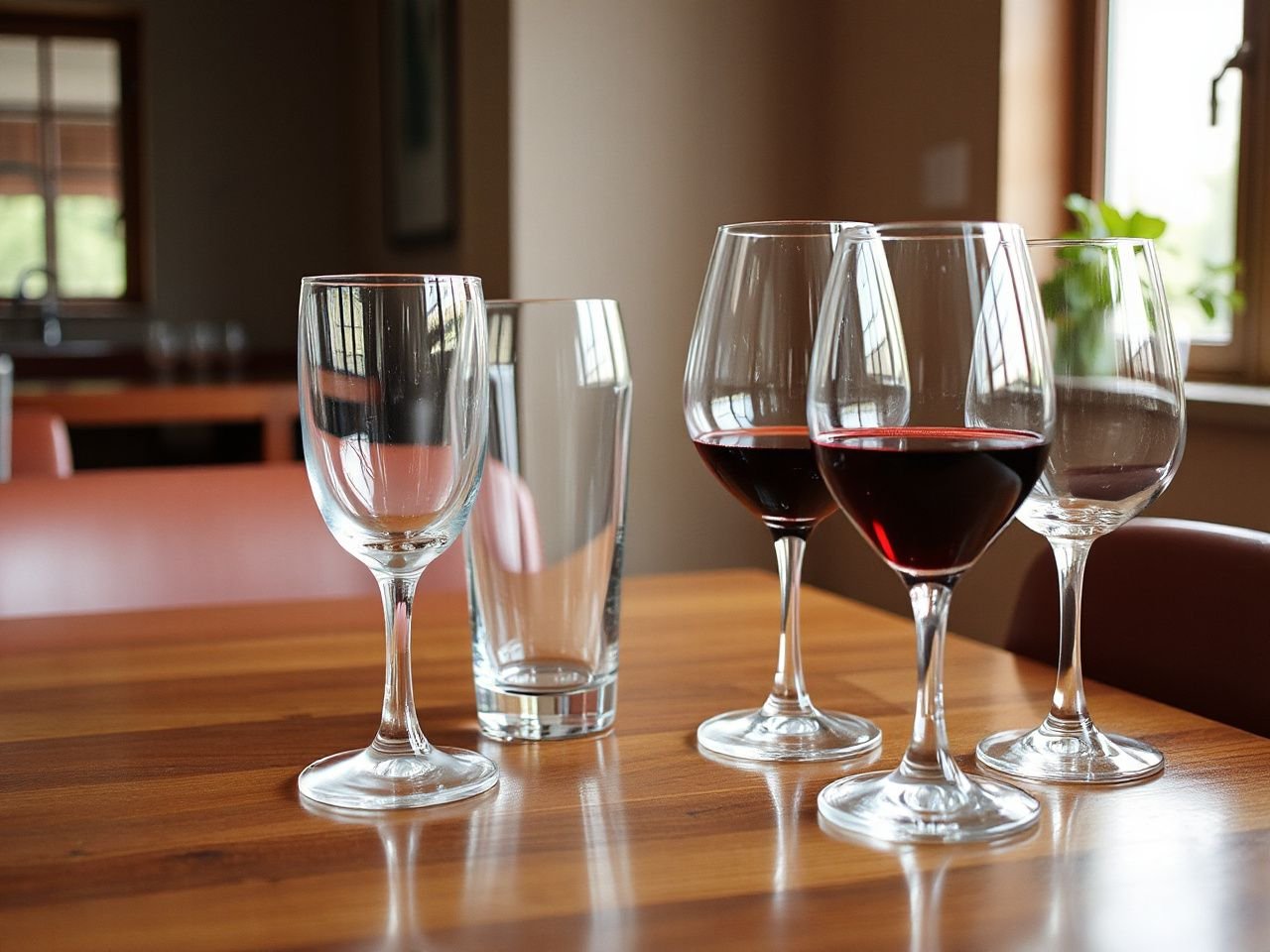
Wine and cocktails have more specialized forms because the bowl, opening, and stem influence how the drink is held and presented. A narrower opening can direct the drink toward the mouth in a different way from a broad one, while a bowl gives the hand space to remain below the drinking area. Those design choices affect aroma, temperature at the hand, and the ease of swirling or pouring.
A glass shape should support the drink’s serving function before it serves as decoration. A beautiful profile becomes a poor everyday choice if the base rocks, the rim feels sharp, or the bowl is difficult to grip.
- Water: Look for a stable tumbler or a stemmed glass that feels balanced when partly filled. A moderate opening makes ordinary drinking easy.
- Juice: Prioritize a comfortable rim and a shape that can be lifted without squeezing the sides. The glass should pour and drink neatly.
- Cocktails: Consider the drink’s method of service. A rocks-style tumbler suits drinks served over ice, while a stemmed cocktail glass keeps the hand away from the bowl.
- Beer: Choose a shape that leaves room for the style of pour and gives the hand a secure hold. A foot or wider base can help a larger glass remain steady.
- Wine: Examine the opening, bowl, and stem together. The form should allow a controlled sip and comfortable handling without forcing the fingers around the bowl.
Step 2: Treat capacity as a serving decision
Capacity affects how often a glass needs refilling, how heavy it feels when full, and how much space it occupies in a dishwasher or cabinet. A large vessel may suit a generous pour, but a smaller one can be easier to handle and store. The manufacturer does not always list a capacity in a way that helps with daily use, so check the actual product information rather than relying on the appearance of the bowl.
Do not choose every glass in a household by the same visual standard. A family may need water tumblers for routine meals, stemmed glasses for formal serving, and smaller vessels for spirits. The useful question is not how impressive a set looks on a shelf; it is how often each shape will be used and washed.
Step 3: Examine the rim before the pattern
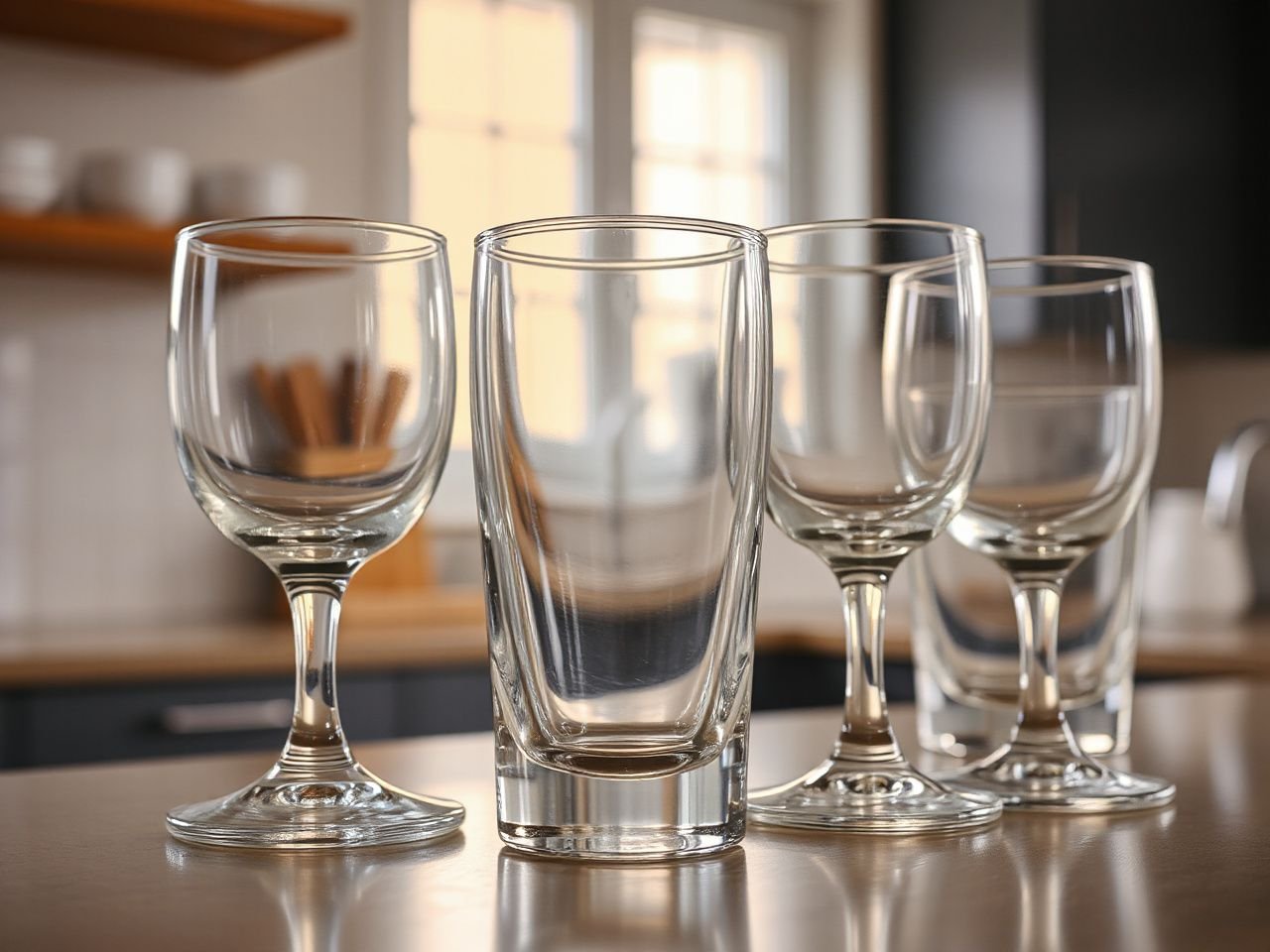
The glass rim is the point of contact between the vessel and the mouth, so it deserves the first close inspection. Run clean fingers around the edge and look for unevenness, rough spots, visible chips, or decoration that reaches the drinking surface. A rim that feels smooth and consistent is easier to use than one that looks attractive but interrupts every sip.
Thin rims can give a refined drinking sensation, while thicker rims can feel more substantial and may suit busy everyday settings. Thickness alone does not guarantee that a glass will survive drops, knocks, or thermal shock. A thick wall can change the hand feel without solving weaknesses at the rim, base, or transition between differently shaped sections.
A chipped or cracked rim is a safety and hygiene problem, so the damaged glass should be removed from service rather than reserved for occasional use. Do not assume a small defect will remain small after washing, stacking, or repeated contact with other dishes.
Intermediate: Understand materials and breakage behavior
Soda-lime glass
Soda-lime glass is a familiar tableware material and appears in many ordinary tumblers and serving glasses. Its practical appeal is usually tied to straightforward everyday use, clear appearance, and a broad range of shapes. The label alone does not tell you how a particular glass should be washed, stacked, or exposed to temperature changes.
Look at the whole object rather than treating the material name as a guarantee. A soda-lime glass with a stable base and uncomplicated form may be easier to manage than a more elaborate glass whose decoration, stem, or narrow profile creates extra handling demands.
Borosilicate glass
Borosilicate glass is another material label that deserves careful reading rather than automatic trust. A product made from borosilicate glass may be intended for uses where temperature changes matter, but the manufacturer’s care instructions still control the decision. Shape, thickness, decoration, and construction affect how the finished item should be handled.
Thermal shock can crack or shatter glass. Do not move a glass abruptly between sharply different temperatures unless the design and care instructions support that use. A cold glass exposed suddenly to a hot liquid, or a hot glass placed against a cold surface, can experience stress that is not visible beforehand.
Glass is an amorphous non-crystalline solid, and its response to temperature change depends on the finished object rather than on appearance alone. That is why a familiar-looking vessel should still be treated according to its instructions.
Tempered glass
Tableware can be manufactured using tempered glass. The word describes a manufacturing treatment, not a promise that the glass is impossible to break. A tempered drinking glass can still be damaged by a hard impact, a chipped edge, poor stacking, or unsuitable temperature change.
Tempered glass may suit settings where repeated handling is expected, but examine the rim and base as carefully as you would with any other material. Do not keep a tempered glass in service after a crack or chip appears.
Lead-free crystal
Lead-free crystal is made to provide a crystal-like presentation without treating lead as part of the material description. Its visual clarity, shaping, and feel may make it appropriate for formal table settings, but those qualities can also come with more demanding care requirements. Follow the manufacturer’s guidance for washing, stacking, and temperature exposure.
Lead crystal
Lead crystal should not be treated as interchangeable with lead-free crystal. Prolonged storage of acidic or alcoholic drinks in lead crystal deserves particular caution, because storage is different from serving a drink briefly. Use the maker’s instructions for the vessel and do not assume that a decorative decanter or glass is suitable for holding a drink over extended periods.
The United States Food and Drug Administration provides food-contact information through its main site at FDA.gov; use that authority and the manufacturer’s instructions when a material or intended use raises a safety question. A label that says crystal does not remove the need to check how the item is intended to be used.
Does thicker glass resist breakage better?
Thickness changes the feel in the hand, the apparent weight, and the visual character of a glass. It can also influence how easily the vessel fits into storage or a dishwasher rack. Thickness by itself is not a complete measure of durability, because the rim, base, corners, stem, decoration, and temperature exposure all affect the way a glass is handled.
Glass thickness mainly changes handling and feel; it does not by itself prove resistance to every type of breakage. A heavier tumbler may feel reassuring, but a stable base and smooth rim remain more useful checks for everyday service.
Intermediate: Judge comfort, stability, and everyday fit
Check the base
A glass base should sit flat without rocking when placed on a clean, level surface. The base also needs enough contact with the table to support the shape above it. A tall or broad vessel may look elegant, yet an unstable base creates a constant risk during pouring, serving, and clearing.
Set the empty glass down and observe whether the foot or bottom remains level. Then hold it near the point where you would normally grip it. If the glass twists, tips, or forces an awkward pinch, the silhouette is working against daily use.
A stable base reduces the chance that ordinary contact will tip the glass during serving. This check applies to tumblers, stemmed glasses, cocktail vessels, and larger beer glasses.
Check the grip
A comfortable grip depends on the relationship between the bowl, wall, base, and filled weight. Straight-sided tumblers can be easy to hold, but a smooth exterior may offer little guidance if the glass is wide. A shaped tumbler can provide a natural hand position, while a stemmed glass keeps the hand away from the bowl and can help preserve a comfortable touch point.
Stemmed does not automatically mean better. A stem adds another part to handle and store, and a narrow stem can feel less secure for people who prefer to wrap the hand around a tumbler. The right choice depends on how the glass will be carried, poured, washed, and stored.
Check the opening
The opening should suit the drink and the person using the glass. A wide opening may make filling and cleaning simple, while a narrower one can guide a controlled sip and change how aromas reach the nose. A very narrow opening can make brushing or inspecting the inside more difficult.
Look inside the glass under ordinary light. You should be able to see whether residue remains near the shoulder, base, or decoration. A shape that is easy to inspect is usually easier to care for.
Check storage before buying a set
Storage is part of the specification, even when it is absent from the product label. Measure the cabinet opening, shelf height, or rack arrangement yourself. A tall stemmed glass may require upright space, while a tumbler may fit more easily into a row.
Some tumblers are designed to nest on top of one another, which can make storage more efficient. Never force glasses into a stack, though. Contact between rims or pressure against a narrow section can create chips that are difficult to notice until the next wash.
For broader table-setting decisions, the Dinner Plates Buying Guide: What’s Worth Knowing First offers a useful reminder that serving pieces need to work together in actual storage and use, not only in a staged setting.
Advanced: Wash, dry, and store glasses without avoidable damage
Dishwasher suitability is conditional
Dishwasher suitability varies with the glass material, decoration, shape, and manufacturer guidance. Repeated washing can also contribute to cloudiness or damage delicate surfaces. A glass marked or described as suitable for dishwasher cleaning still needs sensible placement and care.
Keep glasses from touching one another or pressing against cookware during a cycle. Place them where the rack supports the base and does not put force on the rim. Tall or stemmed shapes deserve particular attention because a poor position can create movement, contact, or stress during washing.
Dishwasher-safe labeling does not make a glass immune to chips, cloudiness, or damage from poor loading. Read the care instructions, avoid crowding, and inspect the glass after washing rather than returning it automatically to the cabinet.
Hand-washing technique
Use water and detergent appropriate to the manufacturer’s guidance, and support the glass by the bowl or lower body rather than twisting the rim. Do not force a brush into a narrow opening. A tool that bends or scrapes against the edge can damage the area used for drinking.
Rinse away detergent residue and inspect the base, shoulder, and decoration. Cloudiness may come from residue or from damage to the surface, and the remedy depends on the cause. If the glass remains cloudy after proper rinsing and drying, check the maker’s care advice rather than using increasingly abrasive methods.
Drying and polishing
Allow the glass to drain in a position that supports it securely. If polishing is recommended for the vessel, use a clean, soft cloth and handle the glass without twisting the rim against the cloth. Never hold a bowl and pull hard on a stem or narrow neck to speed the process.
A glass should be fully dry before storage, especially around decorative details, seams, or areas where water can collect. Water spots are often easier to prevent through complete rinsing and drying than to remove after they harden.
Prevent cloudiness and chips
Cloudiness can result from residue, mineral deposits, or surface damage associated with repeated cleaning. Avoid assuming that a cloudy glass needs aggressive scrubbing. Abrasive treatment may leave a finish that looks worse and may make future cleaning more difficult.
Chips commonly develop at contact points, especially where rims meet other glasses, racks, sinks, or hard utensils. Separate pieces before placing them in a cabinet. Do not slide one glass inside another unless the design specifically supports nesting and the pieces can be separated without force.
Know when to retire a glass
Remove a glass from service if the rim is chipped, the wall is cracked, the base is damaged, or a sharp defect can be felt. Do not use a damaged vessel for parties, storage, or occasional drinks. If the glass cannot be reused safely, follow local guidance for glass recycling or disposal.
The National Sanitation Foundation provides information about public-health standards and certification through NSF.org; its resources can help explain why food-contact equipment and cleaning practices deserve attention. Product-specific care still belongs to the manufacturer’s instructions.
Advanced: Compare usable life rather than shelf appeal
Consider replacement and maintenance together
A low-cost glass can be practical if it is comfortable, stable, easy to wash, and simple to replace. A more refined glass may make sense for occasional serving if its care demands match the way it will be used. The useful cost question includes breakage, storage, washing, and the likelihood that a damaged piece will be kept in service too long.
Material and shape should be assessed together. A plain tumbler may be easier to load and store than an elaborate stemmed glass. A decorated surface may suit formal table setting but require gentler washing. A glass that nests safely may use less cabinet space than one with a broad profile.
For kitchen storage decisions involving another type of glass, the practical guide to choosing glass food containers follows the same principle: care behavior and storage fit matter alongside appearance.
Use a simple decision sequence
- Name the primary drink: Start with water, juice, beer, wine, cocktails, or spirits.
- Choose the handling style: Decide whether a tumbler or stemmed glass suits the way the drink will be carried and served.
- Inspect the rim: Reject roughness, visible damage, or decoration that interferes with drinking.
- Test stability: Place the glass on a flat surface and check for rocking or an uneven base.
- Confirm care: Read the dishwasher, temperature, stacking, and drying instructions.
- Check storage: Make sure the shape fits the cabinet, shelf, or rack without forced stacking.
The most practical drinking glass is the one whose shape, material, care instructions, and storage needs agree with its daily job. Appearance should remain part of the decision, but it should not outrank the rim or base.
Frequently Asked Questions
How should I choose a glass shape for water, juice, cocktails, beer, or wine?
Begin with the serving action. Water and juice usually benefit from a stable tumbler with a comfortable opening. Cocktails depend on whether the drink is served over ice or presented in a stemmed form. Beer needs a secure grip and room for the pour, while wine requires attention to the bowl, opening, and stem. In every case, inspect the rim and base before choosing the appearance.
What is the practical difference between soda-lime glass, borosilicate glass, tempered glass, and lead-free crystal?
These labels describe different material or manufacturing choices, but none replaces product-specific care instructions. Soda-lime glass is common in everyday tableware; borosilicate glass should still be checked for temperature guidance; tempered glass is treated during manufacture; and lead-free crystal is distinct from lead crystal. Compare the finished shape, rim, base, decoration, dishwasher guidance, and storage needs.
Can sudden changes between hot and cold cause a drinking glass to break?
Yes. Thermal shock can crack or shatter glass when a vessel moves abruptly between sharply different temperatures. Do not pour a sharply hot liquid into a cold glass, place a hot glass on a cold surface, or make a similar change unless the design and care instructions support it. A glass that looks intact may still be unsuitable for that transition.
Which drinking glasses are suitable for dishwasher cleaning?
Suitability varies with material, decoration, shape, and manufacturer guidance. Check the product instructions before loading a glass. Keep pieces from touching, support the base, and avoid placing a rim where it can strike the rack or another dish. Repeated washing can contribute to cloudiness or damage delicate surfaces, so inspect glasses after cleaning and retire any chipped or cracked piece.
Is lead crystal safe for serving drinks, and how is it different from lead-free crystal?
Lead crystal should not be treated as interchangeable with lead-free crystal. Prolonged storage of acidic or alcoholic drinks in lead crystal deserves particular caution, and the manufacturer’s instructions should guide use. Brief serving and extended storage are different situations. If the intended use is unclear, seek information from the maker or consult the FDA’s food-contact resources rather than assuming that every crystal vessel has the same care requirements.