Blend until the texture stops changing.
The single biggest difference between appliances I kept and ones I gave away was how annoying they were to clean on a weeknight. For most smoothies, blending at the highest speed for 20 to 30 seconds produces a thicker texture, while 10 to 20 seconds gives a thinner drink and can soften bitterness, chalkiness, or excess sweetness.
The answer to how long should you blend a smoothie depends on the texture you want, the ingredients in the jar, and how easily the container, lid, blade area, and seals come apart at the sink. A perfect blend that leaves pulp packed beneath a blade is a poor kitchen result.
Key Takeaways
- Blend for 20 to 30 seconds at the highest speed for a thicker smoothie.
- Use 10 to 20 seconds at the highest speed for a thinner drink.
- Start with 1 1/4 cups of liquid for a smooth consistency.
- Check the blade area and removable parts before choosing a blender routine.
How Long Should You Blend a Smoothie? Start With the Right Target
A smoothie does not need an arbitrary long run. The useful stopping point is the moment the mixture reaches the texture you want and stops visibly changing. For a typical thick smoothie, that means 20 to 30 seconds at the highest speed. A thinner drink usually needs 10 to 20 seconds at the highest speed.
The listing of a blender may mention speed settings, container materials, or cleaning instructions, but those details do not replace a clear blending target. The smoothie itself tells you more: a thinner pour needs less high-speed time, while a thicker mixture needs the longer range.
Choose a thinner smoothie
Use the shorter blending range when you want a pourable drink. Blend at the highest speed for 10 to 20 seconds, then stop rather than allowing the motor to continue out of habit. This shorter cycle also helps reduce bitterness, chalkiness, or excessive sweetness in a mixture that already has the right amount of liquid.
A thinner smoothie should still look unified rather than separated. If the mixture remains visibly uneven, the issue may be ingredient placement or too little liquid rather than a need for a much longer run.
Choose a thicker smoothie
For a thicker smoothie, use the highest speed for 20 to 30 seconds. The longer range gives the ingredients more time to break down into a dense, spoonable mixture without turning the process into an open-ended timing exercise.
Thicker blends deserve closer attention at the sink. Dense residue can cling to the underside of a lid or around the blade assembly, so a removable container and accessible seals matter as much as the stated speed range.
Use liquid as the first adjustment
Incorporate 1 1/4 cups of liquid for the perfect smoothie consistency described by the available recipe guidance. That liquid can be part of the recipe rather than an afterthought, because a mixture with the right starting balance needs less intervention during blending.
If the result is too thick, add liquid before simply extending the blending time. If the result is too thin, a longer high-speed cycle will not automatically create body; the ingredient balance still controls the finished texture.
For a broader explanation of timing and texture, How Long Should You Blend a Smoothie: What To Know fits naturally alongside this timing guide.
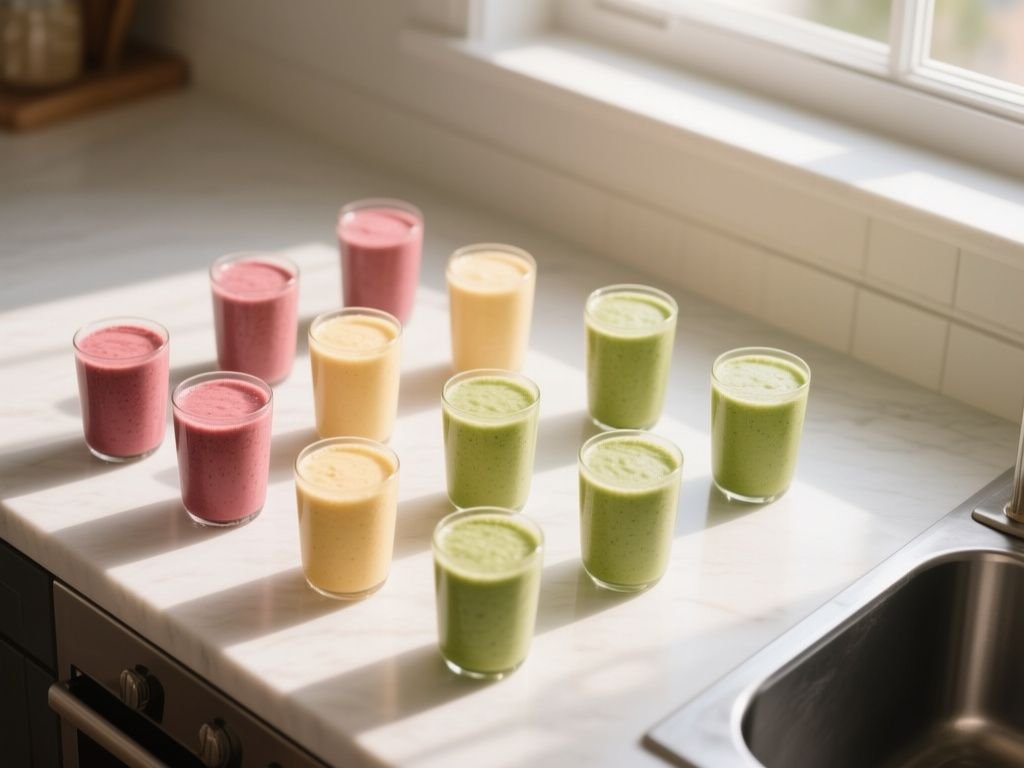
Step 1: Prepare Ingredients for an Even Blend
Blending time begins before the motor starts. Put the liquid into the container first, then add the other ingredients in an arrangement that lets the mixture move toward the blade instead of forming a dry pocket above it.
The available guidance identifies liquid as the key starting quantity, with 1 1/4 cups supporting a smooth consistency. The manufacturer does not provide a universal ingredient capacity in the information available here, so do not treat that liquid figure as permission to fill any container to a particular level.
Use frozen fruit without creating a dry mass
Frozen fruit can make a smoothie thick, but the mixture still needs enough liquid to circulate. Pour the liquid in first, add the frozen fruit afterward, and begin at the highest speed if the appliance permits that setting.
Frozen ingredients do not create a separate timing rule that overrides texture. Start with the same practical ranges: 10 to 20 seconds for a thinner result or 20 to 30 seconds for a thicker one, then judge the texture rather than forcing the motor to run longer.
Keep ingredient amounts consistent
Three-ingredient smoothies are useful because fewer ingredients make the texture easier to read. A liquid, fruit, and one additional ingredient give you a clean way to identify whether thickness comes from the fruit or from the amount of liquid.
Milk and frozen fruit can follow the same order. Add the milk first, place the frozen fruit above it, then use the highest-speed range that matches the texture you want.
Avoid filling around the blade area
The blade area is where cleanup-first judgment begins. A container that leaves the blade assembly exposed for rinsing is easier to maintain than one with narrow recesses that trap fruit pulp, but the listing does not identify the construction of every appliance or its removable parts.
Read the cleaning instructions before blending if the manufacturer supplies them. Do not assume that a blade assembly, gasket, lid, or electrical base is safe for immersion simply because the container itself can be rinsed.
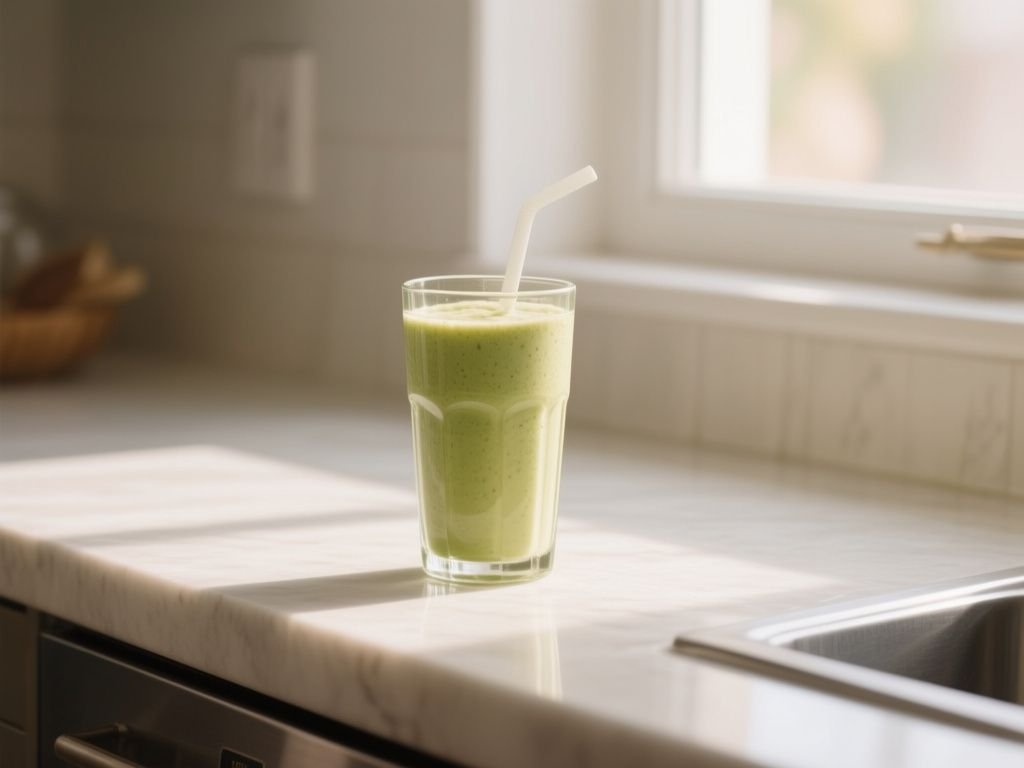
Step 2: Blend in Short, Controlled Intervals
Place the lid securely, select the highest speed, and begin with a controlled interval. Use 10 to 20 seconds when a thin smoothie is the goal, or continue toward 20 to 30 seconds for a thicker result.
The correct duration is a range, not a command to run every smoothie for the maximum time. A mixture that already looks uniform has reached its useful stopping point, and a longer cycle can make cleaning more tedious without solving a texture problem.
Check the mixture at the right moments
At 10 seconds, inspect the drink if the appliance allows safe observation without opening a moving container. If the mixture is already pourable and even, stop within the shorter range; if you want a dense texture, continue toward the longer range.
At 20 seconds, a thick smoothie may be ready. Reaching 30 seconds is reasonable for that thicker target, but the exact endpoint depends on what is visible in the container rather than on a promise that every ingredient requires identical treatment.
Fix a chalky taste
A chalky smoothie can benefit from another 10 to 20 seconds at the highest speed. This is a targeted correction, not a reason to keep blending indefinitely.
Stop after that added interval and reassess the texture. If the chalkiness remains, the mixture may need a recipe adjustment rather than additional motor time, and the available information does not support inventing a new quantity for that correction.
Reduce bitterness or sweetness
The highest speed used for 10 to 20 seconds can reduce bitterness in a smoothie. The same timing and speed range can decrease excessive sweetness.
These are modest texture-and-flavor corrections. They do not turn a poorly balanced recipe into a different recipe, so start with the liquid amount and ingredient balance before extending the cycle.
Know when the time is too long
There is no verified basis here for assigning a universal maximum runtime to every blender. The manufacturer does not list a single operating limit in the supplied information, so follow the appliance manual for any motor or cycle restrictions.
For the smoothie itself, extended blending is rarely the first answer once the drink is uniform. Timing should serve the texture, not replace it.
Step 3: Judge Smoothness Before Serving
A finished smoothie should match the intended pour. A thinner blend moves readily from the container, while a thicker blend holds more body; both can be correct when the recipe calls for them.
The visible result is more useful than a fixed promise about every ingredient. The ingredient list, liquid amount, and selected time work together, so change one factor at a time when correcting the next batch.
For a thinner pour
Blend at the highest speed for 10 to 20 seconds. If the mixture reaches the intended pour before the end of that range, stop there.
A thinner smoothie should not require repeated long cycles. If it remains too dense, review whether the container began with the recommended 1 1/4 cups of liquid rather than assuming more time will provide the missing fluid.
For a thick consistency
Blend at the highest speed for 20 to 30 seconds. A thick smoothie may be ready at the shorter end, especially when the mixture already circulates and looks even.
Serve promptly after reaching the desired consistency. The available guidance establishes blending times, not a separate holding time, so there is no reliable reason to assign one.
For a smoothie that tastes bitter or chalky
Use another high-speed interval of 10 to 20 seconds as the stated correction. The same interval can help reduce excessive sweetness.
Do not keep opening the container while the blades are moving. For operating and cleaning precautions, the manufacturer’s manual remains the controlling document, and the [U.S. Consumer Product Safety Commission](https://www.cpsc.gov/) provides general consumer-safety information for household products.
Step 4: Clean the Blender Before Residue Dries
Cleanup is part of the blending time decision. If a smoothie appliance takes apart easily at the sink, a short, controlled blend is easier to repeat; if pulp collects in inaccessible seams, the habit becomes less appealing regardless of the drink’s texture.
The listing does not state the exact construction, dishwasher status, or removable-part design for a specific blender here. That missing information matters, so confirm whether the lid, seal, container, and blade assembly can be separated before using any cleaning method.
Rinse the container promptly
Rinse the container soon after pouring the smoothie. Fresh residue is easier to identify and remove than residue that has been left around the walls, lid, or blade housing.
Keep the electrical base away from water unless the manual explicitly permits a particular cleaning method. The base is not the same part as the removable blending container.
Inspect the lid and seal
The lid often catches a thin ring of smoothie near its inner edge. Remove and rinse any seal only if the manufacturer says the part is removable, then check that it returns to its correct position before the next use.
A gasket that is not seated properly can affect how the container closes, but the supplied information does not establish a performance result for any particular gasket. Treat the instruction manual as the authority for reassembly.
Pay attention to the blade assembly
Fruit fibers and thicker ingredients can remain around the blade area after the drink has been poured. Use the cleaning tool and method specified by the manufacturer, and never reach toward exposed blades while the appliance is connected to power.
The [FDA](https://www.fda.gov/) publishes the Food Code as a model for safe food-handling practices, including cleaning principles for food-contact equipment. That general standard does not replace the blender manual, but it supports a simple kitchen rule: food-contact parts need prompt, thorough cleaning before they are used again.
Dry parts before reassembly
Allow cleaned removable parts to dry as directed before putting them back together. The available product information does not state a drying time, so do not invent one; use the instructions supplied with the appliance.
Store the container, lid, and blade assembly in a way that leaves all parts identifiable. Cleanup becomes more reliable when the next use does not begin with a hidden seal or blade component that has been misplaced.
Causes of Uneven Smoothies and Practical Fixes
An uneven smoothie usually points to a mismatch between the liquid amount, ingredient arrangement, and blending interval. The remedy should address the likely cause rather than adding arbitrary time.
Too little liquid
A thick, reluctant mixture may need the recommended liquid starting point of 1 1/4 cups. Add liquid only in line with the recipe and appliance instructions, then return to a controlled high-speed interval.
More time cannot supply liquid that is absent. If the texture remains too dense after the stated correction, the recipe itself needs review.
Ingredients are not circulating
Place liquid first and frozen or solid ingredients above it. If the blender manual specifies a different loading order, follow that instruction instead of applying a general routine.
Stop the appliance before checking or rearranging ingredients. A moving blade assembly requires the safeguards described by the manufacturer.
The smoothie is too thin
A shorter high-speed interval is associated with a thinner drink, while a thicker target uses 20 to 30 seconds. If the smoothie is too thin, do not assume that running longer will always reverse the result.
The available information does not provide a thickener quantity or a universal ingredient ratio beyond the stated liquid guidance. Correct the recipe with quantities you know, then use the blending ranges as the timing framework.
The smoothie is too sweet
Use the highest speed for 10 to 20 seconds to help decrease sweetness. Stop after that range and taste the result rather than extending the cycle without a defined reason.
A blender can change how ingredients are distributed, but it cannot erase an ingredient that was added in excess. Recipe balance still matters.
Beginner, Intermediate, and Advanced Timing Habits
Beginner: use one target time
Start with 20 seconds at the highest speed for a thick smoothie. This point sits inside the stated 20-to-30-second range and gives you a clear place to inspect the texture.
Use 10 seconds as the first check for a thinner drink. Once you understand the result, adjust within the applicable range rather than making large timing changes.
Intermediate: change one variable
Keep the liquid amount at 1 1/4 cups while you compare a shorter and longer high-speed interval. Changing liquid, ingredient quantity, and time together makes the result difficult to interpret.
Record the texture in simple terms such as pourable or thick. A small kitchen note can make repeat batches more predictable without pretending that every smoothie follows one exact schedule.
Advanced: include cleanup in the routine
Choose the shortest interval that delivers the required texture. This approach reduces unnecessary residue and makes the sink-side workload part of the decision rather than an afterthought.
Before preparing a recipe with sticky or fibrous ingredients, identify every removable food-contact part. A blender’s practical value depends on what happens after the drink leaves the container.
For a second perspective on adjusting the interval, this practical look at smoothie blending time can help you compare thinner and thicker targets. The useful principle remains the same: choose a range, inspect the result, and stop promptly.
Frequently Asked Questions
How long should you blend a smoothie with frozen fruit?
Use the same texture-based ranges: 10 to 20 seconds at the highest speed for a thinner smoothie and 20 to 30 seconds for a thicker one. Put the liquid in first, with 1 1/4 cups as the stated starting amount for a smooth consistency, then stop when the mixture looks even. Do not keep blending simply because the fruit began frozen.
How long should you blend a smoothie to fix a chalky taste?
Run the blender at the highest speed for another 10 to 20 seconds. That interval is the stated correction for a chalky taste, and the same range can help reduce bitterness or excessive sweetness. Stop after the interval and reassess. If the taste remains, changing the recipe is more sensible than continuing to run the appliance without a defined endpoint.
How long should you blend a smoothie before cleaning it?
Blend only until the desired texture is reached: 10 to 20 seconds for a thinner drink or 20 to 30 seconds for a thicker one. Then pour the smoothie and rinse the removable food-contact parts promptly, following the manufacturer’s instructions for seals, lids, blades, and dishwasher use. Getting smoothie blending time right is useful, but easy sink cleanup is part of a sustainable routine.
Final Guidance
For most smoothie routines, begin with 1 1/4 cups of liquid and use the highest speed for the texture you want. Select 10 to 20 seconds for a thinner result, or 20 to 30 seconds for a thicker one.
Short, deliberate blending is easier to judge and easier to clean. Grant Sullivan’s cleanup-first standard is simple: the right smoothie is the one that reaches its intended texture without turning the sink into the hardest part of the recipe.