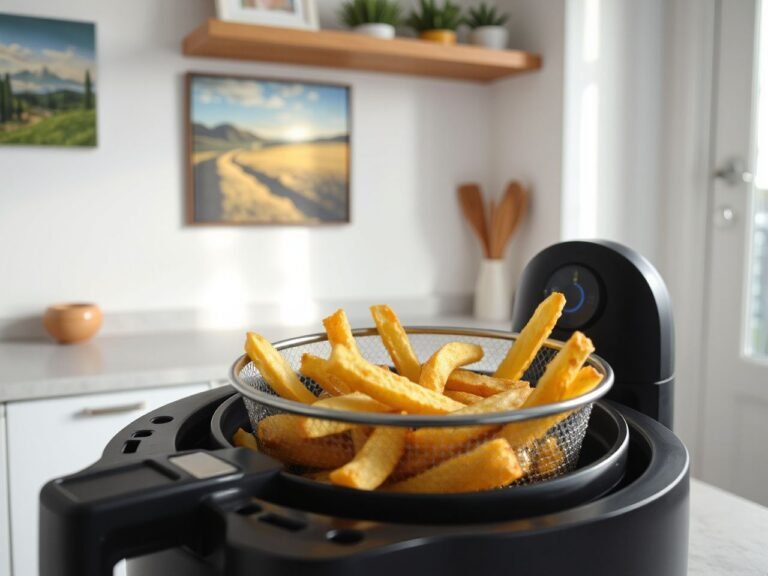
A basket of beer-battered fish goes into a 400°F air fryer. Thirty seconds later, smoke curls from the vents as batter drips through the perforated tray onto the heating element. The smoke alarm joins the conversation.
This is the moment every new owner learns that the list of what cannot be cooked in an air fryer is not a matter of preference but a set of physical constraints.
The core mistake beginners make is assuming an air fryer is a miniature convection oven for anything. An air fryer is actually a high-velocity hot-air dryer. Curly foods like leafy greens get sucked into the fan, wet batters drip onto the heating element, and items like popcorn need pressure, not just hot air. The real rule is that air fryers work best with foods that are already dry on the surface and have some structural mass.
If you want to see what an air fryer does well, try a dry-rubbed Greek chicken thigh recipe that keeps everything contained. That is the machine working as designed.
Key Takeaways
- Wet batter, leafy greens, popcorn kernels, and raw eggs in shells are the four worst offenders. They either drip, fly, fail to pop, or explode.
- An air fryer’s heating element sits an inch above the food. Anything that can melt, drip, or fly upward becomes a fire or smoke risk.
- Foods that require boiling liquid or internal steam pressure cannot work because the air fryer only moves hot, dry air.
- Most “forbidden” foods have a workaround that changes the format — drying the surface, using a rack, or cutting into smaller pieces.
Why Some Foods Simply Cannot Survive the Air Fryer
An air fryer is a small convection oven with a fan that pushes air at roughly 30 miles per hour directly down onto a perforated tray. The heating element is a bare metal coil positioned just above that tray. That geometry is the entire story.
Any food with a loose, low-mass structure will get lifted by the airflow. A single spinach leaf weighs about one gram. At full fan speed, that leaf has no chance. It gets pulled into the heating coil, scorches, and sends a burnt odor through the kitchen.
Any food with a liquid or batter coating will drip. The perforated tray is designed to let hot air circulate, but it also lets anything liquid fall through. Once batter or melted cheese hits the hot coil, it smokes and can ignite at temperatures above 450°F. The Consumer Product Safety Commission maintains a public database of air fryer fire reports, many of which involve melted cheese or grease drips.
Any food that relies on a sealed chamber or boiling liquid cannot work. Popcorn kernels need internal moisture to build steam pressure until the hull ruptures. An air fryer moves hot air around the kernels too fast; they tumble, lose heat, and scorch without popping. Rice and pasta require a pot of water at a steady 212°F — an air fryer cannot maintain a liquid bath.
The machine earns its counter space only when the food is dry-surfaced, dense enough to stay put, and shaped to allow airflow around every side. If you respect those three conditions, the results are excellent.
The Master List of What Cannot Be Cooked in an Air Fryer
Some foods fail catastrophically, others just turn out badly. Here is the breakdown by category, from dangerous to disappointing.
Wet-Battered Foods: Tempura, Beer Batter, Corn Dogs
Deep frying works because food is submerged in 350°F oil, which instantly seals the wet batter into a crisp shell. An air fryer blows hot air over the surface. Before the outer batter can set, it drips through the basket holes onto the heating element. That produces smoke, a bitter smell, and a potential grease fire.
Breaded foods are different. A dry panko or flour-egg-flour coating stays attached and crisps beautifully. The distinction between breaded and battered is the single most important rule for air frying.
Cheese That Melts Freely: Slices, Shreds, and Soft Cheeses
Cheddar, mozzarella, and American cheese all melt at temperatures between 130°F and 150°F. An air fryer runs at 350°F to 400°F. When a cheese slice sits on top of a burger or a pile of shredded cheese sits in the basket, it turns liquid and drips. Once that cheese hardens on the heating element or the non-stick coating, it can permanently bond and ruin the basket’s PTFE surface.
Cheese inside a breading or crust is fine. A mozzarella stick with a thick breading holds the cheese in place long enough to crisp the outside. But open-face cheese melts into the machine.
Leafy Greens and Light Herbs
Fresh spinach, kale leaves, cilantro, and parsley are too light to stay in the basket. The fan pulls them upward in under five seconds, and they cook onto the coil. You get a burnt herb smell and a mess to clean. Some newer models include a fine mesh screen that fits over the top of the basket, but it restricts airflow and slows cooking.
Dried leafy greens are actually possible if you use a low temperature and a special mesh tray that sits above the basket. Kale chips work at 300°F for three to five minutes, but fresh leaves remain a hazard.
Popcorn Kernels
Popcorn requires two things: a kernel temperature of about 180°C (356°F) and enough internal moisture to create steam pressure around 135 psi. In a pot or microwave, the kernels stay in one place and heat evenly. In an air fryer, the fan tosses them around. They scorch on one side, tumble away, and never pop. You will end up with hard, burnt kernels and nothing edible.
No air fryer model solves this. The airflow is the enemy of stationary heating.
Whole Eggs in Their Shell
An egg in its shell placed in an air fryer will heat unevenly. The air pocket inside expands, and pressure builds until the shell cracks violently. The egg whites and yolk splatter across the heating element and interior walls. This is not a cooking method; it is a cleaning project. Soft-boiled or hard-boiled eggs are better made on the stovetop or in an instant pot.
Large Bone-In Cuts and Whole Chickens Over 4 Pounds
Air fryer baskets range from 3 to 8 quarts, but the usable space is shallow. A whole chicken weighing more than 4 pounds will touch the heating element on top and block airflow underneath. The breast cooks dry while the thigh stays raw. The FDA sets the minimum internal temperature guidance for poultry at 165°F, and an overcrowded air fryer cannot guarantee that. For food safety, a chicken that does not fit with at least half an inch of clearance on all sides belongs in a standard oven.
If you want to cook a whole chicken in an air fryer, look for a cornish hen or a spatchcocked bird under 3.5 pounds. Even then, check the temperature in the thickest part of the thigh.
Uncooked Grains, Rice, and Pasta
Rice and pasta need to absorb water while cooking. An air fryer cannot hold a pot of water, so the grains dry out and harden instead of softening. You cannot boil spaghetti in moving hot air. No amount of parchment liner or oil changes this.
Leftover cooked rice and pasta reheat well in an air fryer because the goal is to crisp the exterior, not to hydrate the starch. But raw grains are a lost cause.
Shellfish: Scallops and Thin Shrimp
Scallops have almost no fat and a delicate texture. At 400°F, they turn rubbery in under two minutes. Thin shrimp curl and dry out before the center is done. Thick, shell-on shrimp can work if you dry them thoroughly and use a high-heat sear for six to eight minutes, but for most shellfish, a hot skillet is still the better tool.
Hamburgers and High-Fat Ground Meats
A 80/20 ground beef patty contains about 20% fat. As the patty cooks, that fat renders out and drips onto the heating element, creating smoke and flare-ups. The airflow also blows the rendered fat around, making the burger greasy. You can cook thin smashburgers on a special flat accessory, but a standard air fryer basket produces a smoked, uneven burger. If you must, use a liner underneath and cook at 375°F for eight minutes, flipping once.
Saucy Dishes Like Curries and Stews
Anything with a lot of liquid will boil off or burn onto the basket floor. A curry or stew needs a sealed pot with a lid to trap moisture. An air fryer evaporates liquid quickly and leaves a charred residue. Thick sauces that cling to food, like barbecue glaze, are fine for the last two minutes of cooking because they caramelize without dripping. Thin sauces are not.
How to Adapt Forbidden Foods So the Air Fryer Still Earns Its Space
Most “cannot cook” lists are too absolute. With a format change, several problem foods work fine. Here is how to convert them.
Wet Batter Becomes Dry Coating
Blot the food completely dry, then coat in flour, beaten egg, and breadcrumbs. The triple dip creates a sealed exterior that crisps without dripping. For tempura, you can use a thick batter and refrigerate the coated pieces for 15 minutes before air frying at 390°F. The cold batter sets faster than warm batter and drips less. But it will never match deep-fried tempura’s lacy texture.
Leafy Greens Get Weighed Down
If you want kale chips, massage the leaves with a teaspoon of oil, then place a wire rack over the basket to hold them in place. Set the temperature to 300°F and check every two minutes. The leaves will still fly without the rack, so do not skip it.
Cheese Moves Inside a Crust
For a grilled cheese, use two thin slices of bread and a light smear of butter on the outside. Place a small metal weight on top to keep the sandwich closed and prevent the bread from flipping. Cook at 350°F for five minutes per side. The cheese stays contained, and the bread crisps. Open-face cheese toast is impossible; closed sandwiches work.
Popcorn Has No Workaround
There is no air fryer method that pops popcorn. Buy a stovetop popcorn maker or use the microwave bag. The air fryer’s fan is the problem, and no accessory changes that.
Whole Chicken Becomes Spatchcocked or Quartered
Cut the bird into parts or flatten it by removing the backbone. A spatchcocked chicken under 3.5 pounds fits in a 5 to 6 quart basket and cooks evenly at 375°F for 35 to 45 minutes. Check the thigh reaches 165°F. For a reliable high-protein dinner, this air fryer chicken fajitas recipe uses sliced breast that cooks in 12 minutes, no bone issues at all.
Rice and Pasta Get Pre-Cooked
Cook rice or pasta on the stovetop, then cool it completely and use the air fryer to crisp it. Day-old rice tossed with a little oil and air fried at 400°F for five minutes makes fried rice that rivals a wok. The air fryer is a finishing tool for starches, not a boiler.
A Two-Minute Test Before You Load the Basket
When you are standing in the kitchen wondering whether a food belongs, run through these three checks. They take less time than cleaning a smoke-filled air fryer.
- Does the food have a dry surface? If no, either dry it, coat it in breading, or choose a different method. Wet batter and thin sauces are out.
- Does the food weigh more than a few grams per piece? If no, it will fly. Leafy greens, light herbs, and loose seasoning need a physical barrier.
- Does the food release fat or moisture as it cooks? If yes, line the bottom with perforated parchment or place a drip tray underneath. Cheese, bacon, and fatty burgers need this step or they smoke.
The air fryer’s heating element sits directly above the food, so any fat or batter that drips down can ignite at temperatures above 400°F. That sentence alone should decide most borderline cases.
If you are selecting a model, pay attention to the basket depth and the quality of the fan guard. Some units have a fine mesh over the heating element that catches flying debris. The Instant Vortex air fryer review explains how that design affects real cooking performance. A good fan guard reduces the leafy green hazard without blocking too much airflow.
Frequently Asked Questions
What exactly cannot be cooked in an air fryer?
Foods that fail fall into four groups: wet battered items that drip, lightweight leaves that fly, items that need boiling liquid like raw rice or pasta, and sealed items like eggs in the shell that build pressure. Cheese that melts freely and popcorn kernels are also on the list. Each failure comes from the high-velocity dry air and the exposed heating element, not from a lack of heat.
Can I cook battered foods like tempura or beer batter in an air fryer?
No. Wet batter drips through the perforated basket onto the heating element before it can set, causing smoke and potential fire. Convert the recipe to a dry breading with flour, egg, and breadcrumbs, which produces a crisp crust that stays attached. The texture will differ from deep frying but still works for many dishes.
Why don’t popcorn kernels pop in an air fryer?
Popcorn needs kernels to sit still while internal moisture builds steam pressure to around 135 psi. The air fryer’s fan tosses the kernels around, so they heat unevenly, scorch on one side, and never reach the popping point. No air fryer model or accessory solves this because the airflow itself prevents the necessary pressure build-up.
How do I stop cheese from smoking up my air fryer?
The fix is containment. Use cheese inside a breaded coating or a closed sandwich, not open on top. If you want melted cheese on a burger, add it during the last 30 seconds of cooking and use a small metal rack above the patty to keep the cheese from dripping. Clean any existing cheese residue from the heating element and basket before the next use, as burnt cheese will smoke again.
What size whole chicken fits in a typical 5-6 quart air fryer?
A spatchcocked chicken under 3.5 pounds fits in most 5 to 6 quart baskets with enough clearance for airflow. Larger birds touch the heating element and block circulation, leaving raw spots near the bone. Quarter the chicken or use cornish hens if you need more meat. Always check the thigh reaches 165°F as the FDA recommends for safe poultry.