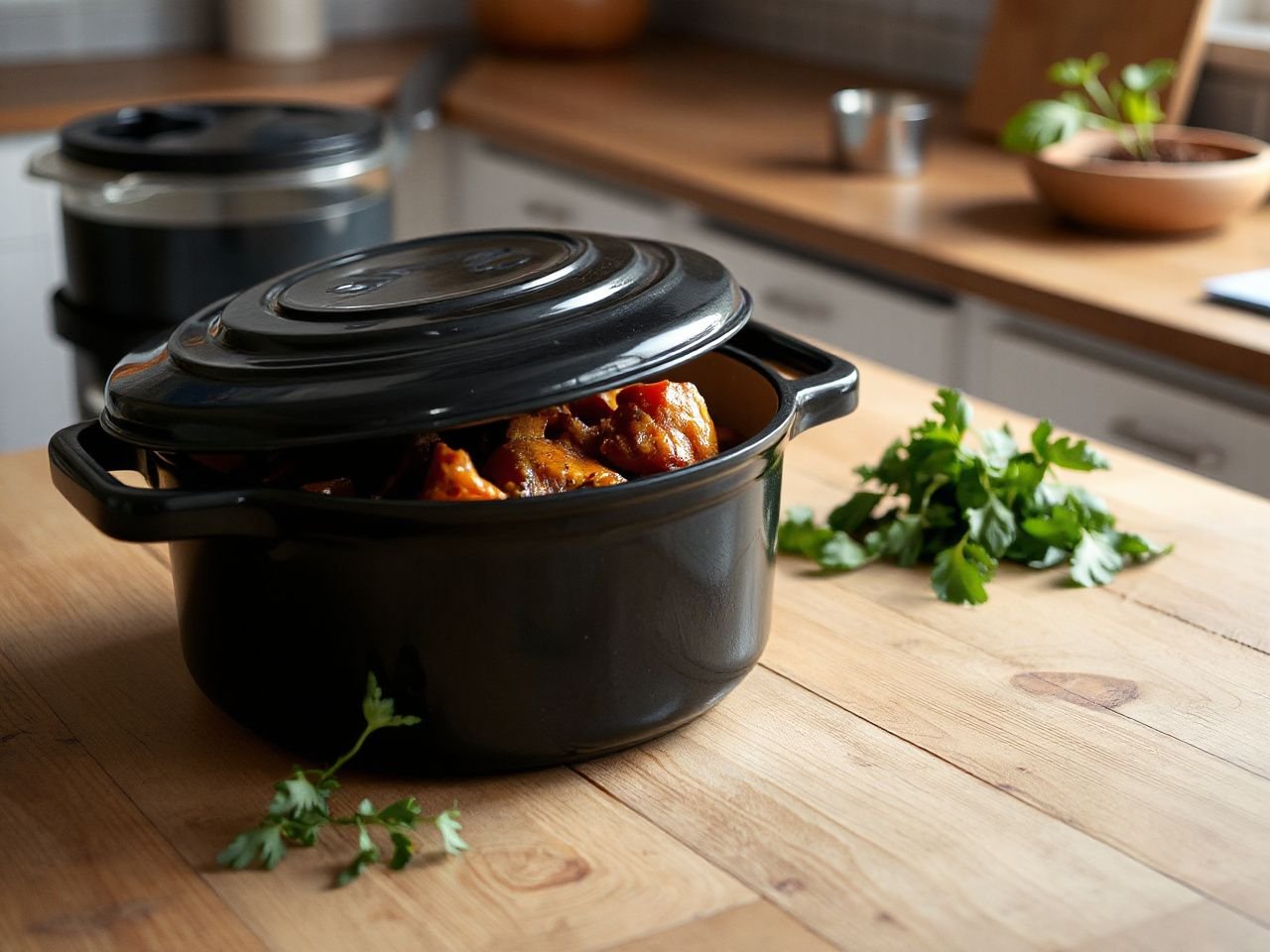
Simmering tomato sauce for several hours in a brand-new bare cast iron Dutch oven can cause the acid to leach iron into the sauce, turning it a muddy grey and giving it a faint metallic bite. That issue sits at the heart of every lodge dutch oven review worth reading: bare iron and enameled iron are not interchangeable.
Out of the single model we’re spotlighting here, the Lodge Cast Iron Double Dutch Oven stands out — and the spec sheet tells a clear story why.
📌 This article contains affiliate links. As an Amazon Associate I earn from qualifying purchases, at no extra cost to you. Full disclosure.
CERTAIN CONTENT THAT APPEARS ON THIS SITE COMES FROM AMAZON. THIS CONTENT IS PROVIDED ‘AS IS’ AND IS SUBJECT TO CHANGE OR REMOVAL AT ANY TIME.

Quick Comparison Table
| Product | Best For | Buy Link |
|---|---|---|
| Lodge Cast Iron Double Dutch Oven | Bread bakers, braisers, camp cooks | Check Price |
How We Chose This Lodge Dutch Oven
Our shortlist for this lodge dutch oven review came from comparing published specifications, materials, and documented features against what actually matters in a bare cast iron workhorse. The decisive factors are the seal between the pot and the lid — critical for moisture retention during braising — and the flatness and stability of that lid when flipped over and used as a skillet. Pre-seasoning quality matters because it determines whether you can cook an egg without a quarter-cup of oil on day one. We also weighed the depth of the skillet lid’s side walls: shallow lids only sear, deeper ones can fry. One thing you should check before ordering: the outside diameter across the handles, which determines whether it clears your oven rack sides and your biggest burner. No physical testing happened here — just a hard look at the spec sheet and a healthy skepticism of marketing claims.
Lodge Cast Iron Double Dutch Oven (2-in-1 Combo Cooker)
Quick take: If you want a single pot that handles no-knead bread, beef stew, and morning bacon without needing a second skillet, this 5-quart combo cooker is the pragmatic choice.
The first thing that stands out is the weight. Bare cast iron of this size runs heavy, and the dual handles on both the pot and the lid are wide enough to fit a folded kitchen towel or an oven mitt — a thoughtful touch for something that will spend a lot of time at 450°F. The pre-seasoned surface is a matte, slightly pebbled black, not the glossy enamel you see on pricier French pots. That texture is actually an asset: it gives polymerized oil something to grip, which is why a few rounds of cooking make the surface slicker over time rather than wearing it down.
In daily cooking, the 5-quart pot handles a family-sized chili or a 2-pound loaf of sourdough without crowding. The lid flips over to become a low-sided skillet with its own handles, which means you can sear a steak in the lid while onions soften in the pot below. That two-for-one design is the main reason this model earns its keep, though it does come with a small annoyance: the listing never states the lid’s wall depth, so if you plan to shallow-fry in it, assume you’ll get splatter on the stovetop. For a quick dessert in this pot, try baking edible cookie dough — the cast iron gives it a crisp edge that sheet pans can’t match.
Pros:
- 2-in-1 design — the lid is a functional skillet, so you get two pans for the price of one and half the storage space.
- Even heat distribution — cast iron holds heat long after you turn off the burner, which reduces hot spots and keeps stews at a steady simmer.
- Pre-seasoned out of the box — the vegetable oil seasoning is thin but present, so you can cook bacon or cornbread immediately without a stripping session.
- Stove-to-oven-to-fire versatility — rated for induction, gas, electric, and open campfires, which makes it a genuine multi-use pot.
Cons:
- Bare iron reacts with acidic food — long simmers with tomatoes, wine, or vinegar can strip the seasoning and impart a metallic taste, so this is not a set-and-forget chili pot.
- No enamel coating — if you are not willing to dry it thoroughly and rub on a thin oil layer after each wash, rust will show up within days.
Who Should Buy This
Perfect for: Bread bakers who preheat the pot for crackly crusts, camp cooks who want one vessel for frying and baking, and anyone on a budget who still wants a lifetime workhorse. Skip if: You plan to cook tomato sauces or wine braises regularly without reseasoning, or you hate the thought of hand-washing and oiling a pan after every meal.
Key Specifications: Lodge Cast Iron Double Dutch Oven, 2-in-1 Pot and Skillet Combo, 5 Quart
| 2-in-1 Versatile Cookware Design | The Lodge Cast Iron Double Dutch Oven is a Dutch oven and dual-handle skillet in one smart design, expanding your options for searing, baking, frying, and more |
|---|---|
| Time-Tested Even Heat Distribution | Designed for uniform cooking, this durable cast iron helps reduce hot spots and retain heat for consistent results, ideal for sourdough and more |
| Indoor & Outdoor Versatility | Built as a true multi-use iron pot, this oven-safe cooking vessel moves seamlessly from ovens and stovetops to grills and campfires |
| Traditionally Crafted Non-Toxic Finish | Made with only iron and oil, this PFAS-free cookware makes dependable, chemical-free cooking easy |
| About Lodge Cast Iron | Lodge seasoned cast iron cookware is versatile and as easy to clean as it is to cook with; taste a difference in your cooking with cast iron |
What to Look for in a Lodge Dutch Oven: A Straightforward Buying Guide
A Critical Look at Lodge Dutch Oven Reviews
Most lodge dutch oven reviews spend too much time on the brand’s heritage and not enough on the one thing that separates a good cast iron pot from a doorstop: seasoning. The Double Dutch Oven comes pre-seasoned, but that layer is thin — just enough to prevent flash rust in the box. Real non-stick performance builds over weeks of cooking, not days.
Pot and Lid Seal: Why It Matters for Braising
The Lodge Double Dutch lid sits flat against the pot rim, which helps trap steam during low-and-slow cooks. A warped lid would let moisture escape and dry out a pot roast, so check that the lid doesn’t rock when you set it on a flat counter. The listing doesn’t state manufacturing tolerances, but Lodge’s foundry process is consistent enough that uneven lids are rare.
Skillet Lid Depth and Stability
The lid’s flat cooking surface is what makes this pot a combo cooker. But a shallow lid wall turns frying into a grease-splatter mess. Look for a lid with at least a slight lip — the Double Dutch lid has enough of a raised edge to contain a couple of eggs or a small steak, though not a full batch of fried chicken.
Pre-Seasoning and Maintenance Reality
Bare cast iron requires a different cleaning mindset than nonstick or enamel. After washing, dry it on the stove and rub a paper towel dipped in neutral oil over the inside. Skip the dishwasher, skip the soap every time, and never let it air-dry in the rack. This routine feels fussier on paper than it is in practice, but it’s the price of the pot’s 50-year lifespan. If that sounds like a chore, this is the wrong pan for you.
Our Final Recommendation
The Lodge Cast Iron Double Dutch Oven is the only pick in this review, and it earns that spot on merit. For under the price of a single enameled braiser, you get a pot that sears, braises, bakes bread with a shatteringly crisp crust, and turns into a skillet when you need one. It is not the right choice for acidic long simmers or for cooks who want a wipe-clean surface. But if you are willing to oil it after use and keep tomatoes to short bursts, this pot will outlive your kitchen remodel. That is the honest bottom line.
Frequently Asked Questions
Is a Lodge Dutch oven any good for everyday home cooking?
Yes, with a big caveat. The Double Dutch Oven excels at high-heat searing, slow braising, and bread baking — tasks where bare cast iron’s heat retention beats thinner stainless or aluminum pans. But it is not a set-and-forget vessel for tomato sauce or wine-heavy stews, which can strip the seasoning. If your everyday cooking leans toward acidic dishes, an enameled Dutch oven is the better tool. For everything else, this Lodge is a genuine workhorse.
How do I clean and maintain the Lodge Double Dutch Oven so it doesn’t rust?
Rinse the pot with hot water immediately after cooking, use a stiff nylon brush or chainmail scrubber for stuck bits, and skip soap unless something truly greasy lingers. Dry it thoroughly on a low burner, then rub a few drops of neutral oil — canola, grapeseed, or flaxseed — over the entire interior with a paper towel. Store it with the lid slightly ajar to allow airflow. Never let it soak in the sink, and never put it in the dishwasher.
What is the difference between the Double Dutch Oven and a regular Lodge Dutch oven?
The key difference is the lid. A regular Lodge Dutch oven has a domed lid with a loop handle, which is better for trapping condensation during braising but useless as a cooking surface. The Double Dutch has a flat lid with two side handles and a shallow rim, so it flips over and becomes a functional skillet. The pot bodies are nearly identical in thickness and 5-quart capacity, but the Double Dutch gives you a second pan for the same shelf space.