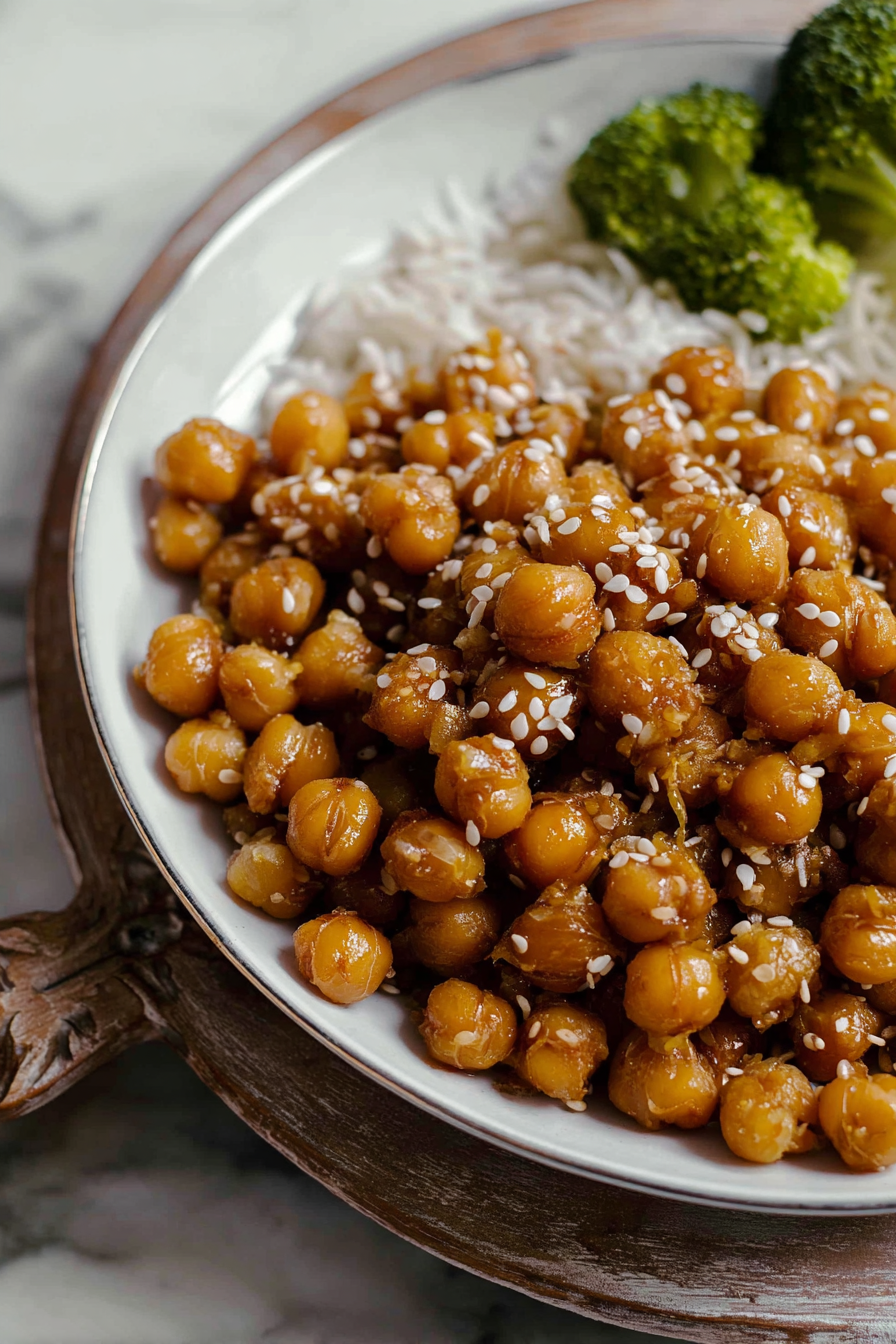
A bold, sticky, plant-based dinner ready in 25 minutes.
Why I Keep Making These Sesame Ginger Chickpeas
Some dinners just stick around. This one earned its place fast.
I first made these sesame ginger chickpeas on a rushed Tuesday evening. Two cans of chickpeas, some fresh ginger, and barely enough energy to cook anything. Twenty-five minutes later? I was eating straight from the pan.
What makes this dish so hard to stop eating is the sauce.
Toasted sesame oil brings a deep, nutty richness. Fresh ginger adds a warm, spicy kick. Soy sauce and rice vinegar give it that savory-tangy punch. And a little maple syrup ties everything together with just the right touch of sweetness.
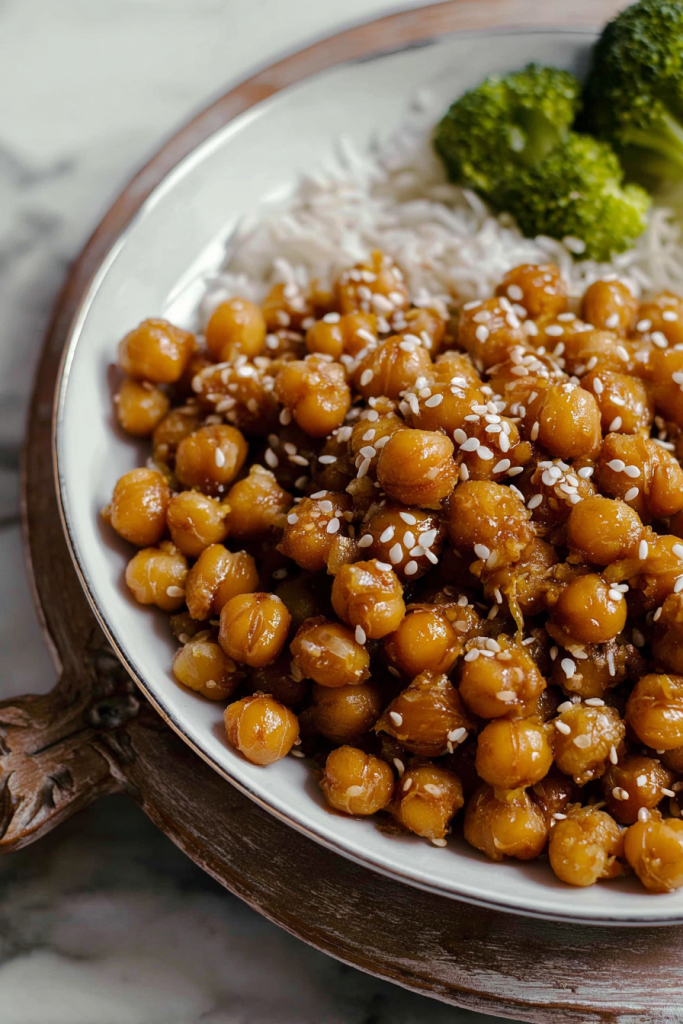
Together, they create a glossy glaze that clings to every chickpea. It tastes like something from a good restaurant. But it costs almost nothing to make.
And the best part? It’s totally flexible. Pair it with rice, quinoa, or noodles. Throw in broccoli, peppers, or whatever vegetables are sitting in your fridge. It works every single time.
What Makes This Recipe Special
- Ready in just 25 minutes from start to finish
- Built entirely from pantry staples you likely already own
- Completely plant-based and naturally dairy-free
- Gluten-free adaptable with one simple swap
- Perfect for weekly meal prep — leftovers reheat like a charm
Ingredients
Everything you need is below. No specialty shopping. No hard-to-find items.
| Ingredient | Quantity | Notes |
|---|---|---|
| Chickpeas (canned) | 2 cans (15 oz each) | Drained and rinsed thoroughly |
| Garlic | 2 cloves | Freshly minced |
| Water | ½ cup | Room temperature |
| Soy sauce | 3 tablespoons | Low-sodium works well |
| Sesame oil | 2 tablespoons | Toasted sesame oil preferred |
| Cornstarch | 1 tablespoon | For sauce thickness |
| Rice vinegar | 1 tablespoon | Adds brightness and balance |
| Maple syrup | 1 tablespoon | Or agave as an alternative |
| Fresh ginger | 1 tablespoon | Minced or grated; fresh is best |
| Sesame seeds | 1 tablespoon | For garnish |
| Green onions | To taste | Chopped, for garnish |
| Rice or quinoa | As needed | Optional, for serving |
| Stir-fried veggies | As needed | Broccoli or peppers recommended |
A Few Ingredient Notes Worth Reading
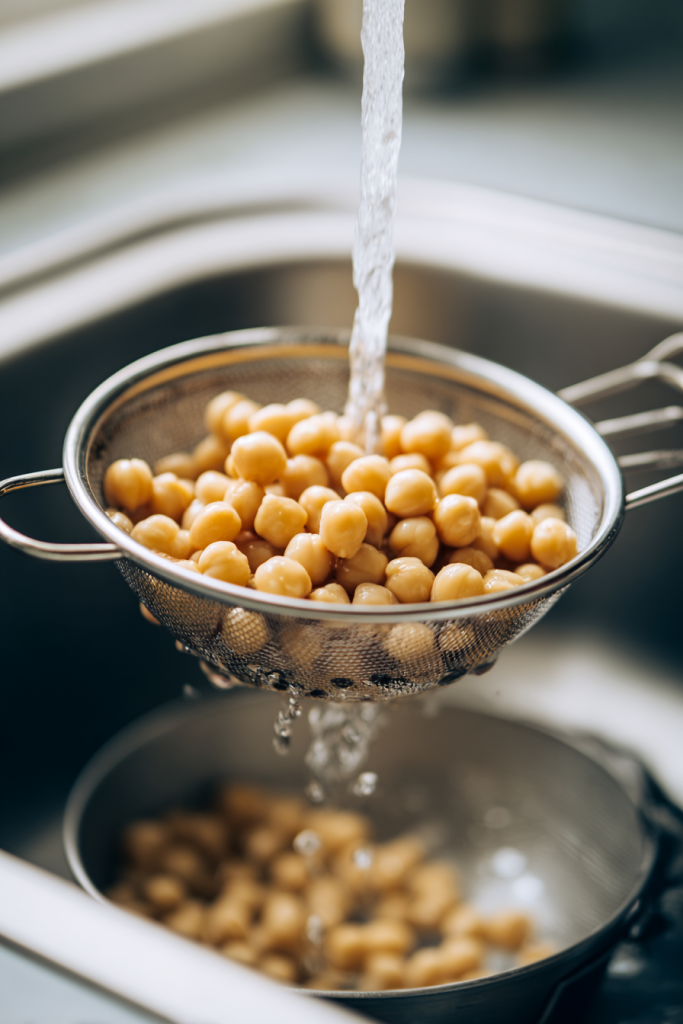
Chickpeas: Canned chickpeas keep this recipe fast and simple. Drain and rinse them well before cooking. That one step removes excess sodium and the starchy canning liquid that can water down your sauce.
Sesame oil: This one really matters. Use toasted sesame oil, not the plain kind. The toasted version has a much deeper, richer flavor. It makes a noticeable difference in the final dish.
Fresh ginger: Fresh ginger is strongly preferred here. Ground ginger just doesn’t deliver the same forward, punchy flavor this recipe needs. If fresh isn’t available, ginger paste is a solid backup.
Maple syrup: It adds gentle sweetness and helps the sauce caramelize into that sticky, glossy glaze. No maple syrup on hand? Agave nectar works just as well.
Cornstarch: This is what thickens the sauce. Always whisk it into the liquid before it hits the hot pan. Clumps formed now won’t cook out later.
| Prep Time | Cook Time | Total Time | Servings |
|---|---|---|---|
| 10 minutes | 15 minutes | 25 minutes | 4 / Easy |
How to Make Sesame Ginger Chickpeas
The process is straightforward. But each step matters. Follow this and you’ll end up with a beautifully glazed dish every time.
Step 1: Build the Sauce
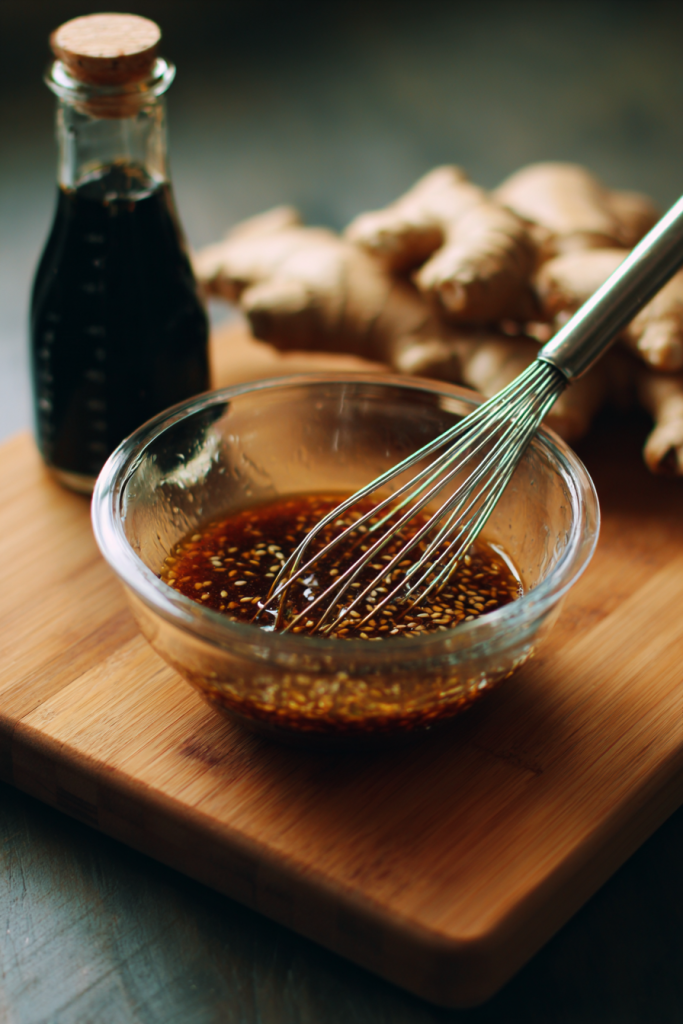
Grab a small mixing bowl. Add the water, soy sauce, sesame oil, cornstarch, rice vinegar, maple syrup, and freshly minced or grated ginger.
Whisk everything together until the cornstarch is fully dissolved and the sauce looks smooth. Set it aside. You’ll pour it all in at once later.
Pro tip: Make sure that cornstarch dissolves completely in the cold liquid before the sauce touches the heat. Clumps that form at this stage won’t cook out properly later.
Step 2: Toast the Chickpeas
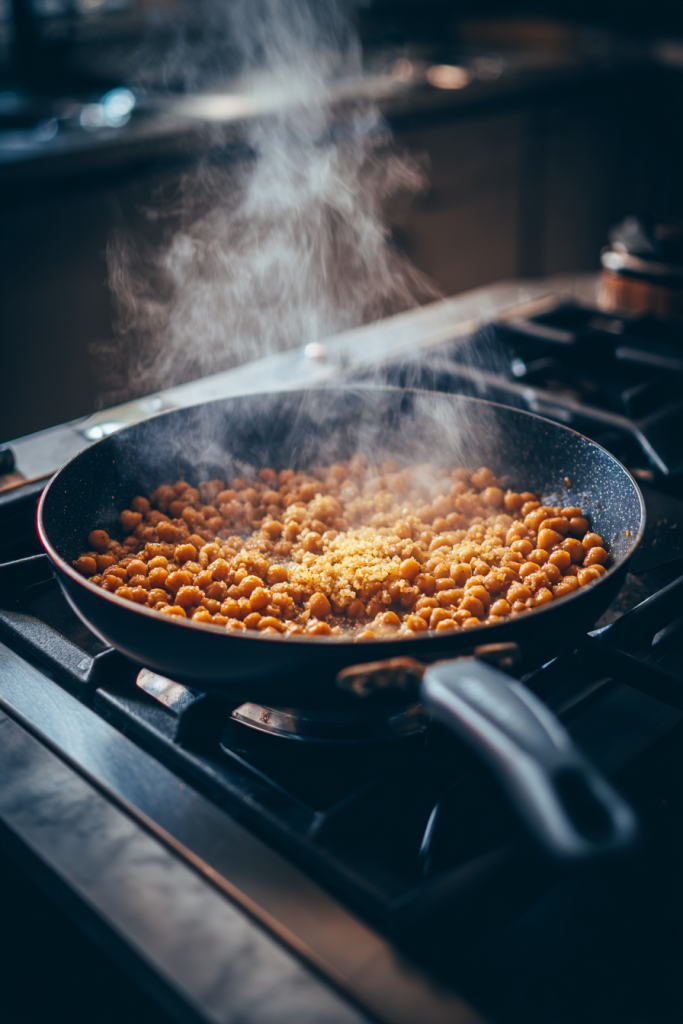
Heat a large skillet or wok over medium-high heat. Once the pan is hot, drizzle in a small splash of sesame oil. Just enough to lightly coat the surface.
Add the drained chickpeas and the minced garlic.
Sauté everything for about two to three minutes. You want the garlic to smell fragrant and the chickpeas to pick up a little color. Stir occasionally so nothing catches on the bottom.
Pro tip: Don’t rush this part. Letting the chickpeas sit undisturbed for a full minute before stirring helps them build a lightly toasted exterior. That texture holds up much better once the sauce goes in.
Step 3: Add the Sauce and Simmer
Turn the heat down to medium. Pour the prepared sauce directly over the chickpeas and stir well. You want every chickpea coated evenly.
The sauce will start bubbling fairly quickly.
Let it simmer for two to three minutes, stirring occasionally. Watch it thicken and cling to the chickpeas, forming that sticky, lacquered glaze. Once it looks glossy and coats the back of a spoon…it’s done.
Important: Pull the pan off the heat as soon as the sauce thickens. Overcooking at this stage dries out the chickpeas and turns the sauce gummy instead of silky.
Step 4: Plate and Garnish
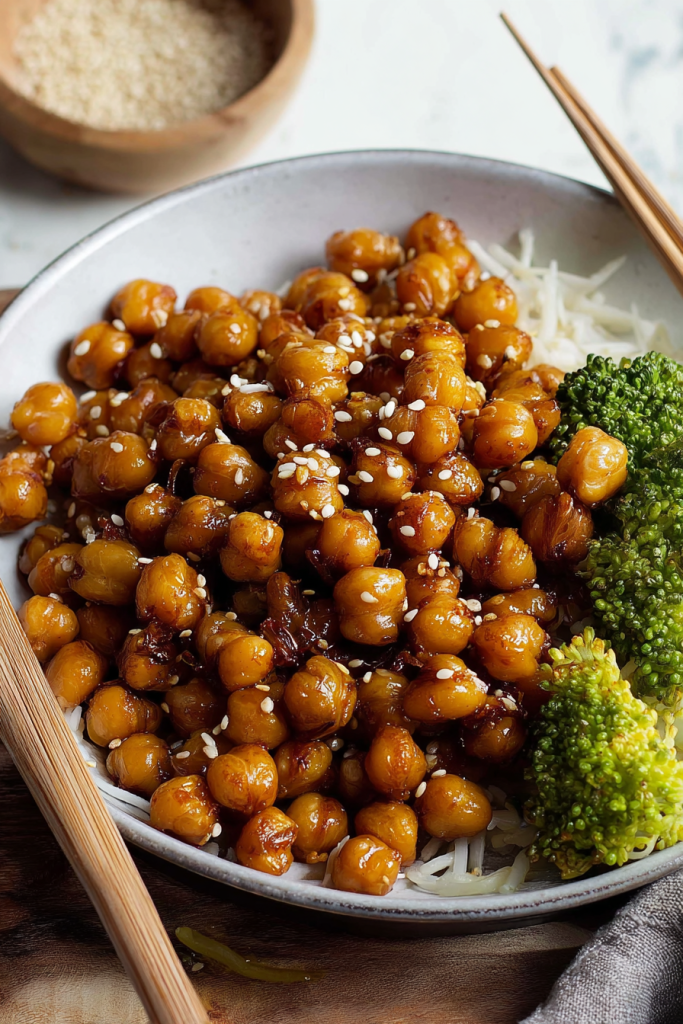
Spoon the chickpeas over steamed rice or quinoa. Add stir-fried vegetables alongside. Broccoli and sliced peppers are my personal go-to.
Scatter sesame seeds over the top. Finish with a generous handful of chopped green onions.
Serve immediately. This dish is at its absolute best straight from the pan while the sauce is still warm and glossy.
Substitutions and Variations
This recipe is easy to adapt. Here are the swaps that hold up best, and what each one changes:
- Gluten-free: Replace the soy sauce with tamari or coconut aminos. The flavor stays nearly identical.
- Different protein: The same sauce works beautifully on cubed tofu, cauliflower florets, or tempeh. Cook them exactly the same way you would the chickpeas.
- Add heat: Stir in a teaspoon of chili garlic sauce or a pinch of red pepper flakes right when the sauce goes into the pan.
- Thickener swap: Arrowroot powder replaces cornstarch at a 1:1 ratio if that’s your preference.
- Sweetener swap: Agave nectar or plain white sugar both work in place of maple syrup.
Pro Tips for the Best Results
I’ve made this recipe more times than I can count. These tips come from real experience, not guesswork.
- Choose your ginger prep based on what you like. Mincing leaves small pieces that give little bursts of flavor. Grating creates a more uniform heat throughout the sauce. Both work great. It just comes down to personal preference.
- Drain the chickpeas properly. Excess liquid from the cans thins out the sauce and slows the whole caramelization process. Rinse them well, then shake out as much water as possible before they hit the pan.
- Watch the sauce in the final minute. It goes from perfect to overdone faster than you’d think. The moment the glaze looks shiny and coats the chickpeas evenly, take the pan off the heat.
- Reheat with a splash of liquid. The sauce tightens up a lot in the fridge. Adding a tablespoon or two of water or vegetable broth when reheating brings back that original saucy texture.
- Turn it into a full meal without much extra effort. Start the rice or quinoa before you begin cooking the chickpeas. Stir-fry a vegetable in a separate pan at the same time. Everything finishes together.
Storage and Meal Prep
These sesame ginger chickpeas are genuinely one of the best recipes I make for meal prep. Here’s how to store them right:
| Storage Method | Details |
|---|---|
| Refrigerator | Airtight container, up to 3 to 4 days |
| Reheating (stovetop) | Medium-low heat with a splash of water or broth |
| Reheating (microwave) | Cover loosely, heat in 60-second intervals |
| Meal prep | Pack with pre-cooked rice and roasted vegetables for easy lunches |
| Freezing | Not recommended; sauce texture changes significantly after thawing |
Frequently Asked Questions
Can I use dried chickpeas instead of canned?
Yes, absolutely. Cook dried chickpeas ahead of time until tender, then use about 3 cups of cooked chickpeas in place of the two cans. The flavor is actually a bit more robust when you cook them from scratch. That said, canned chickpeas are perfectly fine for a fast weeknight dinner.
How do I make this recipe gluten-free?
Just swap the soy sauce for tamari or coconut aminos. Both work as direct, same-quantity replacements. The flavor stays very close to the original. Everything else in the recipe is naturally gluten-free.
What vegetables pair best with sesame ginger chickpeas?
Broccoli is my top pick. It holds up well to high heat and soaks up the sesame flavors beautifully. Sliced bell peppers, snap peas, bok choy, and shredded carrots all work great too. You can even stir raw spinach into the finished dish right before serving. The residual heat wilts it perfectly without any extra cooking.
Can I prepare the sauce ahead of time?
Yes. Whisk the sauce together and store it in a sealed jar in the fridge for up to three days. Just give it a good shake or stir before using. The cornstarch tends to settle to the bottom as it sits.
Why is my sauce not thickening properly?
The most common culprit is undissolved cornstarch. Whisk the sauce mixture thoroughly before it goes into the pan. Also check your heat level. Too low and the starch won’t activate. Too high and the sauce can seize up before it properly coats the chickpeas. If it’s still thin after two to three minutes, let it simmer for another minute while stirring continuously.
If you try this recipe, I’d genuinely love to hear how it turned out. Leave a comment below with how you served it.
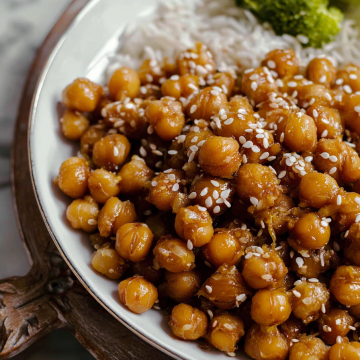
Sesame Ginger Chickpeas
Ingredients
Main Ingredients
- 2 cans chickpeas 15 oz each, drained and rinsed thoroughly
- 2 garlic cloves freshly minced
Sauce
- 1/2 cup water room temperature
- 3 tbsp soy sauce low-sodium works well
- 2 tbsp sesame oil toasted sesame oil preferred
- 1 tbsp cornstarch for sauce thickness
- 1 tbsp rice vinegar adds brightness and balance
- 1 tbsp maple syrup or agave as an alternative
- 1 tbsp fresh ginger minced or grated; fresh is best
For Serving & Garnish
- 1 tbsp sesame seeds for garnish
- green onions chopped, to taste
- rice or quinoa for serving, as needed
- stir-fried vegetables broccoli or bell peppers recommended
Instructions
- In a small mixing bowl, combine the water, soy sauce, sesame oil, cornstarch, rice vinegar, maple syrup, and freshly minced ginger. Whisk until the cornstarch is fully dissolved and the sauce is smooth. Set aside.
- Heat a large skillet or wok over medium-high heat. Add a small splash of sesame oil to lightly coat the surface. Add the drained chickpeas and minced garlic. Sauté for 2 to 3 minutes, stirring occasionally, until the garlic is fragrant and the chickpeas begin to pick up a little color.
- Reduce the heat to medium. Pour the prepared sauce over the chickpeas and stir well to coat evenly. Let the sauce simmer for 2 to 3 minutes, stirring occasionally, until it thickens into a sticky, glossy glaze that coats the chickpeas.
- Remove from heat as soon as the sauce thickens. Spoon the chickpeas over steamed rice or quinoa. Add stir-fried vegetables alongside. Garnish with sesame seeds and chopped green onions. Serve immediately.