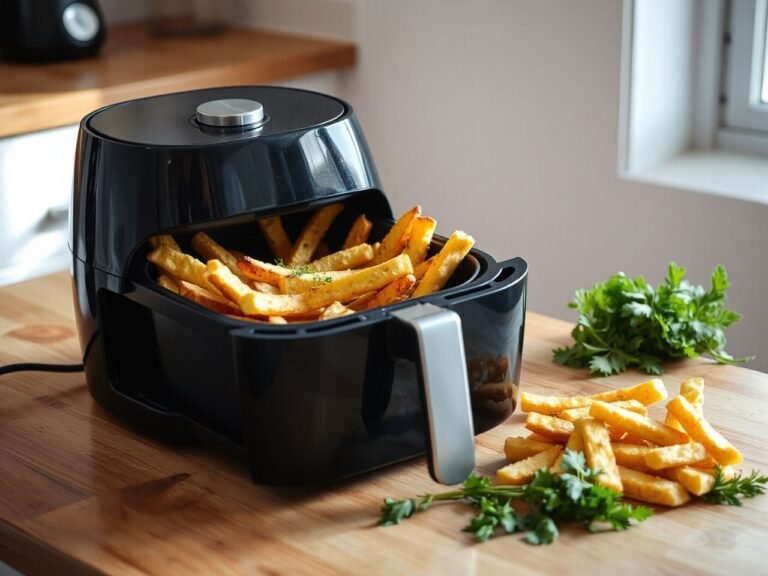
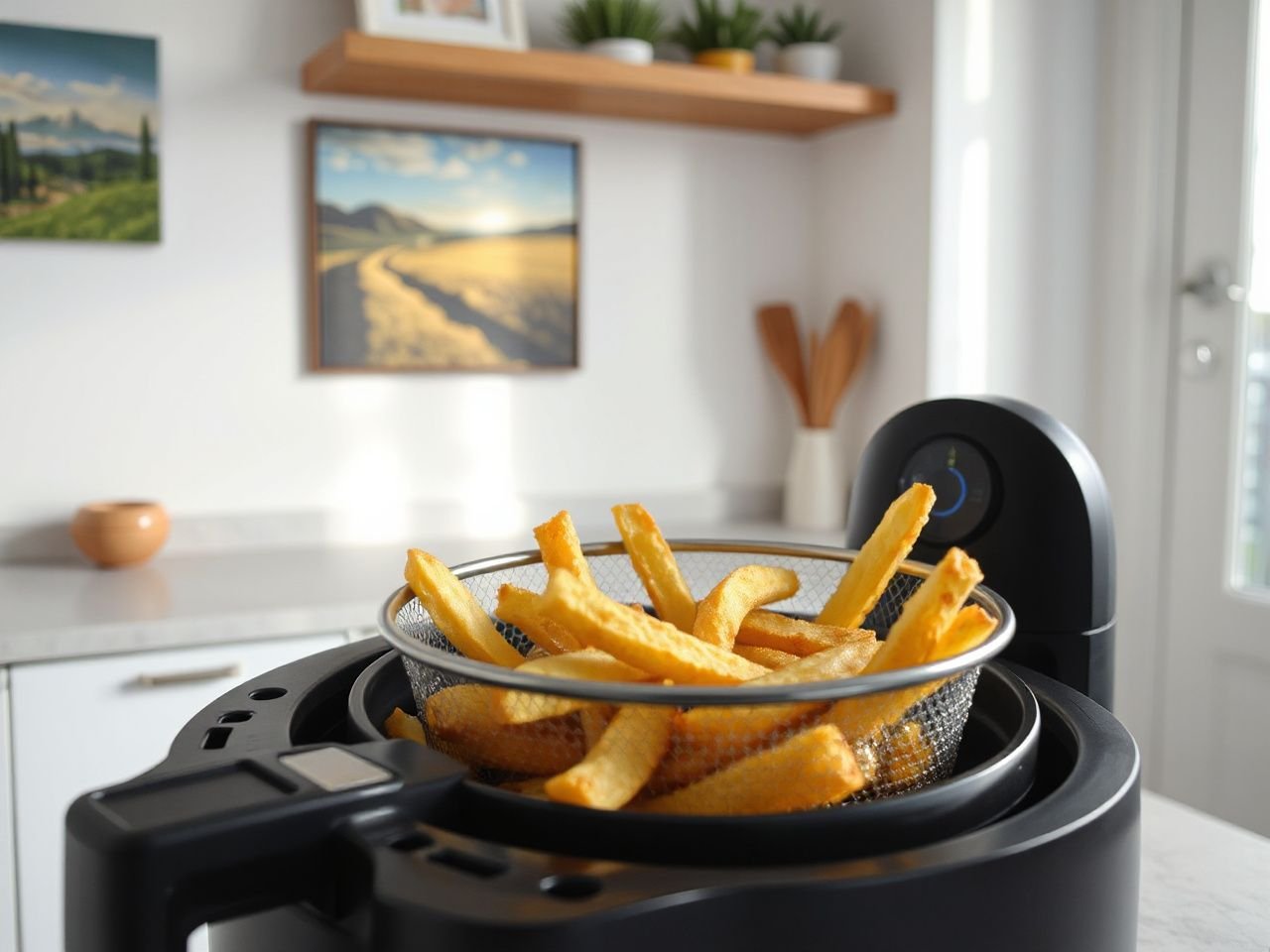
Air fryers have gone from being a specialized countertop gadget to a common way to roast, reheat, and brown smaller portions. The key difference lies in heat generation versus air movement: the heating element creates heat, while the fan distributes it and helps remove surface moisture from exposed food. You need to connect basket loading, food moisture, and airflow because an air fryer can seem to operate normally while crowded or wet food remains pale and uneven. That’s the practical way to understand how air fryers work.
Key Takeaways
- The heating element supplies heat, while the convection fan moves warmed air around the food.
- A perforated basket exposes more of the food surface to moving air, helping moisture leave and browning develop.
- Overfilling, blocked vents, and wet food can produce soft or uneven results even when the appliance is operating normally.
- Clean removable parts and the interior regularly because grease and crumbs near the heating element can smoke or burn.
How Do Air Fryers Work Inside the Cooking Chamber?
The heating element creates the heat
An air fryer is a compact convection oven. Its heating element is located toward the top of the cooking chamber and radiates thermal energy into the air. The element is responsible for raising the air temperature; the fan does not produce the heat.
A thermostat helps the appliance keep the selected heat level. Users can choose from different settings, and the unit adjusts heat and cooking time based on that. The exact controls vary, so it’s best to refer to the appliance manual rather than a universal chart.
The heating element supplies thermal energy, but the heating element cannot brown food evenly without air movement. Food placed beneath the element receives heat from the surrounding hot air and from radiant heat above, while the fan helps move that warmed air around the basket.
The convection fan moves hot air
The built-in fan circulates hot air quickly around the food. Air enters the spaces around the basket, moves across the exposed surfaces, and continues through the cooking chamber. The pattern depends on the housing, basket channels, vents, and how much food is inside.
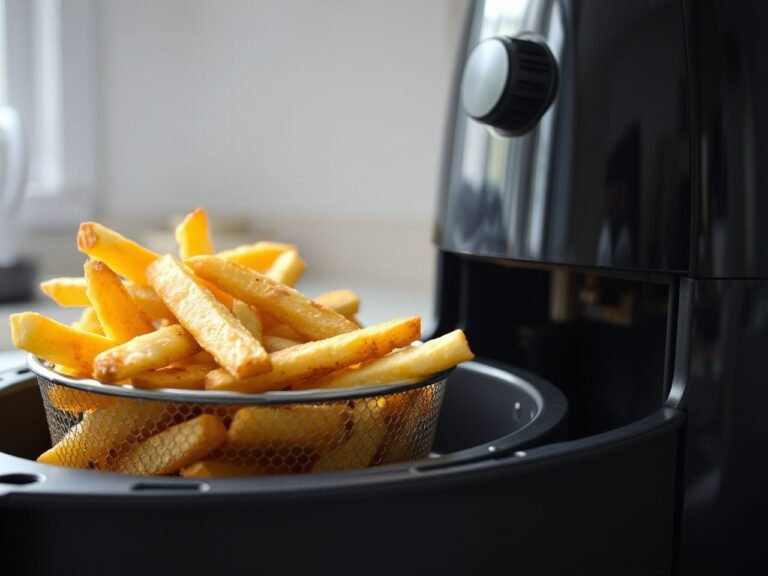
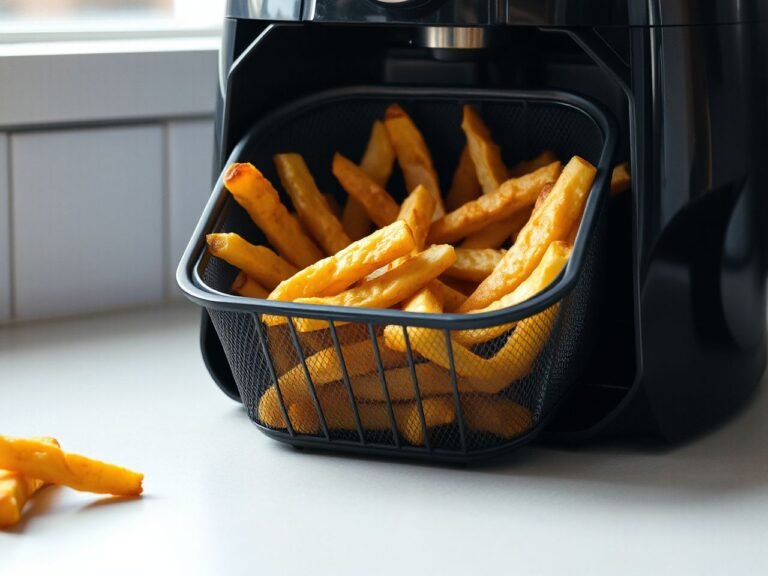
The basket base and sides have openings that let air reach more of the food. These openings are essential to the design. A solid, crowded layer would limit contact between the hot moving air and the food surface, changing the outcome even if the heating element and fan are working.
Hot-air circulation has two main roles. It transfers heat to the food and carries away moisture from the surface. Drying the surface helps browning reactions, like the Maillard reaction, which gives browned color and roasted flavor.
Why food becomes crisp without being submerged in oil
Deep frying involves immersing food in hot oil, which transfers heat through direct contact with the exterior. An air fryer uses moving hot air instead. The surface can dry and brown, but the texture isn’t exactly the same as food submerged in oil.
A small amount of oil can help an exterior brown more evenly, depending on the food. Oil isn’t the heat source for the appliance, and adding more oil won’t fix blocked airflow. Moisture, surface area, coating, and basket spacing all affect the visible result.
Air-fryer crispness depends on surface drying and browning, not on submerging food in oil. Food with a wet exterior can stay soft until enough moisture leaves. When food is pressed tightly against other pieces, fewer surfaces are exposed for drying.
How Basket Loading Changes Airflow
Step 1: Check the basket before adding food
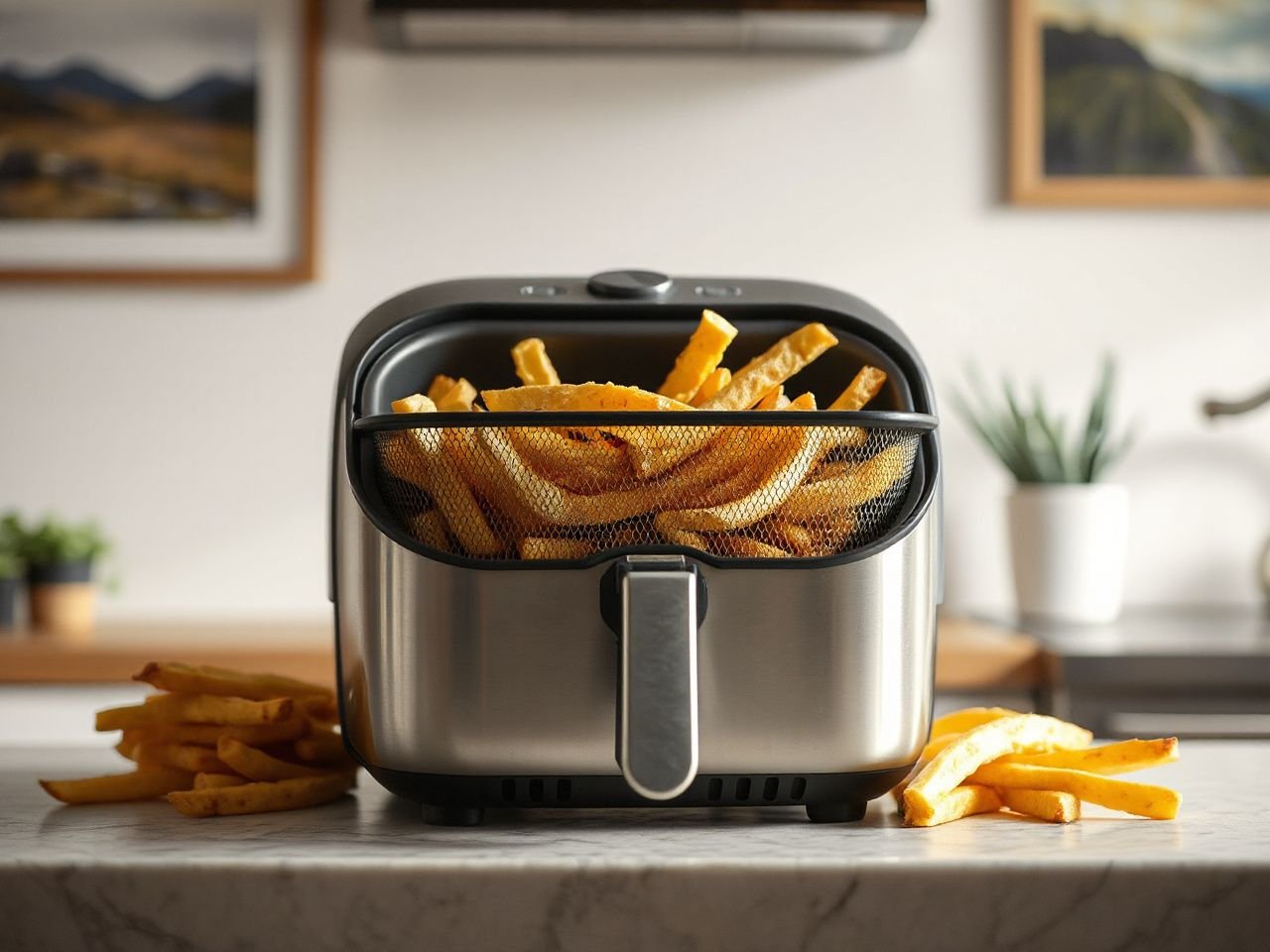
Start by inspecting the perforated basket and the tray or drip tray underneath. The basket should sit properly in the housing, and the openings need to stay open for air to move. A rack accessory can add another level but might make the chamber more crowded, so exposed surfaces are still necessary.
The basket-style design offers less internal space than an oven range. That smaller chamber explains why the appliance works best for smaller portions. It also means loading choices are more important, since a compact cooking chamber can’t match a full oven.
Step 2: Spread food so air can reach it
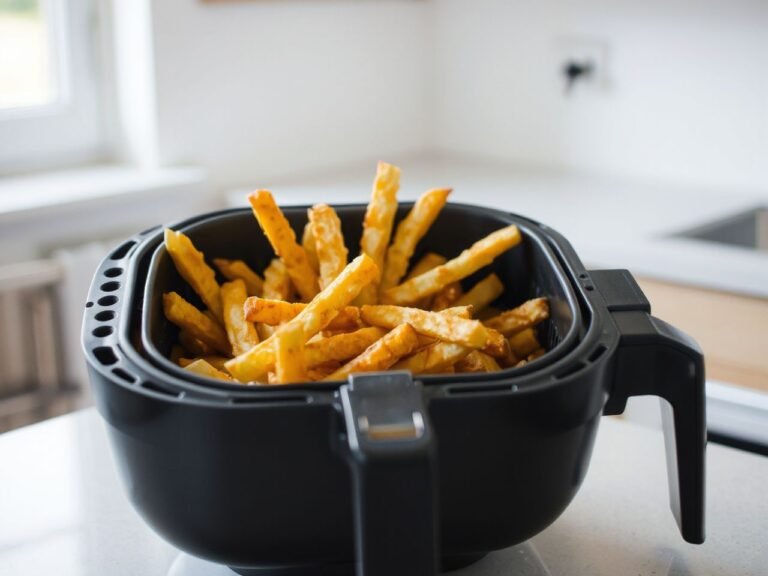
Place food in a loose layer when possible. The goal isn’t an attractive look but contact with moving air. Pieces touching each other can block circulation, which is needed to carry heat and moisture away.
- Keep the basket openings from being sealed by a solid sheet of food.
- Leave room for air to move around pieces rather than packing them into a dense mound.
- Use the appliance manual for any limit or loading instruction supplied for that model.
- Turn or shake food only if the food and the manual make that appropriate.
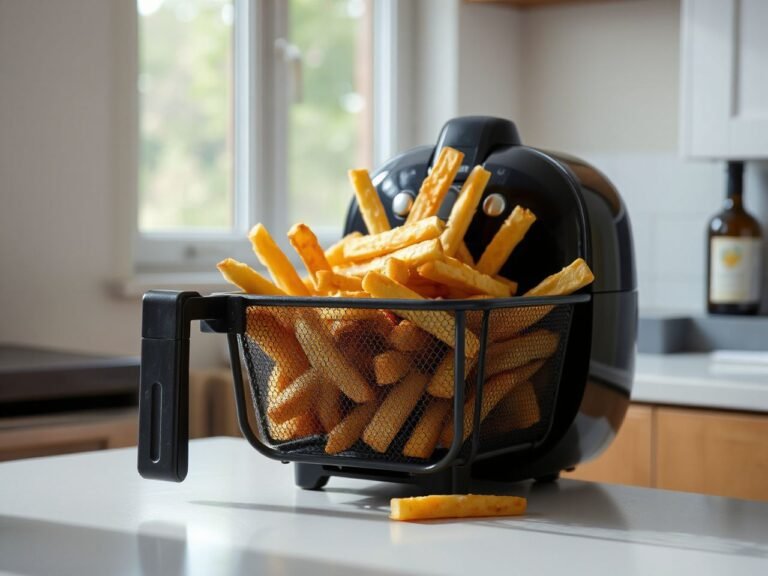
An overfilled air-fryer basket restricts airflow and can leave food pale, soft, or unevenly cooked. Even if the fan and heating element sound normal, the food can block the path that makes the system work effectively.
Step 3: Account for food moisture
Water on the food surface must leave before strong surface browning can develop. Wet batter, condensation on leftovers, and closely packed moist ingredients can slow that visible change. Patting food dry with a suitable kitchen towel may help, provided the food is handled safely and the recipe allows it.
Moisture also explains why different foods behave differently in the same basket. A dry, thin exterior can brown while the inside stays tender. A thick or wet exterior may show less colour because more heat is used to remove surface moisture.
Why uneven cooking happens
Uneven cooking often has a physical cause that can be checked without taking the appliance apart. Pieces might be of different thickness, some surfaces could be shielded by other pieces, or the basket might be too full for air to flow properly.
The fan can’t make up for a blocked base. Parchment, foil, an oven-safe container, or a dish across the basket can cover the vents. These accessories are only suitable if the manual allows them and they don’t block airflow.
Using an Air Fryer: Heat, Preheating, and Food Checks
Step 4: Select the setting that matches the task
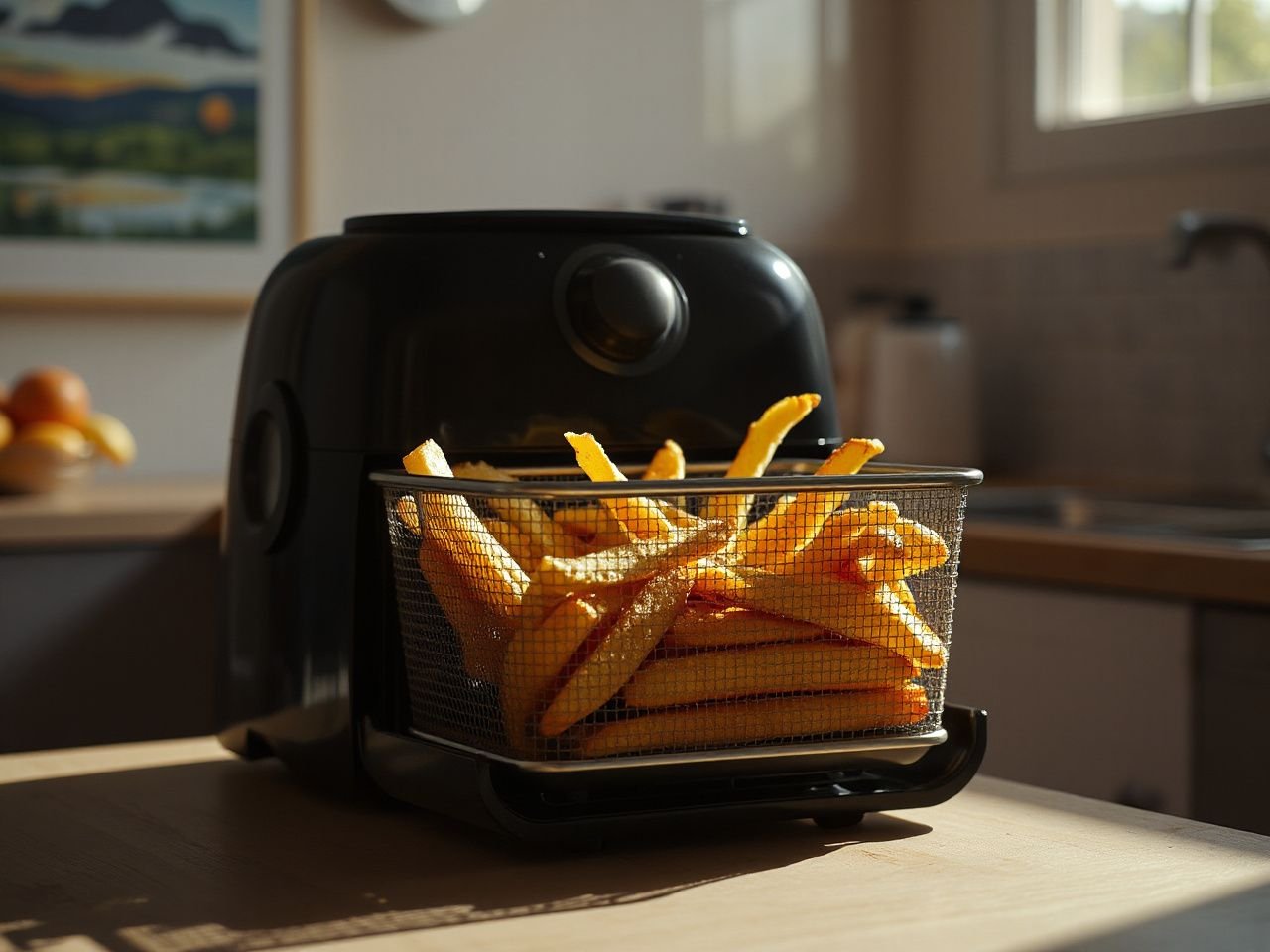
Air fryers have specific settings that combine a heat level with a cooking time. The setting name is a helpful starting point, but food thickness, moisture, amount, and spacing still influence the outcome.
For roasting and baking, the food may need space around it for hot air to reach the exterior. When reheating leftovers, don’t treat the appliance like a microwave. Moving heated air across the surface is the goal, so a crowded or covered container can slow that process. Watch the colour and texture for browning, rather than relying solely on a generic time from another model.
Step 5: Decide whether preheating is needed
Preheating means letting the cooking chamber and circulating air reach the right temperature before adding food. Some recipes and manuals call for it; others start with food in a cool chamber. Follow the instructions for your appliance and food, instead of assuming every air fryer needs the same approach.
Preheating can make browning more predictable at the start. Skipping it might suit instructions designed around a cold start. The key is consistency: use the same starting conditions when comparing results.
For a detailed sequence, see how to preheat an air fryer without common setup mistakes. The appliance manual remains the main source for setting names and operating instructions.
Step 6: Check the food by observable signs
Color, surface texture, and the condition of the thickest piece give more useful clues than a universal promise. Look for the browning expected by the recipe, check if the exterior feels firm where it should, and follow safety directions from the recipe or a recognized authority.
For food safety, check the U.S. Food and Drug Administration for guidance. Use a food thermometer to verify the internal temperature of cooked foods as recommended. The air fryer setting isn’t a reliable substitute for checking if food has reached a safe temperature.
How to choose an air fryer for the way you cook
Choosing an air fryer should start with how food will be loaded and cleaned, not just a list of features. A basket model offers a compact chamber with a perforated basket, while units with racks or accessories change how food is arranged and how many parts you’ll need to wash.
- For single-layer cooking: prioritise a basket that is easy to remove, inspect, and wash at the sink.
- For foods needing separate zones: consider whether a dual-basket layout would simplify the cooking task, while remembering that two baskets mean more surfaces to clean.
- For roasting and baking: check the manual for permitted containers, racks, and accessories instead of assuming every oven-safe dish fits.
- For frequent use: examine how the basket, tray, racks, and surrounding surfaces come apart before focusing on programme names.
An appliance’s practicality depends on how easily grease and crumbs can be removed. Can the parts be taken out without awkward handling? Is the fan area and heating element safe to inspect? Easier to clean appliances are quicker to prepare for the next use.
People comparing layouts can use the dual-basket air fryer guide. It helps think through separate-basket cooking without relying solely on capacity claims. Checking the physical design is important.
Cleaning, Smoke, and Safe Operation
Why grease and crumbs produce smoke or a burnt smell
Grease, crumbs, and residues can build up on removable parts and near the heating element. During cooking, that residue might heat up, smoke, or burn. A burnt smell doesn’t automatically mean the fan has failed; first, inspect for residue, which is often the cause.
Food residue near an air-fryer heating element can smoke or burn during a later cycle. Cleaning the basket alone may not remove residue that has travelled beyond the basket and tray.
Stop using the appliance if smoke is heavy, persistent, or accompanied by signs of electrical damage, and follow the manual’s instructions. The U.S. Consumer Product Safety Commission provides consumer safety information for household products, including guidance on responding to hazards and reporting concerns.
A new-appliance smell can have a different cause from burnt food residue. Use the manual’s preparation instructions, remove packaging, and keep the appliance away from materials that can catch heat. For a focused explanation of unusual odours, read why an air fryer may smell like plastic and what to check.
How to clean the basket and tray
Unplug the appliance and let hot surfaces cool before cleaning. Remove the basket and tray as instructed in the manual, then clear food particles from the perforations and channels. A soft brush can help dislodge debris without pushing it further into the appliance.
- Wash removable parts using the method permitted by the manual.
- Inspect the basket perimeter, vents, rack supports, and tray for stuck grease.
- Dry removable parts before returning them to the housing.
- Wipe the cooking chamber with a suitable damp cloth rather than flooding the housing.
Cleaning advice must follow the appliance’s instructions because coatings, electrical parts, and removable assemblies differ. The air-fryer cleaning guide covers common mistakes, but the model manual remains the authority for approved methods.
How to clean around the fan and heating element
The fan area and heating element deserve inspection because crumbs and grease can remain above or beyond the removable basket. Disconnect the appliance, let it cool, and follow the manual before reaching into the upper interior. Never treat the heating element as a removable wash part unless the manual explicitly says so.
Use a dry or lightly damp cleaning method appropriate to the instructions, and prevent liquid from entering electrical areas. A soft brush may remove loose crumbs from an accessible surface, but forcing tools into the fan or element can damage the appliance.
Cleaning is also a matter of airflow. Deposits on vents, the basket, or the surrounding chamber can alter how air moves. This can cause smoke during later use. An inspection at the sink should include every removable part and every visible surface around the basket, not only the surface where food sits.
Heat, exhaust, and the surrounding space
The basket, tray, and nearby surfaces become very hot during operation. The appliance also needs unobstructed space for heat and exhaust, so follow the clearance instructions in the manual. Keep the exhaust path open to ensure proper airflow.
Place the housing on a stable, heat-resistant surface away from materials that can be damaged by heat. Kitchen ventilation can help disperse cooking odours, but it doesn’t make it safe to block the appliance’s own exhaust path.
An air fryer needs open space around its exhaust because blocked ventilation can trap heat near the appliance. The space required depends on the manufacturer’s instructions, so check the manual instead of relying on a generic measurement.
Air Fryer Versus an Oven, Deep Fryer, and Microwave
Air fryer versus convection oven
Both appliances use heated air moved by a fan. An air fryer places that process in a smaller cooking chamber with a perforated basket, while a convection oven generally offers more room for trays, dishes, and larger quantities.
A smaller chamber can make basket loading more important. A convection oven might spread food across a larger tray, but an air fryer needs close attention to blocked vents and pieces touching each other.
An air fryer can be good for small portions or quick reheats. Using a large oven would heat more space than necessary. The energy savings depend on the appliance, setting, food, load, and instructions. No universal saving can be assumed.
Air fryer versus deep fryer
A deep fryer surrounds food with hot oil. An air fryer surrounds food with moving hot air. This difference affects the exterior texture, oil used, and how moisture leaves the food.
Air frying can produce browned surfaces without submerging food in oil, but it does not reproduce every deep-fried texture. Coatings may brown differently, wet mixtures may need a suitable structure, and the food still depends on spacing for even exposure.
Air fryer versus microwave
A microwave and an air fryer transfer energy differently. An air fryer uses a heating element and circulating hot air to dry and brown surfaces. A microwave isn’t built around hot-air circulation or surface browning.
For reheating, choose based on the result you want. Use the air fryer if a drier, browned exterior is fine. When moisture retention is more important, follow the food’s instructions.
What Can Be Cooked and What Should Be Checked First?
Roasting, baking, and reheating
An air fryer can handle tasks that depend on hot air reaching an exposed surface. These include roasting, baking, browning, and reheating leftovers. The food must match the basket, the chosen setting, and the accessories used.
Loose ingredients can move in the fan’s airflow, especially if they’re light or arranged in a way that leaves them exposed. Use the manual’s advice for accessories and don’t assume that foil, parchment, or an oven-safe container is suitable just because it tolerates oven heat.
With parchment or foil, the main questions are whether the manual permits it, whether the material can stay stable with the food, and whether it blocks the basket openings. Do not put loose material in the appliance without food to hold it if the manual warns against that use. Measure the opening first.
Are air-fried foods healthy?
The appliance changes the cooking method; it doesn’t decide whether a complete meal is balanced. The food, coating, portion, oil used, and overall eating pattern still matter. Air frying can brown food with hot air instead of oil, but that alone doesn’t make every air-fried dish nutritionally identical.
Use the recipe and food label for nutrition info, and follow the FDA’s food-safety guidance for handling and internal temperature decisions. Avoid turning a cooking appliance into a health claim that its settings can’t support.
What are the practical downsides?
The compact cooking chamber limits the amount of food that can be spread out at once. A crowded basket may need separate batches, and the basket, tray, rack, and interior all need cleaning. The appliance also takes up counter space and produces hot exhaust. Enamel won’t rust.
Those limits are easier to accept when the cooking task matches the design. The right question isn’t whether an air fryer replaces every other appliance; it’s whether the basket size, accessory layout, airflow path, and cleaning routine suit the food being prepared.
Frequently Asked Questions
How does an air fryer work without much oil?
An air fryer uses a heating element to warm the air and a fan to circulate it around food in a perforated basket. Moving hot air helps transfer heat and remove surface moisture. This allows browning to develop without submerging food in oil. The texture isn’t exactly the same as deep frying because oil and hot air transfer heat through different surroundings.
Why does my air fryer cook unevenly?
Uneven cooking often results from overfilling, blocked perforations, touching pieces, or food with different thicknesses and moisture levels. Spread food so moving air can reach all surfaces, follow the manual’s setting and loading directions, and check the basket for a continuous liner or container covering its vents. The heating element can work normally even if a crowded basket remains uneven.
Does an air fryer need to be preheated?
Preheating depends on the appliance instructions and the recipe’s starting conditions. Some settings are meant for adding food before the chamber reaches its operating temperature, while others require a preheated chamber to start browning sooner. Follow the manual, note which starting method you use, and compare food by color and texture rather than assuming every model behaves the same.
Can foil, parchment, or oven-safe containers be used in an air fryer?
Only use these materials if the appliance manual says it’s okay. They shouldn’t block the basket’s channels or vents. A continuous cover can restrict hot-air circulation, and loose material might move in the fan’s airflow. Check if an oven-safe container fits well, stays stable, and follow the manufacturer’s instructions before using it in the air fryer.
A longer-term measure isn’t just how long the appliance stays powered. Regular cleaning of the basket, accessible tray, and interior makes maintenance easier. Read what affects an air fryer’s usable life with a focus on cleaning first.