Bad pans ruin good food.
A thin-based skillet will scorch a roux even when the recipe is flawless. The pan, not the recipe, is usually what failed — and that bias is why this cookware set buying guide starts with construction rather than brand names.
What separates even browning from scorched patches comes down to where the conductive layer lives. Fully clad cookware sandwiches an aluminum or copper core between sheets of stainless steel, running that heat-spreading material all the way up the side walls. Disc-bottom pans bond a metal plate to the base only, leaving side walls comparatively cool. At higher flame levels, that temperature gap between base and walls is precisely where hot spots form. Responsiveness compounds the issue: copper responds to heat changes fastest, cast iron slowest. A set that mixes materials — one sauté pan in stainless, one everyday skillet in nonstick, a cast iron piece for oven work — covers more cooking situations than any single-material line ever will.
Key Takeaways
- Fully clad construction distributes heat up the sides of a pan, while disc-bottom pans only heat the base — the single biggest factor separating even browning from scorching.
- Induction cooktops require ferromagnetic cookware. Not all stainless steel is magnetic, so you must check for induction-compatible markings before buying.
- Nonstick coatings should never exceed 500°F (260°C). Preheating an empty PTFE pan past that point releases toxic fumes and destroys the coating.
- Mixed-material sets serve more cooking styles than matched lines. Stainless for searing, nonstick for eggs, and cast iron for oven work each do things the others cannot.
Beginner Level: What a Pan Actually Is
Clad Versus Disc Bottom: The Construction Question
The phrase “fully clad” is not marketing language, or at least it should not be. It describes a specific manufacturing method: a pan body formed from multiple layers of metal bonded under pressure and heat, with the conductive core — typically aluminum or copper — extending from the base up through the side walls.
Disc-bottom construction takes a different route. A single sheet of stainless steel forms the pan body, and a thick metal disc is welded or brazed to the underside. The base carries the thermal mass and conductivity. The side walls do not.
The practical difference shows up the moment you cook at anything above medium heat. In a disc-bottom pan, the base runs hot while the walls stay comparatively cool. Food pushed toward the edges of the pan cooks slower than food in the center. On a gas burner, the flame licking up the sides of a disc-bottom pan heats the walls unevenly, creating a band of unpredictable temperature.
A clad pan spreads heat through the entire body. Searing a chicken thigh means the oil temperature at the pan’s edge stays close to the temperature at the center. That uniformity is why a clad skillet can brown six pieces of chicken evenly while a disc-bottom pan may scorch the middle two and leave the outer four pale.
Material Responsiveness: Copper to Cast Iron
Different materials respond to heat changes at entirely different speeds. Copper responds fastest of the common cookware metals — it heats quickly when the flame goes up and cools quickly when the flame drops. Aluminum is nearly as responsive. Stainless steel alone is slow and uneven, which is why good stainless pans always carry an aluminum or copper core. Cast iron sits at the opposite end of the spectrum: it heats slowly, holds heat stubbornly, and barely notices when you adjust the burner.
That spread of responsiveness is not a hierarchy of good to bad. It is a set of trade-offs. Copper and responsive aluminum make sense for delicate work — butter sauces, thin omelets, anything that needs the heat to drop instantly when you pull the pan. Cast iron makes sense for tasks that reward thermal mass — searing a steak where you want the pan temperature to hold steady through the first cold shock of meat hitting metal, or baking a skillet cornbread in an oven.
This is why a single-material set limits you. A set of all-clad stainless handles most tasks competently but none perfectly. Adding even one cast iron piece changes what you can cook well.
Stainless Steel Versus Nonstick: What Each Is For
Stainless steel and nonstick pans are not alternatives to each other. They solve different problems.
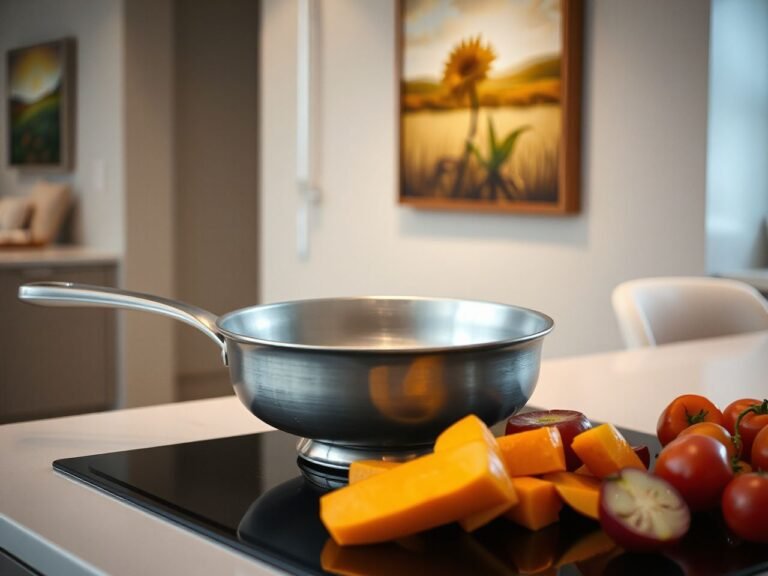
Stainless steel creates fond — the browned bits of protein and carbohydrate that stick to the pan and deglaze into sauce. That sticking is a feature, not a defect. A stainless pan is the right tool for searing, browning, and building pan sauces. The one-pot marry me chicken pasta recipe demonstrates exactly why: the fond left behind by browning the chicken becomes the flavor base for the sauce.
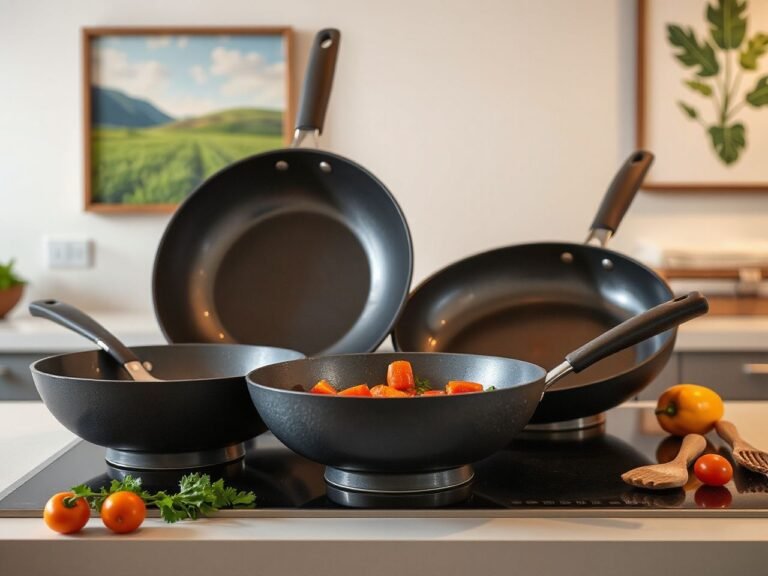
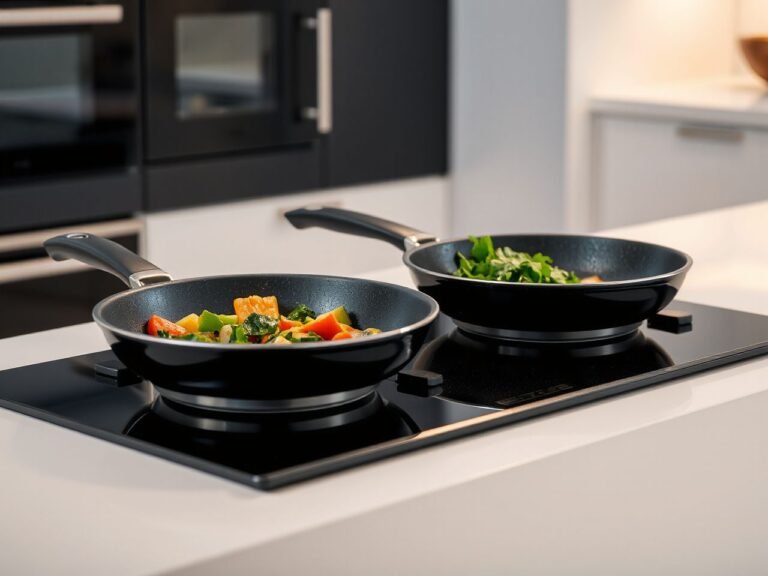
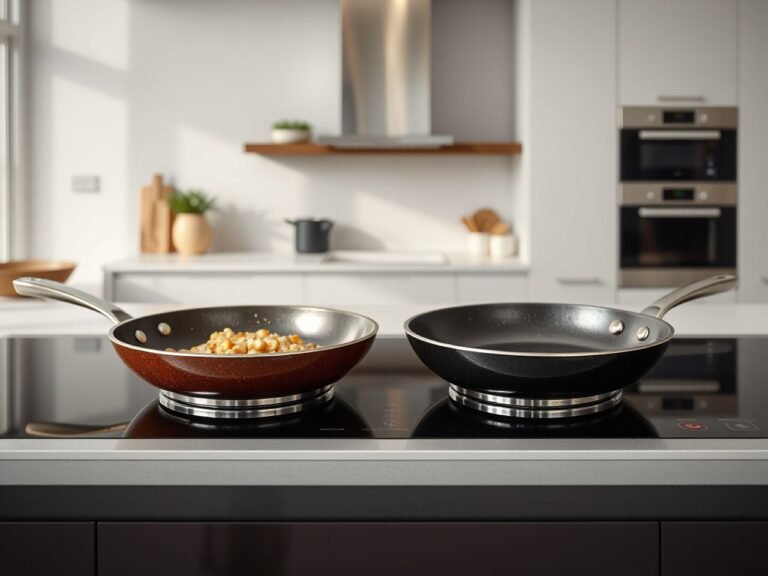
Nonstick, whether PTFE-based or ceramic, exists to prevent sticking. It is the right tool for eggs, delicate fish, and anything that will fall apart under high-heat searing. Nonstick pans trade away fond development and most browning in exchange for easy release.
The failure mode differs too. Stainless steel pans last for decades with minimal care. Nonstick coated pans wear out by design — the coating degrades with heat exposure and utensil contact no matter how carefully you treat it. A nonstick pan is a consumable. A stainless pan is closer to permanent.
Aluminum Reactivity: Why Bare Aluminum Is Rare
Bare aluminum is reactive. Aluminum pans react with acidic foods like tomatoes, vinegar, lemon juice, or wine, leaching metal into the food and leaving a metallic off-taste. The pan can also discolor permanently from the reaction.
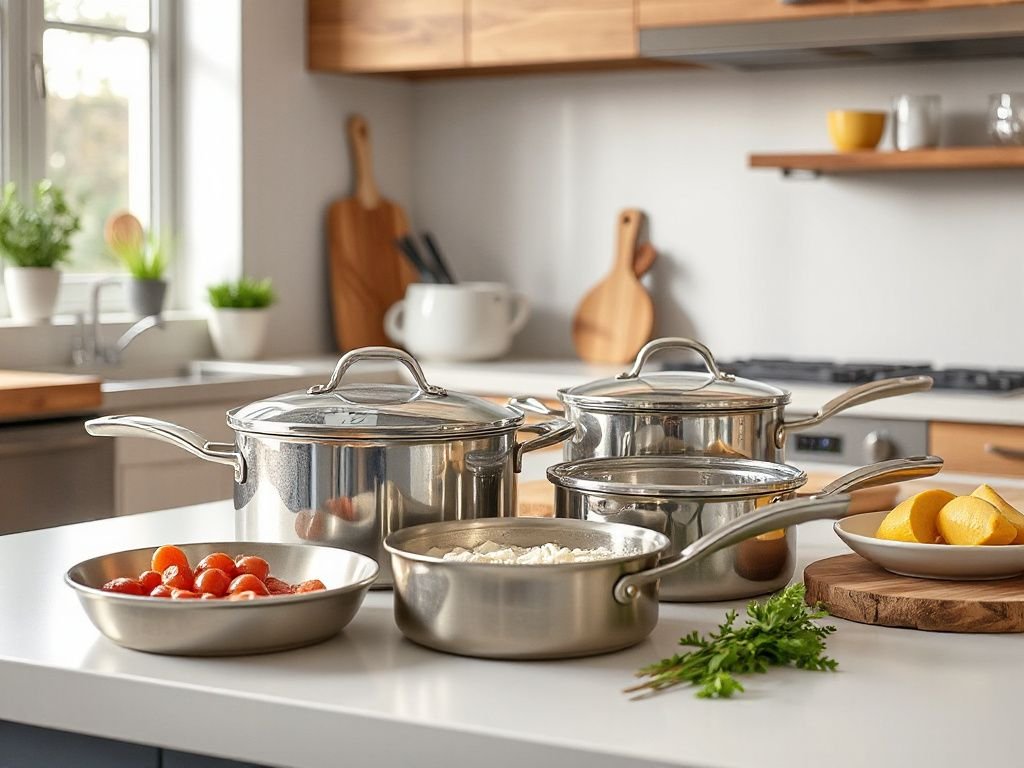
This is why aluminum appears in cookware either in anodized form — where an electrochemical process hardens and seals the surface — or buried inside a clad construction where stainless steel protects it from food contact. The aluminum core inside a clad pan never touches your food. The thermal benefit comes without the reactivity.
If you spot a cookware set advertising “aluminum construction” without specifying cladding, anodizing, or a non-reactive coating, the pieces will react with acidic dishes. That matters for anyone who cooks tomato-based sauces or deglazes with wine regularly.
Intermediate Level: Reading a Cookware Set Before You Buy
Induction Compatibility: How to Check
Induction cooktops do not heat the pan directly. They generate a magnetic field that induces electrical current in the pan base, which in turn generates heat through electrical resistance. For that to work, the pan base must be ferromagnetic — meaning a magnet must stick to it.
This creates a common confusion: not all stainless steel is magnetic. Many stainless grades used in cookware are austenitic, meaning they have a crystal structure that does not attract a magnet. Manufacturers add induction-compatible bases by bonding a magnetic layer of different steel to the bottom.
The check is simple. Carry a small refrigerator magnet when you shop. If the magnet clings firmly to the base of every pan in a set, the set is induction-ready. If it slides off, the set will not work on an induction cooktop, period. Many manufacturers also mark induction-compatible pans with a coil symbol on the packaging or base, and standardized testing for induction performance falls under ASTM material and performance test standards.
Oven-Safe Ratings: Pans and Lids Are Different
A cookware set is not uniformly oven-safe. The pan body may tolerate 500°F while the lid maxes out at 350°F — or is not oven-safe at all. Many lids ship with plastic or phenolic handles that will melt in a hot oven, and glass lids often carry lower temperature limits than the pans they sit on.
The temperature rating is always specific to each component. A set that claims “oven-safe to 500°F” usually means the metal pan bodies only. Lids frequently top out at 350°F to 400°F, because that is the ceiling set by the tempered glass or the handle material. Any pan you plan to move from stovetop to oven — for a frittata, a braised short rib, or a chicken dumpling soup that finishes under the broiler — needs a lid or handle rating you have actually checked. Read the specification for each piece individually. Do not assume.
How Many Pieces You Actually Need
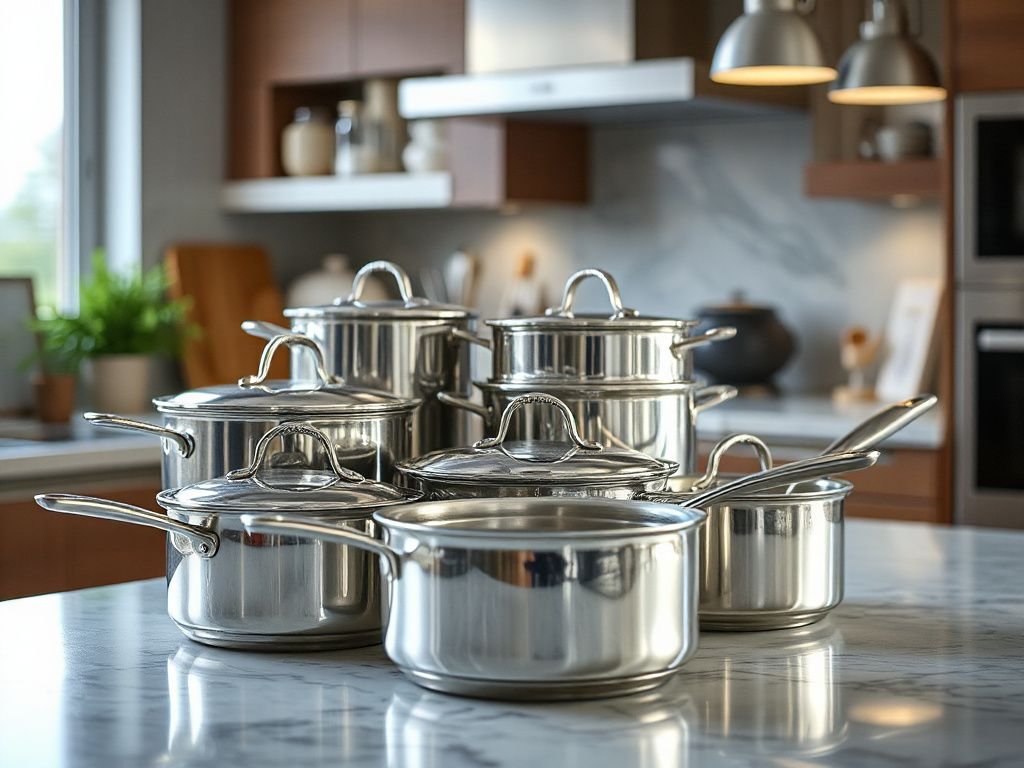
Cookware set manufacturers inflate piece counts in ways that flatter the box. A “12-piece set” often counts each lid as a separate piece, which means the actual cookware count might be as low as six or seven.
What a home cook needs comes down to a short list:
- One 10-inch or 12-inch stainless skillet — the workhorse for searing, sautéing, and pan sauces.
- One 8-inch or 10-inch nonstick skillet — eggs, fish, delicate breakfast work.
- One 3-quart to 4-quart saucepan — rice, small-batch soups like chicken tortilla soup, reheating, and sauces.
- One 5-quart to 6-quart Dutch oven or stockpot — braising, boiling pasta, batch cooking.
- One cast iron skillet — searing, oven baking, cornbread, and any recipe that rewards thermal mass.
That is five pieces. Anything beyond that list is specific to how you cook. A saucier is lovely but redundant if your saucepan has rounded corners. A second saucepan matters only if you regularly cook multiple sauce-based dishes at once.
Counting lids as pieces pads the number without adding a matching pan. Read the actual pan inventory, not the marketing count.
Aluminum Core Thickness and What It Does
The thickness of the aluminum or copper core in clad cookware directly controls two things: heat distribution and heat retention. Thin cores — 2mm or less — respond quickly but distribute unevenly and warp under high heat. Thicker cores — 3mm and above — spread heat more evenly and resist warping, though they respond slower to burner adjustments.
All-Clad’s D3 line uses a 2.6mm aluminum core. Its D5 line layers two additional sheets of stainless steel around the same core thickness. The difference is not marketing-only: the extra steel layers in D5 add structural stiffness and a slightly slower, steadier heat response than D3. But the core thickness — 2.6mm in both — determines the fundamental heat distribution.
A 3mm aluminum core distributes heat measurably more evenly than a 1.5mm core at identical burner settings. The thinner core is not “worse” across the board — it reacts to temperature changes faster — but it will warp sooner and scorch more easily when the flame goes too high.
When a cookware set listing does not disclose core thickness, that omission matters. Core thickness is the single most useful performance number a pan can state.
Why Nonstick Coatings Fail and How to Slow It
Nonstick coatings are consumable. PTFE — polytetrafluoroethylene, the material behind the Teflon brand name — degrades under two conditions: high heat and physical abrasion.
The high-heat failure mode is dangerous, not merely inconvenient. PTFE begins to decompose around 500°F (260°C), releasing fumes that can cause polymer fume fever in humans and are rapidly fatal to birds. Preheating an empty nonstick pan past that point is the most common way to hit these temperatures without realizing it. An empty pan on a high flame can exceed 500°F in under two minutes on a gas burner. The FDA food contact material regulations cover nonstick coatings, but the regulation does not make a pan safe above its decomposition temperature.
The abrasion failure mode is slower. Metal utensils, stacking pans without a protective layer, and dishwasher detergent all wear away the coating surface over time. Once the coating flakes or peels, the pan should be replaced — cooking on an exposed base layer introduces an unknown surface, and flaked coating particles have no place in food.
Ceramic nonstick is different: it does not release toxic fumes at high heat the way PTFE does, but its nonstick performance fades faster, often within one to two years of regular use. PTFE pans generally hold their release properties longer but impose a hard temperature ceiling.
Advanced Level: Long-Term Ownership and Cost
What You Pay for With All-Clad or Le Creuset
The question “is All-Clad worth it” is really a question about what any premium brand buys you. In the case of All-Clad, the answer is straightforward: clad construction, consistent quality control, and a lifetime warranty that the company actually honors. All-Clad cookware is manufactured in the United States, and the brand’s warranty covers defects for the lifetime of the original owner.
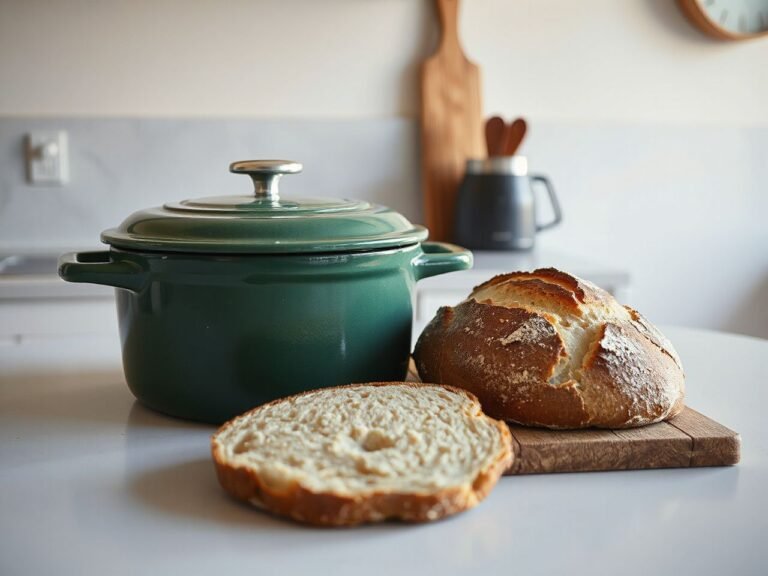
Le Creuset occupies a different niche. The brand’s enameled cast iron Dutch ovens are made in France, and the enamel is a proprietary formula that resists chipping better than many less expensive enameled pieces. The purchase is partly functional — a well-made enameled Dutch oven will braise, bake, and simmer for decades — and partly aesthetic, since Le Creuset’s color range and finish are not duplicated by budget competitors.
These premiums are not always necessary. A mid-priced fully clad set from a lesser-known manufacturer performs close to All-Clad’s fundamental function. The differences — warranty service, finishing consistency, resale value, and edge smoothness — are real but modest. You are paying for the last 10 percent of quality and the confidence that the pan meets its specification every time.
That last 10 percent matters more to a baker’s temperament than a weekend cook’s. Uneven rivets, slightly warped bases, and variable lid fit are the defects that show up in cheaper lines and drive a recipe to failure without any fault of the recipe itself.
Cast Iron Seasoning and Care
Cast iron is the only common cookware material that improves with use — provided you treat it correctly. Seasoning is polymerized oil bonded to the iron surface, and it functions as both a natural nonstick layer and a corrosion barrier.
Seasoning happens when a thin layer of oil is heated past its smoke point on the iron surface, causing the oil molecules to cross-link into a hard, plastic-like coating. Each cooking session with oil adds a microscopic layer, which is why a well-used cast iron skillet has a glassy, dark finish that you cannot buy new.
Care rules are specific:
- No soap — soap strips seasoning. Use hot water and a stiff brush or chain mail scrubber.
- No dishwasher — the detergent and prolonged moisture will remove seasoning and rust the iron.
- No soaking — cast iron left in water rusts within hours.
- Dry immediately — heat the pan on the stove after washing to drive off residual water, then apply a thin coat of oil while warm.
A rusted cast iron pan is recoverable. Scrub the rust off with steel wool, re-season from bare iron with a thin oil coat baked at 450°F to 500°F for an hour, and repeat until the surface darkens and feels smooth. The USDA food handling and storage guidance includes detail on maintaining cookware surfaces that contact food directly.
Cost of Ownership Over Ten Years
The price tag on the box is the wrong way to evaluate a cookware set. A lifetime cost calculation changes the ranking of nearly every option.
A fully clad stainless set that costs $400 to $600 today will still be cooking in 20 years if you treat it reasonably. Stainless does not wear out. Rivets may loosen, but the metal body survives household use essentially indefinitely. The ten-year cost is the purchase price, full stop.
A $100 nonstick set is not a bargain when you replace it every 18 months. Over ten years, that is roughly $600 to $700 in replacement pans — more than the stainless set cost up front. The nonstick set also degrades continuously, so you are cooking on a worse pan in month 15 than you were in month one.
Cast iron and carbon steel sit between these poles. The initial cost is modest — often $20 to $50 per skillet — and with proper seasoning maintenance, the pan is a one-time purchase. The “cost” comes in the form of care time: hand-washing, immediate drying, re-oiling after use. Some cooks value that ritual; others find it a burden.
Enameled cast iron is more expensive up front and replaces faster than bare cast iron if the enamel chips. Once enamel cracks, the underlying iron is exposed and the pan requires replacement — a chipped enameled Dutch oven is no longer safe for food contact because the iron can rust and flake into food.
Signs Your Cookware Should Be Replaced
Stainless steel and cast iron fail rarely, but specific signs mean the pan is done:
- A warped base — if the pan rocks on a flat surface, it will heat unevenly on every cooktop type. A warped base cannot be repaired.
- Loose rivets or handles — a handle that wobbles is not just annoying; it is a burn risk when the handle separates mid-pour.
- Pitting or deep scratches on stainless — surface pitting from years of salt exposure in boiling water is cosmetic, but deep scratches that expose a different metal layer indicate the cladding has been breached.
For nonstick pans, the replacement signals are different and more frequent:
- Visible flaking or peeling of the coating — replace immediately. Flakes of PTFE or ceramic coating in food are not acceptable, and the exposed base layer has unknown food-contact properties.
- Loss of release — a nonstick pan that requires oil to release eggs is no longer nonstick. The coating has worn through, even if the surface still looks intact.
- Discoloration that does not clean off — dark staining that persists after cleaning usually means the coating has degraded and begun to absorb oils and food residues.
An enameled cast iron piece with a chip on the cooking surface or the rim must be retired. Chips on the exterior are cosmetic; chips on the interior are a food-safety problem because the iron underneath will corrode.
Common Mistakes This Cookware Set Buying Guide Warns Against
The most expensive cookware mistake is not choosing the wrong brand. It is choosing cookware that does not match your cooktop, your cooking style, or your willingness to maintain it.
Mistake: buying a set without testing induction compatibility. An induction cooktop will not heat a non-magnetic pan at all — not poorly, not slowly, not at all. If the set is not ferromagnetic, it is a set of paperweights on that cooktop. Bring a magnet. Test every piece.
Mistake: assuming every piece in a set has the same oven limit. The frying pan may handle 500°F while the lid melts at 350°F. Read the rating for each component separately — pan body, lid, handle material, and any coating.
Mistake: buying a large nonstick set. Nonstick pans have a limited lifespan by design. You will not replace a lid or a saucepan handle when the coating fails; you will replace the pan. Spending heavily on nonstick pieces that will wear out anyway is a poor long-term allocation. Buy one or two nonstick skillets for eggs and fish, and spend the rest on stainless or cast iron.
Mistake: treating a set’s piece count as a value metric. Twelve-piece sets that include six lids and a steamer insert are not delivering twelve pieces of cookware. They are delivering six pans, five lids, and a basket you will use twice. Count the actual cooking vessels.
Mistake: preheating nonstick pans on high heat. A nonstick pan on a high flame with no food in it climbs past 500°F quickly — the point where PTFE decomposition begins. Medium heat is the ceiling for nonstick work, and the pan should always have oil or food in it before the burner climbs.
Frequently Asked Questions
What is the first thing to look at in any cookware set buying guide?
Construction. Before you evaluate brands, piece counts, or price, determine whether the set is fully clad or disc-bottom. Fully clad pans run the conductive core up through the side walls, which spreads heat evenly across the entire cooking surface. Disc-bottom pans heat the base only. That single difference predicts more about real-world performance than any other spec on the box.
How do I know if a cookware set is compatible with my induction cooktop?
Test every pan with a magnet. If the magnet sticks firmly to the base, the pan is induction-compatible. If it slides or falls, the pan will not work on an induction burner. Some manufacturers also stamp a coil symbol on the base or mark the box with an induction icon, but the magnet test is definitive because it verifies the physical property — ferromagnetism — that induction actually requires.
What is the difference between stainless steel and nonstick pans in practical terms?
Stainless steel allows food to stick deliberately, creating fond — the browned bits that deglaze into pan sauces. Nonstick pans prevent sticking entirely but cannot create fond. Stainless pans tolerate high heat, metal utensils, and deglazing with wine or vinegar. Nonstick pans have a hard temperature ceiling of 500°F and wear out after several years of regular use. They solve different problems.
Why do my nonstick pans lose their coating so quickly, and how do I prevent it?
Two causes dominate: high heat and abrasion. Preheating an empty nonstick pan past 500°F decomposes the PTFE coating, releasing fumes and permanently damaging the surface. Metal utensils, stacking pans without protection, and dishwasher detergent all abrade the coating mechanically. Use medium heat only, always add oil before heating, use silicone or wood utensils, stack with cloth or paper between pans, and wash by hand.
Is it worth spending more on a brand like All-Clad or Le Creuset?
For stainless steel, All-Clad’s premium buys you clad construction, consistent quality control, and a lifetime warranty. Mid-priced fully clad sets perform close to the same function. What you are paying for with All-Clad is the elimination of small defects — uneven rims, loose rivets, slight warping — and a warranty that will actually replace a defective pan. For Le Creuset, the premium buys French-manufactured enameled cast iron with a formula that resists chipping longer than budget enameled pieces. Both are defensible purchases if you cook enough to notice the last 10 percent of quality.