Nonstick pans have gone through a quiet revolution over the past decade. PFOA disappeared from manufacturing, ceramic coatings arrived as an alternative, and home cooks started asking harder questions about what happens when a pan’s surface begins to break down. The question of whether scratched nonstick pans are safe now sits at the center of that conversation. A scratched nonstick pan is not automatically unsafe, but the reality depends on how deep the damage goes and how hot the pan gets. The key distinction is that a scratched nonstick pan is not automatically unsafe because the PTFE coating is inert at normal cooking temperatures; the real danger arises when scratches cause hotspots that allow the pan to overheat, releasing fumes. A scratch also exposes the reactive aluminum base, which is a separate health consideration for acidic foods. Beginners often focus on flaking particles, but the actual safety ceiling is about heat management and exposed metal.
Key Takeaways
- A scratched nonstick pan is not immediately dangerous, but scratches disrupt even heat distribution and can create hot spots that lead to overheating.
- The coating itself (PTFE) is inert below 500°F; the real risk is fumes from overheating, not from ingesting small flakes.
- Scratches expose the aluminum base, which can react with acidic foods, so a heavily scratched pan should not be used for tomato sauce or vinegar-based dishes.
The Anatomy of a Scratch: What Actually Happens Under the Surface
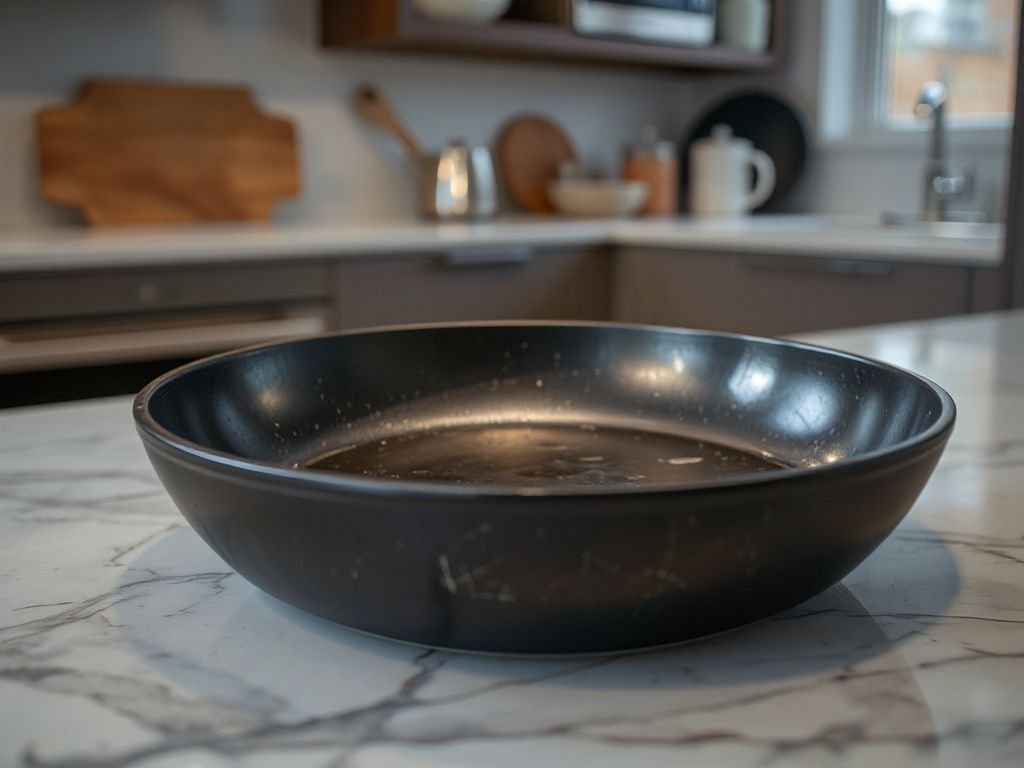
Nonstick coatings are thin. A typical PTFE layer runs between 20 and 40 microns thick, roughly half the diameter of a human hair. When you drag a metal spatula across it, you are not just leaving a cosmetic mark; you are carving through that polymer film and exposing whatever sits underneath. Most nonstick pans use an aluminum core because aluminum conducts heat quickly. The scratch breaks the seal between your food and that reactive metal.
That exposed aluminum is the first concrete health concern. Aluminum reacts with acidic ingredients—tomatoes, citrus, vinegar, wine—and trace amounts can leach into your food. The U.S. Food and Drug Administration regulates nonstick coatings as food contact substances, and FDA guidance on PTFE notes that the polymer itself is inert at normal cooking temperatures. The aluminum underneath is a separate issue. Cooking a tomato sauce in a deeply scratched pan is like cooking in an unlined aluminum pot, which most home cooks avoid for exactly that reason.
PFOA and PTFE are often confused, and that confusion drives a lot of the fear. PFOA, or perfluorooctanoic acid, was a processing aid used to manufacture PTFE. It has been phased out of nonstick production since 2015 under an EPA stewardship program. Modern PFOA-free pans still use PTFE, the actual nonstick polymer, which is not the same chemical. PTFE belongs to the broader PFAS family, but its stability at cooking temperatures is well documented. The danger from scratches is not the PTFE itself flaking into food; PTFE flakes pass through the digestive system without being absorbed.
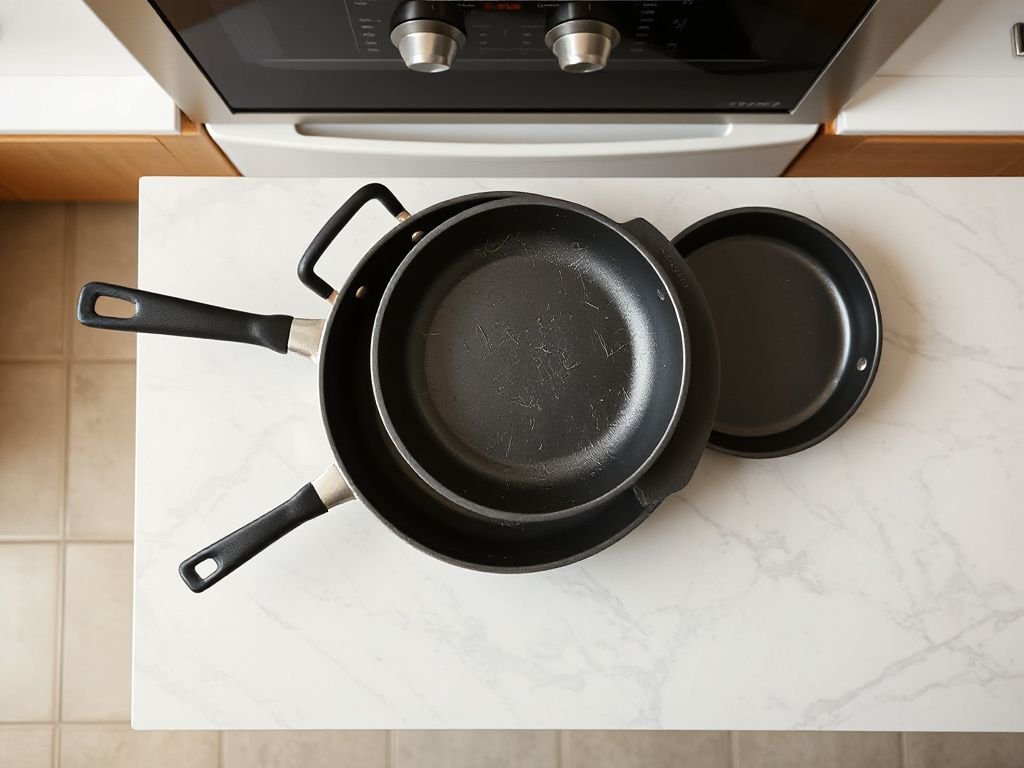
The real story of a scratch is mechanical, not chemical. A smooth nonstick surface spreads heat evenly because oil and food contact the coating uniformly. Once that surface gets scored, the pan develops micro-variations in thickness. Thinner coating areas heat faster, thicker areas lag. A scratch can become a heat amplifier. That uneven heating is what moves a scratched pan from a performance nuisance into a genuine safety question.
Heat Mapping a Scratched Pan: Where the Real Danger Lives
Heat distribution is a key factor in judging a pan’s performance. Nonstick coatings contribute not only to release but also to the thermal system. A scratch alters that system in ways that are invisible without measurement. The most serious risk from a scratched nonstick pan relates to what happens when a pan with uneven heat is pushed past its safe temperature zone.
PTFE begins to degrade at temperatures above 500°F. The coating breaks down and releases fumes that can cause polymer fume fever, a temporary flu-like illness in humans and a rapid killer for pet birds. The Consumer Product Safety Commission has documented this hazard for decades, and CPSC guidance on nonstick cookware warns against preheating an empty pan or leaving it unattended on high heat. A scratched pan makes that warning harder to follow because the hot spots can hit 500°F even when the stove dial is set to medium.
Here is the sequence that catches people off guard. You pour oil into a scratched pan and turn the burner to medium-high. The oil settles into the scratches and the coating is slightly thinner there, so those strips heat faster than the intact coating around them. The burner keeps pumping heat because the pan’s average temperature reads normal. But the scratched strips are already at 520°F, while the rest of the pan sits at 400°F. You cannot see that difference, and no built-in thermometer will warn you. The pan releases fumes before you ever notice a problem.
That is why the overheating risk matters more than the scratch itself. A pan with a scratch can still be used safely at low and medium temperatures for liquids and gentle cooking. The danger appears only when you ask a damaged pan to do high-heat work, like searing steak or stir-frying. A typical one-pot pasta dish, like this one pot marry me chicken pasta recipe, stays below 350°F for most of its cooking time, so a lightly scratched pan handles it fine. But the same pan used to sear chicken thighs at high heat becomes a fume risk.
The distinction between a shallow scratch and a deep gouge also changes the heat profile. A shallow scratch is a thin line; it creates a minor hot spot but does not expose much aluminum. A deep gouge runs through the coating into the metal and widens the exposed area. That wider exposed aluminum acts as a thermal bypass, pulling heat away from the surrounding coating and making the hot spot larger and more unpredictable. The deeper the scratch, the more the pan behaves like a mixed material, and mixed materials never heat evenly.
Ceramic vs PTFE: Does Scratch Safety Change?
Ceramic nonstick coatings have shifted the conversation, and they deserve a direct answer. A ceramic coating is silica-based, not PTFE-based, so it does not belong to the PFAS family and does not release the same fumes when overheated. Many home cooks read that and assume a scratched ceramic pan is automatically safer. The truth is more complicated.
Ceramic coatings scratch more easily than PTFE. They are harder but more brittle, and the smooth release layer is often thinner. A plastic spatula worn at the edge can score a ceramic surface within a few months of daily use. Once ceramic scratches, it exposes the same aluminum base underneath. The aluminum leaching risk for acidic foods is identical whether the pan was coated with PTFE or ceramic. A scratched ceramic pan does not solve the reactive metal problem.
What ceramic does change is the overheating risk. Silica coatings can tolerate higher temperatures than PTFE without releasing fumes, but they still degrade over time. The heat distribution argument stays the same: any scratch disrupts even heating, and a ceramic pan with deep scratches will develop hot spots just like a PTFE pan. The difference is that a ceramic pan’s hot spots do not produce toxic fumes at the same temperature threshold. That is a meaningful safety advantage, but it does not make a scratched ceramic pan safe for all uses. If you have a ceramic pan with deep scratches and you cook acidic tomato sauce in it, you are still cooking in exposed aluminum.
The bottom line about ceramic: it is not inherently safer when damaged. It may be safer when overheated, but the mechanical problems of scratches—aluminum exposure, uneven heating, reduced nonstick performance—apply to both types. A scratched nonstick pan, whether PTFE or ceramic, should be treated the same way until you assess the depth of the damage.
What to Do With a Scratched Pan: A Practical Decision Tree
You stand in front of your pan drawer holding a scratched skillet. The first question is not whether the pan is toxic; it is how deep the scratches go and how you cook. Use this decision tree to make a clear call.
Step 1: Inspect the scratch depth and coverage
Run a fingernail across the scratch. If it catches, the scratch is deep enough to matter. Check how much of the cooking surface is affected. A single shallow scratch covering less than 5% of the surface is a minor issue. A network of deep gouges covering a quarter or more of the pan is a retirement candidate. The more exposed aluminum, the more the pan behaves like a bare metal skillet with a nonstick island in the middle.
Step 2: Identify what you cook in the pan
Acidic foods are the first to go. Tomato sauces, lemon-butter reductions, vinegar deglazes—all of these leach aluminum from exposed spots. If you only use the scratched pan for eggs, pancakes, or gentle sautés, the aluminum exposure risk is minimal because those foods are neutral in pH. But if your go-to dishes include a chicken tortilla soup with tomatoes, that scratched pan is actively working against you.
Step 3: Check the pan’s heat performance
Place the empty pan on medium heat for 90 seconds. If you see visible hot spots—areas where oil shimmers and smokes before the rest of the pan even warms—the scratches are disrupting heat flow. A pan that cannot hold a stable temperature below 450°F is no longer safe for any nonstick application. You can still use it for water-based cooking, like boiling pasta or poaching, because water caps the temperature at 212°F. A lightly scratched pan works fine for a rotisserie chicken mushroom soup simmer, where nothing exceeds 250°F.
Step 4: Decide to keep, repurpose, or retire
If the scratches are shallow and minor, keep the pan for low-heat, non-acidic cooking. If the scratches are deep but localized, repurpose the pan for boiling or simmering only. If the pan has deep scratches across more than a quarter of the surface, or if it has warped from uneven heating, retire it. Warping is a sign that the pan has been overheated repeatedly, and a warped nonstick pan will never sit flat or heat evenly again. At that point, the pan is done.
Prevention and Maintenance: Keeping a Nonstick Pan Intact
Nonstick pans are consumable tools. No amount of care will make one last forever, but the right habits can stretch a pan’s useful life from two years to five or more. The prevention rules are simple, and they all come back to protecting the coating and managing heat.
Use non-metal utensils only. Wood, silicone, and nylon are the standard choices. Even a plastic spatula can scratch if it has a rough edge, so check your utensils for burrs before using them on nonstick. Metal tongs, forks, and whisks are the fastest way to destroy a coating. This rule is non-negotiable.
Never preheat an empty nonstick pan on high. An empty pan reaches 500°F in under two minutes on a high-output burner. Always add oil or food before the pan gets hot, or keep the heat at medium or below. The oil itself acts as a temperature buffer, but only if the pan is not already overheated. This is the single most effective way to prevent both scratches and fume release.
Store pans without stacking them directly. A heavy pan sitting on top of a nonstick surface will eventually wear through the coating at the contact points. Use pan protectors, paper towels, or hang the pans. Also avoid using cooking sprays with nonstick pans; the lecithin in sprays bakes onto the coating and creates a sticky residue that leads to more scrubbing, which creates more scratches.
Clean with a soft sponge and warm soapy water. Do not use abrasive scrubbers, steel wool, or harsh cleaners. If food sticks, soak the pan in warm water for 15 minutes instead of scrubbing harder. Heat maps of a well-maintained nonstick pan show even distribution across the entire surface; a scratched pan shows a series of temperature spikes where the coating is compromised. Those spikes are the early warning sign that a pan is nearing the end of its life.
Frequently Asked Questions
Are scratched nonstick pans safe to use for daily cooking?
A scratched nonstick pan is safe for low-heat cooking if the scratches are shallow and cover a small area. Reserve it for simmering, boiling, and gentle sautés with neutral foods. Avoid high-heat searing and acidic sauces, which can cause aluminum leaching and uneven heating that leads to fume risk. If the scratches are deep or widespread, retire the pan.
Do scratched nonstick pans release toxins into food?
No, the PTFE coating itself is inert and passes through the body without being absorbed. Small flakes from a scratched pan are not toxic. The real toxin risk comes from overheating the pan above 500°F, which releases fumes. Scratches increase overheating risk by creating hot spots, but the flakes themselves are not a chemical hazard.
Is it safe to use a scratched nonstick pan for acidic foods like tomato sauce?
No. Acidic foods react with the aluminum base exposed by scratches, and trace amounts of aluminum can leach into your food. The FDA regulates food contact materials, and cooking acidic dishes in exposed aluminum is not recommended. Use a stainless steel or enameled cast iron pan for tomato sauces, citrus reductions, or vinegar-based dishes.
How do I know if a scratched nonstick pan is too damaged to use?
Run your fingernail across the scratch; if it catches, the damage is deep. Check for warping, multiple deep gouges, or a scratch network covering more than a quarter of the surface. Heat the empty pan on medium for 90 seconds and look for uneven oil shimmer or smoking. Any of these signs means the pan should be repurposed for water-based cooking only, or retired entirely.
Are ceramic nonstick pans safer than Teflon when scratched?
Ceramic pans do not contain PTFE and do not release the same toxic fumes at high temperatures, which is a real safety advantage. But ceramic scratches more easily than PTFE, and a scratched ceramic pan exposes the same aluminum base. For acidic foods and deep scratches, a ceramic pan is not inherently safer. The mechanical risks of aluminum exposure and uneven heating apply equally.