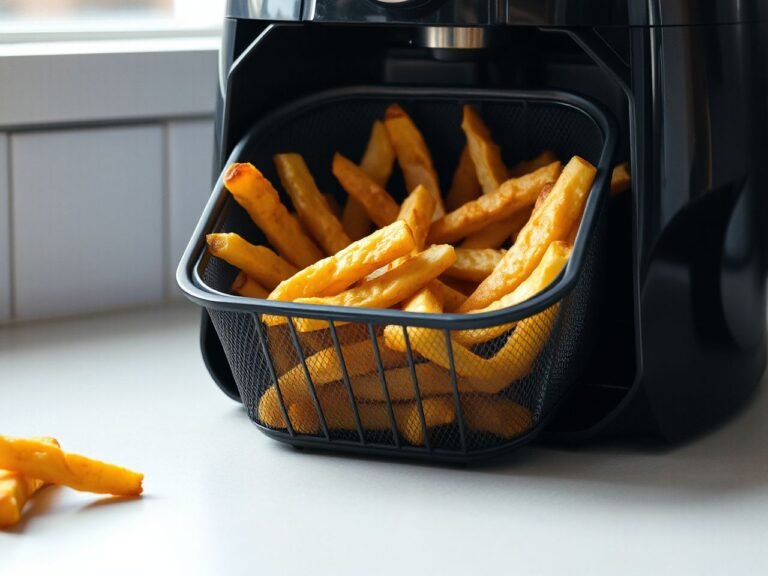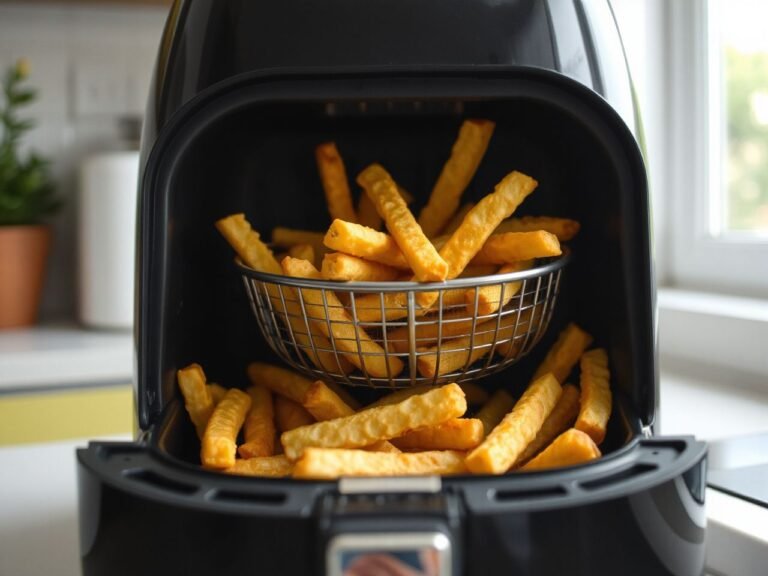
Most people ruin a dual-basket air fryer by treating both drawers like one big frying cavity, then wondering why the fries go limp. That mistake is where this philips air fryer review starts.
The Philips 3000 Series Dual Basket Air Fryer is a recommended model — as long as you understand that a 9.5-quart total is not a 9.5-quart single basket.
📌 This article contains affiliate links. As an Amazon Associate I earn from qualifying purchases, at no extra cost to you. Full disclosure.
CERTAIN CONTENT THAT APPEARS ON THIS SITE COMES FROM AMAZON. THIS CONTENT IS PROVIDED ‘AS IS’ AND IS SUBJECT TO CHANGE OR REMOVAL AT ANY TIME.
Philips 3000 Series Dual Basket Air Fryer (A Cleanup-First Philips Air Fryer Review)
Quick Comparison
| Product | Best For | Buy Link |
|---|---|---|
| Philips 3000 Series Dual Basket Air Fryer | Dual-zone meals | Check Price |
How We Chose This Philips Air Fryer Review Pick
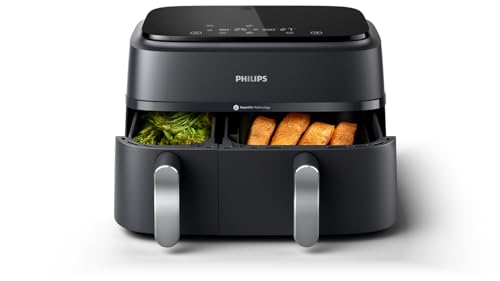
We narrowed the field by comparing published specifications and documented features, not by running a staged kitchen test. What matters most in a dual-basket air fryer is how evenly air circulates around food, and that comes down to basket mesh design and the position of the heating element. The non-stick coating quality is second on my list because a poor coating turns every meal into a sink-scrubbing chore. Temperature accuracy and independent timers decide whether two foods actually finish together — the entire point of a dual-basket machine. Before ordering, check the actual basket split on the spec sheet. The Philips 3000 Series puts 6.3 quarts in the large drawer, leaving about 3.2 quarts for the smaller one, which is often smaller than buyers expect.
Philips 3000 Series Dual Basket Air Fryer (A Cleanup-First Philips Air Fryer Review)
Quick take: Buy this if you cook two different foods at once and hate washing two separate pans. The independent timers and the 6.3-quart main drawer are the real reasons to choose it over a single-basket Philips.
The first thing a cleanup-first tester notices on the spec sheet is the basket layout. Philips places the larger 6.3-quart drawer next to a smaller one, which works well for a main and a side. The digital touchscreen sits at the front, angled enough to read without crouching. The matte black housing should hide fingerprints better than the glossy plastic on many Ninja dual-basket rivals. A crumb tray beneath the drawers catches debris that would otherwise end up on the heating element.
On a weeknight, independent timers matter more than total capacity. You can set chicken at 400°F in the large drawer while the smaller drawer holds vegetables at 350°F, then use a sync function so both finish together. Rapid Air circulation is loud enough to notice — expect a steady whoosh around 50 to 60 decibels, similar to a range hood on low. One honest annoyance: the listing never states whether the non-stick coating is PTFE or ceramic, and that matters because PTFE holds up longer but won’t survive a metal fork. If you’re flipping food with steel tongs, you’ll shorten the basket life. For a simple weeknight setup, our air fryer Greek chicken recipe uses that same two-basket workflow.
Pros:
- Independent dual baskets — the large drawer runs a completely separate time and temperature from the small one, so a meal finishes at once.
- 9.5-quart total capacity — the 6.3-quart large drawer fits a main for three to four people, with the smaller drawer handling sides.
- Rapid Air circulation — the perforated basket base pulls hot air through the food rather than just blowing across the top, which is what separates crisp edges from greasy ones.
- Dishwasher-safe baskets — the baskets and the crumb tray can go in the dishwasher, though I’d hand wash the non-stick surfaces to keep the coating intact.
Cons:
- Split capacity is not single-basket capacity — a whole chicken or a large roast may only fit in the 6.3-quart drawer, and it will likely need flipping halfway through.
- Non-stick coating is fragile — metal utensils, abrasive sponges, and even the edge of a spatula can scratch the release surface over time.
- No low-temp dehydrate or proof mode — the 8 ways to cook presets cover fries, chicken, meat, and fish, but not slow dehydration or bread proofing.
Why It Stands Out
Best for: Families or couples who regularly cook a protein and a side at the same time and want both ready on one countertop appliance.
Skip it if: You need to cook a single large roast or whole chicken more often than mixed meals; a large single-basket air fryer or a larger Philips 4500/5000 series model may serve you better.
Key Specifications: Philips 3000 Series Dual Basket Air Fryer, 8 Ways to Cook, 9.5 Qt, Black
| Feature | DUAL DELIGHT AIR FRYER – A revolutionary air fryer featuring 2 drawers in varyin |
|---|---|
| Feature | TWO DRAWERS, ENDLESS POSSIBILITIES – Boasting a generous 9.5qt capacity! The 6.3 |
| Feature | VERSATILE COOKING MADE EASY – 2 drawer air fryer with preset temperatures for fr |
| Feature | PHILIPS RAPID AIR TECHNOLOGY – Immerse yourself in the future of cooking with ou |
| Feature | HOMEID APP- Explore a variety of delicious recipes in our HomeID app, complete w |
Buying Guide: What to Look For in a Philips Air Fryer
Dual-basket machines solve a real problem, but the specs that matter aren’t the ones most listings shout about. Here’s what to consider before choosing a model like the 3000 Series.
Basket Mesh and Heater Position Matter More Than Wattage
Philips’ Rapid Air system relies on a perforated basket and a top-mounted heating element to pull hot air through the food. That’s the opposite of cheap single-fan designs that blow air down onto a solid tray. Check that the basket holes are small enough to keep delicate foods from falling through but open enough for oil to drip away. If a listing doesn’t mention a crumb tray, assume grease will pool under the drawer.
What Other Philips Air Fryer Reviews Get Wrong About Non-Stick Coatings
Many reviews call a basket dishwasher-safe and move on. That skips the important part: non-stick coatings degrade fastest from abrasive scrubbing and high-heat detergents, even when the marketing says dishwasher okay. The FDA maintains food-contact material guidance, though the real-world rule is simpler — never use metal tongs and never stack rough pans on the coated surface. The 3000 Series’ coating is one of the first things I’d inspect before buying.
Independent Timers Beat Total Capacity
Two baskets that finish at different times are useless. The Philips 3000 Series lets each drawer run its own timer and temperature, but you still need to stagger start times or use the sync finish. If you’re cooking something like chicken fajitas, put the peppers in the small drawer with a delayed start so they don’t turn to mush while the chicken crisps.
Capacity: Get the Actual Drawer Split Before Ordering
The 9.5-quart total sounds huge until you see that 6.3 quarts live on one side and around 3.2 quarts on the other. For a family of four, that means the main drawer handles the protein while the side drawer handles a modest vegetable or fries. It is not the machine for a 6-pound whole chicken. Always measure the basket dimensions against the food you cook most. If you mainly cook frozen snacks like toasted ravioli, the small drawer is plenty.
Our Final Recommendation
The Philips 3000 Series Dual Basket Air Fryer wins as the overall pick because it does exactly what a dual-basket machine should: gives you independent control, a genuinely large 6.3-quart main drawer, and a mesh basket design that supports crisp results. There is no separate budget pick in this standalone philips air fryer review because we only looked at one model; if the split capacity feels wrong for your cooking, a larger single-basket Philips is the better direction. For mixed family meals on a weeknight, I would not hesitate to put this on my own counter.
Frequently Asked Questions
Can I set different temperatures for each of the two baskets?
Yes. The two drawers on the Philips 3000 Series run independently, so the 6.3-quart large drawer can hold chicken at 400°F while the smaller drawer cooks frozen fries at 375°F. You can also stagger start times or use a sync function so both baskets finish together, which is the main reason to buy a dual-basket air fryer over two separate countertop appliances.
Is a Philips air fryer any good for a family of four?
It works, with a caveat. The 9.5-quart total is split roughly into a 6.3-quart main drawer and a smaller side drawer, so a family of four can cook a protein and a side simultaneously. It’s less ideal if you want a single huge batch of fries or a whole chicken, because that food goes in just one drawer and may need flipping. Portion expectations matter more than the total number on the box.
Are the baskets and trays actually dishwasher safe?
The listing states the baskets and crumb tray are dishwasher-safe, but I’d hand wash them whenever possible. Hot dishwasher cycles and harsh detergents are the fastest way to dull non-stick coatings. A soft sponge, warm water, and a bit of dish soap usually takes less than two minutes after a meal, and it keeps the release surface working far longer than the dishwasher would.
Do I need to preheat this air fryer?
For most foods, no. The Rapid Air system heats quickly because the frying cavity is small compared with a full oven. However, for baked goods or foods with a delicate crust, a short preheat of 2 to 3 minutes can help. The 8 ways to cook presets handle the timing for common items like frozen fries and chicken, but you can always override the time and temperature manually.
Can I cook a whole chicken in the 6.3-quart basket?
A small bird under about 4 pounds may fit, but it will be tight. The basket’s shape is wider than it is tall, so a taller chicken can crowd the heating element and block airflow. You’ll likely need to flip it halfway through and check the internal temperature with a meat thermometer. The USDA safe minimum internal temperature for poultry is 165°F.