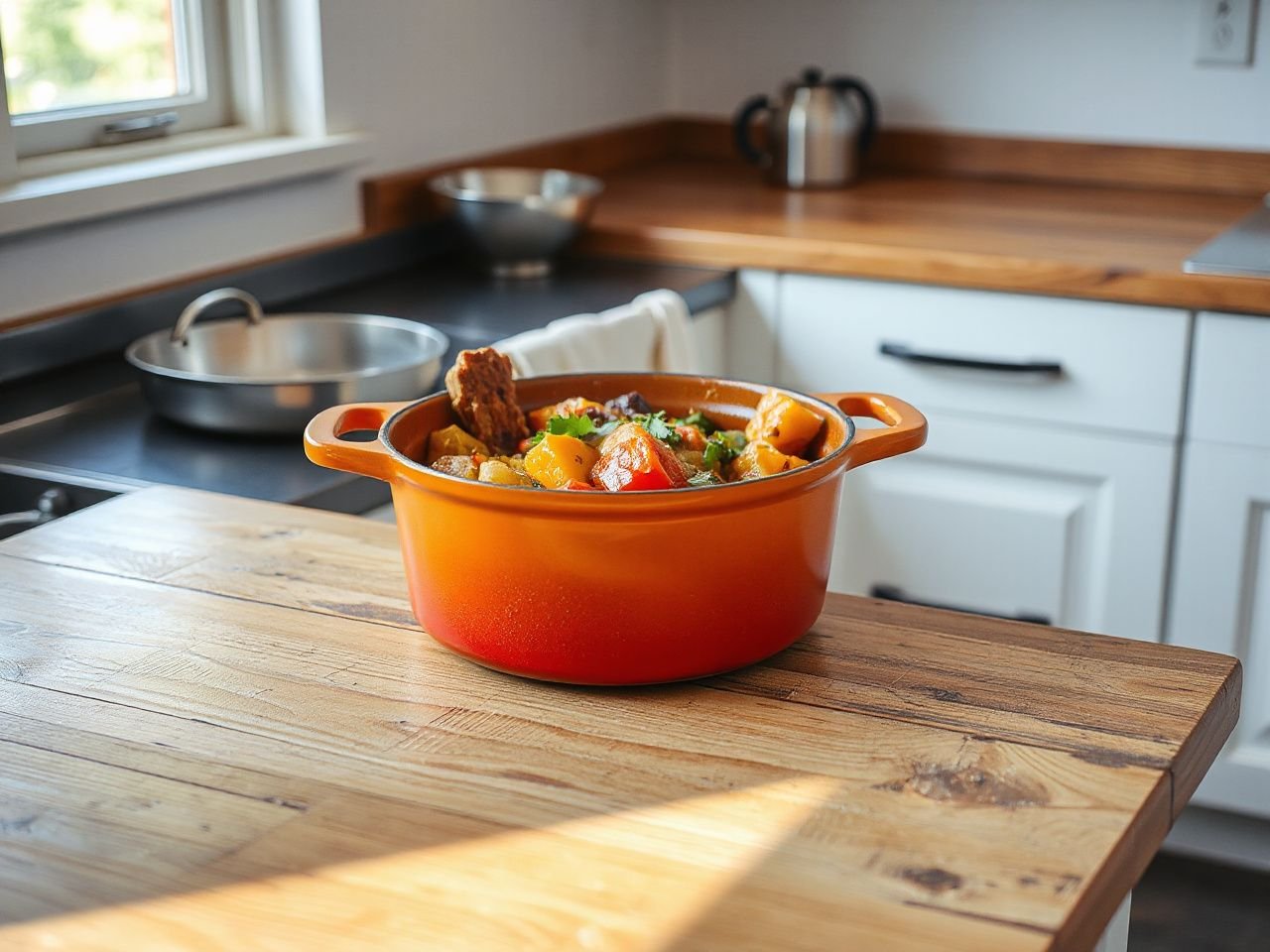
A reader reached out last month asking whether the Le Creuset Dutch oven she’d been eyeing for years was actually worth the price of a small used car. I told her to hold off until I’d dug into the spec sheets properly. She deserved a straight answer, not marketing fluff. That question became this le creuset dutch oven review — my honest breakdown of the one pot that dominates every wedding registry and holiday wish list.
If you only remember one thing from this review, make it this: the Le Creuset Enameled Cast Iron Round Dutch Oven earns our top recommendation for anyone who prioritizes even heat distribution and a lifetime of service over saving a few bucks upfront.
📌 This article contains affiliate links. As an Amazon Associate I earn from qualifying purchases, at no extra cost to you. Full disclosure.
CERTAIN CONTENT THAT APPEARS ON THIS SITE COMES FROM AMAZON. THIS CONTENT IS PROVIDED ‘AS IS’ AND IS SUBJECT TO CHANGE OR REMOVAL AT ANY TIME.

Comparison Table
| Product | Best For | Buy Link |
|---|---|---|
| Le Creuset Enameled Cast Iron Round Dutch Oven | Serious home cooks, braisers | Check Price |
How We Chose This Le Creuset Dutch Oven
My selection process for this review was built entirely on comparing published specifications, materials, and documented features against the failure points that actually decide whether an enameled cast iron pot earns its price. The enamel coating quality matters most — a thick, smooth, chip-resistant layer over a cast iron core that heats without hot spots separates a ten-year pot from a one-year disappointment. Lid fit comes next: a tight seal circulates steam and returns moisture to the food, which is why the Le Creuset’s tight-fitting lid design stood out to me. Weight is a real concern for the 7.25 quart size — over 12 pounds empty makes full-pot lifting a two-hand job. And the knob material is a critical failure point: the standard phenolic knob has a lower oven temperature limit than the optional stainless steel knob, so bread bakers need to check which knob their pot ships with before ordering. I compared these specs against Staub’s black enamel interior and Lodge’s raw cast iron offerings, and the Le Creuset’s light-colored interior enamel and no-seasoning requirement pushed it ahead for most home cooks.
Le Creuset Enameled Cast Iron Round Dutch Oven (The Benchmark)
Quick take: This is the pot I’d point my own mother toward if she wanted one vessel that could brown, braise, simmer, and bake bread for the rest of her life — provided she can handle the heft.
The first thing that jumps out from the spec sheet is the light-colored smooth interior enamel. That’s a deliberate choice by Le Creuset, and it matters more than most people realize. A pale interior lets you see browning and fond development clearly — something Staub’s black enamel hides until you’ve already crossed into burnt territory. The enamel itself is described as resisting dulling, staining, chipping, and cracking, which is the durability promise you’re paying for. That said, enamel is still glass, and glass chips if you drop a lid or crank the heat too high on an empty pot. The enameled cast iron core delivers superior heat distribution and retention, and it requires no seasoning — a real advantage over raw cast iron for anyone who doesn’t want to maintain a polymerized oil layer.
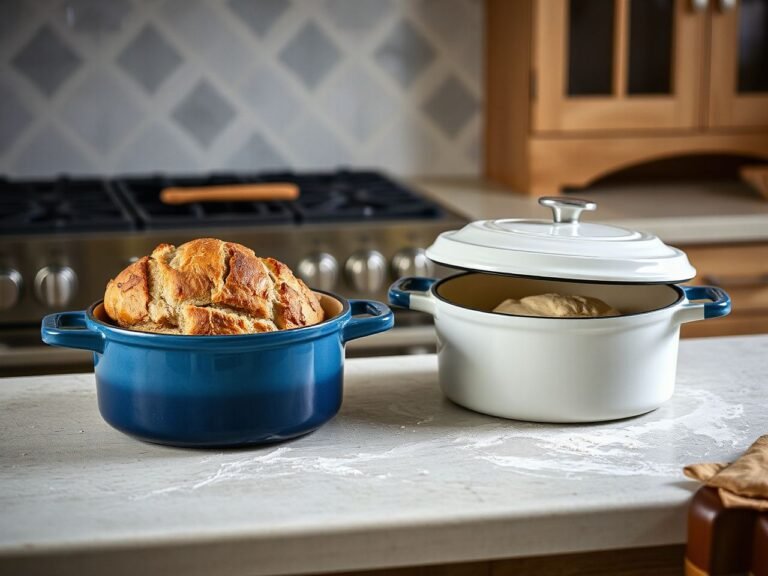
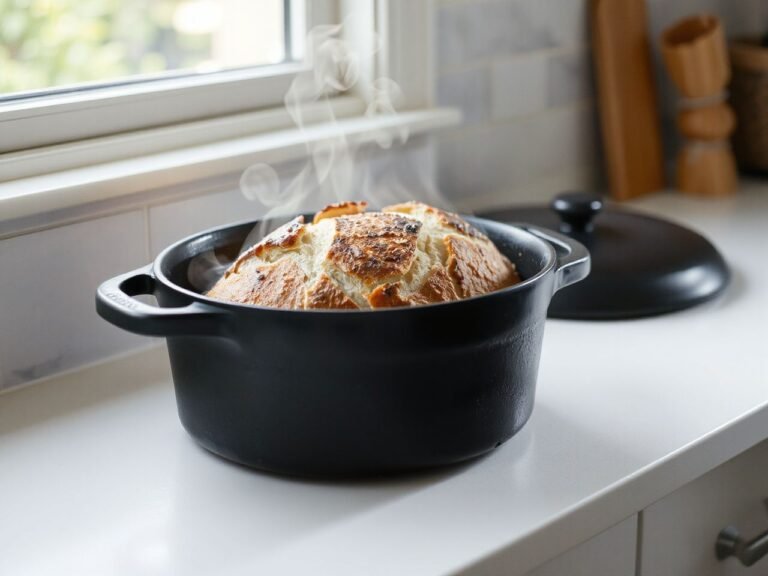
On paper, the tight-fitting lid is engineered to circulate steam and return moisture to the food, which is why this pot excels at slow braises and no-knead bread with a crackly crust. The tall sides reduce splatter and give room for a whole chicken or a 5-pound chuck roast. One annoyance worth naming: the standard phenolic knob on many 7.25 quart models is only safe to about 390°F, which rules out the 475°F bread bakes that enameled cast iron otherwise handles beautifully. If you plan to bake bread, budget for the stainless steel knob upgrade — it’s a $20-ish fix that removes the temperature ceiling entirely. If you’re also baking cookies alongside a stew, our guide to the best baking sheets for cookies applies the same even-heat logic to a different tool.
Pros:
- Superior heat distribution and retention — the enameled cast iron core evens out hot spots from electric coils or gas burners, which is what prevents scorched stew bottoms.
- No seasoning required — unlike raw cast iron, the enamel is non-reactive and ready to use straight out of the box, so tomato sauces and wine braises won’t strip a seasoning layer.
- Light-colored interior enamel — makes it far easier to monitor browning and fond development than Staub’s black interior, which can hide burning until it’s too late.
- Tight-fitting lid with steam circulation — the lid design returns moisture to the food, keeping braises tender and bread crusts properly humidified during the first half of baking.
- Durable enamel coating — the listing states the enamel resists chipping and cracking under normal use, and the lifetime warranty against manufacturing defects backs that up for the original owner.
Cons:
- Heavy and unwieldy — the 7.25 quart pot weighs over 12 pounds empty, and a full pot of beef bourguignon can exceed 25 pounds; anyone with wrist, shoulder, or grip issues will struggle.
- Standard phenolic knob limits high-heat baking — if your pot ships with the black phenolic knob, you’re capped around 390°F in the oven, which is below the 450-475°F range many bread recipes call for.
The Real Deal
Best for: Home cooks and bread bakers who want one pot that does everything well and will outlive them, provided they upgrade the knob for high-heat work. Skip if: You have any physical limitation that makes lifting a 12+ pound empty pot difficult, or you’d rather spend half the money on a Lodge enameled Dutch oven that heats almost as evenly but lacks the same fit-and-finish and lifetime warranty.
Key Specifications: Le Creuset Enameled Cast Iron Round Dutch Oven, 7.25 qt., Cerise
| Feature | Enameled cast iron delivers superior heat distribution and retention; Ready to u |
|---|---|
| Feature | Easy-to-clean and durable enamel resists dulling, staining, chipping and crackin |
| Feature | Tight-fitting lids are specially designed to circulate steam and return moisture |
| Feature | Ergonomic knobs and handles are designed for easy lifting |
| Feature | Compatible with all cooktops and oven-safe up to 500°F; Safe for dishwasher |
What to Look For in a Le Creuset Dutch Oven
Buying a Le Creuset isn’t a casual purchase. The 7.25 quart size is the most popular, but it’s also the heaviest and most expensive per quart. Before you click buy, work through these three decision factors.
What Le Creuset Dutch Oven Reviews Reveal About Value
Across the board, reviews of Le Creuset Dutch ovens consistently circle back to one truth: you’re paying for enamel quality and warranty. The company’s enamel is thicker and more chip-resistant than budget competitors, and the light-colored interior is a genuine usability advantage. But value depends entirely on how often you’ll cook with it. If this pot gets used twice a week for the next twenty years, the cost per meal is pennies. If it sits on a display shelf, it’s a very expensive paperweight. A buyer should check one thing before ordering: whether the pot ships with the phenolic or stainless steel knob, because that single part determines your maximum oven temperature.
Enamel Quality and Heat Distribution
The core selling point of any Le Creuset is the enameled cast iron. The cast iron provides thermal mass and even heating; the enamel provides a non-reactive, easy-to-clean surface. The lighter interior enamel on Le Creuset makes visual monitoring easier than Staub’s matte black, but Staub’s black interior hides stains better over time. Both are chip-resistant under normal use, but neither survives being dropped or heated while empty at high power. For evenness, the Le Creuset’s thick base and side walls are hard to beat, which is why searing a chuck roast before braising yields such consistent browning.
Lid Fit and Knob Material
The tight-fitting lid is what makes a Dutch oven a braising machine rather than just a heavy pot. Le Creuset’s lid is designed to circulate steam and return condensation to the food, which prevents dry braises and improves bread crust development. But the knob is the weak point. The standard phenolic knob tops out around 390°F, so if your recipes call for 450°F bread bakes or high-heat roasting, you need the stainless steel knob. It’s a trivial upgrade on paper but an easy thing to overlook until you’ve already melted a knob onto the lid — which, by the way, the warranty does not cover.
Our Final Recommendation
The Le Creuset Enameled Cast Iron Round Dutch Oven is the overall winner here, and the spec sheet explains why: superior heat distribution from a thick cast iron core, a light-colored enamel interior that makes cooking more precise, and a lifetime warranty against manufacturing defects. It’s heavy, and the standard knob is a real limitation for bread bakers, but both issues have straightforward fixes. If you can afford it and can lift it, this pot is one of the few kitchen tools that earns its legacy.
Frequently Asked Questions
Is the Le Creuset Dutch oven actually any good, or is it just branding?
It’s genuinely good — the enameled cast iron core distributes heat evenly, the light interior enamel makes browning obvious, and the tight-fitting lid retains moisture during braises. What you pay for beyond branding is the quality of the enamel coating, which is thicker and more chip-resistant than cheaper alternatives, and a lifetime warranty that covers manufacturing defects. For a home cook who will use it weekly, the performance justifies the price.
Does the enamel chip easily, and what should I do if it does?
The enamel is designed to resist chipping under normal use, but it is still glass — dropping the lid, scraping it with metal utensils, or overheating an empty pot can all cause chips. If a chip occurs from normal use and you are the original owner, contact Le Creuset’s warranty department; manufacturing defects are covered, but chips from misuse or accidental drops are not. For minor enamel crazing on the interior, the pot remains safe to use, but a full chip that exposes bare cast iron should be retired.
Can I put my Le Creuset in a very hot oven for bread baking?
Yes, but only with the stainless steel knob. The standard phenolic knob is safe to about 390°F, while the stainless steel upgrade handles temperatures well above 500°F. Since many no-knead bread recipes call for preheating the pot at 450-475°F, you must confirm which knob your pot ships with before cranking the oven. Also remember that the pot itself is oven-safe to at least 500°F — the limitation is entirely in that one plastic part.