
Let me tell you something about party food.
The best appetizer isn’t the most complicated one. It’s the one that disappears first.
And these pinwheels? They’re always gone before I even sit down.
I’ve brought them to backyard picnics, holiday dinners, and casual afternoon get-togethers. Every single time, someone corners me near the snack table and asks, “Wait, what are these?” That’s when I know I’ve done something right.
The beauty of a great pinwheel is its balance. You’ve got soft and crunchy in the same bite. Rich and bright at the same time. It’s the kind of food that feels fancy but takes almost no effort to pull together.
Think of it like a well-written sentence. Every word earns its place. Nothing is wasted.
Here’s a quick breakdown of how the flavors work together:
| Flavor Element | Role in the Bite | What You Actually Feel |
|---|---|---|
| Savory Protein | Grounds the whole thing | Hearty and satisfying |
| Sweet Fruit Spread | Cuts through the richness | Bright, tangy, refreshing |
| Creamy Base | Holds everything together | Smooth, buttery, lush |
| Crisp Vegetables | Adds contrast and freshness | Clean, crunchy, hydrating |
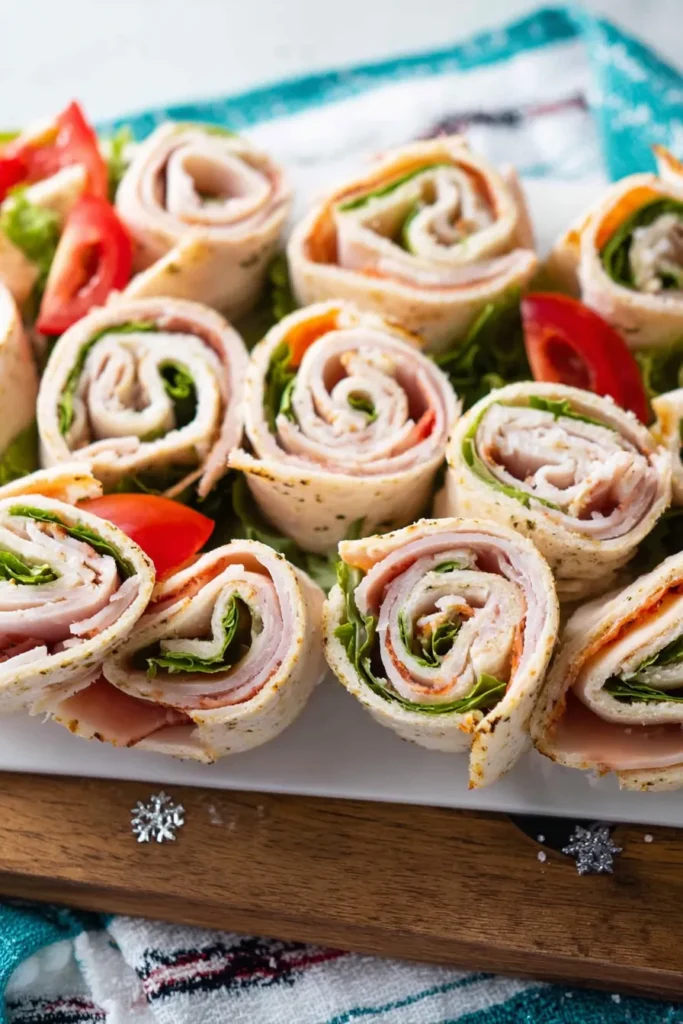
People eat with their eyes before they ever take a bite. A platter of colorful pinwheels, with those bright pink swirls and deep green spirals, just looks exciting. It tells your guests, “Someone put thought into this.” And that matters more than most home cooks realize.
I started making these for garden parties specifically. They pair beautifully with sparkling water or iced tea. They’re light enough that nobody feels weighed down. And because they’re completely hand-held, guests can mingle freely without fumbling with plates and forks.
Nobody wants to balance a fork at a networking event. Trust me on that one.
There’s also something genuinely social about a grazing table. People drift toward it naturally. Conversations start. It creates a relaxed, unhurried vibe in your home. You spend less time doing dishes and more time actually enjoying your guests.
One more thing before we get into technique. Ingredient quality matters enormously here. When the recipe is simple, there’s nowhere to hide. A bland wrap ruins the whole experience. Sad, wilted lettuce kills your presentation instantly. Go for the freshest deli meats you can find. Seek out bright, crisp greens. You want everything to taste as good as it looks.
The Technique Stuff (This Is Where Most People Go Wrong)
Here’s the truth. Most pinwheel disasters come down to one thing.
Moisture.
Fresh vegetables hold a surprising amount of water. The moment that water hits your wrap, things go sideways fast. The dough gets gummy. It tears. It falls apart when you try to slice it. The whole spiral collapses, and you’re left with a soggy mess instead of a beautiful appetizer.
The fix? Pat everything dry before it goes anywhere near the wrap. Grab a paper towel and press it firmly against your cucumber slices, your peppers, your greens. This one habit alone will change your results completely. It’s not glamorous. But it works.
The creamy spread does double duty here. Yes, it tastes incredible. But it also acts as a moisture barrier, sitting between your wet vegetables and the delicate outer layer. Spread it all the way to the edges. Even coverage prevents weak spots. Dry patches are where things start to fall apart.
Now, the second most important step. The chill.
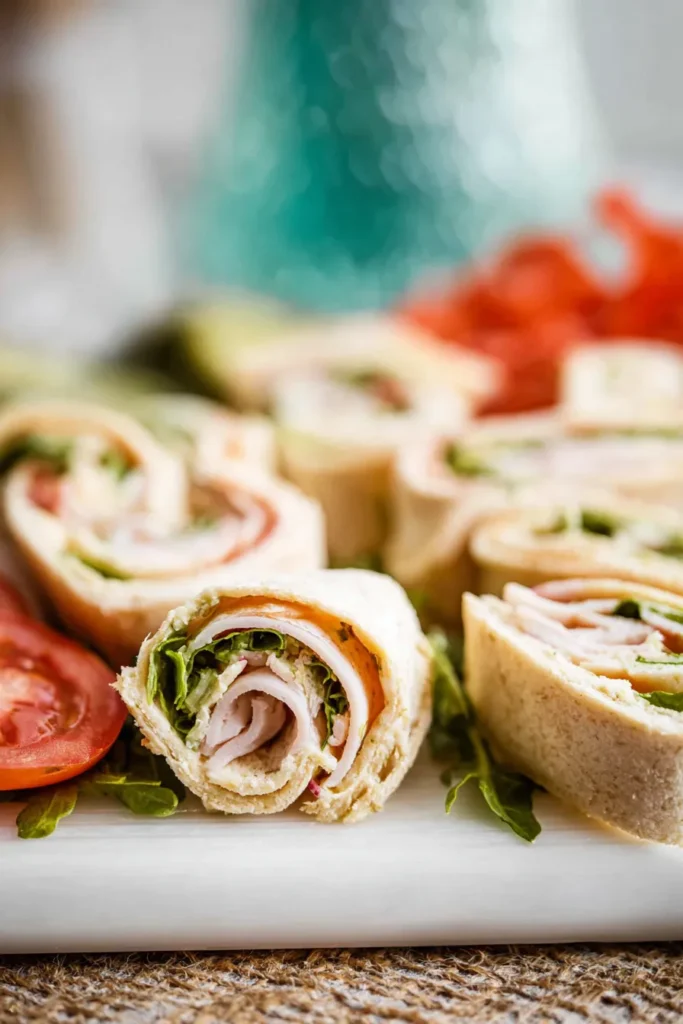
Once you’ve rolled your wraps, don’t slice them immediately. I know it’s tempting. Don’t do it.
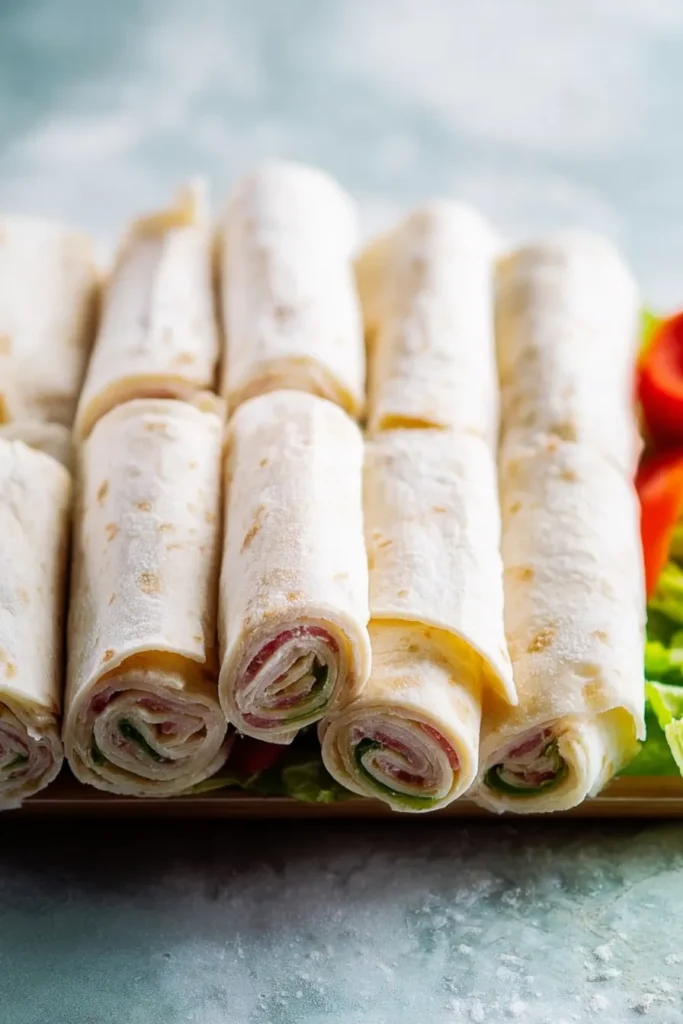
A warm wrap is soft and unstable. The moment your knife touches it, the filling squishes sideways and your spiral disappears. Instead, wrap them tightly in plastic film and put them in the fridge. Give them at least an hour. The cream firms up. The whole cylinder becomes dense and rigid. Then you can slice, and the results are clean and beautiful every single time.
Speaking of slicing, use a serrated knife. Not a flat chef’s knife. A serrated blade grips the outer layer gently and saws through without crushing. Use a slow, steady back-and-forth motion. Never press straight down with force. That’s how you flatten all your hard work.
Rolling technique matters too. You want the cylinder tight but not aggressive. Think of it like rolling a yoga mat. You’re applying firm, even pressure as you go. Too loose, and the spiral looks sloppy. Too tight, and the wrap tears.
And please, don’t overstuff. This is the most common mistake I see. More filling does not mean a better pinwheel. It means a burst wrap and a countertop covered in cream cheese. A modest, even layer of ingredients gives you a clean spiral and a consistent flavor in every single bite.
Presentation, Storage, and Fun Variations
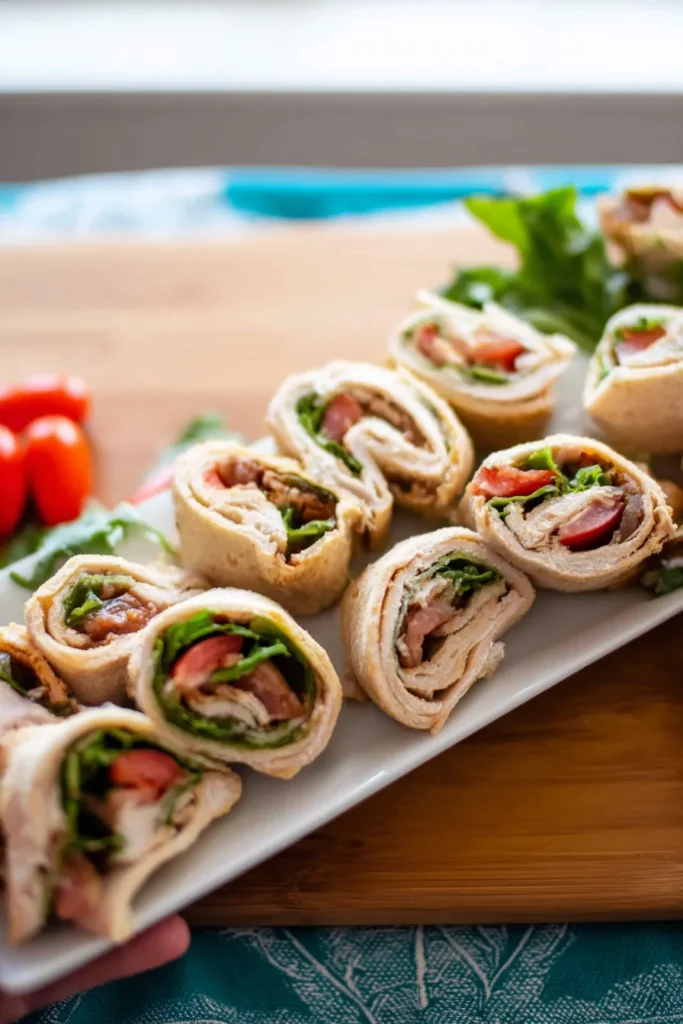
You’ve rolled them. You’ve chilled them. You’ve sliced them perfectly. Now, how do you show them off?
Arrange the slices spiral-side up. Always. That colorful swirl is the whole visual payoff, so let it be the first thing people see. I love serving them on a large flat wooden board for a rustic, relaxed feel. For something more polished, a sleek white porcelain platter works beautifully. Tuck in a few fresh parsley sprigs around the edges. It adds color and signals freshness without any extra effort.
A word on storage. These are best served the day you make them. Fresh produce doesn’t stay crisp forever, and after about 24 hours, moisture migration starts to soften everything. If you do need to store them, keep them in an airtight container in the coldest part of your fridge. They’ll hold up reasonably well until the next day.
Do not freeze them. Ever. Freezing destroys the texture of fresh vegetables completely. What comes out the other side is limp and watery and nothing like what went in.
Now, the fun part. Variations.
The basic pinwheel is essentially a blank canvas. Once you understand the structure, you can take it anywhere.
- Want heat? Add finely diced jalapeños. The spice cuts beautifully against the creamy base.
- Want color? Try spinach-flavored wraps for vivid green or sun-dried tomato wraps for a warm reddish hue. A mixed platter of both looks genuinely stunning.
- Want something heartier? Swap in thinly sliced roast beef instead of the standard deli meat. Richer, more substantial, still delicious.
The variations are almost endless. Match the flavor profile to your party theme and run with it.
Questions I Get Asked All the Time
How do I keep the wraps from unrolling on the platter? Spread the cream all the way to the very edge of the wrap. That sticky border acts as a seal and holds everything closed once rolled.
Can I prep these a day ahead? You can prep the components a day ahead. Wash your greens, mix your spreads, slice your proteins. But assemble the actual wraps on the day of your party for the best texture.
Why does my outer layer crack when I roll it? Usually means the wrap is too cold or past its best. Always use fresh wraps at room temperature. A quick 10-second warm-up in the microwave brings the flexibility right back.
How do I transport these to a party without ruining them? Keep them whole and tightly wrapped in plastic film. Travel with them in a cooler with ice packs. Slice them on-site, right before you plate them. This guarantees the freshest presentation possible.
Are these appropriate for a formal dinner party? Absolutely. Slice them with care, plate them elegantly, and they hold their own alongside any upscale spread. Clean execution makes even simple food feel luxurious. That’s the whole idea.
Perfect Crowd-Pleasing Party Pinwheels
Ingredients
Base Elements
- 4 large tortilla wraps fresh, room temperature (spinach or sun-dried tomato for color)
- 8 oz creamy base cream cheese or similar spreadable base
Fillings
- 1/2 lb savory protein high-quality deli meats or thinly sliced roast beef
- 1 cup crisp vegetables cucumber, peppers, or greens – patted dry
- 4 tbsp sweet fruit spread to cut through the richness
Instructions
- Prepare your ingredients by patting all vegetables and greens firmly with a paper towel to remove excess moisture.
- Lay the wraps flat and spread the creamy base evenly all the way to the very edges to ensure a proper seal.
- Layer the savory protein, fruit spread, and crisp vegetables in modest, even layers. Do not overstuff.
- Roll the wraps tightly with firm, even pressure—similar to rolling a yoga mat.
- Wrap the cylinders tightly in plastic film and refrigerate for at least one hour to allow the filling to firm up.
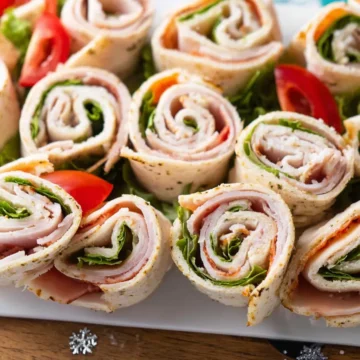
- Using a serrated knife and a gentle sawing motion, slice the rolls into even pinwheels. Arrange spiral-side up on a platter.