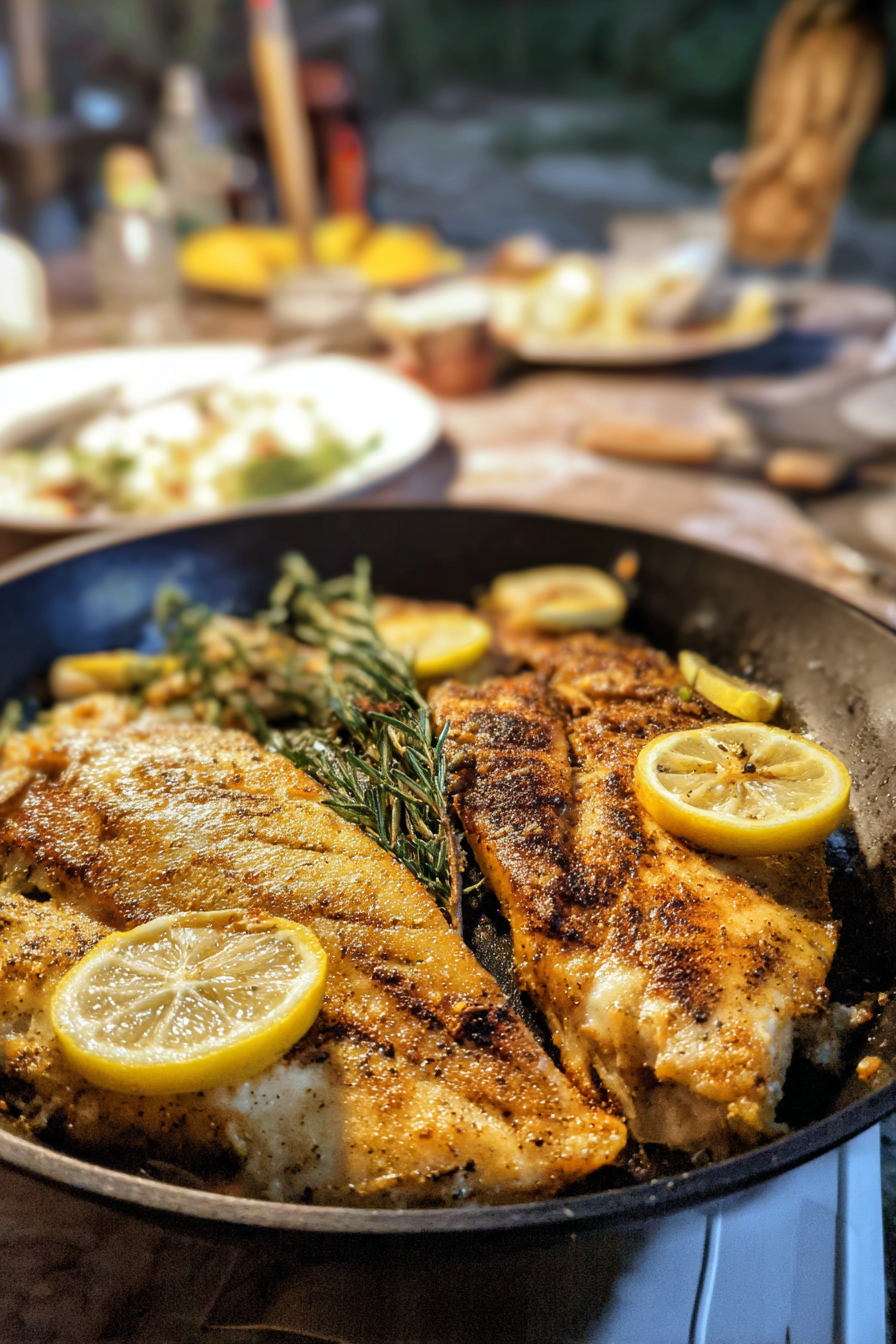
There’s something magical about cooking fish over an open flame. This campfire pan-seared fish combines simple ingredients with outdoor cooking techniques to create a restaurant-quality meal in the wilderness.
I’ve made this recipe countless times on camping trips. The butter and oil create a golden crust while keeping the fish tender inside. Whether you’re an experienced camper or trying outdoor cooking for the first time, this recipe will become your go-to.
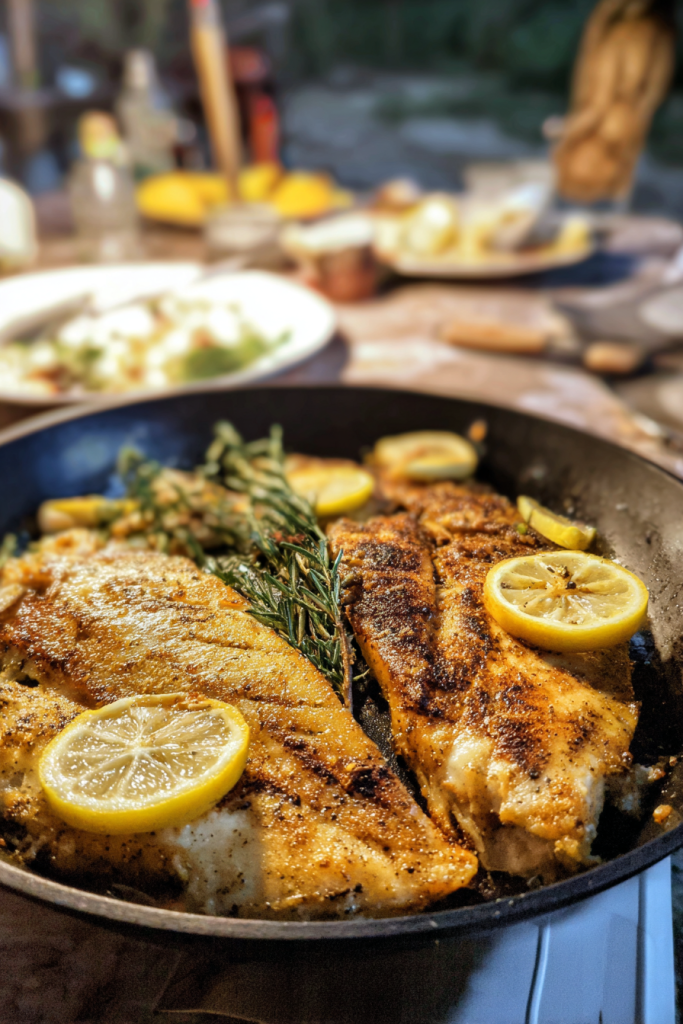
Why This Recipe Works for Camping
Camping meals don’t have to be complicated. This recipe uses minimal ingredients that travel well and store easily in a cooler. The flour coating helps protect delicate fish fillets from breaking apart over uneven campfire heat.
The method is not fussy about what goes in the pan. The technique works whether you caught your fish that morning or brought store-bought fillets from home. The key is maintaining proper temperature and using a quality cast iron skillet.
Planning Your Camping Fish Meal
Timing matters when you’re cooking fish outdoors. I always plan to make this dish within the first day or two of camping. Fish doesn’t keep as long as other proteins, especially in variable cooler temperatures.
If you’re bringing frozen fish, leave it in its original packaging until you’re ready to thaw it. Then transfer it to a sealed container inside your coldest cooler. The fish should thaw gradually and stay at safe temperatures.
For fresh fish from the store, keep it packed in ice. Use it for your first or second meal at camp. I recommend an insulated cooler that maintains consistent cold temperatures.
Choosing Your Cooking Method
You have two excellent options for this recipe. A traditional campfire provides authentic outdoor flavor and ambiance. The dancing flames create an experience that’s hard to replicate at home.
Alternatively, a camp stove offers more temperature control. I use this method when I’m cooking for a larger group or need consistent results. Both approaches produce delicious fish with that perfect golden exterior.
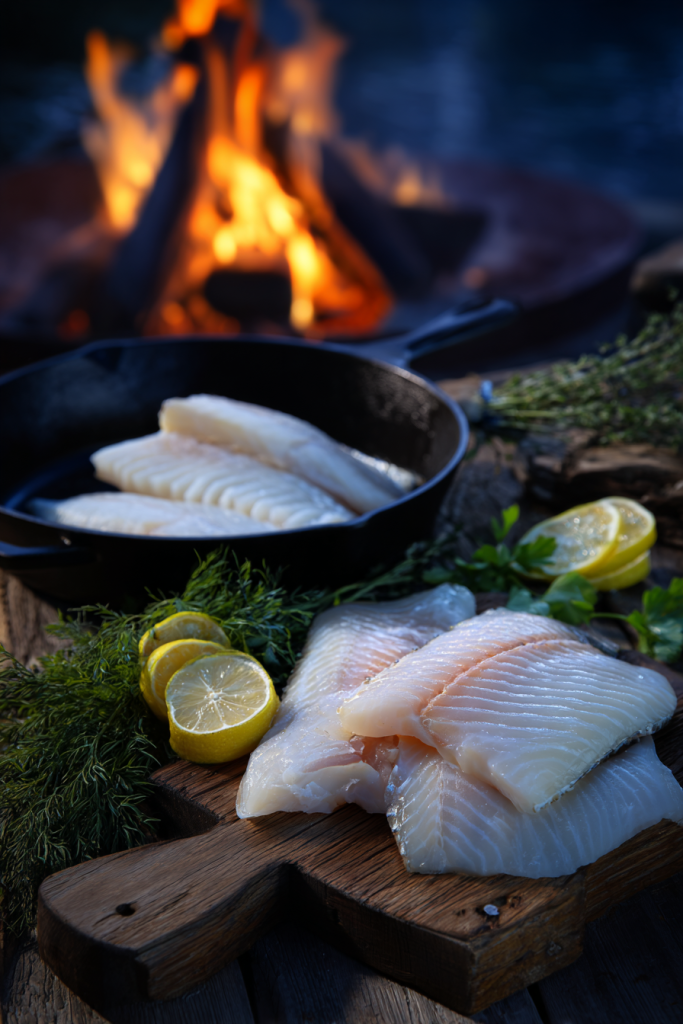
Essential Equipment
Your cookware makes a significant difference. I always use a 12-inch cast iron skillet for this recipe. Cast iron distributes heat evenly and creates that coveted crispy crust.
You’ll also need a thin metal spatula. This tool slides under delicate fish fillets without tearing them. Pack heat-resistant gloves and long tongs for safely managing your cooking fire.
The Flour Coating Secret
Some home cooks skip the flour when pan-searing fish. I don’t recommend that approach for campfire cooking. The flour creates a protective barrier that keeps fillets intact over uneven heat.
This coating also helps achieve that restaurant-style golden brown color. The flour mixture absorbs moisture from the fish surface, allowing proper browning. Mix your dry ingredients before your trip to save time at camp.
Detailed Recipe Instructions
Recipe Timing & Yield
Prep Time: 10 minutes
Cook Time: 15 minutes
Total Time: 25 minutes
Servings: 4
Difficulty: Easy
Ingredients Table
| Ingredient | Quantity | Notes |
|---|---|---|
| Fish fillets | 1 pound (4-5 fillets) | Cleaned, pin-bones removed, thawed if frozen |
| All-purpose flour | ¼ cup | Gluten-free AP flour works well |
| Salt | Pinch | To taste |
| Black pepper | Pinch | Freshly ground preferred |
| French or Italian herbs | Pinch | Dried herb mixture |
| Avocado oil | 2 tablespoons | High smoke-point oil required |
| Butter | 2 tablespoons | Unsalted preferred |
| Lemon | 1 whole | Cut into wedges for serving |
Step-by-Step Instructions
Preparing Your Cooking Area
First, establish your cooking station. If using a campfire, let the flames die down to glowing coals. You want consistent heat, not dancing flames that create hot spots.
Position your cast iron skillet over indirect heat. This placement prevents the oil from smoking excessively. Pour the avocado oil into the skillet and let it heat gradually.
Prepping the Fish
While your pan heats, prepare your fish fillets. Pat them completely dry with paper towels. This step is crucial for achieving a proper sear.
Excess moisture prevents browning and causes oil splatter. I spend extra time on this step because it dramatically improves the final result. Set up a shallow plate with your flour mixture nearby.
Creating the Coating
Combine flour, salt, pepper, and herbs on a large plate. Mix these ingredients thoroughly with a fork. The even distribution ensures consistent flavor in every bite.
Dust each fillet lightly with the flour mixture. Coat both sides but shake off any excess. You want a thin, even layer rather than a thick breading.
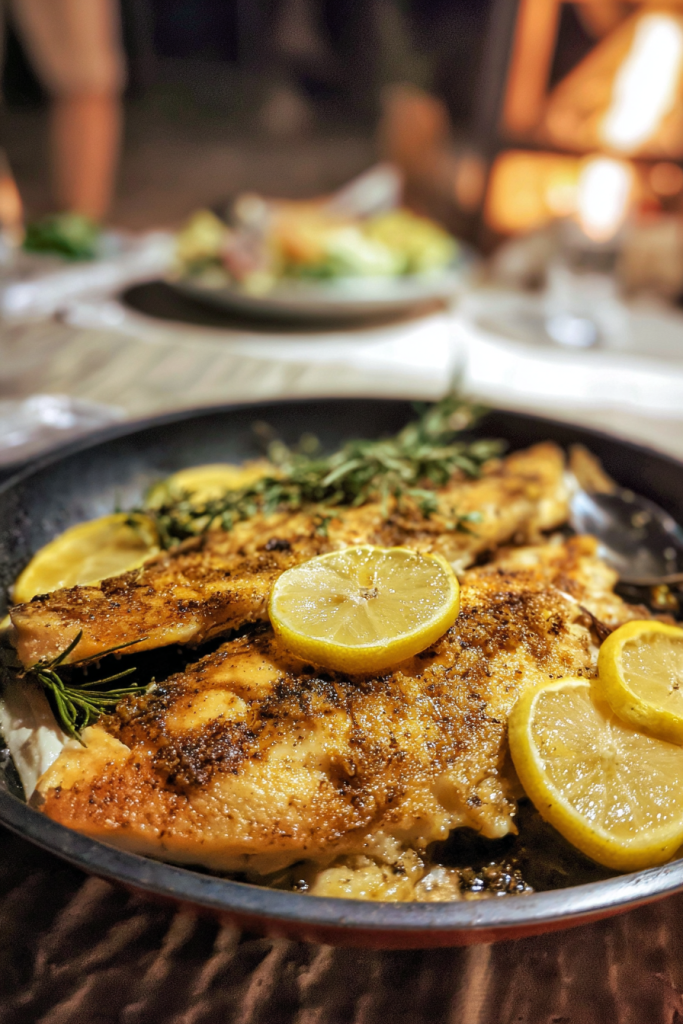
Searing the Fish
Watch your oil carefully. When it begins to shimmer and move easily across the pan, it’s ready. This visual cue prevents adding fish to oil that’s too cool or too hot.
Place fillets in the pan with space between them. Crowding causes steaming instead of searing. I usually cook two or three fillets at a time, depending on their size.
If your fillets have skin, place them skin-side down first. Let them cook undisturbed for several minutes. Resist the urge to move them around.
The Flip Test
Here’s my pro tip for knowing when to flip. Gently slide your spatula under a fillet edge. If it releases easily, the fish is ready to turn.
If it sticks, give it another minute. Forcing the flip tears the delicate flesh and ruins that beautiful golden crust you’ve created.
Finishing with Butter
After flipping, divide the butter among the fillets. It will melt quickly and create a rich, glossy finish. The butter also adds incredible flavor that complements the fish perfectly.
Cook for a few more minutes until both sides are golden. Total cooking time depends on fillet thickness. A one-inch thick fillet typically needs 3-4 minutes per side.
Transfer finished fillets to a plate. Keep them warm near the fire while you cook the remaining batch. Garnish with lemon wedges before serving.
Tips, Variations & FAQs
Choosing the Right Fish
Fish selection significantly impacts your cooking experience. Oily fish like salmon handle campfire cooking beautifully. They release from the pan easily and hold together during flipping.
White fish varieties require more careful handling. They’re more delicate and can break apart if you’re not gentle. Cod, halibut, and snapper all work well with this method.
I recommend practicing this technique at home first. Understanding how different fish types behave helps you succeed at the campsite. Trout and bass are excellent if you’re catching your own.
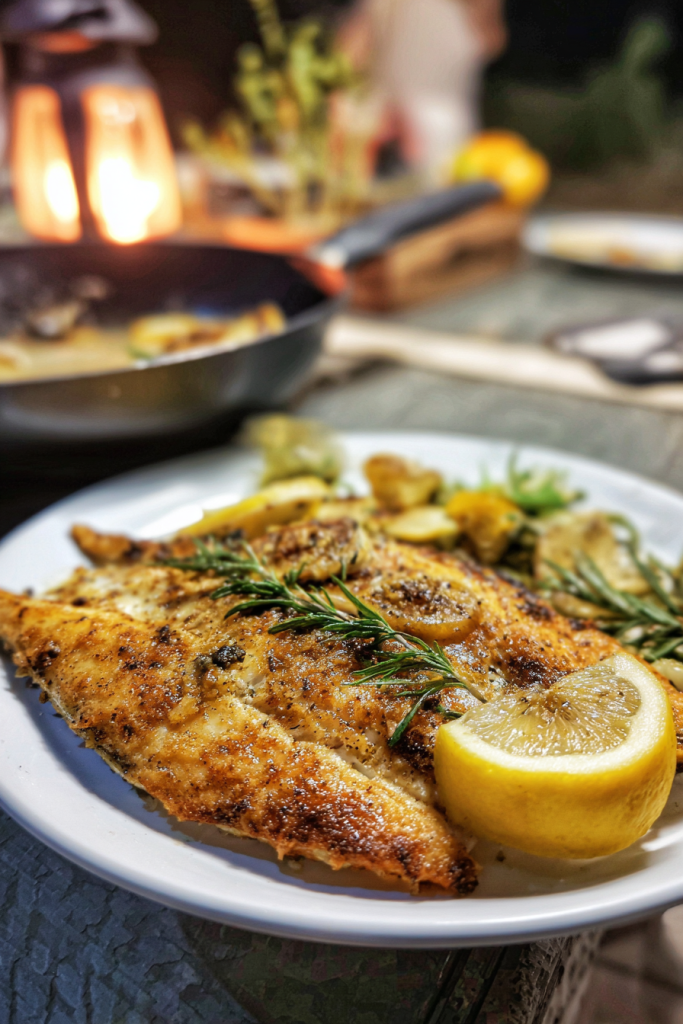
Serving Suggestions
This fish pairs wonderfully with fresh salads and vegetable sides. I love serving it with pasta salad, green beans, or Brussels sprouts slaw. The light, fresh sides complement the rich, buttery fish.
Consider coordinating with your camping companions. Ask friends to bring side dishes while you focus on the main course. This approach distributes cooking duties and creates a more varied meal.
Store-bought bagged salads work perfectly for camping. They require no preparation and stay fresh in your cooler. Just remember to pack your favorite dressing separately.
Gluten-Free Modifications
Need a gluten-free option? Simply substitute gluten-free all-purpose flour for regular flour. The coating still protects your fish and creates that desirable crispy exterior.
I don’t recommend skipping the flour entirely for campfire cooking. The uneven heat makes flour coating more important than when cooking on your home stove. The protection it provides is worth using a gluten-free alternative.
Temperature Control Tips
Campfire cooking requires different skills than stovetop cooking. Heat fluctuates as coals shift and wind changes direction. Stay attentive and adjust your pan position as needed.
If using a camp stove, set it to medium-high heat. This setting mimics the temperature you’d use at home. The consistent heat makes timing more predictable.
Storage and Food Safety
Keep your fish cold until you’re ready to cook. If bringing frozen fish, remove vacuum-sealed packaging before thawing. The fish should thaw gradually in a sealed container.
Plan fish meals for early in your trip. Even with a quality cooler, fish doesn’t keep as long as other meats. When in doubt, check for any off odors before cooking.
Frequently Asked Questions
Can I use other oils instead of avocado oil?
Yes, any high smoke-point oil works well. Grapeseed oil, refined coconut oil, or vegetable oil are excellent alternatives. Avoid olive oil, as it smokes at lower temperatures and can create bitter flavors.
What if my fish fillets are different thicknesses?
Adjust cooking time based on thickness. Thicker fillets need longer on each side. Use a fork to check doneness. The fish should flake easily and appear opaque throughout.
How do I prevent my fish from sticking to the pan?
Three factors prevent sticking: proper pan temperature, adequate oil, and patience. Let the fish develop a crust before attempting to flip. A properly seared fillet releases naturally.
Can I make this recipe without a campfire?
Absolutely. A camp stove works perfectly for this recipe. You’ll have better temperature control, making it easier to achieve consistent results. The flavor remains delicious either way.
What should I do with leftover cooked fish?
Store leftovers in a sealed container in your cooler. Consume within 24 hours. Leftover fish works great in breakfast scrambles or lunch wraps the next day.
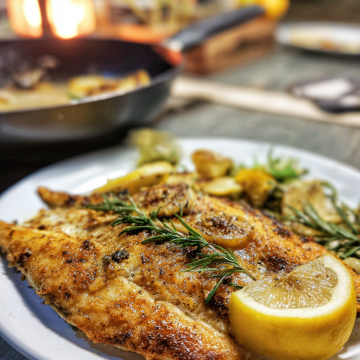
Campfire Pan-Seared Fish
Ingredients
- 1 pound fish fillets 4-5 fillets, cleaned, pin-bones removed, thawed if frozen
- ¼ cup all-purpose flour gluten-free AP flour works well
- Pinch salt to taste
- Pinch black pepper freshly ground preferred
- Pinch French or Italian herbs dried herb mixture
- 2 tablespoons avocado oil high smoke-point oil required
- 2 tablespoons butter unsalted preferred
- 1 whole lemon cut into wedges for serving
Instructions
- Prepare Cooking Area
- If using a campfire, let flames die down to glowing coals for consistent heat.
- Position cast iron skillet over indirect heat.
- Pour avocado oil into skillet and let it heat gradually until shimmering.
- Prep the Fish
- Pat fish fillets completely dry with paper towels to remove excess moisture.
- Combine flour, salt, pepper, and herbs on a large plate and mix thoroughly.
- Dust each fillet lightly with flour mixture on both sides, shaking off excess.
- Sear the Fish
- When oil shimmers and moves easily across the pan, place fillets in pan with space between them.
- If fillets have skin, place skin-side down first.
- Cook undisturbed for 3-4 minutes until golden crust forms.
- Gently slide spatula under fillet edge to test. If it releases easily, flip the fish.
- Finish Cooking
- After flipping, divide butter among the fillets and let it melt.
- Cook for 3-4 more minutes until both sides are golden brown and fish is opaque throughout.
- Transfer finished fillets to a plate and keep warm near fire.
- Repeat with remaining fillets if cooking in batches.
- Garnish with lemon wedges before serving.
Notes
Oil Alternatives: Use grapeseed oil, refined coconut oil, or vegetable oil. Avoid olive oil as it has a lower smoke point.
Gluten-Free: Substitute gluten-free all-purpose flour for regular flour.
Temperature Control: For camp stove, use medium-high heat. For campfire, adjust pan position as needed to maintain consistent temperature.
Doneness Test: Fish should flake easily with a fork and appear opaque throughout. Cooking time varies based on fillet thickness.
Food Safety: Keep fish cold until ready to cook. Plan fish meals for first 1-2 days of camping trip.
Storage: Store leftover cooked fish in sealed container in cooler and consume within 24 hours.